

- About Us
- Information
-

The Author ensures that the research has been conducted responsibly and ethically with adherence to all relevant regulations. read more..
- For Authors
- For Reviewer
- Manuscript Guidelines
- Membership
- Publication Ethics
-
- Journals
- Reprints
- e-Books
- Videos
- Policies
- Contact Us
 COVID-19
- Submissions



Abstract
Significances of Bioengineering & Biosciences
Smart Prosthetics: A Systematic Review of 3D-Printed Myoelectric Limbs with Integrated Sensory Feedback
Ameh Benson Agi1, Micheal Abimbola Oladosu2*, Moses Adondua Abah3, Dominic Agida Ochuele3, Abimbola Mary Oluwajembola2, Olaide Ayokunmi Oladosu4, Bukola Oluwaseyi Olufosoye5 and Olamide Yosola Falana6
1Department of Chemistry, College of Science, University of Siegen, Germany
2Department of Chemical Sciences, Faculty of Science, Anchor University, Nigeria
3Department of Biochemistry, Faculty of Pure and Applied Sciences, Federal University of Wukari, Nigeria
4Department of Computer Science, Faculty of Science and Technology, Babcock University, Nigeria
5Department of Medical Microbiology, Faculty of Medical Laboratory Sciences, Ambrose Alli University, Nigeria
6Department of Public Health, Teesside University, United Kingdom
*Corresponding author:Micheal Abimbola Oladosu, Department of Chemical Sciences, Faculty of Science, Anchor University, Ayobo, Ipaja, Lagos, Nigeria
Submission: November 19, 2025;Published: arch 11, 2026
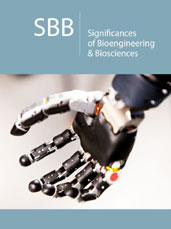
ISSN 2637-8078Volume7 Issue 5
Abstract
The advancement of prosthetic technology has undergone a significant transformation with the incorporation of 3D printing, myoelectric control, and integrated sensory feedback systems. This systematic study analyses the contemporary field of smart prosthetics, emphasizing 3D-printed upper-limb prosthesis augmented with myoelectric data acquisition and tactile feedback systems. The paper examines advancements in materials and fabrication methods, namely the application of biocompatible polymers and soft robotics, alongside control schemes that encompass signal processing and actuation. It also assesses sensor integration, such as touch and pressure sensors, and the consequent enhancements in clinical and functional outcomes, including dexterity, user comfort, and cost-effectiveness. Significant limitations, including power supply issues and user adaptability, are thoroughly examined, with recommendations for enhancing usability and accessibility presented. This analysis underscores the transdisciplinary advancements influencing next-generation prosthetics and stresses the necessity for scalable, user-centric solutions to improve limb replacement technologies.
Keywords: Intelligent prosthetics; Additive manufacturing; Myoelectric control; Sensory feedback; Biocompatible materials; Signal processing
Editor In Chief







.jpg)































Signup for Newsletter

Quick Links
 Editorial Board Registrations
 Submit your Article
 Best Paper of the Volume
 Reprints
 Refer a Friend
 Advertise With Us
Our Recent Edition

.jpg)



Top Editors




.jpg)

















.bmp)
.jpg)
.png)
.jpg)













.jpg)






.png)

.png)




.png)




Financial Support

Sponsors

Latest e-Books

Latest Video



