

- About Us
- Information
-

The Author ensures that the research has been conducted responsibly and ethically with adherence to all relevant regulations. read more..
- For Authors
- For Reviewer
- Manuscript Guidelines
- Membership
- Publication Ethics
-
- Journals
- Reprints
- e-Books
- Videos
- Policies
- Contact Us
 COVID-19
- Submissions



Full Text
Research in Medical & Engineering Sciences
Investigation and Improvement of Radiation Protection Self-Efficacy Among Vocational School Students: A Quasi-Experimental Study
Assoc. Prof. Dr. Meral Miraloğlu1* and Dr. Bişar Akbaş2Arzu Can3
11Çukurova University Faculty of Medicine, Department of Clinical Microbiology, Turkey
2Çukurova University Faculty of Medicine, Department of Radiology, Turkey
3Çukurova University Abdi Sütcü Health Services Vocational School, Medical Services and Techniques Department/Medical Laboratory Program, Turkey
*Corresponding author:Meral Miraloğlu, Çukurova University medical fakülte clinical microbiology deparment sari cam, Adana, Turkey
Submission: June 03, 2026;Published: June 26, 2026
ISSN: 2576-8816Volume12 Issue 3
Abstract
Purpose: This study was conducted to determine the levels of self-efficacy regarding radiation protection among vocational school students and to examine the effect of a structured educational intervention on these levels.
Materials and Methods: This quasi-experimental study was conducted using a one-group pretest-posttest design. A total of 34 students enrolled in a vocational school of health services participated in the study. Data were collected using an introductory information form prepared by the researchers and the Radiation Protection Self-Efficacy Scale. Construct validity of the scale was evaluated by exploratory factor analysis, and reliability was assessed using Cronbach’s alpha coefficient. Dependent samples t-test, independent samples t-test, and one-way analysis of variance were used for statistical analysis.
Results: Exploratory factor analysis demonstrated that the scale had a one-dimensional structure consisting of 12 items. The Kaiser-Meyer-Olkin coefficient was 0.777, the total explained variance was 74.273%, and Cronbach’s alpha coefficient was 0.934. The mean radiation protection self-efficacy score increased from 4.51±2.01 before the training to 8.35±1.48 after the training. The difference between pretest and posttest scores was statistically significant (p<0.001). Although a significant difference was found according to gender before the training, this difference disappeared after the training. No significant difference was found according to the academic program attended or the unit in which the students worked during clinical practice.
Conclusion: It was determined that structured training on radiation protection significantly improved the self-efficacy levels of vocational school students. These findings indicate that radiation safety education should be provided early, systematically, and in a practice-oriented manner within health education curricula.
Keywords:Radiation protection; Radiation safety; Self-efficacy; Vocational school students; Health education
Introduction
Ionizing radiation has become an essential component of many contemporary medical practices, including diagnostic radiology, computed tomography, interventional radiologic procedures, nuclear medicine, and radiotherapy [1,2]. Although advances in imaging and treatment have greatly improved patient care, the use of radiation without adequate protection measures may create preventable risks for patients, healthcare workers, and students [2,3]. Current international evidence shows that the increasing volume of medical exposure has made radiation safety not merely a technical matter confined to radiology units, but an interdisciplinary safety concern that extends across multiple areas of healthcare delivery [2,4]. For health sciences students, particularly those who may encounter portable radiography, fluoroscopy, computed tomography, or nuclear medicine during clinical training, radiation protection knowledge should be regarded as a core professional competency [1,4]. The International Commission on Radiological Protection recommends that healthcare personnel involved in diagnostic and interventional procedures receive radiation protection education appropriate to their roles and emphasizes that such training should not be limited to theoretical instruction alone [1]. The International Atomic Energy Agency similarly highlights the importance of structured, up-to-date, and competency-based radiation protection education for health professionals [4]. Educational perspectives from Europe and the United States also stress that radiation biology, exposure risks, protection principles, and appropriate imaging selection should be systematically addressed in undergraduate health professions education [5,6].
Insufficient preparation in radiation safety among healthcare students may lead to improper use of protective equipment, disregard of warning signs, underestimation of exposure risks, and continuation of unsafe behaviors during clinical practice [1,3]. This concern is not limited to students directly enrolled in imagingrelated programs; it also applies to students in other health programs who may be present in clinical settings where radiation is used during internships or practical training [2,3]. Recent commentaries and educational reviews have shown that radiation safety instruction in many institutions remains fragmented, limited in duration, and weak in practical application [6,7]. Because of the density of healthcare curricula, radiation protection is often treated as a secondary topic, leading students to rely on fragmented course content, informal sources, or observational learning in clinical environments [4,7]. However, evidence suggests that early and structured radiation safety education strengthens not only knowledge, but also the ability to recognize clinical risks and adopt safe behaviors [1,4]. For this reason, radiation safety should be approached not simply as a technical knowledge area, but as a shared component of patient safety, worker safety, and safe clinical decision-making culture [2,6].
In the health education literature, self-efficacy is defined as an individual’s belief in their ability to perform a specific task effectively and is considered an important determinant of skillbased learning outcomes [8,9]. Students with higher self-efficacy are more likely to apply newly acquired knowledge and skills in practice, maintain appropriate behavior in risky situations, and perform professional responsibilities more safely [8,9]. In the context of radiation protection, self-efficacy reflects the extent to which individuals perceive themselves as capable of understanding the ALARA principle, using personal protective equipment appropriately, recognizing radiation warning signs, complying with safety regulations, and assessing risks in the clinical environment [1,8]. Therefore, measuring knowledge alone may not fully explain a student’s capacity to demonstrate safe behavior in real clinical settings [1,9]. Self-efficacy-focused assessment is particularly valuable in evaluating educational interventions because it helps reveal whether knowledge can be translated into safe practice [8,9].
Previous studies have shown that levels of knowledge, awareness, and practice related to radiation safety among healthcare students and professionals are not uniform and often remain below the desired level [10,11]. A study conducted among final-year medical students in Norway reported limited knowledge regarding radiation dose and associated risks [10]. More recent investigations have similarly identified inadequate or fragmented understanding among medical students concerning ionizing radiation, the risks associated with common radiologic examinations, and radiation protection measures [12,13]. Studies involving nurses and nursing students have reported comparable findings, showing that formal education, clinical experience, and work setting may influence knowledge and awareness of radiation protection [11,14]. In addition, recent research involving dental students and students from other applied health programs has revealed continuing deficiencies in understanding the risks of ionizing radiation, the use of protective equipment, and safe behavioral practices [16,17]. Taken together, these findings make it clear that radiation safety is not a narrow topic relevant only to radiology, but a shared educational issue across multiple health disciplines [14,17].
Another important issue is that most studies in this area have used cross-sectional designs and have primarily focused on describing levels of knowledge or awareness [12,18]. Although these studies are valuable for identifying the current situation, they are limited in their ability to demonstrate the direct impact of educational interventions on self-efficacy or perceived safe practice [14,18]. Recent systematic reviews have emphasized that radiation protection literacy among healthcare professionals generally ranges from moderate to low and that educational content, instructional materials, and institutional safety culture should be strengthened [18]. Current practice-based studies have also shown substantial differences in access to radiation safety education and in the use of protective practices among personnel working in areas such as interventional radiology and catheterization laboratories [19]. At the same time, the diversity of clinical environments in which students may encounter radiation makes it necessary for radiation protection education to be not only theoretical, but also practical and context-sensitive [2,20]. For this reason, quasi-experimental designs evaluating pre- and post-education change offer strong potential to complement the largely descriptive literature with practice-oriented evidence [18,20].
When the existing literature is considered as a whole, it becomes clear that although evidence on radiation knowledge and awareness among healthcare students has increased, studies focusing on vocational school students remain limited, especially those involving students from different programs, with variable clinical placements and heterogeneous levels of potential radiation exposure [11,17]. Students in vocational schools of health services may be enrolled in programs such as oral and dental health, anesthesia, medical imaging, elderly care, or similar fields, and they may encounter radiation directly or indirectly during clinical training [1,2]. However, studies examining radiation protection selfefficacy in this group through pre- and post-education comparisons are still scarce [14,18]. Moreover, much of the existing research centers on knowledge levels, while giving less attention to students’ perceptions of their ability to translate that knowledge into safe behavior in clinical settings [8,9]. This points to a clear gap in the literature in terms of both target population and outcome measure.
This study was designed to address that gap among vocational school students enrolled in health services programs [18,20]. By measuring students’ radiation protection self-efficacy before and after a structured educational intervention, the study quantitatively evaluates the effect of education across students from different academic programs [4,8]. In doing so, it goes beyond describing students’ current perceptions and provides evidence regarding the extent to which this domain can be improved through education [8,18]. This approach may offer direct guidance to curriculum planners and educators regarding when and how radiation safety training should be incorporated into health professions education [4,6]. Accordingly, the main aim of this study was to determine the levels of radiation protection self-efficacy among vocational school students and to examine the effect of structured training on these levels. It was expected that the educational intervention would significantly improve students’ radiation protection selfefficacy scores and might also reduce some baseline group differences observed before training [8,9]. In this respect, the study contributes practice-oriented evidence to the literature by treating radiation safety instruction as a measurable, improvable, and programmatically planned area of education.
Materials and Methods
Study design and educational intervention
This quantitative study was conducted using a quasiexperimental one-group pretest-posttest design to determine vocational school students’ levels of radiation protection selfefficacy and to examine the effect of a structured educational intervention on these levels. In this design, the same participants were assessed before and after the training, allowing direct evaluation of within-group change over time. Following completion of the pretest, the participants received structured training on radiation protection. The educational content included the definition of radiation, ionizing and non-ionizing radiation types, harmful effects of radiation, dose limits, the ALARA principle, basic principles of radiation protection, use of personal protective equipment, radiation safety warning signs, and protocols related to pregnant workers.
Setting, population, and sample
The study population consisted of students enrolled in the relevant vocational school of health services. The study sample included 34 students who voluntarily agreed to participate and completed both the pretest and posttest assessments. Of the participants, 76.5% were female and 23.5% were male. The students were enrolled in oral and dental health, anesthesia, medical documentation and secretarial studies, medical imaging techniques, and elderly care programs. Their clinical practice experiences were concentrated in internal medicine units, surgical units, emergency departments, operating rooms, intensive care units, outpatient clinics, and radiology units.
A non-probability convenience sampling method was used because the study aimed to reach an accessible student group and to compare pretest and posttest scores within the same participants. The inclusion criteria were being enrolled in one of the relevant academic programs, agreeing to participate voluntarily, and completing both phases of data collection.
Data collection instruments
Study data were collected using a questionnaire developed by the researchers. The data collection form consisted of two sections. The first section included questions on descriptive characteristics such as sex, age, academic program, and clinical practice unit. This section also included multiple-choice questions regarding the sources from which the participants had obtained information about radiation protection and the radiation-related applications they encountered during clinical practice.
The second section consisted of items assessing radiation protection self-efficacy. The scale items were scored on a 10-point Likert-type scale ranging from 1 (“I have no knowledge”) to 10 (“I have complete knowledge”). The scale covered topics such as the justification principle in medical radiation applications, harmful effects of radiation, the distinction between ionizing and nonionizing radiation, deterministic and stochastic effects, the ALARA principle, use of personal protective equipment, radiation safety regulations, warning signs, and protocols for pregnant workers.
Validity and reliability of the scale
Exploratory factor analysis was performed to evaluate the construct validity of the measurement tool. As a result of the analysis, five problematic items were removed, and a one-dimensional structure consisting of 12 items was obtained. The Kaiser-Meyer- Olkin coefficient was 0.777, and the total explained variance was 74.273%. Internal consistency was assessed using Cronbach’s alpha, and the coefficient was 0.934. Scale scores were calculated based on item means, with higher scores indicating higher levels of radiation protection self-efficacy. Data were collected at two time points, before and after the educational intervention.
Statistical analysis
Statistical analyses were performed using IBM SPSS Statistics for Windows, version 22.0. Descriptive data were summarized as number, percentage, mean, and standard deviation. Exploratory factor analysis was used to assess construct validity, and Cronbach’s alpha analysis was used to evaluate internal consistency.
Table 1:Skewness and kurtosis values of radiation protection self-efficacy scores before and after the training.

The distributional properties of the overall scale scores before and after the training were examined using skewness and kurtosis coefficients, and the results are presented in Table 1. For the pretest scores, skewness was 0.025 and kurtosis was -1.338. For the posttest scores, skewness was -0.853 and kurtosis was 0.224. Because these values were within the ±2 range, the data were considered suitable for parametric testing.
Accordingly, paired-samples t test was used to compare pretest and posttest scores. Independent-samples t test was used for comparisons according to sex, and one-way analysis of variance was used for comparisons according to academic program and clinical practice unit. Statistical significance was set at p<0.05.
Ethical considerations
Ethical approval for the study was obtained from the Çukurova University Faculty of Medicine Research Ethics Committee. The study was reviewed at Meeting No. 156, and approval was granted under Decision No. 57 on June 13, 2025. Institutional permission was also obtained before data collection. The study was conducted in accordance with the principles of the Declaration of Helsinki.
Results
Construct validity of the radiation protection selfefficacy scale
Exploratory factor analysis was performed to examine the construct validity of the Radiation Protection Self-Efficacy Scale. Principal component analysis was used to determine the factor structure of the scale. Kaiser-Meyer-Olkin and Bartlett’s test of sphericity were performed to evaluate the suitability of the data for factor analysis. The Kaiser-Meyer-Olkin coefficient was 0.777, and Bartlett’s test of sphericity was statistically significant (p<0.001), indicating that the dataset was appropriate for factor analysis.
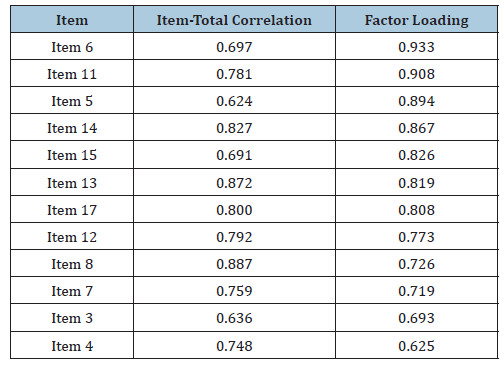
Table 2:Factor analysis results of the radiation protection self-efficacy scale.
Abbreviations: KMO: Kaiser-Meyer-Olkin.
Note: KMO=0.777; total explained variance=74.273%.
Because the scale showed a one-factor structure, no rotation procedure was applied. During the analysis, items 1, 2, 9, 10, and 16 were removed because they were identified as problematic. A single-factor structure with an eigenvalue greater than 1 was obtained, and the total explained variance was 74.273%. The final form of the scale consisted of 12 items. Factor loadings ranged from 0.625 to 0.933, whereas item-total correlations ranged from 0.624 to 0.887. These findings indicated that the items measured the same construct and had acceptable discriminative power. The factor loadings and item-total correlations of the final scale are presented in Table 2.
All items in the final version of the scale were significantly correlated with the total scale score. The correlations between the items and the total score were moderate to high at the 0.01 significance level, providing further evidence for the item validity and homogeneity of the scale.
Reliability of the radiation protection self-efficacy scale
The internal consistency of the Radiation Protection Self- Efficacy Scale was evaluated using Cronbach’s alpha coefficient. The Cronbach’s alpha coefficient was 0.934, indicating a high level of reliability. This finding supports that the items of the scale were internally consistent and measured the same construct.
Participant characteristics
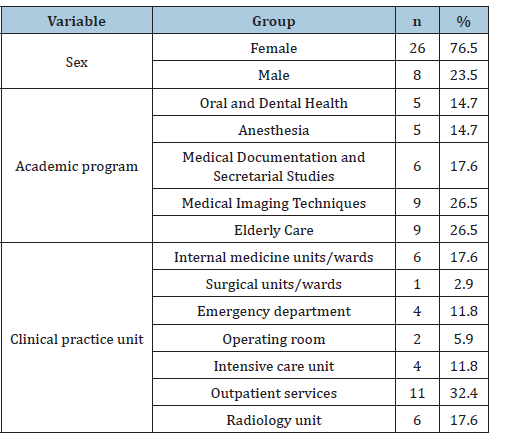
A total of 34 students participated in the study. Of the participants, 76.5% were female and 23.5% were male. With regard to academic program, 14.7% were enrolled in oral and dental health, 14.7% in anesthesia, 17.6% in medical documentation and secretarial studies, 26.5% in medical imaging techniques, and 26.5% in elderly care. In terms of clinical practice placement, 17.6% of the participants were in internal medicine units or wards, 2.9% in surgical units or wards, 11.8% in the emergency department, 5.9% in the operating room, 11.8% in the intensive care unit, 32.4% in outpatient services, and 17.6% in the radiology unit. Participant characteristics are presented in Table 3.
Table 3:Participant characteristics.
Abbreviations: n: Number of Participants.
Sources of information on radiation protection before and after the training
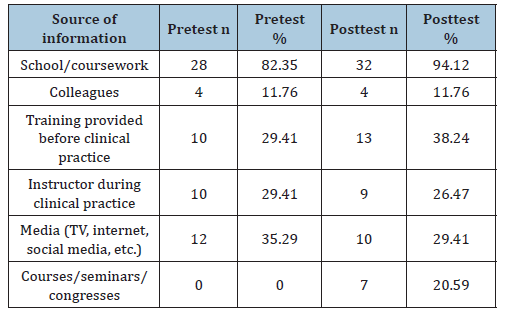
The sources from which participants obtained information about radiation protection were compared between the pretest and posttest periods. Before the training, 82.35% of the participants reported school or coursework as a source of information, 11.76% reported colleagues, 29.41% reported training provided before clinical practice, 29.41% reported their instructor during clinical practice, and 35.29% reported media sources. After the training, these rates were 94.12%, 11.76%, 38.24%, 26.47%, and 29.41%, respectively. In addition, 20.59% of the participants reported courses, seminars, or congresses as a source of information after the training. These findings are shown in Table 4.
Table 4:Sources of information on radiation protection before and after the training.
Abbreviations: n: Number of Participants.
Note: Participants could select more than one response.
Radiation-related applications encountered during clinical practice
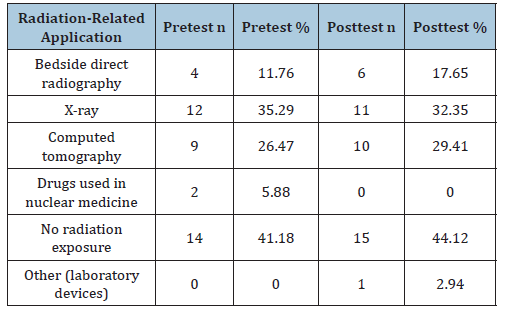
Table 5:Radiation-related applications encountered during clinical practice before and after the training.
Abbreviations: n: Number of Participants.
Note: Participants could select more than one response
Radiation-related applications encountered by the participants during clinical practice were examined separately for the pretest and posttest periods. Before the training, 11.76% of the participants reported exposure to bedside direct radiography, 35.29% to X-ray, 26.47% to computed tomography, and 5.88% to drugs used in nuclear medicine. After the training, 17.65% reported exposure to bedside direct radiography, 32.35% to X-ray, 29.41% to computed tomography, and 2.94% to laboratory devices as a source of radiation exposure. In addition, 41.18% of the participants before the training and 44.12% after the training reported that they were not exposed to radiation during clinical practice. The distribution of radiation-related applications encountered by the participants is presented in Table 5.
Radiation protection self-efficacy scores before and after the training
Radiation protection self-efficacy scores were compared before and after the training. The mean pretest self-efficacy score was 4.51±2.01, whereas the mean posttest score was 8.35±1.48. Pairedsamples t test showed that the difference between the pretest and posttest scores was statistically significant (t=-9.23, p<0.001). These findings indicated that the participants’ radiation protection self-efficacy levels were significantly higher after the training than before the training. Pretest and posttest self-efficacy scores are presented in Table 6.
Table 6:Radiation protection self-efficacy scores before and after the training.

Abbreviations: n: Number of Participants; SD: Standard
Deviation.
Note: Paired-samples t test.
Radiation protection self-efficacy according to sex, academic program, and clinical practice unit
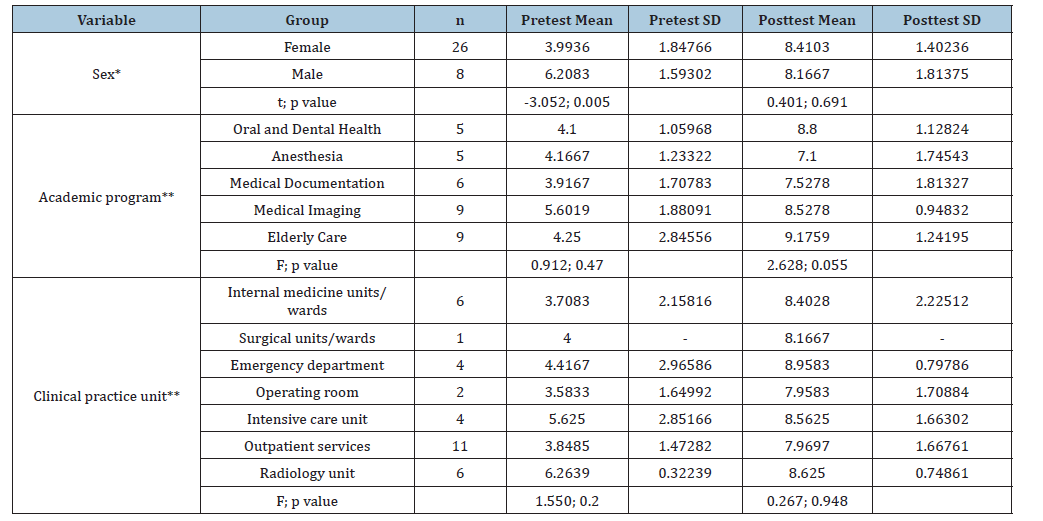
Radiation protection self-efficacy scores before and after the training were further examined according to sex, academic program, and clinical practice unit. According to sex, the mean pretest self-efficacy score was 3.99±1.85 in female participants and 6.21±1.59 in male participants. Independent-samples t test showed a statistically significant difference between female and male participants before the training (t=-3.052, p=0.005). Thus, male participants had higher pretest radiation protection self-efficacy scores than female participants. After the training, the mean score was 8.41±1.40 in female participants and 8.17±1.81 in male participants, and this difference was not statistically significant (t=0.401, p=0.691).
According to academic program, the mean pretest self-efficacy scores were 4.10±1.06 for oral and dental health, 4.17±1.23 for anesthesia, 3.92±1.71 for medical documentation and secretarial studies, 5.60±1.88 for medical imaging techniques, and 4.25±2.85 for elderly care. One-way analysis of variance showed no statistically significant difference in pretest scores according to academic program (F=0.912, p=0.470). Posttest mean scores were 8.80±1.13, 7.10±1.75, 7.53±1.81, 8.53±0.95, and 9.18±1.24, respectively, and the difference among programs was also not statistically significant (F=2.628, p=0.055).
According to clinical practice unit, pretest mean self-efficacy scores were 3.71±2.16 for internal medicine units or wards, 4.00 for surgical units or wards, 4.42±2.97 for the emergency department, 3.58±1.65 for the operating room, 5.63±2.85 for the intensive care unit, 3.85±1.47 for outpatient services, and 6.26±0.32 for the radiology unit. Posttest mean scores were 8.40±2.23, 8.17, 8.96±0.80, 7.96±1.71, 8.56±1.66, 7.97±1.67, and 8.63±0.75, respectively. One-way analysis of variance showed no statistically significant difference according to clinical practice unit in either pretest scores (F=1.550, p=0.200) or posttest scores (F=0.267, p=0.948). The distribution of radiation protection self-efficacy scores according to sex, academic program, and clinical practice unit is presented in Table 7.
Table 7:Radiation protection self-efficacy scores according to sex, academic program, and clinical practice unit.
Abbreviations: n: Number of Participants; SD: Standard Deviation.
Note: *Independent-samples t test. **One-way analysis of variance.
Discussion
The present study showed that structured radiation protection training significantly improved vocational school students’ selfefficacy scores. The increase in the mean score from 4.51±2.01 before training to 8.35±1.48 after training suggests that radiation protection self-efficacy is not a fixed characteristic, but an educational outcome that can be strengthened through targeted instruction. This finding is consistent with international recommendations emphasizing that radiation protection education should be systematic, role-specific, and practice-oriented for healthcare learners and professionals [1,4].
This interpretation is also supported by broader institutional and public health documents showing that the expanding use of ionizing radiation in medicine has increased the importance of radiation safety across healthcare settings. As medical exposure continues to grow globally, the need for learners to develop not only basic awareness but also operational confidence in safe practice becomes more pressing [2,3]. From this perspective, the strong post-intervention gain observed in the present study is educationally meaningful because it reflects improved readiness to apply protection principles in clinical environments rather than mere passive knowledge acquisition [2,3].
Another important point is that the present findings support current calls to strengthen radiation-related content in undergraduate and pre-licensure health education. European and U.S.-based educational papers have argued that radiation science, imaging safety, and appropriateness principles should be introduced earlier and more consistently in health professions curricula [5,6]. In the same vein, mandatory or more structured radiology education has been proposed as a way to reduce fragmented learning and improve safe decision-making among future healthcare professionals [7]. The substantial improvement observed after training in this study supports these arguments and suggests that even a focused intervention may produce measurable gains in perceived competence [5,7].
The psychometric findings also strengthen the interpretation of the main outcome. The final 12-item scale showed a one-factor structure, acceptable sampling adequacy, substantial explained variance, and high internal consistency. These results are in line with prior psychometric work indicating that radiation protection competence can be meaningfully assessed through structured selfevaluation tools [8]. In addition, the broader self-efficacy literature suggests that perceived capability is closely linked to performance in skill-based educational settings [9]. Accordingly, the posttraining increase in self-efficacy scores in the present study may be interpreted as an important indicator of improved educational preparedness, even though actual behavioral performance was not directly measured [8,9].
The current findings are also broadly compatible with previous studies showing insufficient or uneven radiation-related knowledge among students in the health professions. Research among final-year medical students in Norway demonstrated limited understanding of radiation dose and associated risks, while more recent studies have similarly identified inadequate knowledge among medical and applied medical sciences students [10,12]. Likewise, studies from other medical student populations have reported poor awareness of radiation hazards and continuing demand for more formal teaching on radiation protection [13,15]. Against this background, the significant increase observed in the present study suggests that deficiencies identified in descriptive studies are modifiable when students receive structured educational input [10,15].
Comparable patterns have been reported in nursing and allied health education. Previous studies have shown that nurses’ knowledge of radiation protection is often uneven, with weaker understanding in areas such as radiation physics, biology, and principles of safe use, particularly among those without prior education [11,16]. Similarly, final-year nursing students have been reported to have insufficient awareness of radiation hazards and protection, and formal education has been recommended to support safer clinical practice [14]. These findings help explain why the intervention in the present study may have been effective: students may begin with fragmented or experience-based understanding, and a structured training session can help organize and reinforce that knowledge into a more confident perception of safe practice [11,14].
The absence of significant differences across academic programs and clinical practice units after the intervention is also noteworthy. One plausible interpretation is that radiation protection training may address a common educational need across heterogeneous student groups, even when their routine exposure contexts differ. This interpretation is supported by studies showing that deficits in radiation knowledge are not limited to one discipline; similar concerns have been reported among nursing students, dental students, and other healthcare learners [14,17]. In addition, systematic review evidence indicates that radiation protection literacy remains variable across health professions exposed to ionizing radiation, supporting the view that this topic should be treated as a shared safety competency rather than a narrowly specialized subject [18].
One of the more interesting findings of the present study was the significant sex difference before training, which disappeared after the intervention. Although the current literature does not provide a consistent pattern strong enough to support a single explanation, this result may indicate that baseline differences in prior exposure, confidence, or informal learning can be reduced when all students receive the same structured educational content. Studies in student and professional groups often emphasize overall knowledge deficits rather than stable demographic patterns, which makes the disappearance of the sex difference after training more suggestive of an equalizing educational effect than of an inherent group difference [9,13]. This point deserves further exploration in larger samples.
The findings related to information sources also deserve attention. School and coursework were the most frequently reported sources both before and after the intervention, and this proportion increased after training. This pattern suggests that formal education was recognized by participants as the main reference point for radiation protection knowledge. At the same time, the post-training appearance of courses, seminars, and congresses as information sources may reflect increased awareness and greater attentiveness to professional learning opportunities after the educational intervention. This interpretation is compatible with current literature showing that radiation protection practices and educational access vary substantially across real clinical settings, making structured educational reinforcement especially valuable [19,20].
Several limitations should be considered when interpreting these findings. First, the study was conducted in a single center with a relatively small sample, which limits generalizability. Second, the one-group pretest-posttest design did not include a control group; therefore, the observed improvement cannot be attributed to the educational intervention with absolute certainty. Third, the data were based on self-report, which may have introduced response bias or social desirability effects. Fourth, some subgroup sizes were very small, which may have reduced the statistical power of comparisons by academic program and clinical practice unit. These limitations mean that the results should be interpreted as promising but preliminary evidence rather than definitive proof of effectiveness.
Despite these limitations, the study has practical implications. The findings support the integration of structured, early, and practice-oriented radiation protection education into vocational health services curricula. Such training should not be restricted to students in imaging-focused programs, because exposure risks and safety responsibilities extend across multiple clinical areas. Future studies should use larger multicenter samples, include control or comparison groups, and examine whether gains in self-efficacy are sustained over time and translated into observable safe behaviors in clinical practice. In addition, further validation of the scale in different student populations would strengthen its usefulness as an educational evaluation tool. Overall, the present study suggests that radiation protection education is both necessary and improvable, and that self-efficacy may serve as a meaningful outcome for assessing its impact.
Conclusion
This study demonstrated that structured radiation protection training had a significant and positive effect on vocational school students’ radiation protection self-efficacy. Comparison of pretest and posttest scores showed a marked increase in students’ perceived competence regarding radiation safety, protection principles, the ALARA approach, use of personal protective equipment, warning signs, and related protocols. In addition, the measurement tool used in this study showed acceptable construct validity and high internal consistency in this sample.
The disappearance of the significant sex-based difference observed before the training suggests that the intervention not only improved overall self-efficacy levels, but may also have reduced some baseline differences among students. In contrast, the absence of significant differences according to academic program and clinical practice unit indicates that radiation protection education represents a common and essential need across different student groups. Taken together, these findings suggest that radiation protection education is a necessary, effective, and improvable component of training for students enrolled in vocational health services programs.
Radiation protection content should therefore be addressed more systematically within vocational school curricula. In particular, standardizing training provided before clinical practice may strengthen not only students’ knowledge levels but also their self-efficacy related to safe clinical behavior. Including core radiation safety modules in all programs with potential exposure to radiation, and increasing applied training on warning signs, protective equipment use, and exposure awareness in clinical settings, may be beneficial. Future studies should be conducted with larger samples, in different institutions, and preferably with controlled designs to improve the generalizability of the findings. Re-testing the scale in different samples and conducting long-term follow-up studies would also contribute to evaluating the lasting impact of radiation protection education.
Author Contributions
Conceptualization: Meral Miraloğlu, Arzu Can (Özdil); Study design: Meral Miraloğlu, Bişar Akbaş; Supervision: Meral Miraloğlu; Subject-matter expertise and scientific content review: Bişar Akbaş; Development of data collection tools: Arzu Can (Özdil); Data collection and/or data processing: Arzu Can (Özdil); Analysis and/ or interpretation: Meral Miraloğlu, Bişar Akbaş, Arzu Can (Özdil); Literature review: Arzu Can (Özdil); Writing - original draft: Arzu Can (Özdil); Critical review and revision: Meral Miraloğlu, Bişar Akbaş. Contribution percentages were 40% for Meral Miraloğlu, 20% for Bişar Akbaş, and 40% for Arzu Can (Özdil). All authors read and approved the final version of the manuscript.
Ethics Approval
This study was conducted in accordance with the principles of the Declaration of Helsinki. Institutional permission to conduct the study was granted by the Chief Physician’s Office of Çukurova University Balcalı Hospital on May 26, 2025 (E-59565534-010.10- 1317070). Ethical approval was obtained from the Çukurova University Faculty of Medicine Research Ethics Committee at Meeting No. 156, Decision No. 57, dated June 13, 2025.
Informed Consent
Written informed consent was obtained from all participants after they had been informed about the purpose and procedures of the study.
Data Availability Statement
The data supporting the findings of this study are available from the corresponding author upon reasonable request.
Funding
This study was supported by the TÜBİTAK 2209-A University Students Research Projects Support Program (Application/Project No. 1919B012420354). The funding body had no role in the design of the study; the collection, analysis, or interpretation of the data; the writing of the manuscript; or the decision to submit the article for publication.
Conflict of Interest
The authors declare that they have no conflict of interest..
Acknowledgments
The authors would like to thank the institutions that supported this study and the students who voluntarily participated in the research.
References
- Vañó E, M Rosenstein, J Liniecki, M M Rehani, C J Martin, et al. (2009) Education and training in radiological protection for diagnostic and interventional procedures. Ann ICRP 39(5): 7-68.
- (2022) United Nations Scientific Committee on the Effects of Atomic Radiation. UNSCEAR 2020/2021. report volume I: sources, effects and risks of ionizing radiation; annex A: evaluation of medical exposure to ionizing radiation. United Nations, New York, USA.
- (2023) World Health Organization. Ionizing radiation and health effects. WHO, Geneva, Switzerland.
- (2021) International Atomic Energy Agency. Improving radiation protection education and training of health professionals. IAEA, Vienna, Austria.
- (2011) European Society of Radiology. Undergraduate education in radiology. Insights Imaging. 2(4): 363-374.
- Linet MS, Davis PB, Brink JA (2021) The need for a broad-based introduction to radiation science within U.S. medical schools' educational curriculum. Radiology 301(1): 35-40.
- Farmakis SG, Chertoff JD, Straus CM, Barth RA (2023) Perspective: mandatory radiology education for medical students. Acad Radiol 30(7): 1500-1510.
- Schroderus-Salo T, Hirvonen L, Henner A, Ahonen S, Kaariainen M, et al. (2019) Development and validation of a psychometric scale for assessing healthcare professionals' knowledge in radiation protection. Radiography (Lond) 25(2): 136-142.
- Brocker A, Scafide KN (2024) Systematic review: Self-efficacy and skill performance. Int Nurs Rev 71(4): 10-822.
- Kada S (2017) Awareness and knowledge of radiation dose and associated risks among final year medical students in Norway. Insights Imaging 8(6): 599-605.
- Hirvonen L, Schroderus-Salo T, Henner A, Ahonen S, M Kaariainen et al. (2019) Nurses’ knowledge of radiation protection: A cross-sectional study. Radiography (Lond) 25(4): e108-e112.
- Alali MA, Alsalem OF, Alsalem NF, Alsalem MF, Alzuwayyid LA, et al. (2024) Awareness and knowledge of ionizing radiation in common radiological investigation and associated risks among medical and applied medical sciences students at Majmaah University. Cureus 16(8): e67261.
- Shafiq P, Mehmood Y (2024) Awareness of radiation hazards and knowledge about radiation protection among medical students at the Northern Border University, Arar, Saudi Arabia. Cureus16(3): e55484.
- Salih S, Nordin MN, Alkatheeri A, Nasser A, Saif M, et al. (2023) Assessment of nursing students’ awareness toward ionizing radiation: Cross-sectional study. Nurs Rep 13(2): 855-864.
- Jeyasugiththan J, Dissanayake DMTPB, Kohombakadawala IMCWB, Satharasinghe DM (2023) Assessment of the awareness of radiation protection and related concepts among nursing staff mainly working in diagnostic imaging units, cath-labs and operation theatres in Sri Lanka: A survey-based study. Radiography (Lond) 29(2): 319-326.
- Ageeli W, Alfaify A, Abdali E, et al. (2024) Assessment of dental students’ knowledge towards ionizing radiation in dentistry: A cross-sectional study. Radioprotection 59(4): 270-277.
- Rodrigues BV, Lopes PC, Mello-Moura ACV, Flores-Fraile J, Veiga N (2024) Literacy in the scope of radiation protection for healthcare professionals exposed to ionizing radiation: A systematic review. Healthcare (Basel) 12(20): 2033.
- O'Rourke M, Moore N, Young R, Svetlic S, Bucknall H, et al. (2024) An investigation into the knowledge, attitudes, and practice of radiation protection in interventional radiology and cardiac catheter-laboratories. J Med Imaging Radiat Sci 55(3): 101440.
- Deb P (2024) Occupational radiation dose among student radiographers, nuclear medicine technologists, and radiotherapists in an Australian university. Radiat Prot Dosimetry 200(16-18): 1537-1541.
- Mellis S, Zhang Y, McAteer D (2024) Awareness of radiation risks by medical students and referrers requesting radiological examinations in the North of Scotland: An audit. BMC Med Educ 24(1): 830.
© 2026 Meral Miraloğlu. This is an open access article distributed under the terms of the Creative Commons Attribution License , which permits unrestricted use, distribution, and build upon your work non-commercially.
Editor In Chief







.jpg)































Signup for Newsletter

Quick Links
 Editorial Board Registrations
 Submit your Article
 Best Paper of the Volume
 Reprints
 Refer a Friend
 Advertise With Us
Our Recent Edition

.jpg)



Top Editors




.jpg)

















.bmp)
.jpg)
.png)
.jpg)













.jpg)






.png)

.png)




.png)




Financial Support

Sponsors

Latest e-Books

Latest Video

 a Creative Commons Attribution 4.0 International License. Based on a work at www.crimsonpublishers.com.
Best viewed in
a Creative Commons Attribution 4.0 International License. Based on a work at www.crimsonpublishers.com.
Best viewed in 
 | Above IE 9.0 version