

- About Us
- Information
-

The Author ensures that the research has been conducted responsibly and ethically with adherence to all relevant regulations. read more..
- For Authors
- For Reviewer
- Manuscript Guidelines
- Membership
- Publication Ethics
-
- Journals
- Reprints
- e-Books
- Videos
- Policies
- Contact Us
 COVID-19
- Submissions



Full Text
Novel Research in Sciences
Bitter Taste Receptors a Field Study to determine Polyphenols in Cheese
Galina MA1,2, Piedrahita R2, Sánchez N1 and Pineda J1
1Universidad de Colima, México
2FES Cuautitlán, National Autonomous University off México, México
*Corresponding author:Miguel Ángel Galina, Universidad de Colima, FES Cuautitlán, National Autonomous University of México, México
Submission: September 09, 2025;Published: October 29, 2025
.jpg)
Volume17 Issue 1October 29, 2025
Summary
The objective of this study was to determine the antioxidant content of cheeses produced from animals whose diet consisted of at least 50% grazing. Previous experimental and clinical research has reported beneficial effects of polyphenol intake on highly prevalent diseases such as type 2 diabetes and obesity. Polyphenols were measured in cheeses made from grazing animals (G) and from milk obtained from ruminants kept in Full Confinement (FC). Samples were analyzed using the superoxide anion test to determine the Degree of Antioxidant Protection (DAP), expressed as the molar ratio between antioxidant compounds and an oxidation target. On the other hand, 25 tastings were carried out with 350 participants, measuring according to taste on a scale from 1 to 10 the flavor of 6 cheeses, four from pasture and two from full confinement. It is concluded that through the bitter taste the consumer can distinguish pastured cheeses that contain polyphenols, the feeding system directly influences the degree of antioxidant protection of the cheese and can be identified by the bitter taste in cheeses that come from pasture or some mixture of pasture and full confinement. Results showed that DAP was significantly higher in pasturebased cheeses, with the highest value observed in G (11.17) compared with FC (3.42). Additionally, 30 field tasting trials were carried out with 350 participants, who rated the flavors of six cheeses (four from pasture and two from confinement) on a scale from 1 to 10. Consumers were able to distinguish grazing-based cheeses containing polyphenols by their bitter taste. The feeding system directly influenced antioxidant protection, and this characteristic could be identified through a bitter flavor. Results showed that those grass-fed cheeses with the highest polyphenol content and antioxidant capacity were the ones that achieved the highest scores in the consumer tasting.
Introduction
Humans have developed a sophisticated sense of taste to survive in a complex environment by eating an omnivorous diet. Sweet, salty and umami tastes allow the evaluation of nutritional content (monosaccharides, minerals, and amino acids, respectively), while bitter and sour tastes help avoid harmful substances and identify fermented, spoiled, or unripe foods. Bitterness is sensed by at least 25 subtypes of Taste Type 2 Receptors). The ligands that activate these receptors respond to plant-derived metabolites such as alkaloids and polyphenols, bacterial quorum-sensing molecules, byproducts of cell metabolism, and even synthetic compounds such as pharmaceuticals [1].
Bitter taste perception begins when bitter taste-eliciting compounds interact with the taste receptor proteins i.e., G-protein coupled receptors that are expressed in type II taste receptor cells in taste buds present in the tongue and oropharynx. T2Rs are generally considered to function as monomers, although evidence suggests that they are also formed as heterodimers [2]. T2Rs can detect thousands of bitter molecules, as each T2R can bind to a range of ligands. Certain receptors are broadly tuned and respond to several bitter agonists (“generalists”, as T2R14), others have a narrow range of ligands (“specialists”, as T2R38), while the ligands for others remain unidentified [1]. On the other hand, more than 150 single nucleotide polymorphisms have been discovered in human T2Rs coding regions [3,4]. T2R38 together with T2R3, T2R4, T2R5 and T2R16 present high level of polymorphism [5] resulting in a variety of phenotypes. Consequently, T2Rs exhibit a large threshold variability, a fact that impacts on bitter taste sensitivity [1].
For example, three Single Nucleotide Polymorphisms (SNPs) in T2R38 have been identified, giving rise to five different haplotypes. The most common two haplotypes are: Proline- Alanine-Valine (PAV) and Alanine-Valine-Isoleucine (AVI). From PAV homozygotes, individuals perceive the greatest bitterness e.g., Phenylthiocarbamide (PTC) and 6-n-propylthiouracil (PROP) [6]. Thus, some subjects can be classified as “supertasters” or “tasters” when there is present a high or medium taste sensitivity (low or medium taste thresholds), or as “non-tasters” when virtually only recognize specific T2R38 ligands at high concentration levels. T2R polymorphisms influence oral detection consequently might be involved in food preference and intake [7]. Therefore, bitter receptors may also play a role in modulating dietary intake of healthful foods, including many vegetables that contain bitter compounds such as isothiocyanates, polyphenols or other bioactive compounds [8].
Additionally, the expression of these receptors is not only limited to the taste buds in the oral cavity. Indeed, their ectopic expression has been reported in a variety of organs and extra-oral tissues such as lung, brain, and heart [9,10]; suggesting additional functions for these receptors beyond taste perception [11]. Numerous drugs taste bitter because of activated T2Rs, including analgesics anti-inflammatories, antibiotics, anti-asthmatics, anti-thyroids, immunosuppressives, antitussives, muscle relaxants, laxatives, antiemetics, antispasmodics, antipsychotics, antiarrhythmics or antimalaria drugs. On the other hand, polyphenols [8] and other bitter-tasting phytochemicals [12] could similarly exert some of their physiological actions via interaction with extra-oral T2Rs if target concentrations are high enough. For example, genistein activates T2R14 and T2R39 between 4 and 8μM [13].
Concentrations that can be reached into the intestine in determined condition [14]. While useful databases of bitter ligands are available [15,16] in the absence of selective/specific pharmacological reagents, defining the exact actions of the systemically expressed T2Rs has been challenging. Nevertheless, the association of T2R activity with respiratory function, innate immunity or cardiac depression are exciting and provocative, suggesting that these T2Rs play a role in the maintenance of homeostasis, as well as providing an additional defense against pathogens. Thus, as ancient traditional wisdom says, “Good medicine always tastes bitter”. Now, this could be verified through scientific research.
Oxidative stress is due to free radical production such as: hydrogen peroxide (H2O2), superoxide (O2), free oxygen (1/2 O2) and hydroxyl radicals (OH); with some acquired exogenously, and others from metabolic processes such as: cellular respiration, exposure to microbial infections that produce phagocytic activation, during intense physical activity; or by the action of polluting substances such as cigarette smoke, alcohol, ultraviolet ionization, pesticides, coronavirus infection and ozone. Previous works show how the substances most susceptible to oxidation are polyunsaturated fats, especially archiodonic acid and docosahexaenoic acid, which produce malondialdehyde and 4 hydroxynonenal, recognized markers of lipid oxidation decline. Lipid oxidation also produces aldehydes that affect proteins and can impede their functions [17]. Oxidative damage to lipid membrane components has been related to mechanisms of neurodegeneration, cancer, cardiovascular or inflammatory diseases. It has been confirmed that the excessive production of reactive oxygen species can lead to the overexpression of oncogenic genes, or the formation of mutagenic compounds that can cause proatherogenic activity and is related to the appearance of senile plaque or inflammation [18,19].
The circumvallate papillae are shaped like an inverted V and are located at the back of the tongue, while the foliate papillae are arranged in vertical folds on the lateral edges of the tongue. The fungiform papillae occupy two-thirds of the anterior part of the tongue. These three types of papillae contain the receptors primarily responsible for the taste perception of food. The fourth type of papillae present, the filiform papillae, are the most numerous. However, they do not contain taste receptors and serve primarily to increase friction between the tongue and food, or to transmit mechanical information and information about the temperature of the food.
T2R polymorphisms influence oral detection and might be involved in food preference and intake [7-20]. Therefore, bitter receptors may also play a role in modulating dietary intake of healthful foods, including many vegetables that contain bitter compounds, such as isothiocyanates, polyphenols or other bioactive compounds found also in cheese [4-8].
Previous experimental and clinical research has reported beneficial effects of polyphenol intake on highly prevalent diseases such as type 2 diabetes and obesity. These plant-derived phytochemical compounds are known by the generic name polyphenols and have been shown to be effective antioxidants. These small particle compounds can be distinguished by T2R gustatory receptors, which have recently been localized to a series of fungiform papillae located on the back of the tongue and in the oral cavity. Therefore, the interaction between polyphenols and T2Rs, are signaling agents to brain structures, particularly the hypothalamus, and may have a direct effect on the regulation of appetite and food intake. T2Rs are also expressed throughout polyphenol digestion, which can induce the release of external hormones that influence appetite, gastrointestinal function, and glycemic control [20].
The objective was to determine the degree of antioxidant protection in cheese, based on superoxide anion content or the differences between cholesterol and alpha tocopherol, including samples from grazing and non-grazing animals. Polyphenols are expressed as a molar ratio between antioxidant compounds and an oxidation target, distinguishing products from grazing and nongrazing animals, divided into two different production systems: Grazing (G) and confinement (FC), comparing the results with 30 tastings in a heterogeneous population of consumers.
Materials and Methods
Six cheese varieties were analyzed (three goat, three cow). Freeze-dried goat cheese samples were Soxhlet-extracted with petroleum ether/ethyl ether (1:1 v/v) to determine fatty acid composition. Fatty acid methyl esters were separated using gas chromatography with flame ionization detection and a split injector (1:24). Separations were performed using a capillary column (25cm x 0.2mm i.d. x 0.3um). Fatty acid content was expressed as a percentage. After determination, the sum of saturated, monounsaturated, and polyunsaturated fatty acids, as well as the omPa fatty acid content, were calculated according to Method 923.07 (AOAC, 2000).
Cheese samples (pasture and confinement) were transported in ice and stored at -20 °C until saponification. Superoxide anion was determined spectrophotometrically, and the cheese was incubated with 10μL of 1mg/L nitroblue tetrazolium solution for 30 minutes in a dark environment. 50μL of dimethyl sulfoxide and 50μL of 2M sodium hydroxide were added. Sample absorption was measured at 600nm [21].
Thirty tests were conducted on 125 random participants. Each participant was offered three different grass-fed cheeses and three stable-farmed cheeses, half goat cheeses and the other half cow cheeses. They were asked to rate the cheeses on a scale of 1 to 10, indicating their taste preference.
Total cheese production, and milk or cheese composition were analyzed using a one-way ANOVA design. Data analysis was performed using general linear model procedures (Statgraphics Centurion). The results were expressed in the amount of cholesterol (oxidant) and tocopherol (antioxidant) in addition to consumer preference (scale 1-10).
Result
Cholesterol and alpha-tocopherol levels were consistent within production systems. However, significant differences were observed between pasture-based and confinement-based cheeses. Pasture cheeses contained higher alpha-tocopherol levels and DAP values compared to confinement cheeses (Table 1 & Figure 1).
Figure 1:The natural cheeses were Ajo y hierbas finas (garlic and fine herbs), and cenizas (ashes) rom goat (pasture), Chihuahua, Gouda, and Manchego, and cow (confinement). Taste score Average
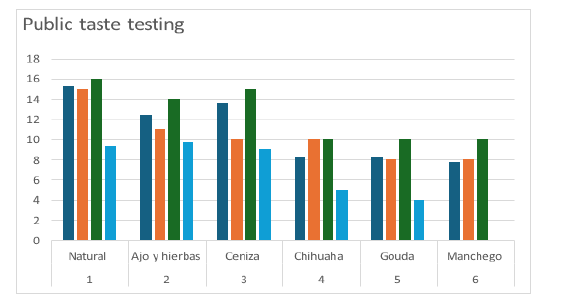
Table 1:Polyphenol levels measured with superoxide ion and antioxidant protection levels (AP) in the cheeses studied. The natural cheeses were garlic and ash from goat (pasture), Chihuahua, Gouda, and Manchego, and cow (confinement).

DAP Degree of Antioxidant Protection
Average
Standard deviation
Discussion
There are three distinct classes of taste receptor cells, which are differentiated by their ultrastructural characteristics, genetic expression, and specific functions. Each taste bud contains all three receptor cell types, allowing every taste bud to respond to the five primary taste categories (bitter, sweet, salty, umami, and sour). Although any taste bud can theoretically detect any taste, some regions of the tongue demonstrate greater sensitivity to certain stimuli. Earlier “tongue map” models suggested narrow regions responsible for specific tastes [22]. The results of the present observation are consistent with this distribution of sensitivity. To better understand how taste stimuli are transported and perceived, silicon models have been developed to monitor stimulus intensity over time [3]. These models use a tube with a small opening placed against a porous surface mimicking the tongue.
Pulses of tastings such as sodium chloride (NaCl, 500mM) or sodium saccharin (NaSac, 2mM) are introduced, and perceived taste is measured via a conductivity cell. When no opening is present, the stimulus intensity has a “square-wave” profile. Pulses (from 100 to 1000ms) are obtained by introducing 500mM sodium chloride (NaCl) or 2mM sodium saccharin (NaSac) into the tube at a rate of 10ml/s, and the perceived taste is evaluated using a conductivity measuring cell placed at the end of the opening. Comparing the impulse transmission profiles, with or without an opening in the tube, it is observed that in the absence of an opening, the stimulus intensity has a “square” tendency. In contrast, when an opening is present, the stimulus is delayed during displacement, likely due to the tongue surface acting as a porous sponge that traps some compounds, altering the concentration profile downstream [23]. Our work showed comparable results, suggesting that natural tongue structures influence the delivery and intensity of taste stimuli.
The field of sensory nutrition is emerging as an important area of research, focusing on how chemical senses and oral somatic sensation affect dietary choices and health outcomes. One strategy is to design personalized nutritional plans by studying an individual’s T2R genotype status. Such approaches could potentially prevent or treat obesity and diabetes by tailoring diet according to genetic taste sensitivity. Defining taste phenotypes may also help clinicians predict disease progression, select personalized therapies, and optimize treatments.
Bitter compounds, such as polyphenols, are of particular interest because they not only act as antioxidants but also stimulate T2Rs, which may affect appetite, satiety, gastrointestinal motility, and insulin secretion. Bitter flavourings have therefore been proposed as a non-invasive weight-loss treatment. While this idea is appealing to the public, current results remain lacking. There is talk about administering cheeses that are bitter, and further research should clarify how cheeses should be consumed based on the side effects; regarding administration, timing, and use of them in relation to food [23].
The bitter taste of polyphenol is a potential treatment for weight loss. This is an invasive and simple approach that will be received with considerable enthusiasm by the public [4,19-25] However, the literature on its administration hinders consistency in measurements and findings. Any further research needs to be clarified. How these compounds should be administered based on this side of administration. The best bitter compounds to use and when in relation to food [11]. This review is intended to advance research or the development of a larger pill for the treatment of highly prevalent disorders such as diabetes and obesity.
Bitter tastes such as polyphenols are a potential weightloss treatment. This is a non-invasive, easily approach, which should be received with considerable enthusiasm by the public as demonstrated in the taste probes preformed in the present observation, the public easily identified cheeses with high content of polyphenols, Moreover, additional research must clarify how these compounds should be given based on the site of administration, the best bitter compounds to use, and if cheese from grazing could be an important food that could be identified by taste by general public [1-24].
It is worth emphasizing that although numerous bitter medicinal plants have long been used in traditional medicine and cuisine, the integration of traditional knowledge with modern biomedical science remains limited. Our observations suggest that activation of T2Rs by polyphenols and other bitter compounds may modulate gut hormone secretion, regulate gastric emptying, influence satiety and appetite, and enhance insulin secretion and bile acid release. These mechanisms could ultimately lead to improved glucose control and weight management [1].
Conclusion
The results of this study show that consumers can distinguish cheeses with higher polyphenol content by taste, independent of species. Grazing systems produced cheeses with lower cholesterol, higher alpha-tocopherol, and stronger antioxidant protection. The amount of alpha tocopherol is inversely proportional: it is higher in pasture cheeses and lower and stable cheeses. This supports the conclusion that feeding systems directly influence the nutritional and sensory properties of cheese, with potential implications for chronic disease prevention.
References
- Trius SM, Moreno JJ (2024) Bitter taste receptors: Key target to understand the effect of polyphenols on glucose and body homeostasis. Pathophysiology and pharmacology implications. Biochem Pharmacol 228: 116192.
- Kuhn C, Bufe B, Batram C, Meyerhof W (2010) Oligomerization of TAS2R bitter taste receptors. Chem Senses 35(5): 395-406.
- Kim C, Wooding D, Ricci LB, Jorde D, Drayana D (2023) Woldwide haplotype diversity and coding sequence variation at human bitter receptrors loci. Hum Mutant 26(3): 199-204.
- Galina MA, Piñón JO, Ortiz RA, Higuera PRI, De la Cruz H, et al. (2022) Effect of nutritional system on the degree of Antioxidant Protection of Bovine Milk. Nov Res Sci 12(3): 1-7.
- Ueda T, Ugawa S, Ishida Y, Shibata Y, Murakami S, et al. (2001) Identification of coding single-nucleotide polymorphisms in human taste receptor genes involving bitter tasting. Biochem Biophys Res Commun 285(1): 147-151.
- Kim U, Jorgensen E, Coon H, Leper M, Risch R, et al. (2023) Positional cloning of the human quantitative trait locus underlying taste sensitivity to phenylthiocarbamide. Science 299(5610): 1221-1225.
- Diószegi J, Llantaj E, Adany R (2019) Genetic background of taste perception, taste preference, and nutritional implications: A Systematic Review. Front Genet 10: 1272-1285.
- Tarragan E, MorenoJ (2020) Polyphenols and taste 2 receptors. Physiological, pathophysilogical and pharmacological implications. Biochem Pharmacol 178: 114086.
- Shah AS, Ben Shabar Y, Moninger TO, Kline JN, Welsh MJ (2009) Motile cilia of human airway epithelial are chemosensory. Science 325(5944): 1131-1134.
- García E, Schuter A, Carmona M, Moreno J, Ansolaga B, et al. (2013) Functional genomics reveals dysregulation of cortical olfactory receptors in Parkinson disease: Novel positive chemoreceptors in the human brain. J Neuropathol Exp Neurol (72): 524-539.
- Chandrasheckar M, Hoon N, Ryba C, Zuker (2006) The receptrors of cells for mammalian taste. Nature 444(7117): 288-294.
- Drewnowski A, Gomez Carneros C (2000) Bitter taste phytonutrients and the consumer: A Review. M J Clin Nutr 72(6): 1424-1435.
- Roland WS, Vincken JP, Gouka RJ, van BorenI, Gruppen H, et al. (2011) Soy isoflavours and other bioflavonoids active the human taste receptors hTAS2R14 and hTAS2R39. J Agric Food Chem 59(21): 11764-11771.
- Langa S, Landete JM (2023) Strategies to achieve significant physiological concentrations of bioactive phytoestrogens in plants. Crit Rev Food Sci Nutr 63(14): 2203-2215.
- Dagan Wiener A, Di Pizio A, Nissim J, Bahia MS, Dubovki N (2019) BitterDB: Taste ligands and receptors database in 2019. Nucleic Acids Res 47(D1): D1179-D1185.
- Di Pizio, Waterloo AW, Brox R, Lober S, Weikert S, et al. (2020) Rational design of against for bitter taste receptors TAS2R14: Cell Mol Life Sci 77(3): 531-542.
- Poljsak B, Šuput D, Milisav I (2013) Achieving the balance between ROS and antioxidants: When to use the synthetic antioxidants. Oxid Med Cell Longev 2013: 956792.
- Pisoschi AM, Pop A (2015) The Role of Antioxidants in the Chemistry of Oxidative Stress: A Review. Eur J Med Chem 97: 55-74.
- Galina MA, Higuera PRI, Carrillo S, Musco N, Pineda J, et al. (2021) Effect of feeding systems on Bovine Milk Quality in Mexico. Novel Techniques in Nutrition and Food Science 6(1): 519-523.
- Diószegi J, Shaw B, Mitchell S, Munger N, Steinle N (2010) Variations in the TAS2R3S is associated with the eating behavior disinhibitions in older Order Amish women. Appetite 54(1): 93-99.
- Beherens M, Foerster F, Staehler JD, Raguse W, MayerFhof M (2007) Gustatory expression patterns of the human TAS2R bitter recetor gene family reveals a heterogenous population of bitter responsive taste receptors cells. J Neurosci 27(46): 12630-12640.
- Marchesino, Mariana A. et al. (2017) Changes in superoxide anion levels in breast milk, based on flavonoid and carotenoid intake. Public Health of Mexico 59(5): 526-531.
- Gallegos M JJ, Cañete CE, Gersnoviez A, Brox M, Sánche Gil J, et al. (2024) Devices for monitoring oenological processes: A Review. Measurement 235: 114922.
- Wu Z, Zhao K (2020) Taste of time: A porous-medium model for human tongue surface with implications for early taste perception. PLoS Computational Biology 16(6): e1007888.
- Galina M, Higuera Piedrahita R, De la Cruz H, Olmos J, Vázquez P, et al. (2023) Effect of feeding system on goat cheese quality. Nov Res Sci 13(1): 1-8.
© 2025 Miguel Ángel Galina. This is an open access article distributed under the terms of the Creative Commons Attribution License , which permits unrestricted use, distribution, and build upon your work non-commercially.
Editor In Chief







.jpg)































Signup for Newsletter

Quick Links
 Editorial Board Registrations
 Submit your Article
 Best Paper of the Volume
 Reprints
 Refer a Friend
 Advertise With Us
Our Recent Edition

.jpg)



Top Editors




.jpg)

















.bmp)
.jpg)
.png)
.jpg)













.jpg)






.png)

.png)




.png)




Financial Support

Sponsors

Latest e-Books

Latest Video

 a Creative Commons Attribution 4.0 International License. Based on a work at www.crimsonpublishers.com.
Best viewed in
a Creative Commons Attribution 4.0 International License. Based on a work at www.crimsonpublishers.com.
Best viewed in 
 | Above IE 9.0 version