

- About Us
- Information
-

The Author ensures that the research has been conducted responsibly and ethically with adherence to all relevant regulations. read more..
- For Authors
- For Reviewer
- Manuscript Guidelines
- Membership
- Publication Ethics
-
- Journals
- Reprints
- e-Books
- Videos
- Policies
- Contact Us
 COVID-19
- Submissions



Full Text
Determinations in Nanomedicine & Nanotechnology
The Charge Neutralization Process (CNP) as a Boundary- Driven Informational Stabilization Framework Toward an Integrative Model of Biological Memory, Adaptive Organization, and Consciousness
Pavle Vesić*
Independent researcher, Serbia
*Corresponding author:Pavle Vesić, Independent Researcher, Serbia
Submission: May 18, 2026;Published: June 10, 2026

ISSN: 2832-4439 Volume3 Issue 4
This paper proposes the Charge Neutralization Process (CNP) as an informational framework for understanding adaptive biological organization across multiple scales. The model integrates concepts from quantum information theory, systems biology, thermodynamics, cybernetics, and neuroscience to explore how biological systems maintain stability under continuous environmental perturbation. Within the proposed framework, living systems are interpreted as open informational structures that continuously minimize locally generated entropy through boundary-regulated stabilization dynamics. The model reinterprets biological boundaries-particularly those described by the Markov Blanket formalismas active interfaces mediating energetic exchange, informational persistence, and adaptive feedback. The framework additionally explores a reinterpretation of consciousness as a secondary monitoring interface associated with boundary stabilization processes rather than as an independently causal entity.
Keywords:CNP; Markov blanked; Free energy principle; Neuron; Visual cortex; CPTP-completely positive trace-preserving; Consciousness
Introduction
One of the central unresolved questions in modern science concerns the relationship between physical information, biological organization, and conscious experience. Although quantum mechanics successfully describes microscopic physical behaviour and neuroscience increasingly explains large-scale neural dynamics, a coherent framework capable of connecting informational physics with adaptive biological structure remains incomplete.
Recent developments in information theory, active inference, systems neuroscience, and thermodynamics increasingly suggest that living systems may be understood as boundaryregulated informational processes rather than purely mechanical structures. The Markov Blanket formalism proposed by Judea Pearl and later expanded within Karl Friston’s active inference framework provides an important mathematical description of such boundarymediated organization [1-4].
Mathematical Formalization of the CNP
The Charge Neutralization Process (CNP) proposed in this paper should not be interpreted as a replacement for the Free Energy Principle (FEP), but rather as a lower-level stabilization framework potentially compatible with it. The Free Energy Principle provides a highly general description of how adaptive systems maintain structural integrity by minimizing prediction error and variational free energy across Markov blankets.
The present framework attempts to extend this perspective
by proposing possible informational and biophysical mechanisms
through which such stabilization dynamics may manifest at
biological boundaries. Within this interpretation:
a. FEP describes the global adaptive imperative,
b. while CNP attempts to model the localized compensatory
dynamics operating at the interface between organism and
environment.
Thus, the two frameworks may be understood as complementary rather than competing descriptions of adaptive organization across multiple scales.
Consider a biological boundary represented by an initial informational state:
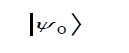
External energetic interactions perturb this equilibrium through an environmental operator U_env(f), producing a disturbed state:

The informational entropy of the system is represented through the Von Neumann entropy relation:
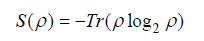
The stabilization process is modelled using Completely Positive Trace-Preserving (CPTP) transformations:

subject to:
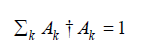
The framework assumes biological systems move toward locally minimized entropy states:
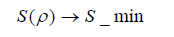
rather than absolute zero entropy.
Informational Evolution
Within the proposed framework, early biological evolution may be interpreted as a progressive emergence of increasingly stable informational architectures capable of preserving adaptive responses to environmental perturbation. The transition from transient molecular interactions toward persistent biological encoding can be modeled as:

where M represents iterative adaptive cycles.
Over sufficiently large iterative timescales:
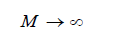
certain adaptive configurations may approach relative dynamical stability:

Photonic Boundary Interactions and the Emergence of Visual Processing Systems
Within the CNP framework, repeated photonic perturbations at biological boundaries may have provided a persistent adaptive pressure favouring increasingly efficient sensory stabilization mechanisms. Organisms capable of more accurately detecting, predicting, and compensating for high-frequency environmental variations would possess improved energetic and informational regulation. Over long evolutionary timescales, such iterative stabilization pressures may have progressively selected for specialized photoreceptive structures and increasingly centralized neural processing architectures. In this interpretation, the emergence of visual systems and cortical sensory integration is not viewed as a teleological objective, but as a cumulative adaptive consequence of repeated environmental stabilization demands.
Consciousness as a Monitoring Interface
Within the CNP framework, conscious awareness is interpreted
not as the primary causal initiator of biological action, but as
a secondary monitoring layer associated with already ongoing
stabilization dynamics. This perspective offers a reinterpretation
of delayed conscious awareness findings, including the Libet
readiness-potential experiments. In this model:
i. Perturbation registration occurs first.
ii. Adaptive stabilization dynamics initiate automatically.
iii. Neural systems execute compensatory responses.
iv. Conscious awareness subsequently reconstructs the event.
The framework therefore interprets consciousness as a largescale
integrative visualization process associated with adaptive
boundary regulation.
Systemic Applications
Phantom limb pain
Within the CNP framework, phantom limb pain may be interpreted as a persistent mismatch between established internal body representations and the absence of expected sensory feedback.
Sleep and low-noise states
The framework proposes that sleep and deep meditative states
may function as low-noise regulatory modes characterized by:
a. reduced sensory influx,
b. lower-frequency neural synchronization,
c. increased informational reorganization.
Aging as adaptive degradation
Aging may be interpreted as the progressive accumulation of unresolved adaptive errors across repeated stabilization cycles.
Experimental Predictions
i. The framework generates experimentally approachable
hypotheses involving:
a. frequency-correlated compensatory dynamics,
b. non-Markovian persistence effects,
c. neural entropy modulation,
d. synchronization during altered states.
ii. Potential methodologies include:
a. high-density EEG,
b. optical spectroscopy,
c. SQUID-based measurements,
d. entropy analysis,
e. inflammatory biomarker tracking.
Mathematical Clarifications
The manuscript should avoid implying literal zero entropy in living systems.
Instead of:
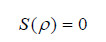
the preferred expression is:

A generalized compensatory response model is recommended:

where:
a. α represents stabilization proportionality,
b. ε captures stochastic biological noise.
Non-Markovian persistence may additionally be modelled using temporal memory kernels:

Conclusion
The Charge Neutralization Process framework should be understood as an exploratory interdisciplinary model rather than a completed physical theory. Its primary contribution lies in proposing a unified informational language for discussing:
a. adaptive stabilization,
b. biological boundary regulation,
c. informational persistence,
d. neural organization,
e. and conscious experience.
Whether the CNP ultimately proves physically realizable or remains primarily a conceptual abstraction, the framework offers a novel interdisciplinary perspective for investigating the relationships among information, adaptation, biology, and consciousness.
References
- Pavle V (2026) Charge neutralization process (CNP) as a foundational physical principle of neural evolution and consciousness. Determinations in Nanomedicine & Nanotechnology 3(4): 1-2.
- Frank W (2018) The lightness of being. Fingerprint Digital Media, Ireland.
- Inês H, Maxwell JDR, Laura C, Anjali B, Karl F, et al (2021) Markov blankets in the brain. Neurosci Biobehav Rev 125: 88-97.
- Karl F (2010) The free-energy principle: A unified brain theory? Nature Reviews Neuroscience volume 11: 127-138.
© 2026 Pavle Vesić. This is an open access article distributed under the terms of the Creative Commons Attribution License , which permits unrestricted use, distribution, and build upon your work non-commercially.
Editor In Chief







.jpg)































Signup for Newsletter

Quick Links
 Editorial Board Registrations
 Submit your Article
 Best Paper of the Volume
 Reprints
 Refer a Friend
 Advertise With Us
Our Recent Edition

.jpg)



Top Editors




.jpg)

















.bmp)
.jpg)
.png)
.jpg)













.jpg)






.png)

.png)




.png)




Financial Support

Sponsors

Latest e-Books

Latest Video



