

- About Us
- Information
-

The Author ensures that the research has been conducted responsibly and ethically with adherence to all relevant regulations. read more..
- For Authors
- For Reviewer
- Manuscript Guidelines
- Membership
- Publication Ethics
-
- Journals
- Reprints
- e-Books
- Videos
- Policies
- Contact Us
 COVID-19
- Submissions



Abstract
Degenerative Intellectual & Developmental Disabilities
An Empirical Evaluation of the Barriers to Disabled Students’ Inclusion in Pakistani Higher Education Institutions
-
Open or CloseMuhammad Qasim Rana1*, Angela Lee1, Noreen Saher2 and Lekan Damilola
Ojo3
1 School of Construction, Surveying and Engineering, University of the Built Environment, Horizons, UK
2 Faculty of Social Sciences, International Islamic University, Pakistan
3 Department of Building and Real Estate, Hong Kong Polytechnic University, Hung Hom, Hong Kong
*Corresponding author: Muhammad Qasim Rana, School of Construction, Surveying and Engineering, University of the Built Environment, Horizons, 60 Queen’s Road, Reading RG1 4BS, UK
Submission: January 28, 2026; Published: February 17, 2026
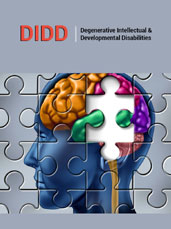
Volume2 Issue2 February 17, 2026
Abstract
The inclusion of students with disabilities in higher educational institutions remains a global challenge, particularly in developing nations where structural and institutional limitations persist. In Pakistan, higher education continues to face significant obstacles that restrict the full participation of students with disabilities despite existing policy frameworks. This study aims to identify, evaluate and prioritize the barriers hindering disabled students’ inclusion in Pakistani higher educational institutions. An explanatory sequential research design was employed using data collected through structured questionnaires administered to the targeted respondents and focus group discussion. The quantitative data were analyzed using the Fuzzy Synthetic Evaluation (FSE) approach, which provided a systematic means to measure the agreement level, weight and internal consistency of each identified barrier, while the qualitative data was used to discuss the findings. Findings revealed nine key barriers, with knowledge and training barriers ranked as the most severe, followed by institutional and financial barriers. These findings highlight deficiencies in educator preparedness, institutional commitment and funding support as critical impediments to inclusive education. The study contributes theoretically by applying FSE to inclusive education research, offering a quantifiable framework to assess multidimensional barriers. Practically, it provides directions for policymakers, administrators and educators to design targeted interventions and implement enforceable institutional policies. This study is original in its methodological approach and regional focus, offering empirical insight into Pakistan’s path toward sustainable and inclusive higher education.
Keywords:Inclusive education; Disabled inclusion; Higher educational institutions; Fuzzy synthetic evaluation; Pakistan
Editor In Chief





.jpg)



























Signup for Newsletter

Quick Links
 Editorial Board Registrations
 Submit your Article
 Best Paper of the Volume
 Reprints
 Refer a Friend
 Advertise With Us
Our Recent Edition
.jpg)


Top Editors




.jpg)













.bmp)
.jpg)
.png)
.jpg)











.jpg)





.png)

.png)



.png)



Financial Support

Sponsors

Latest e-Books
Latest Video

 a Creative Commons Attribution 4.0 International License. Based on a work at www.crimsonpublishers.com.
Best viewed in
a Creative Commons Attribution 4.0 International License. Based on a work at www.crimsonpublishers.com.
Best viewed in 
 | Above IE 9.0 version