

- About Us
- Information
-

The Author ensures that the research has been conducted responsibly and ethically with adherence to all relevant regulations. read more..
- For Authors
- For Reviewer
- Manuscript Guidelines
- Membership
- Publication Ethics
-
- Journals
- Reprints
- e-Books
- Videos
- Policies
- Contact Us
 COVID-19
- Submissions



Full Text
COJ Technical & Scientific Research
A Mini-Review on Effects of Orifice Geometry on Pressure Swirl Atomizers’ Spray
Reza Pilbala1, Shahrzad Mozafari Ghazafi2 and Ali Kamranpey3*
1 Faculty of Mechanical Engineering, University of Guilan, Iran
2 Payam Noor University, Sanandaj Branch, Iran
3 Department of Mathematics, University of Guilan, Iran
*Corresponding author:Ali Kamranpey, Department of Mathematics, University of Guilan, Rasht, Iran
Submission: May 19, 2026:Published: May 28, 2026

Volume6 Issue1May 28, 2026
Abstract
Pressure swirl atomizers are widely employed in various industrial applications such as aerospace propulsion, power generation and agricultural spray systems, owing to their ability to produce fine, widespread sprays essential for efficient combustion, crop treatment and emission control. The geometry of the atomizer orifice plays a crucial role in determining spray characteristics, including droplet size distribution, spray cone angle, velocity and atomization efficiency. This review synthesizes recent experimental and computational studies focusing exclusively on how orifice geometry-shape, dimensions and internal features-influences spray behaviour. It examines how variations in orifice diameter, length, shape (conical, profiled, plain) and geometric ratios (such as length-to-diameter) affect atomization quality, spray angle, droplet size and flow patterns. The review highlights that larger orifice diameters tend to reduce swirling velocity and increase droplet size, while optimized geometric ratios can enhance spray uniformity and atomization efficiency. Deviations from ideal orifice shapes, such as inclined or convergent/divergent profiles, significantly impact internal flow patterns and resulting spray characteristics. Understanding these effects is vital for designing more efficient atomizers tailored to specific industrial needs. The study underscores the importance of precise orifice design to optimize spray quality, improve combustion performance and minimize emissions, thus contributing to advancements in atomizer technology.
Keywords:Spray; Pressure swirl atomizer; Orifice; Geometry
Introduction
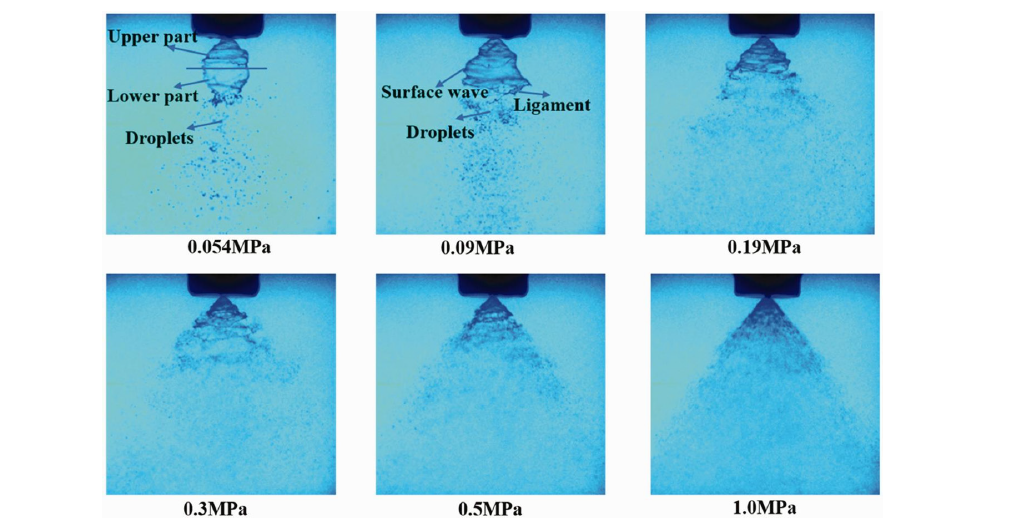
Sprays are dispersions of liquid droplets in a gaseous medium, fundamental to numerous natural phenomena and industrial processes [1-3]. Their behaviour-dictated by fluid dynamics, atomization mechanisms [4,5] and geometric factors-affects applications ranging from combustion in engines and turbines to agricultural spraying and spray cooling systems [6,7]. Among various spray generation devices, pressure swirl atomizers [8,9] are prominent due to their ability to produce fine, uniform sprays with a high degree of control, making them indispensable in sectors like aerospace, power plants and agriculture [10,12]. Pressure swirl atomizers operate based on the principle of imparting a tangential or swirling motion to the liquid, causing it to disintegrate into droplets under centrifugal forces [13]. The geometry of the orifice through which the liquid is injected significantly influences the internal flow development, swirling intensity and ultimately, the spray characteristics. Variations in orifice shape, diameter, length and geometric ratios alter key parameters such as the spray cone angle, droplet size distribution, velocity and atomization efficiency. Figures 1 & 2 show the different parts of a pressure swirl atomizer and its spray in terms of pressure. The flow entering through the tangential channels induces a strong tangential velocity in the flow, which leads to the formation of a hollow cone-shaped spray. Gradually increasing the inlet pressure up to a certain limit increases the spray angle significantly and then the geometric limitations of the atomizer, the most important of which is the diameter of the outlet nozzle (orifice diameter), reduce the effect of the inlet pressure on the spray angle. The design and optimization of orifice geometry are essential for achieving desired spray features tailored to specific applications. For instance, in aerospace engines, fine atomization enhances combustion efficiency and reduces emissions, while in agricultural sprays, uniform droplet distribution ensures effective coverage with minimal waste. Despite the critical importance of orifice geometry, understanding its precise effects remains complex due to the interplay of internal flow dynamics and external spray behaviour. This review aims to synthesize recent research focusing exclusively on how orifice geometry-its shape, dimensions and internal features-influences spray characteristics in pressure swirl atomizers. By examining experimental and computational studies, we seek to elucidate the relationships between orifice design parameters and spray performance, providing insights for future nozzle development and optimization [14,15].
Figure 1:Schematic diagram of a pressure swirl atomizer and its various parts [14].
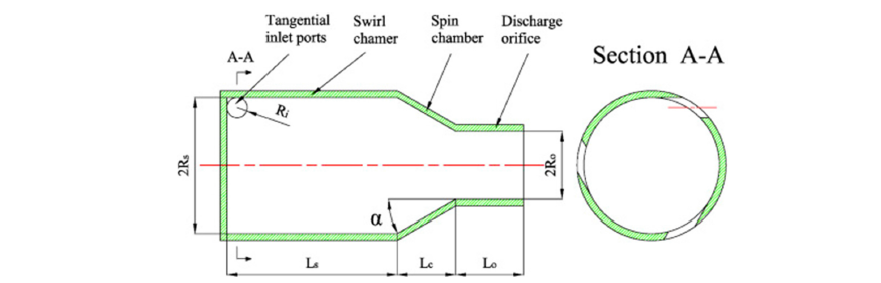
Figure 2:Pressure swirl atomizer spray at different inlet pressures [15].
Objectives and significance
The primary objective of this review is to analyse current literature on the effects of orifice geometry on pressure swirl atomizer spray characteristics. Emphasis is placed on understanding how variations in orifice shape, size and geometric ratios influence spray cone angle, droplet size, velocity and atomization quality. This focus is crucial because precise orifice design directly impacts spray efficiency, combustion performance and environmental emissions. Conducting such a study is vital for advancing atomizer technology, enabling engineers and researchers to design more efficient, reliable and application-specific spray systems. Improved understanding of orifice effects can lead to better control of spray parameters, reduction in fuel consumption and minimized pollutant formation. Moreover, insights from this review can guide manufacturing tolerances and quality control in nozzle production, ensuring consistent performance.
Effect of Orifice Diameter and Shape on Spray Characteristics
Cui et al. [16] reported that nozzle geometry has a significant influence on both air-core formation and spray characteristics. Their experiments showed that smaller cylindrical nozzles tend to suppress the development of the air-core and under low-pressure conditions they produce a slightly higher Sauter Mean Diameter (SMD) than other configurations, indicating somewhat coarser atomization. Among the nozzle types examined, convergent nozzles performed the worst, as they negatively affected both air-core stability and the overall atomization process. Divergent nozzles showed comparatively better atomization behaviour at low pressure; however, this advantage was offset by their very low discharge coefficients (Cd), which implies reduced flow efficiency. In contrast, inclined nozzles had an unfavourable impact on spray quality, leading to poorer SMD, lower Cd and a less uniform atomizing region. Overall, the findings suggest that nozzle shape can strongly affect the balance between atomization quality, flow efficiency and spray uniformity. Zheng et al. [17] reported that increasing orifice diameter results in a broader spray cone angle and larger SMD. Specifically, their experiments indicated that a 900μm orifice produced a 30-40% higher flow rate than a 700μm orifice, with an associated increase in droplet size by approximately 8.5%. This relationship underscores that larger orifices tend to generate coarser sprays, which might be undesirable in applications requiring fine atomization.
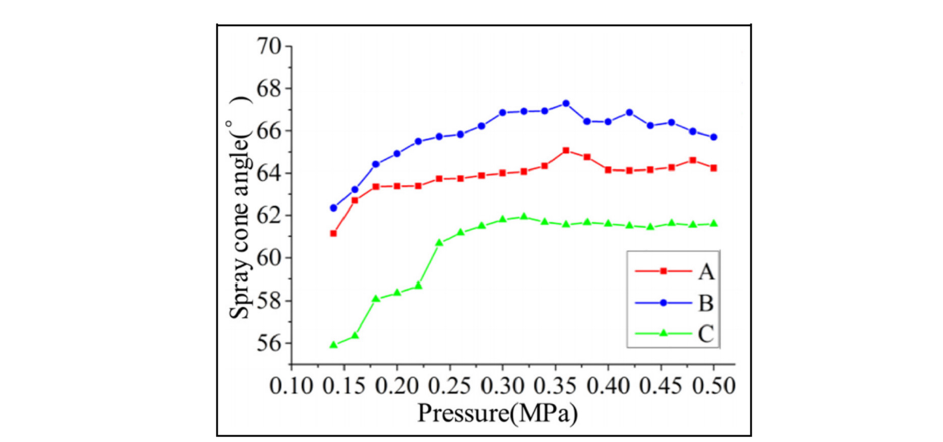
Table 1 & Figure 3, 4 and 5 are some of the key results of their study and examines how pressure affects spray characteristics of nozzles A, B and C. As pressure increases from 0.08 to 0.32MPa, the Sauter Mean Diameter (SMD) significantly decreases due to stronger swirling flow, thinner liquid films and enhanced interaction with ambient air. Beyond 0.32MPa, droplet size stabilizes, indicating a balance in the breakup mechanism. Spray cone angle grows with pressure as surface tension is overcome, but reaches a stable value after a critical pressure (0.325MPa for A, 0.3MPa for B and 0.275MPa for C). Nozzle B demonstrates superior spray expansion due to its larger diameter and stronger swirl. Flow rate increases proportionally with pressure for all nozzles, with nozzle B showing the highest flow performance, confirming that larger orifice diameters improve flow capacity and spray characteristics.
Table 1:Size parameters of nozzle shell [17].
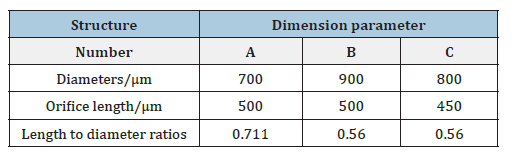
Figure 3:Curves of pressure versus flow rate [17].
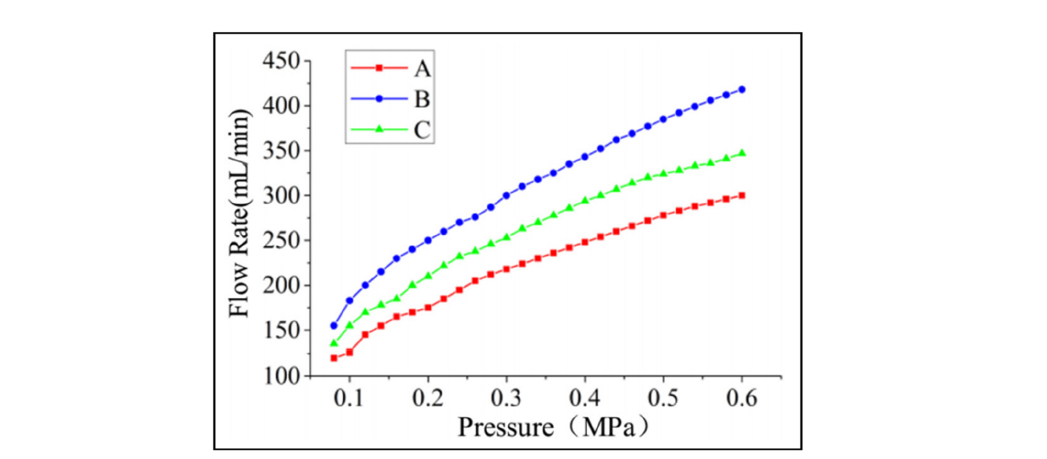
Figure 4:Curves of pressure versus SMD [17].
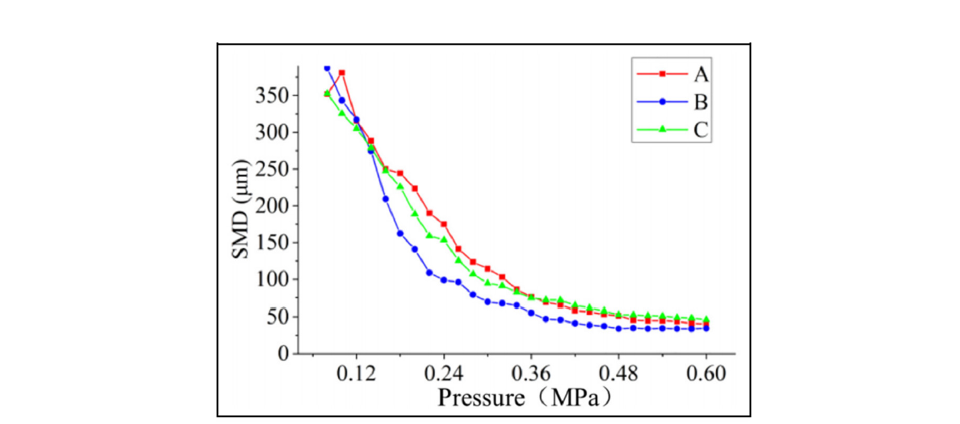
Figure 5:Curves of pressure versus spray cone angle [17].
The Broniarz-Press et al. [18] results showed that profiled and conical orifice atomizers generate the finest sprays, producing the smallest droplet diameters among the configurations tested, whereas plain orifice atomizers yield the largest droplets, indicating less effective atomization. An examination of the interfacial surface area created during atomization further confirmed that profiled and conical orifices significantly enhance the breakup process, leading to more efficient liquid-air interaction compared with plain orifices. In addition, the study proposed a correlation for the Sauter Mean Diameter (SMD) expressed as a function of the Reynolds number and the ratio of orifice length to diameter, providing a useful predictive tool for estimating spray characteristics under varying flow conditions and geometrical parameters. The work is closely associated with agricultural water management and the experimental data are particularly valuable for the design and optimization of atomizers used in agricultural applications, including irrigation, pesticide application and crop protection, where droplet size and spray uniformity play a critical role in efficiency and effectiveness. In general, the Chen et al. [19] findings indicate that as the orifice length-to-diameter ratio (lo/do) increases, the average droplet size in the spray also increases, while the spray cone angle becomes narrower. This suggests that a longer or more restrictive discharge passage tends to produce a course, less widely dispersed spray. The study also shows that the most even circumferential distribution of liquid occurs when (lo/do) =2, which appears to be the optimal geometry for spray uniformity. If the ratio is made either greater than or less than this value, the liquid distribution around the spray perimeter becomes less uniform, reducing overall spray quality. Importantly, the influence of (lo/do) on spray behaviour is essentially the same whether the ratio is changed by increasing the orifice length (lo) or by changing the orifice diameter (do). In other words, it is the ratio itself-not the specific way it is achieved-that primarily governs the resulting spray characteristics. Furthermore, the internal flow visualization by Jiwen Cui et al. [16] revealed that orifice geometries with inclined or divergent profiles influence the development of the air core and vortex structures, which directly impact atomization quality. Divergent nozzles tend to enhance air-core development at low pressures, promoting finer sprays, whereas convergent orifices may hinder vaporization and produce larger droplets. The internal orifice shape’s influence extends to flow stability and uniformity. Maly et al. [20] demonstrated that spill-return orifices with specific geometries could control spray flow rates and droplet sizes effectively, although their effects are highly sensitive to geometric deviations and manufacturing tolerances.
Geometric Ratios and Their Impact
The ratios of geometric parameters-such as length-to-diameter (L/d), orifice diameter to swirl chamber diameter (d_s/d_o) and orifice length to orifice diameter (L_o/d_o)-are critical in defining internal flow regimes and spray performance. Khani Aminjan et al. [21,22] studied various ratios and found that increasing the lengthto- orifice diameter ratio (L_o/d_o) generally leads to larger droplet sizes and narrower spray cones due to increased flow resistance and enhanced vortex formation. Rashed et al. [23] reported that optimal geometric ratios exist for achieving the best atomization quality. For example, an orifice length/diameter ratio (L_o/d_o) around 3.75 minimizes SMD while maintaining an adequate spray cone angle. Deviations from these optimal ratios result in less desirable spray features, such as increased droplet size or uneven spray distribution. Gad HM et al. [24] Experimental data suggest that increasing the ratio of the swirl chamber length to its diameter (L_s/D_s) enhances vortex development, improving atomization, but excessive ratios can cause flow instability. The ratio of the orifice diameter to the swirl chamber diameter (D_s/Do) influences swirling intensity; smaller ratios typically produce stronger swirl and finer droplets, but at the expense of increased pressure drop.
Influence of Orifice Profile and Internal Geometry
The internal profile of the orifice, including conical, profiled, or spiral paths, dramatically affects flow development. Huilong Zheng et al. [17] indicated that conical and profiled orifices facilitate better atomization owing to smoother flow transitions and enhanced vortex formation. These shapes promote more uniform droplet sizes and broader spray angles. In contrast, flat or plain orifices tend to produce less efficient atomization, with larger droplets and narrower spray cones. The internal geometry’s influence extends to flow stability, with optimized profiles reducing flow pulsations and improving spray uniformity.
Furthermore, the incorporation of spiral paths or tangential inputs modifies the flow development, as shown by Khani Aminjan et al. [21,22]. Increasing spiral path turns or the length of the swirl chamber enhances swirling strength, leading to finer droplets and wider spray cones although with increased pressure losses.
Experimental and Numerical Methodologies
Simulation methods, Computational Fluid Dynamics (CFD) and coding play a crucial role in modern engineering industries [25-28]. In aerospace, they are used to predict aerodynamic performance, optimize wing and fuselage designs and analyse high-speed compressible flows. In gas turbines and power plants, CFD helps improve combustion efficiency, thermal management, blade cooling and overall performance while reducing emissions. In broader aerodynamics and optimization problems, numerical simulations enable rapid design iterations, parametric studies and cost-effective virtual testing [29-35]. Advanced coding skills allow engineers to develop custom solvers and automate complex analyses. Nevertheless, experimental methods [36-40] remain as essential as ever for validation, calibration and ensuring real-world reliability and safety. The reviewed studies employ a variety of advanced techniques, including Phase Doppler Anemometry, laser diffraction, high-speed photography and fibre-probe measurements to capture detailed spray characteristics and internal flow dynamics. Computational Fluid Dynamics (CFD) simulations complement experimental data by visualizing internal swirl patterns and breakup mechanisms, enabling deeper understanding of the influence of orifice geometry.
Conclusion
The body of research unequivocally demonstrates that orifice geometry-comprising shape, size and internal profile-has a profound impact on the spray characteristics produced by pressure swirl atomizers. Larger orifice diameters tend to produce coarser sprays with larger droplets and narrower cone angles, while smaller diameters Favor finer atomization but may require higher pressures. The shape of the orifice-conical, profiled, or plain-affects internal vortex formation, flow stability and spray uniformity, with conical and profiled geometries generally yielding better atomization efficiency. Geometric ratios such as L_o/d_o, L_s/D_s and D_s/Do serve as critical design parameters that influence swirling strength, flow resistance and droplet size distribution. Optimizing these ratios can markedly improve spray quality, uniformity and atomization efficiency. Internal profiles like spiral paths and inclined orifices introduce additional control over flow development, further refining spray characteristics. Understanding these effects allows for targeted design of pressure swirl atomizers tailored to specific industrial applications. Fine-tuning orifice geometry can enhance combustion efficiency, reduce emissions, improve crop coverage and optimize spray processes across diverse sectors. Future research should focus on integrating computational modelling with experimental validation to develop predictive tools that streamline orifice design, accounting for manufacturing tolerances and operational conditions. In summary, the influence of orifice geometry on pressure swirl atomizer spray characteristics is both significant and complex. Precise control and optimization of orifice shape, size and internal features are essential for advancing atomizer technology, ensuring efficient, reliable and applicationspecific spray performance. Continued investigation into these parameters will facilitate the development of next-generation atomizers with superior spray quality, energy efficiency and environmental compatibility.
References
- Lefebvre, Arthur H, Vincent G, McDonell (2017) Atomization and sprays. CRC press, USA.
- Aminjan, Kiumars Khani (2023) Comment on DPM-LES investigation on flow field dynamic and acoustic characteristics of a twin-fluid nozzle by multi-field coupling method. International Journal of Heat and Mass Transfer 217(2023): 124678.
- Sazhin, Sergei S (2022) Droplets and sprays: Simple models of complex processes. Cham, Switzerland.
- Doustdar, Mohammad Mehdi, Houman Alipour, Maryam Aliakbari (2022) Estimating spray characteristics of the air-blast atomizer of a typical jet engine using definition of the new non-dimensional number K: Numerical and experimental study. Tehnički vjesnik 29(1): 208-214.
- Khani Aminjan, Kiumars (2023) Study on duplex air-blast atomizers spray in the engine real operation conditions. Physics of Fluids 35(7): 3326.
- Kamranpey Ali (2026) A review of studies conducted on pressure swirl atomizer (PSA). Evolutions in Mechanical Engineering 6(4): 1-6.
- Durdina Lukas, Jan Jedelsky, Miroslav Jicha (2012) Spray structure of a pressure-swirl atomizer for combustion applications. EPJ Web of Conferences 25.
- Kamranpey Ali (2021) Review on main equations for measuring spray properties in centrifugal injectors. Journal of Industrial Safety Engineering 8(3): 17-23.
- Khani Aminjan Kiumars, Davood Domiri Ganji (2025) Experimental and numerical study on inlet pressure and reynolds number in tangential input pressure-swirl atomizer. Arabian Journal for Science and Engineering 51: 2329-2348.
- Laryea Gabriel Nii, Soo Young (2003) Development of electrostatic pressure-swirl nozzle for agricultural applications. Journal of Electrostatics 57(2): 129-142.
- Ghazafi Shahrzad Mozafari (2022) Study on the evolution of drone engine and the future of drone propulsion. International Journal of IC Engines and Gas Turbines 8(1): 10-19.
- Dikshit SB, Kulshreshtha DB, Channiwala SA (2017) Numerical simulation of pressure swirl atomizer for small scale gas turbine combustion chamber.
- Khavkin Yuriy I (2003) Theory and practice of swirl atomizers. CRC Press, USA.
- Liu Zhilin, Yong Huang, Lei Sun (2017) Studies on air core size in a simplex pressure-swirl atomizer. International Journal of Hydrogen Energy 42(29): 18649-18657.
- Fan Xiongjie (2020) Experimental investigations of spray characteristics of a pressure-swirl atomizer. Proceedings of the Institution of Mechanical Engineers, Part A: Journal of Power and Energy 234(5): 643-654.
- Cui Jiwen (2017) Visualization of internal flow and the effect of orifice geometry on the characteristics of spray and flow field in pressure-swirl atomizers. Applied Thermal Engineering 127: 812-822.
- Huilong Zheng, Zhaomiao Liu, Kaifeng Wang, Jiayuan Lin, Zexuan Li, et al. (2020) Influence of orifice geometry on atomization characteristics of pressure swirl atomizer. Science Progress 103(3): 0036850420950182.
- Broniarz Press L, Włodarczak S, Matuszak M, Ochowiak M, Idziak R et al. (2016) The effect of orifice shape and the injection pressure on enhancement of the atomization process for pressure-swirl atomizers. Crop Protection 82: 65-74.
- Chen SK, Lefebvre AH, Rollbuhler J (1990) Influence of geometric features on the performance of pressure-swirl atomizers. 112(4): 579-584.
- Maly M, Sapik M, Cejpek O, Wigley G, Katolicky J, et al. (2019) Effect of spill orifice geometry on spray and control characteristics of spill-return pressure-swirl atomizers. Experimental Thermal and Fluid Science 106: 159-170.
- Kiumars Khani Aminjan, Balaram Kundu, Ganji DD (2020) Study of pressure swirl atomizer with tangential input at design point and outside of design point. Physics of Fluids 32(12).
- Kiumars Khani Aminjan, Milad Heidari, Ganji DD, Maryam Aliakbari, Fatemeh Salehi, et al. (2021) Study of pressure-swirl atomizer with spiral path at design point and outside of design point. Physics of Fluids 33(9).
- Muhammad Rashad, Huang Yong, Zheng Zekun (2016) Effect of geometric parameters on spray characteristics of pressure swirl atomizers. International Journal of Hydrogen Energy 41(35): 15790-15799.
- Gad HM, Baraya EA, Farag TM, Ibrahim IA (2022) Effect of geometric parameters on spray characteristics of air assisted pressure swirl atomizer. Alexandria Engineering Journal 61(7): 5557-5571.
- Hamid Parhrizkar, Kiumars K Aminjan, Mohammad M Doustdar, Ahad Heydari (2019) Optimization of S-shaped air intake by computational fluid dynamics. International Journal of Fluid Mechanics & Thermal Sciences 5(2): 36-42.
- Zhaoliang Zang, Shi Xiang, Kiumars Khani Aminjan, Samira Marami Milani, Antonio Zuorro, et al. (2025) Numerical investigation of interaction between internal mixing air and spray of three kinds of fluids. Thermal Science 30(1): 629-641.
- Ghazafi Shahrzad Mozafari (2023) A review on gas turbines derived from aero engines. International Journal of Thermal Energy and Applications 8(2).
- Gao Ruiwen (2025) High-bypass ratio, separate-exhaust turbofan engine: Study on flight Mach number and inlet temperature. Journal of the Chinese Society of Mechanical Engineers 46(2): 185-193.
- Zarepour Gholamreza, Kiumars Khani Aminjan (2018) Modeling the thrust and specific fuel consumption for a hypothetical turbofan engine. International Journal of IC Engines and Gas Turbines 4(1): 1-10.
- Mahmoodi Mostafa, Kiumars Khani Aminjan (2017) Numerical simulation of flow through Sukhoi 24 air inlet. Computational Research Progress in Applied Science & Engineering 3(1): 35-41.
- Aminjan Kiumars Khani (2018) A Review on the change process and the evolution of aircraft engine air intake. International Journal of Mechanics and Design 4(1): 15-22.
- Aminjan Kiumars Khani (2021) Design and simulation of radial flow turbine impeller and investigation thermodynamic properties of flow in LE and TE. TEM Journal 10(2): 975‐980.
- Kiumars Khani Aminjan, Pooyan Rahmanivahid, Milad Heidari (2020) Aerodynamic analysis of double wedge air foil 16.5%@ 50% in different angle of attack at supersonic flow. Solid State Technology 63(6).
- Kamranpey Ali (2022) A study on effects of mass flow rate and compressor pressure ratio on gas turbine cycle performance. International Journal of IC Engines and Gas Turbines 8(2): 1-0p7.
- Kamranpay Ali, Alireza Mehrabadi (2019) Numerical analysis of NACA Air foil 0012 at different attack angles and obtaining its aerodynamic coefficients. Journal of Mechatronics and Automation 6(3): 8-16.
- Brown David AR (2003) Experimental methods. Handbook of industrial mixing: Science and practice 1: 145-256.
- Charness Gary, Uri Gneezy, Michael A Kuhn (2012) Experimental methods: Between-subject and within-subject design. Journal of Economic Behavior & Organization 81(8): 1-8.
- Belhadef Abdelhak (2012) Pressure-swirl atomization: Modeling and experimental approaches. International Journal of Multiphase Flow 39: 13-20.
- Kiumars Khani Aminjan, Wayne Strasser, Samira Marami Milani, Manolis Gavaises, Antonio Zuorro, et al. (2026) Experimental investigation on spray morphology in dual pitch spiral nozzle. Scientific Reports (2026).
- Chia Chien Chu, Shyan Fu Chou, Heng I Lin, Yi-Hai Liann (2008) An experimental investigation of swirl atomizer sprays. Heat and Mass Transfer 45: 11-22.
© 2026 Ali Kamranpey. This is an open access article distributed under the terms of the Creative Commons Attribution License , which permits unrestricted use, distribution, and build upon your work non-commercially.
Editor In Chief







.jpg)































Signup for Newsletter

Quick Links
 Editorial Board Registrations
 Submit your Article
 Best Paper of the Volume
 Reprints
 Refer a Friend
 Advertise With Us
Our Recent Edition

.jpg)



Top Editors




.jpg)

















.bmp)
.jpg)
.png)
.jpg)













.jpg)






.png)

.png)




.png)




Financial Support

Sponsors

Latest e-Books

Latest Video

 a Creative Commons Attribution 4.0 International License. Based on a work at www.crimsonpublishers.com.
Best viewed in
a Creative Commons Attribution 4.0 International License. Based on a work at www.crimsonpublishers.com.
Best viewed in 
 | Above IE 9.0 version