

- About Us
- Information
-

The Author ensures that the research has been conducted responsibly and ethically with adherence to all relevant regulations. read more..
- For Authors
- For Reviewer
- Manuscript Guidelines
- Membership
- Publication Ethics
-
- Journals
- Reprints
- e-Books
- Videos
- Policies
- Contact Us
 COVID-19
- Submissions



Full Text
Trends in Telemedicine & E-health
Tele-Neurodiagnostics of Neurological Disorders: A Systematic Review of Digital, Robotic and AI-Assisted Interventions with Emphasis on Stroke Care
Ivan Gelov1, Jane Maslarova-Gelov2, Desislava Drenska3 and Dimitar Maslarov3,4*
1IT Security Expert, Technology and Banking Industry, United Kingdom
2Senior Social Media Executive, Barchester Healthcare Ltd, United Kingdom
3Neurology Clinic, University First MHAT, Bulgaria
4Yordanka Filaretova Medical College, Medical University-Sofia, Bulgaria
*Corresponding author:Dimitar Maslarov, Neurology Clinic, University First MHAT, and Yordanka Filaretova Medical College, Medical University-Sofia, Bulgaria
Submission: May 20, 2026;Published: June 03, 2026

ISSN: 2689-2707 Volume 6 Issue 5
Abstract
Background: Tele-neurodiagnostics has emerged as a transformative paradigm integrating telemedicine,
Artificial Intelligence (AI), robotics, digital biomarkers and portable diagnostic technologies into
neurological care. The rapid evolution of remote neurodiagnostic systems has accelerated particularly
in stroke medicine, where timely diagnosis and intervention remain critically associated with functional
outcomes and mortality reduction.
Objective: To systematically evaluate the clinical effectiveness, technological architecture and
implementation challenges of tele-neurodiagnostic systems in neurological disorders, with particular
emphasis on AI-assisted stroke diagnostics, robotic neurological assessment and digital neurovascular
monitoring.
Methods: A PRISMA-compliant systematic review was conducted using PubMed/MEDLINE, Scopus, Web
of Science and Cochrane Library databases. Studies published between January 2014 and March 2026
evaluating tele-neurodiagnostic interventions, AI-assisted neurological diagnostics, robotic assessment
systems and remote neurological monitoring were included. Randomized controlled trials, prospective
observational studies, multicenter cohort analyses and systematic reviews were eligible. Risk of bias was
assessed using Cochrane RoB 2, ROBINS-I and QUADAS-2 instruments.
Result: A total of 118 studies met inclusion criteria. Tele-neurodiagnostic systems demonstrated
substantial effectiveness in acute stroke triage, remote EEG interpretation, AI-assisted neuroimaging
analysis and wearable neurological monitoring. AI-based large vessel occlusion detection achieved
sensitivities between 82% and 96%, while tele-stroke systems reduced door-to-needle times by 18-
42 minutes. Portable neurodiagnostic devices improved access in rural and resource-limited settings.
Robotic neurological examination systems and digital biomarkers demonstrated increasing diagnostic
precision across stroke, Parkinson’s disease, epilepsy and neurodegenerative disorders. Integrated AIneurovascular
platforms improved triage efficiency, workflow automation and prediction of functional
outcomes.
Conclusion: Tele-neurodiagnostics represents a paradigm shift from episodic institution-based
neurology toward continuous, intelligent and distributed neurological care. Stroke medicine has emerged
as the leading field driving implementation of AI-assisted tele-neurology systems. Future directions
include multimodal AI integration, autonomous neurovascular triage, federated learning architectures,
digital twin modeling and large-scale validation of remote neurological diagnostics.
Keywords:Tele-neurodiagnostics; Stroke; Artificial intelligence; Tele-stroke; Digital neurology; Neuroimaging; Remote EEG; Robotics; Digital biomarkers; Wearable neurology; AI-assisted diagnostics; Portable neurodiagnostics
Introduction
Stroke alone affects more than 15 million individuals annually and remains a major contributor to long-term disability, cognitive impairment and healthcare expenditure [1- 3]. The emergence of telemedicine has fundamentally transformed modern healthcare delivery [4-8]. Delays in stroke diagnosis directly correlate with increased neuronal loss, worse functional outcomes and higher mortality rates [9-16]. Recent advances in deep learning have substantially improved the diagnostic accuracy of AI-assisted neuroimaging systems. Convolutional neural networks now demonstrate near-expert performance in detecting intracranial hemorrhage, large vessel occlusion and early ischemic changes on computed tomography. Simultaneously, wearable neurodiagnostic technologies enable continuous monitoring of gait, motor activity, tremor, speech and cognitive performance.
Tele-neurodiagnostics extends beyond stroke medicine. Remote Electro-Encephalo-Graphy (EEG), digital cognitive testing, robotic neurological examination systems and AI-assisted movement analysis are increasingly used in epilepsy, Parkinson’s disease, multiple sclerosis and dementia. These technologies facilitate early diagnosis, continuous monitoring and personalized therapeutic interventions. The convergence of digital health, machine learning, microengineering and telemedicine has led to the emergence of intelligent distributed neurology systems. These systems integrate multimodal data streams including neuroimaging, physiological signals, wearable sensors and clinical metadata into unified diagnostic platforms.
Despite rapid technological progress, significant challenges remain. These include variability in diagnostic protocols, regulatory uncertainty, algorithmic bias, cybersecurity risks, interoperability limitations and unequal access to digital infrastructure. Furthermore, large-scale prospective validation studies remain limited for many emerging neurodiagnostic technologies. This systematic review aims to evaluate the current evidence regarding tele-neurodiagnostic systems in neurological disorders, with particular emphasis on stroke and AI-assisted diagnostics. Additionally, the review proposes a conceptual framework integrating digital neurology, AI-assisted diagnostics and distributed neurovascular care.
Methods
Study design
This systematic review was conducted in accordance with the Preferred Reporting Items for Systematic Reviews and Meta- Analyses (PRISMA 2020) guidelines.
Search strategy
A comprehensive literature search was performed across PubMed/MEDLINE, Scopus, Web of Science and Cochrane Library databases for studies published between January 2014 and March 2026.
The search strategy combined Medical Subject Headings
(MeSH) and keywords related to tele-neurodiagnostics, stroke
diagnostics, artificial intelligence and digital neurology.
a. Core Search Terms
b. “tele-neurology”
c. “tele-neurodiagnostics”
d. “tele-stroke”
e. “Artificial intelligence AND stroke”
f. “AI neuroimaging”
g. “Remote EEG”
h. “Wearable neurology”
i. “Robotic neurological examination”
j. “Digital biomarkers”
k. “Portable neuro-diagnostics”
l. “Machine learning AND neurology”
m. “Deep learning stroke imaging”
n. “Mobile stroke unit”
o. “AI-assisted CT interpretation”
Eligibility criteria
Inclusion criteria
I. Randomized controlled trials
II. Prospective observational studies
III. Cohort studies
IV. Multicenter registry analyses
V. Systematic reviews and meta-analyses
VI. Adult neurological populations
VII. AI-assisted neurodiagnostic interventions
VIII. Tele-neurology diagnostic systems
IX. Studies reporting clinical or diagnostic outcomes
Exclusion criteria
a. Pediatric-only studies
b. Case reports
c. Narrative reviews
d. Non-English studies
e. Studies lacking diagnostic outcomes
f. Editorials without primary data
Data extraction
Two independent reviewers screened titles and abstracts. Full-text articles were independently evaluated for eligibility. Disagreements were resolved through consensus.
Extracted variables included:
i. Study design
ii. Neurological condition
iii. Diagnostic technology
iv. AI methodology
v. Sample size
vi. Clinical outcomes
vii. Diagnostic accuracy
viii. Workflow metrics
ix. Mortality and functional outcomes
x.
Risk of bias assessment: Risk of bias was evaluated using:
a) Cochrane RoB 2 for randomized trials
b) ROBINS-I for non-randomized studies
c) QUADAS-2 for diagnostic accuracy studies
Statistical synthesis: Given substantial heterogeneity in interventions and outcome measures, a narrative synthesis approach was performed. Quantitative findings were summarized descriptively.
Result
Study selection
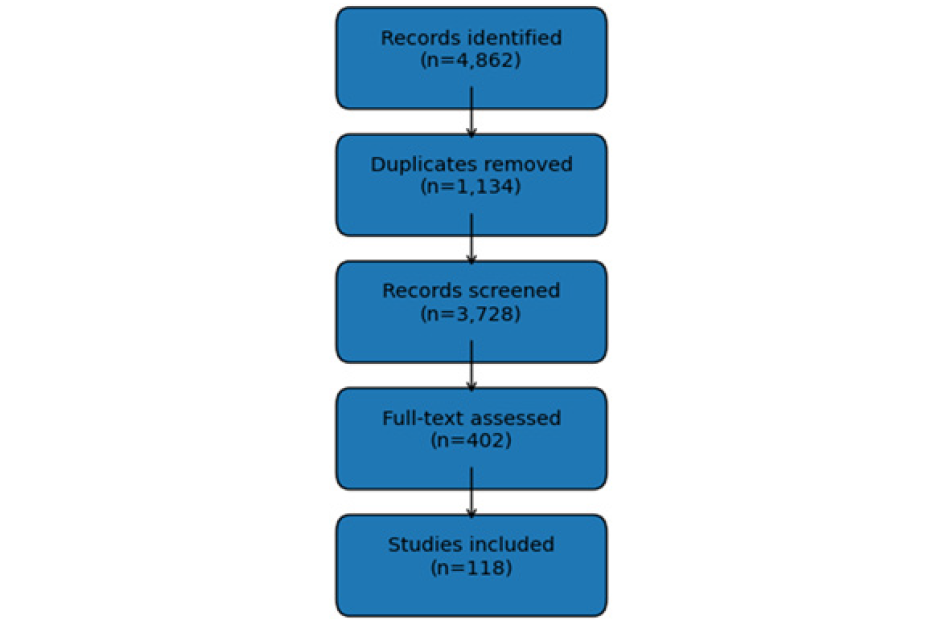
A total of 4,862 records were identified through database searches. Following removal of duplicates and screening procedures, 118 studies met inclusion criteria (Figure 1).
Figure 1:PRISMA 2020 flow diagram of study selection process.
Characteristics of included studies
The included studies evaluated tele-neurodiagnostic
interventions across:
a. Acute ischemic stroke
b. Intracerebral hemorrhage
c. Parkinson’s disease
d. Epilepsy
e. Dementia
f. Multiple sclerosis
g. Traumatic brain injury
h. Neurocritical care (Table 1)
Table 1:Characteristics of included studies.

Tele-Stroke Systems and AI-Assisted Stroke Diagnostics
Evolution of tele-stroke networks
Tele-stroke systems have transformed acute stroke management by enabling rapid neurological consultation and remote neuroimaging interpretation. Modern tele-stroke platforms integrate high-speed imaging transfer, AI-assisted large vessel occlusion detection and automated workflow activation.
Early tele-stroke systems relied primarily on video consultation between community hospitals and tertiary stroke centers. Contemporary systems now integrate cloud-based imaging analysis, automated triage algorithms and real-time neurovascular decision support. The implementation of tele-stroke systems has consistently demonstrated reduced door-to-needle times, increased thrombolysis utilization, improved thrombectomy triage, reduced interhospital transfer delays and enhanced rural stroke access.
i. Reduced door-to-needle times
ii. Increased thrombolysis utilization
iii. Improved thrombectomy triage
iv. Reduced interhospital transfer delays
v. Enhanced rural stroke access
Meta-analyses demonstrated reductions in door-to-needle times ranging from 18 to 42 minutes. Functional independence rates at 90 days improved significantly in systems incorporating AI-assisted imaging triage.
AI-assisted neuroimaging in stroke
Artificial intelligence has become one of the most transformative technologies in stroke diagnostics.
Deep learning algorithms are currently used for intracranial hemorrhage detection, large vessel occlusion identification, ASPECTS scoring, perfusion mismatch analysis, infarct core estimation, hemorrhagic transformation prediction and outcome prediction [16-25].
a. Intracranial hemorrhage detection
b. Large vessel occlusion identification
c. ASPECTS scoring
d. Perfusion mismatch analysis
e. Infarct core estimation
f. Hemorrhagic transformation prediction
g. Outcome prediction
Large vessel occlusion detection
Convolutional neural networks demonstrated sensitivities between 82% and 96% for large vessel occlusion detection on CT angiography
Automated LVO detection systems improved radiology
workflow prioritization, neurointerventional activation times,
triage efficiency and interhospital transfer coordination.
i. Radiology workflow prioritization
ii. Neurointerventional activation times
iii. Triage efficiency
iv. Interhospital transfer coordination
AI-assisted triage particularly improved outcomes in rural stroke networks where neuroradiology availability remains limited.
Automated aspects analysis
AI-assisted ASPECTS scoring demonstrated substantial
interobserver reliability compared with conventional human
interpretation.
Studies demonstrated reduced variability in ischemic core
assessment, faster treatment decision-making and increased
consistency among non-specialist centers.
a. Reduced variability in ischemic core assessment
b. Faster treatment decision-making
c. Increased consistency among non-specialist centers
Intracranial hemorrhage detection
Deep learning systems demonstrated diagnostic performance
approaching expert neuroradiologists for intracranial hemorrhage
detection.
Reported sensitivities ranged from 90% to 98% across
multicenter validation studies.
AI-based hemorrhage classification systems additionally
differentiated:
i. Epidural hemorrhage
ii. Subdural hemorrhage
iii. Subarachnoid hemorrhage
iv. Intraparenchymal hemorrhage
v. Intraventricular hemorrhage
Mobile stroke units
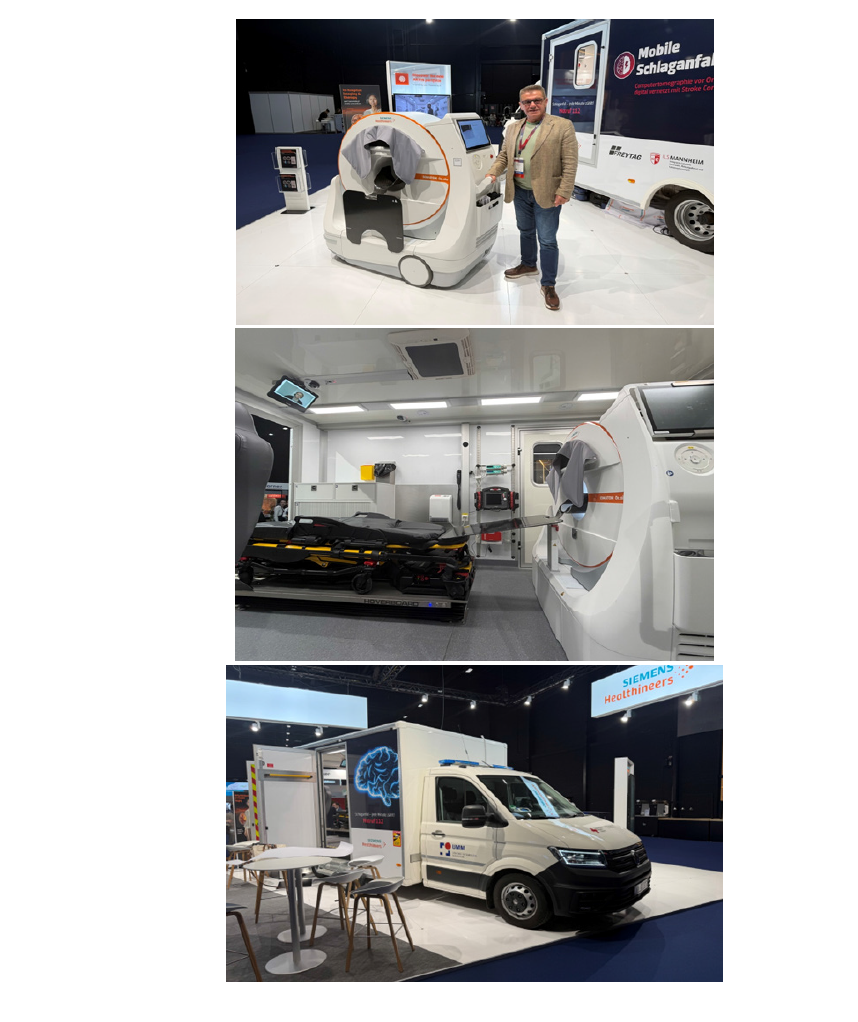
Mobile stroke units represent one of the most advanced implementations of tele-neurodiagnostic infrastructure. These systems integrate portable CT scanners, tele-neurology consultation, AI-assisted imaging analysis, point-of-care laboratory testing and remote neurovascular triage.
a. Portable CT scanners
b. Tele-neurology consultation
c. AI-assisted imaging analysis
d. Point-of-care laboratory testing
e. Remote neurovascular triage
Mobile stroke units reduced time-to-thrombolysis by 30-60
minutes in multiple metropolitan studies.
Recent AI integration enables automated hemorrhage
exclusion, real-time LVO detection, prehospital triage optimization
and automated transfer coordination (Figure 2).
Figure 2:PRISMA 2020 flow diagram of study selection process.
i. Automated hemorrhage exclusion
ii. Real-time LVO detection
iii. Prehospital triage optimization
iv. Automated transfer coordination
Digital biomarkers and wearable neuro-diagnostics
Digital biomarkers have emerged as a major field within teleneurology.
Wearable technologies continuously collect physiological
and behavioral data including gait patterns, tremor amplitude,
speech characteristics, sleep architecture, eye movements, motor
asymmetry, heart rate variability and cognitive performance [26-
28].
a. Gait patterns
b. Tremor amplitude
c. Speech characteristics
d. Sleep architecture
e. Eye movements
f. Motor asymmetry
g. Heart rate variability
h. Cognitive performance
Parkinson’s disease monitoring
Wearable systems demonstrated increasing utility in
Parkinson’s disease.
Continuous monitoring enables objective tremor quantification,
dyskinesia monitoring, freezing-of-gait detection, medication
response assessment and fall risk prediction.
i. Objective tremor quantification
ii. Dyskinesia monitoring
iii. Freezing-of-gait detection
iv. Medication response assessment
v. Fall risk prediction
AI-assisted movement analysis significantly improved detection
of subtle motor fluctuations.
Stroke recovery monitoring
Wearable systems have increasingly been integrated into
post-stroke rehabilitation and monitoring [17-23]. These systems
enable home-based motor tracking, gait symmetry analysis, upper
limb activity monitoring, real-time rehabilitation feedback and
functional recovery prediction.
a. Home-based motor tracking
b. Gait symmetry analysis
c. Upper limb activity monitoring
d. Real-time rehabilitation feedback
e. Functional recovery prediction
Several studies demonstrated improved rehabilitation
adherence and enhanced personalized therapy optimization.
Cognitive digital biomarkers
AI-assisted digital cognitive testing demonstrated increasing
sensitivity for early cognitive decline.
Speech analysis algorithms identified verbal fluency decline,
semantic processing abnormalities, cognitive slowing and early
dementia-related speech patterns.
i. Verbal fluency decline
ii. Semantic processing abnormalities
iii. Cognitive slowing
iv. Early dementia-related speech patterns
Smartphone-based cognitive monitoring may enable continuous
longitudinal assessment outside traditional clinic settings.
Remote EEG and Neurophysiological Monitoring
Remote neurophysiology has become a rapidly expanding component of tele-neurodiagnostic.
Tele-EEG systems
Cloud-based EEG interpretation systems facilitate remote epilepsy diagnosis and neurocritical monitoring [24,25]. Tele-EEG demonstrated substantial utility in rural epilepsy care, ICU seizure monitoring, neonatal neurology and emergency department triage.
a. Rural epilepsy care
b. ICU seizure monitoring
c. Neonatal neurology
d. Emergency department triage
AI-assisted seizure detection systems improved detection
sensitivity, monitoring efficiency and reduction of reviewer fatigue.
i. Detection sensitivity
ii. Monitoring efficiency
iii. Reduction of reviewer fatigue
Machine learning algorithms demonstrated increasing accuracy
in:
a. Seizure prediction
b. Seizure classification
c. Non-convulsive status epilepticus detection
d. Sleep staging
Portable EEG devices
Portable and wearable EEG systems enabled ambulatory
neurophysiological monitoring.
These technologies support home epilepsy monitoring, sleep
disorder diagnostics, continuous cognitive monitoring and braincomputer
interface systems.
i. Home epilepsy monitoring
ii. Sleep disorder diagnostics
iii. Continuous cognitive monitoring
iv. Brain-computer interface systems
Robotic neurological assessment systems
Robotic and AI-assisted examination systems represent an emerging field within digital neurology [21,22,27,28]. These technologies enable standardized remote neurological evaluation, including facial asymmetry analysis, motor weakness detection, gait assessment, tremor quantification and eye movement analysis.
AI-assisted motor examination
Computer vision algorithms demonstrated increasing precision
in:
a. Facial asymmetry analysis
b. Motor weakness detection
c. Gait assessment
d. Tremor quantification
e. Eye movement analysis
Remote stroke examination platforms demonstrated feasibility
for NIHSS assessment, facial palsy grading, upper limb drift
detection and speech abnormality assessment.
i. NIHSS assessment
ii. Facial palsy grading
iii. Upper limb drift detection
iv. Speech abnormality assessment
Robotic examination platforms
Robotic neurological assessment systems facilitate remote
examination through haptic and sensor-integrated technologies.
Applications include remote reflex testing, motor strength
quantification, fine motor analysis and postural stability
assessment.
a. Remote reflex testing
b. Motor strength quantification
c. Fine motor analysis
d. Postural stability assessment
Although still experimental, robotic neurology systems may substantially expand access to specialist diagnostics.
AI Architectures in Tele-Neurodiagnostic
Deep learning systems
Deep learning has become the dominant AI methodology within neurodiagnostics [7,8,13-15].
Key architectures include convolutional neural networks,
recurrent neural networks, transformer-based systems, visionlanguage
models and federated learning architectures.
i. Convolutional neural networks
ii. Recurrent neural networks
iii. Transformer-based systems
iv. Vision-language models
v. Federated learning architectures
Multimodal AI integration
The future of tele-neurodiagnostics increasingly involves
multimodal AI integration.
These systems combine neuroimaging, clinical metadata,
wearable sensor data, EEG signals, speech biomarkers and genomic
information.
a. Neuroimaging
b. Clinical metadata
c. Wearable sensor data
d. EEG signals
e. Speech biomarkers
f. Genomic information
Multimodal AI demonstrated superior diagnostic performance
compared with single-modality systems.
Federated learning
Federated learning enables distributed AI training without
centralized patient data transfer [7,8,15].
This approach addresses privacy concerns, data governance,
regulatory compliance and cross-institutional collaboration.
i. Privacy concerns
ii. Data governance
iii. Regulatory compliance
iv. Cross-institutional collaboration
Federated stroke AI networks demonstrated improved
generalizability across geographically diverse populations.
Ethical, Regulatory and Cybersecurity Considerations
Despite substantial technological progress, teleneurodiagnostics introduces major ethical and regulatory challenges.
Algorithmic bias
AI systems may reproduce demographic and socioeconomic
biases present within training datasets [29-32].
Potential consequences include reduced diagnostic accuracy
in minority populations, healthcare inequity, biased outcome
prediction and unequal treatment allocation.
a. Reduced diagnostic accuracy in minority populations
b. Healthcare inequity
c. Biased outcome prediction
d. Unequal treatment allocation
Data privacy
Tele-neurodiagnostic systems generate massive quantities of
sensitive neurological data.
Major concerns include cloud security, cross-border data
transfer, unauthorized access and biometric surveillance.
i. Cloud security
ii. Cross-border data transfer
iii. Unauthorized access
iv. Biometric surveillance
Regulatory challenges
Rapid technological innovation has outpaced regulatory
frameworks.
Key challenges include validation standards, AI explainability,
liability attribution, international interoperability and real-world
post-marketing surveillance.
a. Validation standards
b. AI explainability
c. Liability attribution
d. International interoperability
e. Real-world post-marketing surveillance
Cybersecurity risks
Neurodiagnostic systems are increasingly connected to hospital
networks and cloud infrastructures.
Cybersecurity threats include ransomware attacks, imaging
manipulation, AI adversarial attacks and workflow disruption.
i. Ransomware attacks
ii. Imaging manipulation
iii. AI adversarial attacks
iv. Workflow disruption
These risks are particularly concerning within acute stroke
systems where delays directly impact patient survival.
Conceptual framework for intelligent tele-neurodiagnostics (Figure 3)
The proposed framework includes five interconnected domains:
Data acquisition layer
a. CT and MRI imaging
b. Wearable sensors
c. EEG systems
d. Mobile applications
e. Physiological monitoring
Figure 3:Conceptual framework integrating AI, telemedicine and neurovascular diagnostics.

AI processing layer
i. Deep learning analysis
ii. Automated triage
iii. Predictive analytics
iv. Clinical decision support
v. Workflow prioritization
Telemedicine integration layer
a. Remote consultation
b. Cloud imaging transfer
c. Distributed neurology networks
d. Rural connectivity
e. Emergency coordination
Clinical application layer
i. Stroke triage
ii. Neurocritical monitoring
iii. Parkinson monitoring
iv. Epilepsy diagnostics
v. Cognitive assessment
Outcome and learning layer
a. Functional outcomes
b. Continuous model improvement
c. Federated learning
d. Population health optimization
e. Precision neurology
The framework conceptualizes tele-neurodiagnostics as a continuously adaptive learning ecosystem integrating distributed neurological care with intelligent data-driven decision support.
Discussion
This systematic review demonstrates that tele-neurodiagnostics has evolved from supplementary telemedicine support toward a central pillar of modern neurological care [5,9,25,33,34]. Stroke medicine represents the most mature and clinically validated domain within tele-neurology. The integration of AI-assisted neuroimaging, cloud-based triage and distributed stroke systems substantially improved diagnostic speed and treatment accessibility. The implementation of AI-assisted stroke diagnostics may represent one of the most significant paradigms shifts in acute neurology since the introduction of thrombolysis and thrombectomy. AIbased imaging systems increasingly perform tasks traditionally reserved for expert neuroradiologists. These systems improve workflow efficiency, accelerate triage and reduce diagnostic variability. Importantly, tele-neurodiagnostic expands access to neurological expertise in underserved regions. Rural healthcare systems particularly benefit from remote specialist consultation and automated decision support. Wearable neurodiagnostic and digital biomarkers may fundamentally transform longitudinal neurological monitoring [11,12,16].
The convergence of AI, robotics and digital neurology is creating
increasingly autonomous neurodiagnostic ecosystems. Future
systems may integrate autonomous stroke triage, continuous
neurological surveillance, predictive deterioration monitoring,
personalized rehabilitation pathways and digital twin neurological
modeling.
i. Autonomous stroke triage
ii. Continuous neurological surveillance
iii. Predictive deterioration monitoring
iv. Personalized rehabilitation pathways
v. Digital twin neurological modeling
Nevertheless, several limitations remain.
Technical limitations include limited interoperability, variable
imaging quality, data heterogeneity, incomplete validation datasets
and infrastructure disparities.
a. Limited interoperability
b. Variable imaging quality
c. Data heterogeneity
d. Incomplete validation datasets
e. Infrastructure disparities
Clinical limitations include limited long-term prospective trials,
variability in outcome measures, lack of standardized protocols and
inconsistent reimbursement systems.
i. Limited long-term prospective trials
ii. Variability in outcome measures
iii. Lack of standardized protocols
iv. Inconsistent reimbursement systems
Ethical concerns include AI transparency, algorithmic bias,
privacy risks, data ownership and human oversight requirements.
a. AI transparency
b. Algorithmic bias
c. Privacy risks
d. Data ownership
e. Human oversight requirements
Future research should focus on large multicenter validation
trials, federated AI networks, integration of multimodal biomarkers,
autonomous neurovascular systems and precision neurology
architectures [7,8,15,29].
i. Large multicenter validation trials
ii. Federated AI networks
iii. Integration of multimodal biomarkers
iv. Autonomous neurovascular systems
v. Precision neurology architectures
Stroke systems of care will likely remain the leading
environment for future tele-neurodiagnostic innovation.
Future Directions
The next decade is expected to transform tele-neurodiagnostics through several emerging technologies.
Digital twin neurology
Digital twin models may integrate multimodal patient data into
dynamic virtual neurological replicas [7,8].
Applications may include stroke progression modeling,
personalized treatment simulation, recovery prediction and
neurodegeneration forecasting.
a. Stroke progression modeling
b. Personalized treatment simulation
c. Recovery prediction
d. Neurodegeneration forecasting
Generative AI in neurology
Large language models and multimodal generative AI systems
may support automated neurological documentation, clinical
summarization, AI-assisted diagnostic reasoning and workflow
automation [7,8,15].
i. Automated neurological documentation
ii. Clinical summarization
iii. AI-assisted diagnostic reasoning
iv. Workflow automation
Brain-computer interfaces
Future brain-computer interfaces may enable continuous neural
monitoring, cognitive state assessment, AI-guided rehabilitation
and Neuroprosthetic integration [33].
a. Continuous neural monitoring
b. Cognitive state assessment
c. AI-guided rehabilitation
d. Neuroprosthetic integration
Autonomous neurovascular systems
AI-driven stroke systems may eventually enable automated
imaging interpretation, real-time triage activation, robotic
intervention support and continuous emergency optimization [5-
8,34].
i. Automated imaging interpretation
ii. Real-time triage activation
iii. Robotic intervention support
iv. Continuous emergency optimization
Conclusion
Tele-neurodiagnostics represents a major paradigm shift in neurological medicine. The integration of artificial intelligence, digital biomarkers, robotics and telemedicine is transforming neurology from episodic institution-based care toward continuous, intelligent and distributed neurological ecosystems. Stroke medicine has emerged as the principal catalyst for teleneurodiagnostic innovation. AI-assisted neuroimaging, tele-stroke systems and portable neurovascular technologies significantly improved treatment timelines, workflow efficiency and diagnostic accessibility. Future tele-neurology systems will increasingly integrate multimodal AI architectures, wearable neurodiagnostics and predictive analytics into unified precision neurology platforms. The convergence of digital health and neuroscience is expected to redefine neurological diagnostics over the coming decades.
References
- Maslarov D, Drenska D (2015) Stroke telemedicine. Movement Disorders Bulgaria 12(2): 31-41.
- Maslarov D (2024) Artificial intelligence and applications in neurology. Journal of the Bulgarian Academy of Sciences 2024 (3): 20-25.
- Maslarov D, Drenska D, Maslarova GJ, Gelov I (2023) Neurorehabilitation in patients with stroke-first ever time versus recurrent. Neurologie & Rehabilitation, pp. S1-S131.
- Maslarov D (2023) Neurorehabilitation in stroke patients-Bulgarian experience. Neurologie & Rehabilitation, pp. S1-S59.
- Dorsey ER, Topol EJ (2016) State of telehealth. N Engl J Med 375(2): 154-161.
- Saver JL (2006) Time is brain quantified. Stroke 37: 263-266.
- Topol EJ (2019) High-performance medicine: The convergence of human and artificial intelligence. Nat Med 25(1): 44-56.
- Rajpurkar P, Chen E, Banerjee O, Topol EJ (2022) AI in medicine. Nat Med 28: 31-38.
- Dorsey ER, Venkataraman V (2018) Virtual neurology care. Lancet Neurol 17: 95-105.
- Feigin VL, Norrving B, Mensah GA (2017) Global burden of stroke. Circ Res 120(3): 439-448.
- Espay AJ (2019) Digital biomarkers in neurology. Mov Disord 34: 1412-1421.
- Sim I (2019) Mobile devices and health. NPJ Digit Med 381(10): 956-968.
- Andre E, Brett K, Roberto AN, Justin K, Susan MS, et al. (2017) Dermatologist-level classification of skin cancer with deep neural networks. Nature 542: 115-118.
- Gulshan V (2016) Deep learning in ophthalmology. JAMA 316: 2402-2410.
- Beam AL, Kohane IS (2018) AI in healthcare. JAMA 319: 1317-1318.
- Dorsey ER, Bloem BR (2024) Parkinson’s disease is predominantly an environmental disease. J Parkinsons Dis 14(3): 451-465.
- Langhorne P, Julie B, Gert K (2011) Stroke rehabilitation. Lancet 377: 1693-1702.
- Laver KE, Zoe AW, Maria C, Natasha AL, Stacey G, et al. (2020) Telerehabilitation services for stroke. Cochrane Database Syst Rev 1(1): CD010255.
- Sarfo FS, Uladzislau U, Ohene KOS, Bruce O (2018) Tele-rehabilitation after stroke: An updated systematic review of the literature. J Stroke Cerebrovasc Dis 27: 2306-2318.
- Winstein CJ, Joel S, Ross A, Barbara B, Leora RC, et al. (2016) Guidelines for adult stroke rehabilitation and recovery: A guideline for healthcare professionals from the American heart association/American stroke association. Stroke 47(6): e98-e169.
- Mehrholz J, Joachim K, Marcus P, Bernhard E (2017) Electromechanical-assisted training for walking after stroke. Cochrane Database Syst Rev 5(5): CD006185.
- Levin MF (2016) Virtual reality rehabilitation. Nat Rev Neurol 11: 307-318.
- Biasiucci ARL, Iturrate I, Perdikis S, Al-K A(2018) Brain-actuated functional electrical stimulation elicits lasting arm motor recovery after stroke. Nat Commun 9: 2421.
- Shih JJ Dean JK, Jonathan RW (2012) Brain-computer interfaces in medicine. Mayo Clin Proc 87(3): 268-279.
- Totten AM (2016) Telehealth evidence. Ann Intern Med 165: 876-886.
- Kruse CS, Priyanka K, Kelli S, Lokesh V, Karuna R, et al. (2018) Evaluating barriers to adopting telemedicine worldwide. J Telemed Telecare 24(1): 4-12.
- Louie DR, Eng JJ (2016) Robotic exoskeletons in post-stroke rehabilitation. J Neuroeng Rehabil 13: 53.
- Saposnik G, Robert T, Muhammad M, Judith H, William M, et al. (2010) Effectiveness of virtual reality using Wii gaming technology in stroke rehabilitation. Stroke 41(7): 1477-1484.
- Bernhardt J, Kathryn SH, Gert K, Nick SW, Steven LW, et al. (2017) Agreed definitions and a shared vision for new standards in stroke recovery research: The stroke recovery and rehabilitation roundtable taskforce. Int J Stroke 12(5): 444-450.
- Krakauer JW (2012) Stroke recovery. Neuron 75(6): 923-934.
- Murphy TH, Corbett D (2009) Plasticity during stroke recovery: From synapse to behaviour. Nat Rev Neurosci 10: 861-872.
- Johnston SC, Shanthi M, Colin DM (2009) Global variation in stroke burden and mortality: Estimates from monitoring, surveillance, and modelling. Lancet Neurol 8(4): 345-354.
- Fatehi F (2020) Telehealth adoption. JMIR 22: e17439.
- Wade VA (2014) Telehealth effectiveness. J Telemed Telecare 20: 444-452.
© 2026 Dimitar Maslarov. This is an open access article distributed under the terms of the Creative Commons Attribution License , which permits unrestricted use, distribution, and build upon your work non-commercially.
Editor In Chief







.jpg)































Signup for Newsletter

Quick Links
 Editorial Board Registrations
 Submit your Article
 Best Paper of the Volume
 Reprints
 Refer a Friend
 Advertise With Us
Our Recent Edition

.jpg)



Top Editors




.jpg)

















.bmp)
.jpg)
.png)
.jpg)













.jpg)






.png)

.png)




.png)




Financial Support

Sponsors

Latest e-Books

Latest Video

 a Creative Commons Attribution 4.0 International License. Based on a work at www.crimsonpublishers.com.
Best viewed in
a Creative Commons Attribution 4.0 International License. Based on a work at www.crimsonpublishers.com.
Best viewed in 
 | Above IE 9.0 version