

- About Us
- Information
-

The Author ensures that the research has been conducted responsibly and ethically with adherence to all relevant regulations. read more..
- For Authors
- For Reviewer
- Manuscript Guidelines
- Membership
- Publication Ethics
-
- Journals
- Reprints
- e-Books
- Videos
- Policies
- Contact Us
 COVID-19
- Submissions



Full Text
Trends in Telemedicine & E-health
Neurokinin 3 Receptor Antagonists (Fezolinetant) for the Treatment of Menopausal Vasomotor Symptoms: A Narrative Review
Espitia De La Hoz FJ1,2,3* and Orozco Santiago L4,5
1President of the Colombian Menopause Association (ASOMENOPAUSIA), Colombia
2Secretary of the Latin American Federation of Climateric and Menopause Societies (FLASCYM), Colombia
3Chief Scientific Officer: Hathor, Clínica Sexológica, Colombia
4Internal Medicine-Hematology, Clínica San Rafael - Clínica Central del Eje, Colombia
5Hematology, Fundación Universitaria de Ciencias de la Salud (FUCS), Colombia
*Corresponding author:Franklin José Espitia De La Hoz, President of the Colombian Menopause Association (ASOMENOPAUSIA) and Secretary of the Latin American Federation of Climateric and Menopause Societies (FLASCYM) and Chief Scientific Officer: Hathor, Clínica Sexológica, Carrera 18 # 12-75 Megacentro-Pinares, Torre 1, local 205, Colombia
Submission: March 14, 2026;Published: May 19, 2026

ISSN: 2689-2707 Volume 6 Issue 5
Summary
Introduction: In recent years, menopausal hormone therapy has fallen out of favor due to safety
concerns. As result, there is a need for effective and safe non-hormonal therapies to manage vasomotor
symptoms associated with menopause.
Objective: To evaluate the efficacy and safety of neurokinin 3 receptor antagonists for the treatment of
menopausal vasomotor symptoms.
Materials and methods: Randomized controlled trials, systematic reviews, narrative reviews, and metaanalyses
were included. Search was conducted across multiple electronic databases, including MEDLINE
via PubMed, CENTRAL, CINAHL, and the Cochrane Database of Systematic Reviews (Wiley platform),
among others, using both free-text and controlled vocabulary terms. The search covered the period from
1995 to 2026 without language restrictions.
Results: A total of 67 articles were identified, including 8 placebo-controlled clinical trials involving 6,270
participants. Women received fezolinetant, a neurokinin 3 receptor antagonist. Evidence suggests that
NK3 receptor antagonists reduce both the frequency and severity of hot flashes in menopausal women.
Conclusion: To date, NK3 receptor antagonists have demonstrated a rapid and meaningful reduction in
the frequency and severity of vasomotor symptoms, along with improvements in quality of life. These
agents represent a novel non-hormonal therapeutic alternative for menopausal symptom management.
Keywords:Menopause; Vasomotor symptoms; Therapeutics; Neurokinin-1 receptor antagonists; Efficacy; Safety
Introduction
According to the World Health Organization, most countries are experiencing significant population aging due to increased life expectancy and declining fertility rates [1]. Each year, approximately 25 million women worldwide enter menopause, and by 2030, the global population of postmenopausal women is projected to reach 1.2 billion [2]. Menopause occurs at a mean age of 51 years [3,4]. However, the menopausal transition affects approximately 1.5 million women annually and is frequently accompanied by bothersome vasomotor symptoms, such as hot flashes and sweating, as well as insomnia, fatigue, myalgia, arthralgia, vaginal dryness and decreased libido [3,5]. Hypoestrogenism resulting from the decline in ovarian function typically leads to endocrine, psychological, somatic and atrophic changes in estrogendependent tissues. These changes contribute to physiological alterations that may negatively affect quality of life in menopausal women [6,7]. The overall prevalence of menopausal symptoms ranges from 73.8% [8] to 85%, although only 10% of affected women seek medical care [9]. Symptoms are even more common during perimenopause, affecting up to 81.7% of women. The most frequently reported symptoms include fatigue (38.08%), hot flashes and sweating (33.65%) and joint pain (28.81%) [8]. The proportion of women reporting five or more symptoms increases as they progress from early to late perimenopause, including increases in hot flashes (+27%), night sweats (+17%), and vaginal dryness (+17%) [5].
Figure 1:Box trainer. Optician.
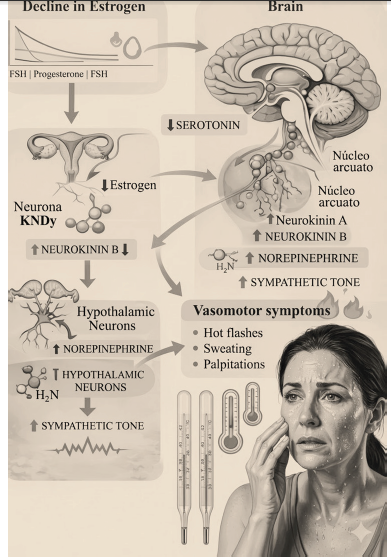
Pathophysiology of menopause symptoms.
Troublesome menopausal symptoms persist for an average of 5.2 ± 3.8 years (median 4 years), although longer durations are common. Approximately 25% of women continue to experience hot flashes more than five years after menopause [10]. A metaanalysis including 35,445 participants across 10 studies found that vasomotor symptoms increase significantly during the two years preceding the final menstrual period, peak one year afterward, and do not return to premenopausal levels until approximately eight years later. Nearly 50% of women report vasomotor symptoms within four years after their final menstrual period, and 10% continue to experience them for up to 12 years [11]. The physiology of vasomotor symptoms is not clearly elucidated; however, the most widely accepted hypothesis argues that there is a restoration and narrowing of the thermoregulatory system in association with fluctuations or loss of estrogen production; in such a way that the thermoregulatory system is altered as a consequence of the decrease in estrogen, which causes the hypothalamus (temperature control center) to become more sensitive. Upon perceiving a slight increase in temperature, the body reacts with vasodilation, which generates redness and sweating in an attempt to cool the body and dissipate heat [12]. Another hypothesis proposes that estrogen helps maintain stability within the serotonergic system, which plays a role in temperature regulation. Reduced estrogen levels may lower serotonin concentrations and alter regulation of the 5-Hydroxy-Tryptamine (5-HT2A) receptor. This decreases serotonin availability in the hypothalamus, increasing sensitivity to minor temperature fluctuations and triggering compensatory serotonin release (Figure 1). Activation of 5-HT2A receptors subsequently alters the thermoregulatory set point and produces hot flashes [13]. Regardless of the underlying mechanism, both menopausal hormone therapy and non-hormonal treatments can provide symptomatic relief [14-16].
Figure 2:Relationship between Neuro-Kinin (NK) receptors and the onset of hot flashes.
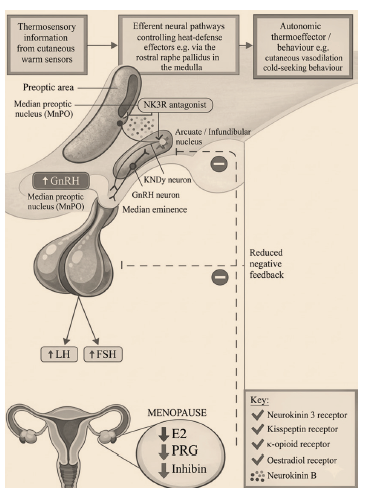
To date, menopausal hormone therapy remains the most effective treatment for menopausal symptoms, reducing the frequency and severity of hot flashes by 75% to 79% [17]. However, potential health risks may outweigh the benefits [18], leading many women to seek non-hormonal alternatives [19]. Women who cannot or choose not to use menopausal hormone therapy now have several non-hormonal options for managing vasomotor symptoms. These treatments offer meaningful symptom relief without the risks associated with hormone therapy and with minimal adverse effects [19-21]. The identification of a link between Neuro-Kinin (NK) receptors and hot flashes (Figure 2) has driven the rapid development of a new class of compounds targeting the Neuro- Kinin-3 Receptor (NK3R) and its associated pathways, moving swiftly from laboratory research into clinical application [20]. Fezolinetant is the first non-hormonal neurokinin-3 receptor antagonist approved by the U.S. Food and Drug Administration (FDA) [22]. More recently, elinzanetant has also received approval [22]. These agents have demonstrated efficacy in reducing hot flashes and represent promising non-hormonal treatment options with favorable safety profiles. Additionally, improvements in sleep outcomes have been reported [23-25] (Figure 3).
Figure 3:Fezolinetant.
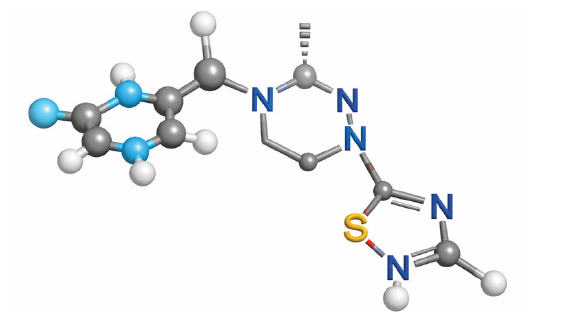
Given the need for safe and effective non-hormonal therapies to manage menopausal vasomotor symptoms, NK3R antagonists offer a novel therapeutic approach. Fezolinetant has successfully completed clinical trials demonstrating both efficacy and safety [22-25]. This review therefore aimed to evaluate the efficacy and safety of neurokinin-3 receptor antagonists for the treatment of menopausal vasomotor symptoms. These agents constitute a new class of non-hormonal therapies designed to alleviate moderate to severe vasomotor symptoms by acting on NK3 receptors in the hypothalamus. Through modulation of thermoregulatory neuronal activity, they reduce both the frequency and severity of vasomotor symptoms [26,27].
Materials and Methods
The final research question for this review was structured according to the PICOT framework (Population, Intervention, Comparison, Outcome, Time) [28] (Table 1). It was refined through consultation with three experts, who recommended focusing on women with moderate to severe vasomotor symptoms and excluding menopausal hormone therapy as a comparator, instead evaluating neurokinin-3 receptor antagonists.
Table 1:Final research question and PICOT framework.
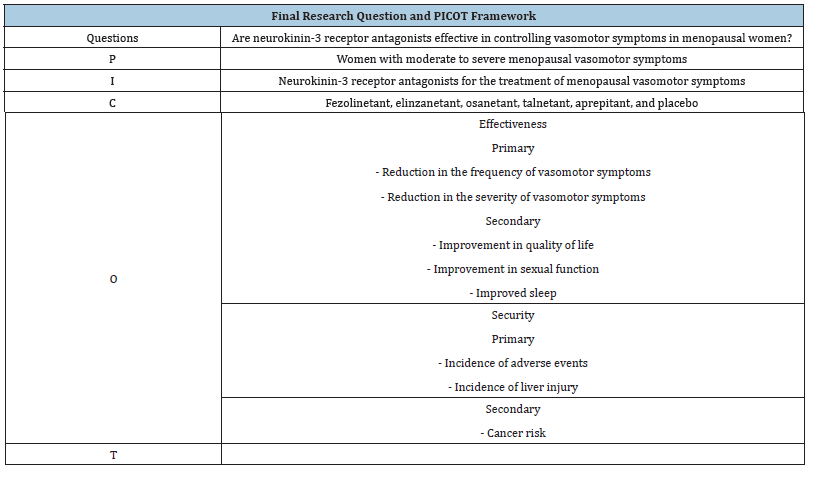
Source: Author’s own elaboration.
The following inclusion criteria were applied
Population: Studies involving menopausal women with moderate to severe vasomotor symptoms were included if full-text articles were available for evaluation. The search covered studies published between January 1, 1995, and January 31, 2026, with no language restrictions. Posters and abstracts were excluded due to insufficient methodological and outcome data, as were studies with fewer than 20 participants.
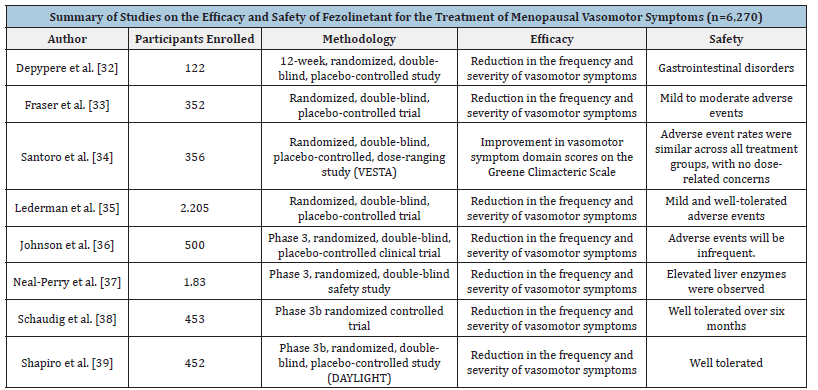
Intervention: The intervention of interest was treatment with neuro-kinin-3 receptor antagonists for moderate to severe menopausal vasomotor symptoms. Comparators included fezolinetant, elinzanetant, osanetant, talnetant, aprepitant and placebo. Primary efficacy outcomes were reductions in the frequency and severity of vasomotor symptoms. Primary safety outcomes included the incidence of liver injury and the proportion of adverse events (Table 2).
Table 2:Summary of studies on the efficacy and safety of fezolinetant for the treatment of menopausal vasomotor symptoms (n=6,270).
Source: Authors’ own elaboration.
Search strategy
A literature search was conducted using the following
databases: MEDLINE via PubMed, CENTRAL, CINAHL, the
Cochrane Database of Systematic Reviews (Wiley platform),
EMBASE (Elsevier), LILACS (Virtual Health Library-VHL, iAHx
interface), the WHO International Clinical Trials Registry Platform
(ICTRP) and ClinicalTrials.gov.
A literature search was conducted using the following
databases: MEDLINE via PubMed, CENTRAL, CINAHL, the
Cochrane Database of Systematic Reviews (Wiley platform),
EMBASE (Elsevier), LILACS (Virtual Health Library-VHL, iAHx
interface), the WHO International Clinical Trials Registry Platform
(ICTRP) and ClinicalTrials.gov. Search terms were derived from
the PICOT framework (Table 1). The first step involved identifying
terms to define the target population, followed by terms related to
the interventions of interest. Population terms were selected using
controlled vocabulary from hierarchical thesauri, including DeCS/
MeSH and Emtree. These included: “Menopause,” “Vasomotor
System” [MeSH], and “Therapeutics. “Intervention-related terms
were combined using the Boolean operator “OR” and included:
“Neurokinin-1 Receptor Antagonists,” “Efficacy,” “Safety” and
“Placebo”. Population and intervention search terms were then
combined using the Boolean operator “AND.” In addition, a manual
snowball search was conducted by reviewing the reference lists
of selected studies to identify additional publications meeting the
predefined inclusion criteria.
Reference screening and study selection: Prior to initiating
the search process, the publication selection criteria were
established and any uncertainties regarding study selection were
clarified. Reference screening was conducted independently by
three investigators (LOS, ODB, and FEU), who were blinded to each
other’s decisions. The studies selected by each reviewer were then
compared. Discrepancies in study selection were resolved through
consensus by reassessing titles and abstracts. When additional
information was required, full-text articles were obtained to
determine eligibility. In cases of persistent disagreement, a fourth
reviewer (GSB) was consulted.
Quality assessment of evidence: The quality of evidence
and risk of bias were assessed for each selected study by two
investigators (LOS and ODB) working independently. A critical
selection of relevant articles was carried out, prioritizing systematic
reviews and clinical trials, in accordance with SANRA (Scale for the
Assessment of Narrative Review Articles) guidelines [29].
Data extraction and evidence synthesis: Data were extracted
from all included studies, including details on interventions,
inclusion and exclusion criteria, number of participants, age,
clinical characteristics, type of analysis, evaluated outcomes, ethical
approval, study location and funding sources. All extracted data
were compiled into an Excel spreadsheet. Both efficacy and safety
outcomes were considered, with particular attention to adverse
events [30].
Statistical analysis: For categorical outcomes, the number of
participants and events were extracted, along with effect measures
such as Risk Ratio (RR), Hazard Ratio (HR), or Odds Ratio (OR),
including their corresponding measures of dispersion or confidence
intervals. For continuous variables, group means and measures of
dispersion were extracted, or mean differences with confidence
intervals where available. Subgroup analyses were not prespecified.
Ethical Considerations
As this study is a narrative review of published scientific literature, it was classified as a minimal-risk investigation in accordance with Article 11 of Resolution 8430 of 1993 [31].
Result
The database search identified 146 publications. After removing duplicates, 109 references remained. Of these, 67 met the inclusion criteria based on title and abstract and were selected for full-text review. Ultimately, 8 clinical trials and 13 meta-analyses were included in the qualitative and quantitative analyses..
Effectiveness Primary
a. Reduction in frequency and severity of vasomotor symptoms: In 2019, Depypere et al. [32] conducted a 12-week, double-blind, randomized, placebo-controlled study across eight centers in Belgium between September 2015 and October 2016. The study included 122 healthy women aged 40 to 65 years with moderate to severe vasomotor symptoms. Of these, 87 participants were randomized (1:1) to receive fezolinetant 90mg twice daily or placebo for 12 weeks, and 80 (92%) completed the study. At week 12, fezolinetant significantly reduced the total vasomotor symptom score compared with placebo (-26.5 vs -12.2; p<0.001) and lowered the mean daily frequency of moderate to severe vasomotor symptoms by five episodes relative to placebo [33]. Reductions in both severity and frequency were observed from the first day of treatment. Improvements were also reported across all quality-oflife measures. Fezolinetant was well tolerated, with gastrointestinal disorders being the most frequently reported adverse events (n=6).
In 2020, conducted a phase 2b, randomized, double-blind, placebo-controlled, dose-ranging study in postmenopausal women aged 40 to 65 years with moderate to severe vasomotor symptoms (≥50 episodes per week). Participants were randomized to receive fezolinetant at doses of 15, 30, 60 or 90 mg twice daily; 30, 60 or 120 mg once daily; or placebo for 12 weeks. Of the 352 treated participants, 287 completed the study. Fezolinetant reduced the daily frequency of moderate to severe vasomotor symptoms by 1.9 to 3.5 episodes at week 4 and by 1.8 to 2.6 episodes at week 12 (all p<0.05 vs placebo). Compared with placebo, the severity score decreased by 0.4 to 1.0 at week 4 (all doses p<0.05) and by 0.2 to 0.6 at week 12 (p<0.05 for 60 and 90 mg twice daily and 60 mg once daily). A ≥50% reduction in symptoms was achieved in 81.4% to 94.7% of participants receiving fezolinetant, compared with 58.5% in the placebo group at the end of treatment (all doses p<0.05). Adverse events were predominantly mild to moderate, and no serious treatment-related adverse events were reported.
In 2020, Santoro et al. [34] conducted a 12-week, randomized, double-blind, placebo-controlled, dose-ranging study (VESTA) in postmenopausal women with moderate to severe vasomotor symptoms. Participants were randomized to receive fezolinetant 15, 30, 60 or 90mg twice daily; 30, 60 or 120mg once daily; or placebo. The Greene Climacteric Scale was used for assessment. Of the 356 women randomized, 352 received treatment and were included in the analysis. A greater proportion of women receiving fezolinetant met response criteria at week 12 compared with placebo. Across all doses, improvements from baseline in menopause-specific quality of life questionnaire scores were greater with fezolinetant. At week 4, scores changed by -1.8 in the placebo group versus -1.9 to -3.6 with fezolinetant; at week 12, changes were -2.3 versus -2.9 to -4.4, respectively. Improvements were also observed on the Hot Flash-Related Daily Interference Scale at week 4 (placebo: -2.2; fezolinetant: -2.5 to -3.8) and week 12 (placebo: -2.9; fezolinetant: -3.3 to -4.3). Vasomotor symptom domain scores on the Greene Climacteric Scale also improved with most fezolinetant doses compared with placebo (week 4: placebo -1.7 vs fezolinetant -2.1 to -3.3; week 12: placebo -2.1 vs fezolinetant -2.7 to -3.6). Fezolinetant was associated with higher response rates and greater improvements in quality of life and related measures. Adverse event rates were similar across treatment groups, with no major dose-related safety concerns.
In 2023, Lederman et al. [35] conducted SKYLIGHT 1, a phase 3, randomized, double-blind, placebo-controlled trial with a 12-week primary study period and a 40-week blinded extension to assess durability of response. The study was conducted across 97 centers in the United States, Canada, the Czech Republic, Hungary, Poland, Spain, and the United Kingdom between July 11, 2019, and August 11, 2021. A total of 2,205 women aged 40 to 65 years (mean age 54.4 years) experiencing an average of at least seven moderates to severe hot flashes per day were enrolled and randomized in a 1:1:1 ratio to receive placebo (n=175), fezolinetant 30mg (n=176), or fezolinetant 45mg (n=176) once daily. Compared with placebo, fezolinetant 30mg and 45mg significantly reduced the daily frequency of vasomotor symptoms at week 4 (-1.87 vs 0.42; p<0.001 and -2.07 vs 0.42; p<0.001, respectively) and at week 12 (-2.39 vs 0.44; p<0.001 and -2.55 vs 0.43; p<0.001, respectively). Symptom severity was also significantly reduced at week 4 (-0.15 vs 0.06; p=0.012 and -0.19 vs 0.06; p=0.002, respectively) and at week 12 (-0.24 vs 0.08; p=0.002 and -0.20 vs 0.08; p=0.007, respectively). Improvements in both frequency and severity were observed within the first week and were maintained through 52 weeks with both doses. At week 12, reductions in daily vasomotor symptom frequency relative to baseline were -35% with placebo, -56% with fezolinetant 30mg, and -61% with fezolinetant 45mg.
Regarding safety, during the first 12 weeks, adverse events were reported in 65 (37%) of 174 women in the fezolinetant 30mg group, 75 (43%) of 173 in the fezolinetant 45mg group, and 78 (45%) of 175 in the placebo group. The incidence of elevated liver enzymes was low (placebo n=1; fezolinetant 30mg n=2; fezolinetant 45mg n=0). These events were generally asymptomatic, transient and resolved during or after treatment.
In 2023, Johnson et al. [36] conducted SKYLIGHT 2, a 12-week, double-blind, placebo-controlled phase 3 trial with a 40-week active treatment extension. Women aged 40 to 65 years experiencing an average of at least seven moderates to severe vasomotor symptoms per day were enrolled between July 2019 and April 2021. Participants were randomized to receive placebo, fezolinetant 30mg, or fezolinetant 45mg once daily. Those who completed the initial phase were re-randomized to receive fezolinetant 30mg or 45mg for an additional 40 weeks. The primary efficacy endpoints were the mean change from baseline to weeks 4 and 12 in the daily frequency and severity of vasomotor symptoms. Both doses of fezolinetant significantly reduced symptom frequency and severity at weeks 4 and 12 compared with placebo. At week 4, the mean reduction in symptom frequency was -1.82 vs 0.46 (p<0.001) for fezolinetant 30mg and -2.55 vs 0.46 (p<0.001) for fezolinetant 45mg. At week 12, reductions were -1.86 vs 0.55 (p<0.001) and -2.53 vs 0.55 (p<0.001), respectively. Symptom severity also improved significantly. At week 4, reductions were -0.15 vs 0.06 (p<0.05) for fezolinetant 30mg and -0.29 vs 0.06 (p<0.001) for fezolinetant 45mg. At week 12, reductions were -0.16 vs 0.08 (p<0.05) and -0.29 vs 0.08 (p<0.001), respectively. Improvements in both frequency and severity were observed from the first week and were sustained through week 52.
Adverse events were infrequent, reported in 2%, 1% and 0% of participants receiving fezolinetant 30mg, fezolinetant 45mg, and placebo, respectively. Overall, both doses were effective and well tolerated for the treatment of moderate to severe vasomotor symptoms. In 2023, Neal-Perry et al. [37] conducted SKYLIGHT 4, a phase 3, randomized, double-blind, 52-week safety study (July 2019 to January 2022) designed to evaluate the safety, tolerability and effects of fezolinetant on endometrial health. A total of 1,830 postmenopausal women seeking treatment for menopausal vasomotor symptoms were randomized in a 1:1:1 ratio to receive placebo, fezolinetant 30mg, or fezolinetant 45mg once daily. Endometrial safety was assessed in 599 participants. In the fezolinetant 45mg group, endometrial hyperplasia occurred in 1 of 203 participants, with no cases reported in the placebo (0/186) or fezolinetant 30mg (0/210) groups. Endometrial malignancy was reported in 1 of 210 participants in the fezolinetant 30mg group, with no cases observed in the other groups.
Adverse events were reported in 64.1% (391/610) of participants in the placebo group, 67.9% (415/611) in the fezolinetant 30mg group, and 63.9% (389/609) in the fezolinetant 45mg group. Rates of treatment discontinuation due to adverse events were similar across groups (placebo: 26/610 [4.3%]; fezolinetant 30mg: 34/611 [5.6%]; fezolinetant 45mg: 28/609 [4.6%]). Elevations in liver enzymes exceeding three times the upper limit of normal occurred in 6 of 583 participants receiving placebo, 8 of 590 receiving fezolinetant 30mg, and 12 of 589 receiving fezolinetant 45mg. No cases of severe liver injury were reported, defined as alanine aminotransferase or aspartate aminotransferase elevations greater than three times the upper limit of normal combined with total bilirubin elevations greater than twice the upper limit of normal, without alkaline phosphatase elevation and without an alternative clinical explanation. The findings from SKYLIGHT 4 confirm the safety and tolerability of fezolinetant over 52 weeks and support its continued clinical use.
In 2024, Schaudig et al. [38] conducted a phase 3b randomized controlled trial involving 453 women aged 40 to 65 years with moderate to severe menopausal vasomotor symptoms across 16 countries. The study evaluated the efficacy and safety of once daily fezolinetant 45mg compared with placebo over 24 weeks. A total of 370 participants (81.7%) completed the study (fezolinetant n=195; placebo n=175). Full analysis and safety populations included 452 participants who received at least one dose of the study medication. The mean age was 54.5±4.7 years. At week 24, fezolinetant significantly reduced the frequency (-1.93; 95% CI: -2.64 to -1.22; p<0.001) and severity (-0.39; 95% CI: -0.57 to -0.21; p<0.001) of vasomotor symptoms. Participants in the fezolinetant group also reported greater improvements in sleep disturbances, as measured by the PROMIS SD-SF 8b total score, compared with placebo (-2.5; 95% CI: -3.9 to -1.1; p<0.001). Improvements were observed as early as the first week of treatment.
Adverse events were reported in 147 participants (65.0%) in the fezolinetant group and 138 (61.1%) in the placebo group. Serious adverse events occurred in 10 participants (4.4%) receiving fezolinetant and 8 (3.5%) receiving placebo. The most commonly reported adverse events in the fezolinetant group were COVID-19 (30 [13.3%]), headache (20 [8.8%]), and fatigue (13 [5.8%]). The investigators concluded that fezolinetant is effective and well tolerated over six months for the treatment of moderate to severe vasomotor symptoms in women who are not candidates for menopausal hormone therapy.
In 2025, Shapiro et al. [39] conducted DAYLIGHT, a phase 3b, randomized, double-blind, placebo-controlled study lasting 24 weeks. Participants were women aged 40 to 65 years with moderate to severe vasomotor symptoms who were considered unsuitable for menopausal hormone therapy due to contraindications, caution, treatment discontinuation, or personal preference. Participants were randomized in a 1:1 ratio to receive placebo or fezolinetant 45mg once daily. A total of 452 women received at least one dose of the study medication (placebo n=226; fezolinetant n=226). At week 24, fezolinetant was associated with statistically significant reductions in the frequency and severity of vasomotor symptoms compared with placebo. Improvements were also observed in sleep and quality-of-life measures. Compared with placebo, the fezolinetant group showed greater improvement in PROMIS SD-SF 8b total score (-2.5; 95% CI: -3.9 to -1.1; p<0.001), total MENQOL score (-0.44; 95% CI: -0.69 to -0.18; p<0.001), and WPAI-VMS domains, including activity impairment (p<0.001), overall work productivity loss (p=0.036), and presenteeism (p=0.002).A higher proportion of participants in the fezolinetant group reported improvements in sleep disturbance (PGI-C SD, p<0.001), sleep disturbance severity (PGI-S SD, p=0.042), and vasomotor symptoms (PGI-C VMS, p<0.001) compared with placebo. The DAYLIGHT study demonstrated that reductions in vasomotor symptom frequency with fezolinetant were associated with meaningful improvements in quality of life [39].
Secondary outcomes
a. Improvement in quality of life
In a systematic review and meta-analysis, Chavez et al. [40]
evaluated the efficacy and safety of fezolinetant for the treatment of
moderate to severe menopausal vasomotor symptoms. Compared
with placebo, fezolinetant significantly reduced the daily frequency
of vasomotor symptoms at 12 weeks. It was also associated with
significant improvements in quality of life (-0.42; 95% CI: -0.58
to -0.26) and sleep disturbance (-1.10; 95% CI: -1.96 to -0.24). In
their meta-analysis, Bonga et al. [41] reported that fezolinetant
significantly reduced the frequency of vasomotor symptoms.
Compared with placebo, the difference in the MENQOL (Menopause-
Specific Quality of Life Questionnaire) score was -0.60 (95% CI:
-0.92 to -0.28). Fezolinetant was also associated with improved
sleep quality. In a systematic review and meta-analysis, Elnaga et
al. [42] found that fezolinetant reduced both the frequency and
severity of vasomotor symptoms. These improvements were
reflected in menopause-specific quality of life scores (-0.46; 95%
CI: -0.57 to -0.34) and (-0.37; 95% CI: -0.48 to -0.25) at weeks 4 and
12, respectively.
i. Improvement in sleep quality
Across 1,022 women enrolled in the SKYLIGHT 1 and 2 studies, the mean PROMIS SD-SF-8b (Patient-Reported Outcomes Measurement Information System Sleep Disturbance Short Form 8b) total score improved from 26.80 at baseline to 23.21 at week 4 and 22.68 at week 12, indicating reduced sleep disturbance. Findings from SKYLIGHT 2 further showed that fezolinetant 45mg, but not 30mg, significantly reduced sleep disturbances [36].
ii. Improvement in sexual function
In the DAYLIGHT study, Shapiro et al. [39] evaluated sexual function in participants (n=226 in the placebo group and n=226 in the fezolinetant 45mg group). No differences were observed between groups in changes from baseline at weeks 4, 12, 16 or 24 in either the total FSFI (Female Sexual Function Index) score or any domain scores.
Safety Primary outcome
a. Proportion of adverse events: Rahman et al. [43] conducted a systematic review and meta-analysis and found no significant difference in drug-related adverse events between fezolinetant and placebo (RR: 1.21; 95% CI: 0.90-1.63; p=0.21), although a slight increase was noted with fezolinetant. Rates of treatment discontinuation due to adverse events were similar between groups. Uterine bleeding occurred less frequently, while endometrial events and hepatotoxicity showed a non-significant upward trend in the fezolinetant group. In a systematic review and meta-analysis of randomized controlled trials, Akhtar et al. [44] found no significant differences in adverse events between fezolinetant and placebo at 12 weeks of treatment. Similarly, Al Barakat et al. [45] reported no statistically significant differences between fezolinetant and placebo in the occurrence of any adverse event (OR=1.01; p=0.81) or serious adverse event (OR=1.57; p=0.90). Elhunsein et al. [46] also reported that fezolinetant, at doses of 90mg twice daily, 30mg once daily, or 45mg once daily, did not significantly differ from placebo in the rate of adverse events leading to permanent treatment discontinuation.
b. Proportion of liver injury: In a pooled analysis of three phase 3 randomized studies, Kagan et al. [47] evaluated 952 participants who received placebo, 1,100 who received fezolinetant 45mg, and 1,103 who received fezolinetant 30mg. The incidence of serious drug-related adverse events and treatment discontinuations was low. Elevations in liver transaminases were observed in 1.5% to 2.3% of participants treated with fezolinetant. These elevations were typically asymptomatic and transient, resolving either during treatment or after discontinuation, with no evidence of severe drug-induced liver injury. However, within one year of regulatory approval, a case of mixed cholestatic hepatitis with symptoms and jaundice was reported in a patient receiving fezolinetant. The event occurred within 54 days of treatment initiation and resolved after discontinuation of the drug. As a result, warnings regarding potential drug-induced liver injury were strengthened, along with more explicit recommendations for patient screening and monitoring. Both the U.S. Food and Drug Administration (FDA) and the European Medicines Agency (EMA) subsequently issued warnings about the rare risk of severe liver injury associated with fezolinetant use [48].
In line with these findings, Nuthi et al. [49] conducted electrophilicity analyses showing that the fezo-carbene metabolite has greater reactivity potential (ω=2.77 eV). Differences in local electrophilicity (Δω c+) confirmed increased reactivity of the thiadiazole, fluorophenyl and triazolopiperazine rings in the metabolites fezo-carbene, fezo-epoxy and fezo-pip-dehydro, respectively. Reactions with model nucleophiles (MeOH, H₂O, MeNH₂ and MeSH) suggest that fezo-carbene is likely to form thiol adducts. These findings provide insight into the metabolic mechanisms underlying fezolinetant-related hepatotoxicity and may support the future design of less toxic analogues.
Secondary outcome
a. Cancer risk: In recent months, concerns have been raised regarding the safety of the Neuro-Kinin 3 Receptor (NK3R) antagonist fezolinetant, particularly in relation to a potentially increased risk of neoplasms [50]. These concerns stem from the number of neoplastic events reported among participants in the SKYLIGHT 1 and 2 trials.
In response, several analyses have been conducted [37,47,51,52]. A comprehensive evaluation including 1,463 women who received placebo and 3,314 who received fezolinetant (436 of whom were exposed to both at different stages) found no evidence supporting an increased risk of neoplasia associated with fezolinetant. This assessment incorporated analyses of key carcinogenic characteristics [53], non-clinical data, structural properties of fezolinetant, and a review of epidemiological evidence. The findings are supported by the short latency periods to diagnosis, the heterogeneity of tumor types, the presence of preexisting risk factors and alternative baseline etiologies observed among reported cases [51,52]. Additionally, no carcinogenic potential was identified in preclinical studies. Post-marketing surveillance data remain consistent with clinical trial findings, and no signal of increased neoplasia risk has emerged since regulatory approval in May 2023 [54].
Discussion
This narrative review evaluates the efficacy and safety of Neuro-Kinin 3 Receptor (NK3R) antagonists for the treatment of menopausal vasomotor symptoms. Across diverse patient populations, fezolinetant consistently reduced the frequency of vasomotor symptoms irrespective of intrinsic or extrinsic factors [40-42,55]. No statistically significant differences were identified between fezolinetant and placebo in overall safety outcomes [23,24,36,38]. During the double-blind treatment period, adverse events were reported in 40% of women receiving fezolinetant 30mg, 36% receiving fezolinetant 45mg, and 32% receiving placebo. Headache was the most commonly reported adverse event in the fezolinetant groups (3% with 30mg and 4% with 45mg, compared with 2% in the placebo group). Serious adverse events were infrequent and occurred in 2%, 1% and 0% of participants receiving fezolinetant 30mg, fezolinetant 45mg, and placebo, respectively.
Adverse events leading to treatment discontinuation were nonserious and occurred in 1%, 3% and 1% of participants receiving fezolinetant 30mg, fezolinetant 45mg, and placebo, respectively. Reported events included fatigue and oropharyngeal pain in one participant and alexithymia in another in the fezolinetant 30 mg group; arthralgia in one participant; abdominal pain, hematochezia, nausea, vomiting and colitis in one participant; increased International Normalized Ratio (INR) in one participant; nausea in one participant; and elevated Alanine Aminotransferase (ALT) in one participant in the fezolinetant 45mg group; and increased appetite and hot flashes in one participant in the placebo group [37,47,50].
Regarding efficacy, Johnson et al. [36] reported a reduction of 2 to 3 vasomotor symptom episodes per day from baseline to week 12 compared with placebo. This effect was sustained throughout the 40-week extension period. These findings are consistent with those of Depypere et al. [32,33], both phase 2 trials that demonstrated significant reductions in total vasomotor symptom scores and in the frequency of moderate to severe symptoms compared with placebo. Similarly, Rahman et al. [43], in a meta-analysis, reported a significant reduction in mean daily vasomotor symptom frequency at weeks 4 and 12 (-2.36; 95% CI: -2.85 to -1.87; p<0.00001 at week 12), along with a significant decrease in symptom severity in the treatment group. These findings are consistent with those reported by Cucinella et al. [24], who reviewed the SKYLIGHT 1 and 2 trials as well as the DAYLIGHT study. Comparable conclusions were drawn by Santoro et al. [56] in a pooled analysis highlighting the effectiveness of fezolinetant compared with placebo in reducing the frequency and severity of vasomotor symptoms in women who are not candidates for hormone therapy.
In a systematic review and Bayesian network meta-analysis, Morga et al. [57] compared the efficacy of fezolinetant 45mg with hormonal and non-hormonal therapies for the treatment of vasomotor symptoms in postmenopausal women. Changes in symptom frequency showed no significant differences between fezolinetant 45mg and any of the 27 hormonal therapy regimens evaluated. However, fezolinetant 45mg significantly reduced the daily frequency of moderate to severe vasomotor symptoms compared with all non-hormonal treatments assessed, including paroxetine 7.5mg (mean difference 1.66; 95% CI: 0.63 to 2.71), desvenlafaxine 50-200mg (range 1.12; 95% CI: 0.10 to 2.13 to 2.16; 95% CI: 0.90 to 3.40), gabapentin extended-release 1800mg (1.63; 95% CI: 0.48 to 2.81), and placebo (2.78; 95% CI: 1.93 to 3.62). Tibolone 2.5mg significantly reduced symptom severity compared with fezolinetant 45mg. Fezolinetant 45mg significantly reduced severity compared with desvenlafaxine 50mg and placebo and showed no significant differences compared with higher doses of desvenlafaxine or gabapentin extended release 1800mg. For response rates ≥75%, fezolinetant 45mg was less effective than tibolone 2.5mg and the combination of conjugated estrogens 0.625mg with bazedoxifene 20mg. It showed no significant differences compared with other non-hormonal regimens and was superior to desvenlafaxine 50mg and placebo.
Oliveira Amador et al. [58], in a systematic review and Bayesian network meta-analysis including 41 randomized controlled trials (n = 14,743; mean age 53.4 years), reported that synthetic conjugated estrogens (1.25mg) produced the greatest reduction in the frequency of vasomotor symptoms (-5.69; 95% CI: -7.93 to -3.38), while drospirenone 0.5mg combined with estradiol 0.5mg was most effective in reducing symptom severity (-1.06; 95% CI: -1.39 to -0.72). Most treatments demonstrated safety profiles comparable to placebo, although estradiol 0.5mg plus dydrogesterone 2.5mg was associated with a higher incidence of adverse events (RR: 1.56; 95% CI: 1.06 to 2.24). No significant differences were observed in serious adverse events. The authors identified synthetic conjugated estrogens and estradiol transdermal gel as the most effective treatments for reducing symptom frequency, while drospirenone plus estradiol was most effective for symptom severity. Fezolinetant and elinzanetant showed moderate efficacy.
In the MOONLIGHT I study, Ruan et al. [59] conducted a phase 3, randomized, double-blind trial in 301 postmenopausal East Asian women with moderate to severe vasomotor symptoms (mean baseline frequency ≥7 episodes per day or ≥50 per week). Participants received fezolinetant 30mg daily or placebo during weeks 1-12, followed by an open-label extension with fezolinetant 30 mg daily during weeks 13-24. Compared with placebo, the change from baseline in daily vasomotor symptom frequency was -0.65 (95% CI: -1.41 to 0.12) at week 4 and -0.55 (95% CI: -1.35 to 0.26) at week 12. Changes in symptom severity compared with placebo were -0.06 (95% CI: -0.14 to 0.02) at week 4 and -0.13 (95% CI: -0.27 to 0.01) at week 12. Serious adverse events occurred in 0.7% of participants receiving fezolinetant during weeks 1-12, compared with 1.3% in the placebo group. The overall safety profile was consistent with that observed in SKYLIGHT 1, SKYLIGHT 2 and SKYLIGHT 4 phase 3 trials. In this study, fezolinetant did not significantly reduce the frequency or severity of vasomotor symptoms compared with placebo. This finding may be explained by the lower dose used (30mg) and possible regional differences in symptom perception and treatment response.
In contrast to the robust results observed in the SKYLIGHT programs, the MOONLIGHT I trial [59], conducted specifically in an East Asian population, failed to demonstrate statistically significant superiority of fezolinetant over placebo. This divergence in findings requires a multifactorial analysis. First, biometric factors such as a generally lower Body Mass Index (BMI) in Asian cohorts may alter the volume of distribution and the pharmacokinetics of the drug, suggesting that the standard 45mg dose may require populationspecific adjustments. Second, genetic background-particularly polymorphisms in cytochrome P450 enzymes (such as CYP1A2, the primary enzyme responsible for fezolinetant metabolism)- may lead to interethnic variability in systemic exposure to the compound. Additionally, it is imperative to consider the impact of the high placebo response observed in the region, a phenomenon documented in women’s health trials in Asia that may mask true therapeutic efficacy. Finally, cultural differences in the perception and reporting of vasomotor symptoms may have introduced bias in patient-reported outcomes, underscoring the need for further bridging studies evaluating dose escalation and more objective biomarkers in non-Western populations.
Fezolinetant has been recognized as a precision therapy [60], as it is a selective NK3 receptor antagonist that blocks the binding of neurokinin B to KNDy neurons and neurons within thermoregulatory pathways [26,61-63] (Figure 2). By targeting mechanisms involved in vasomotor symptoms, it helps restore normal hypothalamic thermoregulatory sensitivity (61,62). This was further supported by Nappi et al. [64], who analyzed pooled data from the two phase 3 studies (SKYLIGHT 1 and 2). A higher proportion of patients receiving fezolinetant 30mg or 45mg, compared with placebo, achieved reductions of at least 50%, 75%, 90%, and 100% in vasomotor symptom frequency from baseline at weeks 4 and 12.
Finally, these findings underscore the need for further postmarketing safety and efficacy studies, particularly among breast cancer survivors and women aged 65 years and older, who were excluded from randomized controlled trials [65]. A key strength of this research lies in the use of the SANRA scale to identify and synthesize the available evidence addressing a clearly defined question. The inclusion of randomized controlled trials, systematic reviews and meta-analyses further strengthens the validity of the findings. The comprehensive literature search, supplemented by snowballing, aimed to capture all relevant publications, although complete retrieval cannot be guaranteed. A potential limitation is the absence of studies involving the Colombian population, reflecting the current lack of local research on this class of therapy. However, this limitation is unlikely to have materially affected the overall findings.
An important limitation of the present review lies in the origin of the funding of the primary evidence analyzed. Most of the Phase 3 clinical trials included (such as the SKYLIGHT and MOONLIGHT programs) were initiated, designed, and funded by the pharmaceutical industry [66]. Although these studies meet the highest regulatory and monitoring standards, the presence of potential Conflicts of Interest (COI) and sponsorship bias must be considered when interpreting the magnitude of clinical benefit. Furthermore, the controlled nature of these trials, conducted under rigid protocols, may not fully reflect the variability of everyday clinical practice. Therefore, there is a critical need for future realworld evidence (Real-World Data, RWD). These independent studies will be essential to assess long-term effectiveness, patient adherence and, in particular, to validate the hepatic safety profile in unselected populations, thereby confirming whether results obtained in controlled settings are generalizable to the global population of menopausal women.
Conclusion
Fezolinetant, an oral Neuro-Kinin 3 Receptor (NK3R) antagonist, has demonstrated favorable efficacy and safety in the treatment of moderate to severe menopausal vasomotor symptoms across multiple clinical trials. Its benefits include rapid and clinically meaningful reductions in both the frequency and severity of vasomotor symptoms, along with associated improvements in health-related quality of life [67]. NK3R antagonists represent a novel non-hormonal therapeutic option for managing vasomotor symptoms without the risks associated with menopausal hormone therapy. Regulatory agencies currently recommend liver function monitoring due to the potential for elevations in transaminase levels.
The safety of the drug, far from being unconditional, is subject to strict pharmacovigilance. In light of warnings from the U.S. Food and Drug Administration and the European Medicines Agency regarding the potential for serious hepatic dysfunction, baseline screening and periodic monitoring of liver enzymes are established as essential, non-optional requirements for its prescription. Furthermore, it is imperative to consider the variability in therapeutic response observed across different ethnic groups, particularly the apparent lack of efficacy in East Asian populations suggested by the MOONLIGHT I trial. Therefore, while fezolinetant expands the therapeutic armamentarium in gynecology, its use must be individualized, based on rigorous safety monitoring and a critical consideration of patients’ demographic profiles.
Funding
This research received no external funding and was supported solely by the author.
Acknowledgments
The author thanks the statistics team at Hathor Sexological clinic for their editing and final review of the manuscript.
References
- (2026) Ageing. World Health Organization.
- Bojar I, Lyubinets O, Novotny J, Stanchak Y, Tiszczenko E, et al. (2016) Intensification of menopausal symptoms among female inhabitants of East European countries. Ann Agric Environ Med 23(3): 517-24.
- Franklin JEDLH (2022) Prevalence and characterization of menopausal symptoms in climacteric women of the Coffee Region, Colombia, 2018-2020. Univ Med 63(3): 1-10.
- Baber RJ, Panay N, Fenton A (2016) 2016 IMS recommendations on women's midlife health and menopause hormone therapy. Climacteric 19(2): 109-150.
- Dennerstein L, Dudley EC, Hopper JL, Guthrie JR, Burger HG (2000) A prospective population-based study of menopausal symptoms. Obstet Gynecol 96(3): 351-358.
- Avis NE, Colvin A, Bromberger JT, Hess R, Matthews KA, et al. (2009) Change in health-related quality of life over the menopausal transition in a multiethnic cohort of middle-aged women: Study of women's health across the nation. Menopause 16(5): 860-869.
- Franklin JEDLH (2023) Quality of life in women with genitourinary syndrome of menopause in Quindío, Colombia. Rev Colomb Endocrinol Diabetes Metab 10(1): 6-21.
- Du L, Xu B, Huang C, Zhu L, He N (2020) Menopausal symptoms and perimenopausal healthcare-seeking behavior in women aged 40-60 years: A community-based cross-sectional survey in Shanghai, China. Int J Environ Res Public Health 17(8): 2640.
- McKinlay SM, Brambilla DJ, Posner JG (1992) The normal menopause transition. Maturitas 14(2): 103-115.
- Col NF, Guthrie JR, Politi M, Dennerstein L (2009) Duration of vasomotor symptoms in middle-aged women: A longitudinal study. Menopause 16(3): 453-457.
- Politi MC, Schleinitz MD, Col NF (2008) Revisiting the duration of vasomotor symptoms of menopause: A meta-analysis. J Gen Intern Med 23(9): 1507-1513.
- Freeman EW, Sammel MD, Lin H, Gracia CR, Pien GW, et al. (2007) Symptoms associated with menopausal transition and reproductive hormones in midlife women. Obstet Gynecol 110(2 Pt 1): 230-240.
- Kligman L, Younus J (2010) Management of hot flashes in women with breast cancer. Curr Oncol 17(1): 81-86.
- (2023) The 2023 nonhormone therapy position statement of the North American menopause society. Menopause 30(6): 573-590.
- Umland EM (2008) Treatment strategies for reducing the burden of menopause-associated vasomotor symptoms. J Manag Care Pharm 14(3 Suppl): 14-19.
- Hill DA, Crider M, Hill SR (2016) Hormone therapy and other treatments for symptoms of menopause. Am Fam Physician 94(11): 884-889.
- Maclennan AH, Broadbent JL, Lester S, Moore V (2004) Oral oestrogen and combined oestrogen/progestogen therapy versus placebo for hot flushes. Cochrane Database Syst Rev 2004(4): CD002978.
- Rossouw JE, Anderson GL, Prentice RL, LaCroix AZ, Kooperberg C, et al. (2002) Risks and benefits of estrogen plus progestin in healthy postmenopausal women: Principal results from the women's health initiative randomized controlled trial. JAMA 288(3): 321-333.
- Zalles L, Santoro N (2025) Nonhormonal treatments for vasomotor symptoms. Curr Opin Obstet Gynecol 37(5): 326-331.
- Santoro N (2025) Novel nonhormonal treatments for vasomotor symptoms of menopause. Curr Opin Obstet Gynecol 37(4): 193-197.
- Nelson HD, Vesco KK, Haney E, Fu R, Nedrow A, et al. (2006) Nonhormonal therapies for menopausal hot flashes: Systematic review and meta-analysis. JAMA 295(17): 2057-2071.
- Lee A (2026) Elinzanetant: First approval. Drugs 86(1): 121-125.
- de OHM, Diaz CAV, Barbosa LM, Flávio RVHP, Zamora FV, et al. (2025) Efficacy and safety of fezolinetant and elinzanetant for vasomotor symptoms in postmenopausal women: A systematic review and meta-analysis. Maturitas 195: 108220.
- Cucinella L, Cassani C, Tedeschi S, Memoli S, Martini E, et al. (2025) A profile of safety and efficacy of fezolinetant for the treatment of menopausal vasomotor symptoms. Expert Rev Clin Pharmacol 18(5): 247-258.
- Menegaz AA, Oliveira P, Lopes L, Leite M, Morbach V, et al. (2025) Fezolinetant and elinzanetant therapy for menopausal women experiencing vasomotor symptoms: A systematic review and meta-analysis. Obstet Gynecol 145(3): 253-261.
- Cucinella L, Tedeschi S, Memoli S, Cassani C, Martini E, et al. (2025) Pharmacokinetic evaluation of fezolinetant for the treatment of vasomotor symptoms caused by menopause. Expert Opin Drug Metab Toxicol 21(2): 105-113.
- Lee A (2023) Fezolinetant: First approval. Drugs 83(12): 1137-1141.
- Rios LP, Ye C, Thabane L (2010) Association between framing of the research question using the PICOT format and reporting quality of randomized controlled trials. BMC Med Res Methodol 10: 11.
- Baethge C, Goldbeck-Wood S, Mertens S (2019) SANRA-a scale for the quality assessment of narrative review articles. Res Integr Peer Rev 4: 5.
- Fuentes BH, Aguilera ER, López SOP, Aristizábal HJA (2026) SANRA: A guide for the evaluation and development of narrative reviews. Nutr Hosp 43(2): 475-476.
- Ministry of health and social protection. Resolution 8430 of 1993.
- Depypere H, Timmerman D, Donders G, Sieprath P, Ramael S, et al. (2019) Treatment of menopausal vasomotor symptoms with fezolinetant, a neurokinin 3 receptor antagonist: A phase 2a trial. J Clin Endocrinol Metab 104(12): 5893-5905.
- Fraser GL, Lederman S, Waldbaum A, Kroll R, Santoro N, et al. (2020) A phase 2b, randomized, placebo-controlled, double-blind, dose-ranging study of the neurokinin 3 receptor antagonist fezolinetant for vasomotor symptoms associated with menopause. Menopause 27(4): 382-392.
- Santoro N, Waldbaum A, Lederman S, Kroll R, Fraser GL (2020) Effect of the neurokinin 3 receptor antagonist fezolinetant on patient-reported outcomes in postmenopausal women with vasomotor symptoms: Results of a randomized, placebo-controlled, double-blind, dose-ranging study (VESTA). Menopause 27(12):1350-1356.
- Lederman S, Ottery FD, Cano A, Santoro N, Shapiro M, et al. (2023) Fezolinetant for treatment of moderate-to-severe vasomotor symptoms associated with menopause (SKYLIGHT 1): A phase 3 randomised controlled study. Lancet 401(10382): 1091-1102.
- Johnson KA, Martin N, Nappi RE, Neal-Perry G, Shapiro M, et al. (2023) Efficacy and safety of fezolinetant in moderate to severe vasomotor symptoms associated with menopause: A phase 3 RCT. J Clin Endocrinol Metab 108(8): 1981-1997.
- Neal PG, Cano A, Lederman S, Nappi RE, Santoro N, et al. (2023) Safety of fezolinetant for vasomotor symptoms associated with menopause: A randomized controlled trial. Obstet Gynecol 141(4): 737-747.
- Schaudig K, Wang X, Bouchard C, Hirschberg AL, Cano A, et al. (2024) Efficacy and safety of fezolinetant for moderate-severe vasomotor symptoms associated with menopause in individuals unsuitable for hormone therapy: Phase 3b randomised controlled trial. BMJ 387: e079525.
- Shapiro CMM, Wu X, Wang X, Miyazaki K, Morga A, et al. (2025) Effect of fezolinetant on patient-reported quality-of-life outcomes: Data from a phase 3b study (DAYLIGHT) of the treatment of moderate to severe vasomotor symptoms associated with menopause in women considered unsuitable for hormone therapy. Maturitas 193: 108159.
- Chavez MP, Pasqualotto E, Ferreira ROM, Hohl A, de MFCA, et al. (2024) Fezolinetant for the treatment of vasomotor symptoms associated with menopause: A meta-analysis. Climacteric 27(3): 245-254.
- Bonga KN, Mishra A, Maiti R, Padhy BM, Meher BR, et al. (2024) Efficacy and safety of fezolinetant for the treatment of menopause-associated vasomotor symptoms: A meta-analysis. Obstet Gynecol 143(3): 393-402.
- Elnaga AAA, Alsaied MA, Elettreby AM, Ramadan A (2024) Effectiveness and safety of fezolinetant in alleviating vasomotor symptoms linked to menopause: A systematic review and meta-analysis. Eur J Obstet Gynecol Reprod Biol 297: 142-152.
- Rahman UA, Kashif TB, Usman M, Rana M, Hasanain M, et al. (2023) Efficacy and safety of fezolinetant, a neurokinin-3 antagonist, in treating vasomotor symptoms in postmenopausal women: A systematic review and meta-analysis. Medicine (Baltimore) 102(50): e36592.
- Akhtar SMM, Ali A, Khan MS, Khan V, Fareed A, et al. (2024) Efficacy and safety of fezolinetant for vasomotor symptoms in postmenopausal women: A systematic review and meta-analysis of randomized controlled trials. Int J Gynaecol Obstet 166(3): 969-983.
- AlBarakat MM, Feras AJ, Abdelaziz A, Elrosasy A, Elzeftawy MA, et al. (2025) Efficacy and safety of fezolinetant for vasomotor symptoms in postmenopausal women: A comprehensive systematic review and meta-analysis of randomized controlled trials. Proc (Bayl Univ Med Cent) 38(4): 535-546.
- Elhusein AM, Fadlalmola HA, Abedelwahed HH, Elshaikh AA, Banaga AE, et al. (2024) Menopausal symptom management: Fezolinetant's varied doses provide effective relief for vasomotor symptoms in women-A meta-analysis of 3291 participants. Afr J Reprod Health 28(3): 99-113.
- Kagan R, Cano A, Nappi RE, English ML, Mancuso S, et al. (2025) Safety of fezolinetant for treatment of moderate to severe vasomotor symptoms due to menopause: Pooled analysis of three randomized phase 3 studies. Adv Ther 42(2): 1147-1164.
- (2025) Safety update: EMA and FDA warn of liver problems with ▼ Drug Ther Bull 63(3): 36.
- Nuthi A, Mishra G, Dixit VA. Carbene reactive metabolite explains the hepatotoxicity of the hot flashes drug fezolinetant: A DFT investigation. Bioorg Chem 157:108291.
- Douxfils J, Boretti E, Beaudart C, Dogné JM (2025) Letter to the editor regarding: Safety of fezolinetant for treatment of moderate-to-severe vasomotor symptoms due to menopause: Pooled analysis of three randomized phase 3 studies. Adv Ther 42(8): 4089-4091.
- Neal PG, Santoro N, Cano A, Nappi RE, Shapiro M, et al. (2024) Totality of evidence refutes neoplasm risk with fezolinetant. Lancet 403(10440): 1987-1988.
- Shapiro CMM, Neal PG, Santoro N, Cano A, Nappi RE, et al. (2025) RE: How safe is fezolinetant for the treatment of vasomotor symptoms? Can Fam Physician.
- Smith MT, Guyton KZ, Gibbons CF, Fritz JM, Portier CJ, et al. (2016) Key characteristics of carcinogens as a basis for organizing data on mechanisms of carcinogenesis. Environ Health Perspect 124(6): 713-721.
- Kagan R, Cano A, Nappi RE, English ML, Mancuso S, et al. (2025) Response to: Letter to the editor regarding: Safety of fezolinetant for treatment of moderate-to-severe vasomotor symptoms due to menopause: Pooled analysis of three randomized phase 3 studies. Adv Ther 42(8): 4092-4095.
- Santoro N, Nappi RE, Neal PG, English M, King DD, et al. (2024) Fezolinetant treatment of moderate-to-severe vasomotor symptoms due to menopause: Effect of intrinsic and extrinsic factors in two phase 3 studies (SKYLIGHT 1 and 2). Menopause 31(4): 247-257.
- Santoro N, Neal PG, Stute P, Blogg M, Mancuso S, et al. (2025) Fezolinetant effect on vasomotor symptoms due to menopause in women unsuitable for hormone therapy. Curr Med Res Opin 41(2): 375-384.
- Morga A, Ajmera M, Gao E, Patterson LO, Zhao A, et al. (2024) Systematic review and network meta-analysis comparing the efficacy of fezolinetant with hormone and nonhormone therapies for treatment of vasomotor symptoms due to menopause. Menopause 31(1): 68-76.
- Oliveira AWF, Saraiva CA, Ruelas MG, Queiroz I, Iqbal A, et al. (2025) Pharmacological treatments for menopausal vasomotor symptoms: A systematic review and Bayesian network meta-analysis of efficacy and safety. Eur J Obstet Gynecol Reprod Biol 312: 114552.
- Ruan X, Bai W, Ren M, Kim T, Lee JY, et al. (2024) Efficacy and safety of fezolinetant for moderate to severe vasomotor symptoms associated with menopause among women in East Asia: A phase 3 randomized study (MOONLIGHT I). J Int Med Res 52(5): 3000605241247684.
- Nappi RE, Cagnacci A, Di CC, Genazzani AD, Villa P, et al. (2025) Targeting vasomotor symptoms with the new drug fezolinetant-an expert overview. Gynecol Endocrinol 41(1): 2526560.
- Roberts MZ, Andrus MR (2024) Fezolinetant: A novel nonhormonal therapy for vasomotor symptoms due to menopause. Expert Opin Pharmacother 25(9): 1131-1136.
- Onge ES, Phillips B, Miller L (2023) Fezolinetant: A New nonhormonal treatment for vasomotor symptoms. J Pharm Technol 39(6): 291-297.
- Depypere H, Lademacher C, Siddiqui E, Fraser GL (2021) Fezolinetant in the treatment of vasomotor symptoms associated with menopause. Expert Opin Investig Drugs 30(7): 681-694.
- Nappi RE, Johnson KA, Stute P, Blogg M, English M, et al. (2024) Treating moderate-to-severe menopausal vasomotor symptoms with fezolinetant: Analysis of responders using pooled data from two phase 3 studies (SKYLIGHT 1 and 2). Menopause 31(6): 512-521.
- Hsu CD, Carpenter RM, Richardson G, Guo F, Adekanmbi V, et al. (2026) Utilization of fezolinetant for the treatment of moderate-to-severe vasomotor symptoms of menopause in a real-world setting. Menopause 33(5): 529-535.
- Nielsen JC, Saito M, Wang X, Iwai M, Fraser GL, et al. (2026) Concentration-QTc modeling to support clinical development of fezolinetant. Clin Pharmacol Drug Dev 15(1): e1613.
- Nielsen JC, Woodhead JL, Howell BA, Shoda LKM, Parasrampuria DA, et al. (2026) Quantitative systems toxicology modeling with DILIsym to support phase 3 dose selection for fezolinetant. Clin Pharmacol Ther 119(4): 1016-1024.
© 2026 Espitia De La Hoz FJ. This is an open access article distributed under the terms of the Creative Commons Attribution License , which permits unrestricted use, distribution, and build upon your work non-commercially.
Editor In Chief







.jpg)































Signup for Newsletter

Quick Links
 Editorial Board Registrations
 Submit your Article
 Best Paper of the Volume
 Reprints
 Refer a Friend
 Advertise With Us
Our Recent Edition

.jpg)



Top Editors




.jpg)

















.bmp)
.jpg)
.png)
.jpg)













.jpg)






.png)

.png)




.png)




Financial Support

Sponsors

Latest e-Books

Latest Video

 a Creative Commons Attribution 4.0 International License. Based on a work at www.crimsonpublishers.com.
Best viewed in
a Creative Commons Attribution 4.0 International License. Based on a work at www.crimsonpublishers.com.
Best viewed in 
 | Above IE 9.0 version