
- About Us
- Information
-

The Author ensures that the research has been conducted responsibly and ethically with adherence to all relevant regulations. read more..
- For Authors
- For Reviewer
- Manuscript Guidelines
- Membership
- Publication Ethics
-
- Journals
- Reprints
- e-Books
- Videos
- Policies
- Contact Us
 COVID-19
- Submissions



Full Text
Trends in Textile Engineering & Fashion Technology
Towards Sustainable Textile Cleaning: A Fractal Approach for Assessing Fabric Surface Changes Post- Enzymatic Bio Laundering
Somya Tyagi and Prof. Sanjoy Ghosh*
Department of Biosciences and Bioengineering, Indian Institute of Technology Roorkee, India
*Corresponding author:Sanjoy Ghosh, Department of Biosciences and Bioengineering, Indian Institute of Technology Roorkee, Roorkee, Uttarakhand - 247667, India
Submission: August 01, 2025;Published: February 26, 2026

ISSN 2578-0271 Volume11 Issue 4
Abstract
Bio laundering is a sustainable alternative for chemical dry cleaning which will be done with the help to enzymes. The purpose of this process can be applied to fabrics and furnished clothes to bring out the luster and remove stains along with restricting the shrinkages in clothes. It will be done by using enzyme cocktail made of three enzymes that is cellulase, pectinase and amylase together. All three of these enzymes have been used separately in textile industry for different applicability. The goal is to make the fabric feel smoother, cleaner, increase lustre, and improve its overall appearance. Therefore, this biodry cleaning formula is expected to decrease the surface impurities, which would be reflected as a lower fractal dimension done by SEM analysis when compared with the greige fabric. Bio laundering is a sustainable alternative utilizing enzyme cocktail (cellulase, amylase, and pectinase) to reduce chemical reliance and promote eco-friendly textile care. Cellulase enhances fabric luster (bio-polishing), amylase maintains dimensional stability (bio-desizing), and pectinase improves stain removal (bio-scouring). The process operates at an optimal temperature of 50 °C and a pH range of 5-7. Scanning Electron Microscopy (SEM) analysis and fractal dimension (FD) characterization using the box-counting method were employed to evaluate fabric surface changes. Untreated (greige) fabric exhibited a higher fractal in contrast to the enzyme-treated fabric that showed a reduced fractal dimension of 1.673, signifying a smoother, less complex surface. This decrease in fractal dimension quantifies the effectiveness of the enzymatic treatment in improving surface smoothness, leading to enhanced cleaning efficiency, reduced soil adhesion, and a superior fabric feel. Bio laundering presents a viable, sustainable solution for the textile care industry, aligning with principles of reuse, reduce, and recycle.
Introduction
Bio laundering is an approach like bio polishing and bio scouring together without using chemicals. This used natural cocktail of enzymes, thereby reducing the use of harsh chemicals and offering sustainable environment. This also benefits in a way where the furnished cloth is made to remove dullness and dirt with the help to enzymes. Enzyme based drycleaning can be gentler on fabrics, potentially extending life of clothing. It will also create a healthier environment for dry cleaners. Eventually, leading to a more sustainable textile care industry. The current chemical dry-cleaning industry is worth 3988.658 million dollars by 2030 which is forecasted to be growing at 21% every year. (www.databridgemarketresearch.com/ reports/global-dry-cleaning-and-laundry-services-market) [1].
The conventional chemical dry-cleaning industry, projection, faces significant environmental challenges due to the use of harsh chemicals and high chemical oxygen demand (COD) in textile effluents. Here comes the need for bio laundering as busy lifestyles, increasing fashion needs and people becoming more environment friendly. In a world, where everyone is talking about reuse, reduce and recycles, bio laundering is a need of the hour to meet the increasing demand and to provide a sustainable solution. Between 50 and 80% of chemical oxygen demand (COD) in effluents of textile world is caused by polluting agents, which contribute to water pollution at a major level (Opwis et al., 1999). Bio laundering offers a sustainable way to clean clothes along with making them feel softer.
Formulation of enzyme cocktail
Cellulase is being used in the textile world due to its nature of hydrolyzing cellulosic micro-fibrils which are bulging out of the yarn surface as they are more prone to enzymatic attack (Araujo et al., 2008). Pectinase which is being used specifically to remove pectin act as the biological gum on the surface of fabric, which again is used specifically in bioscouring (Buchert et al., 2000; Jayani et al., 2005; Solbak et al., 2005). Cellulases may assist pectinases by increasing their accessibility to the pectin material. Amylases are enzymes that hydrolyze starch molecules to give various products which are used in different industries, including dextrins and smaller polymers composed of glucose units [2]. Amylases are used to target complete removal of the size without any harmful effects on the fabric. All these 3 enzymes are being used in textile industry for different purposes.
An enzyme cocktail is made using these 3 enzymes. Enzyme based bio laundering will be carried out by use of enzymes maintaining temperature, pH, time and concentration of enzymes. All three enzymes as listed in table1 have their action specifically targeted at particular temperature and pH. After using this cocktail on fabric, changes were notices and SEM analysis was done to review the changes caused by enzyme cocktail. Biodry cleaning can be further used for delicate and sensitive clothes. Characterization of the fabric surface is done by box counting method for greige method as well as enzymatic treated cloth. We used SEM as a primary analytical tool, which is a powerful method for surface morphology using fractal dimension analysis. Surface changes are crucial for both cleaning efficacy and fabric damage. To compare the performance of enzyme-cocktail-based bio laundering with greige fabric methods in terms of fabric integrity and cleaning efficacy. Table 1 showing the current chemical dry-cleaning process and the bio cleaning process which we are using along with the already used conventional methods with the novel approach. The table also shows the temperature and Ph used and where all 3 process can be combined and a optimum pH and temperature is maintained for the cocktail solution.
Table 1:
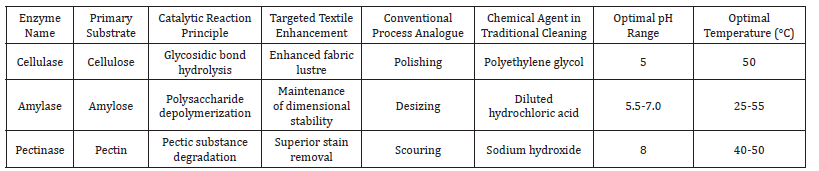
Enzymes like cellulase, amylase, and pectinase are revolutionizing dry cleaning by offering targeted solutions for fabric care. Cellulase enhances fabric lustre through cellulose hydrolysis, replacing traditional polishing with polyethylene glycol. Meanwhile, amylase ensures dimensional stability by depolymerizing starch, an enzymatic alternative to hydrochloric acid in desizing. Lastly, Aspergillus niger’s pectinase significantly improves stain removal by degrading pectin, substituting harsh sodium hydroxide in scouring processes (Sheikh et al., 2019). Pectinase enzymes play a crucial role in bio-scouring, a textile pretreatment process that uses enzymes to remove impurities from cotton fibers, making them more absorbent and suitable for dyeing (Burman et al., 2014). A solution will be formed of these enzymes maintaining a Ph and temperature where all 3 will function together. In layman terms we can say that cellulase is known to remove dullness. Amylase is used to keep the shape and size of the dry-cleaned cloth. Pectinase is used for removing dirt.
Cellulase production done by Raikamal Bhattacharya [3] using a sustainable method called solid-state fermentation (SSF). The production process was optimized by controlling parameters such as airflow, leading to high enzyme yields. This approach is a more economical and environmentally friendly alternative to traditional methods. The optimal temperature for the cellulase enzyme was determined to be 50 °C, where it retained its stability. Other optimal conditions for maximum cellulase production included a six-day fermentation period and a temperature of 30 °C in the bioreactor. The ideal moisture ratio of the substrate was 1:2 (67%). The optimal pH for maximum production was found to be 5. A twostep membrane filtration process used to filter the crude cellulase extract. First, micro filtration with a 0.45μm pore size membrane recovers 94% of the enzyme. This is followed by ultrafiltration using a 10kDa membrane, which recovers 71% of the enzyme. The final product is a concentrated cellulolytic enzyme with an activity of 13.54FPU/mL. Coming to our next issue of shrinkages, which happens when clothes are dry cleaned due to which sizes and shapes change, thereby making the fit go away. For this problem enzymatic biodesizing where we will use amylase, exhibiting the best amylase activity among the isolate, produced 341.7U/mL of amylases under optimized conditions of incubation period (6 days), incubation temperature (35 °C), and incubation pH (6.0), using nutrient salt solution (NSS). The crude enzyme preparation, so obtained from the test strain under optimized conditions of SSF, was found to be thermos alkali stable, as it retained about 90% of its maximum activity at pH 8.0 and more than 50% of its maximum activity at a temperature of 75 °C. Banana peel powder through enzymatic hydrolysis using crude pectinases derived from A. niger at different substrate concentrations, pH, temperature, and duration. Pectinase was produced at optimum condition in sufficient amount to carry out further experiments. Some part of the pectinase thus produced was partially purified using ethanol. This is mixed with 1 part of amylase and 1 part of cellulase. The biobased methods operate under specific pH and temperature ranges, signifying a shift towards more sustainable and effective textile treatments.
Optimization of different parameters
Concentration: Enzymes (cellulose and amylase) each 1part fraction respectively, were mixed with pectinase which was made by banana leaf. The cultivation of A. niger for pectinase production was carried out in 250ml Erlenmeyer flasks. Each flask contained 100ml of distilled water supplemented with the following basal medium components (all %w/v): Monopotassium Phosphate (KH2PO4): 0.02%, Magnesium Sulfate (MgSO4): 0.01%, Ammonium Sulfate ((NH4)2SO4): 0.04%, Ferrous Sulfate (FeSO4): 0.01%, Manganese Sulfate (MnSO4): 0.001%. Dried banana peel powder was used as the pectic substrate, with its concentration varied according to the experimental design for optimization. The prepared medium was then sterilized by autoclaving and subsequently cooled to room temperature. The pH of the medium was adjusted to 5.8 using a citrate buffer. Each sterilized flask was inoculated with approximately 2×10⁸ spores of A. niger. The flasks were then incubated in an incubator shaker at a shaking speed of 150rpm. Incubation time and temperature were determined by the experimental design. Following incubation, the culture filtrate was cooled to 4 °C and centrifuged at 10,000rpm for 10 minutes in a refrigerated centrifuge. The resulting supernatants, containing the crude enzyme, were collected for subsequent investigations. Bulk production of pectinase was subsequently conducted under the optimized conditions. This pectinase was then used for partial purification and clarification of banana juice. For a feasibility analysis, this produced pectinase was combined with commercial cellulase and amylase. An enzyme cocktail was formulated by mixing the three enzymes (pectinase, cellulase, and amylase) in a 1:1:1 ratio. Hence, the optimum enzyme cocktail concentration was taken and filtered. Now the filtered enzyme cocktail is sprayed on the greige fabric.
Treatment time: The percentage weight loss observed in enzyme-treated cotton fabrics increased proportionally with the application of the enzyme cocktail to the greige fabric. Following treatment, the fabrics were immersed in the cocktail solution for 2 hours prior to examination. According to Klug (2004), the isoelectric point of pectate lyase is pH 8.5, which aligns with its observed maximal activity. Notably, the pectin removal efficiency of pectinase significantly decreased at pH values above 9.0.
Selection of optimal range of temperature and pH for solution of enzyme cocktail: Optimal Temperature Range: The process 1 has temperature of 50 °C while process 2 has temperature of 25-55 °C and process 3 has temperature of 40-50 °C. The intersection of Process 2 (25-55 °C) and Process 3 (40-50 °C) is 40-50 °C. Process 1 operates optimally at 50 °C. Since 50 °C falls within the 40-50 °C range, the common optimal temperature for all three processes is 50 °C.
Optimal Ph Range: For the Ph range, as there is no similar Ph range, so we opted to mix the 3 enzymes keeping ph between 5-7 so that all two process (cellulase and pectinase process) are adjusted a little bit and amylase is done at its required range.
Table 1 shows the enzymes used, their origin and the reaction they will be going through. An enzyme cocktail using ratio 1:1:1. the material to liquor ratio is 1:4. Cellulase is known to remove dullness. Amylase is used to keep the shape and size of the drycleaned cloth. Pectinase is used for removing dirt. The cocktail combining three process -bio polishing (using cellulase enzyme) and bio desizing (using amylase), bio scouring (using pectinases) together for commercial purpose of dry cleaning. There is a major problem of shrinkage which happens when clothes are dry cleaned due to which sizes and shapes changes, thereby making the fit go away. For this problem enzymatic bio desizing where we will use amylase. The process is followed by bio desizing using amylase as an enzyme for restraining any shrinkage in the apparel so that the final apparel is dry cleaned keeping the same shape and size.
Result
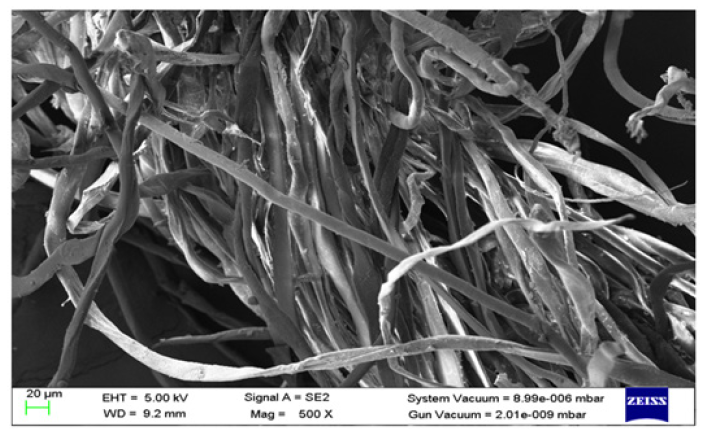
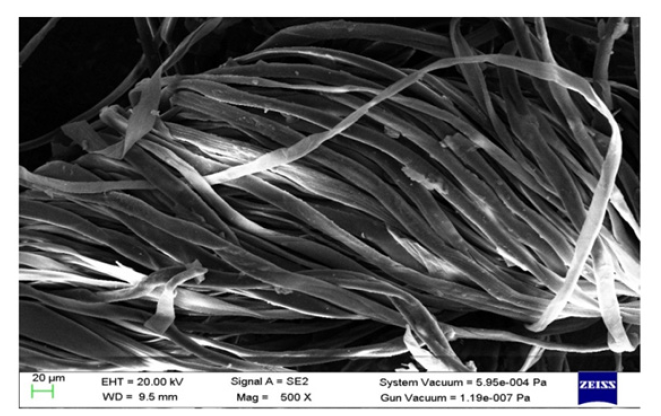
Figure 1 of greige fabric reveals distinct morphological difference. The biodry cleaned fabric exhibit smoother surfaces with notable decrease in protruding fibers. The biodry cleaned fabric further insight into the effects of enzymes. The fibres are aligned more uniformly. The study demonstrates the effectiveness of SEM in analyzing the morphological change in fabric. Pentland noticed that the Fractal Dimension of surfaces could be used to obtain shape information and evaluate a difference between smooth and rough surfaces (Pentland et al., 1984).
It provides highly magnified, three-dimensional-like figures of the surface and internal structure of fibers and fabrics, revealing details that are invisible to the naked eye or even with traditional optical microscopes. SEM Figure 1 is primarily used to visualize the surface features, shape, size, and textures of individual fibers and the overall fabric structure. This includes observing the arrangement of fibers within yarns, the weave or knit patterns of fabrics, and the overall fabric density. The main is to identify defects, damage, or changes on the fiber or fabric surface due to processing, wear, chemical treatments, or environmental exposure. Identifying the elements present in the fibers or any foreign particles on the fabric surface. This is useful for identifying contaminants, impurities, or specific additives. Similarly SEM analysis of Figure 2 provides invaluable insights into the micro-scale characteristics of fabrics, based on which we will do fractal dimension of fabric and compare both the figures using box counting method. The fractal dimension technique as said by Chrpova [4] is changed according to changes in a scanned production process. Changes are observed in a process giving way to a quality product and a process giving way to a low-quality product. The fractal dimension is carried out for investigation and is usually targeted for a process production control [4].
Figure 1:Basic diagram of electrolysis setups.
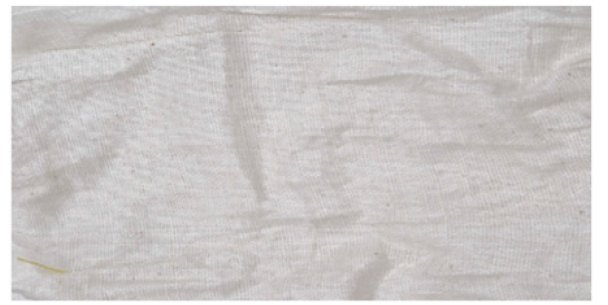
Figure 2:Untreated greige fabric.
The fractal dimension (D) using the box-counting method is
calculated based on the relationship between the size of a box and
the number of boxes required to cover a fractal. The formula is:
D=limr→0log(1/r) logN (r)
Where:
• D is the fractal dimension.
• r is the side length of the box (or the scale).
• N(r) is the number of boxes of size r needed to cover the
object.
So, the fractal dimension is approximated by plotting log(N(r)) against log(1/r) for various box sizes. The slope of the best-fit line on this log-log plot is the estimated fractal dimension.
For experiment on the box-counting method for analyzing textile fabrics of greige and cocktail treated, these high-resolution figures of each sample captured under controlled lighting conditions to ensure consistent figure quality [5-8]. The digital figures would then be converted to a binary format, with the fabric’s threads and their associated pores distinguished as either black or white pixels. Using the formula, a series of virtual grids with a range of decreasing box sizes is overlaid on each binary figure. The number of boxes containing a portion of the fabric’s structure is recorded for each grid size. The resulting data would be plotted on a log-log graph, with the logarithm of the number of boxes on the y-axis and the logarithm of the box size on the x-axis. The fractal dimension, which quantifies the textural complexity and porosity of the fabric, would be determined by calculating the slope of the best-fit line through the plotted data points. This process would be repeated for both fabric sample, and the resulting fractal dimensions would be statistically analyzed to correlate the fabrics’ structural characteristics with their determined fractal values, thereby establishing the efficacy of FD to that of the fabric (Figures 3&4).
Figure 3:Treated fabric with enzyme cocktail.
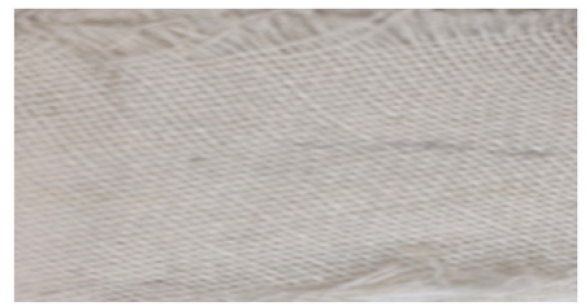
Figure 4:Treated fabric with enzyme cocktail.
FD analysis of both the fabrics
As fractal dimension is a measure of the complexity and roughness of a surface. A higher fractal dimension indicates a more complex, rough, or irregular surface. A lower fractal dimension indicates a smoother, less complex, or more regular surface. Bio drycleaning, which uses cocktail of enzymes, is a treatment aimed at removing protruding fibers, fuzz, and cleaning from the fabric surface. The grey fabric (untreated) has a higher fractal dimension of the grey figure, calculated using the box-counting method, is approximately 1.709. This slightly higher value than the previous figure suggests a marginally more intricate or entangled fiber structure., indicating a more complex and rougher surface, typical of untreated fabric. The enzyme-treated fabric has a lower fractal dimension of the figure, calculated using the box-counting method, is approximately 1.673. This value suggests a moderately complex and detailed structure, typical of fibrous or entangled materials like raw fabric under a microscope, indicating a smoother and less complex surface compared to the untreated fabric. A smoother surface might allow cleaning agents (including biological enzymes) to interact more effectively and evenly with the fabric, potentially leading to better stain removal and overall cleaning performance. Smoother surfaces tend to resist the adhesion of dirt and soil particles more effectively than rougher surfaces, which can trap contaminants in their irregularities. This could contribute to easier cleaning and less re-soiling after treatment. From a tactile perspective, a smoother fabric is perceived as softer and more pleasant to the touch, improving the “hand” or feel of the textile. The graph demonstrate that the enzymatic treatment for bio laundering is effective in overall look of fabric. The decrease in fractal dimension from 1.709 to 1.673 quantifies the improvement in surface smoothness achieved by the enzyme treatment. This is a characteristic outcome of successful bio laundering process, leading to an improved fabric feel and appearance [9-11] (Graphs 1&2).
Graph 1:Basic diagram of electrolysis setups.
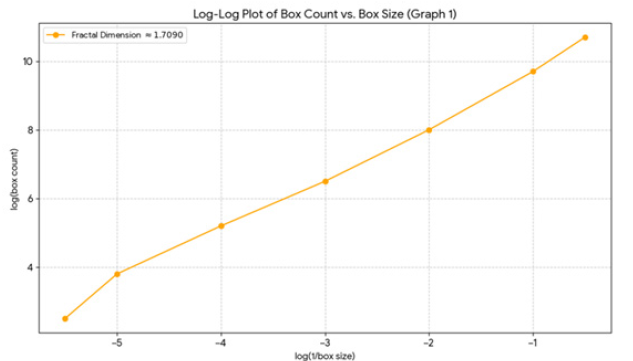
Graph 2:Untreated greige fabric.
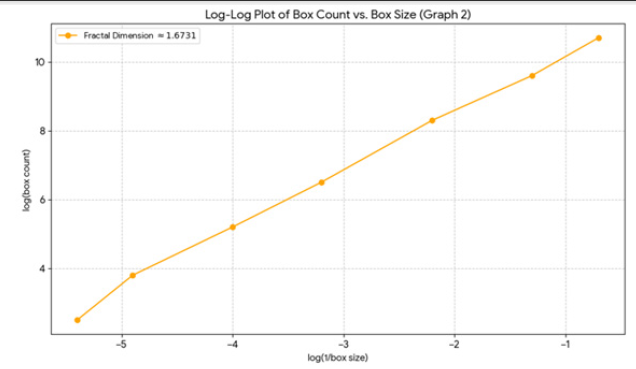
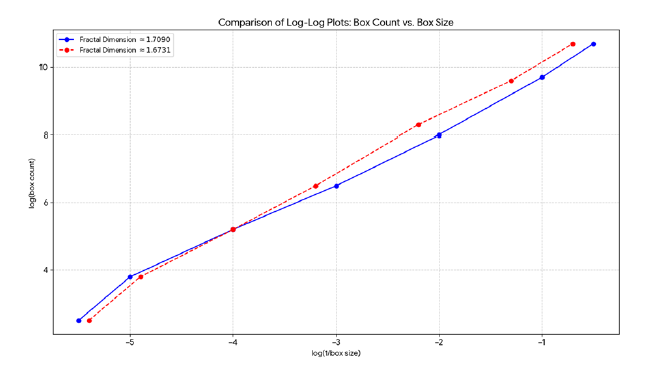
Based on surface smoothness and characterization, Below is the Graph 3 comparing the treated fabric with the untreated one. It will interpret the meaning of the fractal dimension values in the context of bio laundering. Based on the Graph 3 and the fractal dimension values as Grey fabric (Untreated), the value of Fractal Dimension by box counting method is 1.709 while for enzymatic treated is 1.673. The difference in fractal dimension between the two graphs as indicated in Graph 3 quantifies the change in surface roughness and complexity as a result of the fabric treatment. A decrease in fractal dimension suggests a smoothing effect on the fabric surface. The fractal dimension serves as an objective, quantitative measure of fabric surface smoothness.
Graph 3:Comparison between both the analysis.
Conclusion
The research effectively demonstrates the efficacy of enzyme-based bio laundering as a sustainable and fabricfriendly alternative to conventional and chemical methods. The comprehensive analysis, particularly through Scanning Electron Microscopy (SEM) and fractal dimension (FD) using box counting method measurements, provided clear evidence of the positive morphological changes induced by the enzyme cocktail. The untreated greige fabric, characterized by a fractal dimension of 1.709, revealed a rough and complex surface with protruding fibers. Conversely, the fabric treated with the cellulase, amylase, and pectinase cocktail exhibited a significantly smoother surface, reflected by a lower fractal dimension of 1.673. This quantifiable reduction obtained by box counting method of fractal dimension directly correlates with improved fabric appearance and feel. The enzymatic or chemical treatment likely acted to remove or modify surface irregularities, resulting in a smoother, less complex morphology, hence the reduction in fractal dimension. A lower fractal dimension signifies a smoother fabric, which is highly desirable in final apparel for enhanced comfort, aesthetics, and overall consumer satisfaction. The findings indicate that bio-dry cleaning not only removes dullness and dirt but also contributes to enhanced fabric integrity, preventing shrinkage and maintaining dimensional stability. The smoother surface of the treated fabric is expected to lead to improved cleaning efficiency, as cleaning agents can interact more effectively, and reduced soil adhesion, making clothes easier to clean and less prone to re-soiling. Ultimately, this study underscores the potential of enzyme-based bio laundering to revolutionize the textile care industry, offering a greener, gentler, and more sustainable approach that benefits both the environment and the longevity of clothing.
References
- https://www.databridgemarketresearch.com/reports/global-dry-cleaning-and-laundry-services-market.
- Gupta R, Gigras P, Mohapatra H, Goswami VK, Chauhan B (2003) Microbial α-amylases a biotechnological perspective. Process Biochemistry 38(11): 1599-1616.
- Bhattacharya R, Arora S, Ghosh S (2024) Bioprocess optimization for food-grade cellulolytic enzyme production from sorghum waste in a novel solid-state fermentation bioreactor for enhanced apple juice clarification. Journal of Environmental Management 358: 120781.
- Chrpov E (2025) Application of fractal dimension in textile application process. A Department of Mechanical Technologies, Technical University of Liberec, Czech Republic.
- Uddin MG (2015) Effects of biopolishing on the quality of cotton fabrics using acid and neutral cellulases. Text Cloth Sustain 1: 9.
- Peter CK Lau, Grosse S (2013) 2- The fundamentals and fun of biocatalysis. Marine Enzymes for Biocatalysis pp: 17-69.
- Kosaric N, Carius WL, Gray CC (1987) Biosurfactants and Biotechnology. Marve Dekker Pub, New York, USA.
- Ismail Y, Eroglu NS, Canoglu S (2023) Environmental effects of pretreatment processes applied to cotton fabrics. Proceedings of the 11th Global Conference on Global Warming (GCGW 2023).
- Barman S, Sit N, Badwaik LS, Deka SC (2015) Pectinase production by Aspergillus niger using banana (Musa balbisiana) peel as substrate and its effect on clarification of banana juice. J Food Sci Technol 52(6): 3579-3589.
- Javed S, Bramhecha I (2019) 6- Enzymes for green chemical processing of cotton. The Impact and Prospects of Green Chemistry for Textile Technology pp: 135-160.
- Kaur A, Rishi V, Soni SK, Rishi P (2020) A novel multi-enzyme preparation produced from Aspergillus niger using biodegradable waste: A possible option to combat heterogeneous biofilms. AMB Expr 10: 36.
© 2026 Sanjoy Ghosh. This is an open access article distributed under the terms of the Creative Commons Attribution License , which permits unrestricted use, distribution, and build upon your work non-commercially.
Editor In Chief






.jpg)































Signup for Newsletter

Quick Links
 Editorial Board Registrations
 Submit your Article
 Best Paper of the Volume
 Reprints
 Refer a Friend
 Advertise With Us
Our Recent Edition

.jpg)



Top Editors




.jpg)

















.bmp)
.jpg)
.png)
.jpg)













.jpg)






.png)

.png)




.png)




Financial Support

Sponsors

Latest e-Books

Latest Video