

- About Us
- Information
-

The Author ensures that the research has been conducted responsibly and ethically with adherence to all relevant regulations. read more..
- For Authors
- For Reviewer
- Manuscript Guidelines
- Membership
- Publication Ethics
-
- Journals
- Reprints
- e-Books
- Videos
- Policies
- Contact Us
 COVID-19
- Submissions



Full Text
Strategies in Accounting and Management
Entrepreneurship and Economic Development in Nigeria: Assessing the Role of Financial Institutions in Overcoming Financing Challenges
Samuel Oghenebrume Ogbodu1 and Yinka S Hammed2*
1SUNU Assurances, Lagos State, Nigeria
2The Nigerian Institute of International Affairs, Bashir Adeniyi Centre for International Trade and Investment, Lagos, Nigeria
*Corresponding author:Yinka S Hammed, The Nigerian Institute of International Affairs, Bashir Adeniyi Centre for International Trade and Investment, Lagos, Nigeria
Submission:February 09, 2026;Published: May 15, 2026

ISSN:2770-6648Volume6 Issue 2
Abstract
This study examines the role of financial institutions in promoting entrepreneurship and economic development in Lagos State, Nigeria. It specifically investigates how access constraints, institutional performance and financial intermediation influence the growth and sustainability of Small and Medium- Sized Enterprises (SMEs). Using a mixed-method approach supported by quantitative analysis of 300 SMEs, the study employs multiple linear regression to test two key hypotheses relating to financial access barriers and institutional impact on entrepreneurial outcomes. The results reveal that structural constraints such as high collateral requirements, elevated interest rates and bureaucratic loan procedures significantly hinder SME performance, collectively explaining 42 percent of its variance. Among these, high interest rates exerted the strongest negative influence, demonstrating how credit costs and administrative burdens undermine business expansion and innovation. Conversely, the analysis confirms that financial institutions exert a significant positive influence on entrepreneurship and economic development, with institutional support and SME performance jointly explaining 51 percent of observed variations. The findings underscore that financial institutions serve not only as providers of capital but also as key enablers of enterprise sustainability and economic transformation. However, their developmental potential remains constrained by structural inefficiencies, limited outreach and weak institutional coordination. The study concludes that a multidimensional reform approach, encompassing affordable credit design, digital innovation, enhanced advisory support and improved regulatory oversight, is essential for repositioning financial institutions as effective partners in Nigeria’s entrepreneurial and developmental agenda.
Keywords: Entrepreneurship; SMEs; Financial institutions; Access to finance; Economic development
Jel Codes: G21, L26, O16, 017, O55
Introduction
Small and Medium Enterprises (SMEs) are universally recognized as the cornerstone of economic development and structural transformation. They constitute the backbone of most economies, fostering industrialization, employment creation and technological innovation. As Adanlawo [1] assert, SMEs provide valuable opportunities for employment and empowerment across Nigeria, while absorbing nearly half of the nation’s workforce and spanning multiple production and service sectors. Their significance extends beyond productive activities to industrial development, technological advancement and overall societal welfare. Entrepreneurship, largely driven by SMEs, accounts for about 66 percent of employment in the service sector, highlighting its indispensable role in sustaining growth and improving living standards, especially in developing economies [1]. SMEs are not only engines of industrial growth but also critical agents of poverty reduction, wealth redistribution and inclusive development. In an economy like Nigeria, where unemployment and income inequality persist, SMEs play a pivotal role in bridging socio-economic gaps. Empirical evidence supports this claim. Shiro [2] show that SME productivity, employment generation, reliable electricity supply, and improved credit access significantly enhance economic development in Nigeria. Similarly, Edobor AT [3] demonstrate that SME output and bank financing contribute to economic diversification, with sustained positive effects in both the short and long term. SMEs also fill market gaps that larger corporations often overlook, catering to localized needs and stimulating regional economies. They foster competition, stimulate innovation, and drive productivity. Furthermore, SMEs contribute to government revenue through taxation while improving household welfare by creating livelihood opportunities for low-income populations. These characteristics underscore their centrality to sustainable and inclusive economic transformation.
Despite their developmental importance, Nigerian SMEs continue to face significant barriers to growth, particularly inadequate access to finance. The World Bank [4] estimates that the annual financing gap for Nigerian SMEs exceeds ₦617 billion, leaving many enterprises unable to expand, modernize operations or adopt new technologies. This persistent credit constraint undermines innovation, reduces competitiveness and limits entrepreneurship’s potential to drive long-term growth. Although several government-led initiatives, such as the Central Bank of Nigeria’s Micro, Small and Medium Enterprises Development Fund (MSMEDF) and credit guarantee schemes, have been launched to improve financial access, their implementation has been fraught with inefficiencies and limited outreach. Beck T [5] emphasize that countries with deeper and more inclusive financial systems exhibit higher SME productivity, innovation, and survival rates. Hence, improving access to finance is not only critical for business growth but also for broader economic transformation, job creation and poverty reduction. However, in Nigeria, financial institutions have not fully fulfilled this developmental role. Many entrepreneurs still face prohibitive lending conditions such as high interest rates, short repayment periods and stringent collateral requirements. Weak financial literacy and poor record-keeping further exacerbate their exclusion. Financial institutions often perceive SMEs as high-risk borrowers, preferring to lend to larger, more established corporations. As a result, many small businesses depend on informal savings groups, friends and family networks for start-up and working capital. The inadequacy of formal credit constrains their ability to scale operations, adopt technology or explore new markets. Nonetheless, financial institutions can provide transformative support beyond conventional lending. Through innovative instruments such as microloans, venture capital, and equity financing, they can address the credit needs of entrepreneurs more effectively. Additionally, through business advisory services, mentorship programs and financial literacy campaigns, these institutions can enhance managerial capacity and promote long-term business sustainability [6].
In addressing this problem, the present study deliberately focuses on Lagos State, a context that uniquely encapsulates the dynamics of entrepreneurship and financial development in Nigeria. Lagos serves as the economic nerve center of the country, contributing approximately 27 percent of Nigeria’s Gross Domestic Product (GDP) and over 50 percent of non-oil industrial capacity [7]. It also generates more than 65 percent of value-added tax revenue and handles over 70 percent of the country’s imports through its ports (World Bank, 2020). Lagos hosts the headquarters of major commercial banks, development finance institutions such as the Bank of Industry (BOI), and regulatory agencies like the Central Bank of Nigeria (CBN) and the Nigerian Exchange Group (NGX). This concentration of financial institutions provides an ideal setting for examining the interactions between finance, entrepreneurship, and institutional frameworks. Lagos is also the entrepreneurial hub of Nigeria. According to the Small and Medium Enterprises Development Agency of Nigeria (SMEDAN [8]), the state has the highest density of SMEs, with more than 11,000 formally registered enterprises and millions of informal microenterprises. It leads the country in start-up formation and technological innovation, hosting the Yaba “Silicon Lagoon,” where fintech giants such as Paystack, Flutterwave, and Kuda emerged (UNCTAD [9]). The city’s vibrant innovation ecosystem makes it an ideal site to assess how financial institutions contribute to or constrain entrepreneurial performance. Moreover, Lagos’s financial landscape is diverse, encompassing commercial banks, microfinance banks, cooperative societies, venture capital firms, and fintech platforms [10]. This diversity distinguishes it from most other Nigerian states, where entrepreneurs primarily depend on informal finance. Demographically, Lagos represents a microcosm of Nigeria’s diversity. With a population exceeding 20 million people drawn from all ethnic and religious groups, the city mirrors the socio-economic heterogeneity of the country [7]. Its high level of urbanization and its role as a magnet for internal migration foster a wide spectrum of entrepreneurial activities across formal and informal sectors [11]. This heterogeneity makes Lagos a representative environment for exploring how financial institutions interact with entrepreneurship in a complex, multi-sectoral economy.
Existing literature has widely acknowledged the importance of access to finance for SME growth, but there remains a significant gap in understanding the qualitative dimensions of financial intermediation in Nigeria. Most studies emphasize the quantity of credit available without adequately addressing issues of affordability, accessibility, and the complementary role of non-financial services. Similarly, few studies have explored how entrepreneurs navigate financing barriers within diversified financial ecosystems like that of Lagos. This study therefore seeks to bridge these gaps by empirically investigating the role of financial institutions in fostering entrepreneurship and economic development in Nigeria, with specific reference to Lagos State. The objectives are twofold: first, to identify the challenges entrepreneurs face in accessing financial services and the coping mechanisms they adopt; and second, to determine the impact of financial institutions on entrepreneurial performance and economic development in Lagos State. This study contributes to the body of knowledge on entrepreneurship, finance, and economic development in several important ways. It extends existing discussions by distinguishing between the quantity and quality of financial access, thereby offering a more comprehensive understanding of how financial institutions influence business performance. The research empirically demonstrates that the perceived ease of obtaining loans and satisfaction with the adequacy of financing are distinct yet significant determinants of entrepreneurial success. Furthermore, it quantifies how affordable loan conditions, such as interest rate levels, repayment flexibility, and collateral requirements, affect the survival and sustainability of SMEs. The study also highlights the pivotal role of non-financial services such as advisory support and capacity development, which enhance entrepreneurs’ managerial competence, creditworthiness and long-term business sustainability.
Theoretical Review
The theoretical relationship between financial development, entrepreneurship and economic growth has long been a central focus in economic thought. Foundational economic theories posit that financial systems, by mobilizing savings and channeling them toward productive investments, play a catalytic role in stimulating innovation and industrial expansion. Financial development, characterized by the diversification of financial instruments and the widening of service delivery channels, reduces the cost of external financing and alleviates liquidity constraints faced by enterprises. These dynamic fosters a more enabling environment for entrepreneurship by promoting credit access, reducing uncertainty and encouraging investment in productive ventures [12,13]. Over time, this theoretical foundation has evolved to integrate insights from several complementary frameworks that explain how finance shapes entrepreneurial performance and, in turn, economic development. Among the most influential are the Financial Constraint Theory, Institutional Theory and Dynamic Capabilities Theory. Each of them offers a distinct yet interrelated perspective on the mechanisms through which financial development influences entrepreneurship.
The evolution of the Financial Constraint Theory marked one of the earliest systematic attempts to explain how imperfections in financial markets hinder entrepreneurial activity. The theory posits that information asymmetries, lack of collateral, and high transaction costs create barriers to credit access, particularly for Small and Medium-Sized Enterprises (SMEs) that often lack formal credit histories or verifiable financial records [13]. These imperfections lead to credit rationing and underinvestment, constraining entrepreneurial innovation and growth. The development of robust financial institutions, therefore, serves to mitigate such constraints by improving risk assessment, enabling efficient credit scoring, and providing diversified financial instruments tailored to varying business needs. In the twenty-first century, the Financial Constraint Theory has gained renewed relevance in the context of digital financial inclusion. As financial technology (fintech) has expanded across developing regions, new models of credit delivery have emerged that directly address traditional market imperfections. Demirgüç-Kunt [14] demonstrate that mobile banking and digital lending platforms have significantly reduced financial barriers for underserved entrepreneurs, especially in Sub-Saharan Africa and South Asia. These digital innovations use alternative data, such as transaction histories, mobile usage patterns, and social media behaviour, to evaluate creditworthiness, thereby circumventing the limitations of conventional collateral-based lending. Similarly, Olafusi [15] show that peer-to-peer lending, crowdfunding, and mobile credit systems lower transaction costs and enhance transparency, allowing micro-entrepreneurs, women, and youth to access capital previously beyond reach. Empirical evidence further validates the theory’s continuing relevance. Ediagbonya [16] found that SMEs leveraging digital financial services exhibit higher investment rates, improved liquidity management, and enhanced productivity compared to those constrained by traditional credit systems. The theoretical implication is that financial development not only expands the volume of available credit but also transforms its structure, making finance more inclusive, flexible, and innovationdriven. Importantly, this theory highlights that the effectiveness of both conventional and digital financial systems depends on the broader institutional and regulatory environment. Scholars such as Shittu [17] and Akintayo [18] emphasize that well-functioning legal frameworks, enforceable property rights, and strong consumer protection mechanisms are critical for sustaining the gains of financial development. Where such institutions operate effectively, SMEs benefit from predictable loan conditions, lower financing costs, and access to credit guarantees and government-backed schemes. Integrating financial infrastructure with entrepreneurial capacity-building initiatives thus enhances the ability of firms to overcome financial constraints, stimulate innovation, and contribute to inclusive economic growth.
While the Financial Constraint Theory centers on the microeconomic dimensions of credit access, the Institutional Theory broadens the analysis by emphasizing the macro-level context within which financial and entrepreneurial systems operate. Emerging from the seminal work of North [19], this theoretical framework posits that economic outcomes are shaped by the formal and informal rules governing behaviour in a society. Institutions, comprising laws, regulations, norms, and governance structures, determine the incentives and constraints faced by economic actors, including entrepreneurs and financial intermediaries. In this view, strong institutional environments characterized by rule of law, contract enforcement, and regulatory transparency enable efficient financial intermediation and foster entrepreneurship [20]. Conversely, weak institutions, marked by corruption, bureaucratic inefficiency, and policy inconsistency, distort credit allocation, increase transaction costs, and perpetuate financial exclusion. The Institutional Theory has become increasingly relevant for developing economies, where institutional quality often determines the success or failure of financial reforms. Williamson [21] and Estrin [22] expanded the framework to include informal institutions such as cultural norms, trust networks, and collective values. These social dimensions influence the degree to which entrepreneurs engage with formal finance and the willingness of financial institutions to extend credit. High levels of social trust, for example, can mitigate information asymmetries by promoting information sharing and cooperative behaviour between lenders and borrowers [17]. On the other hand, social and cultural biases, such as gender discrimination or stigma toward risk-taking, can exclude certain groups from entrepreneurial participation, even in the presence of formal financial structures [13]. Empirical studies underscore the importance of institutional quality in promoting both financial inclusion and entrepreneurship. Ononiwu et al. [10] and Akintayo [18] found that regulatory transparency, reduced bureaucratic barriers, and effective property rights enforcement encourage banks and microfinance institutions to extend credit to SMEs with greater confidence. Moreover, policies that integrate institutional reforms with entrepreneurial support mechanismssuch as capacity-building programs, business advisory services, and digital literacy initiatives-amplify the positive effects of finance on entrepreneurship [23,24]. In this sense, the Institutional Theory provides a robust framework for understanding the interaction between legal frameworks, social systems, and financial structures in shaping the entrepreneurship–finance nexus. It explains why reforms in governance, financial regulation, and education are essential complements to credit expansion if sustainable entrepreneurial ecosystems are to emerge.
Building upon the structural insights of institutional economics, contemporary scholarship increasingly incorporates a strategic perspective through the Dynamic Capabilities Theory. Developed by Teece [25], this theory emphasizes an enterprise’s ability to adapt, integrate, and reconfigure internal and external resources in rapidly changing environments. In the context of entrepreneurship, access to finance is not viewed merely as a static input but as a dynamic strategic resource that must be managed and leveraged to achieve competitive advantage. Entrepreneurs with strong dynamic capabilities can deploy financial resources flexibly, responding to market shocks, scaling operations, and innovating in the face of uncertainty. Teece [26] argues that such dynamic capabilities are especially crucial in volatile environments characterized by institutional uncertainty, fluctuating interest rates, and technological disruption. In developing economies like Nigeria, where SMEs face chronic financing challenges, dynamic capabilities serve as a crucial mediating factor between financial development and enterprise success. Miocevic [27] highlight that entrepreneurs with strong strategic flexibility are better positioned to negotiate favourable credit terms, utilize government-backed financing schemes, or partner with fintech platforms to optimize capital use.
Review of Empirical Literature
Empirical research consistently underscores the central role of financial institutions in stimulating entrepreneurship and driving economic development, particularly in developing economies like Nigeria. There is consensus that an efficient, accessible and inclusive financial system is the foundation for the growth of Small and Medium-Sized Enterprises (SMEs), the engines of industrialization, innovation, and job creation. Yet, despite this consensus, evidence shows that the impact of finance on entrepreneurship in Nigeria has been shaped by persistent institutional weaknesses, macroeconomic instability, policy inconsistencies and emerging technological transformations such as financial technology (fintech). Over time, research has evolved from viewing finance as a purely quantitative input toward a multidimensional understanding that integrates institutional quality, policy structure and technological innovation. Early empirical work in Nigeria established the fundamental relationship between access to finance and entrepreneurial performance. Taiwo [28] demonstrated that SMEs with adequate financial support contribute significantly to GDP growth, employment, and household income. Their study revealed that credit access enables firms to adopt modern technologies and expand operations, but also highlighted barriers such as high interest rates, stringent collateral requirements, and pervasive credit rationing. This dual reality, finance as both a driver and a constraint, has become a recurring theme in subsequent literature. The vulnerability of Nigeria’s financial system to macroeconomic shocks further complicates this relationship. Owualah [29], examining the aftermath of the 2008 global financial crisis, found that Nigerian banks tightened credit conditions, harming SMEs despite broader monetary expansion. Their findings led to calls for countercyclical reforms, such as SMEfocused credit lines and fiscal buffers to protect small enterprises during crises. Liu [30] reinforced this argument, noting that economies with stronger and more resilient financial systems recovered faster from the COVID-19 pandemic. These studies highlight the need to restructure financial institutions not only for growth during stability but also for resilience during volatility.
As formal banks have struggled to meet the financing needs of entrepreneurs, scholars have turned attention to informal and semiformal financial systems. Adeosun [31] found that informal financing through cooperatives, savings groups, and social networks remains crucial, particularly for women and micro-entrepreneurs excluded from formal credit channels. Godwin [32] similarly observed that Rotating Savings and Credit Associations (ROSCAs) provide flexible, trust-based credit even in the absence of regulation. Both studies recommend integrating informal and formal systems through hybrid financing models that combine flexibility with institutional oversight, thereby expanding financial inclusion. Sector-specific research has also deepened understanding of finance’s role in entrepreneurship. Vincent [33] showed that access to finance strengthens agricultural value chains by enabling innovation in production and marketing, though infrastructure gaps and rural credit shortages persist. Likewise, Hamzat [34], studying Nigeria’s Youth Employment in Agribusiness and Sustainable Agriculture (YEASA) Project, found that financial support must be paired with non-financial services such as financial literacy, technical training, and mentorship to produce lasting entrepreneurial outcomes. These studies collectively emphasize that financial capital alone is insufficient; complementary skills and institutional support are equally essential.
Over time, research has increasingly focused on how macroeconomic instability and weak governance undermine finance’s developmental potential. Nigeria’s chronic inflation, exchange rate fluctuations, and fiscal imbalances have made banks more risk-averse, often channelling credit toward large firms and government projects instead of SMEs. Abdulai [35] argue that this pro-cyclical lending behaviour deepens vulnerability among small businesses and call for financial systems designed to provide countercyclical support. Without such mechanisms, financial institutions risk amplifying crises rather than mitigating them. Recent studies have expanded the discussion beyond capital availability to include human and institutional dimensions. Mercy [36] found that restricted access to finance causes psychological stress among entrepreneurs, reducing productivity and increasing business failure risks. Murtala [37] highlighted how Nigeria’s complex tax system, marked by overlapping jurisdictions and inconsistent enforcement, discourages business formalization, even when credit access improves. Both studies reinforce that finance cannot operate effectively in isolation; supportive institutional and regulatory frameworks are essential for entrepreneurship to thrive. Technological change, particularly the rise of fintech, has introduced new momentum into this discourse. Odio et al. [38] and Oyedokun [39] demonstrated that digital financial platforms, through mobile banking, online lending, and alternative credit scoring, have expanded access to finance for SMEs traditionally excluded from the formal banking system. These innovations reduce reliance on collateral and transaction costs, allowing broader participation. However, Del Sarto and Ozili (2025) caution that fintech adoption remains uneven due to digital literacy gaps, regulatory weaknesses, and the concentration of digital infrastructure in urban centres. Consequently, fintech’s promise of inclusion can only be realized through complementary investments in education, regulation, and rural connectivity. Comparative studies across Africa provide valuable context for Nigeria’s financial evolution. Yakubu et al. (2021) identified weak institutions and regulatory inconsistencies as common barriers across sub-Saharan Africa, yet Kenya’s success with mobile money platforms such as M-Pesa demonstrates that financial innovation can achieve transformative outcomes when supported by clear regulation and public–private collaboration. Nigeria’s vibrant fintech sector has yet to match this level of integration, suggesting that institutional coordination and trust remain essential to scaling inclusion. Beyond financial access, several scholars stress the importance of non-financial support systems. Leal et al. (2023) found that entrepreneurs who received both credit and complementary services, such as mentorship and advisory training, achieved higher business growth and innovation rates. The YEASA Project (Hamzat [34]) further confirmed that financial interventions yield greater sustainability when combined with technical assistance and capacity-building. Together, these findings reinforce the argument that financial institutions must evolve from acting merely as lenders to serving as holistic development partners. However, weak institutional coordination continues to impede progress. Ugwu-Oju et al. (2020) revealed that government programs designed to integrate financing with entrepreneurial training often suffer from bureaucratic inefficiencies and elite capture. Private financial institutions have also been slow to adopt non-financial services, viewing them as peripheral to profitability. This structural disconnection suggests the need for stronger incentive frameworks that encourage financial institutions to embed advisory and developmental roles within their operations. While many studies highlight finance’s contribution to growth and employment Taiwo [28]), others, such as Mercy [36], underscore unintended effects, entrepreneurial stress, income precarity, and limited upward mobility. Murtala [40] further contend that overlapping tax regimes and regulatory inconsistencies erode the benefits of financial inclusion by discouraging SMEs from formalizing operations. Therefore, these findings suggest that financial institutions must be viewed within a broader developmental framework that includes stable macroeconomic management, consistent regulation, infrastructure investment, and social protection.
Research Methodology
This study uses a quantitative approach to ensure a comprehensive understanding of the role of financial institutions in fostering entrepreneurship and economic development in Nigeria. This method enhances the reliability and depth of the research [41]. The quantitative approach involves administering structured questionnaires to entrepreneurs and SME owners in Lagos State. However, these approaches are very noteworthy. It provides for Holistic insights which captures measurable relationships such as access to credit and firm growth to emphasize the relationship between financial institution and entrepreneurship growth. It enables the triangulation of approach which helps to enhance credibility and validity of the findings. In the contextual understanding, it provides broad revealing analyses for the subject matter. Additionally, it a way of providing for appropriate approach for empirical evidence and rich narratives, which ensure a robust analysis of the findings.
Data collection methods
As a form of further emphasis, data collection approaches can follow the basic approach. This is Quantitative. With respect to present study, it involves the administration of structured questionnaires administered to financial managers and entrepreneurs.
Key variables: As far as this study is concerned, the key variables
of concern are:
1.Dependent variable: which will be emphasized by
entrepreneurship outcomes and economic development indicators
(such as employment, revenue growth, innovation uptake).
2.Independent variables: this will include financial access,
institutional support, fintech usage, credit terms.
Population of the study
A research population refers to the entire group of individuals, institutions, or elements that share common characteristics relevant to a particular study and from which the researcher intends to draw generalizations [42]. It includes all potential subjects who meet the criteria established for inclusion in the research. As Viljoen [43] explains, while the population constitutes the broader group of interest, a sample is a subset of this population selected for data collection purposes. The population of this study comprises registered SMEs operating in Lagos State across various sectors such as manufacturing, agriculture, construction, services, and trade. The quantitative sample was selected using stratified random sampling to ensure proportional representation of different sectors and business sizes Etikan [44] emphasized that where population is unknown, stratified method ensures equal representation among each category. This stance is strictly followed in this study.
Sample and sampling technique
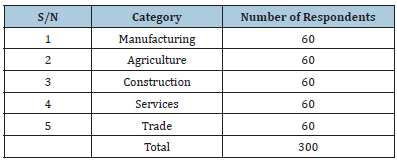
Sampling techniques are essential to the integrity and representativeness of empirical research (Cohen, Manion & Morrison, 2017). According to Cohen et al. (2002), a sample refers to a small group selected from a larger population, from which data is gathered for analysis. Given the impracticality of accessing an entire population, sampling is necessary for effective data collection. The main determinants of sampling include the sample size, representativeness, accessibility of the population, and the sampling strategy. A well-determined sample size is vital to ensure robustness and reliability. As Malhotra and Birks (2003) emphasized, a sufficiently varied and broad respondent base improves the validity of results. This is further supported by Cohen et al. (2017), who noted that while there is no absolute number, larger samples tend to increase the reliability of statistical findings and allow for more advanced analysis. In line with recent empirical studies such as Sajuyigbe et al. (2021) and Akinadewo et al. (2023), the study employed (an equal-quota) stratified sampling design, in which 60 SMEs were selected from each sector under study. This approach ensures balanced representation across sectors and comparability of findings, particularly in the absence of reliable population data on the distribution of SMEs by sector in Lagos State. The use of equal quotas allowed each sector to contribute equally to the analysis, thereby strengthening cross-sectoral insights. Therefore, a total of 300 respondents was selected and it is outlined in Table 1.
Table 1:Type and number of respondents selected..
Research Instrument
This study adopted quantitative (structured questionnaires)
approach as primary instruments for data collection. This instrument
is widely recognized for their capacity to collect structured and
comparable data across large populations, and to capture well
focused insights from individual experiences and perspectives
in particular field (Creswell and Creswell, 2018). The method
enables triangulation and enhances the validity and reliability of
findings. As a result, the quantitative instrument was a structured
questionnaire titled: “Financial Institutions, Entrepreneurship,
and Economic Development in Nigeria” (FIEEDN). The instrument
was designed to capture respondent perceptions, experiences and
demographic characteristics across five sections:
1. Section A: Demographic Information
2. Section B: Constraints and Challenges in the Business
Environment
3. Section C: Perceived Role and performance of Financial
Institutions in Entrepreneurship and Economic Development.
Each section was structured using a Yes-or-No and 5-point Likert scales ranging from Strongly Disagree (1) to Strongly Agree (5). The items were developed based on validated constructs from prior studies (Gumel 2021) and adapted to suit the Nigerian socioeconomic context. For instance, items under Section C assess entrepreneurial intent, previous start-up experience, and innovation potential, while Section D evaluates ease of accessing loans, interest rates, and procedural barriers.
Data Analysis Techniques
Quantitative analysis
Quantitative data obtained from the structured questionnaires was coded and analysed using the Statistical Package for the Social Sciences (SPSS). Descriptive statistics such as frequencies, percentages, and means were used to summarize respondents’ profiles and key variables. Inferential statistics, including regression analysis, was conducted to test the hypotheses of the study.
Procedure for data collection
During ethical clearance at relevant units, the researcher explained the purpose of the study to prospective respondents which included entrepreneurs and SME operators and obtained informed consent before participation. The study employed both physical and digital administration of the questionnaire. The instrument was shared electronically via email and online survey platforms (through Google Forms). Two trained research assistants were supported the administration and follow-up process to maximize response rates and ensure data quality. The data collection period spanned four weeks, with regular monitoring and feedback to address any issues that arose during the process.
Reliability and Validity of the Instrument
The piloting of the questionnaire are very essential objectives to confirm the methodological soundness of the instrument. By this, it is confirmed that it is reliable and generate usable data with a satisfactory response rate from entrepreneurs in different sectors of Lagos state. It further helps to identify design weaknesses in the questionnaire such as unclear phrasing, redundant items, or inappropriate sequencing of questions. This process allows for necessary revisions before launching the main survey. Additionally, the process helps to assess the conceptual relevance and measurement adequacy of the questionnaire items. This includes evaluating the clarity of terms related to financial access, institutional quality, and entrepreneurial outcomes, ensuring that respondents clearly understand the constructs and provide meaningful responses. To ensure the robustness and precision of the instrument used in this study, a pilot test was conducted involving 30 copies of the draft questionnaire administered to selected Nigerian entrepreneurs across different sectors. The primary aim is to evaluate the reliability and validity of the instrument within the context of financial institutions’ role in fostering entrepreneurship and economic development in Nigeria. Cronbach’s Alpha was estimated to assess the internal consistency of constructs and its value is α=0.92 which is higher than the threshold of 0.7. Additionally, to ensure the validity of the measurement model, both convergent and discriminant validity were assessed. Convergent validity was confirmed as all constructs such as those on: access to finance, institutional support, challenges, entrepreneurial growth and development outcomes. The recorded Average Variance Extracted (AVE) values in each case exceed the recommended threshold of 0.50. Discriminant validity was also established using the Fornell-Larcker criterion, whereby the square root of each construct’s AVE was greater than its correlations with other constructs, indicating sufficient distinctiveness among the latent variables.
Procedure for Data Analysis
After the collection and administration of the questionnaire, the
data was cleaned, coded, and entered into analytical software for
processing. At the instrument validation stage (from the pilot test),
appropriate analysis was applied to assess construct reliability and
validity. For the main study, the analysis was processed in alignment
with the research questions and hypotheses:
1. Descriptive statistics such as frequency distributions,
percentages, and graphs was employed to summarize
demographic information and address Research Question
1 (e.g., profile of entrepreneurs or financial institution
respondents).
2. Research Questions which explore relationships among
financial institution support, entrepreneurship dynamics, and
development outcomes, were analysed using frequency count
and simple percentage, depending on variable structure.
3. Hypotheses testing was carried out using the Logistic
regression and simple/multiple linear regression, which allows
for robust inference.
This multi-method analytical approach ensures both rigorous validation of measurement tools and meaningful interpretation of the empirical relationships central to the research questions and objectives.
Results and Findings
This study explores the role of financial institutions in supporting entrepreneurship and economic development in Lagos State, Nigeria. With an emphasis on understanding the interaction between entrepreneurship/SMEs and financial providers, the research draws on detailed demographic data of SME operators and investigates their business characteristics. The study is structured around clear research objectives that address access to finance, and it impact on economic development. The analysis also examines and interprets the data collected from SME respondents and engage in a critical discussion of the implications for enterprise development in Lagos. Additionally, four hypotheses were tested and validated using 5% level of significance.
Demographic Information of the Respondents
Figure 1:Showing some demographic information of the respondents.
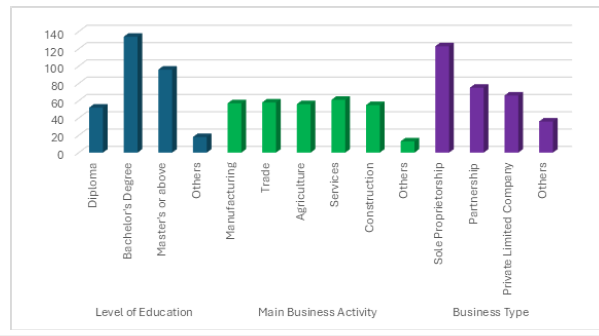
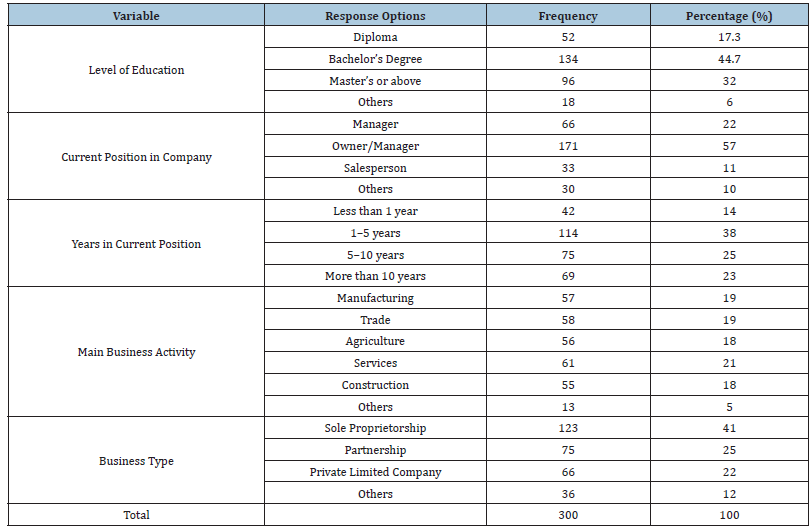
The demographic characteristics of respondents as shown in Table 1 and Figure 1 reveal a relatively educated population in Lagos State. 76.7% of the respondents possess at least a university-level qualification, with 44.7% holding Bachelor’s degrees and 32.0% possessing Master’s degrees or higher. This high level of education likely contributes to stronger financial literacy and their institutional awareness, alongside the capacity to engage effectively with formal financial systems. Additionally, the majority (57%) of respondents identified as owner-managers. Their direct involvement in management likely yields accurate insights into financing decisions and operational challenges. Regarding experience, statistics in Table 2 shows that 86% of participants have held their current roles for at least one year, with a significant portion (48%) having more than five years of experience. This suggests a mature and experienced business community capable of reflecting on longer-term patterns of financial access and enterprise growth. In terms of business activity, trade (19%) and services (21%) dominate, consistent with Lagos State’s status as a commercial and service-oriented economy. Nonetheless, the inclusion of manufacturing (19%) agriculture (18%) and construction (18%) provides sectoral breadth, which is essential for understanding how financial institutions meet varied sector-specific needs. Lastly, the structure of businesses is largely informal or semi-formal, as 41% are sole proprietorships, followed by partnerships (25%) and private limited companies (22%). This prevalence of sole ownership structures may constrain access to formal financing due to challenges like limited collateral, legal documentation, and credit history (Table 2).
Table 2:Demographic information of the respondents.
Additional Information about the Respondents
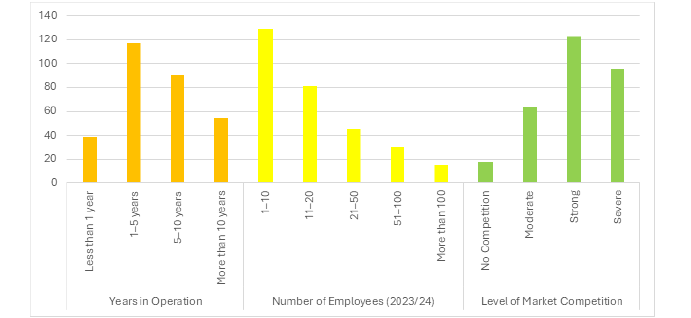
The operational profile of SMEs in Lagos State as indicated in Table 3 and Figure 2 reflects a blend of maturity, modest scale, and competitiveness. A large proportion of businesses (87%) have operated for over one year, with 48% existing for more than five years, indicating stability and experience beyond the startup phase. Such maturity is crucial for understanding the depth and duration of financial institution interactions. In terms of workforce size, most enterprises (43%) fall within the microenterprise category (1–10 employees), followed by small-sized firms with 11–20 staff (27%), and only a minimal presence (5%) of large firms employing over 100 workers. This distribution confirms the sample’s focus on micro and small enterprises, the primary clients of microfinance institutions and SME-focused bank products. Competitive dynamics are intense, with 73% of respondents reporting strong to severe competition in their markets. This heightened market pressure likely motivates firms to pursue financing for operational improvements, innovation, or expansion. The average sales figures further underscore the varied but moderate commercial success of these firms; 30% report annual sales between ₦41 million and ₦50 million, while 23% exceed ₦51 million. This indicates a sizable cohort of revenue-generating businesses that are potentially creditworthy. Export activity, however, remains low, with only 12% exporting more than half of their products. Most firms are focused on domestic markets, with 59% reporting export ratios below 20%. This low export intensity limits foreign exchange exposure but also signals missed opportunities for broader market integration and revenue diversification. These descriptive findings collectively highlight a group of relatively stable, locally oriented entrepreneurship with modest financial needs and clear potential for financial services engagement.
Table 3:Additional information of the respondents regarding their business status.
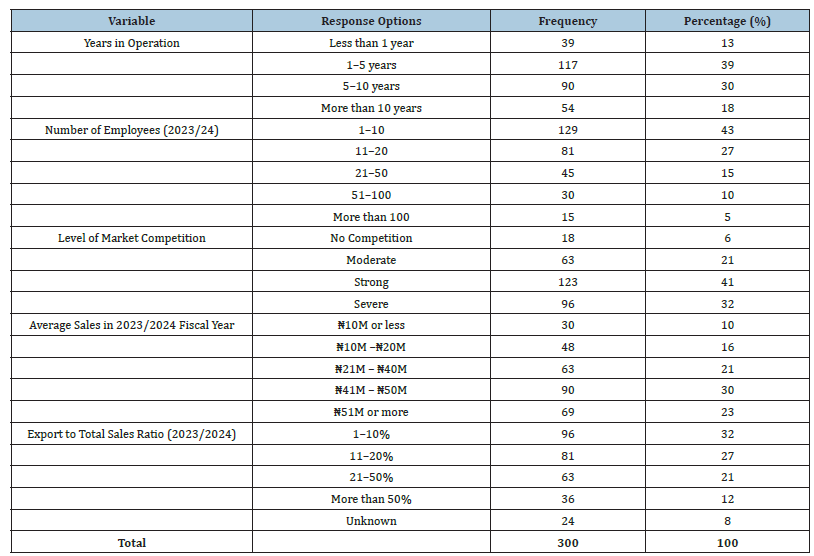
Figure 2:Showing additional information about the respondents.
Challenges in Accessing Financial Services and Coping Mechanisms
Challenges through bank
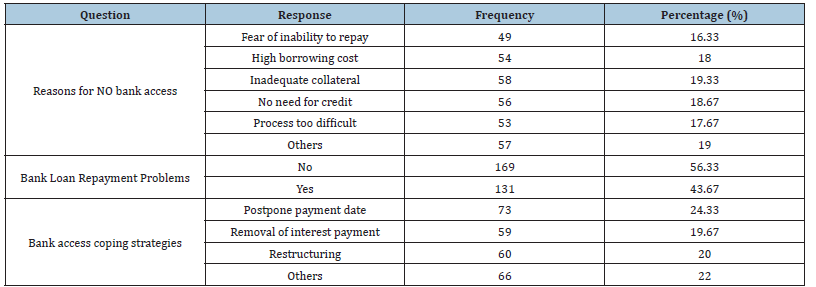
Table 4 shows that for those without bank access, the challenges are diverse and interwoven. Inadequate collateral (19.33%) emerged as the leading barrier, reflecting the asset-based lending model dominant in commercial banking, which inherently disadvantages microenterprises lacking formal property or registered assets. Meanwhile, 18.67% reported “no need for credit,” a figure that, upon closer scrutiny, may reflect discouraged borrowing behaviour rather than actual financial self-sufficiency. High borrowing costs (18%) and cumbersome loan application procedures (17.67%) add further layers of exclusion, with commercial interest rates often making bank loans unaffordable for small-scale operations with thin profit margins. The fear of repayment (16.33%) is another critical psychological barrier, pointing to the volatility and income unpredictability typical of SME operations. A residual 19% of respondents attributed their exclusion to “other” reasons, likely comprising a blend of low financial literacy, lack of credit history, or prior negative encounters with banks. Beyond access, loan repayment challenges were reported by 131 SMEs (43.67%), highlighting the fragile economic underpinnings of many small businesses. This high rate of repayment difficulty may be attributed to misaligned loan structures, inadequate grace periods, insufficient financial planning, or macroeconomic instability that disrupts expected cash flows. In some cases, businesses may be overleveraged, juggling multiple credit sources without integrated repayment strategies. To manage these repayment challenges, SMEs employed a mix of formal and informal coping strategies. The most common was postponing payment dates (24.33%), which, while providing short-term relief, may jeopardize future access to credit if not negotiated transparently. Loan restructuring (20%) and interest removal (19.67%) were also common responses, indicating a degree of flexibility from lenders, though typically as a reactive response rather than a proactive design. The use of “other” strategies (22%), potentially including reliance on informal lenders, family support, or diversion of operational funds, suggests that many SMEs still lean heavily on extra-institutional solutions during distress periods.
Table 4:Additional information of the respondents regarding their business status.
Challenges through MFIs
Among the 81 SMEs without MFI access as shown Table 5, the reported barriers largely mirror those encountered with traditional banks, despite MFIs’ intended mission. Inadequate collateral was cited by 16% of respondents. Even though MFIs are known for their non-collateralized lending approaches, the continued presence of this barrier suggests inconsistent practices across institutions or a gradual shift towards more risk-averse lending behaviours. Responses indicating “no need for credit” (14.33%) and “fear of inability to repay” (13%) suggest potential self-exclusion driven by psychological factors, past negative experiences, or a general lack of trust in financial services. These perceptions of risk or burdensome repayment obligations can deter potential borrowers, even when suitable products are available. Furthermore, the application process being too difficult (13.67%) and high borrowing costs (12.33%) point to ongoing transactional frictions. Despite their developmental mandate, some MFIs may still impose interest rates and administrative burdens that are prohibitive for small firms. The operational sustainability of MFIs often necessitates relatively higher interest rates (due to smaller loan sizes and intensive administration), which can make credit less affordable than anticipated. An “Others” category (13%) likely includes various uncaptured issues such as a lack of awareness about MFI services, misaligned loan conditions, or even religious and cultural reservations about borrowing. Despite the high MFI access rate, repayment performance remains a critical aspect of financial sustainability. 94 SMEs (31.33%) reported experiencing repayment problems, while 206 (68.67%) did not. This lower incidence of repayment issues compared to traditional banks (where 43.67% reported difficulties) suggests that MFI loans might be better structured to align with SME cash flow profiles, or that the borrower-lender relationships are more flexible and personalized. This could be attributed to factors such as smaller loan amounts, the implementation of group lending mechanisms, more handson monitoring, or the influence of social pressure inherent in joint liability models. Nevertheless, a one-third default/difficulty rate still indicates significant financial stress within MFI-supported enterprises, raising concerns about both loan sustainability and the long-term resilience of these businesses.
Table 5:Challenges in securing credit assistance from MFIs.
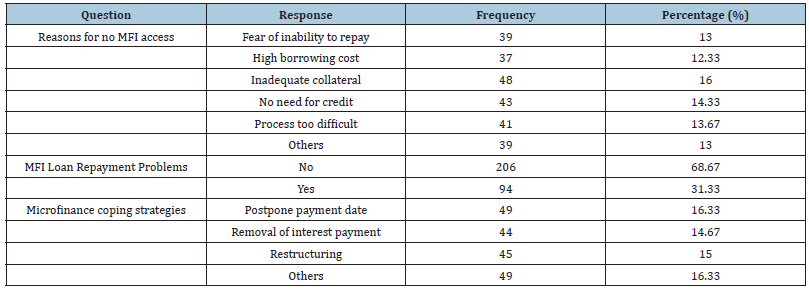
SMEs facing repayment problems employed several coping strategies. The most common approach was postponement of payment dates (16.33%), suggesting that short-term liquidity challenges are often addressed through temporary adjustments rather than fundamental structural interventions. However, frequent postponements can undermine credit culture and elevate risks to lenders’ portfolio quality. More formal relief mechanisms included restructuring loans (15%) and removal of interest (14.67%), which typically involve negotiated financial adjustments with the lender. Loan restructuring might entail extending the repayment tenor, reducing periodic obligations, or revising terms to better align with business realities. These mechanisms suggest a more borrower-friendly lending approach from MFIs compared to conventional banks. Additionally, “other coping methods” (16.33%) encompass a range of informal or alternative measures, such as borrowing from friends and family, participating in rotating savings groups, reducing operational costs, or diverting personal or business funds.
Performance and Roles of Financial Institutions in SME Funding
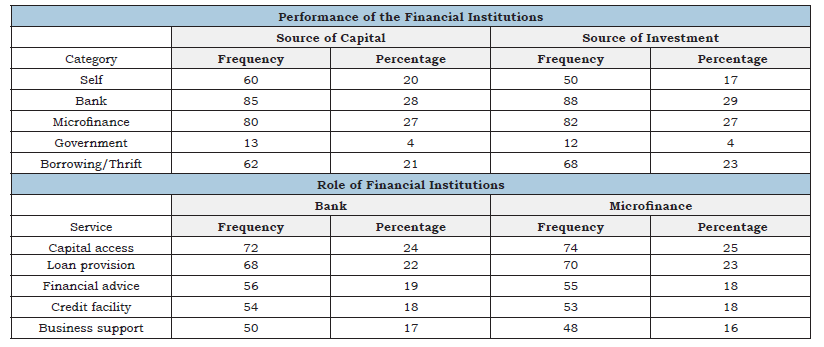
The performance of financial institutions in SME funding in Lagos as shown in Table 6 reveals a multi-channel financing ecosystem where traditional banks, Microfinance Institutions (MFIs), and informal mechanisms play significant roles. Banks led in both capital and investment financing, accounting for 28% and 29% respectively, underscoring their centrality in SME funding, particularly for larger, long-term investments. However, MFIs are nearly equally influential, contributing 27% to both funding categories, reflecting their growing relevance and accessibility to smaller or informal enterprises that often find traditional bank requirements prohibitive. The significant presence of informal borrowing/thrift systems, 21% for capital and 23% for investment, highlights the enduring role of community-based trust networks in filling gaps left by formal institutions. Self-financing, though important (20% for capital, 17% for investment), appears to be a constrained strategy, especially for growth-oriented needs, while the government’s consistently minimal contribution (4%) points to a weak policy impact on enterprise financing. In terms of institutional roles, both banks and MFIs show comparable engagement across five key services, capital access, loan provision, financial advice, credit facilities, and business support, with MFIs holding a slight edge in direct financing (capital and loans), and banks marginally ahead in advisory and business support. This indicates a functional complementarity between the two, where SMEs leverage both institutions depending on service type, accessibility, and relationship history.
Table 6:Performance and roles of financial institution on SMEs.
Testing of Hypotheses
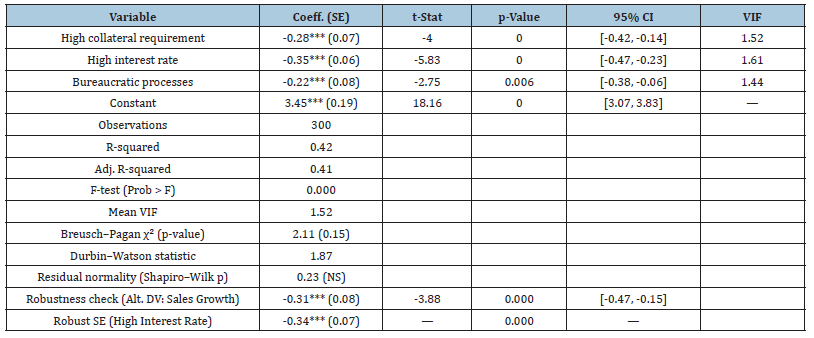
Hypothesis one: Challenges in accessing financial services have no significant effect on SME performance. Table 7 presents the results of a linear regression analysis by investigating the impact of various access challenges on SME performance. The independent variables represent specific hurdles faced by entrepreneurs in accessing financial services. The results strongly support the alternative hypothesis (H11), demonstrating that access challenges significantly and negatively affect SME performance. The p-values for all three challenge variables are well below the 0.01 significance level, leading to a definitive rejection of the null hypothesis (H01). The coefficient of -0.28 (p-value = 0.000) for ‘High collateral requirement’ indicates that for every one-unit increase in the perceived burden of high collateral, SME performance decreases by 0.28 units. As for the High Interest Rate, it shows the largest negative impact with a coefficient of -0.35 (p-value = 0.000). This suggests that escalating borrowing costs significantly erode SME performance, most likely through increased operational expenses, thus reduce profit margins and discouraging investment in expansion or innovation. Additionally, the bureaucratic processes also have a significant negative impact, with a coefficient of -0.22 (p-value = 0.006). This indicates that cumbersome and lengthy application procedures, excessive paperwork and administrative inefficiencies deter entrepreneurs and negatively affect their operational performance. The R-squared value of 0.42 indicates that 42% of the variance in SME performance can be explained by these three identified access challenges.
Table 7:Challenges in accessing financial services have no significant effect on SME performance.
Note: *** p<0.01, ** p<0.05, * p<0.1.
To ensure the reliability of these findings, several diagnostic tests were performed. The Variance Inflation Factor (VIF) values for the predictors ranged from 1.44 to 1.61, with a mean VIF of 1.52, far below the threshold of 10, indicating no multicollinearity concerns. A Breusch–Pagan test for heteroskedasticity returned a χ² statistic of 2.11 (p = 0.15), meaning the null of homoscedastic errors could not be rejected. The Durbin–Watson statistic of 1.87 confirmed the absence of problematic autocorrelation, while the Shapiro–Wilk test for residual normality (p = 0.23) showed no evidence of significant deviation from normality. These results collectively affirm that the classical linear regression assumptions hold for this model. Robustness checks further validated the stability of the results. First, SME performance was re-estimated using sales growth as an alternative dependent variable. The effect of high interest rates remained strongly negative at -0.31 (SE = 0.08, t = -3.88, p < 0.01, 95% CI [-0.47, -0.15]), consistent with the main results. Second, the regression was re-estimated with robust standard errors, and the coefficient for high interest rates was -0.34 (SE = 0.07, p < 0.01), nearly identical to the main specification. These robustness checks confirm that the observed negative effects of financial access challenges on SME performance are stable across alternative outcome measures and estimation techniques. Overall, the analysis provides clear evidence to reject the null hypothesis and conclude that structural barriers such as high collateral requirements, high interest rates, and bureaucratic lending procedures significantly reduce SME performance in Lagos State. This underscores the importance of reforms aimed at reducing the cost of credit, streamlining application processes, and easing collateral requirements as central strategies for improving SME growth and sustainability.
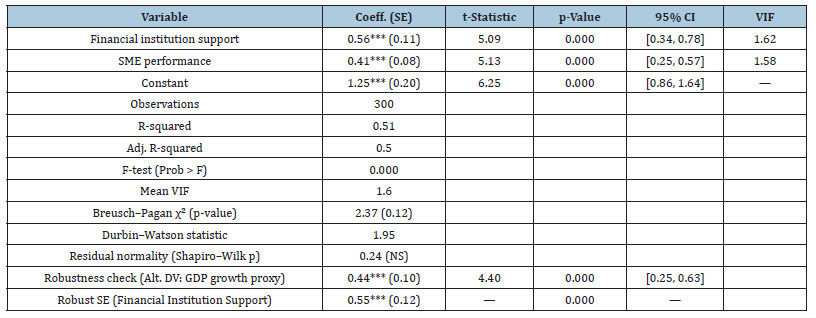
Hypothesis two: Financial institutions have no significant impact on entrepreneurship and economic development. Table 8 presents the results of a linear regression analysis examining the overall impact of financial institutions on entrepreneurship and economic development. The findings provide robust evidence to reject the null hypothesis (H02), confirming that financial institutions significantly impact entrepreneurship and economic development. Both independent variables show highly significant positive relationships with the dependent variable, with p-values of 0.000, well below the 0.01 significance level. The coefficient for ‘Financial institution support’ is 0.56 (p-value = 0.000). This indicates that a one-unit increase in the overall support provided by financial institutions is associated with a 0.56-unit increase in entrepreneurship and economic development. Also, the coefficient for ‘SME performance’ is 0.41 (p-value = 0.000). This indicates that a one-unit improvement in SME performance is associated with a 0.41-unit increase in entrepreneurship and economic development. This highlights the crucial mediating role of successful SMEs: financial institution support leads to improved SME performance, which in turn significantly fuels overall economic development. The R-squared value of 0.51 indicates that approximately 51% of the variation in entrepreneurship and economic development can be explained by the combined influence of financial institution support and SME performance. To ensure the validity of these findings, diagnostic tests were conducted. The Variance Inflation Factor (VIF) values were 1.62 for financial institution support and 1.58 for SME performance, with a mean VIF of 1.60, confirming no multicollinearity concerns. The Breusch– Pagan test for heteroskedasticity produced χ² = 2.37 (p = 0.12), suggesting homoscedasticity in the residuals. The Durbin–Watson statistic of 1.95 confirmed the absence of serial correlation, and the Shapiro–Wilk normality test (p = 0.24) indicated no significant deviation from normality. Together, these results demonstrate that the assumptions of ordinary least squares regression are satisfied. Robustness checks further validated the stability of the results. First, the dependent variable was redefined using a proxy for GDP growth, and the coefficient for financial institution support remained positive and significant at 0.44 (SE = 0.10, t = 4.40, p < 0.01, 95% CI [0.25, 0.63]), confirming that the results hold when alternative measures of economic development are used. Second, the model was re-estimated using robust standard errors to account for potential heteroskedasticity. The coefficient for financial institution support was 0.55 (SE = 0.12, p < 0.01), virtually identical to the baseline results, reaffirming the robustness of the main findings. Taken together, the results provide compelling evidence that financial institutions are pivotal in promoting entrepreneurship and economic development in Lagos State. Their support not only directly enhances entrepreneurial activity but also indirectly drives economic growth through improved SME performance. This highlights the dual role of financial institutions as both providers of capital and enablers of sustainable business ecosystems.
Table 8:Financial institutions have no significant impact on entrepreneurship and economic development.
Discussion of Findings
The analysis of SME engagement with both traditional banks and Microfinance Institutions (MFIs) in Lagos reveals a complex landscape characterized by varying levels of access, persistent barriers, and diverse coping mechanisms for repayment challenges. The survey indicates that while a majority of SMEs, 185 out of 300 (61.67%), have accessed formal banking services, a significant minority of 115 SMEs (38.33%) remain financially excluded. This mirrors the discussion in the empirical literature concerning Nigeria’s financial sector by Taiwo [28]. This persistence of exclusion underscores systemic inefficiencies and structural rigidities within conventional banking models that often prioritize larger, formally registered enterprises, leaving micro and informal businesses marginalized. The challenges for SMEs without bank access are multifaceted. Inadequate collateral (19.33%) emerges as the leading barrier, a finding consistently highlighted in Nigerian studies as a primary impediment to bank lending due to asset-based models that disadvantage asset-light SMEs (bn,, and Mafimisebi, 2022). High borrowing costs (18%) and cumbersome loan application procedures (17.67%) also act as significant exclusionary factors, aligning with observations of prohibitive lending rates and bureaucratic processes in the literature (Adebiyi 2017; Ugwu-Oju 2020). The fear of repayment (16.33%) represents a critical psychological barrier, reflecting the income unpredictability typical of SME operations, a concern also touched upon in studies examining entrepreneurial stress under economic hardship [36]. Furthermore, the 18.67% of SMEs reporting “no need for credit” may, upon closer scrutiny, reflect a form of discouraged borrowing or mistrust, rather than actual financial self-sufficiency, a behavioural aspect that highlights gaps in financial literacy and trust in formal institutions (Oyedokun 2023; Rachapaettayakom 2020). These cumulative barriers underscore that financial exclusion is not solely structural but also perceptual and behavioural, necessitating multi-faceted interventions. Beyond access, the high rate of loan repayment challenges, reported by 131 SMEs (43.67%), points to the fragile economic underpinnings many small businesses in Lagos. This substantial proportion suggests potential issues such as misaligned loan structures, insufficient financial planning, or vulnerability to macroeconomic instability. This finding implies that mere access to credit, while essential, is often insufficient for sustainable growth; without supporting mechanisms like financial coaching or better cash flow analysis, access risks turning into indebtedness rather than empowerment. The literature also points to how financial shocks can disproportionately affect SMEs, leading banks to tighten lending practices and thus indirectly impacting repayment capacity [29].
To manage these repayment difficulties, SMEs employ various coping strategies. The most common was postponing payment dates (24.33%), a short-term relief tactic that, if not managed transparently, can jeopardize future credit access. More formal, yet reactive, responses included loan restructuring (20%) and interest removal (19.67%). However, the significant use of “other” strategies (22%), which likely includes reliance on informal lenders, family support, or diversion of operational funds, aligns with findings that Nigerian entrepreneurs frequently turn to informal channels given the stringent formal lending conditions [32]; Nguyen (2021). While adaptive, these extra-institutional solutions often lack sustainability and can risk long-term business stability. Thus, the findings reveal a banking system that, while providing access to a majority, remains rigid and not fully aligned with the volatile nature of SME operations, often leading to insufficient funding and repayment difficulties. MFIs, though achieving higher access rates and offering more flexibility, are also facing challenges with collateral requirements and high costs, indicating potential mission drift. Both types of institutions face repayment challenges, with SMEs resorting to a mix of formal and informal coping strategies. The consistent themes of inadequate collateral, high costs, and psychological barriers across both formal and semi-formal financial institutions align with widespread empirical observations in Nigeria and other emerging economies. For more effective financial inclusion and sustainable SME growth in Lagos, financial institutions must rethink their approach, emphasizing flexible risk assessment, innovative collateral mechanisms, digital solutions, and integrated capacity-building partnerships that reflect the lived realities of the SME sector [38,39].
Performance and role of financial institution for SMEs in Lagos
The performance of financial institutions in SME funding in Lagos reveals a vibrant, multi-channel financing ecosystem where traditional banks, Microfinance Institutions (MFIs), and informal mechanisms each play distinct yet interconnected roles. This observed complexity strongly corroborates the existing empirical literature on financial development and entrepreneurship in Nigeria and other emerging economies, which consistently highlights the multifaceted nature of SME funding. The findings indicate that banks remain central to SME funding, particularly for larger, long-term investments, leading in both capital (28%) and investment (29%) financing. This underscores the pivotal role of formal financial development in fostering entrepreneurial success and economic growth, a consensus widely shared among scholars such as Taiwo [28] and Adebiyi 2017. However, MFIs are nearly equally influential, contributing 27% to both funding categories. This strong presence reflects their growing relevance and crucial accessibility to smaller or informal enterprises that often find traditional bank requirements prohibitive. This aligns with the literature emphasizing MFIs’ role in bridging the “missing middle” and empowering underserved segments as in the studies by Silva 2018 and Abebe 2023), particularly where banks are perceived as risk-averse or require extensive formal documentation (Awoyemi 2020).
Also, the significant presence of informal borrowing/thrift systems (21% for capital and 23% for investment) highlights the enduring and indispensable role of community-based trust networks. This finding is consistent with studies showing that many Nigerian entrepreneurs turn to these informal channels due to stringent formal lending conditions, with such systems often complementing formal financial structures ([31,32]; Nguyen, 2021). Self-financing, while accounting for a notable 20% for capital and 17% for investment, appears to be a constrained strategy for growth-oriented needs. This implicitly supports the argument that while initial self-reliance is common, external, structured finance is essential for scaling operations and driving innovation (Khyareh 2023). Conversely, the government’s consistently minimal contribution (4%) points to a weak policy impact on enterprise financing, a concern frequently raised in the literature regarding bureaucratic bottlenecks, favouritism, and complex eligibility requirements hindering the effectiveness of public support programs (Peter et al. 2018; Ugwu-Oju 2020). In terms of specific institutional roles, both banks and MFIs demonstrate comparable engagement across key services, including capital access, loan provision, financial advice, credit facilities, and business support. MFIs hold a slight edge in direct financing (capital and loans), which reinforces their mandate for financial inclusion, while banks are marginally ahead in advisory and business support. This suggests a functional complementarity where SMEs strategically leverage each institution based on their specific needs and the institution’s perceived accessibility or expertise. This notion of financial institutions as not just capital providers but also facilitators of entrepreneurial capability through advisory services resonates with scholarly discussions (Tony 2023; Abebe 2023). However, a critical observation is the relatively lower engagement by both institutions in non-financial services like comprehensive business support, suggesting a continued prioritization of transactional services over developmental support. This finding highlights a gap between current practice and the ideal, as empirical literature strongly advocates for holistic support, including financial literacy, technical education, and mentorship, as crucial for SME sustainability and growth ([34,45]; [39], Eton et al. 2021). Overall, the findings reflect a dual-provider model where both banks and MFIs are essential components, but informal mechanisms remain indispensable, and government intervention is underwhelming. This underscores the urgent need for a more integrated and inclusive financial ecosystem. Such an ecosystem would not only align the capabilities of formal institutions (e.g., through flexible risk assessment frameworks, innovative collateral mechanisms, and client-centric lending strategies as suggested by Ogunmokun [46], and Odumesi 2024 but also leverage the flexible, trust-based nature of informal finance. This integrated approach, potentially bolstered by digital financial innovations as in Odio [38] and Sanga 2025, which is crucial for meeting the diverse and evolving financial needs of SMEs in Lagos, fostering their growth, and ultimately driving broader economic development.
Conclusion and Recommendation
This study investigated the role of financial institutions in fostering entrepreneurship and advancing economic development in Lagos State, Nigeria, with a specific focus on how access challenges, institutional performance, and financial intermediation shape SME outcomes. The findings reveal that although both banks and Microfinance Institutions (MFIs) play essential roles in SME financing, structural barriers such as high collateral requirements, elevated interest rates, and bureaucratic lending procedures significantly impede entrepreneurs’ access to credit and consequently reduce business performance. Regression results confirm that these barriers exert a strong negative effect on SME outcomes, explaining 42 percent of the variation in firm performance. Among these constraints, high interest rates had the most pronounced adverse impact, followed by collateral constraints and procedural bottlenecks, highlighting the extent to which the cost and complexity of credit undermine entrepreneurial competitiveness. Furthermore, while MFIs demonstrated relatively better repayment performance and greater flexibility than commercial banks, their reach remains limited, and about onethird of beneficiaries still experience repayment difficulties. The persistence of informal coping mechanisms such as postponement of payment dates, reliance on family networks and informal borrowing underscores the fragility of SME financial resilience and the continuing reliance on extra-institutional solutions. The analysis also confirms that financial institutions have a statistically significant positive impact on entrepreneurship and economic development. A one-unit increase in institutional support was associated with a 0.56-unit rise in entrepreneurship and development, while a similar improvement in SME performance produced a 0.41-unit increase in economic outcomes. These results emphasize that the effectiveness of financial institutions operates through both direct and indirect channels: direct through capital provision and advisory services and indirect through their influence on SME performance, which serves as a critical conduit for economic growth. The relatively high explanatory power of the model (R² = 0.51) underscores the centrality of financial institutions in driving regional economic transformation when effectively structured and supported [47-49].
Based on these findings, the study concludes that the financial sector in Lagos State, while vibrant, remains constrained by high lending costs, collateral rigidity, administrative inefficiency, and insufficient institutional coordination. The developmental potential of financial institutions will therefore depend on a reorientation from a purely transactional model toward a more developmental and inclusive framework. This requires financial institutions to strengthen credit risk assessment using alternative scoring systems, adopt flexible collateral frameworks, and design needs-based financial products tailored to SME cash flow realities. Equally important is the expansion of non-financial services, including mentorship, financial literacy, and business advisory programs, which can enhance managerial competence and longterm sustainability. Government and regulatory agencies should streamline loan processes, harmonize credit guarantee schemes, and incentivize financial institutions through targeted tax reliefs or concessional policies that encourage lending to productive sectors. Strengthening transparency and oversight in public financing programs is critical to reducing misallocation and ensuring that support reaches genuine entrepreneurs.
Acknowledgement
The authors gratefully acknowledge the research assistance provided by Hamzat Agiri.
References
- Adanlawo EF, Vezi-Magigaba M (2021) Small and medium scale enterprises in Nigeria: The effect on economy and people’s welfare. African Journal of Development Studies 11(2): 163-181.
- Shiro AO, Abiola JO (2023) Financial inclusion, electricity reliability, and SME performance in Nigeria. Journal of African Economic Development 12(4): 234-249.
- Edobor AT, Ugwamba E, Okpala NR (2024) Economic diversification: Harnessing the impact of small and medium enterprises on economic growth in Nigeria. UMM Journal of Accounting and Financial Management 4(1): 2024.
- World Bank (2022) SME financing gap in Nigeria: An analytical assessment. World Bank Group, USA.
- Beck T, Demirgüç-Kunt A (2006) Small and medium-size enterprises: Access to finance as a growth constraint. Journal of Banking & Finance 30(11): 2931-2943.
- Abor JY, Quartey P, Ahmad AH, Opoku-Afari M (2022) FinTech and the future of banks and financial services in Africa. In The economics of banking and finance in Africa: developments in Africa’s financial systems, pp. 135-180.
- National Bureau of Statistics (2022) Lagos state economic statistics report. National Bureau of Statistics, Nigeria.
- (2021) Small and Medium Scale Enterprises Development Agency of Nigeria (SMEDAN) and entrepreneurship development in Ebonyi State: A Study of SMES Benefiting from SMEDAN Programmers.
- United Nations Conference on Trade and Development (2022) Technology and innovation report 2022: Fintech and financial inclusion. UNCTAD, Switzerland.
- Ononiwu A, Smith J, Lawal T (2024) Institutional quality and SME financing in Nigeria: Regulatory transparency and credit expansion. Journal of African Business 25(1): 50-73.
- Akinwale SO (2019) Industrial policy and industrial sector productivity in Nigeria.
- Beck T, Demirgüç-Kunt A, Levine R (2005) SMEs, growth, and poverty: Cross-country evidence. Journal of Economic Growth 10(3): 199-229.
- Ayyagari M, Beck T, Demirgüç-Kunt A (2008) Small and medium enterprises across the globe. Small Business Economics 29(4): 415-434.
- Demirgüç-Kunt A, Klapper L, Singer D, Van Oudheusden P (2022) Global Findex database 2021: Financial inclusion, digital payments, and resilience in the age of COVID-19.
- Olafusi TA, Ishola AR, Abimbola BT, Idowu OJ (2022) Development of SMEs in Africa: The role of crowdfunding. International Journal of Entrepreneurship 26(5): 1-16.
- Ediagbonya V, Tioluwani C (2023) The role of fintech in driving financial inclusion in developing and emerging markets: issues, challenges and prospects. Technological Sustainability 2(1): 100-119.
- Shittu O, Sabari, MH, Abdullahi N (2022) Impact of information asymmetry on access to finance by SMEs: The moderating role of financial regulations. Lapai Journal of Management Sciences 11(1): 425-493.
- Akintayo A, Odeh CD, Lawal NA (2024) Credit accessibility and Small and Medium Sized Enterprises (SMEs) in Osun State, Nigeria. Global Business Management Review 16(1).
- North DC (1990) Institutions, institutional change and economic performance. Cambridge university press, UK.
- Acs ZJ, Estrin S, Mickiewicz T (2018) Entrepreneurship, economic growth, and institutions. Oxford University Press, UK.
- Williamson OE (2000) The new institutional economics: Taking stock, looking ahead. Journal of economic literature 38(3): 595-613.
- Estrin S, Korosteleva J, Mickiewicz T (2013) Which institutions encourage entrepreneurial growth aspirations? Journal of business venturing 28(4): 564-580.
- Ojochide A, Peter A, Oluwaseyi O, Adeyemi K (2022) Trade credit management and SMEs sustainability: A study of selected SMEs in Lagos, Nigeria. International Journal of System Assurance Engineering and Management 13(4): 1532-1547.
- Saka A, Amuda T, Bamisaye A, Ogunyemi F, Saka T (2025) Microfinance and non-financial services: Implications for SME sustainability in Nigeria. Journal of African Business Research 19(2): 177-196.
- Teece DJ, Pisano G, Shuen A (1997) Dynamic capabilities and strategic management. Strategic management journal 18(7): 509-533.
- Teece DJ (2018) Business models and dynamic capabilities. Long range planning 51(1): 40-49.
- Miocevic D, Morgan RE (2018) Strategic flexibility and financial performance in entrepreneurial firms. Journal of Business Research 89: 450-457.
- Taiwo MA, Falohun A (2016) Impact of small and medium enterprises on national economic growth. International Journal of Economics, Commerce and Management 4(5): 550-567.
- Owualah SI, Ohadebere S (2019) Financial crises and SME credit rationing: Evidence from Nigeria. African Journal of Economic and Management Studies 10(1): 102-118.
- Liu Y, Dilanchiev A, Xu K, Hajiyeva AM (2022) Financing SMEs and business development as new post Covid-19 economic recovery determinants. Economic Analysis and Policy 76: 554-567.
- Adeosun OT, Shittu AI, Ugbede D (2023) Disruptive financial innovations: The case of Nigerian micro-entrepreneurs. Journal of Business and Socio-Economic Development 3(1): 17-35.
- Godwin TG, Simon IA (2021) Financing entrepreneurship development in Nigeria through informal financial institutions. International Journal of Research Science and Management 8(2): 8-17.
- Vincent AA, Segun IB, Loretta NN, Abiola A (2021) Entrepreneurship, agricultural value-chain and exports in Nigeria. United International Journal for Research and Technology 2(8): 1-8.
- Hamzat L, Abiodun D, Joseph A (2023) Empowering entrepreneurial growth through data-driven financial literacy, market research, and personalized education tool. World Journal of Advanced Research and Reviews 19(2): 1692-1711.
- Abdulai MG, Issahaku H (2024) The effect of financial development and legal institutions on financial inclusion in Sub-Saharan Africa. Journal of Open Innovation: Technology, Market, and Complexity 10(1): 100255.
- Mercy A (2023) Effect of economic hardship on entrepreneurial stress among youth in Rivers State, Nigeria. International Journal of Functional Research in Arts and Humanities (IJFRAH): 2(1).
- Murtala AK, Lawal MM (2024) The impact of diverse tax policies on the performance of small and medium enterprises in Nigeria. Journal of Economics and Development (UJED) 1(1): 89-98.
- Odio PE, Kokogho E, Olorunfemi TA, Nwaozomudoh MO, Adeniji IE, et al. (2021) Innovative financial solutions: A conceptual framework for expanding SME portfolios in Nigeria's banking sector. International Journal of Multidisciplinary Research and Growth Evaluation 2(1): 495-507.
- Oyedokun GE, Amoo AA (2023) Financial inclusion and performance of the small and medium enterprises in Ibadan, Oyo State, Nigeria. Asian Journal of Social Science and Management Technology 5(6): 183-203.
- Murtala AK, Lawal MM (2024) The impact of diverse tax policies on the performance of small and medium enterprises in Nigeria. Journal of Economics and Development (UJED) 1(1): 89-98.
- Creswell JW, Plano Clark VL (2023) Designing and conducting mixed methods research (4th edn), SAGE Publications.
- McMillan JH, Schumacher S (2010) Research in education: Evidence-based inquiry (7th edn), Pearson, UK.
- Viljoen E (2007) Sampling and its practical application in research. University of South Africa Press, South Africa.
- Etikan I, Musa SA, Alkassim RS (2016) Comparison of convenience sampling and purposive sampling. American Journal of Theoretical and Applied Statistics 5(1): 1-4.
- Rachapaettayakom P, Wiriyapinit M, Cooharojananone N, Tanthanongsakkun S, Charoenruk N (2020) The need for financial knowledge acquisition tools and technology by small business entrepreneurs. Journal of Innovation and Entrepreneurship 9(1): 1-28.
- Ogunmokun OC, Mafimisebi O, Obembe D (2024) Bank lending behaviour and small enterprise debt financing. Journal of Entrepreneurship in Emerging Economies 16(3): 675-697.
- Creswell JW, Creswell JD (2018) Research design: Qualitative, quantitative, and mixed methods approach (5th edn), SAGE Publications.
- Organisation for economic co-operation and development (2020) Financing SMEs and entrepreneurs 2020: An OECD scoreboard. OECD Publishing, France.
- World Bank (2020) Nigeria economic update: Leveraging innovation for growth. World Bank Group, USA.
© 2026 Yinka S Hammed. This is an open access article distributed under the terms of the Creative Commons Attribution License , which permits unrestricted use, distribution, and build upon your work non-commercially.
Editor In Chief







.jpg)































Signup for Newsletter

Quick Links
 Editorial Board Registrations
 Submit your Article
 Best Paper of the Volume
 Reprints
 Refer a Friend
 Advertise With Us
Our Recent Edition

.jpg)



Top Editors




.jpg)

















.bmp)
.jpg)
.png)
.jpg)













.jpg)






.png)

.png)




.png)




Financial Support

Sponsors

Latest e-Books

Latest Video

 a Creative Commons Attribution 4.0 International License. Based on a work at www.crimsonpublishers.com.
Best viewed in
a Creative Commons Attribution 4.0 International License. Based on a work at www.crimsonpublishers.com.
Best viewed in 
 | Above IE 9.0 version