

- About Us
- Information
-

The Author ensures that the research has been conducted responsibly and ethically with adherence to all relevant regulations. read more..
- For Authors
- For Reviewer
- Manuscript Guidelines
- Membership
- Publication Ethics
-
- Journals
- Reprints
- e-Books
- Videos
- Policies
- Contact Us
 COVID-19
- Submissions



Full Text
Strategies in Accounting and Management
Navigating the Path of Entrepreneurship in Emerging Economies: Spotlight on SMEs in Bangladesh
Mahamudul Hassan1* and Ayesha Ahmed Ridi2
1Associate Professor Chairman, Department of Development Studies, Bangladesh University of Professionals, Bangladesh
2Lecturer, Department of Development Studies, Bangladesh University of Professionals, Bangladesh
*Corresponding author:Mahamudul Hassan, Associate Professor Chairman, Department of Development Studies, Bangladesh University of Professionals, Bangladesh
Submission:February 11, 2026;Published: March 23, 2026

ISSN:2770-6648Volume6 Issue 1
Abstract
This study thoroughly explores entrepreneurs’ significant challenges in developing countries, using Bangladesh’s SME sector as a focal point. Despite a vibrant entrepreneurial spirit, Bangladesh contends with unique obstacles that impede the growth and success of entrepreneurial ventures. These challenges include inadequate infrastructure, complex regulatory systems, limited capital access, high transaction costs, and a lack of entrepreneurial education and training. By applying systematic review, this paper suggests that technological advancements, particularly Artificial Intelligence (AI) integration, are required to mitigate these challenges and foster a more supportive environment for entrepreneurial growth. By drawing on global references, the study underscores the need for strategies specifically designed to enhance entrepreneurship in Bangladesh. The paper concludes by analyzing entrepreneurial behavior patterns based on extensive literature reviews from different secondary sources. This study contributes significantly to the broader discussion on entrepreneurship in developing countries and lays the groundwork for future research. Finally, several potential recommendations are proposed, including infrastructure development, regulatory simplification, access to capital, entrepreneurial education and training, promotion of AI and technology, regional development strategies, and research and development. These recommendations aim to tackle the significant challenges of entrepreneurship in developing countries like Bangladesh and pave the way for future entrepreneurial initiatives.
Keywords:Infant industry; LDC; Entrepreneurship; Emerging economies; SME; Developing country
Introduction
Developing countries are unique in terms of features as these countries have increasing rates of population and unemployment. This unemployment can be defined as “Underemployment” and “Open unemployment.” Underemployment refers to “the people who do not have enough productivity after giving the full effort.” On the other hand, “Open unemployment refers to “the people who are eager to work, but they do not have enough scope to work.” These countries have a typical pattern as workers do not have enough skills and are incapable of entering the formal job market [1]. Entrepreneurship plays a very important role in eradicating poverty in both urban and rural sectors. While several qualification requirements remain to enter a formal job, starting entrepreneurship is open to all, and there are no hard and fast requirements. Entrepreneurship is a key to economic development in many countries across the globe, as it opens new opportunities for people who do not have a strong background in education. In the context of developing countries, this method plays a vital role in eradicating poverty. They are the change agents in the economy [2]. According to the definition of the World Bank, “SMEs which are micro in scale contain less than 50 workers; small scale SMEs contain 50 workers and medium scale SME contains 50-200 workers” [3]. Small businesses provide employment, serve local community needs, and fuel grassroots economic growth.
As employment issues grow in developing countries, social entrepreneurship organizations are expected to become change agents in the social sector. Though SMEs have growing aspects, entrepreneurs face many challenges in developing countries when establishing their enterprises. Bangladesh is geographically located in the north-eastern part of South Asia and does not have a strong economy. Bangladesh is an emerging economy that faces many challenges in the areas of capital creation, market development, innovation, balancing wealth distribution with marginal development, innovative products and services, and GDP growth. We are also facing challenges in inflation management, trade and payment balances, boosting living standards, and, most importantly, maximizing the use of technology to utilize natural resources [4]. To start up a new business is not easy in this country. An entrepreneur must suffer a lot in this whole process. This study will explore the critical economic challenges SMEs face (Small and medium enterprises) face in developing countries by focusing on Bangladesh’s perspective. In November 2026, Bangladesh will no longer be classified as a Least Developed Country (LDC). Following graduation, Bangladesh’s economic development will encounter numerous obstacles. However, Bangladesh might only receive some of the benefits following the changeover. It is only feasible to compensate for that loss by learning new abilities. After this shift, several sectors will suffer greatly, and the SME sector is one of them. Bangladesh might need help to continue receiving the benefits it was granted as an LDC in copyright, subsidies, patents, ICT, and services after graduation.
Objective of the Study
By applying a systematic review of several secondary sources, this study will explore the critical economic challenges SMEs face (Small and medium enterprises) in developing countries by focusing on Bangladesh’s perspective. This paper also explores the potential role of technological advancements, particularly Artificial Intelligence (AI) integration, in mitigating these challenges and fostering a more supportive environment for entrepreneurial growth.
Rationale of the Study
Starting an enterprise is difficult in the setting of developing countries during the Fourth Industrial Revolution (fourth industrial revolution) for several reasons. SMEs might be crucial to Bangladesh’s macroeconomic development. Since these companies generate jobs and invigorate the industry, small and medium-sized firms are the most cost-effective and valuable means of reducing poverty and promoting industrial growth. It increases GDP as well. Numerous difficulties currently need to be solved by the SME sector. The government of Bangladesh should address issues early on to alleviate problems, as the nation will graduate from LDC status in 2026 and will no longer receive preferential subsidies. This industry has a ton of capacity to grow. In this regard, this study will find out the key challenges Bangladesh faces in terms of the establishment of sustainable entrepreneurship and will face in the long run in this era of technological advancement and how these challenges can be met to ensure a fostering environment for entrepreneurial growth.
Study Design
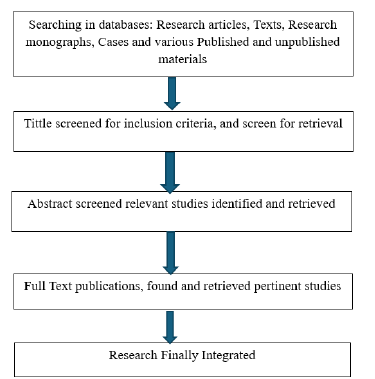
This study has followed a systematic review process to explore the key economic challenges faced by SMEs in developing countries focusing on Bangladesh. This study’s findings were based on publications in English-language journals. Significant and supporting secondary data- such as research papers, research monographs, case studies, and other published and unpublished materials- were gathered through desk research. Keywords including microcredit, entrepreneurship, entrepreneurial ventures, access to financing, transaction costs, infant industry, government policy, SME (small and medium businesses), and ease of doing business were used to search for the articles. Consequently, all entrepreneurship-related publications were gathered beforehand, and once the search was finished, an abstracts list was created. A prepared checklist that included the author’s name, the title of the article, the study period, the community being studied, the study location, the research outcome, the study tool, the study design, and the kind of changes was used to collect data. This study collected an English-language article titled “SME and Entrepreneurship in the Context of Bangladesh.” It should be noted that research considered the main economic obstacles Bangladesh faced in establishing its business. It was determined that 246 articles were pertinent to 90. Because they were redundant and unrelated to the study, 29 out of the 156 papers were eliminated. Fifty of these articles dealt with entrepreneurship. Upon examination of the article abstracts, 25 publications that lacked the necessary details were disqualified from additional evaluation. Finally, 29 publications met the inclusion criteria and were added to the research (Figure 1).
Figure 1:Results of preferred reporting items for systematic reviews.
Literature Investigation
Entrepreneurship plays a vital role in enhancing economic growth. It makes significant contributions in various forms, such as employment, innovation, and welfare. It has also had a substantial impact on women’s empowerment at the grassroots. Additionally, the relationship between entrepreneurship and economic development was “S-shaped” and in this stage of development, one country passes through three different stages of entrepreneurial development. They are Infancy, Expansion, and Maturity. In the stage of maturity, one company looks for innovation and they achieve higher efficiency [5]. Infant industries are the emerging industries in developing countries that need extra protection to compete under pressure in the international market [6]. In developing countries like Bangladesh, infant industries play a vital role in engaging grassroots people in an economy.
Entrepreneurship in developing countries
Entrepreneurship in developing countries has unique features. There are two types of entrepreneurs in developing countries. Due to inadequate formal job facilities people chose their career path as entrepreneurs. Initial funding and capital are crucial to starting a business [7]. They start their companies when they do not have any other options remaining. This livelihood approach provides them with earnings to sustain their family and the capital to reinvest in the development of their business [8]. Promoting and supporting entrepreneurs are critical factors in achieving microeconomic and macroeconomic stability. In this regard, to mention severe consequences, Holcombe [9] initiated the issue that if a developing country cannot support its entrepreneurs, educated people will choose to leave the country due to a lack of entrepreneurial opportunities in their homelands. This sort of “Brain Drain” will continue if the Government cannot support them. “Import substitution” is one of the best strategies for achieving economic development in developing countries. By producing imported items locally, it aims to lessen reliance on imports and foreign influence in the local economy. The first requirement for attaining economic development in emerging nations that support “infant industries” is to establish “import substitution” [10]. High tariffs, export charges, and production subsidies to domestic producers are policies that support emerging industries. Regarding this, Bruton [11] clarified, “The countries of the South must protect their economies from imports from the North and concentrate on putting in place new activities that will produce the variety of manufactured goods that are currently imported to industrialize, given the existence of already industrialized and highly productive economies (the North)”. Duaadehraj [10] noted that developing nations’ economies will grow more rapidly if they provide support to the emerging sector.
Challenges facing developing countries to establish entrepreneurship
Small and Medium-Sized Businesses (SMEs) are the core
of Bangladesh’s manufacturing industry. SMEs, often defined
as businesses with few employees and low turnover, generate
approximately 45% of value addition and employ nearly all of
Bangladesh’s manufacturing workforce. These SMEs employ
approximately 90% of the manufacturing enterprises and 25% of
Bangladesh’s labor force. Additionally, they contribute significantly
to the nation’s export earnings, making up between 75 and 80
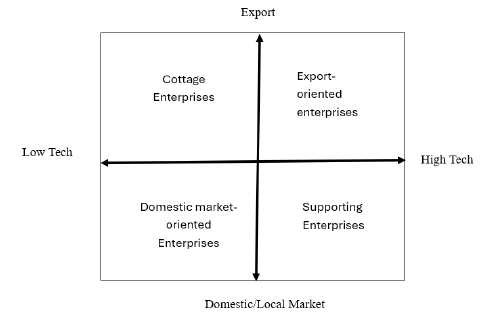
percent of the overall [12,13]. There are the following typologies
of SME by market and technology (Figure 2). Small and Medium
Enterprises can be classified as Low Technology or High Technology
and domestic or export criteria. Based on two criteria, SMEs could
be categorized into four groups:
a) Supporting industry: The eligible investment schemes
directly provide their goods or services to these industries in
support of their export operations.
b) Export-oriented enterprises: The enterprises which concern
export by using high technology.
c) Domestic market-oriented enterprises: Businesses that
concentrate on the domestic market are established in the
nation in consideration and offer their products and services
to their population.
d) Cottage enterprises: A cottage industry is a small
manufacturing enterprise run and managed by a person or
family.
Figure 2:Typology of SME by market and technology (Source: Uchikawa [13]).
These businesses usually operate out of homes rather than facilities designed for that purpose. The minimal initial expenditure needed to launch a cottage industry defines it. One of the advantages of developing nations is their labor force. Making use of these resources is a significant difficulty in developing nations. According to Lingelbach et al. (2005), creating growth-conscious, productive enterprises will be a long-term way to attain macroeconomic stability in this regard. The common challenges faced by developing countries are reliable electricity, robust telecommunications, efficient transportation networks, and easy access to investment capital. Developing countries also face problems related to insurance, information asymmetry, lack of mentorship and apprenticeship opportunities that can expose them to the skills and experiences needed to launch and expand businesses in challenging environments, and high transaction costs. To provide legislation for sustainable entrepreneurship practices in developing countries, he additionally wrapped up diversifying the economy.
It is found that the inefficiency of the import substitution strategy and the complexity of the bureaucracy created by import substitution and entrepreneurs would be more likely to engage in rent-seeking, evasive, and ‘unproductive’ entrepreneurial activities rather than in socially ‘productive’ entrepreneurship [5]. Formal connections with international trade partners and customer bases will enable businesses to reach their full potential [8]. With the right mix of governmental support, access to resources, and an unwavering entrepreneurial spirit, developing economies can unlock the full potential of their people and local businesses to create sustainable growth and prosperity [14]. The lack of institutions in many developing countries often results in a shortage of formal employment opportunities in those countries and leaves substantial portions of the population with little choice but to set out on their own. So-called “reluctant entrepreneurship” of this type also follows the loss of employment, which may be caused by one of the frequent economic shocks that developing countries are prone to suffer [8]. According to North [15], in developing countries, people become hopeless and remain poor as they do not have proper institutional support which provides rents and manipulates the rules in a manner favorable to them. These challenges include inadequate infrastructure, complex regulatory systems, limited access to capital, and a lack of entrepreneurial education and training. By applying systematic review, this paper also explores the potential role of technological advancements, particularly Artificial Intelligence (AI) integration, in mitigating these challenges and fostering a more supportive environment for entrepreneurial growth. The SME sector in Bangladesh is one of the country’s emerging industries at the moment. Small And Medium-Sized Businesses (SMEs) are vital to Bangladesh’s economy because they foster innovation, GDP growth, and employment opportunities. The Small and Medium Enterprise (SME) sector in Bangladesh is thriving and comprises 33 subsectors of goods and services. According to data, SMEs contribute to 48.41 percent of Bangladesh’s GDP, 35.41 percent of workers’ employment opportunities, and 50.91 percent of the microeconomic sector [16]. As a result, trade associations, chambers of commerce, and sectoral business associations are significant in Bangladeshi business circles. To establish sustainable entrepreneurship, interest rate is one of the barriers and it makes it unattractive to borrow [17]. The SME sector is heavily impacted by several factors, such as complicated regulatory frameworks, restricted access to capital, a lack of entrepreneurial education and training, and infrastructure issues like high energy, water, and transportation costs, high interest rates, and extortion. These factors also raise transaction costs, making doing business more challenging and unprofitable in the marketplace. Like poor transportation infrastructure, poor information infrastructure can lessen the appeal of goods commerce within regions [18].
It may be added that small Business Enterprises have proved to be the best option for making a livelihood rural sector [19]. Men who live in rural areas are primarily engaged in agriculture and females remain idle in their houses due to a few social and cultural barriers [20]. Initially, the main barrier is to access funds and microcredit plays a very influential role in entrepreneurship. Women initially face a lot of struggles to establish entrepreneurship as they do not have enough economic freedom and decisionmaking power [21]. Government microfinance initiatives target aspiring women entrepreneurs and youth to help bridge the capital access gap. Again, investing in basic infrastructureelectricity, internet access, and transportation systems will remove major hindrances entrepreneurs face [10]. The development of rural entrepreneurship in Bangladesh primarily depends on the socioeconomic development of the people. It is necessary to develop rural entrepreneurship to foster the development of the capabilities of the borrowers [20]. Bangladesh has a serious lack in terms of infrastructure. Shortage of energy and power supply is seriously affecting the growth of entrepreneurship. Corruption is a routine in the society of Bangladesh which increases the cost of doing business, discourages both local and foreign investment, and hampers the development of entrepreneurship. Bangladesh ranked 168 out of 190 countries in the “Ease of Doing Business” indicator. It is mentioned that Romania’s case was unproductive in terms of entrepreneurship as frequent changes in laws and regulations as well as corruption was spread out there and this created a hostile impact on their business environment [22].
It is acknowledged that institutions play a significant role in improving competitiveness in developing nations and that the “rules of the game” should be established to promote successful entrepreneurship [23]. For instance, made the case that successful entrepreneurship is possible after the rule of law is established [24]. In this regard, the South Korean Policy on SMEs is favorable for flourishing SMEs as well as achieving economic growth [25]. Milo [26] noted that “economic performance is closely related to an institution which controls the rule of law, bureaucratic quality, corruption, government repudiation of contracts, civil liberties, and openness to trade.” Following years of research, the general conclusion seems to be that formal political and economic law from rich countries will not logically and automatically translate into strong economic performance in developing countries [27]. In this regard, “one-size-fits -” which concerns all countries, will follow the same recipe to enhance their institution, which has to be abandoned. Innovation is essential to growth and catching up in an international economy. According to Naudé et al., 2011 entrepreneurs in developing nations use innovation when they copy goods or procedures first developed in other regions and modify them for application in their economy. This “innovation” is crucial for improving industrial efficiency and modernizing technology. Another type of “innovation” that developing nations can profit from is enhancing their ability to “absorb and creatively adapt international technological knowledge.” Innovation in technology and the development of artificial intelligence are the primary drivers of sustainable entrepreneurship in developing nations. These literatures indicate that there is ample research scope on how to develop entrepreneurship in developing countries as well as Bangladesh. This study will bridge the gap of key challenges Bangladesh as a developing country will face in terms of entrepreneurship after LDC graduation [28].
Discussion and Analysis
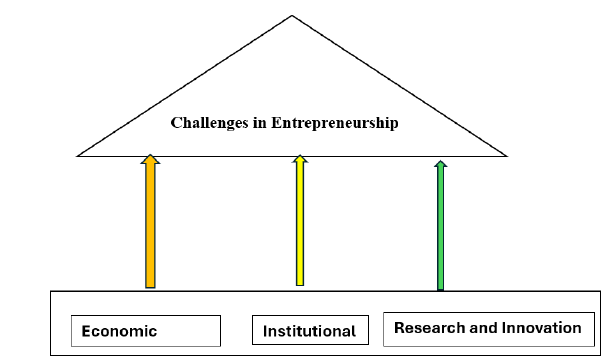
There are three thematic challenges in Entrepreneurship observed in developing countries like Bangladeshi perspectives (Figure 3).
Figure 3:Challenges faced by entrepreneurs in developing countries. Source: Author’s Compilation
Economic challenges
Initial capital formation: Initially, fund management is a very crucial factor in starting up an enterprise. In the poor socioeconomic background, people often face loads of struggle to manage funds. Many people do not have enough family backups, that is why they feel insecure about investing large amounts of money. Due to high interest rates and security issues, people often feel insecure investing money in these enterprises. From the literature it can be said that in Bangladesh context, many of the people have proper business plan but they cannot implement the plan due to lack of capitals. Credit accessibility is also one of the major issues in this case.
Institutional challenges
Rule of law establishment: The rule of law is one of the indicators of good governance. Establishing a sustainable entrepreneurship practice is one of the key challenges in this sector. Most SME sectors are infant industries, and they need extra support from the Government. So, property rights should be ensured through the rule of law, and it will motivate entrepreneurs in terms of research and innovation as well as training in Artificial Intelligence (AI).
High transaction cost: High transaction cost is also a hindrance to achieving economic growth in Bangladesh. The socio-economic background of the entrepreneurs is not so sound. In most cases, they must sell their property or rent to start a business. But in maximum cases it takes lots of time, which is why entrepreneurs cannot start any business easily. Due to bureaucratic red-tapism, people feel demotivated to start up new businesses.
Lack of infrastructural development: Infrastructure plays a significant role in establishing sustainable entrepreneurial practices. Infrastructure mainly provides strong connections, which is helpful for production and for making finished goods. Continuous energy supply is the first and foremost criterion of infrastructural development. So, to establish SMEs and entrepreneurship, energy supply and communication systems should be improved. Political stability is important in terms of the stability of entrepreneurship.
Research and innovation
Proper training to start-up: In this 4IR (Industrial Revolution) era, Bangladesh still needs to catch up to provide technological training to new entrepreneurs. Many of the workloads have been reduced due to the invention of Artificial Intelligence (AI). There should be some incentives policy for those who will be successful in entrepreneurship. There is no formal training center or counseling sector for entrepreneurs. Though some government organizations have training centers, they should introduce some counseling centers where they can get information. In this training process, Non-Government Organizations (NGOs) can bridge the gap. To enhance the technology in entrepreneurship, the course regarding “Entrepreneurship” should be mandatory for all disciplines so that everyone has the idea of it from the very beginning. To make entrepreneurship sustainable, proper knowledge in this regard is very important (Figure 4).
Figure 4:Challenges faced by Bangladesh as a developing country to establish “Entrepreneurship”. Source: Compilation by authors.
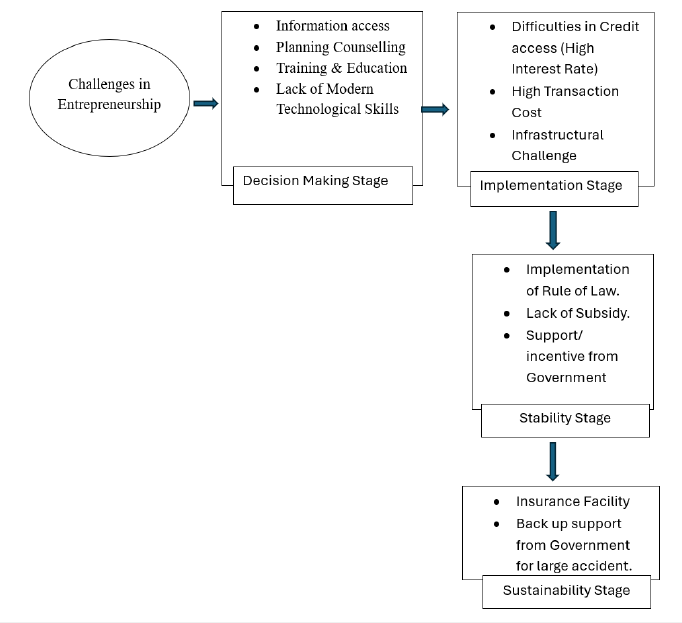
Conceptual framework of challenges in developing countries to establish “entrepreneurship”
The conceptual framework indicates that to establish an enterprise (SME) usually entrepreneurs face different types of challenges. To promote sustainable entrepreneurship, these challenges should be addressed in future planning:
Decision making stage
Entrepreneurs in this stage face considerable obstacles when starting a business. They mainly need support from family, peer groups, and the Government. To start a business with proper support from the government, namely by providing initial capital, training facilities should be provided to the aspirant entrepreneurs.
Implementation stage
In this stage, entrepreneurs face economic challenges as the transaction cost is higher and time-consuming. Most people face struggles due to the formal channel of the support system. Many of the business plans are destroyed in this stage.
Stability stage
This is the expansion stage, where entrepreneurs expand their businesses by adding extra capital. If they do not get proper support from the Government, they will face great economic losses. Implementing the Rule of Law, Subsidies, and Support/incentives from the Government play an influential role in this stage.
Sustainability stage
Finally, Insurance facilities and government back-up support for large accident types are required to protect the SME sectors. Most importantly, imposing import quotas will also help protect the local economy.
Conclusion
The study advocates for a strategic approach tailored to the specific needs of Bangladesh. It recommends developing supportive infrastructure, simplifying regulatory processes to foster business growth, and improving access to capital through diverse funding mechanisms. Moreover, it stresses the importance of entrepreneurial education and training to equip individuals with the necessary skills for success in a competitive market. Using global examples, the study provides valuable insights for policymakers, educators, and entrepreneurs. It emphasizes the need for collaborative efforts to create an ecosystem that supports entrepreneurial success. The recommendations aim to address the core challenges of entrepreneurship in the SME sector in Bangladesh. Focusing on infrastructure development, regulatory simplification, capital accessibility, education, training, and the promotion of AI and technology can drive significant progress. Combined with regional development strategies and ongoing research, these measures could foster a new era of entrepreneurial initiatives. This can contribute to Bangladesh’s economic growth and development and similar contexts in the developing world. The study calls on stakeholders to adopt some recommendations and work together for a brighter future for entrepreneurship.
Recommendations
As the SME sector is emerging and contributing significantly to Bangladesh’s economy, the Government should be aware to mitigate the challenges to establishing sustainable entrepreneurship. After 2026, Bangladesh will lose several preferential facilities as this country will be graduated from Least Developed Countries (LDC). This country should compete with other developed countries. In this regard, training and counseling facilities should be provided to Small and Medium Enterprises (SMEs) entrepreneurs. Various entrepreneurs do their jobs online. In this regard, the digital divide is a great barrier to starting up a business. GOs and NGOs can select entrepreneurs and give technical support. In the long run, it will benefit us in establishing sustainable entrepreneurship. In this regard, the “Smart Mobile Application” will be helpful to them, and this will be a common platform for the “Entrepreneurs” from where they can get support. This will help create a proper database of entrepreneurs and help collaborate with foreign partners. This will be a common experience-sharing platform that will be helpful to follow in the footsteps of successful entrepreneurs. To help entrepreneurs who do not have enough capital to start a business, the Government can provide them with a loan with “Low Interest Rates.” To promote a sustainable economy, information asymmetry should be reduced from the market, and transaction costs should be reduced. Many developed countries can easily start entrepreneurship, as their transaction cost is a little. Political stability and corruption control are significant issues in growing a business-friendly economy. Last of all, to mitigate the challenges, the Bangladesh Government should take these programs, including (i) Stimulatory programs, (ii) Supportive programs, and (iii) Sustaining programs. Bangladesh should be prepared to tackle these above-mentioned challenges so that entrepreneurs can run their businesses smoothly.
References
- Todaro MP, Smith SC (2019) Diverse structures and common characteristics of developing nations.
- Dees JG (2001) The meaning of social entrepreneurship. Working Paper, Fuqua School of Business, Duke University, USA.
- Keskġn H, Ġentürk C, Sungur O, Kġrġġ HM (2010) The importance of SMEs in developing economies. In 2nd international symposium on sustainable development, volume. 183.
- Chowdhury FN (2017) A study of entrepreneurship development in Bangladesh: Pros and cons. Journal of Asian Scientific Research 7(1): 1.
- Acs ZJ, Desai S, Hessels J (2008) Entrepreneurship, economic development, and institutions. Small business economics 31: 219-234.
- Melitz MJ (2005) When and how should infant industries be protected? Journal of International Economics 66(1): 177-196.
- Sarker P (2020) Challenges faced by entrepreneurs in the agricultural sector of Bangladesh. Journal of Business and Management 22(8): 13-26.
- Gutterman A (2022) Entrepreneurship in developing countries. Social Science Research Network.
- Holcombe RG (1998) Entrepreneurship and economic growth. Quarterly journal of Austrian economics 1(2): 45-62.
- Duaadehraj (2023) The challenges and opportunities of entrepreneurship in developing economies. Medium.
- Bruton HJ (1998) A reconsideration of import substitution. Journal of Economic Literature 36(2): 903-936.
- Begum LA, Talukder MS, Rahman MM, Das RC, Bhattacharjee P, et al. (2022) Estimating the contribution of SMEs output on GDP growth in Bangladesh: A VECM Approach. Special Research Work-SP 2: 1-16.
- Uchikawa S, Keola S (2008) Small and medium enterprises in Cambodia, Laos, and Vietnam. ERIA Research Project Report 5: 237-273.
- Al-Shaikh FN (2013) Opportunities and challenges of entrepreneurship in developing countries: The case of Jordan. Journal for International Business and Entrepreneurship Development 7(2): 163-178.
- North DC (1990) Institutions, institutional change and economic performance. Cambridge university press, UK.
- Ali MH, Chung L, Tan KH, Makhbul ZM, Zhan Y, et al. (2023) Investigating blockchain technology adoption intention model in halal food small and medium enterprises: moderating role of supply chain integration. International Journal of Logistics Research and Applications, pp. 1-25.
- Roni NN (2003) Environmental issues of entrepreneurship development: Bangladesh Scenario. Dhaka University Journal of Marketing 6: 159-177.
- Sharma SVS, Habibur Rahman AHM (1979) Small entrepreneurial development in some Asian countries: A comparative study. Light and Life Publications, India.
- Kolawole OD, Torimiro DO (2005) Participatory rural entrepreneurship development for grassroots transformation: A factor analysis. Journal of Human Ecology 18(3): 193-198.
- Afrin S, Islam N, Uddin S (2008) A multivariate model of microcredit and rural women entrepreneurship development in Bangladesh. International Journal of Business and Management 3(8): 169-178.
- Chowdhury MMR (2002) The emerging role of women as entrepreneurs in Bangladesh. The Dhaka University Studies, Part-D 19(1): 157-168.
- Boettke P, Coyne C, Leeson P (2008) Entrepreneurship or entrepreneurship? Digging through Romania’s institutional environment for transition lessons. Making poor nations rich entrepreneurship and the process of economic development, pp. 223-249.
- Olson M (1996) Distinguished lecture on economics in government: Big bills left on the sidewalk: why some nations are rich, and others poor. Journal of economic perspectives 10(2): 3-24.
- Lawson RA (2008) Economic freedom and property rights: The institutional environment of productive entrepreneurship. Making poor nations rich: Entrepreneurship and the process of economic development, pp. 112-133.
- Madan N (2020) A review of access to finance by micro, small and medium enterprises and digital financial services in selected Asia-Pacific least developed countries.
- Milo MS (2007) Integrated financial supervision: An institutional perspective for the Philippines (No. 2007-17). PIDS Discussion Paper Series.
- Acemoglu D, Johnson S, Robinson JA (2001) The colonial origins of comparative development: An empirical investigation. American Economic Review 91(5): 1369-1401.
- Naudé W, Szirmai A, Goedhuys M (2011) Innovation and entrepreneurship in developing countries. UNU, Japan.
© 2026 Mahamudul Hassan. This is an open access article distributed under the terms of the Creative Commons Attribution License , which permits unrestricted use, distribution, and build upon your work non-commercially.
Editor In Chief







.jpg)































Signup for Newsletter

Quick Links
 Editorial Board Registrations
 Submit your Article
 Best Paper of the Volume
 Reprints
 Refer a Friend
 Advertise With Us
Our Recent Edition

.jpg)



Top Editors




.jpg)

















.bmp)
.jpg)
.png)
.jpg)













.jpg)






.png)

.png)




.png)




Financial Support

Sponsors

Latest e-Books

Latest Video

 a Creative Commons Attribution 4.0 International License. Based on a work at www.crimsonpublishers.com.
Best viewed in
a Creative Commons Attribution 4.0 International License. Based on a work at www.crimsonpublishers.com.
Best viewed in 
 | Above IE 9.0 version