

- About Us
- Information
-

The Author ensures that the research has been conducted responsibly and ethically with adherence to all relevant regulations. read more..
- For Authors
- For Reviewer
- Manuscript Guidelines
- Membership
- Publication Ethics
-
- Journals
- Reprints
- e-Books
- Videos
- Policies
- Contact Us
 COVID-19
- Submissions



Full Text
Significances of Bioengineering & Biosciences
Exploring Plant-Derived Bioactive Compounds with Anti-Inflammatory and Anticancer Properties
Ameh Benson Agi1, Micheal Abimbola Oladosu2*, Moses Adondua Abah3, Nathan Rimamsanati Yohanna3, Abimbola Mary Oluwajembola2, Olaide Ayokunmi Oladosu4, Bukola Oluwaseyi Olufosoye5 and Olamide Yosola Falana6
1Department of Chemistry, College of Science, University of Siegen, Germany
2Department of Chemical Sciences, Faculty of Science, Anchor University, Nigeria
3Department of Biochemistry, Faculty of Pure and Applied Sciences, Federal University of Wukari, Nigeria
4Department of Computer Science, Faculty of Science and Technology, Babcock University, Nigeria
5Department of Medical Microbiology, Faculty of Medical Laboratory Sciences, Ambrose Alli University, Nigeria
6Department of Public Health, Teesside University, UK
*Corresponding author:Micheal Abimbola Oladosu, Department of Chemical Sciences, Faculty of Science, Anchor University, Ayobo, Ipaja, Lagos, Nigeria
Submission: November 19, 2025; Published: April 21, 2026

ISSN 2637-8078Volume8 Issue 2
Abstract
Chronic inflammation contributes to genomic instability, establishing a critical connection between inflammation and cancer development. As a result, targeting key inflammatory pathways has become a promising therapeutic strategy for preventing carcinogenesis. Plant-derived bioactive compounds, such as flavonoids, polyphenols, and terpenoids, exhibit diverse biological activities, including antioxidant, anti-inflammatory, analgesic, anti-proliferative, anti-cancer, anti-angiogenic, anti-microbial, and anti-viral effects. These phytochemicals are known to suppress the production of Nitric Oxide (NO), a major inflammatory mediator, as well as pro-inflammatory cytokines such as Interleukin-1 Beta (IL-1β), Tumour Necrosis Factor-Alpha (TNF-α), and Prostaglandin E2 (PGE2). Key dietary sources of these compounds include red wine, dark chocolate, tea, olive oil, and the outer layers of various fruits (e.g., apples, grapes, citrus fruits, cranberries, strawberries, raspberries) and vegetables (e.g., onions, lettuce, tomatoes, asparagus, cabbage, artichokes, celery). Recent research has highlighted that these natural compounds not only suppress inflammatory responses but also promote apoptosis, inhibit cell proliferation, and regulate pivotal molecular pathways involved in tumour progression. This review examines the combined anti-inflammatory and anti-cancer effects of selected phytochemicals, highlighting their potential role in future therapeutic approaches for malignancies driven by inflammation.
Keywords:Plant-derived bioactive compounds; Anti-inflammatory agents; Anticancer activity; Phytochemicals; Polyphenols; Flavonoids; Terpenoids
Introduction
Inflammation is a biological defence mechanism activated in response to infections, injuries, and toxic insults [1]. The immune system detects foreign compounds through various pro-inflammatory pathways, leading to the release of cytokines and the activation of immune cells such as lymphocytes and macrophages. These cells are then responsible for eliminating the harmful substances. However, if the body fails to effectively remove these stimuli, it results in sustained cytokine, chemokine, and inflammatory enzyme production, causing chronic inflammation [1].
Flavonoids are known for their anti-inflammatory properties and can modulate numerous molecular targets involved in inflammation [1,2]. They inhibit the activity of inflammatory enzymes and suppress the production of chemokines and cytokines such as NF-κB, IL-1β, TNF-α, IL-6, IL-8, and COX-2. Specifically, Catechins and quercetin have been shown to suppress IL-1β and TNF-α, while simultaneously promoting the production of IL-10, an anti-inflammatory cytokine [3]. Other flavonoids act by inhibiting enzymes and mediators such as arachidonic acid, phospholipase A2, Cyclooxygenases (COX), and Reactive Nitrogen Species (RNS) [1].
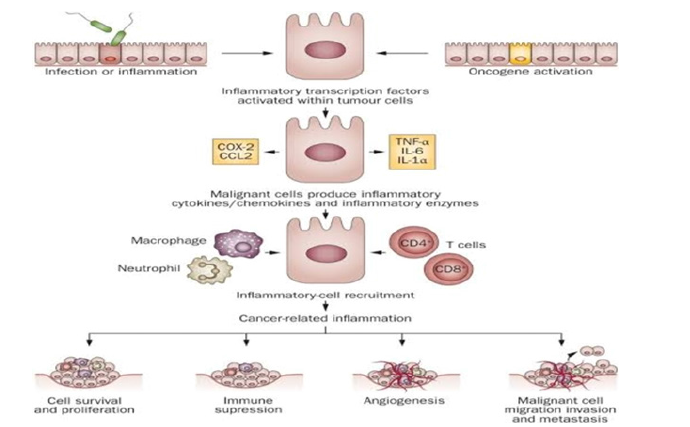
Persistent inflammation also contributes to oxidative stress through the excessive production of Reactive Oxygen Species (ROS) and RNS, which cause extensive damage to proteins, lipids, and nucleic acids, thereby leading to tissue injury [4]; (Figure 1). In response to such damage, tissue regeneration mechanisms may be activated, including the mobilisation of progenitor and stem cells. However, prolonged exposure to ROS/RNS can also harm stem cells, inducing mutations that may lead to the formation of cancer stem cells [4].
Figure 1:Pathophysiological link between chronic inflammation and cancer development [1,4].
Since 2020, cancer prevention and treatment efforts have faced major setbacks [5], largely due to the COVID-19 pandemic. These challenges were compounded by ongoing conflicts, changes in healthcare funding priorities, and rising living costs. According to the Global Burden of Disease report (2019), cancer remains the second leading cause of death worldwide, and its burden is expected to increase significantly in the next two decades [5]. In 2022 alone, around 20 million new cases and 9.7 million cancer-related deaths were recorded, including Non-Melanoma Skin Cancers (NMSC) [5].
This growing burden highlights the need for continuous monitoring of cancer incidence, mortality, and Disability-Adjusted Life Years (DALYs), particularly in low- and middle-income countries where the rise is more pronounced [6]. Contributing factors include ageing populations, unhealthy lifestyle habits, and environmental changes. Epidemiological studies are essential for identifying risk factors, guiding screening policies, and informing government decisions on cancer control and resource allocation [3,6]. Figure 1 illustrates the Pathophysiological link between chronic inflammation and cancer development.
Bioactive compounds are naturally occurring plant substances responsible for colour, flavour, and resistance to disease [7]. These compounds can be broadly classified into polyphenols, flavonoids, carotenoids, alkaloids, and glucosinolates, based on their chemical structures and biological functions [8,9]. Flavonoids, a major subgroup of polyphenols found in tea, wine, fruits, and vegetables, are known for their antioxidant capacity [10] and influence on cell signalling [7]. Carotenoids like beta-carotene and lycopene contribute to the red, orange, and yellow pigmentation of many fruits and vegetables and support eye and immune health [7,8].
Glucosinolates, abundant in cruciferous vegetables such as broccoli and kale, are precursors to active compounds believed to have cancer-preventive properties [9]. As noted by Alum and Ugwu, alkaloids found in plants like coffee and cocoa act on the central nervous system [11]. These bioactive compounds are typically consumed through diets rich in fruits, vegetables, whole grains, nuts, and seeds. Their diverse health benefits include inflammation reduction and chronic disease prevention [6]. This study explores the mechanisms and health implications of plant-derived bioactive compounds, particularly their anti-inflammatory and anticancer effects, along with their applications in food and pharmaceutical industries [12].
Phytochemical Classes and Their Bioactivities
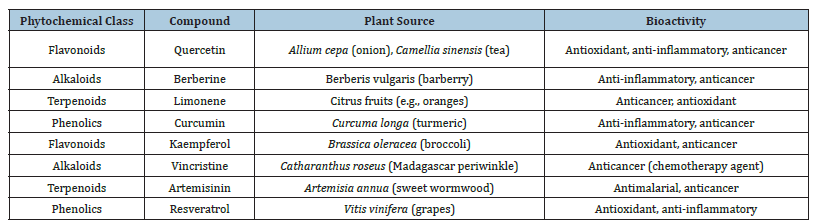
Phytochemicals are plant-derived, low molecular weight secondary metabolites that actively participate in cellular metabolic activities and contribute significantly to health preservation and disease prevention [13-15]. According to Leitzmann [16], these compounds are grouped based on their structural characteristics and functional roles. Among them, carotenoids are widely distributed in fruits and vegetables, with around 50 out of 700 known variants considered vital to human nutrition [8]. Flavonoids represent another important group known for diverse pharmacological actions such as anti-inflammatory, analgesic, antiproliferative, anticancer, anti-angiogenic, antimicrobial, and antiviral effects [2]. They exert their anti-inflammatory potential by inhibiting mediators like Prostaglandin E2 (PGE2), Interleukin-1β (IL-1β), Tumour Necrosis Factor-Alpha (TNF-α), and Nitric Oxide (NO), a principal inflammatory molecule [3]. These flavonoids are most concentrated in the peels of fruits, including apples, grapes, and various berries, as well as in vegetables like onions, lettuce, and cabbage. Additionally, they are found in tea, olive oil, red wine, and dark chocolate [1]. Table 1 shows the representative plant-derived compounds and their sources.
Table 1:Representative plant-derived compounds and their sources [1-2,7-9,11].
Mechanisms of Action
Antioxidant, anti-inflammatory, and anticancer pathways
Figure 2:Structures of selected bioactive phytochemicals [1,7].
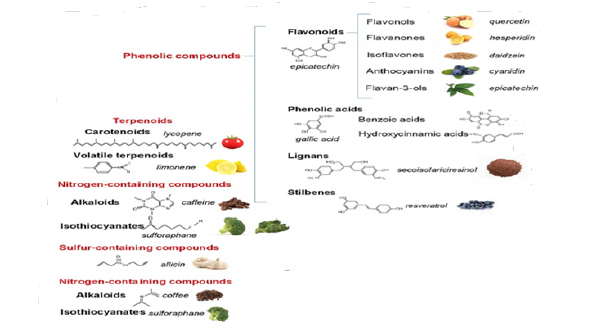
According to Ahmed et al. [17], phytochemicals are potent antioxidants that exert multiple physiological effects, notably reducing oxidative stress and preventing cellular damage, thereby contributing to cancer prevention. Beyond their antioxidative role, these compounds regulate apoptosis and the cell cycle and are useful in the prevention and treatment of inflammatory diseases [17,18]. Their anti-inflammatory and anti-cancer activities are largely mediated by modulation of various signaling pathways, including NF-κB, MAPK, COX-2, 5-LOX, PI3K/Akt, and STAT3, which are central to the inflammation-cancer link [17,19]. Further supporting this, Li et al. [20] reported the anti-cancer activity of essential oil extracted from Plagiomnium Acutum T. Kop (PEO). PEO inhibited the proliferation of several cancer cell lines, such as HepG2, MCF-7, U87, and A549, with a pronounced effect on HepG2 and A549 cells by inducing G1-phase cell cycle arrest [20]. This arrest was associated with the upregulation of p21Cip1 and p27Kip1. Additionally, PEO significantly reduced ROS production and triggered apoptosis through the mitochondrial pathway. This included cytochrome c release, activation of caspases-9 and -3, downregulation of Bcl-2, and upregulation of Bax, confirming its mechanism of action [20]. Figure 2 gives the Structures of some selected bioactive phytochemicals.
Comparative potency and bioavailability of phytochemicals
In order to quantify the absorption, distribution, metabolism, and ultimate excretion of micronutrients and phytochemicals, the concept of bioavailability was developed [21]. It seeks to measure the quantity of these substances that the body uses efficiently. According to Nelson et al. [21], it is “the rate and extent at which the therapeutic entity is absorbed and made available at the site of drug action.” Bioavailability describes how well something is absorbed and used. Orally administered phytochemicals travel through the body by a sequence of sequential processes, including digestion, release, solubilization, absorption, distribution, metabolism, and finally excretion [21,22]. Phytochemicals are released from the ingested food matrix through dynamic physical, chemical, and biological interactions that take place in the Gastrointestinal Tract (GIT).
Particle size is reduced by mechanical forces, and different food structures are broken down by the acidic stomach juices. Bile salts help to solubilise and transport lipids, whereas digestive enzymes are essential for the breakdown of fats, proteins, and carbohydrates. Phytochemicals may be absorbed by the GIT’s lining cell layer through passive or active transport pathways after being released from the food matrix [21,22]. Depending on their polarity, these phytochemicals may then go to the circulation via the lymphatic system (for hydrophobic compounds) or the portal vein (for hydrophilic compounds). The potent therapeutic effects of plant-derived compounds are numerous, making traditional medicines utilise the beneficial properties associated with these bioactive compounds for centuries, thus exploring their potential to become novel medicine candidates in contemporary medicine [12].
Anti-inflammatory mechanisms of phytochemicals
Nuclear factor κB (NF-κB) is a key transcription factor involved in diverse cellular processes such as cytokine production, DNA transcription, and cell survival across mammalian systems [19]. Its role in cancer is significant due to the inflammatory nature of the tumour microenvironment. Chronic inflammation can lead to oncogenic mutations that support tumour initiation and progression [19,23]. NF-κB activation encourages tumour proliferation, inhibits apoptosis, and promotes both angiogenesis and metastasis. The accumulation of pro-inflammatory cytokines at tumour sites further enhances this pro-tumorigenic environment [19].
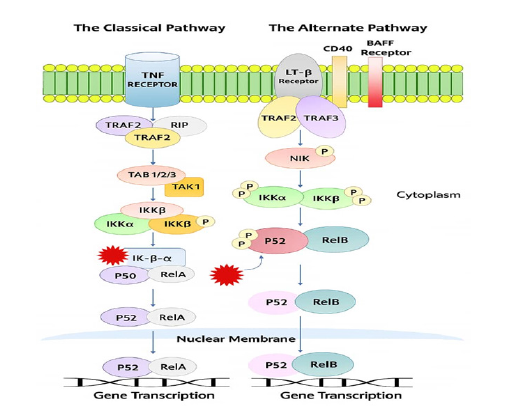
In conditions like Inflammatory Bowel Disease (IBD), immune cells infiltrating the gastrointestinal mucosa release cytokines such as TNF-α, IL-1, and IL-7, which elevate NF-κB activity and subsequently increase colon cancer risk [9,23,24]. Among these, TNF-α is a major inflammatory mediator, also known for its role in modulating pain. It contributes to neuropathic and inflammatory hyperalgesia by acting through TNF-α receptors located on neurons and glial cells [4]. Of these, TNFR1 is primarily responsible for initiating degenerative and inflammatory pathways [4]. Figure 3 shows the Suppression of NF-κB signalling by plant compounds.
Figure 3:Suppression of NF-κB signaling by plant compounds [1,19,24].
Role of Oxidative Stress and Antioxidant Defence Systems
The beneficial effects of antioxidants are primarily associated with their capacity to mitigate the excessive and uncontrolled production of Reactive Oxygen Species (ROS), which contributes to oxidative stress [7,25]. Nonetheless, evolving scientific insights suggest that the mechanisms by which antioxidants function within living systems are more intricate than once thought. Beyond simply neutralising ROS, both antioxidants and phytochemicals engage in multiple protective roles [24]. These include modulating inflammatory pathways, enhancing cellular repair and regeneration, and participating in signalling networks that regulate cell proliferation and apoptosis [7,25]. Additionally, antioxidants can influence gene expression patterns associated with disease susceptibility through epigenetic modifications [24,26]. Emerging studies also highlight a dynamic, symbiotic relationship between antioxidants and gut microbiota. Plant-based antioxidants, in particular, can modulate the composition and diversity of intestinal microorganisms, thereby supporting disease prevention and promoting overall well-being [13,23]. Furthermore, antioxidants exhibit neuroprotective effects, which are crucial for preserving cognitive function and potentially reducing the risk of neurodegenerative conditions [6,25]. Table 2 presents the Summary of anti-inflammatory effects of key phytochemicals (Table 3).
Table 2:Summary of anti-inflammatory effects of key phytochemicals [1-3,24].
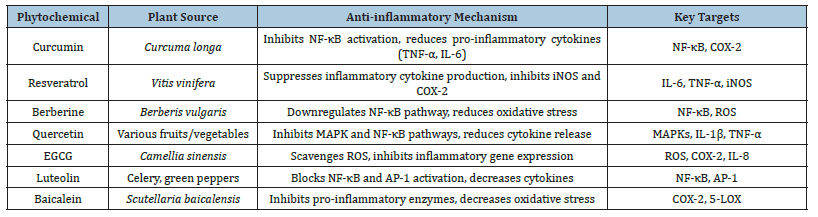
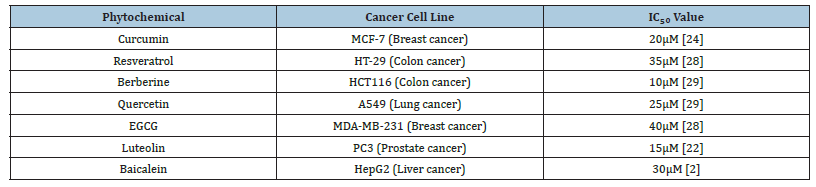
Table 3:IC₅₀ values of selected phytochemicals against various cancer cell lines [24,28,29,32]..
Anticancer Activities of Plant-Derived Compounds
Figure 4:Mitochondrial-mediated apoptosis triggered by phytochemicals [13,24,25].
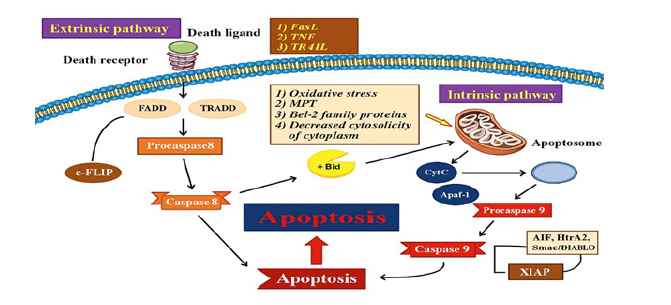
Both intrinsic and extrinsic mechanisms have demonstrated the ability of plant-derived chemicals to induce apoptosis in a variety of cancer cell types [13,24,25,27]. As seen in Figure 4, curcumin, which was extracted from Curcuma longa, has been found to activate the intrinsic apoptotic pathway by raising the Bax/ Bcl-2 ratio and triggering the caspase-9 and caspase-3 cascades, which results in mitochondrial malfunction and cell death [25]. Similarly, resveratrol from Vitis vinifera activates caspase-8 to start the extrinsic apoptotic pathway and increases the expression of Fas receptors [8,28]. In breast and colon cancer cells, berberine from Berberis vulgaris causes death by depolarisation of the mitochondrial membrane and the buildup of ROS [13,29]. Figure 4 illustrates the Mitochondrial-mediated apoptosis triggered by phytochemicals.
Inhibition of cell proliferation and metastasis
Extensive research has highlighted the anticancer potential of certain phytochemicals, notably Epigallocatechin Gallate (EGCG) and quercetin [14,30]. Quercetin has demonstrated efficacy in inhibiting the proliferation of cancer cells by targeting the PI3K/Akt/mTOR signalling pathway. This inhibition induces G2/M phase arrest, ultimately reducing cell growth, particularly in prostate and lung cancer models [30,31]. EGCG, a major catechin found in Camellia sinensis, has been shown to impede angiogenesis driven by Vascular Endothelial Growth Factor (VEGF), thereby limiting tumour progression and metastatic spread in breast cancer xenograft models [14]. Additionally, kaempferol exhibits anti-metastatic properties by downregulating matrix metalloproteinases MMP-2 and MMP-9, which are involved in the Epithelial-Mesenchymal Transition (EMT), thus inhibiting cancer cell invasion and dissemination [28,31].
Interaction with oncogenic proteins and tumour suppressors (e.g., Bcl-2, p53)
Many chemicals that come from plants alter oncogenic proteins and strengthen tumour suppressor pathways [18,29]. Curcumin and baicalein have been shown to suppress NF-κB, a crucial transcription factor that promotes oncogenesis [29]. Resveratrol inhibits MDM2-mediated ubiquitination, which stabilises and activates p53, resulting in p53 accumulation and increased apoptotic responses [3,28]. Additionally, berberine shifts the balance towards apoptosis in a number of cancer types by downregulating surviving and Bcl-2 [2,29].
Bioinformatics and Computational Approaches
Direct interactions between phytochemicals and important oncogenic proteins have been confirmed by molecular docking studies more and more [21,32,33]. High binding affinities for caspase-3 and Bcl-2 indicate that berberine has a direct proapoptotic action [33]. Curcumin’s anti-inflammatory and anticancer activities are supported by its favourable binding energies with the NF-κB p65 subunit [31]. Docking studies have also demonstrated that luteolin interacts with COX-2 and inhibits its pro-tumorigenic effects [15].
Figure 5:Docking model of berberine with Bcl-2 protein [21,33].
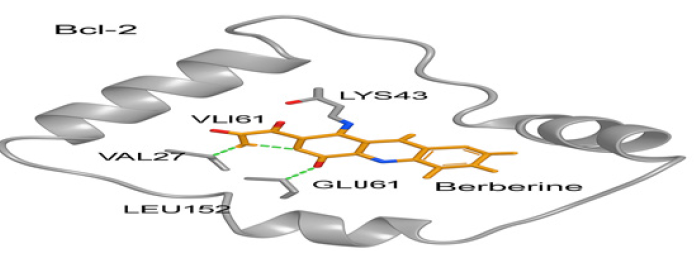
Phytochemicals primarily target signalling pathways, such as PI3K/Akt, NF-κB, apoptosis, and MAPK, according to pathway enrichment studies conducted with the use of tools like the KEGG and STRING databases [21,30]. Berberine has the ability to restore apoptosis by directly adhering to the protein’s active site and interfering with its activity, as shown by the molecular docking of berberine with the anti-apoptotic protein Bcl-2 in Figure 5; [21,33]. Additionally, p53, caspase-3, and NF-κB are highlighted by network pharmacology techniques as important hub nodes that are influenced by substances such as EGCG, curcumin, and resveratrol [30]. The potential of phytochemicals as broad-spectrum therapeutic agents is increased by these comprehensive studies, which support their multitargeted activity [21,30].
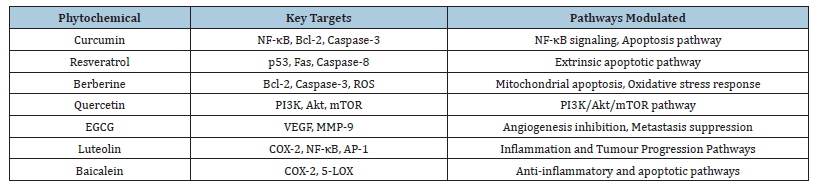
The Anti-Ageing Gene Sirtuin 1 (SIRT1) plays a critical role in the prevention of inflammation and cancer through its regulation of cellular processes, including DNA repair, apoptosis, and metabolic homeostasis [34,35]. SIRT1, a NAD+-dependent deacetylase, modulates the activity of key transcription factors such as NF-κB, p53, and FOXO, thereby influencing inflammatory responses and tumour suppression [34]. Importantly, several phytochemicals, including curcumin, berberine, resveratrol, and quercetin, function as SIRT1 activators, enhancing its protective effects against inflammation-mediated carcinogenesis [35]. These SIRT1- activating compounds improve cellular stress resistance, reduce oxidative damage, and promote longevity pathways that counteract cancer development [15]. The therapeutic implications of targeting SIRT1 through plant-derived bioactive compounds represent a promising strategy for cancer chemoprevention, particularly in populations at high risk for inflammation-associated malignancies [36]. This mechanistic link between phytochemical-mediated SIRT1 activation and cancer prevention underscores the multifaceted role of plant-derived compounds in modulating both ageing and disease processes [15,34-36]. Figure 5 presents the Docking model of berberine with Bcl-2 protein, while Table 4 highlights the Key molecular targets and pathways modulated by plant compounds.
Table 4:Key molecular targets and pathways modulated by plant compounds [21,24,29,30].
Integration of in silico and in vitro findings for drug discovery
The development of treatments based on phytochemicals is being sped up by the combination of computational and experimental results [21,22,30]. Research has shown that there is frequently a high correlation between in vitro cytotoxicity data and molecular docking predictions [21,30]. For instance, inhibitory tests in metastatic breast cancer cells confirmed the high-affinity interactions that EGCG anticipated with MMP-9 [14,20]. These combined strategies offer a strong foundation for the logical creation of innovative anticancer drugs derived from plants [12,21,22].
Conclusion
The important function that phytochemicals produced from plants play in regulating important inflammatory and carcinogenic pathways has been confirmed by growing biochemical data over the last ten years. Curcumin, berberine, resveratrol, and quercetin are among the compounds that have continuously shown dual antiinflammatory and anticancer properties by inducing intrinsic and extrinsic apoptotic pathways and suppressing signalling cascades such NF-κB and PI3K/Akt/mTOR. These processes highlight the molecular adaptability of phytochemicals, which disrupt the chronic inflammation-cancer axis by functioning as both redox modulators and epigenetic regulators. The therapeutic implications of these findings are profound. With the increasing prevalence of inflammation-driven cancers and resistance to traditional chemotherapeutic treatments, the incorporation of phytochemicals into natural product-based medication development presents a viable substitute. They are powerful prospects for next-generation medicines because of their multi-target capabilities, positive safety profiles, and capacity to work in concert with conventional medications.
References
- Al-Khayri JM, Saleh AA, Abd-Elsalam KA, Rezk AA (2022) Molecular insights into the role of phytochemicals in inflammation and cancer. Molecules 27(19): 6469.
- Ferrraz MP, Cunha FC, Mendes AS (2020) The anti-inflammatory and antioxidant potential of flavonoids. Curr Pharm Des 26(28): 3446-3463.
- Zhu X, Zhang Q, Wang J (2018) Anti-inflammatory and antioxidant effects of flavonoids. J Nutr Biochem 57: 1-7.
- Ohnishi S, Ma N, Yamada K (2013) Effects of inflammation-induced reactive oxygen species on stem cell transformation. Free Radic Biol Med 65: 1082-1093.
- Bray F, Laversanne M, Weiderpass E, Soerjomataram I (2021) The ever-increasing importance of cancer as a leading cause of premature death worldwide. CA Cancer J Clin 127(16): 3029-3030.
- Thacker P, Ram A (2024) Natural compounds in chronic disease prevention: Insights from phytochemical studies. Nutrients 16(2): 278.
- Rathee P, Chaudhary H, Rathee D (2024) Phytochemicals as nutraceuticals: A review. Curr Nutr Food Sci 20(2): 138-150.
- Wang X, Liu Y, Yang Y, Huang Q (2021) Epigallocatechin gallate suppresses breast cancer angiogenesis by downregulating VEGF. Oncol Rep 45(4): 1025-1032.
- Nigar S, Raza MA, Yousaf A (2025) Role of polyphenolic compounds in health promotion. J Food Sci Technol 62(1): 15-28.
- Panche AN, Diwan AD, Chandra SR (2016) Flavonoids: An overview. J Nutr Sci 5: e47.
- Alum EU, Ugwu AJ (2023) Phytochemical profile of selected medicinal plants and their pharmacological importance. J Med Plants Res 17(5): 91-99.
- Newman DJ, Cragg GM (2020) Natural products as sources of new drugs over the nearly four decades from 01/1981 to 09/2019. J Nat Prod 83(3): 770-803.
- Watzl B, Kulling SE, Möseneder J, Barth SW, Bub A (2012) A human intervention trial to investigate the antioxidant and anti-inflammatory effects of carotenoids. Mol Nutr Food Res 56(3): 402-411.
- Yoo J, Lee S, Lee H, Moon B (2018) Bioactivity of phytochemicals and their metabolites in chronic diseases. Phytochem Rev 17: 543-562.
- Martins I (2017) Nutrition therapy regulates caffeine metabolism with relevance and induction of type 3 diabetes. J Diabetes Metab Disord 4: 19.
- Leitzmann C (2016) Characteristics and health benefits of phytochemicals. Forum Nutr 23(2): 69-74.
- Ahmed S, Khan H, Aschner M, Sharifi-Rad M, Salehi B (2022) Phytochemicals as potential antioxidants: Sources, mechanisms and therapeutic potential. Biomed Pharmacother 139: 111599.
- Sharma A, Kaur M, Katnoria JK, Nagpal AK (2018) Polyphenols in food: Cancer prevention and apoptosis induction. Curr Med Chem 25(36): 4740-4757.
- Luo H, Zhang J, Zhang Q, Yu H, Wang M (2022) Berberine induces apoptosis in colon cancer cells via ROS-mediated mitochondrial pathway. J Cell Physiol 237(3): 1732-1742.
- Li Y, Wang Y, Wang Y (2022) Essential oil of Plagiomnium acutum induces apoptosis in cancer cells via mitochondrial pathway. J Essent Oil Res 34(4): 341-351.
- Nelson AL, Dhiman N, Fernandez JM (2017) Understanding the bioavailability of phytochemicals. Pharmacol Res 120: 37-45.
- Aqil F, Gupta A, Munagala R, Jeyabalan J, Kausar H et al. (2013) Bioavailability of phytochemicals and its enhancement by drug delivery systems. Cancer Lett 334(1): 133-141.
- Terzić J, Grivennikov S, Karin E, Karin M (2010) Inflammation and colon cancer. Gastroenterology 138(6): 2101-2114.
- Shanmugam MK, Rane G, Kanchi MM, Arfuso F, Chinnathambi A, et al. (2015) The multifaceted role of curcumin in cancer prevention and treatment. Molecules 20(2): 2728-69.
- Thanan R, Oikawa S, Hiraku Y, Ohnishi S, Ma N et al. (2014) Oxidative stress and its significant roles in neurodegenerative diseases and cancer. Free Radic Res 16(1): 193-217.
- Lewandowska H, Kalinowska M, Lewandowski W, Stepkowski TM, Brzóska K (2016) The role of natural polyphenols in cell signaling and cytoprotection against cancer development. J Nutr Biochem 32: 1-19.
- Kopustinskiene DM, Jakstas V, Savickas A, Bernatoniene J (2020) Flavonoids as anticancer agents. Nutrients 12(2): 457.
- Zhang Q, Ma J, Wang Y (2021) Resveratrol induces Fas-mediated apoptosis in colon cancer cells. J Agric Food Chem 69(8): 2431-2438.
- Zhou X, Wang D, Li Y (2021) Anticancer potential of berberine and its derivatives. Biomed Pharmacother 133: 110984.
- Wallace TC, Giusti MM, Pressman P (2015) Anthocyanins: Colorful compounds with a role in health promotion. Annu Rev Food Sci Technol 6: 291-310.
- Imran M, Salehi B, Sharifi-Rad J, Gondal TA, Saeed F et al. (2019) Kaempferol: A key emphasis to its anticancer potential. Molecules 24(12): 2277.
- Singh AK, Kumar R, Pandey AK (2018) Hepatocellular carcinoma: Causes, mechanism of progression and biomarkers. Curr Chem Genom Transl Med 12: 9-26.
- Salehi B, Martorell M, Arbiser JL, Sureda A, Martins N, et al. (2018) Antioxidants: Positive or negative actors? Biomolecules 8(4): 124.
- Martins I (2016) Anti-aging genes improve appetite regulation and reverse cell senescence and apoptosis in global populations. Adv Aging Res 5(1): 9-26.
- Martins I (2017) Single gene inactivation with implications to diabetes and multiple organ dysfunction syndrome. J Clin Epigenetic 3(3): 24.
- Oladosu MA, Abah MA, Ezinwa NF, Justina OD, Athur C et al. (2025) Isolation and characterization of alkaloids from medicinal plants with anticancer properties: A systematic review and meta-analysis. SPC J Med Healthc 1(4): 219-247.
© 2026 Micheal Abimbola Oladosu, This is an open access article distributed under the terms of the Creative Commons Attribution License , which permits unrestricted use, distribution, and build upon your work non-commercially.
Editor In Chief







.jpg)































Signup for Newsletter

Quick Links
 Editorial Board Registrations
 Submit your Article
 Best Paper of the Volume
 Reprints
 Refer a Friend
 Advertise With Us
Our Recent Edition

.jpg)



Top Editors




.jpg)

















.bmp)
.jpg)
.png)
.jpg)













.jpg)






.png)

.png)




.png)




Financial Support

Sponsors

Latest e-Books

Latest Video

 a Creative Commons Attribution 4.0 International License. Based on a work at www.crimsonpublishers.com.
Best viewed in
a Creative Commons Attribution 4.0 International License. Based on a work at www.crimsonpublishers.com.
Best viewed in 
 | Above IE 9.0 version