

- About Us
- Information
-

The Author ensures that the research has been conducted responsibly and ethically with adherence to all relevant regulations. read more..
- For Authors
- For Reviewer
- Manuscript Guidelines
- Membership
- Publication Ethics
-
- Journals
- Reprints
- e-Books
- Videos
- Policies
- Contact Us
 COVID-19
- Submissions



Full Text
Research in Pediatrics & Neonatology
A Systematic Review of the Spillover of Neonatal Mortality: Balancing the Scales of Management of Acute Neonatal Conditions and Their Longterm Sequelae in Low Resource Settings
Njie Albertine Enjema1* and Winstone M Nyandiko1,2
1Academic Model Providing Access to Healthcare, Eldoret, Kenya
2Department of Child Health and Pediatrics, Moi University College of Health Sciences, Kenya
*Corresponding author: Njie Albertine Enjema, Academic Model Providing Access to Healthcare, Eldoret, Kenya
Submission: January 01, 2026; Published: August 12, 2026
ISSN: 2577-9200 Volume8 Issue5
Abstract
Background: Neonatal mortality is disproportionately high in sub-Saharan African countries and
most neonatal deaths result from preventable causes. The causes of neonatal deaths remain significant
contributors to death after the first 28 days of life, necessitating amplification of the current public health
attention.
Objective: We sought to consolidate data on the impact of neonatal conditions on death beyond the
neonatal period. Additionally, we reviewed information on the continuum of acute neonatal conditions and
their sequelae that should be explored to adequately address the full impact of mortality from neonatal
conditions.
Methods: We searched Google Scholar, PubMed, and Cochrane databases using the key search terms
“neonate”, “mortality”, “survival”, “infant”, “prematurity”, “birth asphyxia” and “neonatal infections”. The
spillover of neonatal mortality was defined as mortality arising from neonatal related conditions after the
first month of life.
Result: Nineteen studies that reported on causes of mortality in the neonatal period and death from
neonatal conditions after the first month of life were included in this review. Prematurity (13.6%-89%)
[1,2], intrapartum-related events notably birth asphyxia (3%-56.8%) [3,4], and neonatal infections (6%-
47.4%) [5,6] were the top three causes of death in the first 28 days of life. Beyond the first month of life,
prematurity (1.2%-40.2%) [7,8], and birth asphyxia (2.6%- 37.5%) [7,9] still caused significant mortality.
Conclusion: Conditions diagnosed during the neonatal period result in high mortality after the first month
of life. Comprehensive care packages should entail longer-term assessment, monitoring, and evaluation
plans for children treated for acute conditions in the neonatal period. Additionally, healthcare systems need
to be strengthened for robust treatment of acute neonatal conditions to reduce the spillover mortality from
neonatal conditions.
Keywords:Neonatal mortality; Infant mortality; Prematurity; Birth asphyxia; Neonatal sepsis
Introduction
The global newborn mortality rate is 18 per 1000 live births, with neonatal mortality reported as the slowest declining mortality compared to infant and under-five mortality [10]. Childhood mortality rates are an important indicator of a country’s socio-economic development and healthcare performance [11]. Additionally, neonatal and infant mortality rates are fundamental measures of a country’s public health status [12,13]. However, in Low-and Middle-Income Countries (LMICs) in particular, neonatal and infant deaths are underreported, and this hampers accurate mortality estimates and policy reforms [14]. Prematurity, neonatal infections, and birth asphyxia remain the three predominant etiologies of neonatal mortality [15,16]. While advancements in innovations and technology in neonatal healthcare have led to an increase in the survival of neonates with acute conditions like respiratory distress syndrome from prematurity and birth asphyxia [17,18], a concurrent paradoxical increase in long-term morbidity and hospital costs has been observed [19,20]. Ranjeva and collaborators observed an annual loss of 5.29-8.73 million Disability-Adjusted Life Years (DALYs) in sub-Saharan Africa from neonatal sepsis [21]. Regarding complications of prematurity, a high disease burden of 34,632 per 100,000 population was reported by Kim and associates in a high-income country [22]. Childhood mortalities have declined globally but have been more gradual in LMICs than in developed countries [23]. Nevertheless, in a high-income country, mortality from prematurity and low birth weight after 28 days of life only declined by 1% annually over nine years [24]. Thus, the implications of neonatal mortality and mortality from neonatal conditions after the first month of life are significant irrespective of the setting. Consequently, healthcare systems globally must have programs in place that ensure continuity of care after the first month of life for conditions diagnosed in the neonatal period. This review aims at consolidating evidentiary data on mortality from newborn conditions beyond the first 28 days of life. Additionally, we reviewed information on the continuum of acute neonatal conditions and their sequelae that should be explored to adequately address the full impact of death from neonatal conditions in particularly lowresource settings.
Methods
Overview of identification/ selection of included studies
The PRISMA 2020 expanded checklist was the overall guideline for this review. We searched for articles in PubMed, Cochrane, and Google Scholar with data on mortality between January 2015 to December 2024 using search terms including “neonate”, “mortality”, “survival”, “infant”, “prematurity”, “birth asphyxia” and “neonatal infections”. Search strings were also used to optimize finding of studies. Examples of combinations used in the search string include “mortality and low-resource settings” and “neonatal mortality and specific countries”. The databases were lastly searched in May 2026. The title, abstract, and methods sections of each article served as screening parameters to identify articles included in this review. The reference lists of identified articles also served as a source for selecting more articles.
Reviewer and selection bias
The selection and review processes were performed by a single reviewer. Selection bias was mitigated using the Time-Dependent Risk of Bias (TD-RoB) Framework (Box 1).
Box 1: Phase 4b not applicable, this is a narrative review.

Quality assessment of included studies
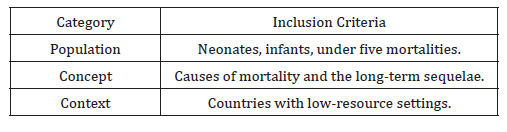
Quality assessment of studies was done using the PICO framework where P refers to population/ patient/ problem: I intervention or exposure: C comparison or control: and O outcome. In this review, the framework was applied as follows (Box 2):
Box 2:

Inclusion and exclusion criteria for included studies
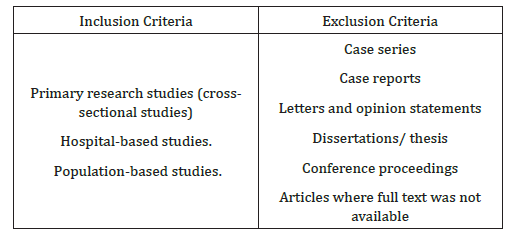
Human studies that reported causes of death in the first month of life were evaluated for inclusion in this review. Studies that reported on neonate-related causes of death beyond the first month of life (mixed mortality reports) were also included. Furthermore, only studies in the English language were included. On the other hand, studies that reported solely on non-neonate-related causes of death after the neonatal period did not meet the inclusion criteria for this review. In addition, thesis/ dissertations, opinion statements, case series, case reports, review articles, articles where full text was not available and conference proceedings were also excluded (Boxes 3&4).
Box 3:
Box 4:
Definition of terms
The spillover of neonatal mortality was defined as mortality arising from neonatal related conditions after the first month of life. Neonatal mortality was defined as the death of a live-born infant within the first 28 days of life. Prematurity was defined as any baby born at less than 37 completed weeks of gestation.
Ethics
No ethical approval was needed for this review.
Result
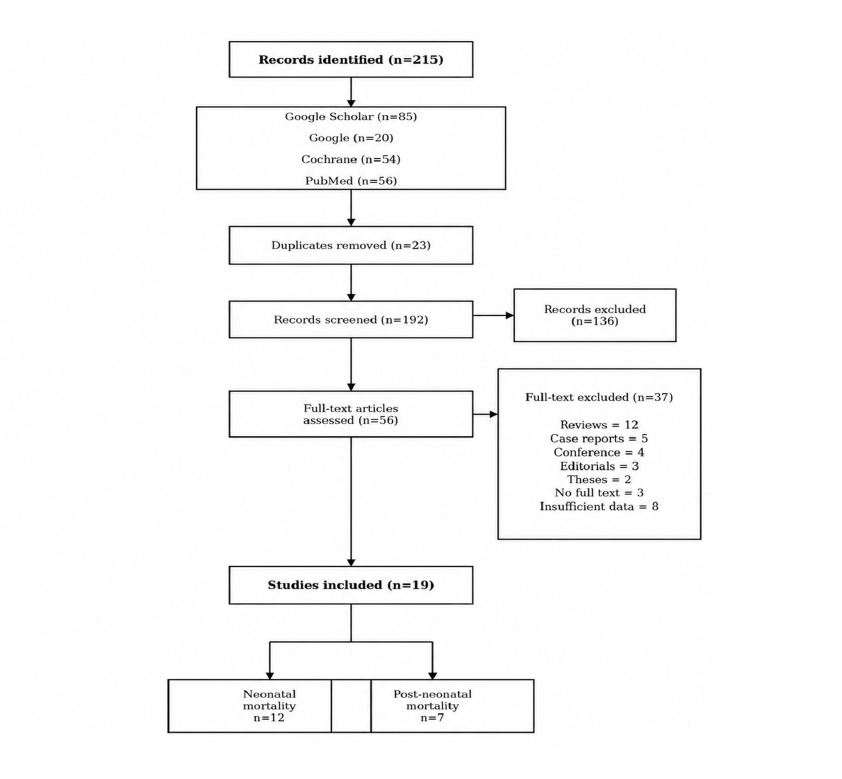
A total of 215 articles were screened across the abovementioned databases. Nineteen studies were included in this review, twelve that reported on causes of mortality in the first 28 days of life, and seven with findings on the neonatal-related causes of death after the neonatal period (Figure 1).
Figure 1: PRISMA flow diagram
Causes of mortality in the first 28 days of life
Twelve studies reported the causes of death in the first month of life (Table 1). Across the majority of the studies, prematurityrelated complications notably, respiratory distress syndrome and low birth weight, birth asphyxia, and neonatal infections, were the main causes of death. One study, [7], had significantly low proportions of death from prematurity (1.2%) and birth asphyxia (2.6%). This could be as a result of differences in study populations as this study was a population-based verbal autopsy while the other studies either had hospital-based verbal autopsy findings or mortality from hospital registry data. Despite the fact that prematurity, birth asphyxia and neonatal infections have been shown to be the top three causes of neonatal deaths, other etiologies were demonstrated to have a significant burden on mortality. Congenital heart disease and neonatal jaundice were the top causes of mortality in only one study each in this review, but they contributed significant proportions at 18.2% and 12% respectively [3,25]. Meconium aspiration syndrome was also an important identified cause of death [2]. One study reported intracranial hemorrhage (6.1%) as a cause of death [3]. In addition to the causes of mortality, some detected neonate-level factors that could influence mortality as an outcome were fever, the time when the first feed was initiated, birth weight less than 2.5kg, low APGAR scores, and late admission for care. Day of life at the time of death and being born at home were neonate-level factors that should also be tackled in a bid to curb neonatal mortality [26,4]. Furthermore, some factors were demographic-dependent such as in Egypt where consanguinity was a significant factor associated with high mortality [3]. Thus, beyond identifying causes of death, there is a need to explore individual-level factors that predispose to mortality [27-30].
Table 1: Causes of mortality in the first month of life, summary of twelve studies.
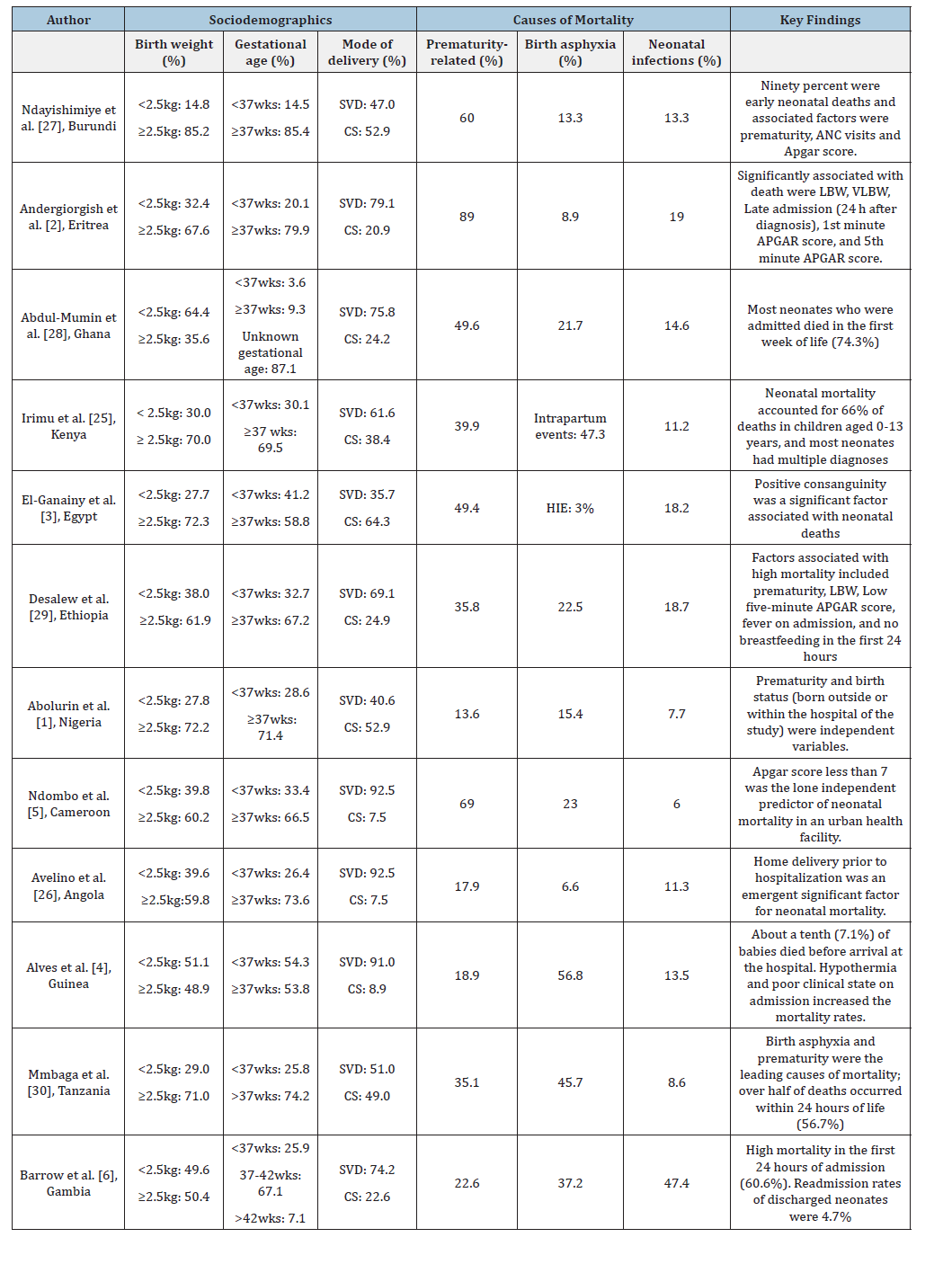
Prem: prematurity complications not specified, LBW: low birth weight, VLBW: very low birth weight, CS: caesarean section, SVD: spontaneous vaginal delivery, HIE: hypoxic ischemic encephalopathy, ANC: antenatal clinic.
Mortality from neonatal etiologies beyond 28 days of life
Seven studies reported mortality from neonatal conditions after the first month of life (Table 2). Birth asphyxia and prematurity complications were the most prevalent neonatal-related causes of death beyond the first month of life, accounting for up to 37.5% and 40.2% mortality respectively in some studies [9,8]. Pneumonia, malaria, acute diarrheal illnesses, and HIV/AIDS were equally significant causes of death after the first month of life. These are crucial causes of mortality that should not be ignored. However, given that birth asphyxia, prematurity and neonatal infections still cause significant mortality after the 28 days of life, attention to these etiologies should not dwindle after the first month of life (Table 2) [31-34].
Table 2: Mortality after 28 days of life with neonatal etiologies extracted.
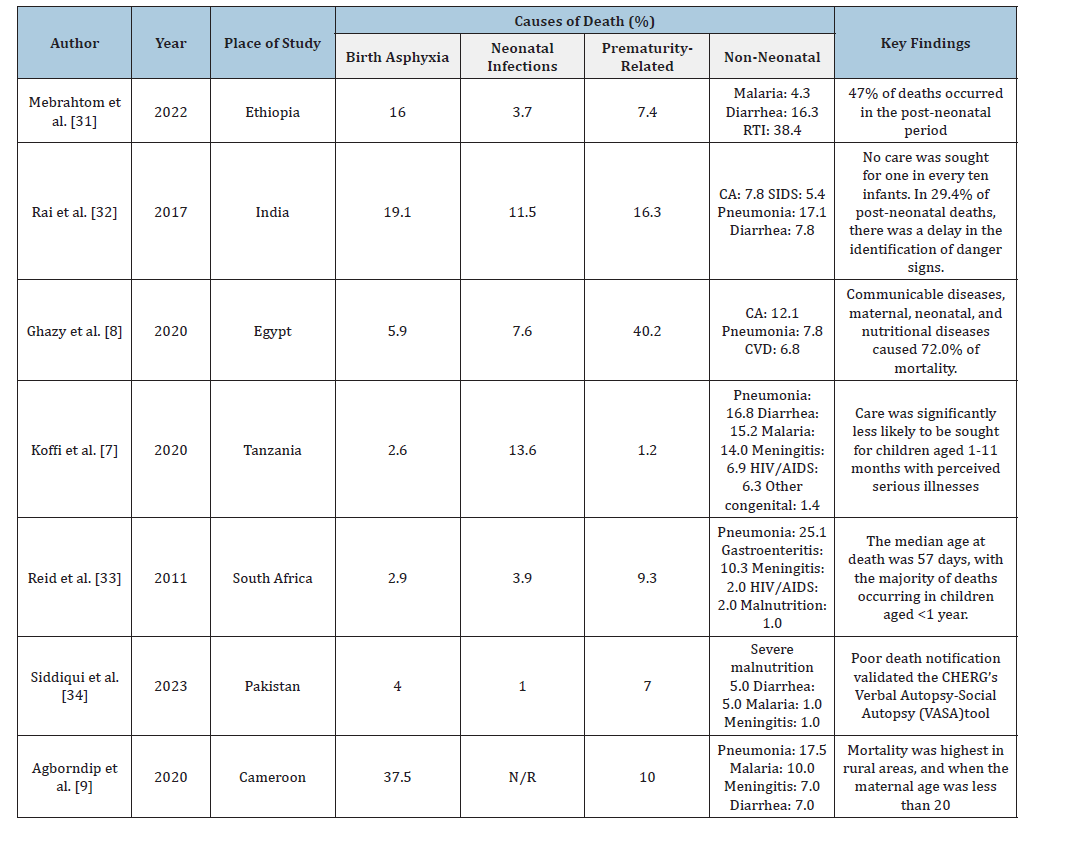
CA: Congenital Anomalies, CVD: Cardiovascular Disease, RTI: Respiratory Tract Infections, SIDS: Sudden Infant Death Syndrome, N/R: Not Reported.
Discussion
Acute neonatal conditions and their chronic sequelae are known. However, the mortality from these conditions after the first month of life has not received the required public health attention. The neonatal mortality rate target for goal 3 of the Sustainable Development Goals (SDGs) is 12 per 1,000 live births. However, most countries chiefly in sub-Saharan Africa have neonatal mortality rates more than double this target. If greater attention is not given to neonatal mortality, 63 countries will not meet the SDG target on neonatal deaths should the current trends continue [35]. In the last decade, prematurity, neonatal infections, and birth asphyxia have been at the pinnacle of the etiologies of newborn mortality and its spillover. Nevertheless, over the years, significant strides have been made in addressing neonatal mortality. The use of Continuous Positive Airway Pressure (CPAP) and therapeutic hypothermia have improved neonatal outcomes in recent years. Cost-effective neonatal interventions can prevent 50% of newborn deaths in LMICs [23].
Prematurity-related mortality and complications
Prematurity accounts for 27.5% of under-five mortality, and neonates born before 32-week gestation are the most adversely affected [36,37]. The use of CPAP has been revolutionary in neonatal respiratory care, especially in the treatment of respiratory distress syndrome from prematurity. It has led to a significant reduction in mortality and the need for mechanical ventilation [38,39]. Early interventions in the delivery room improve preterm respiratory outcomes. In this regard, other interventions like heated Humidified High-Flow Nasal Cannula (HHFNC) that create a flow-related variable distending pressure have come to light, and their application is on the rise [40]. The greater part of the evidence on the utility of HHFNC in comparison to CPAP has been derived from non-inferiority clinical trials [41]. In addition to the abovementioned interventions, particular attention on the role of quality antenatal care has been highlighted in the outcomes of preterm neonates. In this review, a study by Ndayishimiye et al. [27], in Burundi found that antenatal care visits were a prominent factor that predisposed neonates to mortality [27]. 1 in 4 neonates is born premature according to reports from The Lancet series on small and vulnerable newborns. This series highlights the need for upscaling antenatal care visits for small and vulnerable newborns. This series also advocates for the establishment of new born registries to guide policy reforms and increased research to provide evidence-based data for structured improvements in the highest burdened areas of south Asia and sub-Saharan Africa (Lancet series 2023) [42].
Kangaroo Mother Care (KMC) has also been shown to be a positive stride in new born care and in the reduction of neonatal deaths. The utility of Kangaroo mother care ranged from 11.04%- 84.36% across 34 low- and middle-income countries [43]. In this review, three studies reported availability of KMC services in the healthcare facility, however, this was not analyzed as a factor associated with neonatal outcomes [1,4,28]. The WHO Immediate KMC Study Group of 3211 neonates reported reduced mortality (12%) when immediate KMC was done in comparison to 15.7% without KMC. In addition, this trial reported continuous reduction in mortality resulting from implementation of early KMC thus the trial was stopped prematurely based on the recommendation on the data and safety monitoring board [44]. Respiratory distress syndrome is the main contributor to prematurity-related mortality. In this review, the highest mortality from respiratory distress syndrome (48.1%) was reported by Andergiorgish et al. [2]. Chronic lung disease is the main complication of respiratory distress syndrome in preterm neonates. Factors such as duration of oxygen therapy, gestational age and transfusion of packed red blood cells have been shown to increase the risk of development of chronic lung disease from RDS [45]. Dik et al. [46] in their study found that surfactant use, mechanical ventilation requirement, and length of mechanical ventilation increase the risk of development of chronic lung disease [46]. The need for mechanical ventilation for more than 7 days was demonstrated to be the lone independent predictor of mortality in neonates who develop chronic lung disease [47]. Among preterm neonates who develop chronic lung disease, 12.5% die by the age of 3 years [48]. Adequate management of prematurity and its related complications is thus necessary to curb neonatal mortality and its spillover arising from prematurity-related complications.
Birth asphyxia and its sequelae
In this review the lowest percentage of mortality (3%) from birth asphyxia in the neonatal period was recorded by El-Ganainy et al. [3] from Egypt [3], and the highest (56.8%) by Alves et al from Guinea [4]. Despite similarities in study designs and study population by El-Ganainy et al. [3] and Alves et al, the gross difference in neonatal mortality may be due to the higher sample size by El-Ganainy et al. [3] and differences in study settings. In addition, the highest and the lowest proportion of mortality from birth asphyxia after the first month of life were noted in studies by Agborndip et al. [9] (37.5%) from Cameroon [9] and Koffi et al. (2.6%) from Tanzania [7] respectively. This huge difference could have resulted from differences in methodologies. Koffi et al. [7] utilized the verbal autopsy-social autopsy tool, while Aborndip et al. conducted a retrospective community-based birth cohort study and did not use any verbal autopsy tool.
HIE, the main acute complication of birth asphyxia, often culminates in long-term poor neurologic outcomes or death. In a systematic review spanned across 28 years of studies, symptoms were noted as early as in infancy and the recommendation was for early diagnostics and intervention to optimize neuroplasticity and avert secondary complications [49]. In Cameroon according to a study by Chiabi and collaborates, the incidence of HIE was noted to be 39 per 1000 live births [50]. In high-resource settings, mortality from HIE in previous studies ranged from 8.3% to 11% [51,52], while in resource-limited countries, the HIE-associated deaths were higher in some studies included in this review [4,9]. Extending beyond the neonatal period, intrapartum-related events notably birth asphyxia contributed to 11.6% of under-five mortality [53]. A study in Uganda reported a case fatality rate of 26% and an incidence of HIE of 30.6 cases for every 1000 live births [54].
Therapeutic hypothermia has been a game changer in the management of HIE and in curbing asphyxia-associated neonatal mortality. This intervention should be started within six hours before secondary brain damage occurs and involves selective head cooling only, or cooling of the entire body to lower the head and/or the body temperature to a few degrees below the baseline temperature [55]. A meta-analysis of 28 randomized control trials on therapeutic hypothermia noted similar findings with selective head cooling and whole-body hypothermia regarding the reduction in the risk of death [56]. The use of therapeutic hypothermia has been progressively rising [57,58]. The maximum benefits of therapeutic hypothermia have been reported in neonates with severe HIE [59]. Nevertheless, some literature points to the relevance of this intervention in curbing mortality in neonates with mild encephalopathy [60-62]. In a study by Ezenwa et al. [63], in Nigeria, all neonates with mild HIE who died were born at home and/or presented to the healthcare facility after 24hours of birth [63]. A study by Rao et al. [64], revealed that neonates with mild HIE who underwent therapeutic cooling had similar outcomes with healthy term neonates [64]. The role of therapeutic cooling in mild HIE thus requires further exploration and possibly policy reforms to cater holistically to the needs of babies with mild HIE.
The main long-term sequelae of birth asphyxia is cerebral palsy. Children with cerebral palsy face diverse challenges. A study by Tesfamariam et al. [65], from Eritrea found that 64.3% of participants had feeding difficulties, and majority (91.7%) had speech impediments. In addition, only 15.5% of participants actively attended school [65]. Namaganda and collaborators described deaths associated with cerebral palsy as a hidden humanitarian crisis that ought to be addressed. They reported a significant mortality rate of 3952 per 100000 person years of children with cerebral palsy. They also observed higher mortalities among children with gross motor impairments. They therefore concluded that there is an urgent need to address cerebral palsy-associated mortality especially in Sub-Saharan Africa [66]. Children below five years are the most affected by cerebral palsyassociated deaths [67]. McIntyre and colleagues in their study advocated for a transition from waiting for apparition of overt signs of cerebral palsy, to identifying neonates who are at risk of cerebral palsy for early intervention [68]. The management of cerebral palsy requires a multi-disciplinary team approach with pharmacologic and non-pharmacologic measures to provide holistic care to these patients. Non-pharmacologic measures such as occupational therapy, nutritional support, and physiotherapy should be aimed at improving the quality of life, functionality and reducing complications like aspiration syndromes [69]. This review demonstrates that mortality from HIE can occur before children develop chronic sequelae and thus the afore mentioned interventions need to be instituted early to curb mortality before acute intrapartum events transition into chronic sequelae.
Neonatal sepsis
The impact of neonatal sepsis cannot be overlooked. Evaluation of studies included in this review showed that mortality from neonatal sepsis ranged from 6% to 47.4% [5,6]. This review also demonstrated that neonatal sepsis and its complications remain a significant cause of mortality after 28 days of life, with high mortalities of 11.5% [32] and 13.6% [7] observed. The low proportion of mortality (6%), by Ndombo et al., may be due to the definition of neonatal sepsis used in their study. The authors utilized a combination of risk factors and clinical examination findings as a definition of neonatal sepsis. A study of 351 neonates with neonatal sepsis revealed that E. coli, coagulase negative staphylococci, S. aureus and Klebsiella were the top causes of mortality. Low birth weight, mechanical ventilation and parenteral nutrition increased the likelihood of development of infection [70]. Dong and associate described neonatal intensive care units as “double-edged swords” simultaneously improving the neonatal survival and fostering late-onset sepsis [71]. Giannoni et al., in their study found a high proportion of hospital-acquired late onset sepsis (62%) and 12% of the neonates died [72]. This mortality was associated with low birth weight and prolonged ventilation. Another study by Manandhar et al. [73] found culture-positive hospital-acquired neonatal sepsis at 15% and prolonged intravenous cannula insertion was the main predisposing independent factor [73]. Neonatal sepsis has been reported to be associated with the development of epilepsy especially in the presence of culture-positive sepsis and meningitis [74]. The effects of neonatal sepsis have been profound and have led to the expansion of the definition timeline beyond the first month of life to 90 days after birth [75,76]. In addition, subdural effusions and hydrocephalus have been recognized as significant neurological complications of neonatal sepsis [77].
Comprehensive care packages
Globally, according to the WHO Every Newborn Action Plan, newborn deaths account for almost half (45%) of deaths occurring in children less than five years of age [78]. To comprehensively manage neonatal mortality and mortality from neonatal conditions \after the first one month of life, key determinants must be addressed and follow up measures reinforced.
Nutrition and growth
The WHO and UNICEF jointly recommend breastfeeding to be initiated in the first hour of life. The guideline also advocates for an increase in exclusive breastfeeding for the first 6 months up to at least 50% by 2025 [79]. In this review, neonates who were not breastfed in the first 24 hours of life were more likely to die than their counterparts [29]. Another study by Phukan et al. [80] found that only 21% of neonates were breastfed in the first hour of life. They also observed that neonates who were not breastfed in the first hour had a threefold increased mortality rate [80]. In Somaliland, a study by Jama et al., observed a 20.5% exclusive breastfeeding proportion [81]. Appiah et al. in Ghana reported a higher proportion of breastfeeding (61.1%) within the first hour of birth. They also found that 5.1% of mothers gave fluids to their newborns on the first day of birth. Furthermore, complementary feeding at 6 months was started in about 66.4% [82]. These findings reveal that there is a need to upscale measures to promote adequate breastfeeding practices and improve outcomes.
Some studies have found increasingly poor outcomes in breastfeeding duration exceeding 2-3 years. In Pakistan, a study by Syeda et al. found that the prevalence of stunting was 40.6%, wasting 15.8% and underweight was 33.9% [83]. The prevalence of stunting ranged from 12.5% to 56.7% according to a systematic review on stunting in Ethiopia by Elema et al. [84], White et al. analyzed data from over 100 countries and found that nearly a third of infants 4-5 months had already been fed solid foods, and 28.2% of children aged 6-23 months were receiving minimally diverse diets [85]. Almost half of the participants in the study by Munthali et al. in Zambia died from malnutrition and children with marasmus being the least likely to survive [86]. The role of nutrition in neonatal mortality after the first month of life cannot be under-looked. Adherence to growth monitoring guidelines should be improved to promptly diagnose growth faltering (previously known as growth failure) and improve nutrition-related outcomes.
Neurodevelopmental follow-up
The top three known etiologies of neonatal mortality cause significant neurodevelopmental issues, some of which are highlighted in their individual sections above. The Integrated Management of Childhood Illness (IMCI) fosters holistic care by reducing preventable mortality, minimizing illness and disability, and promoting healthy growth and development of children [87]. The community components focuses on: Nutrition promotion, breastfeeding support, growth monitoring, immunization promotion, malaria prevention, diarrhea prevention and management, recognition of danger signs, timely referral of sick children, newborn care, and hygiene and sanitation promotion. On the other hand, the health worker case-management skills focuses on improving assessment of sick children using standardized guidelines, identification of danger signs, classification of illness severity, appropriate treatment and referral, counseling on feeding and home care, and follow-up assessment. The above should be done at every sick-child visit, during routine child health contacts such as immunization, growth monitoring, nutrition, and postnatal visits, and from birth until 5 years of age, with particular attention during the first 2 years [87]. Developmental surveillance is an integral part of newborn and childhood healthcare. The American Academy of Pediatrics (AAP) recommends neurodevelopmental screening during routine visits at 9-18-30 month visits by pediatric professionals [88]. In addition, the AAP further recommends initial screening for hearing within 1-2 days of birth. Screening using the Automated Auditory Brainstem Response (AABR) test should be done when the infant is asleep and within the age group 0 to 6 months. In addition, hearing tests should be done at 4,5, 6,8, and 10 years with subsequent screening between 11-14, 15-17 and 18-21 years [89]. AAP further recommends ocular screening using ocular history taking/ physical examination, red reflex testing, and visual acuity testing. This should be done in the following time intervals: Newborn- 6months, 6-12months, 1-3 years, 4-5 years, and 6 years and older [90]. Country-specific research may be necessary to guide implementation of the above policies taking into consideration variations in population demographics and socioeconomic levels.
Strengths and limitations
One study, Agborndip et al. [9] reported only two of the top three neonatal related causes of death (birth asphyxia 37.5%, prematurity related 10%) The percentage of missing data was minimal and does not hamper the output of results. In addition, this study was done in a crisis-prone region of a security sensitive country making its data valuable. This review highlights the fact that significant mortality occurs from neonatal etiologies after the first month of life and can occur before the onset of chronic sequelae.
Conclusion and Future Implications
The spillover of neonatal mortality in low-resource settings is high. Most available frameworks for screening and long-term follow-up of neonates, infants and children, are complex, involving multi-level approaches and cost investments. These may not be easily implemented in resource-poor settings. There is therefore a need to identify neonates at a higher risk of mortality for prompt management. Demographic-specific neonate level factors impact mortality across infancy and childhood, and need to be addressed in care plans to effectively reduce mortality in the neonatal period and after the first month of life. Tackling neonatal mortality and mortality from neonatal etiologies after the first month of life cannot be done using a ‘one-size-fits-all’ approach. There is a need for comprehensive care packages that entail longer-term assessment, monitoring, and evaluation plans for children treated for acute conditions in the neonatal period. These care packages should comprise neurodevelopmental screening at 9-18-30 month visits, done by pediatric professionals. Also, enforcement of Integrated Management of Childhood Illness as outlined should be implemented by community-service providers and healthcare facility practitioners, by strengthening healthcare systems. This will boost the resilience of healthcare systems in LMICs in particular, ensure continuous progress in neonatal care, and further equip these systems to attain the targeted mortality rates of the SDGs. Future research is necessary to provide evidence-based data of the timeline of mortality from acute neonatal conditions before the development of chronic sequelae.
References
- Abolurin OO, Ogunlesi TA, Ajibola ED, Adekoya AO, Omokore OA, et al. (2025) A five-year review of the morbidity and mortality pattern in the special care baby unit of a private-owned tertiary hospital in Nigeria. Pan Afr Med J 50: 50.
- Andegiorgish AK, Andemariam M, Temesghen S, Ogbai L, Ogbe Z, et al. (2020) Neonatal mortality and associated factors in the specialized neonatal care unit Asmara, Eritrea. BMC Public Health 20(1): 10.
- El-Ganainy HFR, El-Mashad AERM, Shihab NS, Abu-Hamama AM (2019) Risk factors for neonatal mortality in neonatal intensive care units in Tanta city. The Egyptian Journal of Hospital Medicine 75(1): 1996-2006.
- Merscher Alves MB, Conté NF, Diallo B, Mamadou M, Delamou A, et al. (2021) “Assessing Today for a Better Tomorrow”: An observational cohort study about quality of care, mortality and morbidity among newborn infants admitted to neonatal intensive care in Guinea. Plos One 16(8): e0254938.
- Ndombo PK, Ekei QM, Tochie JN, Temgoua MN, Angong FTE, et al. (2017) A cohort analysis of neonatal hospital mortality rate and predictors of neonatal mortality in a sub-urban hospital of Cameroon. Italian Journal of Pediatrics 43(1): 52.
- Barrow A, Kassama KK, Darboe KS (2026) Neonatal mortality following referral from peripheral facilities to Kanifing General Hospital, The Gambia (2022–2024): A survival analysis approach. BMC pediatrics 26(1): 584.
- Koffi AK, Kalter HD, Kamwe MA, Black RE (2020) Verbal/social autopsy analysis of causes and determinants of under-5 mortality in Tanzania from 2010 to 2016. J Glob Health 10(2): 020901.
- Ghazy RM, Fekry MM, Omran AR, Tahoun MM (2020) Causes of under-five mortality using verbal autopsy and social autopsy studies (VASA) in Alexandria, Egypt, 2019. Journal of Global Health Reports 4: e2020080.
- Agborndip E, Kadia BM, Ekaney DSM, Mbuagbaw LT, Obama MT, et al. (2020) Under-five mortality in Buea health district, southwest Cameroon: Evidence from a community-based birth cohort study of rate, causes, and age-specific patterns. International Journal of Pediatrics 2020: e9605492.
- Neonatal mortality. UNICEF DATA.
- Yerdessov N, Zhamantayev O, Bolatova Z, Nukeshtayeva K, Kayupova G, et al. (2023) Infant mortality trends and determinants in Kazakhstan. Children 10(6): 923.
- Gonzalez RM, Gilleskie D (2017) Infant mortality rate as a measure of a country’s health: A robust method to improve reliability and comparability. demography 54(2): 701-720.
- Jacob JA (2016) US infant mortality rate declines but still exceeds other developed countries. JAMA 315(5): 451-452.
- Erchick DJ, Subedi S, Verhulst A, Guillot M, Adair LS, et al. (2023) Quality of vital event data for infant mortality estimation in prospective, population-based studies: An analysis of secondary data from Asia, Africa, and Latin America. Popul Health Metrics 21(1): 10.
- Kamali M, Wright JE, Akseer N, Tasic H, Conway K, et al. (2021) Trends and determinants of newborn mortality in Kyrgyzstan: A Countdown country case study. The Lancet Global Health 9(3): e352-e360.
- Mangu CD, Rumisha SF, Lyimo EP, Mremi IR, Massawe IS, et al. (2021) Trends, patterns and cause-specific neonatal mortality in Tanzania: A hospital-based retrospective survey. International Health 13(4): 334-343.
- Carns J, Kawaza K, Liaghati-Mobarhan S, Asibon A, Quinn MK, et al. (2019) Neonatal CPAP for respiratory distress across Malawi and mortality. Pediatrics 144(4): e20190668.
- Kawakami MD, Sanudo A, Teixeira MLP, Andreoni S, Castro JQX, et al. (2021) Neonatal mortality associated with perinatal asphyxia: A population-based study in a middle-income country. BMC Pregnancy and Childbirth 21(1): 169.
- Donda K, Vijayakanthi N, Dapaah-Siakwan F, Bhatt P, Rastogi D, et al. (2019) Trends in epidemiology and outcomes of respiratory distress syndrome in the United States. Pediatric Pulmonology 54(4): 405-414.
- Peterson MD, Hurvitz EA (2021) Cerebral palsy grows up. Mayo Clinic Proceedings 96(6): 1404-1406.
- Ranjeva SL, Warf BC, Schiff SJ (2018) Economic burden of neonatal sepsis in sub-Saharan Africa. BMJ Global Health 3(1): e000347.
- Kim HJ, Jo MW, Bae SH, Yoon SJ, Lee JY (2019) Measuring the burden of disease due to preterm birth complications in Korea using Disability-Adjusted Life Years (DALY). International Journal of Environmental Research and Public Health 16(3): 519.
- Rosa-Mangeret F, Benski AC, Golaz A, Zala PZ, Kyokan M, et al. (2022) 2.5 million annual deaths—are neonates in low- and middle-income countries too small to be seen? A bottom-up overview on neonatal Morbi-mortality. Tropical Medicine and Infectious Disease 7(5): 64.
- Mathews TJ, Driscoll AK (2023) Trends in infant mortality in the United States, 2005-2014. NCHS Data Briefs.
- Irimu G, Aluvaala J, Malla L, Omoke S, Ogero M, et al. (2021) Neonatal mortality in Kenyan hospitals: A multisite, retrospective, cohort study. BMJ Global Health 6(5): e004475.
- Avelino IC, Van-Dúnem J, Varandas L (2024) Determinants of neonatal mortality at the David Bernardino pediatric hospital in Angola: A Case-Control Study Using Theoretical Frameworks. Int J Environ Res Public Health 21(12): 1609.
- Ndayishimiye JC, Iradukunda A, Ndabashinze R, et al. (2025) Determinants of neonatal mortality at Kamenge Teaching Hospital, Burundi: A prospective cohort study. BMC Public Health 25(1): 4106.
- Abdul-Mumin A, Cotache-Condor C, Owusu SA, Mahama H, Smith ER (2021) Timing and causes of neonatal mortality in Tamale Teaching Hospital, Ghana: A retrospective study. PLOS ONE 16(1): e0245065.
- Desalew A, Sintayehu Y, Teferi N, Amare F, Geda B, et al. (2020) Cause and predictors of neonatal mortality among neonates admitted to neonatal intensive care units of public hospitals in eastern Ethiopia: A facility-based prospective follow-up study. BMC Pediatr 20(1): 160.
- Mmbaga BT, Lie RT, Olomi R, Kvale G, Daltveit K, et al. (2012) Cause-specific neonatal mortality in a neonatal care unit in Northern Tanzania: A registry-based cohort study. BMC Pediatr 12: 116.
- Mebrahtom S, Worku A, Gage DJ (2022) Causes of infant deaths and patterns of associated factors in Eastern Ethiopia: Results of verbal autopsy (InterVA-4) study. PLOS ONE 17(8): e0270245.
- Rai SK, Kant S, Srivastava R, Gupta P, Misra P, et al. (2017) Causes of and contributors to infant mortality in a rural community of North India: Evidence from verbal and social autopsy. BMJ Open 7(8): e012856.
- Reid AE, Hendricks MK, Groenewald P, Bradshaw D (2016) Where do children die and what are the causes? Under-5 deaths in the Metro West geographical service area of the Western Cape, South Africa, 2011. South African Medical Journal 106(4): 351.
- Siddiqui MB, Ng CW, Low WY, Abid K (2023) Validation of CHERG’S Verbal Autopsy-Social Autopsy (VASA) tool for ascertaining determinants and causes of under-five child mortality in Pakistan. Plos One 18(12): e0278149.
- Sharrow D, Hug L, You D, Alkema L, Black R, et al. (2022) Global, regional, and national trends in under-5 mortality between 1990 and 2019 with scenario-based projections until 2030: A systematic analysis by the UN Inter-agency Group for Child Mortality Estimation. The Lancet Global Health 10(2): e195-e206.
- Liu L, Chu Y, Oza S, Hogan D, Perin J, et al. (2019) National, regional, and state-level all-cause and cause-specific under-5 mortality in India in 2000–15: A systematic analysis with implications for the sustainable development goals. The Lancet Global Health 7(6): e721-e734.
- Ekhaguere OA, Okonkwo IR, Batra M, Hedstrom AB (2023) Respiratory distress syndrome management in resource limited settings-Current evidence and opportunities in 2022. Frontiers in Pediatrics 10:
- Behnke J, Lemyre B, Czernik C, Zimmer KP, Ehrhardt H, et al. (2019) Non-invasive ventilation in neonatology. Dtsch Arztebl Int 116(11): 177-183.
- Sweet DG, Carnielli V, Greisen G, Hallman M, Schrehof KK, et al. (2019) European consensus guidelines on the management of respiratory distress syndrome: 2019 update. Neonatology 120(1): 3-23.
- Schmid F, Olbertz DM, Ballmann M (2017) The use of High-Flow Nasal Cannula (HFNC) as respiratory support in neonatal and pediatric intensive care units in Germany-A nationwide survey. Respiratory Medicine 131: 210-214.
- Lavizzari A, Colnaghi M, Ciuffini F, Veneroni C, Musumeci S, et al. (2016) Heated, humidified high-flow nasal cannula vs nasal continuous positive airway pressure for respiratory distress syndrome of prematurity: A randomized clinical noninferiority trial. JAMA Pediatrics.
- (2023) Small vulnerable newborn: An executive summary for the Lancet’s series.
- Lawal TV, Lawal DI, Adeleye OJ (2023) Determinants of kangaroo mother care among low-birth-weight infants in low resource settings. PLOS global public health 3(9): e0002015.
- WHO Immediate KMC Study Group, Arya S, Naburi H, Kawaza K, Newton S, et al. (2021) Immediate "Kangaroo Mother Care" and survival of infants with low birth weight. N Engl J Med 384(21): 2028-2038.
- Yue Tao, Xiao Han, Wan-Liang Guo (2022) Predictors of bronchopulmonary dysplasia in 625 neonates with respiratory distress syndrome. Journal of Tropical Pediatrics 68(3): fmac037.
- Dik PB, Gualdron YN, Galletti MF, Cribioli CM, Mariani GL (2017) Bronchopulmonary dysplasia: Incidence and risk factors. Arch Argent Pediatr 115(5): 476-482.
- Geetha O, Rajadurai VS, Anand AJ, Dela Puerta R, Huey Quek B, et al. (2021) New BPD-prevalence and risk factors for bronchopulmonary dysplasia/mortality in extremely low gestational age infants≤ 28 weeks. Journal of Perinatology 41(8): 1943-1950.
- Sundaram A, Fanaroff JM, Wilson-Costello D, Alberts M, Shiswawala N, et al. (2023) The pandemic allocation of ventilators model penalizes infants with bronchopulmonary dysplasia. Children 10(8): 1404.
- Novak I, Morgan C, Adde L, Blackman J, Boyd RN, et al. (2017) Early, accurate diagnosis and early intervention in cerebral palsy: Advances in diagnosis and treatment. JAMA Pediatr 171(9): 897-907.
- Chiabi A, Nguefack S, Mah E, Nodem S, Mbuagbaw L, et al. (2013) Risk factors for birth asphyxia in an urban health facility in Cameroon. Iran J Child Neurol 7(3): 46-54.
- Acun C, Karnati S, Padiyar S, Puthuraya S, Aly H, et al. (2022) Trends of neonatal hypoxic-ischemic encephalopathy prevalence and associated risk factors in the United States, 2010 to 2018. American Journal of Obstetrics and Gynecology 227(5): 751.e1-751.e10.
- Beltempo M, Wintermark P, Mohammad K, Jabbour E, Afifi J, et al. (2022) Variations in practices and outcomes of neonates with hypoxic ischemic encephalopathy treated with therapeutic hypothermia across tertiary NICUs in Canada. J Perinatol 42(7): 898-906.
- Simiyu IN, Mchaile DN, Katsongeri K, Philemon RN, Msuya SE (2017) Prevalence, severity and early outcomes of hypoxic ischemic encephalopathy among newborns at a tertiary hospital, in northern Tanzania. BMC Pediatrics 17(1): 131.
- Namusoke H, Nannyonga MM, Ssebunya R, Nakibuuka VK, Mworozi E (2018) Incidence and short-term outcomes of neonates with hypoxic ischemic encephalopathy in a Peri Urban teaching hospital, Uganda: A prospective cohort study. Matern Health Neonatol Perinatol 4: 6.
- Michael-Asalu A, Taylor G, Campbell H, Lelea LL, Kirby RS (2019) Cerebral palsy: Diagnosis, epidemiology, genetics, and clinical update. Advances in Pediatrics 66: 189-208.
- Abate BB, Bimerew M, Gebremichael B, Kassie AM, Kassaw MW, et al. (2021) Effects of therapeutic hypothermia on death among asphyxiated neonates with hypoxic-ischemic encephalopathy: A systematic review and meta-analysis of randomized control trials. PLOS ONE 16(2): e0247229.
- Setyarini O, Sukmawati M, Kardana IM, Artana IWD, Putra PJ (2022) Characteristics of hypoxic ischemic encephalopathy among neonates in Sanglah general hospital. GSC Advanced Research and Reviews 10(1): 070-077.
- Shipley L, Gale C, Sharkey D (2021) Trends in the incidence and management of hypoxic-ischemic encephalopathy in the therapeutic hypothermia era: A national population study. Archives of Disease in Childhood-Fetal and Neonatal Edition 106(5):529-534.
- Packer CH, Hersh AR, Sargent JA, Caughey AB (2022) Therapeutic hypothermia in severe hypoxic-ischemic encephalopathy: A cost-effectiveness analysis. The Journal of Maternal-Fetal & Neonatal Medicine 35(5): 890-897.
- Gagne-Loranger M, Sheppard M, Ali N, Saint-Martin C, Wintermark P (2016) Newborns referred for therapeutic hypothermia: Association between Initial degree of encephalopathy and severity of brain injury (What about the newborns with mild encephalopathy on admission?). Am J Perinatol 33(2): 195-202.
- Oliveira V, Singhvi DP, Montaldo P, Lally PJ, Mendoza J, et al. (2018) Therapeutic hypothermia in mild neonatal encephalopathy: A national survey of practice in the UK. Arch Dis Child Fetal Neonatal Ed 103(4): F388-F390.
- Rao R, Mietzsch U, DiGeronimo R, Hamrick SE, Dizon MLV, et al. (2022) Utilization of therapeutic hypothermia and neurological injury in neonates with mild hypoxic-ischemic encephalopathy: A report from children’s hospital neonatal consortium. Am J Perinatol 39(3): 319-328.
- Ezenwa BN, Olorunfemi G, Fajolu I, Adeniyi T, Oleolo-Ayodeji K, et al. (2021) Trends and predictors of in-hospital mortality among babies with hypoxic ischemic encephalopathy at a tertiary hospital in Nigeria: A retrospective cohort study. PLoS One 16(4): e0250633.
- Rao R, Trivedi S, Distler A, Liao S, Vesoulis Z, et al. (2019) Neurodevelopmental outcomes in neonates with mild hypoxic ischemic encephalopathy treated with therapeutic hypothermia. Am J Perinatol 36(13): 1337-1343.
- Kibrom Y, Tekeste E, Tesfamariam S, Ogbe Z, Mohammed M (2024) Clinical profile and associated comorbidities of cerebral palsy in children visiting Orotta National Referral Hospital, Eritrea: A cross-sectional study. BMC pediatrics 24(1): 458.
- Namaganda LH, Almeida R, Kajungu D, Mangen FW, Peterson, S, et al. (2020) Excessive premature mortality among children with cerebral palsy in rural Uganda: A longitudinal, population-based study. PLOS ONE 15(12): e0243948.
- Jahan I, Karim T, Das MC, Muhit M, Mcintyre S, et al. (2019) Mortality in children with cerebral palsy in rural Bangladesh: A population-based surveillance study. Developmental Medicine & Child Neurology 61(11): 1336-1343.
- McIntyre S, Badawi N, Brown C, Blair E (2011) Population case-control study of cerebral palsy: Neonatal predictors for low-risk term singletons. Pediatrics 127(3): e667-673.
- Patel DR, Bovid KM, Rausch R, Longmire BE, Goetting M, et al. (2024) Cerebral palsy in children: A clinical practice review. Current Problems in Pediatric and Adolescent Health Care 54(11): 101673.
- Turhan EE, Gürsoy T, Ovalı F (2015) Factors which affect mortality in neonatal sepsis. Turk Pediatri Ars 50(3): 170-175.
- Dong Y, Speer CP (2015) Late-onset neonatal sepsis: Recent developments. Arch Dis Child Fetal Neonatal Ed 100(3): F257-F263.
- Giannoni E, Agyeman PKA, Stocker M, Posfay-Barbe KM, Heininger U, et al. (2018) Neonatal sepsis of early onset, and hospital-acquired and community-acquired late onset: A prospective population-based cohort study. J Pediatr 201: 106-114.e4.
- Manandhar S, Amatya P, Ansari I, Joshi N, Maharjan N, et al. (2021) Risk factors for the development of neonatal sepsis in a neonatal intensive care unit of a tertiary care hospital of Nepal. BMC Infectious Diseases 21(1): 546.
- Andersen M, Matthiesen NB, Murra M, Nielsen SY, Henriksen TB (2025) Early-onset neonatal infection and epilepsy in children. JAMA Netw Open 8(7): e2519090.
- Fortmann I, Dammann MT, Siller B, Humberg A, Demmert M, et al. (2021) Infants younger than 90 days admitted for late-onset sepsis display a reduced abundance of regulatory T cells. Front Immunol 12: 666447.
- Pantell RH, Roberts KB, Adams WG, Dreyer B, Kuppermann N, et al. (2021) Clinical practice guideline: Evaluation and management of well-appearing febrile infants 8 to 60 days old. Pediatrics 148(2): e2021052228.
- Hsu M-H, Hsu J-F, Kuo H-C, Lai M-Y, Chiang M-C, et al. (2018) Neurological complications in young infants with acute bacterial meningitis. Front Neurol 9: 903.
- WHO Every Newborn Action Plan.
- WHO (2025) Breastfeeding.
- Phukan D, Ranjan M, Dwivedi LK (2018) Impact of timing of breastfeeding initiation on neonatal mortality in India. Int Breastfeed J 13: 27.
- Jama A, Gebreyesus H, Wubayehu T, Gebregyorgis T, Teweldemedhin M, et al. (2020) Exclusive breastfeeding for the first six months of life and its associated factors among children age 6-24 months in Burao district, Somaliland. Int Breastfeed J 15(1): 5.
- Appiah PK, Amu H, Osei E, Konlan KD, Mumuni IH, et al. (2021) Breastfeeding and weaning practices among mothers in Ghana: A population-based cross-sectional study. PLoS One 16(11): e0259442.
- Syeda B, Agho K, Wilson L, Maheshwari GK, Raza MQ (2021) Relationship between breastfeeding duration and undernutrition conditions among children aged 0-3 years in Pakistan. International Journal of Pediatrics and Adolescent Medicine 8(1): 10-17.
- Elema TB, Nega F, Ali JM, Edae G, Boneya DJ (2025) Magnitude and determinants of stunting among children under five years of age in Ethiopia: A systematic review and meta-analysis. Front Pediatr 13: 1499921.
- White JM, Bégin F, Kumapley R, Murray C, Krasevec J (2017) Complementary feeding practices: Current global and regional estimates. Matern Child Nutr 13 Suppl 2(Suppl 2): e12505.
- Munthali T, Jacobs C, Sitali L, Dambe R, Michelo C (2015) Mortality and morbidity patterns in under-five children with Severe Acute Malnutrition (SAM) in Zambia: A five-year retrospective review of hospital-based records (2009-2013). Arch Public Health 73(1): 23.
- WHO (2026) Integrated Management of Childhood Illness (IMCI).
- Lipkin PH, Macias MM, Norwood KW, Brei TJ, Davidson LF, et al. (2020) Promoting optimal development: Identifying infants and young children with developmental disorders through developmental surveillance and screening. Pediatrics 145(1): e20193449.
- Hecht JL (2023) Hearing screening for newborns, children & adolescents: AAP policy explained. American Academy of Pediatrics.
- Committee on Practice and Ambulatory Medicine, Section on Ophthalmology, American Association of Certified Orthoptists, American Association for Pediatric Ophthalmology and Strabismus, American Academy of Ophthalmology, Simon GR, et al. (2016) Visual system assessment in infants, children, and young adults by pediatricians. Pediatrics 137(1): 28-30.
© 2026 Njie Albertine Enjema. This is an open access article distributed under the terms of the Creative Commons Attribution License , which permits unrestricted use, distribution, and build upon your work non-commercially.
Editor In Chief







.jpg)































Signup for Newsletter

Quick Links
 Editorial Board Registrations
 Submit your Article
 Best Paper of the Volume
 Reprints
 Refer a Friend
 Advertise With Us
Our Recent Edition

.jpg)



Top Editors




.jpg)

















.bmp)
.jpg)
.png)
.jpg)













.jpg)






.png)

.png)




.png)




Financial Support

Sponsors

Latest e-Books

Latest Video

 a Creative Commons Attribution 4.0 International License. Based on a work at www.crimsonpublishers.com.
Best viewed in
a Creative Commons Attribution 4.0 International License. Based on a work at www.crimsonpublishers.com.
Best viewed in 
 | Above IE 9.0 version