

- About Us
- Information
-

The Author ensures that the research has been conducted responsibly and ethically with adherence to all relevant regulations. read more..
- For Authors
- For Reviewer
- Manuscript Guidelines
- Membership
- Publication Ethics
-
- Journals
- Reprints
- e-Books
- Videos
- Policies
- Contact Us
 COVID-19
- Submissions



Full Text
Research in Pediatrics & Neonatology
A Novel Scalable Simulation Event to Teach Pediatric History and Examination to a Large Cohort of Medical Students
Ms. Megan Bayer1,2, Dr. Iram Sirajuddin2, Ms. Amelia Hopper3, Dr. Joshua Davis4* and Dr. Angela Carrick5
1Embedded Nurse, University of Kansas, School of Medicine and former Simulation Director Kansas College of Osteopathic Medicine at Kansas Health Sciences University, USA
2Associate Professor of Allergy/Immunology, Kansas College of Osteopathic Medicine at Kansas Health Sciences University, USA
3Simulation Faculty, University of Kansas, School of Medicine and former Adjunct, Professor of Clinical Skills, Kansas College of Osteopathic Medicine at Kansas Health Sciences University, USA
Associate Professor of Clinical Skills and Course Director, Kansas College of Osteopathic Medicine at Kansas Health Sciences University, USA
5Associate Dean of Student Success and Associate Professor of Emergency Medicine, Kansas College of Osteopathic Medicine at Kansas Health Sciences University, USA
*Corresponding author: Joshua Davis, Associate Professor of Clinical Skills and Course Director, Kansas College of Osteopathic Medicine at Kansas Health Sciences University, USA
Submission: March 03, 2026; Published: May 08, 2026
ISSN: 2577-9200 Volume8 Issue4
Abstract
Introduction: Teaching pediatric history-taking, physical examination, and diagnostic reasoning is
fundamental to medical education but is often hindered by limited clinical opportunities, especially with
live pediatric patients. Simulation offers a scalable alternative to traditional bedside teaching.
Methods: We designed a novel observational simulation event for second-year medical students, consisting
of three pediatric cases: a newborn visit, a toddler with constipation, and an adolescent with poor school
performance. Nine volunteer students acted as patients, parents, or physicians, with the remainder
participating in group observation and debriefings. A pre-event lecture reviewed pediatric history and
examination techniques. Post-event surveys assessed perceived skills, confidence with different age groups,
and event satisfaction, using Likert-type scales and qualitative feedback. Paired t-tests analyzed pre- and
post-event scores, and qualitative data underwent inductive thematic analysis.
Results: Of 112 students, 110 participated; 81 (73.6%) completed surveys. Perceived ability to perform
pediatric histories improved by 76% (mean difference 3.09, p<0.01) and examinations by 71% (mean
difference 2.78, p<0.01). Confidence was highest for evaluating adolescents (3.82/5) and lowest for
newborns (3.12/5). Students rated the event highly for content (7.86/10), organization (8.34/10), and
enjoyment (4.25/5). Positive feedback highlighted group discussion, actor quality, and realism; suggested
improvements included smaller groups and increased hands-on practice.
Discussion: This large-scale, resource-efficient simulation significantly improved medical students
perceived pediatric history and examination skills. While increased realism and hands-on opportunities
may enhance learning, this approach is easily adaptable to other institutions and content areas.
Introduction
Teaching the skills of obtaining history, physical examination, and diagnostic reasoning is a central tenant of undergraduate medical education [1]. It is a key aspect of medical practice, as a well-done history and examination can lead to the correct diagnosis 60-80% of the time [2]. Despite this, the training of students on these skills remains highly variable and the ability of physicians to do these well continues to decline, which is associated with poorer patient outcomes [3-5]. Much of this is attributed to global issues in medical education like lack of time, finances, and resources in the curriculum; increased reliance on technology; and a decrease in teaching time spent at the bedside [6-9].
When surveyed, pediatric clerkship directors report that pediatric history and examination should be taught in the preclinical curriculum [10]. Teaching the nuances of a pediatric history and physical examination, including communication skills, to medical students is especially fraught with obstacles [10,11]. This has led to a highly variable exposure to these skills among medical students [10]. While hands-on exposure is considered the ideal teaching methodology for teaching history and examination [12,13]. Data has shown that observation of simulation cases can provide a reliable alternative to educating larger groups of students [14]. Our institution ran into similar barriers as others have described regarding lack of live pediatric participants of varying ages to demonstrate history and examination skills [15,16]. Thus, we sought to develop a feasible alternative for pre-clinical medical students to be exposed to the skills of taking a history and examination for a pediatric patient.
Methods
We developed a novel observational simulation to help teach pediatric history and examination skills to our second-year medical student class with objective listed. We developed 3 cases (attached) of pediatric patients: a routine newborn visit, a toddler with constipation, and an adolescent with poor school performance. Prior to the event, the students were surveyed to identify 9 volunteers to participate as parents, patients, and doctors for each of the cases. Each of these students were given access to their case and role and a 1-hour practice session. For the newborn and toddler, a manikin model was used to simulate the patient.
On the morning of the event, the students were given a 50-minute interactive lecture on the components of the pediatric history and examination, including the key concepts of how to communicate with parents and provide anticipatory guidance. In the afternoon, the students convened in a large conference room with video capabilities. They were divided into groups of 8-12 students and sat with their group. Each simulated case was broadcast live to the group classroom. During this live broadcast, the simulated doctor/ student obtained a history and brief examination, and the other students played the role of parent and/or patient depending on the case. The volunteer students then returned to the large group, and each case was debriefed using facilitator sheets.
Students were surveyed in class the week following the event during class time regarding their experience in the pediatric event. Students were asked about their perceived ability to perform a history and physical examination on a pediatric patient using a 10-point Likert-type item as well as their confidence to evaluate a patient in each age group represented (newborn, toddler, adolescent) using a 5-point Likert-type item. They also were surveyed on the content and organization of the event and their overall enjoyment. They were asked to give a 1-word description of “things that went well” and “opportunities for improvement” with a free text feedback section. This survey was developed a priori by the authors and pilot tested with 5 third year students who had never previously participated in the event.
Normally distributed variables were tested using a paired two tailed student’s t test. More recent data suggests Likert type scales can be treated as parametric continuous data [17]. Qualitative analysis of the one-word descriptor was done using a prevalence weighted word cloud (http://www.wordclouds.com). Qualitative analysis of the other responses performed by 2 authors using inductive qualitative analysis until thematic saturation was achieved.
Results
Of the 112 students in the class, 110 participated in the event. Nine of these students (8%) served as volunteers to perform the cases. The remaining students participated in the debrief. Of these, 81 (73.6%) responded to both portions of the survey. Overall, students reported that the session improved their perceived ability to perform a pediatric history by 76% (mean pre-event 4.06, mean post-event 7.15, mean difference 3.09, p value<0.01) and examination by 71% (mean pre-event 3.90, mean post-event 6.68, mean difference 2.78, p value<0.01). The mean confidence to evaluate a newborn after the event was lowest at 3.12/5, followed by more confidence in evaluating a toddler (3.45/5) and adolescent (3.82/5).
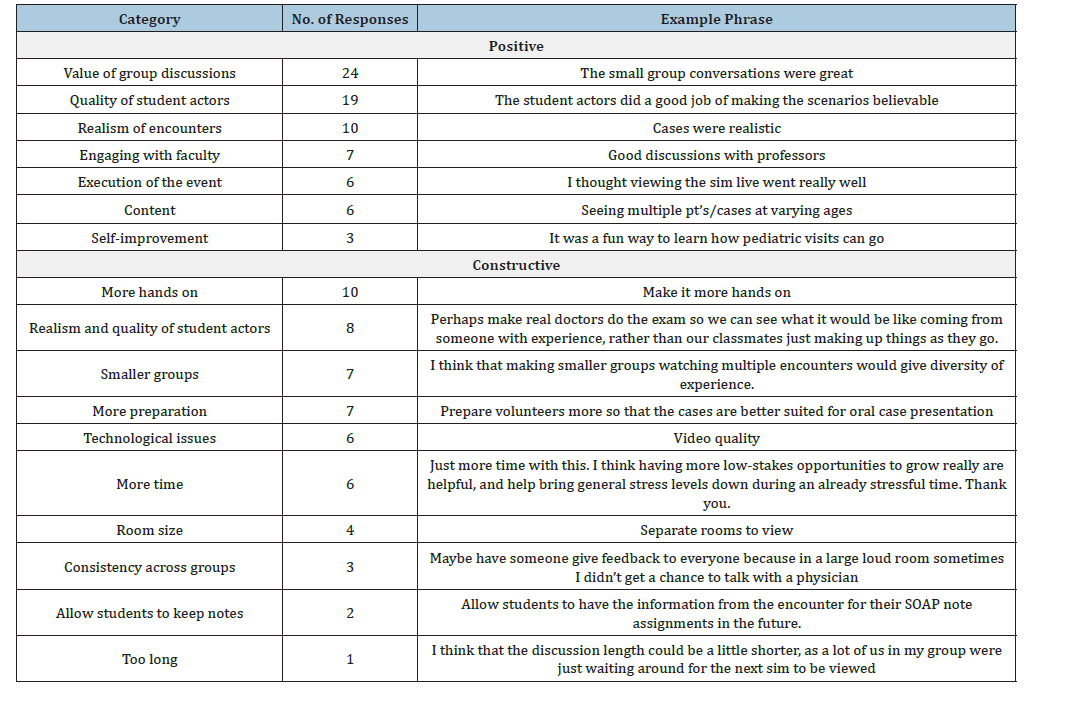
Overall, students agreed the content and organization were appropriate (mean 7.86/10 and 8.34/10, respectively) and they enjoyed the event (mean 4.25/5). Sixty-one students (75.3%) answered the single word descriptor (Figure 1) and most commonly described the session as insightful (n=6), helpful (n=6), informative (n=5), engaging (n=4), or fun (n=4). Themes from positive comments regarding what went well were most commonly the value of group discussions, the quality of the student actors, and the realism of the approach (Table 1). Themes on opportunities for improvements were most commonly recommendations for making the practice more hands-on, smaller groups, and more realistic cases (including better actors or to use faculty).
Figure 1: Copy of feedback questions on a novel pediatric simulation event at a single osteopathic medical school.
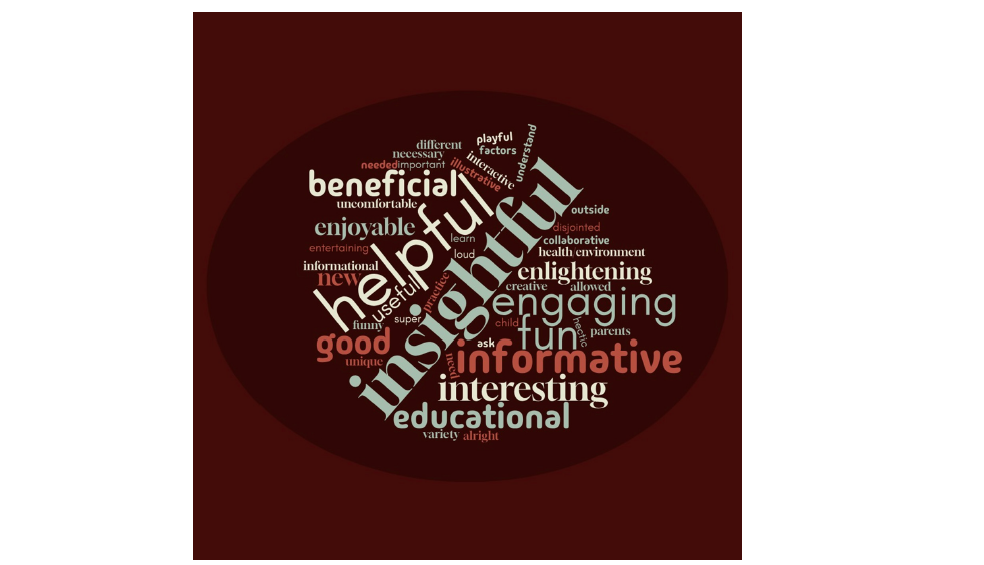
Table 1: Qualitative feedback on a novel pediatric simulation event at a single osteopathic medical school.
Discussion
Our novel approach to teaching the basics of history and examination of pediatric patients was an effective way to teach a large group of preclinical students with minimal resources and no live pediatric patients. We showed that the session improved perceived abilities of students to perform history and examination with patients of 3 different ages. Students overall had a positive review of the session, particularly content and organization.
A minority of students did request more hands-on practice or realistic patients; however, this was greatly outnumbered by the number of students who appreciated the realism and student actors. We acknowledge that hands- on practice with real patients for each student would be ideal, but as noted above it has shown to have many issues historically, including ethical concerns. Feasible improvements we will likely implement in future sessions include dividing groups into separate rooms and watching pre-recorded videos. We also will likely reduce individual group size to 5 students in the future.
Using children as standardized patients is ethically complex despite being educationally valuable. Children are a vulnerable population with limited capacity for fully informed consent, requiring robust parental permission and, when developmentally appropriate, child assent to ensure that participation is voluntary and ethically sound [18]. Ethical frameworks emphasize minimizing risk and discomfort, avoiding exploitation, and ensuring that educational benefit justifies any potential burden placed on the child. Identifying children to serve in this role can be difficult, as parents may be unwilling to allow their children to be used for medical education. Further, children should not be used when suitable alternatives (e.g., adult standardized patients, high-fidelity simulation, or task trainers) can achieve similar educational outcomes, and that their involvement should occur in safe, supervised environments with clear safeguards. This study points to one way to achieve that goal.
The data is limited by its single site nature in one class cohort, potentially limiting generalizability. Further, our study lacks a true control group and is pre/post in nature, which limits causality and may be at risk for confounding. The study also used student self-report and a priori knowledge questions with limited validity evidence and no other objective outcomes. Nine students receive actual simulation exposure, but it was also with students and not trained standardized patients/parents.
While our data only represents a single class at a single institution, this concept can easily be modified and utilized by other institutions. The approach here was so successful, it is also foreseeable that alternative content could be modified to fit this structure.
Funding Source
None. Financial disclosures: The authors have no financial relationships relevant to this article to disclose.
This clinical case demonstrates a particular relevance in documenting an MAS-like presentation that mimics sepsis in an 11-month-old child, which can obscure recognition and adds practical perspective to the limited literature on very early onset of the disease.
Acknowledgements
None.
Conflicts of Interest
The authors have no conflicts of interest relevant to this article to disclose. Dr. Davis reports one-time unrelated honoraria funding from Sketchy and Scholar Rx.
Ethics
This was an educational project and granted exemption from IRB review.
Data availability
Data is available from the authors upon reasonable request..
Contributions
All authors participated in project design and data collection; JD completed data analysis and drafted the manuscript; and all authors revised the manuscript for critically important content and reviewed the manuscript and agreed to be listed as authors and accept responsibility for the content.
Appendix 1
Educational objectives for a novel pediatric simulation event
A. Demonstrate obtaining a comprehensive pediatric history,
with particular attention to the needs and concerns of patients,
parents, and caregivers.
B. Demonstrate an age-appropriate physical exam, with focus on
proficiency in both basic and age-specific techniques.
C. Demonstrate effective communication skills when interacting
with pediatric patients and their caregivers, tailoring the
approach to the age and developmental stage of the patient,
including promoting adolescent autonomy.
D. Accurately explain findings to patients, parents, and caregivers.
E. Analyze physical exam findings to formulate appropriate
differential diagnoses and treatment plans.
Appendix 2
Pediatric history taking simulation lab
Course description: This interactive two-hour session focuses on developing history-taking skills within pediatric patient encounters. With simulations conducted in the simulation center, students will observe three distinct pediatric cases: a newborn well-child check, a toddler with constipation, and an adolescent consultation. Only a select group of student volunteers will participate directly in each simulation, taking on the roles of patient parents and student doctors, while the rest of the class will observe remotely in room 488, divided into small groups. Each case will include a live-streamed interaction, followed a faculty-led debrief in small groups to reinforce key learning points. This formative session blends board-relevant material with practical clinical skills in a dynamic, engaging format.
Course agenda
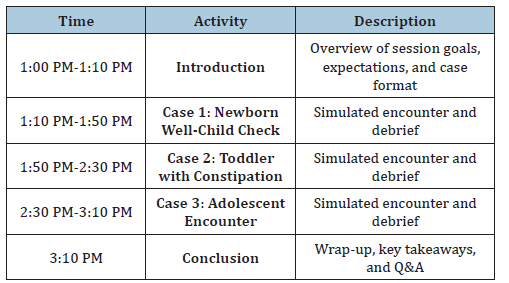
Lesson plan for each case
Updated Lesson Plan for Each Case.
Introduction (10 Minutes)
a. Overview of session goals, objectives, and format.
b. Clarify roles: a select group of student volunteers will engage
in the simulations as caregivers and student doctors, while the
rest of the class will observe in small groups in Room 488 with
faculty facilitators.
Case 1: Newborn well-child check (40 Minutes)
Simulated encounter (15 minutes)
a. Selected student volunteers interact as the caregiver and
student doctor in the simulation room, focusing on gathering
history related to a newborn’s health and development. 2
caregivers, 2 student doctors.
b. Faculty facilitators in Room 488 guide observing groups,
prompting them to note effective history-taking techniques
and key developmental milestones.
Small group debrief (20-25 minutes): Faculty in each small group lead discussions on the encounter, focusing on the unique aspects of conducting a well-child visit and addressing any identified gaps in the history-taking process.
Case 2: Toddler with constipation (40 Minutes)
Simulated encounter (15 minutes):
a. A new group of student volunteers role-play the encounter,
focusing on exploring potential causes and management of
constipation in a toddler. 2 caregivers, 2 student doctors.
b. Observing groups continue to engage in guided notetaking,
identifying effective questioning techniques and the
importance of dietary and developmental history.
Small group debrief (20-25 minutes): Faculty facilitators discuss how to approach a common pediatric complaint, such as constipation, emphasizing patient and caregiver communication and clinical reasoning.
Case 3: Adolescent encounter (30 Minutes)
Simulated encounter (15 minutes): Final group of student volunteers conduct history-taking with an adolescent patient and their caregiver, focusing on addressing developmental, social, and mental health aspects. 2 student doctors, adolescent and caregiver.
Small group debrief (20-25 minutes): Discussions led by faculty facilitators focus on strategies for building rapport with adolescents, handling sensitive topics, and tailoring communication to the patient’s developmental stage.
Conclusion (5 Minutes)
Faculty summarize the session’s key takeaways, highlight common themes across the cases, and address questions from students about pediatric history-taking.
Created by: Dr. Iram Sirajuddin and Megan Bayer
Appendix 3
Case 1: Newborn well-child check
Scenario overview: A new parent and supportive family member bring their 2-week-old newborn for a routine well-child check. The goal of the encounter is to assess the baby’s health, identify any caregiver concerns, and provide anticipatory guidance. The scenario includes a mix of common newborn issues such as breastfeeding struggles, jaundice, and sleep irregularities, allowing the student doctors to practice taking a detailed history and addressing parental concerns.
Participants
a. 2 Student Doctors: Conduct the history-taking, using
open-ended and targeted questions.
b. 2 Caregivers:
I. Parent 1: The primary caregiver, who is an anxious first-time
parent, focused on breastfeeding and jaundice concerns.
II. Parent 2: A supportive family member who offers additional
context and expresses worry about the baby crying excessively.
Key Objectives
a. Obtain a thorough feeding history, including frequency,
duration, and perceived challenges.
b. Explore stooling and urination patterns to assess hydration
and feeding adequacy.
c. Identify developmental milestones and explore caregiver
knowledge of safe sleep practices.
d. Discuss anticipatory guidance (e.g., tummy time, vaccination
schedule, signs of illness).
e. Practice building rapport with both caregivers and managing
an anxious caregiver dynamic.
Script for caregivers
Parent 1
a. Anxiously provides information about inconsistent
breastfeeding (baby latches sometimes but pulls away).
b. Shares worry about jaundice: “The baby still looks yellow
around the eyes-should we be worried?”
c. Mentions feeling overwhelmed and concerned about being “a
bad parent.”
Parent 2
a. Adds that the baby cries “all the time,” particularly in the
evening.
b. Expresses frustration, asking, “Isn’t there something we can do
to make the baby sleep better?”
c. Occasionally interrupts Parent 1, but ultimately defers to their
lead.
Case details (provided to caregivers)
1. Baby born full term (38 weeks) via C-section due to prolonged
labor and fetal distress, APGAR 8/9.
2. Exclusively breastfed; feeds inconsistently, averaging 10-12
times a day, with frequent pulling away.
3. Recent weight check at 1-week visit: slightly below birth
weight, but within normal range for breastfeeding.
4. Stool: Yellow, pasty, once per day. Wet diapers: 6-8 per day.
5. Sleep: Sleeps 2-3 hours at a time, wakes crying; longest stretch
at night is 3 hours.
6. Jaundice noted in the hospital and has resolved.
Faculty debriefing guide
Strengths: What did the student doctors do well?
a. Communication: Did the students establish rapport with both
caregivers? Highlight instances where students used openended
questions to explore concerns or validated caregiver
experiences.
b. Organization: How was the student doctor’s organization of
the history taking? Did the students systematically gathered
information about feeding, stooling, and sleeping patterns.
c. Empathy: What went well when they addressed the anxiety of
Parent 1 and balanced their interaction with Parent 2.
Weaknesses: Missed Opportunities
a. What could they improve on?
b. Did the students fail to explore maternal mental health or
ask about post-C-section recovery (e.g., pain or breastfeeding
positioning challenges)?
c. Did they probe for understanding of safe sleep practices (e.g.,
avoiding co-sleeping, tummy time guidance)?
d. Did they ask about family or community support (e.g., lactation
consultant, family members helping at home)?
e. What would you have done differently if you were in that
situation?
Closing questions
a. How effectively did students involve both caregivers in the
conversation?
b. Were students able to navigate caregiver dynamics (e.g., Parent
2’s interruptions)?
c. Did they summarize and close the session effectively,
addressing key concerns and leaving the caregivers with clear
next steps?
Teaching points for anticipatory guidance
1. Feeding
a) Normal newborn feeding frequency (8-12 feeds per 24 hours).
b) Signs of effective breastfeeding (e.g., audible swallowing,
satiety cues, weight gain).
2. Stooling and hydration: Wet diapers as a hydration
indicator; normal stool patterns for breastfed infants.
3. Sleep: Reinforce safe sleep practices: “Back to Sleep”
guidelines, avoiding soft bedding, and understanding normal sleepwake
cycles.
4. Jaundice: Reassure caregivers about physiologic jaundice
while educating on warning signs (e.g., lethargy, poor feeding, dark
urine, pale stool).
5. Caregiver mental health: Subtle probing for postpartum
depression or caregiver burnout, offering resources if concerns
arise.
Takeaways
1. Building rapport is crucial when managing anxious or
overwhelmed caregivers.
2. Effective history-taking requires balancing the focus between
the infant’s health and the caregiver’s concerns.
3. Anticipatory guidance is an opportunity to educate caregivers
about normal infant development and empower them with
strategies for common challenges.
4. Managing caregiver dynamics can enhance the patient-familyprovider
relationship and optimize outcomes.
Appendix 4
Case 2: Toddler with constipation (with OMM component)
Scenario overview: A parent and a family member bring their 2-year-old toddler for concerns about chronic constipation. In addition to gathering a detailed history and providing a management plan, students should explore how Osteopathic Manipulative Treatment (OMT) might be used as a complementary approach to relieve symptoms and support normal bowel function.
Participants
a. 2 Student doctors: Conduct history-taking and discuss
potential OMT techniques that could benefit the patient.
b. 2 Caregivers
I. Parent 1: Primary caregiver, concerned about the child’s
discomfort and focused on immediate relief.
II. Parent 2: Skeptical family member who questions the use of
OMM and prefers “just fixing the diet.”
Key objectives
a. Obtain a comprehensive history, including dietary habits,
toileting behaviors, and developmental milestones.
b. Explore the role of somatic dysfunction in the gastrointestinal
system and discuss how OMT may support normal bowel
function.
c. Provide a holistic management plan incorporating dietary
changes, behavioral strategies, and OMT where appropriate.
OMM considerations
Relevant anatomy
a. Focus on the sacrum, lumbar spine, and abdomen as they
relate to parasympathetic and sympathetic innervation of the
gastrointestinal tract.
b. Understand how restrictions in these areas may contribute to
constipation.
Techniques to consider
a. Sacral Rocking: To stimulate parasympathetic activity via the
pelvic splanchnic nerves.
b. Abdominal Techniques: Gentle abdominal kneading to
promote bowel motility.
c. Thoracolumbar Soft Tissue: To address sympathetic
overactivity affecting the gastrointestinal system.
d. Myofascial Release: To relieve restrictions in the abdominal
and pelvic regions.
Script for caregivers
Parent 1
a. Expresses concern about the toddler’s discomfort and is open
to any treatment options, asking, “Is there something else we
can do to help them go?”
b. Relays that the toddler resists sitting on the potty and hides
when needing to go.
Parent 2
a. Minimizes the issue, saying, “It’s just diet-why are we talking
about these extra treatments?”
b. Expresses skepticism about OMT: “Does that really help with
things like constipation?”
Case details (provided to caregivers)
1. Diet: Drinks 20-24 ounces of whole milk daily; prefers cheese,
pasta, and crackers with minimal fruits and vegetables.
2. Behavior: Avoids sitting on the potty; hides when needing to
go. Recently started toilet training.
3. History: No fever, vomiting, or blood in stool. No known food
allergies or significant medical history.
4. Hydration: Minimal water intake but drinks sweetened fruit
juice.
Faculty debriefing guide (Including OMM)
Strengths
A. What went well for them?
B. How did they integrate OMM into the encounter?
I. Did the students integrate OMT as part of a broader treatment
plan, emphasizing that it complements dietary and behavioral
changes rather than replacing them?
II. Did students explain OMT in simple, understandable terms for
the caregivers?
III. Praise students for suggesting techniques appropriate for the
toddler’s age and comfort level.
Weaknesses
a. What could have been improved on?
b. What would you have done differently in this situation?
Closing questions
a. What are the challenges with obtaining a history and creating
a plan for a child at this developmental stage.
b. Did the students integrate OMM into the history-taking and
management plan appropriately?
c. Were they able to explain the purpose and benefits of OMT in a
way that addressed both caregivers’ perspectives?
d. Did they provide a balanced, holistic plan that combined OMT
with evidence-based dietary and behavioral interventions?
OMM integration teaching points
Explaining OMT to Caregivers
a. Highlight OMT as a gentle, noninvasive method supporting the
body’s natural function.
b. Example: “OMT can relieve tension in areas like the lower
back and abdomen, improving bowel motility and reducing
discomfort.”
Techniques
a. Sacral Rocking: Encourages nerve activity aiding intestinal
movement.
b. Abdominal Massage: Stimulates digestion through soothing
pressure.
c. Soft Tissue Techniques: Relieves lower back tension to support
gut motility.
Holistic approach: Combine OMT with dietary changes (e.g., more fiber, less milk) and behavioral strategies (e.g., consistent potty routine).
Management plan
OMM recommendation
a. Demonstrate techniques (e.g., sacral rocking, abdominal
massage), addressing caregiver safety concerns.
b. Suggest follow-up OMT if symptoms persist after dietary
adjustments.
Dietary and behavioral strategies: Promote high-fiber foods, limit milk to 16 oz/day, and encourage water intake.
Follow-up: Schedule a visit to monitor progress and reassess OMT effectiveness alongside other interventions.
Takeaways
1. OMM offers a unique, hands-on approach to addressing
functional gastrointestinal issues, complementing standard
treatments.
2. Effective communication is essential when explaining OMM to
caregivers, especially those who may be skeptical.
3. A holistic management plan incorporating OMT, diet, and
behavior strategies aligns with osteopathic principles of
treating the whole patient.
Appendix 5
Case 3: Adolescent encounter
Scenario overview: A parent brings their 15-year-old adolescent for concerns about behavioral changes, withdrawal from activities, and poor appetite. The caregiver is highly concerned and interprets the issues as laziness or excessive screen time, while the adolescent is struggling with stress and self-esteem issues related to school and social dynamics. The encounter’s primary goal is to build rapport with the adolescent, elicit relevant social and mental health history, and provide a balanced approach to addressing the concerns of both the adolescent and the caregiver.
Participants
a. 2 Student Doctors: Conduct history-taking, focusing on the
adolescent’s perspective while managing caregiver input
effectively.
b. 1 Adolescent: Answers questions with hesitation initially but
opens up when rapport is established.
c. 1 Caregiver: Overly involved parent, focused on blaming
screen time and behavioral changes while unaware of deeper
underlying stressors.
Key objectives
a. Obtain a comprehensive history, including dietary habits,
toileting behaviors, and developmental milestones.
b. Explore the role of somatic dysfunction in the gastrointestinal
system and discuss how OMT may support normal bowel
function.
c. Provide a holistic management plan incorporating dietary
changes, behavioral strategies, and OMT where appropriate.
OMM considerations
Relevant anatomy
a. Focus on the sacrum, lumbar spine, and abdomen as they
relate to parasympathetic and sympathetic innervation of the
gastrointestinal tract.
b. Understand how restrictions in these areas may contribute to
constipation.
Techniques to consider
a. Sacral Rocking: To stimulate parasympathetic activity via the
pelvic splanchnic nerves.
b. Abdominal Techniques: Gentle abdominal kneading to
promote bowel motility.
c. Thoracolumbar Soft Tissue: To address sympathetic
overactivity affecting the gastrointestinal system.
d. Myofascial Release: To relieve restrictions in the abdominal
and pelvic regions.
Script for caregivers
Parent 1
a. Expresses concern about the toddler’s discomfort and is open
to any treatment options, asking, “Is there something else we
can do to help them go?”
b. Relays that the toddler resists sitting on the potty and hides
when needing to go.
Parent 2
a. Minimizes the issue, saying, “It’s just diet-why are we talking
about these extra treatments?”
b. Expresses skepticism about OMT: “Does that really help with
things like constipation?”
Case details (provided to caregivers)
1. Diet: Drinks 20-24 ounces of whole milk daily; prefers cheese,
pasta, and crackers with minimal fruits and vegetables.
2. Behavior: Avoids sitting on the potty; hides when needing to
go. Recently started toilet training.
3. History: No fever, vomiting, or blood in stool. No known food
allergies or significant medical history.
4. Hydration: Minimal water intake but drinks sweetened fruit
juice.
Faculty debriefing guide (Including OMM)
Strengths
A. What went well for them?
B. How did they integrate OMM into the encounter?
I. Did the students integrate OMT as part of a broader treatment
plan, emphasizing that it complements dietary and behavioral
changes rather than replacing them?
II. Did students explain OMT in simple, understandable terms for
the caregivers?
III. Praise students for suggesting techniques appropriate for the
toddler’s age and comfort level.
Weaknesses
a. What could have been improved on?
b. What would you have done differently in this situation?
Closing questions
a. What are the challenges with obtaining a history and creating
a plan for a child at this developmental stage.
b. Did the students integrate OMM into the history-taking and
management plan appropriately?
c. Were they able to explain the purpose and benefits of OMT in a
way that addressed both caregivers’ perspectives?
d. Did they provide a balanced, holistic plan that combined OMT
with evidence-based dietary and behavioral interventions?
OMM integration teaching points
Explaining OMT to Caregivers
a. Highlight OMT as a gentle, noninvasive method supporting the
body’s natural function.
b. Example: “OMT can relieve tension in areas like the lower
back and abdomen, improving bowel motility and reducing
discomfort.”
Techniques
a. Sacral Rocking: Encourages nerve activity aiding intestinal
movement.
b. Abdominal Massage: Stimulates digestion through soothing
pressure.
c. Soft Tissue Techniques: Relieves lower back tension to support
gut motility.
Holistic approach: Combine OMT with dietary changes (e.g., more fiber, less milk) and behavioral strategies (e.g., consistent potty routine).
Management plan
OMM recommendation
a. Demonstrate techniques (e.g., sacral rocking, abdominal
massage), addressing caregiver safety concerns.
b. Suggest follow-up OMT if symptoms persist after dietary
adjustments.
Dietary and behavioral strategies: Promote high-fiber foods,
limit milk to 16 oz/day, and encourage water intake.
Follow-up: Schedule a visit to monitor progress and reassess
OMT effectiveness alongside other interventions.
Takeaways
1. OMM offers a unique, hands-on approach to addressing
functional gastrointestinal issues, complementing standard
treatments.
2. Effective communication is essential when explaining OMM to
caregivers, especially those who may be skeptical.
3. A holistic management plan incorporating OMT, diet, and
behavior strategies aligns with osteopathic principles of
treating the whole patient.
Appendix 5
Case 3: Adolescent encounter
Scenario overview: A parent brings their 15-year-old adolescent for concerns about behavioral changes, withdrawal from activities, and poor appetite. The caregiver is highly concerned and interprets the issues as laziness or excessive screen time, while the adolescent is struggling with stress and self-esteem issues related to school and social dynamics. The encounter’s primary goal is to build rapport with the adolescent, elicit relevant social and mental health history, and provide a balanced approach to addressing the concerns of both the adolescent and the caregiver.
Participants
a. 2 Student Doctors: Conduct history-taking, focusing on the
adolescent’s perspective while managing caregiver input
effectively.
b. 1 Adolescent: Answers questions with hesitation initially but
opens up when rapport is established.
c. 1 Caregiver: Overly involved parent, focused on blaming
screen time and behavioral changes while unaware of deeper
underlying stressors.
Key objectives
a. Establish rapport with the adolescent to encourage honest
communication about stress, mental health, and social factors.
b. Balance the conversation by addressing both the adolescent’s
and caregiver’s concerns.
c. Explore lifestyle factors, including sleep patterns, diet,
extracurricular activities, and social relationships.
d. Introduce age-appropriate interventions for stress and mental
health concerns, emphasizing collaboration with the family.
Script for adolescent
A. Initially provides short answers, saying, “I don’t know” or
“It’s fine.” Opens up later with:
I. “I’m just stressed about everything.”
II. “I feel like I’m not good enough, especially when I mess up at
school.”
III. “I don’t even want to hang out with my friends anymore
because they’re doing so much better than me.”
B. Mentions poor sleep (4-5 hours a night) and feeling tired
all the time.
C. Confesses to skipping meals sometimes because of “not
feeling hungry.”
Script for caregiver
A. Frequently interrupts, saying things like:
a. “They’re on their phone all night. That’s why they’re tired.”
b. “This is just laziness-we didn’t have these problems when I
was their age.”
c. “I don’t know why they’re acting like this. Everything was fine
last year.”
B. Expresses frustration but does not acknowledge the
adolescent’s emotional struggles:
a. “They’re just making excuses not to do their homework or
chores.”
b. “I just want them to stop being so dramatic and act normal
again.”
Case details (provided to adolescent and caregiver)
Adolescent
a. Feels overwhelmed by school pressures and social
comparisons.
b. Grades have declined slightly, which they attribute to feeling
tired and unmotivated.
c. Lost 2 pounds over the last month but denies specific health
complaints beyond fatigue and appetite changes.
Caregiver
a. Attributes change to excessive screen time and a lack of
discipline.
b. Reports “things were fine last year” and focuses on behavioral
solutions without acknowledging stress.
Expanded faculty debriefing guide
Strengths
1. What went well for them?
A. Communication
I. Did the students demonstrate patience and empathy when
engaging the adolescent?
II. Highlight effective use of open-ended questions (e.g., “What
has been stressing you out lately?” or “How do you usually feel
about school?”).
2. Balancing Roles
I. Did the students involve the caregiver appropriately without
allowing interruptions to derail the conversation?
II. Praise attempts to redirect focus to the adolescent’s perspective
(e.g., “Let’s hear from [name] about how they’re feeling first,
and then we can explore your concerns”).
Weaknesses
A. What could have been improved on?
B. What would you have done differently in this situation?
I. Did students probe enough into specific stressors (e.g.,
academic workload, peer relationships, or potential bullying)?
II. Did they adequately explore sensitive topics, such as depressive
symptoms, anxiety, or self-esteem issues?
III. Did students recognize potential signs of clinical concern, such
as weight loss, sleep disruption, or emotional withdrawal?
IV. Did they ask about safety concerns, such as self-harm or
suicidal ideation, in an appropriate and sensitive manner?
Closing questions
a. Did the students balance their attention between the
adolescent and caregiver effectively?
b. Were they able to summarize the encounter with clear next
steps for both the adolescent and caregiver?
c. Did they approach sensitive topics with appropriate language
and empathy?
Teaching points for adolescent communication
A. Building rapport
a. Discuss strategies for engaging reluctant adolescents (e.g.,
normalizing their experiences, using reflective listening)
b. Reinforce the importance of using nonjudgmental language to
make the adolescent feel heard.
B. Balancing Input
a. Highlight techniques for managing an overbearing caregiver,
such as redirecting interruptions or requesting one-on-one
time with the adolescent if appropriate.
b. Emphasize the importance of validating caregiver concerns
without dismissing the adolescent’s perspective.
C. Exploring stressors
a. Use specific, age-appropriate questions to explore mental
health:
I. “What’s the hardest part about school right now?”
II. “What do you do when you feel stressed or upset?”
III. “Have you felt really down or hopeless recently?”
D. Red flags
a. Encourage a structured approach to identifying warning signs
(e.g., PHQ-9 for adolescents).
b. Teach how to ask sensitive questions about safety in a nonthreatening
way (e.g., “Some teens feel so overwhelmed they
might think about hurting themselves-has that ever crossed
your mind?”).
Management plan
A. For the Adolescent
I. Suggest stress management techniques (e.g., mindfulness,
journaling, regular sleep routines).
II. Encourage re-engagement with peers and extracurricular
activities as a gradual process.
B. For the caregiver
I. Provide education on adolescent development and the
importance of emotional support during stressful periods.
II. Offer resources for family counseling or parenting strategies
for teens.
C. Referral considerations: If red flags are present, recommend a follow-up with a mental health professional or pediatrician.
Takeaways
A. Adolescents require a tailored approach to communication,
emphasizing rapport and trust.
B. Caregiver dynamics can significantly impact the adolescent’s
willingness to open up; managing these dynamics is a key skill.
C. Addressing both immediate concerns (e.g., stress, fatigue)
and long-term solutions (e.g., counseling, lifestyle changes) is
essential for holistic care.
D. Effective screening for mental health issues in adolescents
involves normalizing these concerns while ensuring safety and
support.
References
- Novack DH, Volk G, Drossman DA, Lipkin JM (1993) Medical interviewing and interpersonal skills teaching in US medical schools. Progress, problems, and promise. JAMA 269(16): 2101-2105.
- Peterson MC, Holbrook JH, Hales DV, Smith NL, Staker LV (1992) Contributions of the history, physical examination, and laboratory investigation in making medical diagnoses. West J Med 156(2): 163-165.
- Russo S, Berg K, Davis J, Davis R, Riesenberg LA, et al. (2020) Incoming interns recognize inadequate physical examination as a cause of patient harm. J Med Educ Curric Dev 7: 2382120520928993.
- Verghese A, Charlton B, Kassirer JP, Ramsey M, Ioannidis JP (2015) Inadequacies of physical examination as a cause of medical errors and adverse events: A collection of vignettes. Am J Med 128(12): 1322-1324.
- Oliver CM, Hunter SA, Ikeda T, Galletly DC (2013) Junior doctor skill in the art of physical examination: A retrospective study of the medical admission note over four decades. BMJ Open 3(4): e002257.
- Feddock CA (2007) The lost art of clinical skills. Am J Med 120(4): 374-378.
- Nair BR, Coughlan JL, Hensley MJ (1998) Impediments to bed-side teaching. Med Educ 32(2): 159-162.
- Williams KN, Ramani S, Fraser B, Orlander JD (2008) Improving bedside teaching: Findings from a focus group study of learners. Acad Med 83(3): 257-264.
- Crumlish CM, Yialamas MA, McMahon GT (2009) Quantification of bedside teaching by an academic hospitalist group. J Hosp Med 4(5): 304-307.
- Guiot AB, Baker RC, Dewitt TG (2013) When and how pediatric history and physical diagnosis are taught in medical school: A survey of pediatric clerkship directors. Hosp Pediatr 3(2): 139-143.
- Frost KA, Metcalf EP, Brooks R, Kinnersley P, Greenwood SR, et al. (2015) Teaching pediatric communication skills to medical students. Adv Med Educ Pract 6: 35-43.
- Keifenheim KE, Teufel M, Julianne IP, Speiser N, Leehr EJ, et al. (2015) Teaching history taking to medical students: A systematic review. BMC Med Educ 15: 159.
- Johnson BK (2019) Simulation observers learn the same as participants: The evidence. Clin Simul Nurs 33: 26-34.
- O'Regan S, Molloy E, Watterson L, Nestel D (2016) Observer roles that optimise learning in healthcare simulation education: A systematic review. Adv Simul 1: 4.
- Gamble A, Bearman M, Nestel D (2016) A systematic review: Children & adolescents as simulated patients in health professional education. Adv Simul 1: 1.
- Tsai TC (2004) Using children as standardised patients for assessing clinical competence in paediatrics. Arch Dis Child 89(12): 1117-1120.
- Huh I, Gim J (2025) Exploration of likert scale in terms of continuous variable with parametric statistical methods. BMC Med Res Methodol 25(1): 218.
- Aviva LK, Sally AW, Committee on Bioethics (2016) Informed consent, parental permission, and assent in pediatric practice. Pediatrics 138(2): e20161485.
© 2025 Joshua Davis. This is an open access article distributed under the terms of the Creative Commons Attribution License , which permits unrestricted use, distribution, and build upon your work non-commercially.
Editor In Chief







.jpg)































Signup for Newsletter

Quick Links
 Editorial Board Registrations
 Submit your Article
 Best Paper of the Volume
 Reprints
 Refer a Friend
 Advertise With Us
Our Recent Edition

.jpg)



Top Editors




.jpg)

















.bmp)
.jpg)
.png)
.jpg)













.jpg)






.png)

.png)




.png)




Financial Support

Sponsors

Latest e-Books

Latest Video

 a Creative Commons Attribution 4.0 International License. Based on a work at www.crimsonpublishers.com.
Best viewed in
a Creative Commons Attribution 4.0 International License. Based on a work at www.crimsonpublishers.com.
Best viewed in 
 | Above IE 9.0 version