

- About Us
- Information
-

The Author ensures that the research has been conducted responsibly and ethically with adherence to all relevant regulations. read more..
- For Authors
- For Reviewer
- Manuscript Guidelines
- Membership
- Publication Ethics
-
- Journals
- Reprints
- e-Books
- Videos
- Policies
- Contact Us
 COVID-19
- Submissions



Full Text
Research & Investigations in Sports Medicine
The Need for an Athlete-Specific Dietary Quality Index: A Narrative Review
Grace White1*, Bree Baker2, Sam Emerson1, Gena Wollenberg1, Ho Han3 and Jillian Joyce1
1 Nutritional Sciences, Oklahoma State University, USA
2 Kinesiology, Applied Health and Recreation, Oklahoma State University, USA
3 Community Health Sciences, Counseling and Counseling Psychology, Oklahoma State University, USA
*Corresponding author:Grace White, Nutritional Sciences, Oklahoma State University, 301 Nancy Randolph Davis, Stillwater, OK 74075, USA
Submission: September 15, 2026;Published: September 28, 2026

ISSN: 2577-1914 Volume11 Issue 5
Abstract
Dietary Quality (DQ) is a term used to describe how well an individual’s diet conforms to a specific set of dietary recommendations. Dietary Quality Indices (DQIs) are tools used to systematically assess dietary quality. DQIs can be very helpful tools in research and practice because they can give quickly translatable insight into the dietary quality of individuals as well as large groups of people. They can also help researchers and practitioners understand how dietary quality is related to certain health or performance outcomes. There are many valid and reliable DQIs, including the Healthy Eating Index (HEI) based on the Dietary Guidelines for Americans. Most existing DQIs, including the HEI, were developed to assess compliance with nutrition recommendations meant for the general population and health rather than athletes and sports nutrition recommendations. There appears to be a gap in research regarding the development and validation of DQIs that are specifically meant to assess athlete dietary quality. In this narrative review, the existing body of literature was explored to address the following two objectives: 1) to determine if there are any DQIs that have been developed and/or validated for an athlete population, 2) to determine the appropriateness of the HEI in assessing athlete dietary quality. Following the review, it is evident that there is a lack of a thoroughly validated athlete-specific DQI. In many performance settings, dietitian accessibility and manpower is limited and a streamlined method of nutritional analysis could more efficiently guide nutrition intervention. The HEI may be a good starting point for the development of an athlete-specific DQI as general health eating is the foundation of performance nutrition recommendations, but some modifications may be warranted due to discrepancies seen between evidence-based recommendations for the general population and athletes.
Keywords: Athlete; Dietary quality index; Performance nutrition; Sports nutrition
Abbreviations: DQ: Dietary Quality; DQI: Dietary Quality Index; HEI: Healthy Eating Index; HDI: Healthy Diet Indicator; MDS: Mediterranean Diet Score; HFI: Healthy Food Index; RFS: Recommended Food Score; DQS: Diet Quality Score; DGA: Dietary Guidelines for Americans; NCAA: National Collegiate Athletic Association; AMDR: Adequate Macronutrient Distribution Range; G: Grams; KG: Kilogram; DRI: Daily Reference Intake; kcal: kilocalorie; AI: Adequate Intake; CDRR: Chronic Disease Risk Reduction Intake; RDA: Recommended Dietary Allowance; MG: Milligram; Mcg: Microgram; IU: International Unit; EAGNZA: Eating and Activity Guidelines for New Zealand Adults; ASDs: Accredited Sports Dietitians; DXA: Dual-Energy X-Ray Absorptiometry; DII: Dietary Inflammatory Index; SFAS: Special Forces Assessment and Selection; APFT: Army Physical Fitness Test; FFQ: Food Frequency Questionnaire; USDA: U.S. Department of Agriculture; NHANES: National Health and Nutrition Examination Survey; PUFAs: Poly Unsaturated Fatty Acids; MUFAs: Monounsaturated Fatty Acids; SFA: Saturated Fatty Acids; REDs: Relative Energy Deficiency in Sport
Introduction
Dietary quality is an umbrella term used to describe how well an individual’s diet conforms to specific dietary recommendations [1]. Dietary quality index (or indices, DQI) is the term used to describe the process or tool by which dietary quality is assessed [2]. DQIs can be very helpful tools in research and practice because they provide useful insight into the dietary quality of a single individual as well as large groups of people. They can also help researchers and practitioners understand how dietary quality is related to certain health outcomes [3,4]. There are many valid and reliable DQIs, but most of them were made to assess compliance to a set of nutrition recommendations meant for the general population and health rather than athletes and sports nutrition recommendations. Development of an athletespecific DQI will involve serious considerations of athletes’ needs and goals. Sports nutrition recommendations are based on the optimization of athlete health, as well as performance, whereas general population nutrition recommendations are typically based on promoting health, decreasing risk for chronic disease and improving quality of life and longevity [5]. While these concerns are still relevant to athletes, it is important for sports nutrition recommendations and therefore an athlete-specific DQI, to target athlete-specific health and performance nutrition considerations, such as low-energy availability, electrolyte balance, hydration, sport-specific macro-nutrient distributions, nutrition timing, acute and chronic inflammation/oxidative stress related to exercise and injury prevention and recovery [6].
In recent years, a collection of researchers has recognized the need for an athlete-specific DQI and attempted to develop and validate one. It is called an Athlete Diet Index [7]. However, a validation study of the Athlete Diet Index demonstrated only moderate construct/relative validity [8]. The need for an athletespecific DQI that demonstrates reliability and stronger validity remains. It is important for a DQI to have established multiple types of validity to ensure that it measures what it intends to measure, covers all the aspects it should cover and correlates with and can even predict the intended outcomes of its targeted population, which is the ultimate goal for an athlete-specific DQI. The purpose of this narrative review is to determine if there are any DQIs that have been developed and/or validated for an athlete population and to determine the appropriateness of the HEI in assessing athlete dietary quality, as an existing, widely used and thoroughly validated DQI. The development and validation of an athlete-specific DQI that assesses compliance to sports nutrition recommendations, as well as predicts athlete health and performance outcomes, would be incredibly beneficial to performance/sports nutrition researchers and practitioners and athletes. Data collection and analysis within the world of performance nutrition could be streamlined with the utilization of an athlete-specific DQI. This athlete-specific DQI would increase efficiency of nutrition intervention administration to athletes from healthcare professionals in order to aid in athlete performance and health optimization. It could also streamline performance nutrition research methods.
Discussion
What is dietary quality?
Dietary quality, also known as diet quality, has a range of definitions and approaches of understanding. The general population’s understanding of it can be different from how it is specifically used and referenced in literature. A layman’s internet search may result in definitions like, ‘diet quality refers to both the amount of nutrients and the uptake of specific nutrients from foods to support body maintenance, growth, physiological status, physical activity and protection against infection’ which is a more generalized definition similar to definitions of a ‘balanced’ or ‘healthy’ diet [9]. In literature, other approaches to defining dietary quality include concepts of prevalence of ‘high quality foods’ or ‘functional foods’ within the diet. Elmadfa and Meyer [10] discuss the characteristics of high-quality foods and therefore a highquality diet as: Micronutrient content, additional health benefits beyond the essential purpose (i.e., functional foods) and food safety and hygiene [10]. Similarly, Alkerwi (2013) discusses many of the heterogeneous terminologies related to dietary quality, including healthy diet, balanced diet, nutritious food, optimal nutrition, functional foods, overall health-promoting diet, nutrient-rich foods [1]. All of which tie in concepts from both a typical layman’s understanding and Elmadfa and Meyer’s definition. However, Alkerwi provides a definition that reflects the most commonly used and referred to definition of dietary quality in the current literature. Dietary quality is an umbrella term often used to describe how well an individual’s diet conforms to specific dietary recommendations [1]. This definition and approach is much more tangible and useful in research, as standardized methods of assessing dietary quality can be established using existing and formalized sets of recommendations. There is a large volume of existing literature on methods to assess dietary quality using this definition.
Existing dietary quality indices
Dietary quality index (or indices, DQI) is the term used to describe the process or tool by which dietary quality is assessed. As there are many ‘sets of recommendations’ by which dietary quality is determined, there are many DQIs. The framework of these DQIs were based on one of three categories: Food groups or specific foods, nutrient intakes, or derived from combinations of food and nutrient intakes [2]. Researchers frequently look at the wide range of DQIs, the validity and reliability of each, their association with prevalence of certain chronic diseases and their ability to properly assess nutritional needs of different demographic groups. Waijers et al. [3] completed a review to uncover all predefined DQIs and their association with nutrient adequacy and health outcomes [3]. In total, they reviewed 20 different DQIs, none of which were specifically geared towards athletes. Out of those 20, they consider the four ‘original’ dietary quality scores to be the Healthy Eating Index (HEI), the Diet Quality Index (DQI), the Healthy Diet Indicator (HDI) and the Mediterranean Diet Score (MDS). Their selection of the ‘original’ indices was based off how many times they had been referred to in literature and the extensiveness of their tested validity. It was concluded that dietary quality scores do have an association with mortality and/or disease risk, but the relations are modest. It was also concluded that dietary quality scores do not predict morbidity or mortality significantly better than individual dietary factors. In their report, however, all included studies assessed either healthy adults or older adults, typically within the country of origin of the dietary quality score. No studies examining the relationship between DQIs and health and performance among athletes were found and/or included in this review [3]. Wirt and Collins [4] also completed a review that explored dietary quality tools and their applications at that current time [4]. In total, they found 25 indices, but similar to the findings of Waijers et al. [3] none of them were created for assessing athlete dietary quality specifically. The authors identified the major indices being the HEI, the HDI, the Healthy Food Index (HFI), the Recommended Food Score (RFS), DQI, the Diet Quality Score (DQS) and the MDS. They concluded that dietary quality indices may be able to quantify risk of some health outcomes and that higher dietary quality was consistently inversely related to all-cause mortality. Similarly to Waijers et al. [3], the included studies assessed only healthy and elderly adults, with the addition of adults with cancer. No studies including health and performance of athletes were mentioned [4]. From these two extensive reviews, it is clear that there are many different types of DQIs and that they can be used to better understand the relationship between dietary quality and certain health outcomes. However, it is also evident that an athlete-specific DQI based on sports nutrition recommendations is lacking. Athletes, researchers and practitioners could all benefit from such a tool. How they could benefit and what that DQI may look like will be described in detail in this review.
How are athletes defined and categorized?
Before creating an athlete-specific DQI, a set of sports nutrition recommendations would need to be recognized as the framework on which to base the DQI. This requires understanding and identifying the specific nutritional needs of different types of athletes versus the general population. This first step starts by defining the term ‘athlete’ and parameters by how different types of athletes are characterized. The American Heart Association defines an athlete as “one who participates in an organized team or individual sport that requires regular competition against others as a central component, places a high premium on excellence and achievement and requires some form of systematic (and usually intense) training” [11]. The European Society of Cardiology (ESC) defines athletes as “an individual of young or adult age, either amateur or professional, who is engaged in regular exercise training and participates in official sports competition” [12]. Grievances with these types of definitions have been brought up in recent literature because they have the potential to exclude much of the physically active population that may benefit from special nutritional and other health considerations [13]. Other, more inclusive definitions have been suggested, such as something as simple as “an individual who is engaged in physical activity and exercise on a regular basis” [14]. Discrepancies in definitions are why it is also beneficial to look at existing proposed classification frameworks for physically active individuals because they are consistently inclusive to both ‘athletes’ and ‘exercisers.’ McKinney et al. [13] proposed an algorithm to categorize and define physically active individuals based on three components: The first being the intent of exercise, the second being the volume of exercise (hours/week) and the third being level of competition. Based on this algorithm, there are five categories of individuals: Elite athlete, competitive athlete, recreational athlete, exerciser and physically inactive. Elite athletes have the intent to compete and exercise greater than or equal to 10 hours/week and the level of competition includes regional or national teams, Olympians and professional and some college athletes. These categories also include those who compete as a source of income. Competitive athletes have the intent to compete and exercise greater than or equal to six hours/week. The level of competition for competitive athletes includes other official competitions, like those attended by high school and most college athletes. Recreational athletes have the intent to compete and exercise greater than or equal to four hours/week and the level of competition includes registered recreational leagues and open events. The last two groups, exerciser and physically inactive, both have no intention of competing. The exerciser is just motivated by personal fitness, not through competition and exercises greater than or equal to 2.5 hours per week. Individuals who are considered ‘physically inactive’ do not meet recommended minimums of low intensity physical activity (<2.5 hours/week) [13].
Swann et al. [15] also came up with five criteria to use when characterizing ‘elite athletes’ specifically. These included highest performance standard, level of success, years of experience, competitiveness of the sport within the athlete’s country and global competitiveness of the sport [15]. McKay et al. [16] then built upon those criteria to make a classification framework that was more inclusive to a wider range of athletes and exercises. The framework has six tiers (0-5). Tier five is World Class, Tier four is Elite/International, Tier three is Highly Trained/National, Tier two is Trained/Developmental, Tier one is Recreationally Active and Tier zero is Sedentary [16]. The primary difference between this framework and the one mentioned previously is that McKay et al. [16] define recreationally active individuals as those who meet World Health Organization (WHO) recommendations for physical activity regardless of intent to compete. Sanz de la Garza and Paolo also came up with a less complicated classification based strictly on the level of commitment that follows similar principles as the McKinney et al. [13] framework:
A. Recreational athletes: individuals engaged in recreational
or open sport.
B. Competitive athletes: individuals engaged in exercise and
training on a regular basis and participating in official sports
competitions, at any level.
C. Elite and professional athletes: constitute a subgroup
within competitive athletes who achieve athletic excellence and
usually compete at an international level, earning a living out of
their sport participation.
Although there is not yet a universally accepted, standardized framework to categorize athletes and physically active individuals, there are a range of proposed frameworks, as discussed above. Regardless of what framework is utilized in research, they can be used as a tool to determine at what level an individual would potentially benefit from more specific performance nutrition recommendations versus nutritional recommendations for the general population.
What are sports nutrition recommendations for athletes versus the general population?
First, it should be acknowledged that general nutrition recommendations to support health are the basis of most sports nutrition recommendations. The goal and purpose of general nutrition recommendations, such as the Dietary Guidelines for Americans (DGA), are to decrease the risk for chronic disease and improve health to increase quality and length of life [5]. These factors are still important and relevant to athletes, but athletes may have additional nutritional considerations due to specific desired outcomes and concerns related to athletic performance. These considerations include but are not limited to low-energy availability, electrolyte balance, hydration, sportspecific macronutrient distributions, nutrition timing, acute and chronic inflammation/oxidative stress related to exercise and injury prevention and recovery [6]. In addition to the long-term goals of general nutrition recommendations, many exercisers and athletes have acute performance goals that influence sports nutrition recommendations. The relationship between many general nutrition recommendations and acute performance effects is not well understood or explored in current literature, as will be discussed later. There are, however, some already well-established sports nutrition recommendations that are described in detail in resources like the Academy of Nutrition and Dietetics’ Sports Nutrition Handbook for Professionals, research institutions like the Gatorade Research Institute and organization position papers, as well as current literature. Table 1 provides a breakdown of how general recommendations for each of the primary nutrients differ for athletes compared to the general population. There a quite a few nutrients for which recommendations are the same for both athletes and the general population, but there are enough that differ to suggest that a unique measurement of athlete’s dietary quality may be beneficial for the unique population.
Table 1: Nutrient Recommendations for General Population vs. Athlete Population.
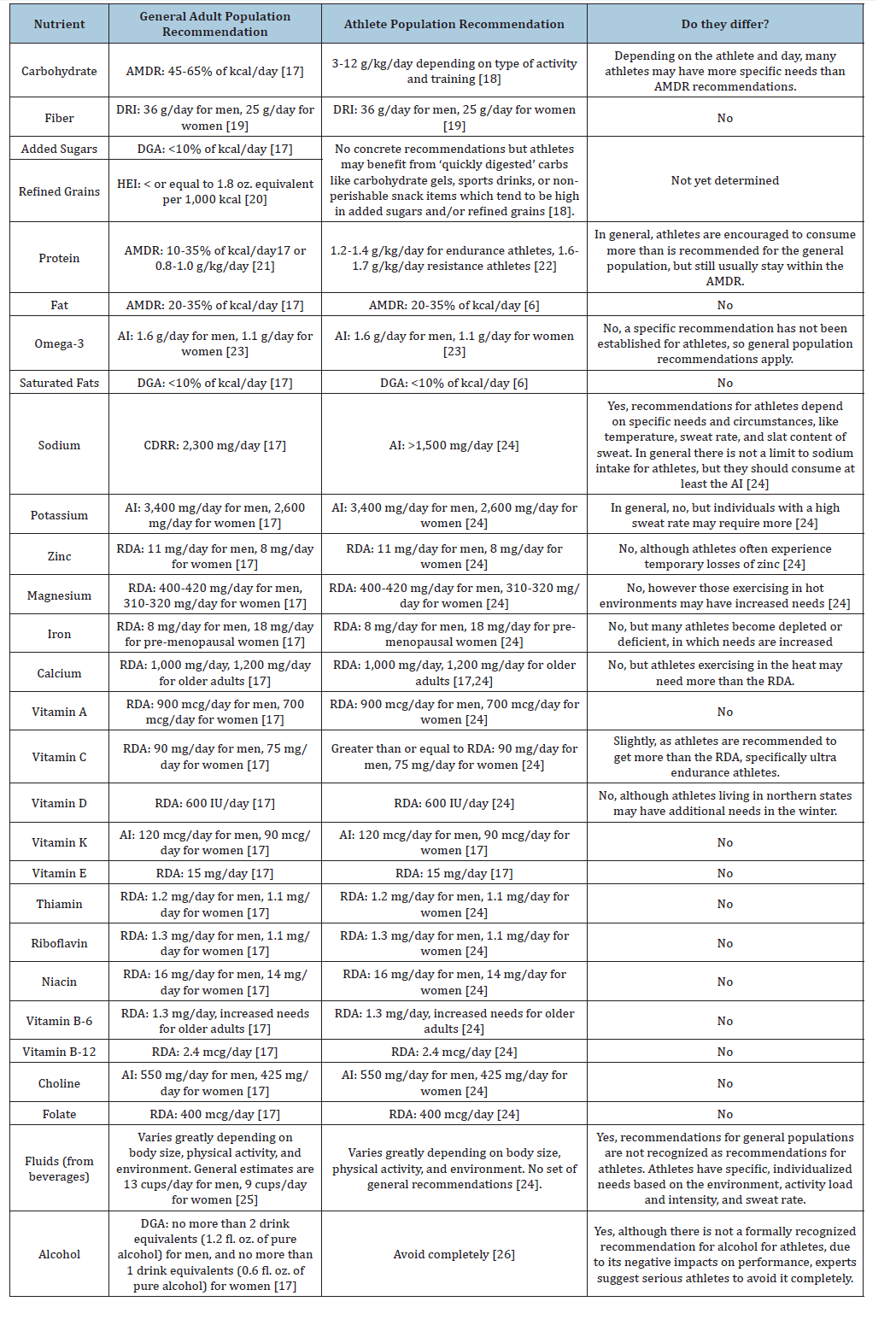
Table Abbreviations: AMDR: Adequate Macronutrient Athletic Association; g: Grams; kg: kilograms; DRI: Daily Reference Intake; DGA: Dietary Guidelines for Americans; kcal: Kilocalorie; HEI: Healthy Eating Index; AI: Adequate Intake; CDRR: Chronic Disease Risk Reduction Intake; RDA: Recommended Dietary Allowance; mg: Milligram; mcg: Microgram; IU: International Unit; fl. oz: Fluid Ounce.
Dietary quality indices for athletes
Although DQIs have been developed, validated and utilized as assessment tools in research for decades, as mentioned previously, the bulk of this research has been exploring dietary quality in the general population or those with or at risk for chronic disease. These recommendations are not the only considerations for athletes. There are some studies that explore the dietary quality of athletes, but very few address the appropriateness and validity of DQIs in the athlete demographic. To our knowledge, the only index that has been developed for athlete assessment specifically is still in the early stages of development and has several current limitations. It is called the Athlete Diet Index. To our knowledge, the first indication of the development of the Athlete Diet Index was in a master’s thesis. Blair and colleagues developed the Athlete Diet Index Questionnaire, which focused on the baseline nutrition requirements of high performing New Zealand athletes and the ability to examine the validity and reproducibility of food groups, food variety, fluid consumption and eating habits [27]. The questionnaire is based of dietary components that reflect the Eating and Activity Guidelines for New Zealand Adults (EAGNZA). It was developed with the collaboration of the lead researcher, two academic supervisors, sports nutritionists, registered dietitians, athletes and sports personnel. The researcher used a four-day estimated food record as a reference for validation of this tool. They found that validity was reasonable for the food groups, fluid, food variety and meal frequency categories, but not for healthy food choices [27]. Capling et. al. [7] used the Athlete Diet Index Questionnaire developed by Blair and colleagues as the initial framework for the Athlete Diet Index [7]. Capling et al. [7] cited an article by Blair et al. that was indicated as ‘under review’ but was seemingly never published. Nevertheless, the proposed purpose of the Athlete Diet Index was for it to be a rapid dietary assessment of athletes. According to the authors, the benefit of this type of DQI for athletes is that it could act as ‘an efficient and practical way to assess the quality of athletes’ diets, guide nutrition interventions and focus sport nutrition support’ [7]. The creation of the Athlete Diet Index was seemingly extensive with three phases of development and validation. The first phase was item development, which involved the review of population diet indices, relevant sports nutrition literature and in-depth focus groups of 20 sports nutritionists. Phase two determined the validity of draft items through the use of a Delphi survey and subsequent detailed coding of focus group transcripts. The third phase was a pilot study using athlete participants to assess instrument readability and face validity. The final Athlete Diet Index was categorized into three sections. Section A evaluated usual intake, special diets or intolerances, dietary habits and culinary skills. Section B assessed training load, nutrition support training and sports supplement use. Section C captured the demographic details, sporting type and caliber. This study did not discuss how the index would be scored and did not test it for reliability and validity [7].
However, in a follow up study, validity, reliability and a formal scoring system was reported for the Athlete Diet Index. The scoring components were quantified and weighted in accordance with the Australian Guide to Healthy Eating, international sports nutrition recommendations and discussion of the members of the research team. The total score is out of 125 with a score ≥90 being classified as exceeds recommendations (i.e., gold status), a score 66-89 being classified as meets recommendations (i.e., silver status) and a score ≤65 being classified as below recommendations (i.e., bronze status). Validity was tested by comparing scores with the four-day estimated food record. Test-retest reliability was also assessed. However, criterion validity was not established. The authors concluded that, ‘ADI is a reliable tool with moderate validity, demonstrating its potential for application to investigate the diet quality of athletes’ [8]. Capling et al. (2020) proceeded to assess dietary quality of elite Australian athletes using the Athlete Diet Index, while getting feedback from accredited sports dietitians (ASDs) to determine suitability of the ADI in practice. Surveyed ASDs indicated that they ‘strongly agreed with the perceived utility of the ADI for screening athletes and identifying areas for nutrition support, confirming its suitability for use in practice’ [28]. There are, however, a few limitations that could interfere with the appropriateness of this dietary quality index for assessing a broad range of athletes. The first being that criterion validity was never established in the Athlete Diet Index and scores have not been compared to performance factors and outcomes or general health outcomes of athletes, which are both very important to look at when determining an appropriate dietary quality assessment tool for athletes. It has also only been developed and validated in adherence to Australian guidelines and dietary assessment methods. Lastly, the assessment tool itself is somewhat time-intensive to use and may not be appropriate in every practice setting. Although the Athlete Diet Index is the only existing DQI made specifically for athletes, the Healthy Eating Index has been used in some, although limited, literature to assess dietary quality of athletes, [29-34] as well as to explore dietary quality’s relationship to athlete performance and health outcomes. In a very recent scoping review that covered existing literature evaluating the dietary quality of adult athletes, only 18 study articles were found to meet inclusion and exclusion criteria. Among those 18 articles, 11 DQIs were used. Among those 11 DQIs, seven were variations of the HEI. The HEI-2015 itself was used in six studies of the 18 [35]. It is evident that the HEI is the ideal starting framework for a DQI intended for assessing athletes. Considering this, the first logical step is to determine if HEI would need to be modified to be appropriate for assessment of athletes or would be appropriate as is. One way to determine this would be to test for any correlations or associations between HEI scores and athlete health and performance outcomes. To our knowledge, only a few studies have looked into these relationships. Gieng et al. [36] conducted a cross-sectional study to investigate associations between HEI-2015 scores and body composition and bone mineral density in athletes [36]. A convenience sample of NCAA Division I athletes who met inclusion and exclusion criteria participated in this study. The athletes were recruited between fall 2018 and spring 2019. Inclusion criteria included being female, 18 years of age or older, a current member of an NCAA Division I team and physically healthy and able to practice or compete in their respective sport. Exclusion criteria included being pregnant, having a diagnosis of a chronic health condition, or being currently injured or unable to practice or compete. The final participant count was 41 coming from five women’s sports: soccer, swimming, basketball, cross country and gymnastics [36]. The researchers gathered demographic, dietary intake, anthropometric and body composition (including bone mineral density) data. Dietary intake was gathered using three interview-based multiple-pass 24-hour dietary recalls. Body composition and bone mineral density data was collected utilizing dual-energy X-ray absorptiometry (DXA). The researchers analyzed dietary intake data using both HEI-2015, as well as the Dietary Inflammatory Index (DII). Pearson’s tests were used to determine relationships between dietary quality scores and body composition. The author’s concluded that neither DII or HEI-2015 scores were correlated with body composition or bone mineral density [36].
Zanella et al. [37] completed a cross-sectional study to determine any associations between HEI scores of adolescent volleyball athletes and body fat percentage and oxidative stress [37]. A convenience sample was of participants was gathered from a sports club in Porto Alegre, Brazil. The inclusion criteria included being adolescence aged, being competitive at the regional level and having regular training of five times a week. Exclusion criteria included smoking and having a chronic disease. The final participant group included 18 volleyball athletes from box sexes (nine boys and nine girls). Food intake was gathered using a threeday food record (two weekdays, one weekend day). The researchers used HEI-2010 to analyze the data. To assess oxidative stress, the researchers collected blood samples and ran various tests on the isolated erythrocytes of the blood samples in order to verify the blood redox status. The researchers used Pearson or Spearman’s correlation tests to determine any correlation between HEI and oxidative stress data. The authors reported that no correlations between HEI and oxidative stress were found [37]. Lastly, Farina et al. [38] conducted a cross-sectional study to determine associations between dietary quality measured with HEI-2015 and physical performance in U.S. Special Forces soldiers [38]. Although not considered traditional athletes, this group has many similarities to traditional athletes and is referred to as tactical athletes, making them of interest to this review. Participants were active-duty, male, U.S. Army soldiers recruited from 12 separate Special Forces Assessment and Selection (SFAS) courses, between May 2015 and March 2017. SFAS is a challenging 19-day to 20-day assessment course meant to distinguish individuals who have the attributes to be successful as an elite U.S. Army Special Forces solider. It involves extensive cognitive and physical challenges, including the Army Physical Fitness Test (APFT). The number of participants that were included in specific analyses varied depending on how many were able to progress far enough into the course to complete the various physical fitness tests used in the study. It varied from 468 to 770 participants [38].
Demographic and health data were collected in a self-report questionnaire and were used to determine age, education, duration of resistance training and aerobic exercise, participation in types of resistance training exercises, cigarette smoking and smokeless tobacco use. Dietary intake over the previous year prior to the course was gathered using a 127-item 2014 Block Food Frequency Questionnaire (FFQ). Daily consumption of foods and the frequency and quantity of food items reported on the FFQ were used to calculate HEI-2015 scores. Physical performance tests included the overall APFT and related sub scores (push-up, sit-up and two-mile run), the pull-up test, timed runs and road marches (distances undisclosed) and land navigation. Each participant was characterized to a specific quartile based on his score. Differences in HEI-2015 total scores according to categorized demographics, health characteristics and physical performance (quartile) were determined with analysis of variance using the general linear model procedure, with models adjusted for confounded variables that included age, education, BMI, duration of resistance training, use of free weights, suspension training, Olympic training and cigarette smoking [38]. Statistically significant differences in HEI-2015 scores were observed between lower and higher scores of the APFT total score, APFT sit-up sub score, APFT two-mile run sub score and the road march time. Statistically significant differences in HEI-2015 scores were not observed in the APFT push-up sub score, number of pull-ups, run time, obstacle course score and land navigation coordinates found. These results indicate a potential association between HEI- 2015 scores and physical performance and the authors conclude that, “Dietary patterns that conform to federal dietary guidelines (except sodium) are associated with physical performance” [38]. However, it is important to look at the values and consider clinical significance. Among the statistically significant different HEI-2015 scores, the difference in actual values never exceeded three points. On a scale of 100, three points is arguably clinically ‘insignificant.’ It would be ideal for an athlete dietary quality assessment tool to have both statistically and clinically significant associations with physical performance factors [38].
Creating a new athlete DQI from the HEI
DQIs are meant to assess how well an individual’s diet aligns to a set of recommendations. Sets of recommendations are usually created in response to what evidence shows about nutritional associations with health-related outcomes. If there is no DQI that has been specifically created to assesses how well an individual follows sports nutrition recommendations, it could also be expected that no existing DQIs are found to be associated with athlete health-and performance-related outcomes. Although testing these association is still being established by research, the association between DQIs and performance is initially confirmed in what the limited research noted above is showing, especially with the HEI, but those associations are not clinically significant. These data indicate the HEI could be the starting point for the development of a new athlete-focused DQI, but is not fully appropriate. This point is further evident when referring to Table 1, which displays how many nutrition recommendations are shared between those for the general population and athletes.
Why HEI?
The first step to developing a new DQI for athletes is deciding which starting framework is most appropriate. Factors to consider when deciding this should include which set of recommendation has significant overlap, whether validity and reliability already established and in what demographics, how easy and convenient it is to assess and calculate and how easy it would be to modify. Based on results and discussions from previously discussed articles, the HEI is often considered the ‘gold standard’ and one of the original and most widely used DQIs. This wide use is because it is based on the Dietary Guidelines for Americans (DGA), which is one of the most evidence-based sets of nutrition recommendations. Developing the DGA involves a scientifically-rigorous, multi-year process that incorporates data analysis, food pattern modeling and systematic reviews as methods of evidence examination [39]. The HEI has been developed, revised and updated as a collaboration between the U.S. Department of Agriculture (USDA), Food and Nutrition Services, Center for Nutrition Policy and Promotion and National Cancer Institute. Updated versions are released in order to align with the newest editions of the DGA [40]. Validity and reliability are evaluated with every updated HEI version [41-46] The HEI-2020 is the newest version of HEI and because no changes were made to the HEI-2020 for ages two years and older from the HEI-2015, only content validity was tested during the evaluation process [42]. HEI-2015 had a more extensive evaluation of validity and reliability, which included a total of eight research questions that addressed construct validity and criterion validity beyond content validity and multiple types of reliability [41]. Although, as mentioned previously, the HEI has not been validated in an athlete population and its reliability has not been tested specifically in athletes, the extensiveness of testing in the general populations makes it a good starting point for a new athlete-specific DQI. Additionally, HEI scoring parameters are very subjective and methods of scoring can be easily streamlined, making it a good framework to incorporate in research and giving it a great amount of potential as a practical tool for performance dietitian practitioners. The HEI is also categorized in a way that allows for easy modifications to meet specific performance nutrition recommendations.
The HEI is made up of 13 subcomponents. There are nine ‘adequacy’ components: Total fruit, whole fruit, total vegetables, greens and beans, whole grains, dairy, total protein foods, seafood and plant protein and fatty acids. There are also four ‘moderation’ components: Refined grains, sodium, added sugars and saturated fats. Each subcomponent is given a score out of 5 or 10, depending on intake levels achieved relative to those indicating maximum and minimum scoring standards [20]. For example, to receive a maximum score of five points on Total Fruit, one must consume ≥0.8 cups per 1,000kcal. No fruit intake leads to a minimum score of zero. The 13 subcomponents add up to the total score of 100. The total score reflects compliance to the DGA and therefore, overall dietary quality. The higher the HEI score, the higher the dietary quality. The USDA has also established dietary quality categories based on the score. A score of 80 or above is described as ‘good dietary quality,’ 51-79 is described as ‘dietary quality needs improvement,’ and below 51 is described as ‘poor dietary quality’ [47].
Modification Suggestions for HEI
As mentioned previously, the goal for creating an athlete-specific dietary quality assessment tool is to measure compliance to sports nutrition recommendations and to predict athlete performance and health outcomes. If a new dietary quality assessment tool is based on the HEI, the factors that would need to be modified are those that specifically contradict with sports nutrition recommendations or have the potential to hinder or have a negative impact on athlete health and performance. Although research addressing the relationship between HEI and athlete health and performance is limited, the next step to determine how appropriate it is (or specifically what parts of it are appropriate) or how it needs to be modified is to look at any existing literature on the relationship between specific components of the HEI and athlete health and performance, as well as considering the differences in general population and sports nutrition needs from Table 1. That being said, most studies that look at performance and the relationship/effects of supplementation, specific nutrients, or a specific food within a food group. Very few studies look at the effect of a whole food group on physical health and performance. In this case, looking at existing literature in addition to the mechanistic action of a food group can be helpful.
Fruits and Vegetables
The primary reasoning for why fruits and vegetables are arguably important for performance is because of their rich micronutrient and antioxidant content [24] Micronutrients play a variety of roles in the human diet, many of which are extremely relevant to performance. Additionally, antioxidants are discussed frequently due to their anti-inflammatory qualities. Anti-inflammation is an important consideration for athletes because it is a beneficial part of recovery from exercise-induced oxidative stress. Many athletes also take interest in the impact of nitrates found in many fruits and vegetables on aerobic capacity [48]. There is a range of articles that look at the impact of specific fruits or supplements in performance [49-54], such as beets, berries, grape juice and cherry juice, but very few articles look at the impact of fruit or vegetable food group consumption as a whole on physical performance factors.
Moroni et al. [49] completed a systematic review to assess the potential of berry fruit consumption to improve skeletal muscle health and performance [49] They included both animal and human studies (nine human studies and seven animal models). Among the included studies, the impact of a variety of berries was assessed: Blackcurrant, blueberries, raspberries, aronia, elderberry and a mixed berry compound. A variety of skeletal muscle health and performance outcomes were also assessed. The researchers found that most of the studies reported at least some positive effects of berry consumption on performance or muscle health. No studies found a negative effect of berries on performance. The researchers indicated that more research is needed to establish firm conclusions about the benefits of berries, but what can be taken away at the least is that berries do not hinder performance [49]. Neville et al. [55] looked at the impact of increased fruit and vegetable intake on physical function and muscle strength in older adults. They observed a trend towards a greater change in grip strength in the five portions/day group compared to the two portions/day group (mean change at 16 weeks ± SD = 2.04 ± 5.16kg and 0.11 ± 3.26kg, respectively, p=0.06). They concluded that fruit and vegetable consumption may modestly increase grip strength [55]. Li et al. (2025) conducted a cross-sectional and longitudinal study to determine any associations between fruit intake and cognitive performance in members of a dance cohort in China. They found that higher quartiles of citrus, drupe, berry and tropical fruit consumption was associated with higher composite z-scores for cognitive performance and lower odds of prevalent mild cognitive impairment. These results suggests that certain fruits may help with cognitive states in athletes as well [56]. From the existing literature covering the role of fruit and vegetable consumption on performance and health outcomes in athletes, there cannot be a concrete conclusion on their role in improving performance. It can, however, be generally concluded that fruit and vegetable consumption will not hinder performance. Given the potential for fruit and vegetable intake to improve performance, intake does not contradict sports nutrition recommendations and there is no potential for it to hinder athlete health and performance. This information suggests that no changes to the fruit and vegetables components of the HEI would be required.
Whole Grains
Similarly, to many other foods groups, there is not a lot of research that looks at the specific effects of relationship of whole grains on performance. However, based on the nutrient composition, it can be assumed that intake could potentially benefit athletes. Whole grains contain fiber (beneficial for gastrointestinal health), B vitamins, various minerals (zinc, iron, magnesium and manganese), protein, carbohydrates and antioxidants [57]. Many of these nutrients are beneficial for athlete health and performance as discussed previously. Additionally, no known research indicates that whole grain intake would have negative impacts on athlete health and performance, although timing considerations of intake may be important due to high fiber content, which will be later discussed in further detail.
Dairy
Dairy products are some of the most calcium-rich foods in the human diet. Many dairy products are also fortified with Vitamin D. Calcium and vitamin D are very important for overall health, especially bone health. Calcium is important for building bones and keeping them strong, while vitamin D is important for maintaining proper levels of calcium in the body [24]. Even though these two nutrients are a very important part of the diet, it can be challenging to get the recommended amounts as they are not found in a large variety of foods and food groups. For athlete’s especially, intaking the recommended amounts of these micronutrients is especially important as bone is capable of being resorbed and remodeled in response to hormonal and mechanical changes that occur during exercise [24]. Supporting those changes with optimal calcium and vitamin D intake is crucial for athlete health. Acute calcium loss might also impair muscle function, adding to the importance of athlete intake [58]. Not only do dairy products provide these essential nutrients, the overall nutrient make-up (carbohydrates, protein and electrolytes) makes dairy products, particularly milk, a great recovery beverage option for athletes. Multiple studies look at the impact of milk when consumed as a recovery beverage [59- 61]. Russo et al. [59] conducted a systematic review to determine the effect of dairy milk on markers of recovery in response to endurance exercise. They concluded that “dairy milk may provide either comparable or superior recovery nutrition qualities with regards to muscle protein synthesis, glycogen replenishment, rehydration and subsequent endurance exercise performance, when compared to non-nutritive, carbohydrate replacement and (or) carbohydrate-electrolyte alternatives” [59]. Two other studies looking at the effect of milk as a recovery drink in female athletes conducting higher-intensity, anaerobic activity have also been published. Results from both studies suggest that milk has a likely beneficial, possibly beneficial, or unclear effect on various recovery outcomes [60,61]. This information indicates that appropriatelytimed dairy products may positively impact recovery and therefore performance, but it can also be concluded that it does not hinder performance. Molaeikhaletabadi et al. [62] also looked at the effects of low-fat chocolate milk on delayed onset muscle soreness and performance in female badminton players. They found that lowfat chocolate milk consumption, compared to water, following a training session resulted in increased aerobic power, upper body explosive power and time to exhaustion and decreased perceived exertion and delayed onset muscle soreness in lower extremity muscles following exercise [62].
Additionally, a few studies have explored the impact of dairy consumption on body composition [63-67] Hartman et al. [67] found that chronic post-exercise consumption of milk promotes greater muscle growth during early stages of resistance training in novice weightlifters when compared to isoenergetic soy or carbohydrate consumption [67]. Josse et al. [63] found that post-exercise milk consumption resulted in greater muscle mass accretion, strength gains, fat mass loss and possible reduction in bone turnover in women after 12 weeks [63]. Josse and Phillips [65] found that resistance training in combination with milk/dairy consumption positively impacted body composition in women by promoting losses in fat, promoting gains or maintenance of lean mass and preserving bone [65]. Conversely, Gomez et al. [64] and Amawi et al. [66] both found that milk/dairy had no effects on body composition or muscle performance [64,66]. All of these considerations suggest that athletes could very likely benefit from dairy consumption, for both their health and performance. This data also suggests that no changes to the dairy component of the HEI would be required.
Omega-3 Fatty acids
Although omega-3 fatty acids are a single nutrient and not a food group component within the HEI, it is brought up here because of its health and performance implications and its relevance to two of the HEI subcomponents: Seafood and plant protein and fatty acid ratio. Many types of seafood and plant proteins are high in omega-3 fatty acids and because they are a polyunsaturated fatty acid, consumption of these foods will also contribute to a higher score on the fatty acid ratio subcomponent. Most studies look at the effect of omega-3 fatty acid supplementation, which will not be included in this review because it is supplement and not diet based. But it is generally accepted that athletes benefit from adequate omega-3 consumption, whether that comes from intake of food or supplement sources [68]. For this reason, the components of seafood and plant protein and fatty acid ration would be justified in an athlete-specific dietary quality assessment tool.
The Moderation Components
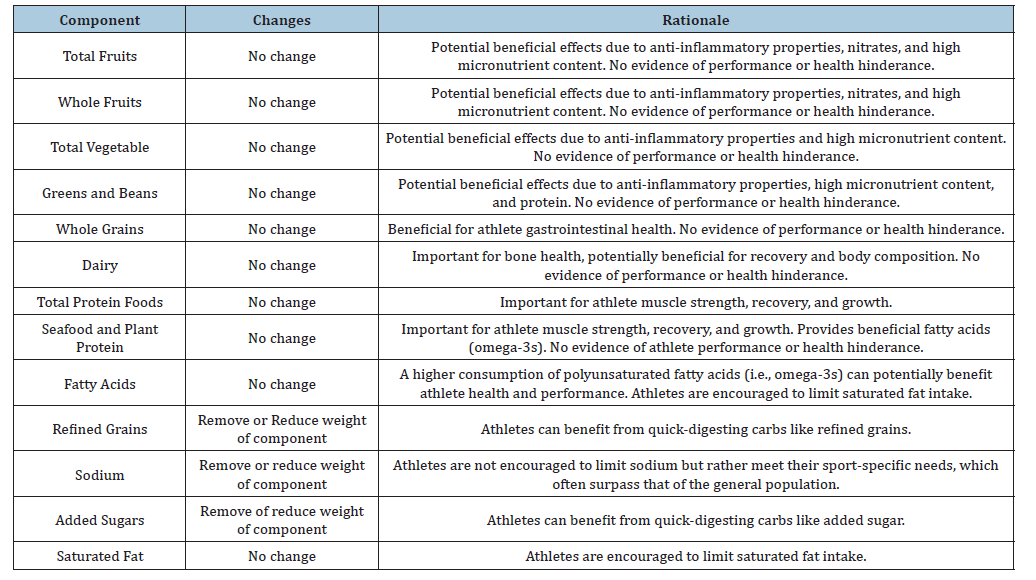
To our knowledge, there are no studies that directly assess the effect of refined grains and added sugar intake specifically on athletic performance, but as mentioned previously, sports nutrition recommendations suggest athlete’s intake ‘quickly digested’ carbs like carbohydrate gels, sports drinks, or non-perishable snack items before and during exercise [18]. These types of foods are typically high in added sugars and refined grains due to the quicker release of energy from those sources of nutrients, which is ironically the same quality that makes it less desirable for the general population and health. These types of foods/ nutrients are also more easily digested, making them good fueling options for athletes undergoing physical activity. More nutrient-dense foods are often more complex and harder to break down, causing GI distress and hindering performance if eaten at the wrong time in relation to the start of physical activity [69]. The negative health implications in the general population of high refined grains and added sugars intake include increased risk for obesity, type 2 diabetes, hypertension, cardiovascular disease and cancer [70]. The proposed reasoning of this relationship is that high intake of refined grains and added sugar can lead to high blood glucose. High blood glucose results in a chain reaction involving insulin and an overworked pancreas that will eventually affect every part of your body and cause chronic inflammation [71]. From a mechanistic standpoint, it could be inferred that athletes who use up their blood glucose quickly during physical activity and burn more calories may not see as much negative impact of these two nutrients. For these reasons, it is suggested that athletes not be penalized so highly in a dietary quality score for consuming a larger amount of added sugars or refined grains. Similarly, sports nutrition recommendations suggest that athletes do not limit sodium. It is recommended that athletes get at least the AI for sodium (1,500mg/day), but there is not an upper limit on the recommendation as sodium needs vary greatly depending on the composition of sweat and sweat rate of the specific athlete [24]. For similar reasons, athletes should not be penalized in a dietary quality score for consuming a larger amount of sodium. The last moderation component, saturated fat, can remain the same in an athlete-specific dietary quality assessment tool as athletes are recommended to limit saturated fat intake and limiting saturated fat will not hinder performance [68]. Table 2 provides a summary of suggestions for change of HEI subcomponents.
Table 2: Suggestions for change of HEI subcomponents.
Suggested Additions to the HEI
Additionally, to the already present components of HEI, there are a few others that should be considered in an athlete-specific DQI. The first addition being fluids, as hydration is an integral part of sports nutrition considerations [6]. Adding a fluid component can be challenging, as fluid needs differ greatly by individual and there are no specific set of fluid recommendations for athletes. Baseline recommendations can be a starting point. Many practitioners use a 1mL/1kcal per day recommendation, which can be integrated into the athlete-specific DQI. Another consideration could be alcohol consumption as a moderation component since alcohol has many negative impacts on general health, as well as performance [26,72]. Other considerations like specific nutrient timing recommendations (i.e., 30-60 grams of carbs within the hour of exercise) can be difficult to assess in a DQI but are still an important part of sports nutrition recommendations. Options for including assessment of compliance with these types of recommendations could be to include self-report questions regarding compliance with the recommendation (yes/no) in addition to dietary intake recall analysis. Additionally, adequate energy intake is vital to athletic performance and health. Low energy availability is often recognized as the most evidence-based deterrent of performance optimization from a nutritional perspective [73-76]. The severity of impact is often dependent on the severity of low energy availability, but the variety of impact is extremely broad. The Relative Energy Deficiency in Sport (RED-S) attempts to capture and outlines this variety of potential impact including increased injury risk, decreased training response, impaired judgement, decreased coordination, decreased concentration, irritability, depression, decreased glycogen stores, decreased muscle strength, decreased endurance performance, menstrual dysfunction, impaired bone health, endocrine and metabolic concerns, impaired growth and development, psychological concerns, cardiovascular dysfunction, gastrointestinal issues and immunological concerns [77,78]. Although assessing low energy availability can be difficult to assess due to the need for body composition data, it should still be a crucial aspect to assessing overall compliance to sports nutrition recommendations.
Lastly, macronutrient distribution or intake adequacy should be considered as athletes have specific carbohydrate and protein needs and both are very important for performance [18,22] Assessing compliance with macronutrient intake recommendations can also be a challenging component to incorporate into an athlete-specific DQI as different types of athletes have different specific needs. The recommended range of intake is very broad and the goal of an athlete-specific DQI is to be applicable to a broad range of athletes. Incorporating whether an athlete is within the AMDRs into the tool may be a viable option to capture basic needs for all athletes. All things considered, the HEI could be a strong starting point for the development of an athlete-specific DQI. Modifications should be based on sports nutrition recommendations, as discussed in this review, but ideally the input of multiple sports nutrition and/or DQI experts would guide final development.
Conclusion
Dietary quality indices can be useful tools to assess compliance to a specific set of nutrition guidelines or recommendations. They can be helpful in identifying dietary patterns in large groups of people and guiding nutrition interventions. To our knowledge, there is no athlete-specific DQI that specifically assesses compliance to sports nutrition recommendations and has been tested for reliability and multiple types of validity (face, content, construct and criterion). The development and validation of such a tool would be incredibly beneficial to researchers, practitioners and athletes, as data collection and analysis within the world of performance nutrition could be streamlined. Use of such a tool would increase efficiency of nutrition intervention administration to athletes from healthcare professionals and reproducibility and translation of performance nutrition research methods. Based on existing research, it is evident that there are similarities and differences between nutritional recommendations for the general population and sports nutrition recommendations. The HEI could be a strong starting point for an athlete-specific DQI, but modifications may be required to improve its alignment with established sports nutrition recommendations.
References
- Alkerwi A (2014) Diet quality concept. Nutrition 30(6): 613-618.
- Kant AK (1996) Indexes of overall diet quality: A review. J Am Diet Assoc 96(8): 785-791.
- Waijers PMCM, Feskens EJM, Ocké MC (2007) A critical review of predefined diet quality scores. Br J Nutr 97(2): 219-231.
- Wirt A, Collins CE (2009) Diet quality-what is it and does it matter? Public Health Nutr 12(12): 2473-2492.
- USDA (nd) Purpose of the dietary guidelines. Diet Guidel Am.
- Thomas DT, Erdman KA, Burke LM (2016) Position of the academy of nutrition and dietetics, dietitians of canada and the American college of sports medicine: Nutrition and athletic performance. J Acad Nutr Diet 116(3): 501-528.
- Capling L, Gifford JA, Beck KL, Flood VM, Slater GJ, et al. (2019) Development of an Athlete Diet Index for rapid dietary assessment of athletes. Int J Sport Nutr Exerc Metab 29(6): 643-650.
- Capling L, Gifford JA, Beck KL, Flood VM, Halar F, et al. (2021a) Relative validity and reliability of a novel diet quality assessment tool for athletes: The athlete diet index. Br J Nutr 126(2): 307-319.
- International Atomic Energy Agency (2016) Diet quality. Int At Energy Agency.
- Elmadfa I, Meyer A (2012) Diet quality, a term subject to change over time. Int J Vitam Nutr Res 82(3): 144-147.
- Maron BJ, Thompson PD, Ackerman MJ, Balady G, Berger S, et al. (2007) Recommendations and considerations related to preparticipation screening for cardiovascular abnormalities in competitive athletes: 2007 update: A scientific statement from the American heart association council on nutrition, physical activity, and metabolism: Endorsed by the American college of cardiology foundation. Circulation 115(12): 1643-1655.
- Pelliccia A, Fagard R, Bjørnstad HH, Anastassakis A, Arbustini E, et al. (2005) Recommendations for competitive sports participation in athletes with cardiovascular disease: A consensus document from the study group of sports cardiology of the working group of cardiac rehabilitation and exercise physiology and the working group of myocardial and pericardial diseases of the European society of cardiology. Eur Heart J 26(14): 1422-1445.
- McKinney J, Velghe J, Fee J, Isserow S, Drezner JA (2019) Defining athletes and exercisers. Am J Cardiol 123(3): 532-535.
- Sanz de la Garza M, Adami P (2020) Definition of athletes and classification of sports. In: Pressler A, Niebauer J (Eds.), Textbook of Sports and Exercise Cardiology, pp. 471-486.
- Swann C, Moran A, Piggott D (2015) Defining elite athletes: Issues in the study of expert performance in sport psychology. Psychol Sport Exerc 16(1): 3-14.
- McKay AKA, Stellingwerff T, Smith ES, Martin DT, Mujika I, et al. (2021) Defining training and performance caliber: A participant classification framework. Int J Sports Physiol Perform 17(2): 317-331.
- USDA, HHS (2020) Dietary Guidelines for Americans 2020-2025.
- Coleman E (2017) Carbohydrate and Exercise. In: Karpinski C, Rosenbloom C (Eds.), Sports Nutrition: A Handbook for Professionals (6th), Academy of Nutrition and Dietetics, 120 South Riverside Plaza, Suite 2190, Chicago, Illinois, United States, pp. 21-38.
- Raymond J, Morrow K (2021) Appendix: Nutrition facts on a high-fiber diet. In: Raymond J, Morrow K (Eds.), Krause and Mahan’s Food and the Nutrition Care Process (15th) Elsevier, 3251 Riverport Lane, St. Louis, Missouri, United States, pp. 1090-1091.
- USDA (2023a) How the HEI is scored. USDA Food Nutr Serv.
- Richter M, Baerlocher K, Bauer JM, Elmadfa I, Heseker H, et al. (2019) Revised reference values for the intake of protein. Ann Nutr Metab 74(3): 242-250.
- Burd N, Phillips S (2017) Protein and exercise. In: Karpinski C, Rosenbloom C (Eds.), Sports Nutrition: A Handbook for Professionals (6th), Academy of Nutrition and Dietetics, 120 South Riverside Plaza, Suite 2190, Chicago, Illinois, United States, pp. 39-59.
- Office of Dietary Supplements (2024) Omega-3 Fatty Acids - Fact Sheet for Health Professionals. Natl. Inst. Health - Off. Diet. Suppl.
- Gilman A, Volpe S (2017) Vitamins, Minerals and Exercise. In: Karpinski C, Rosenbloom C (Eds.), Sports Nutrition: A Handbook for Professionals (6th), Academy of Nutrition and Dietetics, 120 South Riverside Plaza, Suite 2190, Chicago, Illinois, United States, pp. 80-106.
- Gordon B (2024) How Much Water Do You Need? Eatrightorg Acad Nutr Diet.
- O’Brien C, Lyons F (2000) Alcohol and the athlete. Sports Med 29: 295-300.
- Blair R (2016) The development, validity and reproducibility of a tool (the Athlete Diet Index Questionnaire) to assess the dietary intake of high performing athletes. Massay University, New Zealand.
- Capling L, Tam R, Beck KL, Slater GJ, Flood VM, et al. (2021b) Diet quality of elite Australian athletes evaluated using the athlete diet index. Nutrients 13(1): 126.
- Werner EN, Robinson CA, Kerver JM, Pivarnik JM (2024) Diet quality of NCAA Division I athletes assessed by the Healthy Eating Index. J Am Coll Health 72(4): 1309-1315.
- Jürgensen LP, Daniel NVS, Padovani R da C, Lourenço LCD, Juzwiak CR, et al. (2015) Assessment of diet quality for athletes in team sports. Rev Bras Cineantropometria Desempenho Hum 17(3): 280-290.
- Schneider WVD, Sasaki CAL, Da Costa THM (2023) Intermediate-level diet quality of Brazilian paralympic athletes based on national and international indexes. Nutrients 15(14): 3163.
- Çelik ÖM, Dağdeviren N (2022) Evaluation of diet quality using the healthy eating index in college athletes. Gazi Sağlık Bilim Derg 7(1): 89-138.
- Ireland AN (2013) Overall dietary quality of collegiate athletes. University of Kentucky, USA.
- Jontony N, Hill EB, Taylor CA, Boucher LC, O’Brien V, et al. (2020) Diet quality, carotenoid status and body composition in NCAA division I athletes. Am J Health Behav 44(4): 432-443.
- Dion S, Walker G, Lambert K, Stefoska Needham A, Craddock JC, et al. (2024) The diet quality of athletes as measured by diet quality indices: A scoping review. Nutrients 17(1): 89.
- Gieng J, Field KD, Pignotti GAP (2024) Healthy eating index and dietary inflammatory index are not correlated with body composition in female collegiate athletes. J Am Coll Health 72(9): 3829-3835.
- Zanella PB, August PM, Alves FD, Matté C, De Souza CG, et al. (2019) Association of healthy eating index and oxidative stress in adolescent volleyball athletes and non-athletes. Nutr 60: 230-234.
- Farina EK, Thompson LA, Knapik JJ, Pasiakos SM, Lieberman HR, et al. (2020) Diet quality is associated with physical performance and special forces selection. Med Sci Sports Exerc 52(1): 178-186.
- USDA, HHS (nd) Approaches to Examine the Science. Dietary Guidelines for Americans. Diet Guidel Am.
- USDA (2023b) Healthy Eating Index (HEI). USDA Food Nutr Serv.
- Reedy J, Lerman JL, Krebs Smith SM, Kirkpatrick SI, Pannucci TE, et al. (2018) Evaluation of the healthy eating index-2015. J Acad Nutr Diet 118(9): 1622-1633.
- Shams White MM, Pannucci TE, Lerman JL, Herrick KA, Zimmer M, et al. (2023) Healthy Eating index-2020: Review and update process to reflect the dietary guidelines for Americans, 2020-2025. J Acad Nutr Diet 123(9): 1280-1288.
- Guenther PM, Kirkpatrick SI, Reedy J, Krebs Smith SM, Buckman DW, et al. (2014) The Healthy Eating Index-2010 is a valid and reliable measure of diet quality according to the 2010 Dietary Guidelines for Americans. J Nutr 144(3): 399-407.
- Krebs Smith SM, Pannucci TE, Subar AF, Kirkpatrick SI, Lerman JL, et al. (2018) Update of the healthy eating index: HEI-2015. J Acad Nutr Diet 118(9): 1591-1602.
- Middleton F (2019a) The 4 Types of Validity in Research. Definitions & Examples. Scribbr.
- Middleton F (2019b) Reliability vs. Validity in Research. Difference, Types and Examples. Scribbr.
- Gibson RS (2005) Evaluation of nutrient intakes and diet. In: Gibson RS (Ed.), Principles of Nutritional Assessment (2nd). Oxford University Press, 198 Madison Avenue, New York City, New York, United States, pp. 197-232.
- Jones AM (2014) Influence of dietary nitrate on the physiological determinants of exercise performance: A critical review. Appl Physiol Nutr Metab 39(9): 1019-1028.
- Moroni A, Zupo R, Castellana F, Amirante F, Zese M, et al. (2024) Berry fruits and their improving potential on skeletal muscle health and performance: A systematic review of the evidence in animal and in human studies. Foods 13(14): 2210.
- Kuehl KS, Perrier ET, Elliot DL, Chesnutt JC (2010) Efficacy of tart cherry juice in reducing muscle pain during running: A randomized controlled trial. J Int Soc Sports Nutr 7(1): 17.
- Bowtell JL, Sumners DP, Dyer A, Fox P, Mileva KN, et al. (2011) Montmorency cherry juice reduces muscle damage caused by intensive strength exercise. Med Sci Sports Exerc 43(8): 1544-1551.
- Al Dujaili EA, Hall J (2015) The effect of dark grape juice consumption on exercise-induced oxidative stress in healthy adults aged 41 to 60 years. EC Nutrition
- Muggeridge DJ, Howe CCF, Spendiff O, Pedlar C, James PE, et al. (2013) The effects of a single dose of concentrated beetroot juice on performance in trained flatwater kayakers. Int J Sport Nutr Exerc Metab 23(5): 498-506.
- Murphy M, Eliot K, Heuertz RM, Weiss E (2012) Whole beetroot consumption acutely improves running performance. J Acad Nutr Diet 112(4): 548-552.
- Neville CE, Young IS, Gilchrist SECM, McKinley MC, Gibson A, et al. (2013) Effect of increased fruit and vegetable consumption on physical function and muscle strength in older adults. Age 35(6): 2409-2422.
- Yuanyuan Li, Shuai Chen, Fengping Li, Benchao Li, Tingting Li, et al. (2025) The cross-sectional and longitudinal associations between fruit intake and cognitive performance: The Chinese healthy dance study. Maturitas 191: 108146.
- (2019) 9 Health Benefits of Eating Whole Grains, Healthline, USA.
- Heffernan SM, Horner K, De Vito G, Conway GE (2019) The role of mineral and trace element supplementation in exercise and athletic performance: A systematic review. Nutrients 11(3): 696.
- Russo I, Camoes Costa V, Gaskell SK, Porter J, Burke L, et al. (2019) Systematic literature review: The effect of dairy milk on markers of recovery optimization in response to endurance exercise. Int J Sports Sci 9(4): 69-85.
- Rankin P, Landy A, Stevenson E, Cockburn E (2018a) Milk: An effective recovery drink for female athletes. Nutrients 10(2): 228.
- Rankin P, Lawlor MJ, Hills FA, Bell PG, Stevenson EJ, et al. (2018b) The effect of milk on recovery from repeat-sprint cycling in female team-sport athletes. Appl Physiol Nutr Metab 43(2): 113-122.
- Molaeikhaletabadi M, Bagheri R, Hemmatinafar M, Nemati J, Wong A, et al. (2022) Short-term effects of low-fat chocolate milk on delayed onset muscle soreness and performance in players on a women’s university badminton team. Int J Environ Res Public Health 19(6): 3677.
- Josse AR, Tang JE, Tarnopolsky MA, Phillips SM (2010) Body composition and strength changes in women with milk and resistance exercise. Med Sci Sports Exerc 42(6): 1122-1130.
- Gómez AL, Kraemer WJ, Maresh CM, Lee EC, Szivak TK, et al. (2021) Resistance training and milk-substitution enhance body composition and bone health in adolescent girls. J Am Coll Nutr 40(3): 193-210.
- Josse AR, Phillips SM (2012) Impact of milk consumption and resistance training on body composition of female athletes. Acute Top. Sport Nutr 59: 94-103.
- Amawi AT, Alkasasbeh WJ, AlSaoud H, Alaqil AI, Alnimer L, et al. (2024) Assessment of dairy products and protein intake: Implications for body composition in saudi soccer elite athletes. Palest Med Pharm J 10(4): 1-16.
- Hartman JW, Tang JE, Wilkinson SB, Tarnopolsky MA, Lawrence RL, et al. (2007) Consumption of fat-free fluid milk after resistance exercise promotes greater lean mass accretion than does consumption of soy or carbohydrate in young, novice, male weightlifters. Am J Clin Nutr 86(2): 373-381.
- Thomas T, Schnell D (2017) Dietary Fat and Exercise. In: Karpinski C, Rosenbloom C (Eds.), Sports Nutrition: A Handbook for Professionals (6th), Academy of Nutrition and Dietetics, 120 South Riverside Plaza, Suite 2190, Chicago, Illinois, United States, pp. 60-79.
- World Sugar Research Organization (nd) Digestion and Absorption of Carbohydrates. World Sugar Res Organ.
- Wardlaw G, Smith A, Collene A (2015) Guidelines for Designing a Healthy Diet. In: Wardlaw G, Smith A, Collene A (Eds.), Contemporary Nutrition: A Functional Approach, McGraw Hill Education, 2 Penn Plaza, New York City, New York, United States, pp. 37-75.
- Hartman K (2025) The lasting damage of excess sugar. Well Northwell.
- Shirreffs SM, Maughan RJ (2006) The effect of alcohol on athletic performance. Curr Sports Med Rep 5(4): 192-196.
- Kuikman MA, Burke LM (2023) Low energy availability in athletes: Understanding undereating and its concerns. Nutr Today 58(2): 51.
- Areta JL, Taylor HL, Koehler K (2021) Low energy availability: History, definition and evidence of its endocrine, metabolic and physiological effects in prospective studies in females and males. Eur J Appl Physiol 121: 1-21.
- Heikura IA, Uusitalo ALT, Stellingwerff T, Bergland D, Mero AA, et al. (2018) Low energy availability is difficult to assess but outcomes have large impact on bone injury rates in elite distance athletes. Int J Sport Nutr Exerc Metab 28(4): 403-411.
- Stellingwerff T, Heikura IA, Meeusen R, Bermon S, Seiler S, et al. (2021) Overtraining syndrome (OTS) and relative energy deficiency in sport (RED-S): Shared pathways, symptoms and complexities. Sports Med 51(11): 2251-2280.
- Mountjoy M, Sundgot-Borgen J, Burke L, Carter S, Constantini N, et al. (2014) The IOC consensus statement: Beyond the female athlete triad-relative energy deficiency in sport (RED-S). Br J Sports Med 48(7): 491-497.
- White G, Baker B, Emerson S, Wollenberg G, Han H, et al. (2026) The need for an athlete-specific dietary quality index: A narrative review. American Sports and Performance Dietetics Association Annual Conference, United States.
© 2026 Andrew C Muran. This is an open access article distributed under the terms of the Creative Commons Attribution License , which permits unrestricted use, distribution, and build upon your work non-commercially.
Editor In Chief







.jpg)































Signup for Newsletter

Quick Links
 Editorial Board Registrations
 Submit your Article
 Best Paper of the Volume
 Reprints
 Refer a Friend
 Advertise With Us
Our Recent Edition



Top Editors




.jpg)

















.bmp)
.jpg)
.png)
.jpg)













.jpg)






.png)

.png)




.png)




Financial Support

Sponsors

Latest e-Books

Latest Video

 a Creative Commons Attribution 4.0 International License. Based on a work at www.crimsonpublishers.com.
Best viewed in

 | Above IE 9.0 version