

- About Us
- Information
-

The Author ensures that the research has been conducted responsibly and ethically with adherence to all relevant regulations. read more..
- For Authors
- For Reviewer
- Manuscript Guidelines
- Membership
- Publication Ethics
-
- Journals
- Reprints
- e-Books
- Videos
- Policies
- Contact Us
 COVID-19
- Submissions



Full Text
Polymer Science: Peer Review Journal
Synthetic Polypeptides as Programmable Biomaterials: From Controlled Synthesis to Emerging Biomedical Applications
Kevin Wei1 and Jian Wang2*
1Diamond Bar High School, USA
2School of Pharmaceutical Sciences, Tsinghua University, China
*Corresponding author:Jian Wang, School of Pharmaceutical Sciences, Tsinghua University, Beijing 100084, China
Submission: October 09, 2026;Published: October 26, 2026
ISSN: 2770-6613 Volume6 Issue 3
Abstract
Synthetic polypeptides bridge two traditionally separate material classes: synthetic polymers, which can be manufactured with broad control over size and architecture, and proteins, which offer chemically diverse amino-acid side chains and ordered secondary structures. This combination makes polypeptides attractive as programmable biomaterials. Recent progress in amino-acid N-Carboxyanhydride (NCA) chemistry has improved control over polymerization, molecular weight, and macromolecular architecture, while modern functionalization strategies have expanded the range of responsive and biologically active materials [1-4]. This mini review summarizes major routes to polypeptides, explains how chain composition and architecture influence self-assembly, and highlights emerging applications in drug delivery, nucleic-acid delivery, hydrogels, antimicrobial materials, and regenerative medicine.
Keywords:Synthetic polypeptides; Polymerization; Amino acids; Electrostatic interactions
Major Routes to Polypeptide Synthesis
Polypeptides can be prepared by several complementary methods. Solid-Phase Peptide Synthesis (SPPS) is ideal when a defined amino-acid sequence is essential. Because amino acids are added stepwise, SPPS can produce highly controlled short and medium-length peptides and permits the introduction of many non-natural residues. Its main limitation is cumulative coupling inefficiency: as the chain becomes longer, deletion sequences and side products become more difficult to avoid and purification becomes increasingly demanding. Recombinant expression is powerful for genetically encoded sequences, but it is constrained by cellular expression systems and by the range of amino acids that can be introduced efficiently. Polymerization provides a third route. In particular, ring-opening polymerization of α-amino-acid NCAs is among the most practical strategies for producing higher-molecularweight synthetic polypeptides at useful scale [1-3].
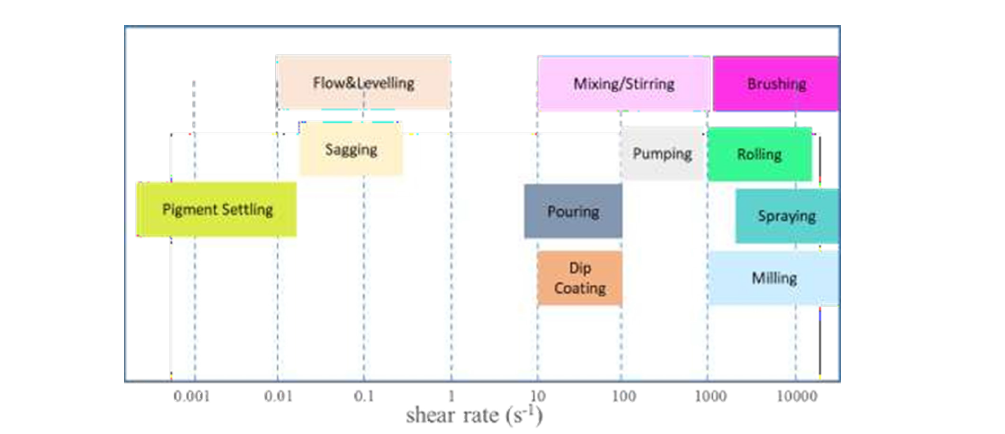
Figure 1:Shear rates during the paint lifetime.
NCA Ring-Opening Polymerization and Precision Control
NCA monomers are cyclic derivatives of amino acids. When activated by an appropriate initiator, the ring opens and the polypeptide chain grows with release of carbon dioxide. Classical NCA polymerizations were often difficult to control because several propagation pathways could operate at the same time and because NCAs are sensitive to moisture and impurities. Consequently, early reactions frequently produced broad molecular-weight distributions or unpredictable chain lengths. Over the past two decades, improved monomer purification, better-defined initiators and catalysts, and careful control of temperature and reaction conditions have substantially increased polymerization speed and living-like behavior [1,2]. These advances make it possible to target molecular weight more reliably and to construct block copolypeptides or hybrid polymers in which a polypeptide segment is connected to another polymer class. Such control is important because molecular weight and architecture directly influence self-assembly, solubility, viscosity, degradation, and biological interactions.
Sequence, Side Chains, and Secondary Structure
Unlike conventional carbon-chain polymers, polypeptides contain peptide bonds and amino-acid-derived side chains. Changing side-chain identity can tune hydrophobicity, net charge, hydrogen bonding, chemical reactivity, and sensitivity to biological conditions. Many synthetic polypeptides also form α-helices, β-sheets, or other ordered structures, providing an additional design variable that is uncommon in ordinary synthetic polymers [2,4]. For example, cationic residues can promote interaction with nucleic acids or cell membranes, while hydrophobic residues can drive formation of micellar cores. Acidic or basic side chains can respond to pH, and chemically protected groups can be converted after polymerization into functional handles for conjugation. Block, graft, star, and brush architectures further expand this design space. The central principle is that the polymer is not defined only by chemical composition; chain length, sequence distribution, architecture, and conformation together determine function.
Self-Assembly and Biomedical Function
Synthetic polypeptides can self-assemble into micelles, vesicles, nanoparticles, fibers, and hydrogels [4-6]. Amphiphilic block polypeptides are especially useful because hydrophobic segments can form a core that carries poorly water-soluble compounds while hydrophilic segments stabilize the assembly in aqueous media. Charged polypeptides can condense DNA or RNA through electrostatic interactions, creating delivery complexes whose stability can be adjusted through chain length and charge density. Polypeptide hydrogels are another active area because their water-rich networks and peptide-based chemistry can mimic selected features of extracellular matrices. These materials have been explored for localized drug release, cell encapsulation, tissue engineering, and wound-related applications. Stimuli-responsive systems add another level of sophistication: changes in pH, redox conditions, enzymes, temperature, or light can alter conformation or assembly and thereby modulate release or activity [5].
Advantages, Limitations, and Translational Challenges
The strongest advantage of synthetic polypeptides is modularity. A researcher can vary the monomer, degree of polymerization, architecture, and post-polymerization chemistry while retaining a degradable peptide backbone. At the same time, this flexibility creates analytical and manufacturing challenges. NCA synthesis and purification must be reproducible; trace water or reactive impurities can change polymerization behavior; and scale-up must maintain control over molecular weight and composition [1,3]. Biomedical translation adds further requirements. Materials intended for in vivo use must be evaluated for degradation products, pharmacokinetics, immunogenicity, biodistribution, and long-term safety. Batch-to-batch comparability is particularly important because small changes in polymer composition may affect assembly and biological response. These issues explain why elegant laboratory chemistry does not automatically translate into a practical therapeutic material.
Outlook
The next stage of the field is likely to focus on integration rather than a single new polymerization method. Controlled NCA chemistry can increasingly be combined with automated synthesis, high-throughput characterization, molecular modeling, and data-driven design. This creates the possibility of screening families of related polypeptides and linking molecular descriptors to experimentally measured properties. Future systems may therefore be designed backward from a desired biological functionsuch as a target degradation rate, membrane interaction, or release profile-rather than optimized mainly by trial and error. Synthetic polypeptides are especially well suited to this approach because their molecular structure can be altered systematically [7,8]. The long-term opportunity is to treat polypeptides as programmable materials whose sequence composition, conformation, architecture, assembly, and biological performance are designed as a connected system.
Author Contributions
Kevin Wei: literature search and screening, organization of source materials, preparation of the initial manuscript draft, reference verification, and manuscript revision. Justin Jun: conceptualization, scientific supervision, interpretation of the literature, critical revision of the manuscript, and final approval.
References
- Wu Y, Chen K, Wang J, chen M, Dai W, et al. (2024) Recent advances and future developments in the preparation of polypeptides via N-Carboxyanhydride (NCA) ring-opening polymerization. J Am Chem Soc 146(35): 24189-24208.
- Lu H, Wang J, Song Z, Yin L, Zhang Y, et al. (2014) Recent advances in amino acid N-carboxyanhydrides and synthetic polypeptides: chemistry, self-assembly and biological applications. Chem Commun 50(2): 139-155.
- González-Henríquez CM, Sarabia-Vallejos MA, Rodriguez-Hernandez J (2017) Strategies to fabricate polypeptide-based structures via ring-opening polymerization of N-carboxyanhydrides. Polymers 9(11): 551.
- Song Z, Han Z, Lv S, Chen C, Chen L, et al. (2017) Synthetic polypeptides: from polymer design to supramolecular assembly and biomedical application. Chem Soc Rev 46(21): 6570-6599.
- Huang J, Heise A (2013) Stimuli responsive synthetic polypeptides derived from N-carboxyanhydride (NCA) polymerisation. Chem Soc Rev 42(17): 7373-7390.
- Wang X, Song Z, Wei S, Ji G, Zheng X, et al. (2021) Polypeptide-based drug delivery systems for programmed release. Biomaterials 275: 120913.
- Zhou X, Li Z (2018) Advances and biomedical applications of polypeptide hydrogels derived from α-amino acid N-carboxyanhydride polymerizations. Adv Healthc Mater 7(15): e1800020.
- Feng H, Fabrizi J, Li J, Mayer C (2022) Syntheses of polypeptides and their biomedical application for anti-tumor drug delivery. Int J Mol Sci 23(9): 5042.
© 2026 Jian Wang. This is an open access article distributed under the terms of the Creative Commons Attribution License , which permits unrestricted use, distribution, and build upon your work non-commercially.
Editor In Chief







.jpg)































Signup for Newsletter

Quick Links
 Editorial Board Registrations
 Submit your Article
 Best Paper of the Volume
 Reprints
 Refer a Friend
 Advertise With Us
Our Recent Edition



Top Editors




.jpg)

















.bmp)
.jpg)
.png)
.jpg)













.jpg)






.png)

.png)




.png)




Financial Support

Sponsors

Latest e-Books

Latest Video

 a Creative Commons Attribution 4.0 International License. Based on a work at www.crimsonpublishers.com.
Best viewed in

 | Above IE 9.0 version