

- About Us
- Information
-

The Author ensures that the research has been conducted responsibly and ethically with adherence to all relevant regulations. read more..
- For Authors
- For Reviewer
- Manuscript Guidelines
- Membership
- Publication Ethics
-
- Journals
- Reprints
- e-Books
- Videos
- Policies
- Contact Us
 COVID-19
- Submissions



Full Text
Polymer Science: Peer Review Journal
Rheology Control and Storage Stability in Waterborne Industrial Coatings
Elif Suna Koçyiğit*
Kanat Paints and Coatings, Kemalpaşa Industrial Zone, Turkey
*Corresponding author:Elif Suna Koçyiğit, Kanat Paints and Coatings, Kemalpaşa Industrial Zone, Kemalpaşa, İzmir, Turkey
Submission: July 02, 2026;Published: July 02, 2026
ISSN: 2770-6613 Volume6 Issue 2
Abstract
Rheology plays a crucial role in the formulation, application, and long-term stability of waterborne industrial coatings. Unlike solvent-based systems, the rheological behavior of waterborne coatings is strongly influenced by particle interactions, ionic strength, and associative thickener mechanisms. This review summarizes the fundamental aspects of rheology control, the types of rheology modifiers used in modern formulations, and their impact on dispersion stability. Moreover, the paper discusses advanced rheological characterization techniques and emerging approaches such as nanoparticle-assisted and stimuli-responsive systems. The insights aim to assist formulators in achieving optimal performancecost balance and improved storage stability in low-VOC coatings.
Keywords:Waterborne coatings; Rheology modifiers; Associative thickeners; Stability; Thixotropy; HEUR; HASE
Introduction
An increasing awareness of the need to decrease the emissions of Volatile Organic Compounds (VOC) and stringent environmental regulations has forced to the paint manufacturing sector to allocate a significant portion of its research and development efforts to low-VOC and sustainable materials. VOC in can be decreased in a variety of ways. One way is to develop waterborne coatings by substituting organic solvents with water. The second way is the application of high solid systems to decrease the overall solvent content. The third method involves eliminating solvents by utilizing powder coatings or radiant curing coatings [1]. Paints and coatings have solid/liquid interphase between fillers/pigments, binders, solvents, and other additives like defoamers and dispersing agents. Each component or additive has a specific function in determining the overall quality of the paint as well as its performance both during and after application such as adhesion, leveling, strength, gloss, stability, durability and mechanic resistance.
Rheology control is a challenge in these systems, affecting pigment dispersion, application properties (sagging, leveling, spattering) and storage stability. When pigments are spread in a medium that is low in viscosity, turbulent flow behavior emerges, resulting in significant energy loss, making it suboptimal for the dispersion process. For this, thickeners or in other words rheology modifiers are incorporated in the manufacturing process to achieve ideal flow characteristics for the mill-base and let-down. Therefore, understanding rheological behavior is essential for predicting both processability and final film properties [2]. It has been reported that the effect of shear rate on viscosity is essential in optimizing the performance of paint. Paints are exposed to a range of shear regimes during production and application, so it is necessary to adjust the formulation to guarantee that every side of the product’s performance satisfies specifications (Figure 1).
Figure 1:Shear rates during the paint lifetime.
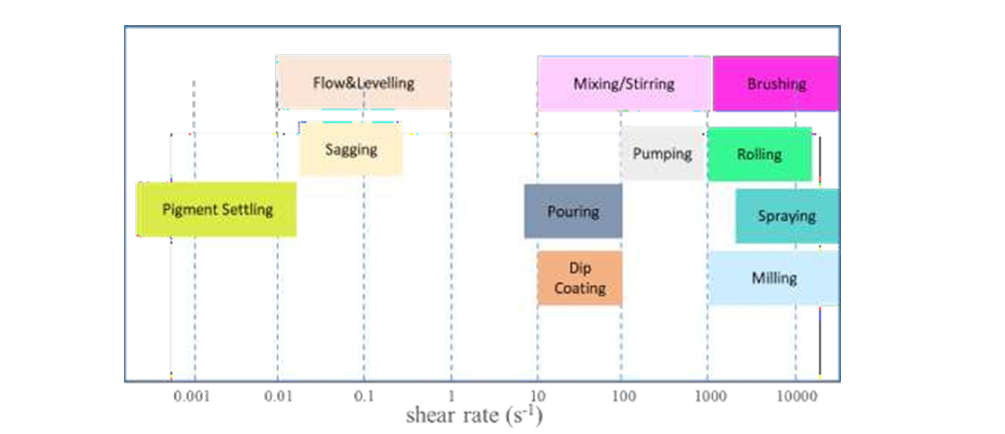
Paint is pumped throughout the factory during the production process, putting it through moderate to high stress. Transportation and storage are low-shear operations. During storage, it must have a solid-like viscosity to prevent phase separation. Moderate (dipping) and high shear (roller coating, spraying) are possible among the application methods. The paint should behave as a relatively low viscosity, free-flowing liquid during its lifetime because it will be subjected to high shear rates (>100s-1) during application (brushing, rolling, spraying, etc.). The stability of waterborne coatings during storage is also influenced by factors such as pH fluctuations, ionic contamination, and temperature variations. Inadequate rheology control can lead to pigment sedimentation, syneresis and phase separation. Associative thickeners mitigate these effects by increasing low-shear viscosity and maintaining homogeneity. Moreover, reversible thickening mechanisms enhance re-dispersibility after extended storage. Studies indicate that optimizing the balance between high-shear and low-shear viscosity is critical for preventing settling while ensuring ease of application [3,4].
Mini Review
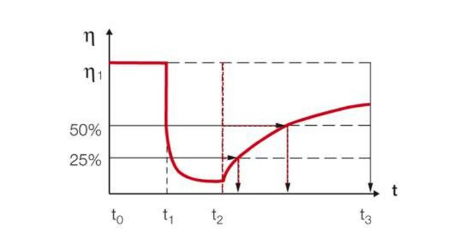
Pure substances exhibit Newtonian rheology that is to say that their viscosity is not depend on shear stress. The majority of the materials we deal with as coating formulator, however, do not behave in a Newtonian manner; rather, most formulations are a combination of liquids and organic/inorganic particles, giving paint formulations a far more complex rheological profile. In the case of pseudoplastic flow, viscosity decreases as shear rate increases. Different viscosity assessments are required throughout the shear rate spectrum to create an accurate rheology profile. Nearly all paints and varnishes exhibit varying degrees of pseudoplastic (shear thinning) flow behavior. Thixotropy is a time-dependent phenomenon A substance exhibits thixotropic flow behavior if its viscosity decreases at a constant shear rate (or constant shear stress) over time; upon removal of the stress, the viscosity rises again shown after a certain period of time in (Figure 2). It influences levelling and sagging of paint but also ensures a sufficient and consistent wet layer thickness.
Figure 2:Time-dependent viscosity of a sample with thixotropic behavior.
In contrast to solvent-based systems, waterborne coatings rely on complex colloidal structures where polymer particles, surfactants and associative thickeners interact within an aqueous medium. Waterborne coatings exhibit predominantly non-Newtonian behavior, characterized by shear-thinning and thixotropic responses. Shear thinning facilitates ease of application, while thixotropy helps prevent sagging after coating application. Yield stress is another critical parameter that defines the minimum stress required for flow initiation. The complex interplay between hydrodynamic, electrostatic, and steric interactions governs these properties. Control over these factors ensures uniform pigment distribution, stable viscosity under storage, and predictable flow during application. The formulators usually use additives, also known as rheology modifiers, thickeners, and thixotropes, to control and optimize the rheology of liquid coatings. Rheological additives can be separated into inorganic and organic thickeners for solvent borne or waterborne coatings in the most general sense. Examples of modified inorganic thickeners are bentonite, synthetic lattice-layer silicate and pyrogenic silica (sometimes organically modified). Examples of organic thickeners are polyureas, cellulose derivatives and polyamides. Organic thickeners for waterborne coatings can be divided into two groups as associative thickeners and non-associative thickeners [2,5,6].
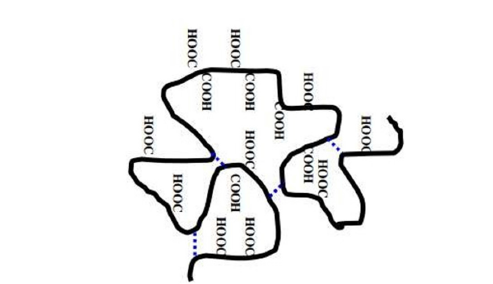
Rheology modifiers in waterborne systems are categorized into non-associative (e.g., cellulosic derivatives such as Hydroxyethyl Cellulose (HEC), Hydroxypropyl Methylcelluclose (HPMC) and associative types (Hydrophobic modified alkali swellable emulsion (HASE), Hydrophobically Modified Ethoxylated Urethane (HEUR)). Non-associative thickening works through a volume-exclusion mechanism, where typically high-molecular-weight, water soluble polymers swell with water and take up hydrodynamic volume in the coating. Examples include HEC and Alkali Swellable (ASE) thickeners, which create viscosity through chain entanglements and particle flocculation. ASE thickeners can be divided into two types: non-associative thickeners (standard ASE) and associative thickeners (HASE). ASE polymers are usually acrylate or acrylic acid species that can be crosslinked or not that are especially effective at raising low shear viscosity, which is shown in (Figure 3). The dotted lines show how loosely crosslinked the acrylic acidbased polymer is. These lengthy acrylic chains are tightly coiled under acidic conditions, but as the system’s pH is raised above 7, they become water-soluble and cause the solution to thicken as a result of entanglement. The polymer’s carboxyl groups repel one another in neutralized circumstances (pH 5.5 or higher). The polymer swells and forms viscous gel-like solutions because the carboxyl groups cannot sufficiently avoid one another due to the crosslinking between polymer chains [7].
Figure 3:Alkali swellable emulsion (ASE) type thickener.
Associative thickeners form transient networks through hydrophobic interactions with the polymer matrix, providing shear-dependent viscosity control which is shown in (Figure 4). associative thickeners are often low molecular weight polymers containing both hydrophilic and hydrophobic regions. The hydrophilic regions can then associate with the hydrophilic moieties, whereas the hydrophobic regions can associate with the hydrophobic moieties. This may cause a network to form inside a mixture, resulting in high viscosities and distinctive rheological characteristics. Hydrophobically modified thickeners are common type of associative thickeners.
Figure 4:Alkali swellable emulsion (ASE) type thickener.
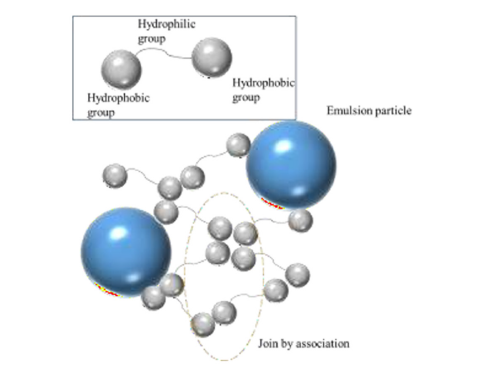
HASE polymers are usually comprised of acrylic acid, acrylate, and other electrolytic backbones and are activated at pH higher than pH 7. However, in comparison to ASE thickeners, HASE have long chain hydrophobic groups attached to the polymer backbone which results in a degree of association between the thickener molecules themselves and with the binder in the formulation. Under fundamental conditions, their size and charge repulsion cause them to thicken primarily through hydrodynamic volume. Instead, by stabilizing hydrophobic moieties, the hydrophobic regions enable the HASE thickeners to produce homogenous emulsions. Therefore, increasing viscosity not just at low shear rates but also at medium and higher shear rates. Rheology modifiers that use a blend of associative and non-associative mechanisms for thickening include HASE and hydrophobically modified HEC, also known as HMHEC thickeners [2,5,6,8,9].
HEUR thickeners are widely used nonionic associative thickeners due to their efficiency and broad compatibility. The creation of these thickeners represents one of the significant progressions in the field of rheological additives over the past several decades and one of the most crucial categories of thickeners for water-based paints and coatings. For HEUR thickeners, the coupling agent used is a diisocyanate and the hydrophilic regions are poly (ethylene oxide) chains and chemical structure is shown in (Figure 5) where R and R’ denote hydrophobic, aliphatic or aromatic groups.
Figure 5:Chemical structure of PUR thickener.

Like all non-ionic associative thickeners, HEUR polymers alter the rheology in solution through two methods of association between the hydrophilic and hydrophobic regions. Hydrophobic end groups form aggregates through intramolecular and intermolecular associations at low concentrations. In order to create floret or flower-like structures, hydrophilic groups are “looped” into a conformation that permits hydrophobic end groups of the same polymer chain to reside in the same aggregate. The hydrodynamic volume created by these floret formations increases viscosity. Hydrophobic end groups start to “link” aggregates at greater polymer concentrations by joining forces with two distinct heads. Although most HEUR thickeners have similar general structures made up of a polyethylene oxide backbone with urethane links and hydrophobic segments, the size, shape, and placement of the hydrophobic regions strongly dictate hydrophobic associations. HEUR and HASE type thickeners interacting mechanism is shown in (Figure 6) [7,10].
Figure 6:HEUR and HASE type thickeners interact with binder molecules (in blue) to produce big polymer-thickener networks that are susceptible to breakdown under shear.
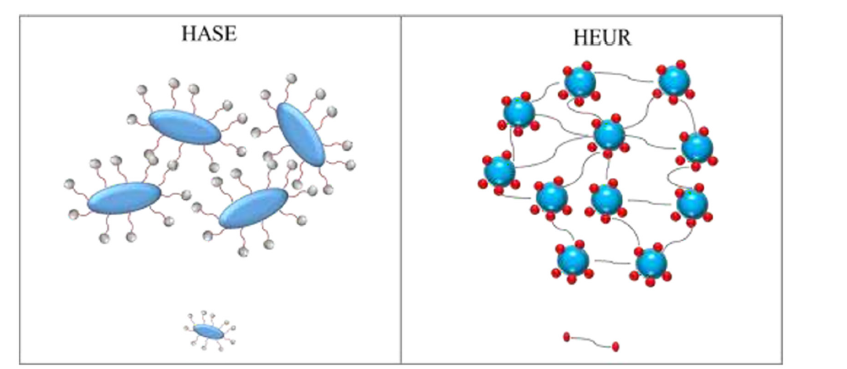
In an aqueous medium, an associative thickener encounters a highly organized water structure. Water molecules are strongly attracted to each other through hydrogen bonding, whereas the hydrophobes of the associative thickener interact only weakly with water. Due to the strong hydrogen-bonding network of water, the polymer hydrophobes are driven into clusters, minimizing the disruption of the water structure. As a result, the organization of water essentially forces the hydrophobic groups to associate into clusters. The unfavorable entropy prevents these clusters from dissolving. This intra- or intermolecular clustering of hydrophobes leads to the formation of a pseudo-polymeric network in which the hydrophobic clusters act as crosslinking junctions. The macromolecular hydrophobic moieties may also associate with other hydrophobic surfaces such as latex particles.
This overall association leads to an increase in the viscosity of the latex system. Associative thickeners also enhance system stability by coating the latex and pigment particles with a protective layer, which helps prevent paint coagulation during storage [1,3,11,12]. It is evident that specifically the factors affecting the relationship between the PUR-thickener and the emulsion particle, along with micelle formation, will also impact the level of thickening produced by the PUR-thickener. Certain typical interactions involve the following components:
a) Surfactants, utilized for stabilizing the emulsion polymer
particles. These surfactants directly contend with the PURthickener
in relation to association processes. The PURthickeners
might also be immediately absorbed onto the
polymer particles through the surfactant molecules.
b) Water-soluble organic solvents such as ethylene glycol,
propylene glycol, and glycol ether hinder micelle formation
by lowering the interfacial tension differences between the
micelles and the continuous (water) phase, resulting in a
reduction in micelle quantity and their role in structure
formation.
c) Dispersing agents such as low-molecular weight
polyelectrolytes, including polyacrylate salts, are commonly
utilized in water-based paints and coating materials for the
purpose of dispersing and stabilizing pigments. The DLVO
(Derjaguin-Landau-Verwey-Overbeek) theory states that
polyelectrolytes enhance the quantity of molecules found in a
single micelle. This indicates that both the quantity of micelles
and the number of connections between micelles and micelle/
emulsion particles reduce. As a result, the structure’s density
and strength are diminished.
d) Additives for coatings that are water-insoluble, such as
coalescing agents or anti-foaming agents, typically increase
viscosity. Because these products dissolve within the micelles,
the size of each micelle expands; therefore, the space between
a micelle and a polymer particle narrow. As a result, lowmolecular
mass fractions of the PUR-thickener can contribute
to bridging and structure formation, resulting in enhanced
structure strength and thus a rise in viscosity. In addition to
this contribution, coalescing agents and co-solvents can soften
the surfaces of the polymer particles, thereby enhancing the
potential for adhesion or adsorption of the hydrophobic groups
present in the PUR molecule [1,2,8,10].
Characterization of rheological behavior involves steady-state and dynamic measurements. Flow curves, yield stress analysis, and oscillatory tests (storage modulus G’, loss modulus G’’) are commonly used to quantify flow behavior. Instruments such as cone-plate and parallel-plate rheometers provide precise control over shear conditions. The correlation between laboratory rheological data and real-world application performance is an ongoing research focus. Standardized methodologies are essential for developing formulations with consistent behavior across production batches [13]. Recent advancements include the use of nanoparticles (SiO₂, clay, graphene) to enhance rheology and film uniformity, as well as stimuli-responsive thickeners that adapt viscosity under varying pH or temperature. Computational modeling is increasingly applied to simulate flow behavior and optimize thickener structures. Future trends focus on developing bio-based associative thickeners, reducing VOC content further, and improving compatibility with hybrid and nanocomposite systems [12].
Conclusion
Waterborne coatings, particularly those based on latex polymers, often rely on additives to control rheology. The molecular weight and backbone stiffness of the polymer do not affect viscosity because latex polymers exist as colloidal particles that are insoluble in water. Instead, the viscosity is significantly influenced by the particle size, particle size distribution, and volume fraction (concentration) of the latex. When the latex concentration approaches the theoretical maximum packing fraction, even small changes can lead to substantial increases in viscosity. Therefore, latex coatings are typically formulated at lower latex concentrations to avoid this issue and commonly incorporate watersoluble thickeners to manage rheology [5]. Rheology control in waterborne industrial coatings is essential for ensuring consistent quality, application performance, and storage stability. Through appropriate selection and optimization of associative thickeners, formulators can balance flow, leveling, and settling resistance. The integration of advanced measurement techniques and modeling tools will continue to drive innovation, enabling environmentally sustainable and high-performance coating systems.
References
- Kästner U (2001) The impact of rheological modifiers on water-borne coatings. Colloids and Surfaces A: Physicochemical and Engineering Aspects 183: 805-821.
- Bieleman JH (2002) Organic thickeners for water-borne paints. Chimia 56(5): 163-163.
- Cibangwa L (2025) Comparative rheological evaluation of associative thickeners in waterborne paints. Coatings 15(4): 450.
- Larson RG, Van Dyk AK, Chatterjee T, Ginzburg VV (2022) Associative thickeners for waterborne paints: Structure, characterization, rheology, and modeling. Progress in Polymer Science 129: 101546.
- Procopio L (2021) Additives to control the rheology of paints and coatings. Coatings.
- Sjöblom J (2022) Associative thickeners for waterborne paints: structure, performance, and application. Advances in Colloid and Interface Science 304: 102658.
- McMahon ML (2011) Part A: The use of nonionic associative polymers for the thickening and emulsifying of personal care products: Part B: The synthesis of a manganese SOD mimetic for reactive coatings (Master's thesis, California Polytechnic State University).
- Patti A, Acierno D (2023) Structure-property relationships of waterborne polyurethane systems. Journal of Applied Polymer Science 140(3): 589-606.
- Zhao F (2024) Tailoring waterborne coating rheology with hydrophobically modified polymers. Industrial & Engineering Chemistry Research 63(9): 4152-4165.
- Zhao G (2022) Handbook of rheological additives. Elsevier.
- Hester RD, Squire DR (1997) Rheology of waterborne coatings. Journal of Coatings Technology 69(864): 109-114.
- Reynolds PA, Marrion A (2004) The rheology of coatings. The Chemistry and Physics of Coatings pp. 26-45.
- Zheng L, Chen HS (2023) Correlations of rheological methods to coatings’ performance. Progress in Organic Coatings 177: 107403.
© 2026 Elif Suna Koçyiğit. This is an open access article distributed under the terms of the Creative Commons Attribution License , which permits unrestricted use, distribution, and build upon your work non-commercially.
Editor In Chief







.jpg)































Signup for Newsletter

Quick Links
 Editorial Board Registrations
 Submit your Article
 Best Paper of the Volume
 Reprints
 Refer a Friend
 Advertise With Us
Our Recent Edition

.jpg)



Top Editors




.jpg)

















.bmp)
.jpg)
.png)
.jpg)













.jpg)






.png)

.png)




.png)




Financial Support

Sponsors

Latest e-Books

Latest Video

 a Creative Commons Attribution 4.0 International License. Based on a work at www.crimsonpublishers.com.
Best viewed in
a Creative Commons Attribution 4.0 International License. Based on a work at www.crimsonpublishers.com.
Best viewed in 
 | Above IE 9.0 version