

- About Us
- Information
-

The Author ensures that the research has been conducted responsibly and ethically with adherence to all relevant regulations. read more..
- For Authors
- For Reviewer
- Manuscript Guidelines
- Membership
- Publication Ethics
-
- Journals
- Reprints
- e-Books
- Videos
- Policies
- Contact Us
 COVID-19
- Submissions



Full Text
Progress in Petrochemical Science
Texture-Size-Liberation Controls on Flotation Performance of a Fine- Grained Pb-Zn Sulfide Ore
Quzong Baima, Hongzhe Xie*, Ziqin Jin, Shuaipeng Ren, Yulong Bai and Minggui Chen
Yunnan Key Laboratory for New Technology of Beneficiation and Metallurgy & Kunming Metallurgical Research Institute Co., Ltd, China
*Corresponding author:Hongzhe Xie, Yunnan Key Laboratory for New Technology of Beneficiation and Metallurgy & Kunming Metallurgical Research Institute Co., Ltd, Kunming 650031, China
Submission: August 13, 2026;Published: September 28, 2026

ISSN 2637-8035Volume7 Issue 5
Abstract
Flotation performance of fine-grained Pb-Zn sulfide ores is fundamentally controlled by the coupling between mineral textures, particle size distribution, and liberation behaviour. However, the role of microtextural features in governing metal recovery and selectivity remains insufficiently constrained. In this study, we investigate the texture-size-liberation relationships in a representative fine-grained Pb-Zn ore from the Maoping deposit (Yunnan, China) using automated mineralogy (MLA) combined with bulk geochemical analysis. The results show that two microtextural features exert dominant controls on flotation performance: (i) ~5μm veinlet or dendritic galena intergrown with pyrite or sphalerite, which leads to Pb misplacement, and (ii) Submicrometer pyrite inclusions within sphalerite, which limit the achievable Zn concentrate grade. These findings demonstrate that flotation selectivity is fundamentally constrained by microtextural scale rather than bulk liberation alone. The results provide a mineralogical basis for understanding performance limitations in fine-grained Pb-Zn systems and have broader implications for similar deposits characterized by complex intergrowths.
Keywords:Pb-Zn Sulfide ore; Process mineralogy; Automated Mineralogy (MLA); Microtextural control; Liberation-texture coupling; Fine-grained intergrowths
Introduction
Lead-Zinc (Pb-Zn) sulfide ores are critical resources of nonferrous metals, yet their flotation performance is often limited by complex mineral textures and incomplete liberation. In fine-grained Pb-Zn systems, conventional flotation inefficiencies are commonly attributed to poor liberation and particle size effects; however, increasing evidence suggests that microtextural features at the micrometre to submicrometre scale may exert a more fundamental control on metal recovery and selectivity.
Such microtextural constraints, including veinlet-type intergrowths and ultrafine inclusions, are difficult to quantify and are not adequately captured by conventional bulk liberation metrics. As a result, the mechanisms by which texture-size-liberation relationships govern flotation performance remain insufficiently constrained. To address this issue, process mineralogy provides a quantitative framework to link mineral textures, particle size distribution, and liberation behaviour to flotation response, offering a basis for understanding the fundamental controls on separation efficiency.
The Maoping Pb-Zn deposit (Yiliang, Yunnan, Southwest China) is a medium- to low- temperature hydrothermal filling-replacement system hosted by Middle-Upper Devonian to Upper Carboniferous carbonates [1,2]. Sulfide mineralization is structurally controlled by fault-related fracture zones and interlayered breccias within the Sichuan-Yunnan-Guizhou metallogenic belt [3,4]. These geological features promote intimate sulfide-carbonate intergrowths, leading to poor liberation and extensive mineral locking during flotation.
Mineral Liberation Analysis (MLA), an automated mineralogy technique based on SEM-EDS (scanning electron microscopy-energy- dispersive X-ray spectroscopy), provides quantitative characterization of modal mineralogy, textures, particle-size distributions and mineral liberation, thereby linking ore attributes to circuit performance [5-7]. However, routine MLA workflows frequently emphasize bulk liberation metrics and give limited attention to the processing implications of very fine-scale intergrowths--whether expressed as thin sulfide veinlets or as ultrafine inclusions within major ore minerals. Although volumetrically minor, these microtextures can dominate circuit behaviour in Pb-Zn systems by controlling both liberation and selectivity. Recognizing and quantifying such features is therefore essential for bridging the gap between mineralogical diagnosis and actionable plant modification.
This study focuses on the secondary-stage classification overflow, identified during plant surveys as the stream most strongly associated with Pb losses and elevated sulfur in the Zn circuit due to its high proportion of <10μm particles and poorly liberated sulfide composites. Accordingly, we conducted a process-mineralogical program combining bulk assays with MLA to (1) Determine elemental grades and modal mineralogy; (2) Characterize the textural and particle-size attributes of galena, sphalerite and pyrite; (3) Quantify liberation constraints and their implications for Pb and Zn flotation; and (4) Propose targeted flowsheet modifications grounded in the observed texture-size-liberation coupling.
The findings provide a mineralogical basis for understanding flotation performance limitations and for guiding size-targeted strategies in fine-grained Pb-Zn systems, with broader implications for similar deposits.
Materials and Methods
Sampling and sample preparation
Representative samples were collected from the secondary- stage classification overflow of the Maoping Pb-Zn mine (Yiliang, Yunnan), which was identified during plant surveys as the primary source of Pb entrainment and S carryover. The ore in this stream is predominantly massive, with metallic sulfides closely intergrown with carbonate gangue.
The sample was filtered and low-temperature oven-dried. Bulk sample aliquots were reduced by coning and quartering to ~200g. Epoxy mounts (Ø 30mm) were prepared using a two-stage embedding protocol. To preserve the as-received Particle-Size Distribution (PSD), the analytical section was taken from the first-stage mount. MLA based on an SEM-EDS platform was performed at the as-classified size to quantify modal mineralogy, textural/locking relationships, particle-size distributions and liberation, mineral-mineral associations, and elemental deportment.
Analytical techniques and parameters
Bulk chemical composition was determined by Inductively Coupled Plasma Mass Spectrometry (ICP-MS). Automated MLA was performed using a FEI Quanta 650 SEM in backscattered-electron (BSE) mode at 1024 × 1024 pixels, equipped with an Oxford X-MaxN 150 EDS.
MLA settings included 20kV accelerating voltage, 40.1nA beam current, and a probe spot size setting of 6.7. The MLA software performed automated mineral identification and reported mineral composition, particle-size metrics, and liberation data. In total, 111,546 particles were analyzed. SEM-EDS spot analyses were used to confirm mineral chemistry of key phases (Galena, Sphalerite, Pyrite, and minor jordanite and bournonite). Liberation and PSD metrics were reported with consideration of sampling and statistical uncertainty [8-11]. In this paper, particle size refers to the equivalent-circle diameter of analyzed particles (grinding product), whereas grain size denotes the internal crystal or inclusion scale of individual minerals observed within particles.
Result
Bulk chemical composition
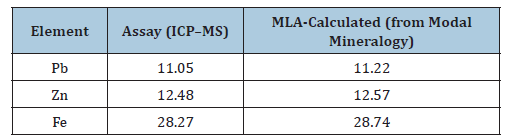
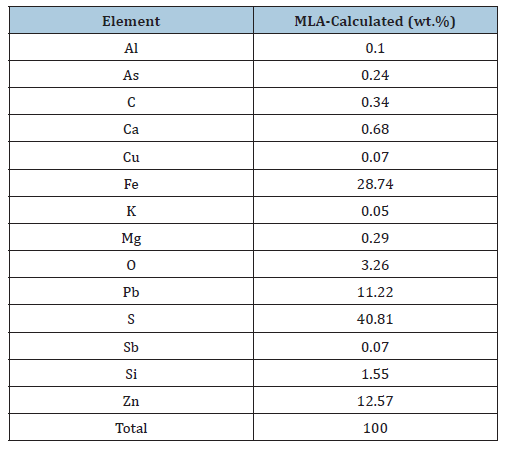
Bulk assays and MLA-calculated grades for key elements are summarized in Table 1, with the full set of MLA-derived multi-element grades provided in Table S1. ICP-MS analysis reports 11.05wt.% Pb, 12.48wt.% Zn, and 28.27wt.% Fe for the sample. Grades back-calculated from MLA modal mineralogy closely match these values (Pb 11.22wt.%, Zn 12.57wt.%, Fe 28.74wt.%; Table 1), confirming the consistency of the MLA data with the bulk assays. Minor elements such as As (0.24wt.%) and Sb (0.07wt.%) are low but relevant for penalty assessment in Pb concentrates.
Table 1:Bulk chemistry (assay vs. MLA-calculated) (wt.%).
Note: Only key assay elements (Pb, Zn, Fe) are reported here; the complete MLA-calculat ed multi-element grades are listed in Table S1.
Table S1:MLA-calculated multi-element grades (wt.%) for the secondary-stage classification overflow.
Note: Only key assay elements (Pb, Zn, Fe) are reported here; the complete MLA-calculat ed multi-element grades are listed in Table S1.
Modal mineralogy and mineral chemistry
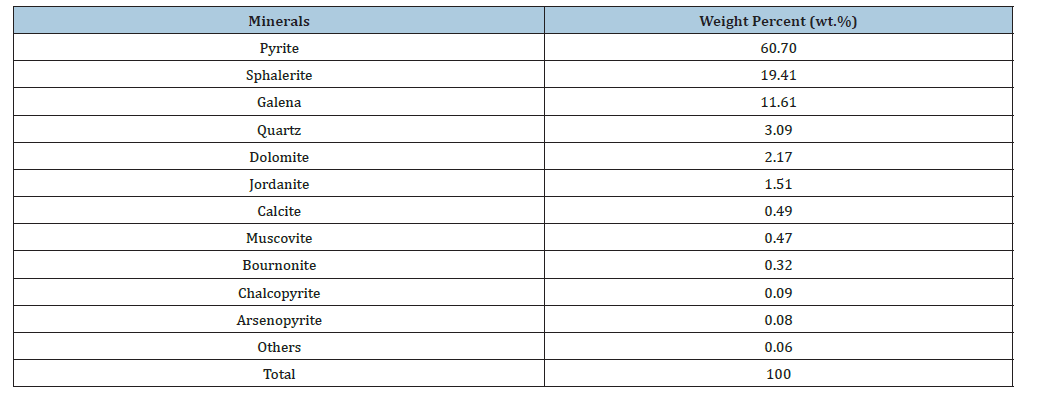
MLA results indicate that the ore is dominated by sulfides, principally pyrite (60.70wt.%), sphalerite (19.41wt.%) and galena (11.61wt.%), with subordinate carbonate gangue and minor Pb-Sb- As sulfosalts (Figure 1; Table 2). Remaining minerals include dolomite, calcite and quartz. Bulk assays (Pb 11.05wt.%, Zn 12.48wt.%, Fe 28.27wt.%) and MLA back-calculated grades agree within <2%, confirming the reliability of the automated modal quantification.
Figure 1:MLA quantitative analysis of mineral composition in the ore
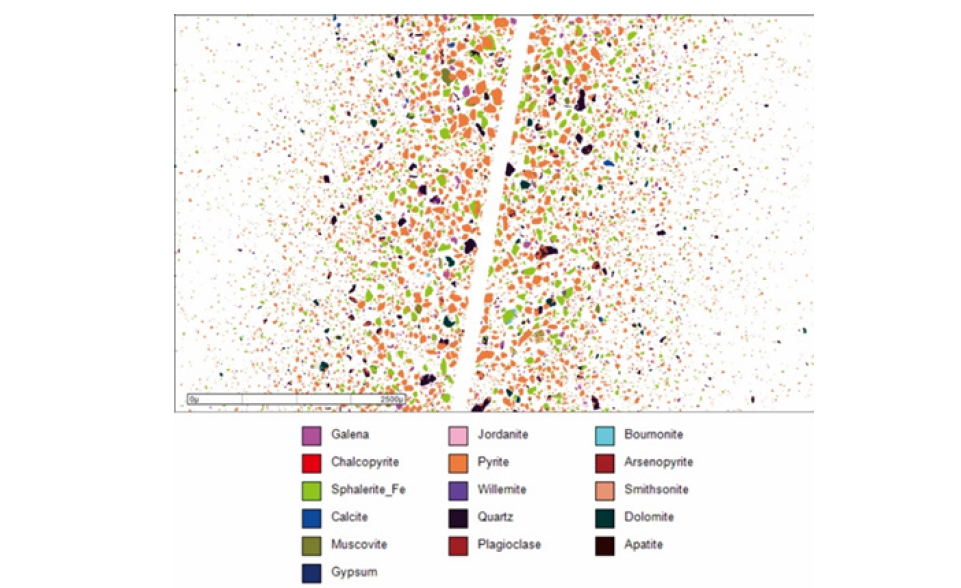
Table 2:Mineral composition and relative abundance in the ore (wt.%).
SEM-EDS analyses (Figure 2) show that the major sulfides display compositions close to stoichiometric values. Galena (PbS) occurs as euhedral to subhedral grains and as fine intergrowths with sphalerite and pyrite; spot analyses yield Pb ≈ 86.4-86.7wt.% and S ≈ 13.3-13.6wt.%. Sphalerite (ZnS) is the sole Zn carrier and contains minor Fe substitution (Fe ≈ 2.24wt.%). It forms mainly anhedral grains from tens to hundreds of micrometres, commonly enclosing submicrometre pyrite inclusions. Pyrite (FeS₂) is abundant and occurs as massive aggregates, disseminations, and veinlet- type intergrowths with galena and sphalerite; its EDS spectra exhibit Fe:S ratios consistent with ideal stoichiometry (46.6 and 53.4wt.%).
Figure 2:EDS spectra of major metallic minerals: (a–b) galena; (c–d) sphalerite; (e–f) pyrite; (g-h) jordanite; (i-j) bournonite
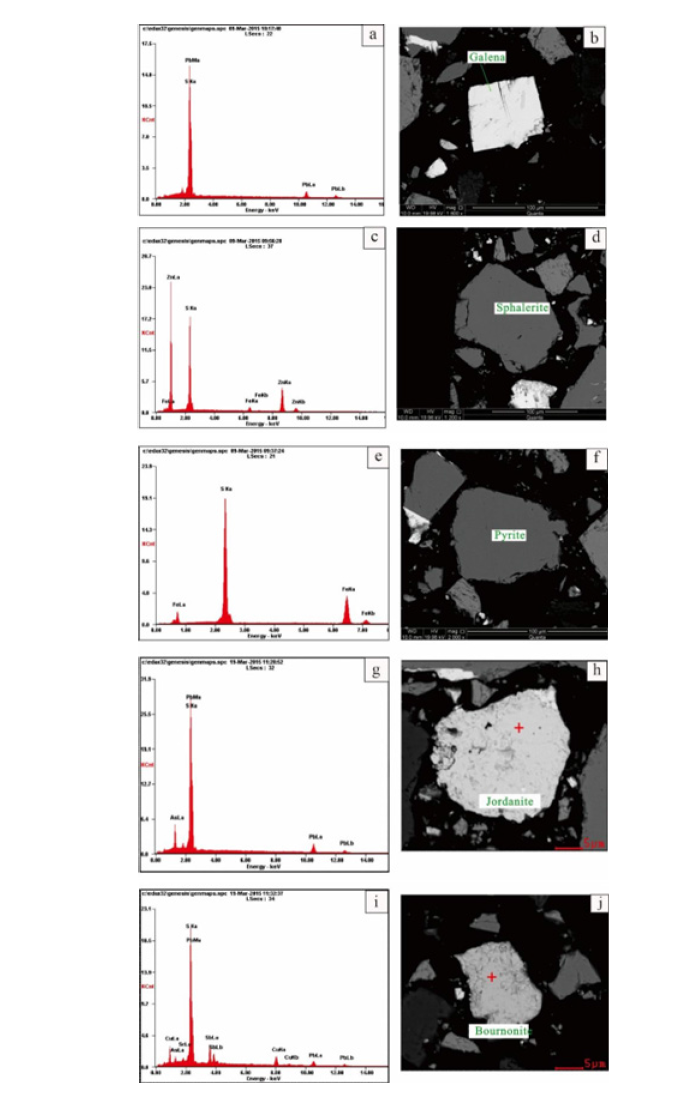
Minor Pb-bearing sulfosalts identified include jordanite (Pb₁₄As₆S₂₃) and bournonite (PbCuSbS₃). These phases are extremely fine-grained (<20μm), locally intergrown with galena or sphalerite, and together account for <2wt.% of the sulfide assemblage, explaining the trace As and Sb observed in bulk assays.
Overall, the modal mineralogy reflects a sulfide-dominant ore with intimate galena-pyrite-sphalerite intergrowths and sparse but ultrafine Pb-Sb-As sulfosalts.
Mineral Textures, Liberation, and Particle-Size Distribution
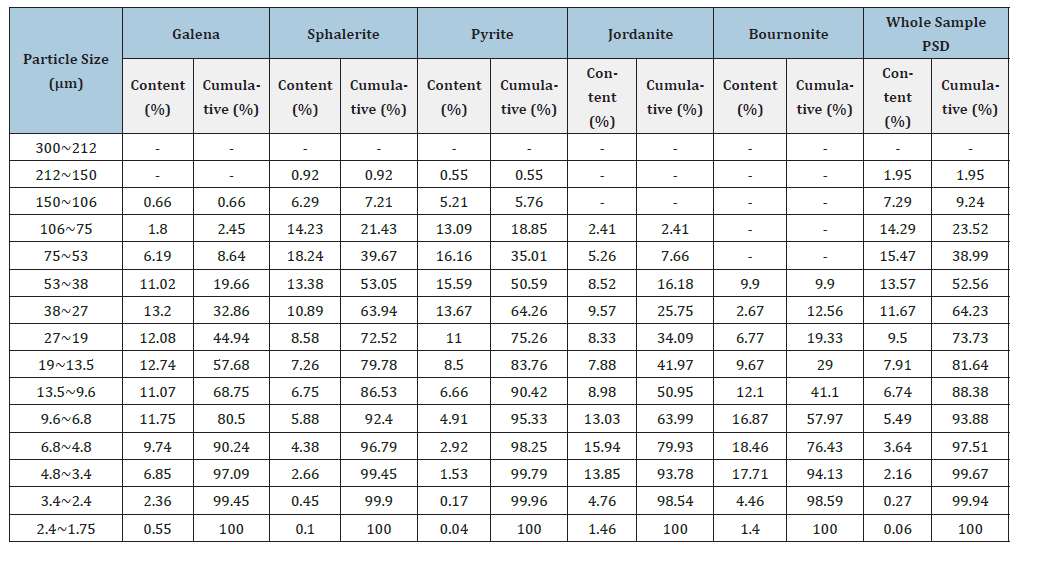
Automated Mineralogy (MLA) provides an integrated assessment of textures, mineral associations, liberation and Particle-Size Distributions (PSDs) for the secondary-stage classification overflow. The bulk PSD spans ∼2-300μm, with the great majority of the mass coarser than 10μm and a broad mode across ~30-100μm (Figure 3a; Table S2). Cumulative PSD curves in Figure 3(a) show a near-bimodal pattern: a dominant 10-100μm population carried mainly by particles hosting sphalerite and pyrite, and a subordinate <10μm fraction contributed principally by galena-bearing particles. The complete PSD table is archived in Supplementary Table S2.
Figure 3:Liberation characteristics of major minerals: (a) Cumulative PSD curves (MLA); (b) Liberation curves (MLA)
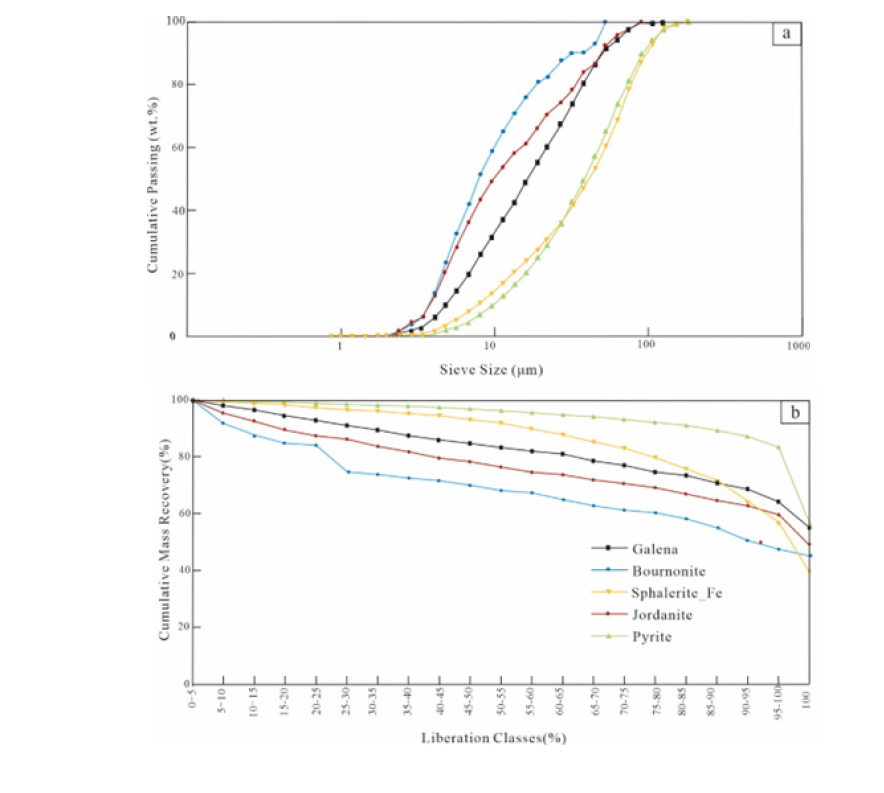
Table S2:Particle-Size Distribution (PSD) statistics of major minerals from MLA for the secondary-stage classification overflow.
Liberation results in Figure 3(b) and Table 3 show clear contrasts among the major sulfides: galena and pyrite are moderately liberated (≈55-56% fully liberated), whereas sphalerite shows a lower fully liberated fraction (~39%), consistent with its common submicrometre pyrite inclusions. Minor Pb-Sb sulfosalts (jordanite, bournonite) are ultrafine and poorly liberated, reflecting their textural occurrence.
Table 3:MLA summary for major sulfides: liberation classes, inter-mineral associations, and surface exposure.

Note: Only major sulfides are shown; Full, unabridged tables--the bin-resolved PSD statistics and the complete association matrix--are provided in the Supplementary Information (Table S2-S3).
These patterns highlight strong texture-size-liberation coupling: galena tends to be finer and partly intergrown with pyrite/ sphalerite; sphalerite commonly hosts ultrafine pyrite inclusions; pyrite displays a non-uniform size distribution and locally crack-hosted ~5μm galena.
Galena
Galena (PbS) is the principal Pb-bearing mineral and exhibits euhedral to subhedral textures. Its particle-size distribution is concentrated in ~7-106μm (~80%), with ~30% finer than 10μm, indicating a fine fraction enriched in the secondary-stage classification overflow. The fraction of fully liberated particles is 55.0%, while the surface-exposure fraction reaches 82.64% (Table 3).
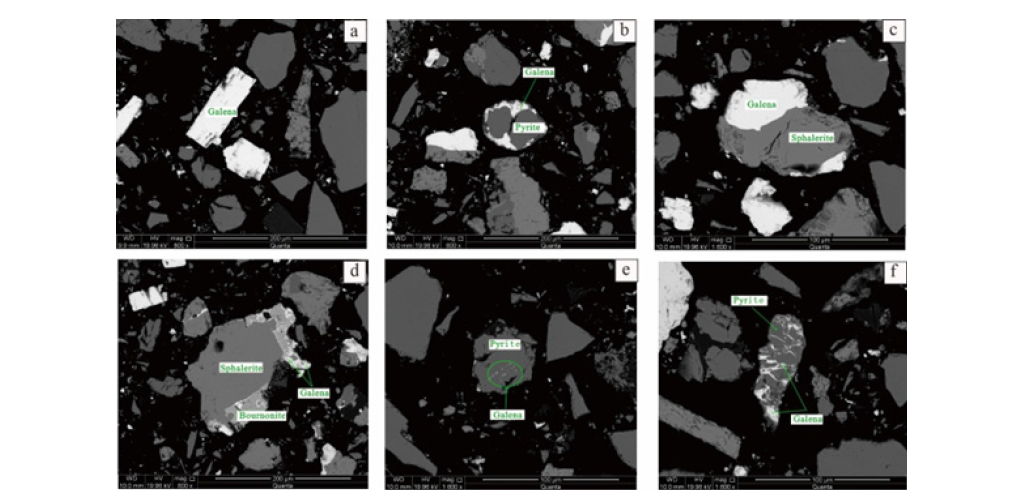
Texturally, galena occurs as liberated grains and as veinlet- to dendritic-type intergrowths with pyrite and sphalerite (Figure 4 & 5). Association statistics show that galena-bearing particles are composite, chiefly with Pyrite (7.65%) and Sphalerite (6.78%) (Table 3). These fine intergrowths constrain Pb selectivity and explain the moderate liberation degree, consistent with PSD-liberation trends (Figure 3) and with the textural evidence (Figure 4 & 5).
Figure 4:MLA phase-map of galena occurring as liberated particles or intergrown with other mineral grains
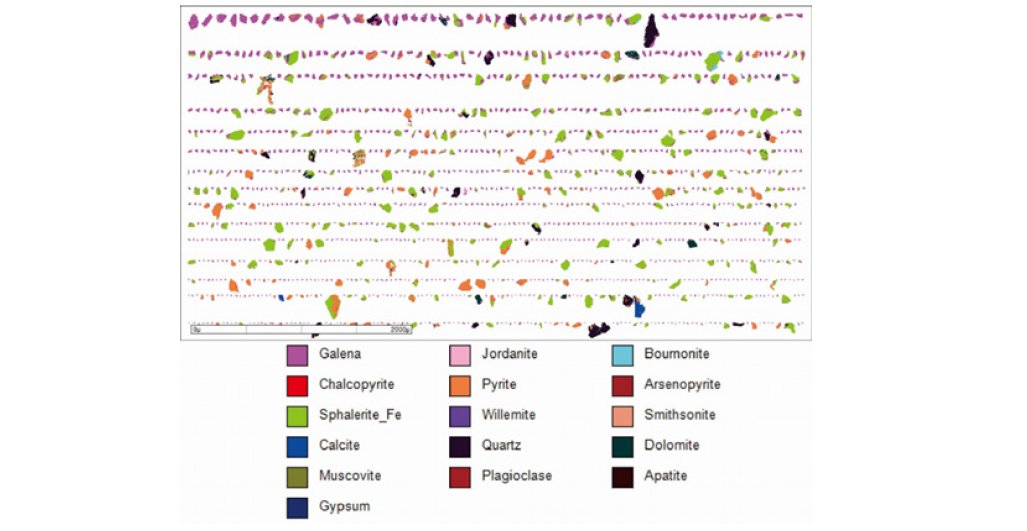
Figure 5:Textural characteristics of galena in the ore shown by BSE images: (a) liberated euhedral grains (×800); (b) reaction rims of galena formed around pyrite (×800); (c) anhedral galena in contact with sphalerite (×1600); (d) bournonite intergrown with sphalerite, with veinlet galena infilling intergranular spaces and intricately intergrowing with bournonite (×800); (e) ultrafine (submicrometre) galena inclusions within pyrite grains (×1600); (f) veinlet–dendritic galena hosted by pyrite (×1600)
Sphalerite
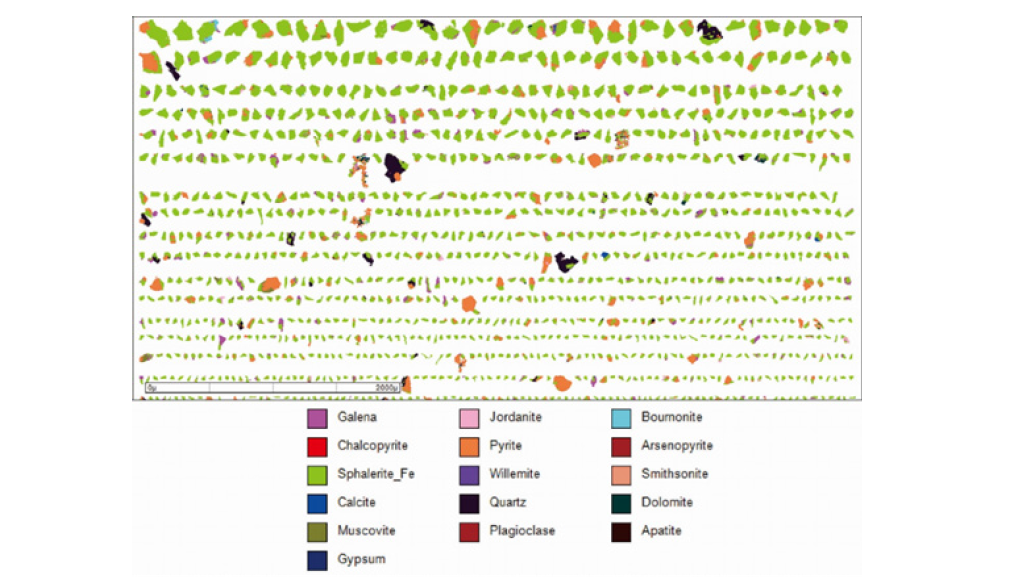
Sphalerite is mostly anhedral in texture and occurs as comparatively coarser particles (Figure 6), with its particle-size distribution concentrated in ~30-150μm (~63%) and only ~13% in the <10μm fraction. By particle count, 39.47% of sphalerite particles are fully liberated (100% class), while the surface-exposure fraction reaches 88.24% (Table 3).
Figure 6:MLA phase-map of sphalerite occurring as liberated particles or intergrown with other mineral grains
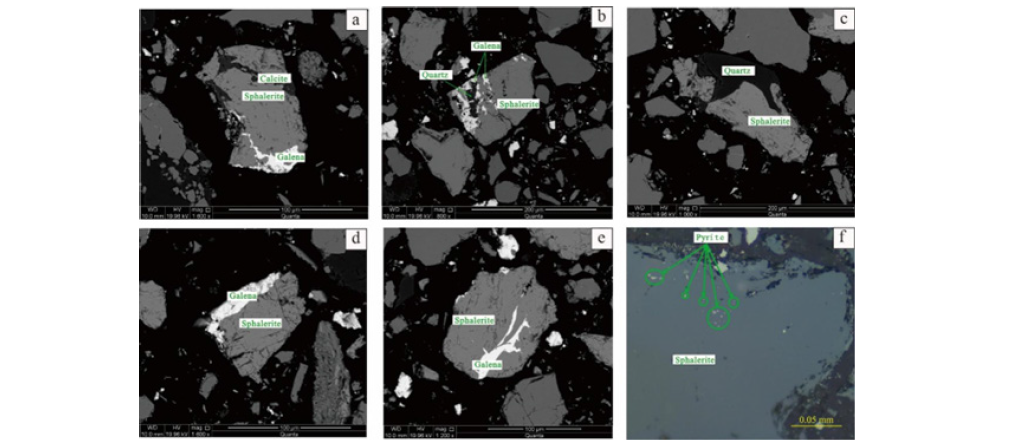
Association statistics indicate composites mainly with Pyrite (5.70%) and Galena (3.89%). Three principal textural modes are observed (Figure 7): (i) Euhedral-subhedral grains that are relatively clean or show only simple intergrowths with galena and pyrite (Figure 7a-d); (ii) sphalerite hosting veinlet/dendritic galena (Figure 7e); and (iii) sphalerite containing colloform or disseminated ultrafine pyrite inclusions (<1μm) (Figure 7f).
Figure 7:Textural characteristics of sphalerite in the ore. (a–e) BSE images: (a) calcite and galena disseminated within sphalerite (×1600); (b) quartz and galena disseminated within sphalerite (×800); (c) quartz intergrown with sphalerite (×1000); (d) galena mantling the rim of euhedral sphalerite (×1600); (e) dendritic galena within sphalerite (×800); (f) Emulsion-like and star-disseminated pyrite inclusions within sphalerite grains (reflected-light photomicrograph, plane-polarized light)
Pyrite
Pyrite (FeS₂) is the most abundant phase and exhibits a markedly non-uniform particle-size distribution (Figure 8), ranging from a few micrometres to 150μm. In addition to a coarse tail (>75μm, ~20%), sub-micrometre pyrite occurs mainly as colloform or disseminated inclusions within sphalerite (≈8% by count in texture mapping). By particle count, 56.39% of pyrite particles are fully liberated (100% class), and the surface-exposure fraction reaches 92.62% (Table 3).
Figure 8:MLA phase-map of pyrite occurring as liberated particles or intergrown with other mineral grains/p>
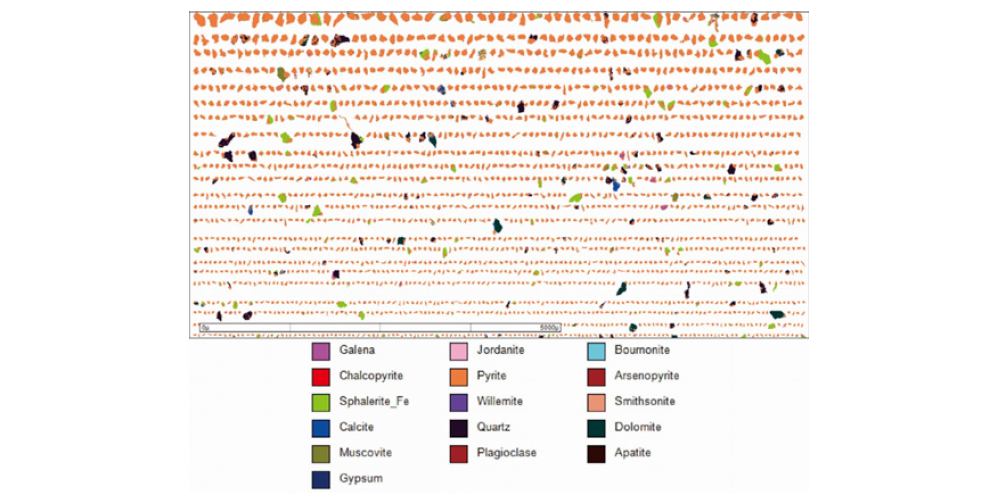
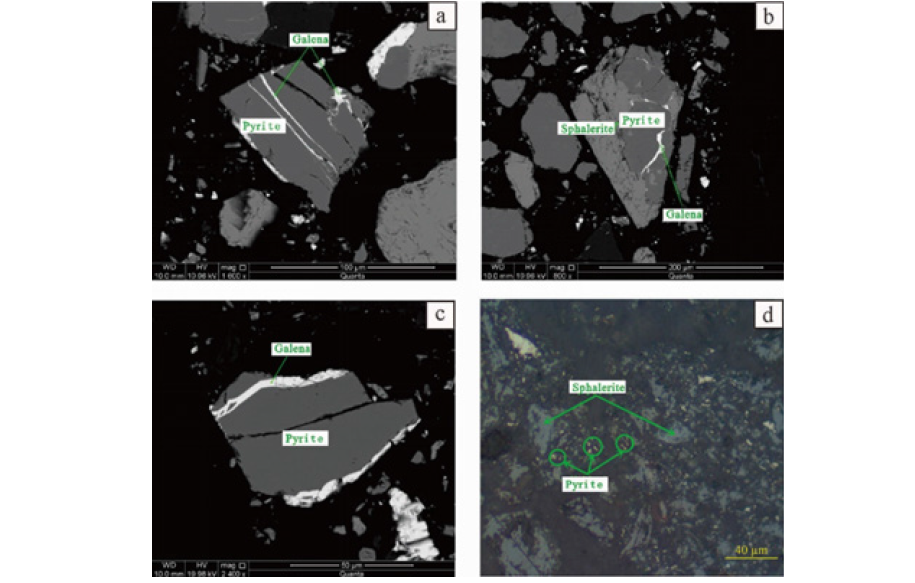
Mineral-association statistics indicate composites with Sphalerite (2.56%), Galena (1.97%) (Table 3). Texturally, pyrite occurs mainly as euhedral to subhedral granular grains, and as intergrowths with galena and sphalerite (Figure 8 & 9). Locally, ~5μm veinlet- to dendritic-type or disseminated galena is enclosed within pyrite grains or fills intragranular cracks, likely related to late-stage fracturing and remobilization. Ultrafine pyrite also forms colloform or disseminated inclusions hosted by sphalerite, as well as irregular disseminations along microfractures within brecciated sphalerite crystals, consistent with complex replacement and deformation textures.
Figure 9:Textural characteristics of pyrite in the ore. (a–c) BSE images: (a) veinlet galena in euhedral pyrite or infilling pyrite cracks (×1600); (b) anhedral pyrite included in sphalerite (×800); (c) veinlet galena at pyrite grain margins (×1600); (d) ultrafine pyrite unevenly distributed along fractures in shattered sphalerite (reflected-light photomicrograph, plane-polarized light)
Minor minerals
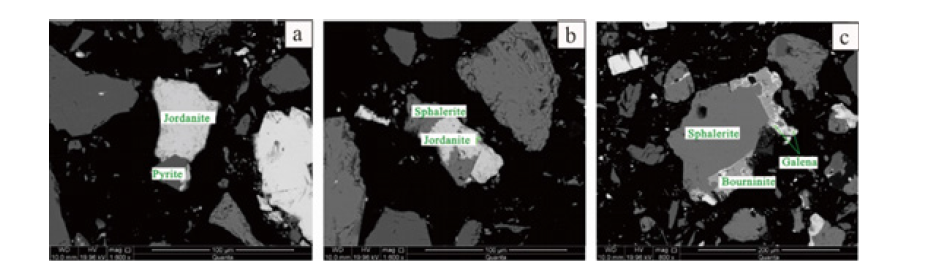
Minor phases of metallurgical interest include jordanite (1.51wt.%) and bournonite (0.32wt.%). Jordanite commonly forms sub-euhedral grains intergrown with pyrite and occurs predominantly as fine to ultrafine particles, with roughly two-thirds of grains finer than ~20μm (Figure 10a & 10b). Bournonite is closely intergrown with sphalerite and is overwhelmingly ultrafine, with about four-fifths of grains <20μm (Figure 10c). Its relatively high Sb content indicates potential impacts on Pb-concentrate quality.
Figure 10:Textural characteristics of jordanite and bournonite in the ore shown by BSE images: (a) simple intergrowth of pyrite and jordanite (×1600); (b) jordanite intergrown with sphalerite (×1600); (c) bournonite intergrown with sphalerite, with veinlet galena infilling intergranular spaces or intricately intergrown with bournonite (×800)
Discussion
Texture-size-liberation coupling
Automated mineralogical results demonstrate that liberation is jointly governed by textural scale and particle-size distribution. The data reveal a strong coupling between veinlet/intergrowth morphology, grain-size contrasts, and the efficiency of mechanical liberation.
Galena shows a moderate degree of full liberation (~55%), with much of the remaining Pb locked as ~5μm veinlet- to dendritic-type intergrowths within pyrite. These microtextures are difficult to expose completely during conventional grinding and thus limit achievable Pb grade. Increasing the surface exposure of such fine galena by size-targeted regrinding combined with sharper classification is more effective than indiscriminate fine grinding [11]. Submicrometer inclusions, however, lie beyond practical liberation limits [12]. Consequently, galena exposure is particularly sensitive to tightening the upper size of the Pb rougher feed and concentrate (i.e., targeted regrinding coupled with sharper classification).
Sphalerite exhibits a lower proportion of fully liberated particles (~39%), not due to its coarser nature, but because of <1μm pyrite inclusions that remain locked even after standard grinding. Once the inclusion scale is reached, further comminution yields diminishing returns and increases the risk of overgrinding fines.
Although pyrite appears moderately liberated in bulk (~56% fully liberated), ~5μm crack-hosted galena veinlets enclosed within pyrite explain persistent Pb contamination in the sulfur concentrate. These fine galena features--locally filling intragranular cracks likely produced or enhanced by late-stage stress--are difficult to fully liberate and thus elevate Pb in the sulfur concentrate. Conversely, ultrafine colloform or disseminated pyrite (<1μm) occurs as inclusions within sphalerite and as uneven disseminations along microfractures in brecciated sphalerite crystals, causing S carryover into the Zn circuit.
Overall, the Particle-Size Distribution (PSD) is near-bimodal, with a dominant 10-100μm band and a subordinate <10μm population. This duality imposes two processing constraints: (i) Tinvein intergrowths, which require selective, size-targeted regrinding rather than wholesale fine milling; and (ii) Truly ultrafine inclusions and slimes, which are better managed through selectivity control and hydraulic measures than by additional energy input [12]. These findings collectively reinforce the observed texture-size-liberation relationships seen in MLA maps and BSE micrographs.
Elemental deportment and texture-driven selectivity risks
Consistent with the modal mineralogy, the principal hosts of the valuable and major elements are well defined--Pb in galena, Zn in sphalerite, and S in pyrite (Table 4). This deportment translates directly into several processing risks that affect concentrate quality and metal recovery.
Table 4:Elemental department of Pb, Zn and S in the secondary-stage classification overflow.
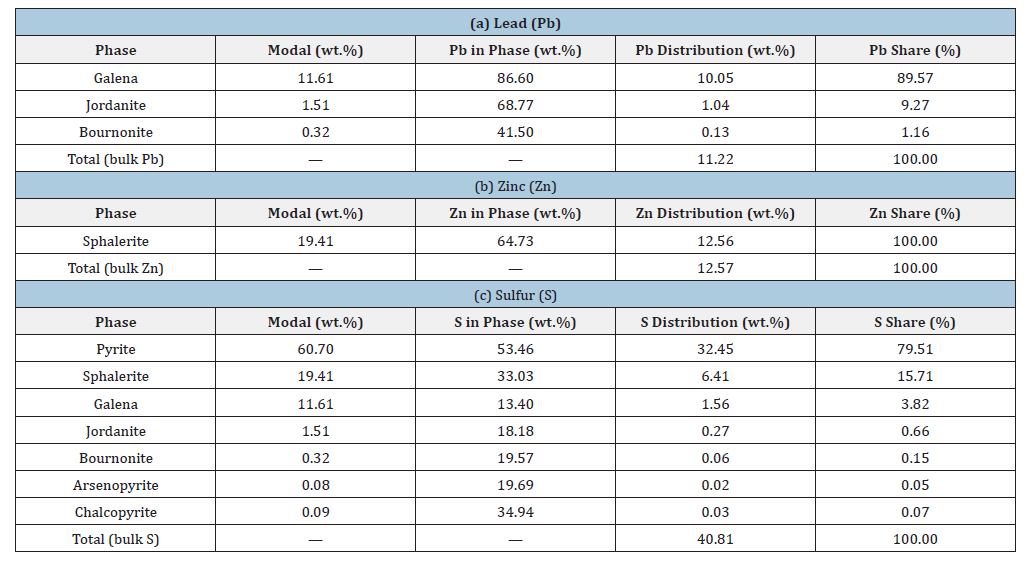
Pb resides predominantly in Galena (89.57%), with minor shares in Jordanite (9.27%) and bournonite (1.16%) (Table 4a). Texturally, a significant portion of the nonliberated galena occurs as ~5μm veinlets/dendrites intergrown with pyrite/sphalerite or as reaction rims on pyrite, which explains Pb misplacement to the S and Zn circuits if composites are not adequately broken. The size statistics further show a substantial <10 μm galena population (~30%), which is prone to hydraulic entrainment. Together these features cap Pb selectivity unless targeted regrinding and sharp classification are applied.
Zn is hosted almost entirely by sphalerite (~100%) (Table 4b). However, ultrafine (<1μm) pyrite inclusions dispersed within sphalerite--documented by reflected-light and BSE imaging—are effectively inseparable by conventional cleaning and act as an inherent sulfur source in the Zn concentrate. These inclusions impose a practical upper limit on Zn cleaning grade, which is better addressed by selective pyrite depression and froth washing/air rate control than by indiscriminate fine grinding
S is dominated by Pyrite (79.51%), followed by Sphalerite (15.71%) and Galena (3.82%), with only minor contributions from jordanite, bournonite, arsenopyrite and chalcopyrite (Table 4c). Given the abundance of pyrite and its fine locking with sphalerite/ galena, S carryover to the Zn circuit arises from both true flotation of liberated pyrite and hydraulic entrainment of ultrafines; managing both mechanisms is necessary to control S in the Zn concentrate [13].
The deportment patterns highlight three risks: (i) Pb losses via veinlet/dendritic galena intergrown with pyrite/sphalerite and via <10μm entrainment; (ii) Elevated S in the Zn circuit from submicrometer pyrite inclusions within sphalerite; and (iii) Potential penalty elements (As, Sb) associated with jordanite/bournonite.
Implications for flotation performance and process optimization
Based on the identified texture-size-liberation constraints, a Pb-first and size-targeted flowsheet is proposed to directly resolve the plant problems of Pb entrainment and S carryover. Sharpening classification is beneficial to restrict <10μm slimes, narrow the PSD supplied to both flotation circuits, reduce hydraulic entrainment, and prepare a cleaner rougher environment. Pb roughing followed by selective regrinding [3] can be applied: Pb is floated first, and the Pb rougher concentrate is then reground to P80 ≤25μm so that ~5μm veinlet-type galena intergrown with pyrite and sphalerite becomes exposed. This texture-targeted approach converts composite particles into liberated galena, improving Pb selectivity and recovery without excessive fines generation.
In the Zn circuit, mild regrinding coupled with selective pyrite depression is suggested. Because the key constraint on Zn cleaning grade is submicrometer pyrite inclusions within sphalerite, pushing to very fine P80 is inefficient and increases slimes; instead, a coarse-end tightening regrind, combined with pyrite depression during cleaning (e.g., pH control with lime and/or sulfite-based depressants such as metabisulfite, subject to plant trials [14], provides more effective selectivity at lower energy cost. Hydraulic controls, including froth washing and air rate adjustment, further help suppress hydraulic entrainment of ultrafine pyrite, while ionic- strength/pH management mitigates slime coating and entrapment [13].
These interventions translate the mineralogical diagnosis into a testable circuit-improvement plan, consistent with the textural scales and PSD-liberation relationships presented above. The performance benefits should be confirmed via grind-float response tests and locked-cycle evaluations using plant-representative composites before full-scale implementation [15].
Conclusion
Based on a systematic process-mineralogical characterization
of the secondary-stage classification overflow from the Maoping
Pb-Zn ore, the following conclusions are drawn:
A. Elemental deportment in this ore is well constrained and consistent
with modal mineralogy. Pb resides predominantly in
Galena (89.57%), Zn almost entirely in Sphalerite (100%), and
S mainly in Pyrite (79.51%), which largely controls recovery
behaviour.
B. Two fine-scale microtextural features impose fundamental
constraints on flotation selectivity: (i) ~5μm veinlet/dendritic
Galena intergrown with Pyrite/Sphalerite restricts Pb exposure
and leads to Pb misplacement; and (ii) Submicrometer
pyrite inclusions within sphalerite impose a practical ceiling
on Zn concentrate grade.
C. Particle-Size Distribution (PSD) is strongly coupled with liberation
and misplacement pathways. The near-bimodal PSD,
with a dominant 10-100μm population and a subordinate
<10μm fraction, promotes both incomplete liberation and hydraulic
entrainment of fine particles.
D. These results indicate that flotation performance in finegrained
Pb-Zn systems is fundamentally constrained by microtextural
scale rather than bulk liberation alone. This imposes
an intrinsic limit on achievable selectivity and explains the
persistence of Pb losses and S carryover in such ores.
E. The findings provide a mineralogical basis for improving flotation
performance through size-targeted strategies and selective
treatment, with broader implications for similar finegrained
sulfide deposits.
Supplementary Materials
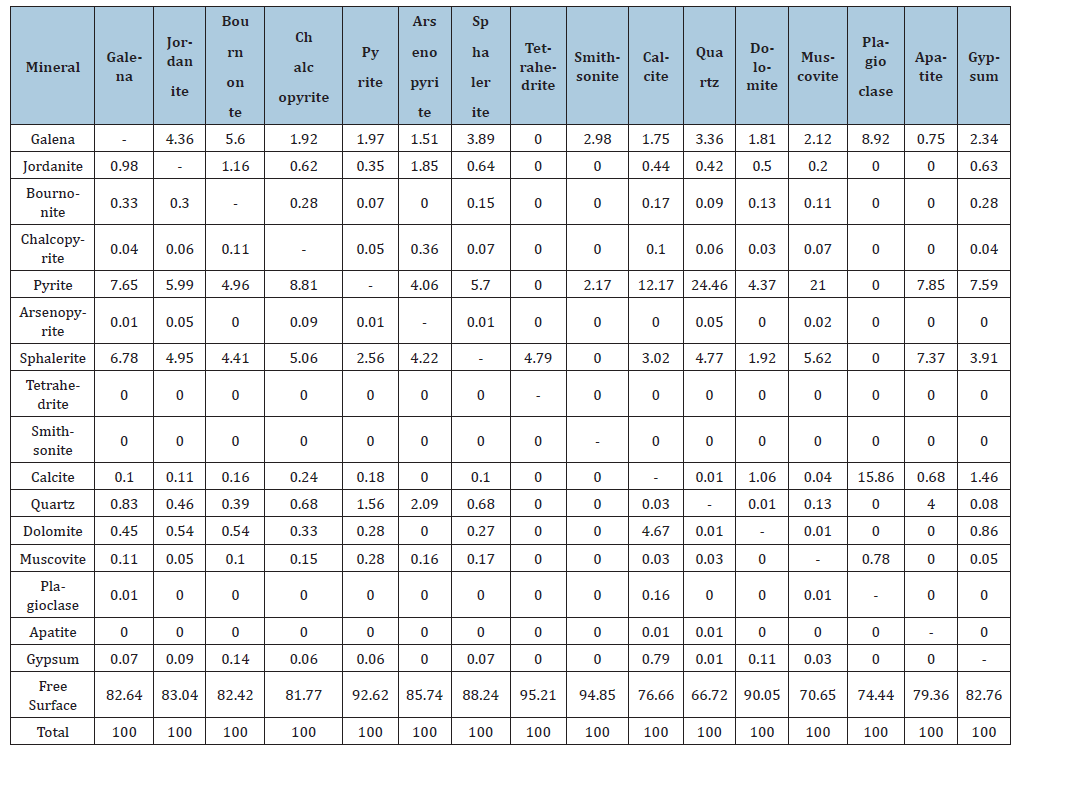
The following supporting information can be downloaded: Table S1: MLA-calculated multi-element grades (wt.%) for the secondary-stage classification overflow; Table S2: Particle-Size Distribution (PSD) statistics of major minerals from MLA for the secondary-stage classification overflow; Table S3: Mineral-mineral association matrix from MLA (%).
Table S3:Mineral-mineral association matrix from MLA (%).
References
- Hu X, Chen Y, Liu G, Yang H, Luo J, et al. (2022) Numerical modeling of formation of the Maoping Pb-Zn deposit within the Sichuan-Yunnan-Guizhou metallogenic province, southwestern China: Implications for the spatial distribution of concealed Pb mineralization and its controlling factors. Ore Geol Rev 140: 104573.
- Wu J, Han R, Zhang Y, Wu P, Gong H, et al. (2024) Porosity-permeability characteristics and mineralization-alteration zones of the Maoping germanium-rich lead-zinc deposit in SW China. Front Earth Sci 12: 1347243.
- Xiang ZZ, Zhou JX, Luo K (2020) New insights into the multi-layer metallogenesis of carbonate-hosted epigenetic Pb-Zn deposits: A case study of the Maoping Pb-Zn deposit, South China. Ore Geol Rev 122: 103538.
- Zhao WC, Zhu X, Jiang B, Zhao D (2022) Metallogenesis of the giant Maoping carbonate-hosted lead-zinc deposit, southwestern Yangtze Craton: New insights from structural geology and whole-rock geochemistry. Geol J 57(6): 2235-2254.
- Fandrich R, Gu Y, Burrows D, Moeller K (2007) Modern SEM-based mineral liberation analysis. Int J Miner Process 84(1-4): 310-320.
- Gottlieb P, Wilkie G, Sutherland D, Ho Tun E, Suthers S, et al. (2000) Using quantitative electron microscopy for process mineralogy applications. JOM 52: 24-25.
- Gu Y (2003) Automated scanning electron microscope based mineral liberation analysis: An introduction to JKMRC/FEI Mineral Liberation Analyser. J Miner Mater Charact Eng 2(1): 33-41.
- Blannin R, Frenzel M, Tușa L, Birtel S, Ivășcanu P, et al. (2021) Uncertainties in quantitative mineralogical studies using SEM-based image analysis. Miner Eng 167: 106836.
- Evans CL, Napier MTJ (2013) Estimating error in measurements of mineral grain size distribution. Miner Eng 52: 198-203.
- Leigh GM, Sutherland DN, Gottlieb P (1993) Confidence limits for liberation measurements. Miner Eng 6(2): 155-161.
- Mariano RA, Evans CL (2015) Error analysis in ore particle composition distribution measurements. Miner Eng 82: 36-44.
- Miettinen T, Ralston J, Fornasiero D (2010) The limits of fine particle flotation. Miner Eng 23(5): 420-437.
- Neethling SJ, Cilliers JJ (2002) The entrainment of gangue into a flotation froth. Int J Miner Process 64(2-3): 123-134.
- Zanin M, Ametov I, Grano S, Zhou L, Skinner W (2019) Lime use and functionality in sulphide mineral flotation: A Review. Miner Eng 143: 105922.
- Castellón CI, Videla A, Toledo PG, Laskowski JS, Yianatos J (2024) Pyrite depression by sodium metabisulfite in freshwater and seawater: A Critical Review. Minerals 14(10): 1036.
© 2025 Hongzhe Xie. This is an open access article distributed under the terms of the Creative Commons Attribution License , which permits unrestricted use, distribution, and build upon your work non-commercially.
Editor In Chief







.jpg)





























Signup for Newsletter

Quick Links
 Editorial Board Registrations
 Submit your Article
 Best Paper of the Volume
 Reprints
 Refer a Friend
 Advertise With Us
Our Recent Edition
.jpg)



Top Editors




.jpg)

















.bmp)
.jpg)
.png)
.jpg)













.jpg)






.png)

.png)




.png)




Financial Support

Sponsors

Latest e-Books

Latest Video

 a Creative Commons Attribution 4.0 International License. Based on a work at www.crimsonpublishers.com.
Best viewed in
a Creative Commons Attribution 4.0 International License. Based on a work at www.crimsonpublishers.com.
Best viewed in 
 | Above IE 9.0 version