

- About Us
- Information
-

The Author ensures that the research has been conducted responsibly and ethically with adherence to all relevant regulations. read more..
- For Authors
- For Reviewer
- Manuscript Guidelines
- Membership
- Publication Ethics
-
- Journals
- Reprints
- e-Books
- Videos
- Policies
- Contact Us
 COVID-19
- Submissions



Full Text
Progress in Petrochemical Science
Environmentally Friendly Rubber Oils in China
Juanjuan Zhou1, Tongjie Xue2, Huabo Xie1 and Yanzhen Wang2*
1 Sinopec Ningbo Zhenhai Refining & Chemical Co. LTD, China
2 State Key Laboratory of Heavy Oil Processing, China University of Petroleum, China
*Corresponding author:Yanzhen Wang, State Key Laboratory of Heavy Oil Processing, China University of Petroleum, Qingdao, Shandong, China
Submission: June 18, 2026;Published: June 26, 2026
ISSN 2637-8035Volume7 Issue 5
Abstract
With the implementation of the EU REACH regulations and China’s GB/T 33322-2016 standards, the content of polycyclic aromatic hydrocarbons (PCA) in rubber plasticizers is strictly limited (PCA≤3%) and traditional aromatic oil is gradually withdrawn from the market. The demand for environmentally friendly rubber oil continues to rise and is highly dependent on imports. The preparation of environmentally friendly rubber oil from solvent extract oil has become an important direction for the high-value utilization of refinery by-product oil. In this paper, the classification, application and market demand of rubber oils are reviewed and the environmental protection regulations and product index requirements at home and abroad are sorted out. The technical routes for the treatment of aromatic oil (TDAE), residual aromatic extract (RAE), naphthenic oil (NAP) and mild solvent extraction oil (MES) are mainly described. The advantages and disadvantages of solvent extraction, hydrotreating and hydrotreating-solvent extraction combined processes and their industrial application status are systematically compared. It is pointed out that there are some problems such as difficult to balance the yield and CA value, excessive hydrogenation and complex process flow. In the future, high-selectivity compound solvent extraction, mild and precise hydrogenation and coupling new processes should be developed to improve the resource utilization rate of solvent extract oil, so as to achieve high quality, low cost and domestic production of environmentally friendly rubber oils.
Introduction
Rubber plasticizer, also known as rubber oil, is an indispensable functional additive in the field of rubber and soft plastic processing. It can significantly improve the flexibility, processing fluidity, low temperature adaptability and durability of polymer materials and is widely used in tire manufacturing, rubber products, sealing materials and other industries. However, it contains a large number of polycyclic aromatic hydrocarbons, about 20%~25%, with strong carcinogenicity and its harm to the environment and human health has been proposed and confirmed. PAHs in tires mainly come from this. Relevant studies have pointed out that the wear of tire tread material and its spread on the roadside will lead to a large number of PCA entering the environment [1]. The demand for rubber plasticizers in the global tire industry accounts for up to 38%. As the world ‘s largest tire producer and exporter, about 40% of China ‘s tire products are exported and the demand for high-quality rubber plasticizers that meet international environmental protection standards continues to be strong [2-4]. Due to environmental regulations, the use of traditional high-toxicity rubber oils has been strictly restricted, making domestic supply of eco-friendly rubber oils highly dependent on imports and posing serious challenges to industry development [5]. Below is a review of the development of rubber oil in China.
Classification and Application of Rubber Oils
The function and mechanism of rubber oils
Rubber oil, also known as rubber plasticizer in China, is a class of petroleum fractions or organic hydrocarbon compounds that can penetrate between polymer chains in rubber, reducing intermolecular forces and enhancing chain mobility [4,6]. Its core functions are reflected in four aspects: One is to improve the processing performance of rubber, reduce the energy consumption and equipment wear in the process of mixing, extrusion and calendaring; the second is to improve the flexibility and low temperature brittle crack resistance of rubber products and expand the use temperature range; the third is to optimize the physical properties of vulcanizates, improve resilience, wear resistance and aging resistance; fourth, as a filler, it reduces production costs and does not significantly damage the core indicators of the product. In the tire industry, rubber plasticizers directly affect the key indicators such as grip strength, rolling resistance and wear resistance of the tread rubber and are one of the core materials for green tire manufacturing [7,8].
Classification of rubber oils
According to the properties of raw materials and the composition of carbon structure, petroleum-based rubber plasticizers can be divided into three categories: Aromatic, naphthenic and paraffin-based and their performance differences directly determine the application scenarios [9,10]. The aromatic carbon rate CA of aromatic rubber plasticizer is more than 35%. It has the characteristics of high density, high viscosity and high aromatic content. It has excellent compatibility with natural rubber, styrene-butadiene rubber, butadiene rubber and other general rubbers and has excellent processing fluidity, which can significantly improve the adhesion strength and filling performance of rubber. However, this kind of oil has poor low temperature performance, easy to contaminate products, fast vulcanization rate and high heat generation. The content of polycyclic aromatic hydrocarbons in traditional products is as high as 20%~25%, which has strong carcinogenicity and environmental hazards. It is the key control object of EU and China ‘s environmental protection regulations [1]. The naphthenic content of the naphthenic rubber plasticizer is CN>35%, the molecular structure is dominated by naphthenic hydrocarbons, the aromatic content is moderate, the low temperature performance is good, the processability is balanced, the pollution-free, the vulcanization rate is medium and the resilience and heat generation index are in the middle level. This kind of oil has good compatibility with rubber and can be used to manufacture rubber products with high requirements for low temperature performance and environmental protection. It is an important substitute for aromatic oil. The paraffin-based rubber plasticizer has a chain alkane content CP>60% and the molecular structure is dominated by straight-chain and branched-chain alkanes. It has excellent low-temperature fluidity, resilience and chemical stability, low heat generation, no pollution and aging resistance. However, this kind of oil has general compatibility with rubber, medium processing performance and slow vulcanization rate. It is usually used in the field of products with high environmental protection and low temperature performance requirements and relatively loose processing requirements.
Application field of rubber oil
The application of rubber oil covers many fields such as synthetic rubber, tires, industrial rubber products, cables, seals, shoe materials, green modification and so on. Among them, the tire industry is the largest consumer market, accounting for more than 38% of the total consumption [11]. In tire products, different types of rubber oils are required for tread rubber, sidewall rubber and belt rubber. Among them, green tires have the most urgent demand for environmentally friendly aromatic oil with low PCA, high CA and low rolling resistance. In addition, rubber oil is also widely used in automotive rubber parts, hoses, tapes, rubber rollers, cable insulation layers and other products.
Environmentally Friendly Rubber Oil Related Regulations
EU environmental protection regulation system
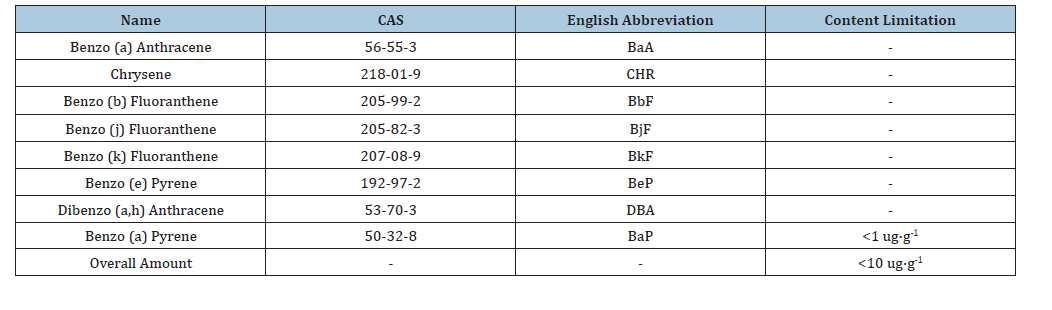
The EU is the first region in the world to implement environmental protection control over rubber plasticizers. Its regulatory system is perfect and the standards are strict, which plays a guiding role in the development of the global industry. In 2005, the European Council issued 2005/69/EC Directive, which clearly stipulates that the content of PCA in rubber oil put on the market and used for tire production is less than or equal to 3%, the total content of eight highly carcinogenic polycyclic aromatic hydrocarbons is less than or equal to 10mg·kg-1 and benzo. [a] pyrene is less than or equal to 1mg·kg-1 [12]. The REACH regulations implemented in 2010 further strengthened the control requirements and listed rubber plasticizers that did not meet the limits as prohibited circulation substances [12,13]. The eight Polycyclic Aromatic Hydrocarbons (PAHs) restricted by EU regulations include benzo (a) anthracene, chrysene, benzo (b) fluoranthene, benzo (j) fluoranthene, benzo (k) fluoranthene, benzo (e) pyrene, dibenzo (a,h) anthracene and benzo (a) pyrene, which are highly toxic and carcinogenic substances. They are cumulative and difficult to degrade in the environment and are harmful to human health and ecological environment. The specific provisions are shown in Table 1.
Table 1:Eight kinds of polycyclic aromatic hydrocarbons and their content requirements.
China national standard system
In order to connect with the international market and ensure the compliance of export products, China issued GB/T 33322- 2016《rubber plasticizer-aromatic mineral oil》in 2016, fully adopted the EU environmental protection limit requirements and constructed a perfect domestic standard system. In the standard, the rubber oil was called rubber plasticizer. The standard divides environmentally friendly aromatic rubber plasticizers into four grades: A-0709, A-1220, A-1820 and A-2530 according to the viscosity grade. It clearly stipulates that the PCA content is less than 3.0%, the total amount of eight specific polycyclic aromatic hydrocarbons is less than 10mg·kg-1 and benzo [a] pyrene is less than 1mg·kg-1. Quantitative requirements are made for key indicators such as density, kinematic viscosity, flash point, aniline point, CA value, CN value, CP value, refractive index and viscosity-weight constant. The implementation of the standard has promoted the domestic rubber plasticizer industry to accelerate the elimination of backward products and comprehensively shift to environmentally friendly production. The relevant provisions in the standard are shown in Table 2.
Table 2:Index requirements of aromatic base rubber plasticizer.

Detection method and quality control
International and domestic standards are equipped with strict detection methods to ensure accurate and reliable index determination. PCA content was determined by NB/SH/T 0838 method. Eight polycyclic aromatic hydrocarbons and benzo [a] pyrene were detected by EN 16143:2013 method. Density, viscosity, flash point, aniline point and other indicators corresponded to SH/T 0604, GB/T 265, GB/T 3536, GB/T 262 and other national standard methods. For special products such as RAE, the EU stipulates that the AMES mutagenesis index method should be used for PCA measurement to further improve the control accuracy and coverage. Compliance inspection and quality control have become the core competitiveness of environmental protection rubber plasticizer production enterprises.
Production Process of Environmentally Friendly Rubber Oil
Mainstream environmentally friendly rubber oil product types
At present, the industrial rubber oils that meet the EU environmental protection requirements mainly include TDAE, RAE, NAP, MES and heavy naphthenic oil (HNAP) and their raw materials, processes and properties are obviously different [14-16]. TDAE uses traditional aromatic oil DAE as raw material, through hydrogenation or solvent refining to reduce the content of polycyclic aromatic hydrocarbons, retains monocyclic, bicyclic aromatic hydrocarbons and cycloalkanes, CA value is 20%~30% and has excellent compatibility with rubber. It is the preferred plasticizer for green tires, which is the most widely used and has the highest market share [17]. Using vacuum residue as raw material, DAO was obtained by solvent DE asphalting and then RAE was prepared by solvent refining. The production cost is low, the molecular weight is large, the viscosity is high and the hardness and viscosity of rubber can be improved. However, the processing fluidity is poor and it is mostly used in special products such as industrial rubber rollers [18]. NAP was prepared from naphthenic crude oil distillate by solvent refining and hydrogenation. It has high CN value, CA value of 11%~17%, good low temperature performance, high environmental protection safety and good compatibility with rubber. MES is prepared from paraffin-based or intermediatebased crude oil by solvent refining, extraction, dewaxing and hydrogenation. The process flow is long and the cost is high. The CA value is 11%~17% and the comprehensive performance is not as good as TDAE.
Solvent extraction
Solvent refining, also known as solvent extraction, is the most mature and widely used physical separation technology for preparing environmentally friendly rubber plasticizers. The core principle is to selectively remove non-ideal components such as resins, polycyclic aromatic hydrocarbons and heteroatom compounds by using the solubility difference of extractants to different polar components in raw materials and retain ideal components such as monocyclic, bicyclic aromatic hydrocarbons, cycloalkanes and chain alkanes [19,20]. The commonly used extractants in industry include furfural, N-methyl pyrrolidone (NMP), sulfolane and so on. They are all polar cyclic compounds with high selectivity, good separation effect and easy recovery. Furfural has low boiling point and low energy consumption of solvent recovery. NMP has good selectivity and high solubility. Sulfolane has good thermal stability and high solubility of aromatics [21]. Solvent refining has the advantages of low operating cost, simple device transformation, mature technology and no change in the molecular skeleton. It is suitable for upgrading the existing refinery solvent refining device. Sinopec Jinan Refining [22] successfully produced TDAE products in line with EU standards by using furfural extract oil as raw material, multi-stage countercurrent extraction in packed tower, directional removal of three-ring and above polycyclic aromatic hydrocarbons. Lv [23] used furfural or NMP secondary extraction process to prepare environmentally friendly rubber oil with PCA<2.8%, CA value of about 16.5%~17.5% and product yield of 40%~45%. Single solvent extraction has the problems of loss of ideal aromatics and difficulty in balancing yield and CA value. In recent years, new technologies such as double solvent extraction, compound solvent extraction and extraction-dewaxing coupling have developed rapidly. Yang [24] used a combination of polar solvents and C6~C20 light hydrocarbon stripping agents to achieve efficient selective separation and the CA value of the product was increased to 22%. Wang [25] coupled extraction and dewaxing to prepare a low pour point environmentally friendly rubber plasticizer with CA of 25% and PCA of 2.4%, which greatly improved product performance and application scope.
Hydrotreating
Hydrofining is a technical route to realize the environmental protection modification of oil products by catalytic hydrogenation reaction, which converts polycyclic aromatic hydrocarbons into monocyclic and bicyclic aromatic hydrocarbons and removes heteroatoms such as sulfur, nitrogen and oxygen. The hydrogenation reaction is usually carried out in a fixed bed reactor and aromatics saturation and impurity removal are completed under the action of high temperature, high pressure and catalyst. The process has high product yield, complete removal of impurities and good oil stability. However, there is a problem of excessive hydrogenation, which is easy to convert monocyclic aromatic hydrocarbons into cycloalkanes or even alkanes, resulting in a decrease in CA value to 10%~12% and a decrease in compatibility with rubber. Petro China Karamay Petrochemical and Liao he Petrochemical [26] adopted high-pressure hydrogenation process to produce environmentally friendly rubber oil with CA of about 10%. CNOOC [27] prepared an environmentally friendly rubber oil with a CA value of about 12% by a single-stage hydrogenation process. Compared with other rubber oils, the compatibility with rubber oil has decreased. prepared an environmentally friendly rubber oil with a CA value of about 12% by a single-stage hydrogenation process. Compared with other rubber oils, the compatibility with rubber oil has decreased.
Hydrotreating-solvent refining coupling process
In order to overcome the shortcomings of a single process and give full play to the advantages of hydrotreating and solvent refining, the industry has developed a hydrotreating -solvent refining coupling process, which has become the mainstream technical direction for the preparation of high-end environmentally friendly rubber oil. Firstly, the polycyclic aromatic hydrocarbons were directionally saturated by mild selective hydrogenation to increase the proportion of monocyclic and bicyclic aromatic hydrocarbons and to remove heteroatom impurities. Then, the residual polycyclic aromatic hydrocarbons were removed by solvent extraction under mild conditions and finally the multiple goals of PCA standard, high CA value and high yield were achieved [28,29]. The combined process can significantly improve the aromatic carbon rate and yield of the product and the performance is better than the single process. Petro China Karamay Petrochemical [23] adopted the combined process of solvent refining and selective hydrogenation and the CA value of the product was 1 unit higher than that of the pure solvent refining. CNOOC(Qingdao) used vacuum residue as raw material and adopted propane DE asphalting-furfural refining combined process to prepare heavy environmentally friendly rubber oil. The application performance of the prepared heavy environmentally friendly rubber oil in semi-steel radial tire was comparable to that of imported TDAE and RAE, achieving import substitution.
Problems and Expectation
The environmentally friendly rubber oil is the key intersection of green transformation of rubber industry and high-value development of oil refining and chemical industry. The technological progress and industrial upgrading are of great significance to China ‘s tire export, new energy vehicle development and dual-carbon goal realization. At present, the technical system with solvent refining, hydrotreating and coupling process as the core technology has been basically formed, but there are still obvious shortcomings in raw material adaptability, separation accuracy, economy and high-quality product supply. In the future, we should focus on the high-value utilization of heavy by-products such as solvent extract oil and develop new separation technologies with high selectivity, low energy consumption and green environmental protection under the guidance of molecular refining, so as to realize the lowcost, high-quality and large-scale production of environmentally friendly rubber plasticizers, promote China ‘s transformation from a big importer of rubber plasticizers to a contributor and provide solid support for the efficient utilization of petroleum resources and green low-carbon development. Also, the rubber oils need to be checked for xenobiotics that may be released into the water, food and air and interfere with critical genes and cellular processes that are important for survival [30,31].
References
- Dasgupta S, Agrawal SL, Bandyopadhyay S (2007) Characterization of eco-friendly processing aids for rubber compound. Polymer Testing 26(4): 489-500.
- CUI Xiaoming (2024) China tire export data. China Rubber 41(5): 73-79.
- (2026) China's Tire Production and Sales in 2025. China Rubber 42(2): 96.
- Zhang Qingchun (2025) Application of rubber plasticizers in tire research and manufacturing. China Tire Resources Recycling (4): 81-83.
- Zhenghai HU, Wang Ning (2024) Research and application progress of environmentally friendly rubber filler oils. Petroleum Processing and Petrochemicals 55(1): 89-97.
- Zhao Min, Yue LI, Huimin Fan (2025) Role of environmentally-friendly plasticizers in rubber production. Contemporary Chemical Industry 54(9): 2254-2258.
- Lodha A, Ghadage RS, Ponrathnam S (1997) Polycondensation reaction kinetics of wholly aromatic polyesters. Polymer 38(25): 6167-6174.
- Umemura RT, Felisberti MI (2020) Plasticization of poly(3‐hydroxybutyrate) with triethyl citrate: Thermal and mechanical properties, morphology and kinetics of crystallization. Journal of Applied Polymer Science 138(10): 49990.
- Bingshui MA, Chunmei GUO, Zhibin GAO (2021) a brief discussion on the classification methods of petroleum-based rubber plasticizers. Petroleum Products Application Research 39(06): 62-65.
- Hong GAO, Shujie MA, Yan LIU (2003) Types, properties and applications of rubber oil. China Rubber Industry 12: 753-759.
- Guan Cuishi Development and industrial application of a complete set of environmentally friendly aromatic rubber plasticizers for green tires.
- MA Shujie, MA Bingshui, Yang Jianxiang (2009) The influence of EU directive to the tyre rubber oil products and the measures. Lubricating Oil 24(2): 6-9.
- DU Jianguo (2013) EU Pahs certification sets off the environmental protection rubber oil market boom. World Rubber Industry 40(10): 42-46.
- Wen LI, Zhang Xinjian, Yun Xiao (2017) Characteristics of three kinds of environment-friendly oils and their application in steel belted radial tire. Tire Industry 37(9): 544-550 .
- YU Enqiiang, FU Yue, MA Jingguang (2012) Present status analysis on Chinese non-carcinogenic rubber oil products and mark. Lubricating Oil 27(1): 12-17.
- Chen S, Zhang Q, Wu X (2025) Characterization of the abrasion behavior, particle morphology and size distribution of rubber composites with various plasticizer structures. Wear 568-569: 205904.
- Yue Zonghao, YU Yang (2013) Research progress on production technology of environmental-friendly rubber extender oil. Lubricating Oil 28(4): 1-5.
- Jiangtao Zhu (2015) The current production and application status of environmentally friendly rubber oil and environmentally friendly filled styrene-butadiene rubber in China. Tire Industry 35(12): 711-719.
- Wang Yanzhen, Jinyun LI, Dong Yanli (2014) Preparation of Environmental Rubber Oil and Cracking Material from FCC Slurry by Solvent Extraction. Petroleum Processing and Petrochemicals 45(08): 35-39.
- Xin Jinni, Wang Danjun, Li Zheng (2021) Research progress on producing eco-friendly rubber filling oil with solvent extraction technology. Petrochemical Technology & Application 39(02): 143-146.
- Wang Chong (2018) Research on a new production process for environmental-friendly rubber oil at Lanzhou petrochemical company, China University of Petroleum East China.
- (2016) Jinan Refining and Chemical Company's environmentally friendly rubber oil enters the market. Special Purpose Rubber Products 37(03): 32.
- XIong Lingquan, LV Zhen, Yang Xinhua (2010) Environmental-friendly extender oil for tire rubber in accordance with REACH regulation. China Synthetic Rubber Industry 33(4): 258-261.
- Yang Junming, Wang Yanzhen, Han Gang. A production method for a rubber-filled oil.
- Wang Yanzhen, Duan Hongling, Song Chunmin (2025) A method for preparing low pour-point, high aromatic content environmentally friendly rubber oil by combining extraction and dewaxing processes.
- Song Junhui, Han Longnian, Yang Lang (2017) Hydrofining process research on producing green rubber oil by naphthenic vacuum gas oil. Chemical Engineering of Oil & Gas 46(1): 17-21.
- Zhang Cuizhen, Tian Yibin, Jiao Zukai (2017) Preparation of environmental rubber oil by hydrogenation process. Petrochemical Technology & Application 35(5): 363-366.
- Yang Xinhua, Zhen LV, Jiao Zhen (2019) Preparation of environmentally friendly tire rubber oil through combined process. Petroleum Products Application Research 37(6): 48-51.
- Xianfeng Sun, Meifang LIU, Zheng LI (2020) Preparation of environmental-friendly rubber processing oil from raffinate of coal-based hydrocracking tail oil. Petroleum Processing and Petrochemicals 51(12): 28-32.
- Ian James Martins (2016) Anti-aging genes improve appetite regulation and reverse cell senescence and apoptosis in global populations. Advances in Aging Research 5: 9-26.
- Ian J Martins (2018) Increased risk for obesity and diabetes with neurodegeneration in developing countries. Top 10 Contribution on Genetics.
© 2025 Yanzhen Wang. This is an open access article distributed under the terms of the Creative Commons Attribution License , which permits unrestricted use, distribution, and build upon your work non-commercially.
Editor In Chief







.jpg)































Signup for Newsletter

Quick Links
 Editorial Board Registrations
 Submit your Article
 Best Paper of the Volume
 Reprints
 Refer a Friend
 Advertise With Us
Our Recent Edition
.jpg)



Top Editors




.jpg)

















.bmp)
.jpg)
.png)
.jpg)













.jpg)






.png)

.png)




.png)




Financial Support

Sponsors

Latest e-Books

Latest Video

 a Creative Commons Attribution 4.0 International License. Based on a work at www.crimsonpublishers.com.
Best viewed in
a Creative Commons Attribution 4.0 International License. Based on a work at www.crimsonpublishers.com.
Best viewed in 
 | Above IE 9.0 version