

- About Us
- Information
-

The Author ensures that the research has been conducted responsibly and ethically with adherence to all relevant regulations. read more..
- For Authors
- For Reviewer
- Manuscript Guidelines
- Membership
- Publication Ethics
-
- Journals
- Reprints
- e-Books
- Videos
- Policies
- Contact Us
 COVID-19
- Submissions



Full Text
Progress in Petrochemical Science
Petrochemical Activity as a Major Anthropogenic Source at Kampung Pasir Puteh, Southern Johore, Malaysia
Chee Kong Yap1*, Ammar Ramlee1, Mohamad Izzuddin Mohd Hadir1, Muzammil Mohd Latif1, Muhd Aqil Syukran Baharuddin1, Meng Chuan Ong2,3 and Yoshifumi Horie4
1Department of Biology, Faculty of Science, Universiti Putra Malaysia, Malaysia
2Faculty of Science and Marine Environment, Universiti Malaysia Terengganu, Malaysia
3Ocean Pollution and Ecotoxicology (OPEC) Research Group, Universiti Malaysia Terengganu, Malaysia
4Graduate School of Maritime Sciences, Faculty of Maritime Sciences, Kobe University, Japan
*Corresponding author:Chee Kong Yap, Department of Biology, Faculty of Science, Universiti Putra Malaysia, 43400 UPM Serdang, Selangor, Malaysia
Submission: October 28, 2025;Published: November 18, 2025
ISSN 2637-8035Volume7 Issue 4
Abstract
Kampung Pasir Puteh in the Johor Strait exemplifies a critical ecological and socio-economic interface where intensive mussel aquaculture coexists with expanding petrochemical operations, resulting in heightened risks to environmental integrity, public health and food security. Drawing on available literature and field photographic evidence, this study discusses the identifiable hydrocarbons, Polycyclic Aromatic Hydrocarbons (PAHs), trace metals (Cu, Zn, Ni, Pb, V) and microplastics as the defining petrochemical signatures that shape contaminant pathways affecting Perna viridis, a major dietary protein source in Malaysia. Hydrodynamic retention within this semi-enclosed strait promotes pollutant accumulation, while aquaculture infrastructure itself contributes synthetic polymers that degrade into microplastics, acting as vectors for hydrophobic pollutants. Mussels, due to their high filtration capacity, bioaccumulate dissolved and particle-bound contaminants, demonstrating biochemical stress responses that signal potential human health risks through seafood consumption. These pressures are exacerbated by nutrient inputs from land-based runoff, driving harmful algal blooms and hypoxic events that synergise with petrochemical stressors to further reduce mussel resilience.
This study frames ecosystem management using the PESTEL approach by analysing the political need for bilateral governance between Malaysia and Singapore, economic pressures influencing aquaculture viability, social imperatives to protect consumer health, technological gaps in monitoring systems, environmental degradation driven by cumulative pollutants and legal requirements for stricter enforcement of discharge standards. The convergence of these external drivers confirms that petrochemical and maritime activities are the dominant forces shaping aquaculture exposure regimes in the Johor Strait. An integrated PESTEL-guided strategy incorporating buffer zones, industrial-aquaculture spatial planning, targeted biomonitoring of hydrocarbons-metals-microplastics and material innovation in farm infrastructure is essential to balance industrial development with sustainable mussel production. This approach ensures ecosystem resilience and secures food safety in a region of strategic economic importance.
Keywords:Mussels; Petrochemical pollution; PAHs and heavy metals; mussel aquaculture risk; Johor strait
Introduction
Kampung Pasir Puteh (KPP) is situated in a very industrialized coastal corridor of the Johor Strait, where mussel aquaculture is in close spatial proximity to petrochemical fabrication plants, oil and gas offshore platforms, shipyards and repair facilities and heavy shipping traffic. This unique overlap creates a multicompartment pollution scenario under which cultured Perna viridis is constantly subjected to petroleum hydrocarbons, combustion residues and trace metals of oil production, ship operation and maintenance activities [1].
Sediment core and surface measurements have consistently registered elevated concentrations of copper (Cu), zinc (Zn), nickel (Ni), lead (Pb) and vanadium (V) [2], while Polycyclic Aromatic Hydrocarbons (PAHs) correspond to persistent petrochemical and marine discharges [3,4]. These contamination profiles overlap directly with aquaculture areas and thus KPP presents a special case study for studying industrial impacts upon food safety and environmental well-being. Long-term monitoring has validated that the Johor Strait is a depositional basin with weak flushing, which makes it highly vulnerable to contaminant accumulations. Studies on hydrodynamics reveal that the western arm of the strait is semienclosed, exhibiting low water renewal, tidal recirculation and stratification that collectively make it favorable for the retention of dissolved and particulate contaminants [5,6].
These conditions provide conditions for the deposition of hydrocarbon residues and metals in surface sediments and surface waters, which are available to filter-feeding animals. Exposure is enhanced by resuspension events resulting from ship wakes or monsoon-induced turbulence, which place legacy pollutants back into the water column [7,8]. In parallel, biological monitoring also verified that P. viridis accumulates these contaminants to levels above food safety thresholds, denoting both the high filtration rate of the species and being in close proximity to contaminant sources [9,10]. The co-occurrence of petroleum hydrocarbons, metals and microplastics in mussel tissues denotes multiple simultaneous routes of exposure, such as dissolved uptake, ingestion of particulate matter carrying contaminants and trophic transfer. This convergence highlights a systemic human health and environmental issue, wherein seafood production occurs in a petrochemicaldominated seascape that boosts contaminant bioavailability and persistence. This paper critically, this study discusses the identifiable petrochemical sources of pollution impacting mussel aquaculture at KPP in the Johor Strait.
Specifically, it aims to: (i) identify and characterise the chemical signatures of hydrocarbons, heavy metals and microplastics according to their industrial origins; (ii) analyse bioaccumulation pathways and physiological effects in Perna viridis; and (iii) propose an evidence-based management framework that integrates spatial buffer zoning, targeted biomonitoring of hydrocarbons-metalsmicroplastics and aquaculture material innovation to ensure longterm ecological sustainability, aquaculture productivity and public health protection.
Identifiable Petrochemical Sources
Figure 1 shows large-scale mussel aquaculture systems floating with plastic barrels and drums as pontoons, close to nearshore petrochemical plants, shipyards and ocean-going ships. The colocation of aquaculture and heavy industry reveals the juxtaposition of food production and petroleum-based sources of pollution in Johor coastal waters. The Figure 1 qualitatively shows some of the petrochemical anthropogenic sources that converge in a single coastal ecosystem: Offshore drilling facilities, shoreline industry, petrochemical transport vessels and plastic-based aquaculture operations. Each of these contributes to petroleum hydrocarbon pollution, which has environmental consequences on mussels cultivated in aquaculture and the sea environment as a whole.
Figure 1:Coastal aquaculture structures and maritime industrial activities at Kampung Pasir Puteh, Johore, Malaysia. This original photo was taken using own handphone on 28 February 2025, without AI app manipulation.
Petrochemical signatures: Hydrocarbons, PAHs and metals
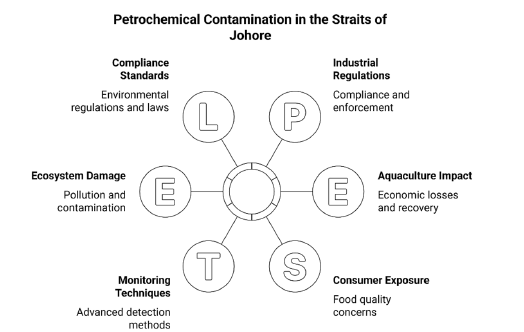
The oil and gas production and exploration facilities in the background are the offshore rigs and fabrication platforms, which contribute oily wastewater from deck drainage and equipment use, from operating leaks during transfer and drilling, hydrocarbons from flaring and engine exhaust and treated drilling muds and produced water discharge. These pathways deliver dissolved and suspended petroleum fractions to the receiving waters, where they partition between the surrounding sediments, surface microlayer and water column and are transported to the aquaculture plots by vessel traffic channels and tides. Figure 2 highlights six interconnected domains: Industrial regulations, compliance standards, ecosystem damage, aquaculture impacts, consumer exposure and monitoring techniques. Together, these components demonstrate how inadequate enforcement, pollution from petrochemical activities and insufficient detection methods lead to ecological degradation, economic losses in aquaculture, public health risks through contaminated seafood and the urgent need for stronger regulatory and monitoring frameworks. Field observations within the Johor system agree with these sources. Systematic survey has recorded oil and grease and measurable petroleum hydrocarbons along the strait, indicating ongoing maritime and industrial inputs and not isolated incidents [1].
Figure 2:Conceptual framework illustrating the multidimensional impacts of petrochemical contamination in the Straits of Johore.
Century-scale reconstruction from cores separated urban from marine-source oils, documenting long-term petroleum contamination following port and industrial development in the area [11]. Specific measurements of polycyclic aromatic hydrocarbons in sediments and with passive samplers in surface waters further linked composition patterns to mixed petrogenic and pyrogenic sources that encompass ship emissions, fuel handling operations and combustion residues from waterfront facilities and marine operations [3,4]. Metals co-occur with these hydrocarbon markers and assist in further refining source apportionment. Hull and infrastructure corrosion and antifouling paint applications introduce zinc and copper, while combustion residues and refinery activities introduce nickel and vanadium, which are extensively reported tracers for heavy fuel oil processing and crude [2]. Lead is still a legacy contaminant from previous fuels and other terrestrial and marine industrial processes [2,7].
Recent multi-compartment analyses show enrichment of these metals in water, sediment and biota in the Johor system, with mussels bearing burdens of importance to food quality and consumer exposure, consistent with uptake from dissolved and particlebound phases in functioning harbors [9,10,12]. The chemical profile blends on the priority of petrochemical sources in proximity to the farms. In sediments and surface water, co-occurrence of grease and oil, diagnostic PAH patterns and metal relationships characteristic of ship fuels and fabrication facilities point to platform, vessel traffic, repair docks, bunkering and not merely urban runoff contributions. Though not visible in the picture, the Pasir Gudang petrochemical complexes add more loading in terms of refinery effluent outfalls, atmospheric deposition of volatile organic compounds that fall on the marine surface and drainage sewers that carry polluted surface water onto the shore. Together these processes create a uniform imprint that explains the metal and hydrocarbon markers detected near the aquaculture locations [1,3,4,7].
Shipyard and docking facilities in close proximity to aquaculture operations
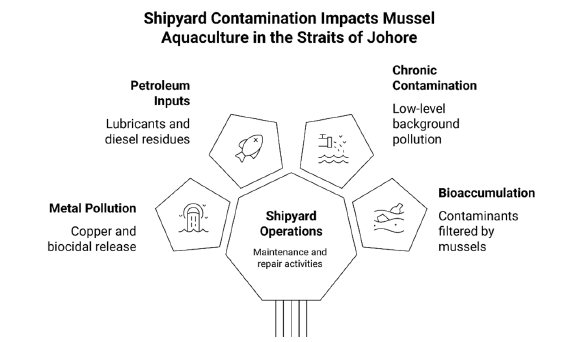
The piers within close distance to the farms are an area of maintenance and repair where sandblasting, repainting, hull cleaning, fueling and engine maintenance occur. These maintenance operations are confirmed sources of metal and petroleum inputs. Anti-fouling paint chips and fines release copper and other biocidal constituents into the water. Refueling and engine maintenance introduce lubricants and diesel residues, while parts washing and paint preparation generate solvent-laden wastes. In secluded berths they settle to bottom sediments in a brief period of time and accumulate with grease and oil and lead to a classical blend of hydrocarbons, polycyclic aromatic hydrocarbons and trace metals also due to ship operations and fuel handling in the Johor system [3,4]. Based on Figure 3, maintenance and repair activities release petroleum inputs, metal pollutants and biocidal agents into surrounding waters, creating chronic contamination. Mussels, being filter feeders, bioaccumulate these contaminants, leading to ecological stress, compromised aquaculture productivity and heightened food safety risks for consumers.
Figure 3:Conceptual representation of how shipyard operations contribute to contamination affecting mussel aquaculture in the Straits of Johore.
Proximity is a problem for exposure. The co-location of shipyards, repair berths and producing platforms with the aquaculture fields increases the probability that near field deposition from minor leaks and deck drainage finds its way into the farmed lines. Single events such as paint stripping, dumping of bilge or small spills add pulses to a constant background, creating an environment for low-level chronic contamination. Spatial surveys collecting constituents across the strait indicated industrial corridors and hotspots consistent with waterfront maintenance zones and port traffic, consistent with the inference that docking and repair sites are significant sources to local sediments and waters [2]. These inputs are of environmental concern to mussel culture since the contaminants are found in bioavailable dissolved and particle-bound forms. Copper and zinc from anti fouling paints, nickel, vanadium [2] and fuel related PAHs from ship motion partition into the water column and are efficiently filtered by bivalves. Latest multi-compartment observations in the Johor system show enrichment of these metals and petroleum markers in water, sediments and biota, with mussels reflecting loads pertinent to food quality and human exposure, in line with cultivation in an active repair and berthing environment [7,9,10,12].
Microplastics as contaminant vectors in a petrochemical seascape
Plastic components that support the farms such as barrels, floats, ropes and lines weather quickly in the tropical sunlight and mechanical stresses. Ultraviolet causes oxidation and embrittlement of polymers, which wear away into micro and mesoplastic fragments. These degraded plastics can leach additives like plasticizers such as phthalates, bisphenol residues and metalbased stabilizers, while rough surfaces enhance compact biofilms that trap particle-sized particles. Shore litter is responsible for this reservoir and thus the aquaculture footprint and adjacent coasts sowing the estuary with synthetic polymers that pass through the farming waters [13,14]. Based on Figure 4, degraded plastic fragments act as vectors for pollutants through sorption of organic compounds, leaching of chemical additives and adsorption of trace metals. These processes increase the contaminant load in coastal habitats, facilitating bioaccumulation in marine organisms and amplifying ecological and human health risks. Farm facilities have now been linked directly to loads of microplastics in the Johor Strait. Sampling close to mussel lines and attached gear confirmed that farms themselves are microplastic point sources, confirming that normal wear and maintenance release particles to the water column and surface microlayer where mussels filter feed [13].
Figure 4:Mechanistic pathways by which microplastics exacerbate petrochemical contamination in the Straits of Johore.
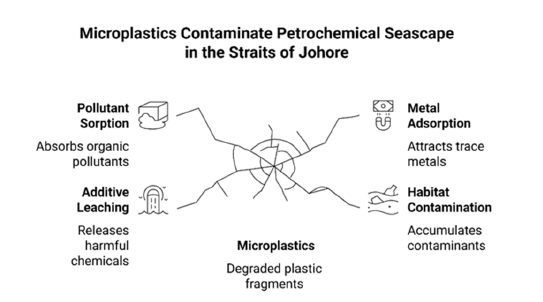
Polymer particles are not inert. They sorb hydrophobic organic pollutants such as polycyclic aromatic hydrocarbons and adsorb trace metals such as copper, zinc and nickel. On ingestion, gut conditions cause desorption of metals and PAHs and raise the effective dose presented to tissues beyond that which would be achieved by dissolved exposure alone [14]. This vector effect combines with habitat level signals near the farms. Seagrass meadows encircling the plots of aquaculture record trace metal enrichment and water quality variation that is congruent with integrated industrial inputs and coastal processes, indicating that biogenic habitats accumulate and expose the same contaminant suite which microplastics carry [15,16]. In a petroleum operations, shipyard and plastic-based aquaculture environment, microplastics act as mobile vectors that accumulate hydrocarbons and metals and transport them to filter feeders. The result is a consistent chain from infrastructure weathering to contaminant uptake by mussels and their habitats.
Interrelationships to Mussel Aquaculture: Exposure, Bioaccumulation and Health
Bioavailability pathways and contaminant dynamics in mussel aquaculture
The pattern and extent of mussel aquaculture pollution across the Straits of Johore are accurately reflected in relation to proximity to ports and other coastal activities. Comparative surveys show that seaport waters carry more loads of Cu, Cd, Zn, Ni and easily absorbable polycyclic aromatic hydrocarbons available for farmed Perna viridis, while non-seaport sites register lighter loads, in support of a spatial gradient of exposure that is in agreement with shipping and industrial signatures [17,18]. Tissue partitioning experiments further reveal that some soft tissues contain metals of different kinetics and affinities so that targeted tissue selection can be employed to diagnose routes of contamination and bioavailability in semi enclosed waters [19]. These mechanistic results contribute to transplantation evidence that mussel translocations from polluted to less polluted waters reduce body burdens and estimated food risks, whereas transfers into impacted zones cause immediate uptake, substantiating vigorous environmental control of aquaculture contaminant loads and resultant human health risks through ingestion [20,21]. Radioecological traces of ^210Po accumulation introduce a related pathway of concern, connecting trophic transfer and resuspension in sediments to edible tissues and emphasizing the need to consider metals and radionuclides in seafood risk management [22].
Spatial contrasts are supplemented by clear signs of anthropogenic inputs along the eastern Johore sector, where concentrations of soft tissue resolve pressure of sources and aid in discriminating background and human-sourced loads from seascapes involving work [17,18]. Transplanted and caged mussels provide a controlled perspective on these processes. Shell matrices carry longer term trace metal histories, supplementing soft tissue snapshots to identify temporal trends and field caging offers ambient bioavailability directly relevant to farm practice and harvest safety [21,23]. In addition to documented depuration upon re-settlement to cleaner waters, these studies position P. viridis as both a sentinel and vector: A reliable integrator of local contamination that can, in turn, transfer metals and naturally occurring radionuclides to consumers if farms maintain operations within contaminated footprints [20,22-24]. The totality of evidence is in favour of continuous biomonitoring including tissue specific diagnostics, shell archives and strategic transplantation to safeguard aquaculture sustainability and public health within the Strait.
Marine vessels (tanker and supply boats)
The dense volume of marine traffic in the Johor Strait, particularly at KPP, locates aquaculture farms close to tankers, tugboats and supply boats carrying petroleum products and servicing offshore rigs. These ships contribute fuel combustion residues such as Polycyclic Aromatic Hydrocarbons (PAHs), bilge water discharges containing emulsified oil residues and intermittent diesel or lubricant spills. These pollutants disperse throughout the surface microlayer, where they are very bioavailable to filter feeders like P. viridis. The high clearance rates and capacity of mussels to adsorb particle-associated and dissolved pollutants make them integrative and sensitive monitors of petroleum-induced contamination [25]. The mussel beds, thus, serve as near-field recorders of long-term metal and hydrocarbon exposure from ship operations. Surveys in the field in the Johor Strait have proven to have high levels of Pb, Cu and Ni in tissues of P. viridis, as well as sediment speciation that enhances metal bioavailability and trophic transfer [9,12]. These metals are due to ship corrosion, anti-fouling paints and combustion emissions and are accumulated by both direct filtration and ingestion. Dose-response and field correlation analyses in the region have blamed these accumulations on oxidative stress, reduced filtration efficiency and growth performance impairment in mussels [9,26]. Exposure to hydrocarbons leads to simultaneous physiological stress through PAH-mediated immunomodulation, enzyme action disruption and metabolic interference.
The biological manifestations in Johor’s mussel populations are thus consistent with an additive effect of oil-source organics and transition metals. From the nutritional standpoint, culturemussels with contaminants are a source of immediate human health risk. Pb, Ni and Cu contaminated mussel consumption for extended periods is likely to lead to cumulative toxic effects like neurotoxicity and hepatotoxicity. Carcinogenic and mutagenic effects following bioaccumulation and metabolic activation are exhibited by hydrocarbons, particularly high molecular weight PAHs. Moreover, Diarrhetic Shellfish Poisonings (DSP) have been reported from Johor mussels during Harmful Algal Bloom (HAB) events, often associated with eutrophication and petrochemical stress [25]. The convergence of petroleum hydrocarbons, heavy metals and algal toxins thus creates a multi-stressor environment, threatening aquaculture sustainability and public health security in the region.
Interaction with nutrients, blooms and oxygen stress
The petrochemical contamination of KPP waters interact with domestic and urban nutrient loading to result in a multiplex stress matrix for mussel aquaculture. Elevated nitrogen and phosphorus from wastewater discharge facilitate eutrophication and intensify the activity of Harmful Algal Bloom (HAB) [27-29]. Dissolved organic carbon and hydrocarbons synergize in this high-nutrient condition to propel bacterial respiration, further reducing dissolved oxygen. Western Johor Strait measurements confirm repeated blooms of Karlodinium australe with massive fish mortalities [30]. Prolonged bloom events induce hypoxic to anoxic conditions that suffocate benthic organisms and stress sessile filter feeders like P. viridis [31]. Broader assessments of HAB richness in the strait have revealed a dynamic harmful microalgal community that is reactive to hydrographic and nutrient status of this semienclosed water body [32-34]. Recurrent appearance of these blooms points towards a nutrient-pollution feedback cycle fueled by industrial and petrochemical activities. Hydrocarbon residues and metal contamination may compromise mussel immune and detoxification functions, rendering them more vulnerable to bloominduced hypoxia and algal toxins. Laboratory and field tests reveal that exposure to combined metal-hydrocarbon exposures prevents antioxidant enzyme defences while promoting lipid peroxidation, leading to increased vulnerability in the course of environmental stress events.
The hydrodynamic conditions worsen the situation. The Johor Strait experiences low flushing and long residence time due to semi-enclosed circulation, promoting the recirculation and storage of petroleum residues and metals in the farmed zones [5,6,8]. Resuspension during tidal exchange re-releases the contaminants buried in the seabed into the water column, providing repeated exposure options to cultured mussels. Those plastics from farms and urban soils are additional vectors, adsorbing PAHs and metals to enhance bioavailability and pass through trophics [13,14]. Together, these interrelated stressors-chemical, biological and physical-enhance avenues of pollution and augment risks for human health from mussel consumption at KPP, confirming petrochemical pressures are at the core of environmental as well as food safety concerns in this aquaculture area.
Pestel Framework Analysis of Aquaculture Contamination in the Straits of Johore
The PESTEL framework is a strategic analytical tool used to examine the external macro-environmental factors that influence an industry, sector or issue. It breaks down these influences into six key dimensions: Political, Economic, Social, Technological, Environmental and Legal. By evaluating these categories, researchers, policymakers and industry stakeholders can identify the driving forces, risks and regulatory pressures that affect decision-making, sustainability, and long-term outcomes. Figure 5 categorizes key contributing factors into six domains: Industrial Regulations, Operational Costs, Consumer Exposure, Monitoring Systems, Ecosystem Impact and Compliance Standards. Together, these domains demonstrate how regulatory oversight, economic burdens, pollutant accumulation, environmental degradation and public health risks are interconnected, emphasising the need for integrated management strategies to safeguard aquaculture sustainability and seafood safety in petrochemically influenced coastal waters. The PESTEL framework offers a systematic approach to understanding the external pressures contributing to aquaculture contamination in the Straits of Johore by examining six domains: Political, Economic, Social, Technological, Environmental and Legal. Politically, regulatory oversight and petroleum discharge permits determine allowable pollution levels and weak enforcement contributes to chronic contamination.
Figure 5:PESTEL framework illustrating the multidimensional drivers of aquaculture contamination in the Straits of Johore.
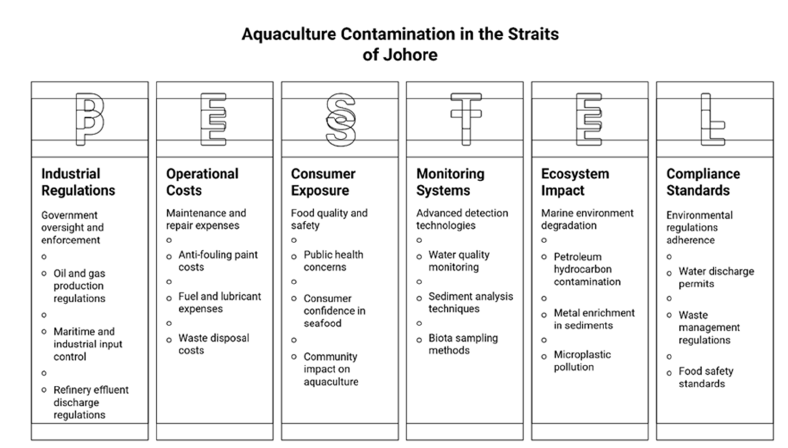
Economically, industrial activities increase operational costs for aquaculture through fuel use, anti-fouling materials and waste disposal, reducing profitability and limiting investments in water-quality protection. Socially, the accumulation of metals and hydrocarbons in mussels poses food safety risks that undermine consumer confidence and community livelihoods. Technologically, advanced water and sediment monitoring methods are crucial but are costly and inconsistently implemented. Environmentally, petrochemical discharges, heavy metals and microplastics degrade marine habitats and reduce aquaculture resilience. Legally, regulations for effluent discharge and food safety exist but are compromised by enforcement gaps. Together, these dimensions highlight that aquaculture contamination is driven by interconnected systemic forces requiring multi-sectoral solutions. Effective management must address the direct causal links between petrochemical activities and contamination pathways. Establishing buffer zones and time-specific restrictions on high-risk industrial activities-such as coating removal, blasting and bunkering-can reduce direct pollutant deposition into mussel farming areas. Targeted biomonitoring using Perna viridis, both caged and wild, should focus on indicators such as PAHs, oil and grease, trace metals (Cu, Zn, Ni, Pb, V) and microplastic concentrations due to their direct relevance to human health and seafood safety [9,10,14,13].
Co-stressors such as nutrients and surfactants from coastal runoff must also be controlled to prevent harmful algal blooms that weaken mussel resilience [27,35]. Material innovation within aquaculture systems represents another priority action. Replacing polyethylene floats and ropes with low-shedding alternatives can prevent microplastic release and reduce internal contamination sources [13]. Given that the Johor Strait is a transboundary water body, bilateral cooperation between Malaysia and Singapore is critical. Shared monitoring platforms, coordinated spill reporting and harmonized responses to discharges and remediation residues are essential to maintain aquaculture viability and public health [5,8]. A fully integrated management system that combines ecological monitoring, engineering solutions and regional governance is necessary to safeguard sustainable mussel aquaculture in a petrochemically stressed environment [36].
Conclusion
KPP represents a critical model of how petrochemical expansion and intensive maritime activity shape the contamination landscape in semi-enclosed coastal ecosystems. The persistent presence of petroleum hydrocarbons, PAHs and trace metals such as Cu, Zn, Ni, Pb and V in sediments, surface waters and the tissues of Perna viridis provides a definitive chemical signature of industrial influence. Hydrodynamic constraints, including limited flushing and recirculating currents, facilitate contaminant retention near aquaculture zones, while the high filtration capacity of mussels makes them biological archives of cumulative pollution. The interaction between contaminant profiles, environmental transport behaviour and physiological responses confirms that petrochemical activity is the dominant anthropogenic driver defining exposure pathways in the Straits of Johore. A sustainable response to this reality requires the adoption of a PESTELguided marine management framework. Politically, coordinated governance between Malaysia and Singapore must strengthen enforcement and cross-border accountability. Economically, the long-term viability of the aquaculture sector depends on reducing contamination-related losses and maintaining seafood export value. Socially, safeguarding public health and consumer confidence is paramount. Technologically, monitoring systems must incorporate advanced biomolecular, chemical and remote-sensing tools to detect hydrocarbons, metals and microplastics in real time.
Environmentally, buffer zones, pollution control infrastructure and restoration of natural filtration habitats such as mangroves are essential to enhance ecological resilience. Legally, stricter compliance mechanisms, spill reporting systems and harmonised discharge standards are needed to protect this internationally strategic waterway. By applying the PESTEL framework, ecosystem management in the Straits of Johore becomes holistic and informed by the full spectrum of external drivers rather than reactive to isolated pollution incidents. This integrative approach ensures that the region can continue to serve as a major petrochemical hub while simultaneously sustaining safe and resilient mussel aquaculture for future generations.
Author Contributions
Conceptualisation, C.K.Y. and Y.H.; Methodology and validation, C.K.Y. and A.R.; Formal analysis, M.I.M.H. and M.M.L., and M.A.S.B.; Investigation, C.K.Y.; resources, Y.H.; Data curation, C.K.Y.; writingoriginal draft preparation, C.K. Y.; writing-review and editing, A.R., M.I.M.H. and M.M.L., and M.A.S.B. All authors have read and agreed to the published version of the manuscript.
Funding
The present study received no external research grants.
Institutional Review Board Statement
Not applicable.
Informed Consent Statement
Not applicable.
Data Availability Statement
Not applicable.
Acknowledgements
The authors thank the department of biology of UPM for providing the necessary facilities.
Conflicts of Interest
The authors declare no conflict of interest.
References
- Abdullah AR, Woon WC, Abu BR (1996) Distribution of oil and grease and petroleum hydrocarbons in the Straits of Johor, Peninsular Malaysia. Bulletin of Environmental Contamination and Toxicology 57(1): 155-162.
- Zulkifli SZ, Ismail A, Mohamat YF, Arai T, Miyazaki N (2010) Johor Strait as a hotspot for trace elements contamination in Peninsular Malaysia. Bulletin of Environmental Contamination and Toxicology 84(5): 568-573.
- Keshavarzifard M, Zakaria MP, Keshavarzifard S (2019) Evaluation of polycyclic aromatic hydrocarbons contamination in the sediments of the Johor Strait, Peninsular Malaysia. Polycyclic Aromatic Compounds 39(1): 44-59.
- Ying TC, Ismail R, Jaafar J (2013) Passive sampling of polycyclic aromatic hydrocarbons in Johor Strait by sol-gel polydimethylsiloxane. Jurnal Teknologi 62(3): 65-71.
- Nesterov O, Tkalich P (2005) Hydrodynamics and water quality modeling of Singapore and Johor Straits with SLON model. In Proceedings of the XXXI IAHR World Congress, pp. 4259-4267.
- Behera MR, Chun C, Palani S, Tkalich P (2013) Temporal variability and climatology of hydrodynamic, water property and water quality parameters in the West Johor Strait of Singapore. Marine Pollution Bulletin 77(1-2): 380-395.
- Wood AK, Ahmad Z, Shazili NM, Yaakob R, Carpenter R (1997) Geochemistry of sediments in Johor Strait between Malaysia and Singapore. Continental Shelf Research 17(10): 1207-1228.
- Sun Y, Eltahir EB, Malanotte RP (2017) The bottom water exchange between the Singapore Strait and the West Johor Strait. Continental Shelf Research 145: 32-42.
- Sheng TL, Han PJ, Tan E, Hing YT, Ramli MZ, et al. (2021) Concentration of heavy metals in Perna veridis collected from Straits of Johor, Malaysia. Malaysian Journal of Analytical Sciences 25(6): 930-939.
- Anayet AH, Zawawi MA, Azman S, Rahman NA, Zin MM (2024) Assessment of heavy metal accumulation in the Straits of Johor: A comprehensive study on water, sediment and aquatic organisms. Jurnal Teknologi 86(6): 203-214.
- Sakari M, Zakaria MP, Mohamed CR, Lajis NH, Chandru K, et al. (2010) Urban vs. marine based oil pollution in the Strait of Johor, Malaysia: A century record. Soil and Sediment Contamination 19(6): 644-666.
- Amirah HH, Kadhum SA, Zulkifli S, Ali AS, Awad A, et al. (2023) Heavy metal speciation in surface sediments and their impact on the bioaccumulation of green mussels (Perna viridis) from the eastern part of the Straits of Johor, Malaysia. Total Environment Research Themes 7: 100064.
- Zin MM, Azman S, Muhammad SA, Jumali S, Yusof NU, et al. (2025) Microplastics (MPs) generated from mussel aquaculture in Johor Strait Estuary, Malaysia. IOP Conference Series: Earth and Environmental Science 1535: 012008.
- Curren EM, Lee AE, Yu DY, Leong SY (2024) Progress in research on microplastic prevalence in tropical coastal environments: A case study of the Johor and Singapore Straits. Microplastics 3(3): 373-389.
- Sidi N, Aris AZ, Mohamat YF, Looi LJ, Mokhtar NF (2018) Tape seagrass (Enhalus acoroides) as a bioindicator of trace metal contamination in Merambong shoal, Johor Strait, Malaysia. Marine Pollution Bulletin 126: 113-118.
- Misbari S, Hashim M (2023) Water quality changes using GIS-based approach at seagrass meadows along the Straits of Johor. AIP Conference Proceedings 2682(1): 050002.
- Yap CK, Mohd NS, Edward FB, Tan SG (2012a) Anthropogenic inputs of heavy metals in the east part of the Johore Straits as revealed by their concentrations in the different soft tissues of Perna viridis (L.). Pertanika Journal of Tropical Agricultural Science 35(4): 815-822.
- Yap CK, Shahbazi A, Zakaria MP (2012b) Concentrations of heavy metals (Cu, Cd, Zn and Ni) and PAHs in Perna viridis collected from seaport and non-seaport waters in the Straits of Johore. Bulletin of Environmental Contamination and Toxicology 89(6): 1205-1210.
- Yap CK, Ismail A, Edward FB, Tan SG, Siraj SS (2006) Use of different soft tissues of Perna viridis as biomonitors of bioavailability and contamination by heavy metals (Cd, Cu, Fe, Pb, Ni and Zn) in a semi enclosed intertidal water, the Johore Straits. Toxicological and Environmental Chemistry 88(4): 683-695.
- Yap CK, Mutairi KA (2023) Lower health risks of potentially toxic metals after transplantation of aquacultural farmed mussels from a polluted site to unpolluted sites: A biomonitoring study in the Straits of Johore. Foods 12(10): 1964.
- Eugene NY, Yap CK, Zakaria MP, Tan SG (2013a) Assessment of heavy metal pollution in the Straits of Johore by using transplanted caged mussel, Perna viridis. Pertanika Journal of Science & Technology 21(1): 75-96.
- Lim MP, Mohamed CR (2019) Radioactivity of 210Po in green mussels (Perna viridis) at the west coast of Johore Straits, Malaysia [Radioaktiviti 210Po dalam kupang (Perna viridis) di pantai barat Selat Johor, Malaysia]. Malaysian Journal of Analytical Sciences 23(6): 980-990.
- Eugene NY, Yap CK, Zakaria MP, Aris AZ, Tan SG (2013b) Trace metals in the shells of mussels Perna viridis transplanted from polluted to relatively unpolluted sites in the Straits of Johore: Shells as biomonitoring materials. Asian Journal of Microbiology, Biotechnology and Environmental Sciences 15(1): 5-8.
- Eugene NY, Yap CK, Zakaria MP, Aris AZ, Tan SG (2013c) Accumulation of trace metals in mussel Perna viridis transplanted from a relatively unpolluted site at Kg. Sg. Melayu to a polluted site at Kg. Pasir Puteh and to an unpolluted site at Sg Belungkor in the Straits of Johore, Iran. Ecology Environment and Conservation 19(1): 27-31.
- Holmes MJ, Teo SM, Lee F, Khoo HW (1999) Persistent low concentrations of diarrhetic shellfish toxins in green mussels Perna viridis from the Johor Strait, Singapore: First record of diarrhetic shellfish toxins from South-East Asia. Marine Ecology Progress Series 181: 257-268.
- Hadibarata T, Abdullah F, Yusoff AM, Ismail R, Azman S, et al. (2012) Correlation study between land use, water quality and heavy metals (Cd, Pb and Zn) content in water and green lipped mussels Perna viridis (Linnaeus.) at the Johor Strait. Water, Air and Soil Pollution 223(6): 3125-3136.
- Cheong AL, Annammala KV, Yong EL, Zhou Y, Nichols RS, et al. (2024) Distribution of nutrients and dissolved organic matter in a eutrophic equatorial estuary: The Johor River and the East Johor Strait. Biogeosciences 21(12): 2955-2971.
- Kok JK, Leong SY (2019) Nutrient conditions and the occurrence of a Karenia mikimotoi (Kareniaceae) bloom within East Johor Straits, Singapore. Regional Studies in Marine Science 27: 100514.
- Chai X, Li X, Hii KS, Zhang Q, Deng Q, et al. (2021) Blooms of diatom and dinoflagellate associated with nutrient imbalance driven by cycling of nitrogen and phosphorus in anaerobic sediments in Johor Strait (Malaysia). Marine Environmental Research 169: 105398.
- Lim HC, Leaw CP, Tan TH, Kon NF, Yek LH, et al. (2014) A bloom of Karlodinium australe (Gymnodiniales, Dinophyceae) associated with mass mortality of cage-cultured fishes in West Johor Strait, Malaysia. Harmful Algae 40: 51-62.
- Mohd DM, Abdul WF, Mohamad SE, Jamaluddin H, Shahir S, et al. (2020) Prolonged high biomass diatom blooms induced formation of hypoxic-anoxic zones in the inner part of Johor Strait. Environmental Science and Pollution Research 27(34): 42948-42959.
- Hii KS, Mohd DM, Luo Z, Tan SN, Lim ZF, et al. (2021) Diverse harmful microalgal community assemblages in the Johor Strait and the environmental effects on its community dynamics. Harmful Algae 107: 102077.
- Mohd DM, Hii KS, Abdul WF, Mohamad SE, Gu H, et al. (2022) Spatial-temporal variability of microphytoplankton assemblages including harmful microalgae in a tropical semi-enclosed strait (Johor Strait, Malaysia). Marine Environmental Research 175: 105589.
- Noor NM, Hazri MM, Wee WH, Cob ZC (2023) A brief overview of the issues faced by harmful algal blooms along Johor Straits. IOP Conference Series: Earth and Environmental Science 1167(1): 012011.
- Othman Z, Abwahid M, Lee WK, Mohamed BD (2016) Water quality observation on Johor River Estuary and East Tebrau Strait, Malaysia. Jurnal Teknologi 78(5-4): 29-32.
- Kazemi Z, Hashim NB, Aslani H, Liu Z, Craig PM, et al. (2014) Calibration of hydrodynamic modeling in Western Part of Johor Strait, Malaysia. International Journal of Environmental Research 8(3): 591-600.
© 2025 Chee Kong Yap. This is an open access article distributed under the terms of the Creative Commons Attribution License , which permits unrestricted use, distribution, and build upon your work non-commercially.
Editor In Chief







.jpg)































Signup for Newsletter

Quick Links
 Editorial Board Registrations
 Submit your Article
 Best Paper of the Volume
 Reprints
 Refer a Friend
 Advertise With Us
Our Recent Edition

.jpg)



Top Editors




.jpg)

















.bmp)
.jpg)
.png)
.jpg)













.jpg)






.png)

.png)




.png)




Financial Support

Sponsors

Latest e-Books

Latest Video

 a Creative Commons Attribution 4.0 International License. Based on a work at www.crimsonpublishers.com.
Best viewed in
a Creative Commons Attribution 4.0 International License. Based on a work at www.crimsonpublishers.com.
Best viewed in 
 | Above IE 9.0 version