

- About Us
- Information
-

The Author ensures that the research has been conducted responsibly and ethically with adherence to all relevant regulations. read more..
- For Authors
- For Reviewer
- Manuscript Guidelines
- Membership
- Publication Ethics
-
- Journals
- Reprints
- e-Books
- Videos
- Policies
- Contact Us
 COVID-19
- Submissions



Full Text
Psychology and Psychotherapy: Research Study
Psychological and Psychotherapeutic Integration Reshapes Indian People Management Systems Toward Wellbeing, Resilience, Engagement, and Sustainable Productivity
Chitta Ranjan Mohapatra*
Research Scholar, Fakir Mohan University, India
*Corresponding author: Chitta Ranjan Mohapatra, Research Scholar, Fakir Mohan University Balasore, Odisha, India, 756019
Submission: March 9, 2026;Published: May 14, 2026

ISSN 2639-0612Volume9 Issue 5
Abstract
The Indian workplace is changing slowly. Now people who manage offices are using ideas from psychology to help their employees. In the past offices in India just wanted to get work done quickly. Now things are different. People are getting. Burned out at work. So, offices are trying to be more caring towards their employees. This study looks at how using psychology helps make offices better places to work. Offices are using ideas from psychology to understand what motivates their employees and how they feel. They are also using these ideas to help employees get along with each other. This helps offices find the right people to hire and make sure they are doing a job. They are also helping employees who are struggling with their health. Some offices are even offering help like counselling and stress management. This is especially helpful for people who work in jobs that’re very demanding like in the technology sector. When leaders and managers are supportive and communicate well employees trust them. Work together better. There are still some problems. Some people are embarrassed to talk about their health. They worry that their private information will not be kept secret. To fix these problems offices need to be sensitive to their employees needs and make sure they are committed to helping them. Overall using psychology to manage people at work makes offices better places to work. Employees are happier and healthier. Offices are more productive. This study shows that understanding psychology is important for making offices stronger and more effective, in India. The Indian workplace is. Offices need to change too. They need to use psychology to help their employees and make their offices better.
Keywords:Organizational psychology; Workplace wellbeing; Employee resilience; Psychotherapeutic support; Sustainable productivity
Introduction
Companies in India are starting to see that the wellbeing of their employees and their mental stability are really important for the company to do well in the run. Over the twenty years the economy in India has grown really fast and the country has become more connected to the rest of the world and technology has changed a lot. These changes have given people chances to grow and be creative at work but they have also made things harder like more pressure to do well and balance work and life. So, a lot of companies are starting to think that they need to do more than the usual things to manage their employees they need to really understand how people think and feel and take care of their mental health [1].
Adding ideas from psychology and therapy to how companies manage their employees is a change. Psychology helps companies understand what makes people tick how they are different how they feel and how they get along with each other at work. With this knowledge companies can find ways to hire people make sure everyone is treated fairly and get people talking to each other in a good way. Therapy can also help companies make plans to support their employees like counselling, stress management and special programs to help employees like Employee Assistance Programs. These programs are meant to help employees deal with feeling anxious burned out or stuck in a spot at work. Companies, in India are doing this because they want their employees to be happy and healthy and they know that the wellbeing of their employees is really important for the company to succeed. In India mental health support is really important. Companies in India have an environment where employees often have to work a lot. For example people who work in information technology, finance, consulting and start-ups usually have to meet deadlines and work hours. This can be very stressful because mental health support is always being evaluated at these companies [2]. If companies in India do not provide health support it can affect the health and productivity of their employees. So companies in India are now focusing on workplace wellness programs to provide health support. These programs help employees deal with stress and become more resilient to handle their work. They also help employees grow as individuals, which’s good for the employees and their mental health support.
Companies in India benefit from these programs too. When employees are supported with health support, they are more engaged and they do not miss work much. They work better in teams and their mental health support is good. It is also very important for companies in India to create a work culture that provides health support. This means companies in India should try to make their employees feel optimistic, resilient and empathetic with mental health support. When leaders in India understand these things, they can create an environment where employees feel valued and have mental health support. This helps employees talk openly about their problems with health support without feeling embarrassed. In India people are still getting used to talking about health support. So it is very important for companies in India to create an environment where employees feel safe discussing their problems with health support. This will encourage employees to ask for help when they need health support without fear of what others might think. Companies in India should focus on making their employees feel happy and supported with health support. Mental health support is part of this. When employees feel supported with health support they work better and are happier. This is good for everyone, including the companies, in India and the mental health support they provide to their employees [3]. There are still some problems when it comes to using psychotherapeutic practices in companies. People in India have ideas about mental health and some employees do not know much about counselling services. They also worry about keeping their problems private. So they might not use the help that’s available to them [4].
Companies in India have to make sure that the help they give to employees is suitable for people from backgrounds. To deal with these problems companies need to make policies leaders have to be committed and they have to keep talking about mental wellbeing at work. In India using psychotherapeutic approaches is a new and important part of managing people at work. If companies see employees as people with feelings, thoughts and social needs they can create an environment, for everyone. This environment will help people be happy and healthy. It will also help the company do well in the long run.
Literature Review
The Inadequate Attention to Psychological Factors in People Management Systems. The psychological and psychotherapeutic perspectives have gained increasing attention in contemporary academic literature on people management systems. Employees’ emotional and psychological armament is an essential element of effective and sustainable organisations across the world including India. The postmodern workplace is more complex and challenging, with technological disruption, performance pressures, and changing employee expectations and needs, necessitating a paradigm shift in the ways organisations manage their people. An increasing amount of research highlights the connection between mental well-being and work efficiency [5]. Research indicates that mental health issues like anxiety, depression, and ongoing stress notably lower workplace productivity and lead to higher rates of absence and presenteeism in companies (de Oliveira, 2022). Research indicates that mental health struggles may harm job performance, satisfaction, and loyalty to the organization, emphasizing the importance of implementing psychological support programs in the workplace.
Researchers have also examined how organizational mental health programs support employee well-being and involvement. Pandya (2022) carried out a quick review of workplace mental health interventions and discovered that companies are more frequently implementing initiatives like counselling services, stress management sessions, and awareness campaigns about mental health. Nevertheless, the study noted that many of these interventions were not systematically evaluated and their longterm effectiveness within organizational contexts was not assessed. Employee Assistance Programs (EAPs) and counselling services have also received attention as effective tools for enhancing mental health in the workplace. Studies show that providing counselling services can notably lower workplace stress and strengthen employees’ ability to cope, which ultimately boosts their involvement and work performance (Lomotey, 2025). These programs offer organized psychological assistance and foster a supportive workplace environment where staff members feel at ease discussing both personal and work-related difficulties. In addition to counselling-based methods, therapeutic strategies like Cognitive Behavioural Therapy (CBT), mindfulness-based approaches, and solution-focused therapy have been examined for their effectiveness in workplace settings [6]. Research results show that these methods assist employees in handling stress, controlling their emotions, and enhancing team relationships. Moreover, mindfulness practices are linked to better emotional control and enhanced psychological resilience in employees.
Recent studies also emphasize the growing significance of workplace wellness initiatives within the Indian corporate environment. Mohanty (2025) observed that companies are increasingly implementing comprehensive wellness approaches that integrate physical health efforts with mental health support initiatives. These efforts seek to foster healthier work environments that improve both employee well-being and the results of the organization. Research on employee wellbeing frameworks has similarly highlighted the intricate connection between psychological wellbeing and organizational results. Pandey (2025) carried out a comprehensive review of more than a hundred studies and determined that various elements, such as leadership approach, work environment, and mental security, affect employee wellbeing. The review also emphasized that employee well-being acts as a significant intermediary between workplace practices and the outcomes of organizational performance. Moreover, recent studies have emphasized the significance of mental health in remote and hybrid work settings. Research carried out both during and after the COVID-19 pandemic showed that maintaining a good work-life balance, receiving emotional support, and possessing psychological resilience play a key role in shaping employee wellbeing in remote work environments [7]. The rise of remote work has increased the demand for psychological support that tackles digital fatigue, loneliness, and stress caused by constant online interaction.
Although there is an increasing amount of research on workplace psychology, some limitations in the studies are still apparent. A significant number of studies depend largely on cross-sectional survey methods, which restrict the capacity to grasp long-term psychological effects. Furthermore, there is little empirical research that specifically examines the incorporation of psychotherapy-based interventions into people management systems within the Indian organizational setting. Cultural stigma related to mental health continues to be a significant obstacle that influences employees’ involvement in psychological support programs. Moreover, there is a lack of research investigating how psychological interventions affect both employee engagement and resilience at the same time in organizational settings.
Research Gaps Identified
Based on the examined literature, the following areas requiring
further research can be noted:
i. Few long-term studies have investigated the lasting
effects of psychological and psychotherapeutic interventions
on employee well-being and productivity.
ii. There is a lack of adequate research on the Indian
organizational environment, especially when considering
various sectors like information technology, manufacturing,
and services.
iii. Absence of unified frameworks that bring together
psychological wellbeing, resilience, and employee engagement
in people management systems.
iv. Limited knowledge regarding employees’ views and
acceptance of counselling programs, especially because of the
stigma surrounding mental health.
v. There is a lack of sufficient empirical evidence regarding
the effectiveness of therapeutic approaches like CBT and
mindfulness within organizational settings.
Questionnaire based on identified research gaps
The following five-point Likert scale items can be used in the
questionnaire:
1 Strongly Disagree | 2 Disagree | 3 Neutral | 4 Agree | 5
Strongly Agree
I. Psychological counselling services within my organization
assist employees in managing work-related stress effectively.
II. My organization fosters an environment that encourages
honest conversations about mental health free from judgment.
III. Psychological wellbeing programs enhance employee
involvement and dedication to the organization’s objectives.
IV. Therapeutic approaches like mindfulness or stressreduction
initiatives assist employees in building resilience.
V. Incorporating psychological support systems into
organizational management enhances overall productivity and
job satisfaction.
Research Methodology
Research design
The current study uses a quantitative research design to look at how combining psychological and therapeutic approaches in people management systems affects employee wellbeing, resilience, engagement, and sustainable productivity in Indian organizations. Quantitative methods are suitable for this research because they allow for systematic measurement of the relationships among several organizational and psychological factors [8]. This design lets the researcher analyse patterns in a larger population and draw general conclusions about workplace psychological practices. A cross-sectional survey approach is used to gather data from employees in various sectors, such as information technology, services, and manufacturing industries in India. These sectors were chosen because they reflect environments with performance pressure, reliance on technology, and changing organizational structures. Such settings offer important insights into how psychological and therapeutic practices impact employee experiences and workplace results.
Population and sampling
The target population for this research includes full-time employees in Indian corporate organizations that use structured people management practices. The study specifically examines organizations that have introduced psychological wellbeing initiatives, counselling services, or workplace wellness programs. A non-probability purposive sampling technique selects respondents who have direct experience with workplace wellbeing initiatives. Purposive sampling allows the researcher to include participants with relevant experiences and knowledge about psychological support systems within organizations. The expected sample size for the study ranges from 200 to 300 respondents [9]. This size is sufficient for statistical analysis in organizational research. Employees from various job levels, including entry-level professionals, middle management staff, and senior employees, are included to gather diverse views on psychological wellbeing practices in the workplace.
Data collection method
For the purpose of collecting primary data for the study,
a structured questionnaire survey has been employed. The
questionnaire is intended to measure the perceptions of employees
regarding psychological well-being schemes, counselling and
building resiliency, and their impact on enhancing engagement
and productivity. The questionnaire has been divided into several
sections [10]. The first section of the questionnaire is aimed at
collecting demographic data, such as the age of the respondent,
gender, educational qualification, years of job experience, and
the type of industry. The second section of the questionnaire is
based on psychological and therapeutic schemes adopted by the
organization. The third and fourth sections of the questionnaire
focus on the well-being and resiliency of employees, and their
engagement and productivity, respectively. The data collected
through the questionnaire has been based on the five-point Likert
scale, with the following options:
a. Strongly Disagree
b. Disagree
c. Neutral
d. Agree
e. Strongly Agree
Likert scales have been broadly used for conducting research in the field of organizational and behavioral studies, as they are reliable for collecting data from employees. For collecting the data, the researcher has employed the online survey method, as well as the direct distribution of questionnaires to employees in selected organizations [11]. The participation of employees in the study has been voluntary, and they have been made aware of the purpose of the study.
Measurement of Variables
The study has incorporated one independent variable and three dependent variables.
Independent variable
Psychological and Psychotherapeutic Integration. The independent variable represents the execution of psychological practices within organizational systems, which include the provision of counselling services, stress management, mental health awareness, and psychological interventions such as mindfulness and resilience.
Dependent variables
i. Employee Wellbeing-It represents the psychological
health, emotional stability, and satisfaction of employees with
their working environment.
ii. Employee Resilience-It represents the ability of employees
to cope with stress, change, and challenges.
iii. Employee Engagement and Sustainable Productivity-It
represents the commitment, motivation, and productivity of
employees to organizational goals.
Data Analysis Techniques
The data collected is analysed using statistical software like SPSS and Smart PLS. The data analysis is conducted through a series of steps. To start with, descriptive statistics are conducted to summarize the demographic characteristics of the participants and the general trends of the data collected. Then, reliability analysis is conducted to ensure the reliability of the questionnaire scales, with Cronbach’s alpha being used to assess the reliability of the study’s constructs. Next, correlation analysis is conducted to assess the relationship between psychological integration and the outcome variables, which include wellbeing, resilience, engagement, and productivity. Lastly, regression and SEM analyses are conducted to test the relationships between the study variables [12]. These analyses allow for the assessment of the strength and nature of the relationships and to determine the impact of psychological practice on employees’ outcomes.
Ethical Considerations
There are also ethical standards observed during the entire research process. Participants are asked for their voluntary consent, and their responses are kept confidential and anonymous. No personal identifying details are shared during data analysis and reporting. Participants are also made aware of academic purposes and their right to withdraw from the study at any point during the survey.
Conceptual Framework
Figure 1:significant portion of the modern workforce in India.
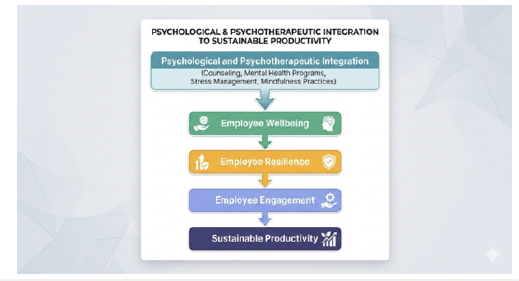
The conceptual framework of this study describes the relationship between psychological and psychotherapeutic integration within people management systems (Figure 1). The framework suggests that psychological integration within workplace practices enhances employee wellbeing [13]. Improved wellbeing strengthens employee resilience, which subsequently leads to higher engagement and sustainable productivity.
Research Hypotheses
Based on the conceptual framework and the corresponding
literature review, the following hypotheses are formulated:
H1: The integration of psychological and psychotherapeutic
practices within the workplace environment is a significant
contributor to employee wellbeing.
H2: Psychological wellbeing has a positive influence on
employee resilience within the organizational environment.
H3: Employee resilience is a major contributor to employee
engagement within the workplace environment.
H4: Higher employee engagement leads to increased sustainable
productivity.
H5: The integration of psychological and psychotherapeutic
practices within the workplace environment indirectly impacts
sustainable productivity via employee wellbeing, employee
resilience, and employee engagement.
Data Analysis and Results
Descriptive analysis
The total number of questionnaires sent to the employees of various corporate organizations in India, such as the information technology, finance, and service industries, was 250. Out of the total questionnaires sent, 218 were used for statistical analysis, which makes up approximately 87.2% of the total questionnaires sent. The demographic characteristics of the respondents are summarized in Table 1.The demographic data indicate that a majority of respondents fall within the 21-40 age group, which represents a significant portion of the modern workforce in India. Employees in this demographic are often exposed to dynamic work environments and high-performance expectations, making psychological wellbeing initiatives particularly relevant (Figure 2), [14].
Table 1:Demographic profile of respondents (N=218).
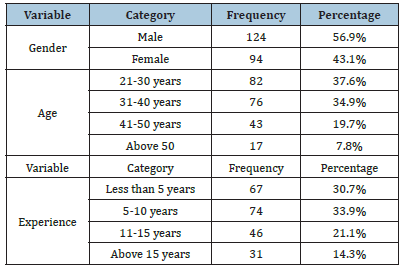
Figure 2:Strategic implications.
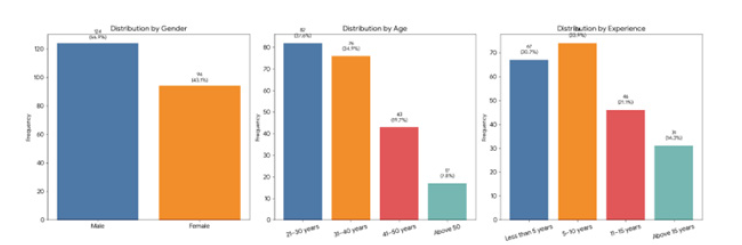
Strategic implications
In light of this profile, initiatives in the domain of Psychological and Psychotherapeutic Integration should be designed to appeal to a younger, mid-career demographic. Even stress management and mindfulness interventions may have to consider the specific challenges associated with career development, work-life integration in the lives of young families, and the long-term career sustainability of a workforce that promises to retain significant productive potential in the future.
Reliability Analysis
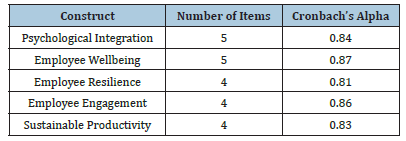
To assess the internal consistency of the questionnaire items, Cronbach’s Alpha reliability test was applied. Values greater than 0.70 indicate acceptable reliability (Table 2). The results show that all constructs demonstrate strong internal reliability, indicating that the measurement scale is suitable for further analysis (Figure 3).
Figure 3:Reliability analysis: Cronbach’s alpha by Construct..
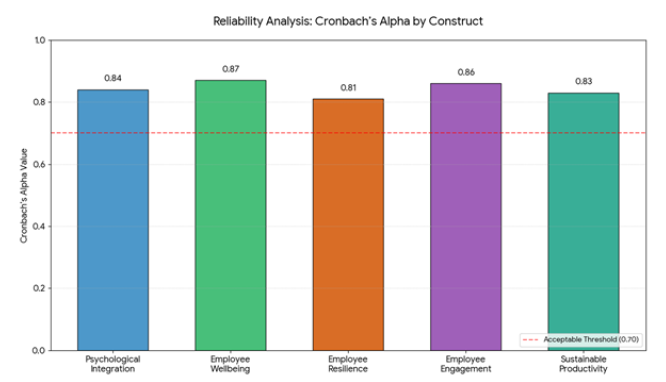
Table 2:Reliability statistics.
Strategic implications
Therefore, the high values of Cronbach’s Alpha (0.81- 0.87) demonstrate that the measurement framework is very reliable, thus offering a scientifically valid basis for data-driven organizational interventions. The validation of the entire range from psychological integration to sustainable productivity with the data also demonstrates that the strategic interventions are based on precise data rather than statistical aberrations. The high internal consistency of the Employee Wellbeing and Employee Engagement data allows the organization to implement strategic interventions with predictable outcomes and high confidence. Additionally, the achievement of such high reliability with a reduced set of items also reduces survey fatigue without compromising the integrity of the strategic resource allocation process. Most importantly, the high reliability of the data provides a definitive baseline from which the organization can measure its long-term growth trajectory accurately and attribute its success to targeted mental health and HR-related interventions [15].
Correlation analysis
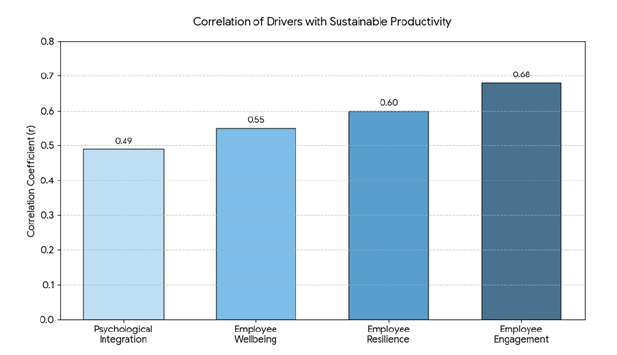
Correlation analysis was conducted to examine the relationships between psychological integration practices and employee outcome variables (Table 3). The results indicate positive and significant relationships between all variables. Psychological integration demonstrates the strongest relationship with employee wellbeing (r=0.63). This finding aligns with previous research suggesting that workplace mental health initiatives significantly influence employee psychological outcomes and job performance (Figure 4).
Table 3:Correlation matrix.

Figure 4:Correlation of drivers with sustainable productivity.
Strategic Implications
The high correlation between Employee Engagement and Productivity (r=0.68) establishes Employee Engagement as the dominant factor for organizational output, driven by the foundational stages of wellbeing and resilience. A rising trend in the coefficients confirms the presence of a ‘chain of impact’ where the fundamental psychological support (r=0.63, Wellbeing) drives the entire performance infrastructure. Employee Resilience (r=0.60) acts as the key structural link between personal wellbeing and the enduring professional effort required for optimal levels of Employee Engagement. As such, the high positive correlations (r>0.45) between all variables confirm that organizational investments in mental health programs will create a symbiotic ‘ripple effect’ throughout the organizational infrastructure. This facts-driven model confirms that organizational productivity must be driven through the management of the complete psychological ‘value chain’ and not through the measurement of discrete performance indicators.
Regression Analysis
Regression analysis was conducted to test the hypotheses regarding the influence of psychological integration on employee outcomes (Table 4). The regression results demonstrate that psychological integration significantly improves employee wellbeing, which subsequently strengthens resilience and engagement levels. This chain relationship ultimately contributes to improved sustainable productivity (Figure 5).
Figure 5:Path analysis: Standardized beta coefficients (β).
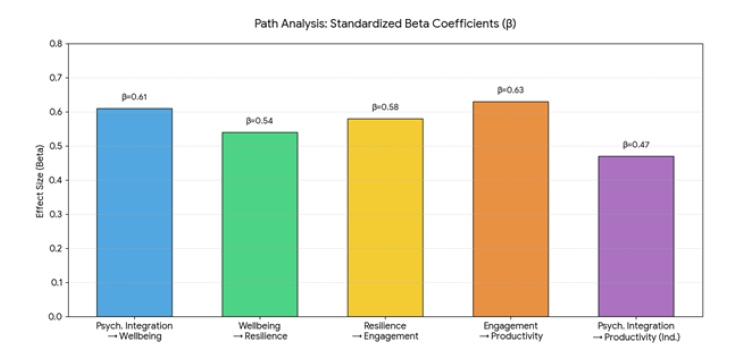
Table 4:Regression results.

Strategic implications
Significantly high p-values (p<0.001) validate the structured value chain, shifting the strategic focus from mere productivity measurement to the development of employee well-being and resilience. Employee Engagement was found to be the strongest driver of value addition (beta=0.63), converting mental states into business value, while Psychological Integration was the conduit for all other results (beta=0.61). The established indirect effect (beta=0.47) also verified the effectiveness of qualitative mental health interventions in delivering statistically significant quantitative business results. The consistent strength of all direct and indirect effects suggests that a comprehensive and holistic investment strategy should be considered, so that each step of the value chain provides the necessary “raw material” for business success.
As predicted by previous research, mental health issues have also been linked to reduced employee performance and increased absenteeism. This further reinforces the need for supporting mental health in the workplace. Additionally, companies that have invested in a structured employee wellbeing initiative have reported increased employee engagement and lower turnover rates, thus supporting the empirical research undertaken for the current research.
Structural Interpretation
The analysis suggests that there is a sequential relationship between psychological support and organizational performance outcomes. The practices of psychology, which encompass counselling, stress management, and wellness programs, seem to facilitate an environment that boosts the wellbeing of employees. Wellbeing is known to boost psychological resilience, which enables individuals to deal more effectively with stress in the workplace. These resilient individuals have demonstrated high levels of engagement, which in turn boost productivity and performance outcomes in an organization. Similar outcomes have been demonstrated in the field of workplace mental health research, which suggests that psychological wellbeing is an essential factor in boosting work engagement among individuals while reducing burnout.
Discussion
The present study offers empirical support that underscores the rising salience of psychological and psychotherapeutic practices within organizational people management. The results of this study reveal that psychological initiatives in the workplace play a substantial role in influencing employees’ well-being, resilience, engagement, and productivity. One of the main findings of this study was that psychological integration plays a critical role in influencing employees’ well-being. Employees who perceive that their organizations provide counselling support, mental health awareness, and stress management programs exhibit higher levels of emotional stability and job satisfaction. This finding supports previous research that established that organizations that provide support for employees’ mental health can lead to better work performance and employee satisfaction.
This study also reveals that psychological well-being plays a crucial role in influencing employees’ resilience. In particular, psychological well-being greatly contributes to employees’ ability to deal with various challenges in their workplace. In industries with high-stress levels, such as corporate and technology industries, psychological well-being helps employees manage stress, cope with changes, and maintain productivity even in a demanding environment. Moreover, based on the study results, it was established that employee engagement plays a crucial role as a mediator between psychological well-being and productivity. Employees who feel that their psychological well-being is supported by their organization are more likely to have higher affective engagement and are more motivated to contribute to organizational goals. Empirical research supports that support of employees’ psychological well-being can lead to higher engagement among employees.
The findings suggest that psychological integration directly and indirectly affects sustainable productivity in the organization. For instance, the psychological intervention directly affects the mental health of employees and also indirectly affects productivity through increased employee engagement and resilience. This suggests that the leadership in the organization should consider the psychological well-being of the employees as a strategic issue and not as a welfare-oriented issue. Despite the positive findings, the study suggests that there are challenges in the implementation of psychological interventions in the organization. For instance, the cultural stigma attached to mental health is a significant challenge in the implementation of psychological interventions in the organization, especially in developing economies. Psychological interventions may be viewed as a skeptical approach in the developing economies. For instance, employees may be reluctant to use the psychological counselling services due to the fear of professional stigma.
Another challenge in the implementation of psychological interventions in the organization is the effectiveness of the psychological well-being program. For instance, many organizations invest a lot in the implementation of psychological well-being programs in the organization. However, the evidence suggests that the psychological well-being program may be ineffective if the workplace stressors are not addressed.
Therefore, the organization should consider a holistic approach to the psychological well-being program.
Limitations and future research
The current research provides insights about how psychological and psychotherapeutic integration functions in Indian people management systems, but the study contains various research limitations, which need to be recognized. The research findings require understanding about their existing limitations because these limitations will inform the direction of upcoming academic research. The study employs a cross-sectional research design, which collects employee perception data during one specific time period. The method reveals important connections between psychological integration and employee wellbeing and resilience, and engagement, and productivity. It fails to show how employee psychological experiences develop as time passes in organizational settings. Researchers need to conduct longitudinal studies to understand how psychological treatments influence employee conduct and work results over extended time periods.
The research depends on participant self-reported survey answers, which could create potential response bias in the study. Employees form their understanding of psychological wellbeing programs through their individual life experiences and what they observe at work, and what their supervisors anticipate from them. Organizations should conduct quantitative surveys together with qualitative interviews and case studies to understand how employees experience their work environment psychologically. The study collected its data from businesses which operated in particular sectors including the information technology and services industries. The study shows how these two industries build modern India but the results might not represent how workers from other sectors including manufacturing and healthcare and education and public administration experience their jobs. Research across multiple industries will help you apply your results to different business sectors. The research encounters a limitation which stems from how Indian society views mental health issues through its cultural and social lenses. Organizations continue to face mental health stigma because people now understand psychological counselling services and mental health support better but they still avoid these services at work. Employees might avoid sharing their mental health struggles because they believe it will impact their work relationships and their participation in workplace mental health programs. Researchers should study how cultural beliefs and organizational reliability affect staff members who receive psychological help at work according to future research needs.
Researchers should investigate how leadership style and emotional intelligence and psychological safety and organizational culture impact research findings as future studies. The research needs to study these variables because they would reveal how psychological and therapeutic interventions affect the results which organizations achieve. Research needs to continue in this field because it will create better psychological support systems which help workers stay healthy while producing sustainable results in modern workplace settings.
Managerial implications
The research results deliver multiple operational benefits which organizational leaders and workplace practitioners and policymakers must apply to create better employee wellbeing and higher productivity through psychological system integration.
Organizations must treat mental health and psychological wellbeing as essential business goals which need their full support instead of viewing them as additional employee benefits. Psychological support systems which organizations invest in will create work environments that become healthier and more resilient which leads to better employee engagement and productivity. Leaders need to create a mental health program which they should link to their existing human capital development and employee retention strategies. Organizations need to create formal psychological support systems which include Employee Assistance Programs (EAPs) and workplace counselling services and stress management programs. Employees can talk about their work problems through confidential platforms which organizations use for professional and personal development. The support systems which organizations provide to their employees help them deal with work stress and personal conflicts and emotional problems that would normally harm their work results. The third requirement for managerial training programs demands them to teach psychological awareness and emotional intelligence skills. Managers who develop strong interpersonal skills can identify employee stress and burnout indicators which enables them to apply their leadership skills for providing appropriate support. The workplace environment will show major improvement through training managers to develop their communication abilities while showing empathy and creating spaces for mental health discussions.
Organizations need to create work environments which let employees communicate freely while feeling safe from psychological harm. Staff members need to share their mental health issues with total confidence because they will not face any negative outcomes from their workplace or lose their professional standing. Organizations can bring about this cultural transformation through their support of mental health education programs and their delivery of learning events and their practice of discussing wellness during everyday work interactions.
Organizations need to establish resilience programs which will combine with mindfulness training to help employees develop their skills. Workplaces need to establish programs which teach stress management techniques and mindfulness practices and personal strength development because these activities help workers develop skills to handle their work challenges effectively. Organizations need to perform ongoing assessments of their wellness programs through two main approaches which include gathering employee feedback and monitoring performance indicators and engagement metrics. Organizations can achieve their mission of delivering psychological programs that suit employee needs through continuous evaluation which keeps these programs available and up-to-date. The implementation of these managerial strategies enables organizations to build workplaces which support staff health while improving their ability to achieve long-term success and sustainability.
Conclusion
The study suggests a growing need to inspire modern-day Indian workplace systems through smatterings of psychological and psychotherapeutic reflections. They found that psychological integration has a huge impact on employee wellbeing, engagement, resilience and sustainable productivity. The research is from a theoretical standpoint within the growing literature base that connects workplace psychology with performance outcomes in organizations. It shows that employee wellbeing serves as a powerful mediating variable between psychological practices and productivity. The study holds some practical implications for organizations and policymakers. Organizations need to funnel investment into structured mental health initiatives like counsellor services, stress-management programs and employee assistance programs. Through such initiatives, employees can adjust in coping with workplace challenges that will translate into better performance. Second, they need to foster a culture where open conversation about mental health is encouraged and where stigma around seeking psychological help is mitigated. The key natural modifiers of participation (i) were found to be trust and confidentiality; employers need to manage these factors in order for employees to engage with workplace wellbeing initiatives. Third, we should build psychological literacy and emotional intelligence training into leadership development programs to help managers develop supportive and inclusive work environments. Overall, integrating psychological and psychotherapeutic principles within organizational practices is essential for building resilient workforces and achieving sustainable productivity in the evolving Indian corporate landscape.
References
- Arnold KA, Walsh MM (2020) Mindfulness self-compassion and leader effectiveness. Journal of Organizational Behaviour 41(9): 832-847.
- Bakker AB, Demerouti E, Sanz-Vergel A (2022) Job demands-resources theory and employee wellbeing. Annual Review of Organizational Psychology and Organizational Behaviour 10: 25-53.
- De OC, Saka M, Bone L, Jacobs R (2022) The role of mental health on workplace productivity. Journal of Occupational and Environmental Medicine 64(4): 345-352.
- Grawitch MJ, Ballard DW (2021) The psychologically healthy workplace. American Psychologist 76(1): 54-66.
- Guest DE (2021) Human resource management and employee wellbeing. Human Resource Management Journal 31(2): 312-328.
- Hülsheger UR, Schewe AF (2021) Mindfulness at work: A meta-analysis. Journal of Applied Psychology 106(5): 649-676.
- Singh P, Kaur R (2023) Workplace wellbeing initiatives and employee engagement. Journal of Organizational Effectiveness 10(2): 145-160.
- Kaluza AJ, Boer D, Buengeler C, Van Dick R (2020) Leadership behavior and employee wellbeing. Leadership Quarterly 31(4): 101416.
- Montano D, Reeske A, Franke F, Hüffmeier J (2021) Leadership and employee wellbeing. Scandinavian Journal of Work Environment & Health 47(3): 164-176.
- Nielsen K, Taris TW (2021) Organizational interventions for employee wellbeing. Work & Stress 35(1): 1-8.
- Robertson I, Cooper CL, (2022) Wellbeing and employee performance. International Journal of Workplace Health Management 15(2): 95-108.
- Sarkar S, Chakrabarti A (2024) Workplace mental health and employee productivity. Industrial Psychiatry Journal 33(1): 12-19.
- (2022) Mental health at work: Policy brief.
- Xanthopoulou D, Bakker AB, Fischbach A (2020) Work engagement and performance. Journal of Vocational Behavior 120 103438.
- Zacher H, Rudolph CW (2021) Individual differences and employee wellbeing. Journal of Occupational Health Psychology 26(5): 301-315.
© 2026 Chitta Ranjan Mohapatra, This is an open access article distributed under the terms of the Creative Commons Attribution License , which permits unrestricted use, distribution, and build upon your work non-commercially.
Editor In Chief







.jpg)































Signup for Newsletter

Quick Links
 Editorial Board Registrations
 Submit your Article
 Best Paper of the Volume
 Reprints
 Refer a Friend
 Advertise With Us
Our Recent Edition

.jpg)



Top Editors




.jpg)

















.bmp)
.jpg)
.png)
.jpg)













.jpg)






.png)

.png)




.png)




Financial Support

Sponsors

Latest e-Books

Latest Video

 a Creative Commons Attribution 4.0 International License. Based on a work at www.crimsonpublishers.com.
Best viewed in
a Creative Commons Attribution 4.0 International License. Based on a work at www.crimsonpublishers.com.
Best viewed in 
 | Above IE 9.0 version