

- About Us
- Information
-

The Author ensures that the research has been conducted responsibly and ethically with adherence to all relevant regulations. read more..
- For Authors
- For Reviewer
- Manuscript Guidelines
- Membership
- Publication Ethics
-
- Journals
- Reprints
- e-Books
- Videos
- Policies
- Contact Us
 COVID-19
- Submissions



Full Text
Open Journal of Cardiology & Heart Diseases
Ischemic Stroke and Prevalence of Atrial Fibrillation at El-Mak Nimer Hospital, Shendi, Sudan: A Cross-Sectional Study
Mojahed Babker Mohamed Saeid1, Samah Alameen G Wageealah2, Fatima Elamin A Elhaj2, Azahir Yousif M Mansur3, Mutwakil Imam Awadelkarim Imam3, Tasneem Elteyeb Hadaby Elameen2 and Ghanem Mohammed Mahjaf4*
1 Consultant Cardiologist, Assistant Professor of Medicine, Faculty of Medicine, Shendi University, Sudan
2 Department of Medicine and Surgery, Faculty of Medicine, Shendi University, Sudan
3 Consultant Physician, Associate Professor of Medicine, Faculty of Medicine, Shendi University, Sudan
4 Department of Medical Microbiology, Faculty of Medical Laboratory Sciences, Shendi University, Sudan
*Corresponding author: Ghanem Mohammed Mahjaf, Department of Medical Microbiology, Faculty of Medical Laboratory Sciences, Shendi University, Shendi, Sudan
Submission: May 11, 2026;Published: June 24, 2026

ISSN 2578-0204Volume5 Issue 3
Abstract
Background: Atrial Fibrillation (AF) is one of the most common cardiac arrhythmias and is considered
an important risk factor for Ischemic Stroke, leading to increased morbidity, mortality, and poor clinical
outcomes. Early detection of AF in stroke patients may significantly improve prevention strategies and
clinical outcomes.
Objective: To determine the prevalence of atrial fibrillation among patients diagnosed with ischemic
stroke and to assess associated clinical characteristics, comorbidities, and anticoagulant use.
Methods: A hospital-based descriptive cross-sectional study was conducted at El-Mak Nimer Hospital from
June 6, 2022, to December 6, 2022. A total of 100 patients diagnosed with ischemic stroke were enrolled.
Data were collected using a structured questionnaire, medical records review, and electrocardiographic
findings. Statistical analysis was performed using IBM SPSS Statistics.
Results: Among the 100 ischemic stroke patients, 27% had atrial fibrillation, including 14% previously
diagnosed cases and 13% newly detected cases. AF was more common among females (74.0%) than
males (26.0%). The prevalence increased significantly with age, with 59.0% of AF cases occurring in
patients older than 75 years. Major associated comorbidities included hypertension (44%), diabetes
mellitus (55%), coronary heart disease (62%), and hypercholesterolemia (62%). Most AF patients were
receiving anticoagulant therapy, with 64.3% using novel oral anticoagulants and 35.7% using warfarin.
Conclusion: The prevalence of atrial fibrillation among ischemic stroke patients was relatively high.
Advanced age, female sex, hypertension, diabetes mellitus, and cardiovascular comorbidities were strongly
associated with AF. Routine screening for AF among stroke patients is essential for early diagnosis and
prevention of recurrent stroke.
Keywords: Atrial fibrillation; Ischemic stroke; Anticoagulants; Stroke risk factors; CHA2DS2-VASc score; Sudan
Introduction
Stroke remains one of the leading causes of mortality, long-term disability, and hospitalization worldwide. According to recent global estimates, stroke is the second leading cause of death and the third leading cause of disability-adjusted life years worldwide. In 2019, approximately 12.2 million new stroke cases and 6.55 million stroke-related deaths were reported globally. Ischemic stroke accounts for nearly 85% of all stroke cases, making it the most common subtype of stroke. Stroke imposes a major clinical, social, and economic burden, particularly in low- and middle-income countries where healthcare resources are limited [1]. In Sudan, stroke is an increasing public health concern, with approximately 20,582 deaths reported in 2020, accounting for 9.44% of total mortality and an age-adjusted mortality rate of 108.7 per 100,000 population. These figures highlight the urgent need for improved identification of risk factors and implementation of effective preventive strategies.
Atrial Fibrillation (AF) is the most common sustained cardiac arrhythmia, and its prevalence increases with age and associated comorbidities such as hypertension, diabetes mellitus, coronary artery disease, heart failure, and valvular heart disease. AF is a well-established independent risk factor for ischemic stroke, increasing the risk approximately fivefold across all age groups [1,2]. AF-related ischemic stroke is generally associated with more severe neurological deficits, larger infarct size, longer hospital stays, higher recurrence rates, and increased mortality compared with non-AF-related stroke. Previous studies have reported that the recurrence rate of AF-associated ischemic stroke may reach approximately 12% within the first three months after the initial event. Additionally, patients with AF often experience poorer functional outcomes and greater dependence after stroke [1,3]. The prevalence of AF among patients with ischemic stroke varies considerably across different populations. Previous studies conducted in Europe reported AF prevalence ranging between 27% and 33% among ischemic stroke patients, while regional studies in the Middle East and Africa have shown variable prevalence rates depending on population characteristics, diagnostic methods, and healthcare accessibility [3-5].
Atrial Fibrillation (AF) is one of the most common cardiac rhythm disorders, resulting from abnormal electrical impulses within the heart. These irregular impulses lead to disorganized atrial activity and rapid, irregular heart rhythms (tachyarrhythmia) [6]. The global prevalence of AF is approximately 1% in the general population, increasing to nearly 9% among individuals older than 75 years [7]. Atrial fibrillation promotes blood stasis within the left atrium, particularly in the left atrial appendage, creating favorable conditions for thrombus formation. These thrombi may detach and travel through the systemic circulation, eventually occluding cerebral arteries and causing ischemic stroke [8]. Diagnosis of Atrial Fibrillation (AF) was established based on patients’ medical history and/or Electrocardiographic (ECG) findings obtained at admission to the Neurology Department or during hospitalization. Ischemic Stroke (IS) was defined as the sudden onset of focal neurological deficits lasting for more than 24 hours, confirmed by brain Computed Tomography (CT) and/or Magnetic Resonance Imaging (MRI). Congestive heart failure was diagnosed based on documented clinical signs and symptoms of reduced cardiac output, as recorded in the patients’ medical charts [9]. Diabetes mellitus was defined as a fasting blood glucose level >126mg/dL on at least two separate occasions, or a random blood glucose level >200mg/ dL at any time during the day [10]. Dyslipidemia was defined by the presence of one or more of the following lipid abnormalities: total serum cholesterol >190mg/dL, Low-Density Lipoprotein (LDL) cholesterol >115mg/dL, serum triglycerides >150mg/dL, or High-Density Lipoprotein (HDL) cholesterol <40mg/dL in males and <45mg/dL in females [11]. Hypertension was diagnosed when blood pressure measurements were consistently ≥140/90mmHg on repeated assessments [12]. Despite the well-established association between Atrial Fibrillation and Ischemic Stroke, published data regarding the prevalence of AF among stroke patients in Sudan remain limited, particularly in local hospital settings. This lack of local epidemiological evidence prompted the current study, which aimed to determine the prevalence of atrial fibrillation among patients with ischemic stroke admitted to El-Mak Nimer Hospital.
Methods
Study design and setting
A hospital-based descriptive cross-sectional study was conducted to determine the prevalence of Atrial Fibrillation among patients diagnosed with Ischemic Stroke and to assess associated demographic and clinical characteristics. The study was carried out at El-Mak Nimer Hospital, one of the major referral and teaching hospitals in Shendi. The hospital serves a large population from both urban and rural areas and provides specialized neurological, cardiovascular, and emergency medical services.
Study period: Data collection was conducted over a six-month
period, from June 6, 2022, to December 6, 2022.
Study population: The study population consisted of all adult
patients admitted to the medical wards or emergency department
of El-Mak Nimer Hospital with a confirmed diagnosis of ischemic
stroke during the study period.
Sample size and sampling technique: A total of 100
patients who fulfilled the study eligibility criteria were enrolled.
Participants were selected using a consecutive sampling technique,
whereby every eligible patient admitted during the study period
was included until the required sample size was achieved.
Inclusion criteria
Patients were included in the study if they met the following
criteria:
1. Adults aged 18 years or older.
2. Patients with a confirmed diagnosis of ischemic stroke
based on clinical examination and radiological investigations,
including Computed Tomography (CT) scan or Magnetic
Resonance Imaging (MRI).
3. Patients who agreed to participate and provided informed
consent.
Exclusion criteria
Patients were excluded if they met any of the following criteria:
1. Patients diagnosed with hemorrhagic stroke.
2. Patients with Transient Ischemic Attacks (TIA) without
confirmed ischemic infarction.
3. Critically ill or medically unstable patients who could not
complete the study assessment.
4. Patients who refused participation or had incomplete
clinical records.
Data collection procedures
Data were collected using a structured and pre-tested data collection form designed specifically for the study objectives. Information was obtained through direct interviews with patients or their relatives when necessary, in addition to reviewing hospital medical records.
Demographic variables
a) Age
b) Gender
c) Residence (urban or rural)
Clinical variables
1. History of previous stroke
2. History of hypertension
3. History of diabetes mellitus
4. History of coronary heart disease
5. Hypercholesterolemia
6. Smoking status
7. Other associated medical conditions
Cardiac assessment
All participants underwent cardiac evaluation using standard 12-lead Electrocardiography (ECG) to detect the presence of Atrial Fibrillation. Patients with previously diagnosed AF were identified through medical records and medication history, while newly diagnosed cases were confirmed by ECG findings during admission.
Treatment assessment
Information regarding the use of anticoagulant therapy was
recorded, including:
A. Warfarin
B. Direct oral anticoagulants (DOACs)
C. Antiplatelet medications
Laboratory findings, including International Normalized Ratio (INR) when available, were also documented for patients receiving anticoagulant therapy.
Risk stratification
The risk of thromboembolic events among patients with AF was assessed using the CHA₂DS₂-VASc scoring system, which considers congestive heart failure, hypertension, age, diabetes mellitus, previous stroke, vascular disease, and sex category. The CHA₂DS₂-VASc score was calculated for each patient with AF based on documented clinical data.
Outcome Measures
The primary outcome of the study was the prevalence of AF among patients with ischemic stroke.
Secondary outcomes included
1. Distribution of AF according to age and gender
2. Associated comorbidities
3. Treatment patterns
4. Clinical complications during hospitalization
Statistical analysis
Data were entered, cleaned, and analyzed using IBM SPSS Statistics version 25. Descriptive statistics were used to summarize study variables, including frequencies, percentages, means, and standard deviations where appropriate. Associations between categorical variables were assessed using the Chi-square test or Fisher’s exact test when applicable. A p-value of less than 0.05 was considered statistically significant.
Results
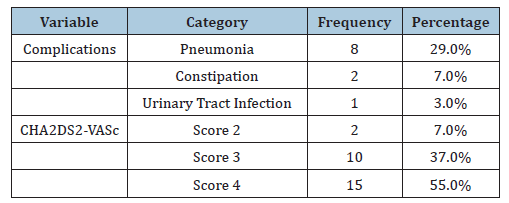
A total of 100 patients diagnosed with Ischemic Stroke were enrolled in this study. The demographic characteristics of participants are presented in Table 1. Half of the participants were males (50.0%) and half were females (50.0%). The majority of patients were older than 75 years (42.0%), followed by those aged 65-74 years (33.0%). Additionally, 55.0% of participants were from rural areas, while 45.0% were from urban areas (Table 1). Among the study participants, 27.0% were diagnosed with atrial fibrillation. Of these, 14.0% were previously known AF cases, while 13.0% were newly diagnosed during hospitalization (Table 2). Among AF patients, females represented the majority (74.0%) compared to males (26.0%). AF prevalence increased with age, with most cases observed in patients older than 75 years (59.0%) (Table 3). Regarding treatment patterns, all previously diagnosed AF patients received anticoagulant therapy. Novel oral anticoagulants were more commonly used than warfarin. Most stroke patients (82.0%) also received antiplatelet therapy (Table 4). Medical complications among AF patients included pneumonia, constipation, and urinary tract infection. Most patients had moderate to high CHA2DS2-VASc scores, indicating increased thromboembolic risk (Tables 1-5).
Table 1:Demographic characteristics of the study population.
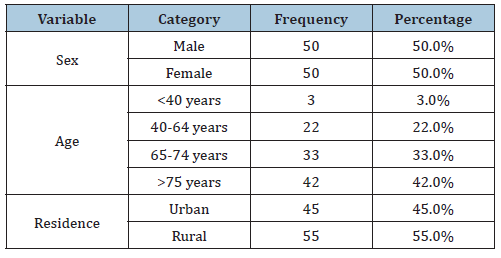
Table 2:Prevalence of atrial fibrillation among ischemic stroke patients.
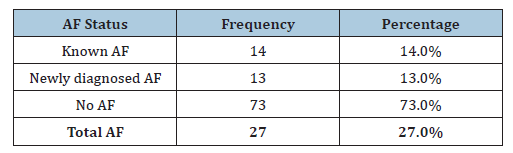
Table 3:Clinical characteristics of patients with atrial fibrillation.
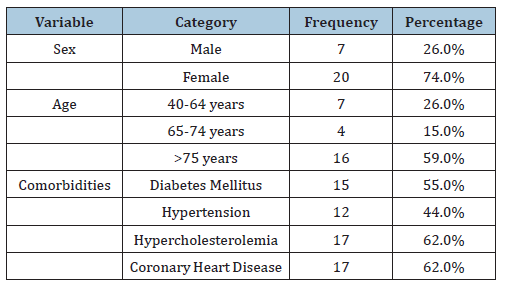
Table 4:Treatment profile among study participants.
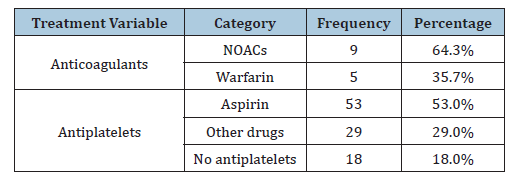
Table 5:Complications and CHA2DS2-VASc score among AF patients.
Discussion
Cardio-embolic stroke accounts for approximately 25% of all ischemic strokes and represents a neurological emergency associated with high morbidity and mortality. This is mainly due to the tendency for large infarctions involving multiple cerebral vascular territories, as well as a higher risk of early hemorrhagic transformation. In the present study, Atrial Fibrillation (AF) was detected in 27% of ischemic stroke patients, which is comparable to findings from Atbara Teaching Hospital, where the prevalence was reported as 23.8% [13]. Age was significantly associated with AF-related stroke. In our study, most AF patients were older than 75 years (59.0%), followed by 40-65 years (26%) and 65-74 years (15%) (p=0.001). This reflects the well-established increase in AF prevalence with advancing age. Similar findings were reported in a study from Qatar, which showed a significantly higher mean age among patients with AF-related stroke (65.4 ± 16.0 years vs. 54.7 ± 12.8 years; P<0.001) [5]. Regarding sex distribution, AF-related stroke was more frequent among females than males in our study. Newly diagnosed AF cases were also predominantly female (74.0% vs. 26.0%, p=0.008), although the overall difference between sexes was not statistically significant (11.0% vs. 3.0%, p=0.316). Similar findings were reported in a study from Poland, which demonstrated a higher frequency of AF among female stroke patients (p<0.01) [14].
Patients with ischemic stroke and AF in our study showed a higher burden of comorbidities compared to those without AF, including diabetes mellitus, arterial hypertension, coronary heart disease, and dyslipidemia. They also had a higher history of previous ischemic stroke. These findings are consistent with a study from Shar Hospital, which reported higher rates of hypertension and diabetes among AF patients, with hypertension reaching 70% compared to 58% in non-AF patients [15]. Additionally, diabetes mellitus was shown to significantly increase stroke risk. However, in contrast to some reports, our AF group showed fewer complications such as pneumonia, urinary tract infection, and constipation compared to non-AF patients, which differs from findings reported in Denmark where higher complication rates were observed among AF patients [16]. All known AF patients in our study were receiving anticoagulant therapy, which was associated with a reduced risk of recurrent stroke (4.0%, p=0.010). This is consistent with a Danish study, which reported a higher recurrence rate of stroke among patients who were ineligible for oral anticoagulation therapy [17]. The CHA₂DS₂-VASc score was used to assess thromboembolic risk in patients with AF. In our study, patients with ischemic stroke and AF showed higher risk profiles, with higher distribution toward increased scores. This is consistent with findings from Swedish health registers, which demonstrated a strong correlation between AF and higher CHA₂DS₂-VASc scores. The score includes risk factors such as age, sex, hypertension, diabetes mellitus, heart failure, vascular disease, and prior stroke or transient ischemic attack, and is also predictive of AF occurrence [18]. Recent evidence further supports the strong association between atrial fibrillation and ischemic stroke, emphasizing its role as a major and potentially modifiable risk factor. AF contributes significantly to thromboembolic events due to atrial blood stasis and thrombus formation, leading to cerebral embolization. AFrelated strokes are often more severe and associated with worse outcomes compared to non-AF strokes. Importantly, undiagnosed or late-detected AF remains a major challenge in stroke prevention, particularly in resource-limited settings where continuous cardiac monitoring is not routinely available. This highlights the importance of systematic screening strategies for AF in high-risk populations, especially elderly patients and those with multiple cardiovascular risk factors [19].
Limitations
This study has several limitations. First, its cross-sectional design does not allow for establishing causal relationships between atrial fibrillation and ischemic stroke. Second, being a single-center hospital-based study may limit the generalizability of the findings and introduce selection bias. Third, AF was diagnosed mainly using a standard 12-lead ECG, which may underestimate paroxysmal cases and therefore the true prevalence. Additionally, the relatively small sample size further limits external validity. Finally, the absence of long-term follow-up data prevented assessment of outcomes such as recurrent stroke and mortality. Future multicenter studies with larger samples and longitudinal follow-up are recommended.
Conclusion
Atrial Fibrillation (AF) was prevalent among patients with ischemic stroke, with an overall prevalence of 27.0%. AF was more common in older patients and was associated with female sex, hypertension, diabetes mellitus, ischemic heart disease, and a previous history of stroke. Medical complications observed among patients with AF included pneumonia, urinary tract infection, and constipation. The CHA₂DS₂-VASc score proved to be a useful tool for thromboembolic risk assessment and may support clinical decision-making regarding anticoagulation therapy and stroke prevention.
Recommendations
The State Ministry of Health and primary health care units should strengthen public awareness about atrial fibrillation and ischemic stroke. Community education programs and mass media campaigns can help improve early recognition of symptoms and encourage timely medical care. Routine screening for noncommunicable diseases should be integrated into primary health care services. Particular attention should be given to hypertension, diabetes mellitus, ischemic heart disease, congestive heart failure, and dyslipidemia. Early identification and management of these conditions may reduce the burden of stroke.
Consent
Written informed consent was obtained from all participants.
Ethical Considerations
Ethical approval for this study was obtained from the relevant ethical review committee of the Faculty of Medicine and Health Sciences, University of Shendi. Written informed consent was obtained from all participants or their legal guardians before enrollment. Confidentiality and anonymity of patient information were strictly maintained throughout the study. The study adhered to the Declaration of Helsinki principles.
Competing Interests
The authors have declared that no competing interests exist.
References
- Díaz-Guzmán J, Freixa-Pamias R, García-Alegría J, Cabeza AIP, Roldán-Rabadán I, et al. (2022) Epidemiology of atrial fibrillation-related ischemic stroke and its association with DOAC uptake in Spain: First national population-based study 2005 to 2018. Revista Española de Cardiología (English Edition) 75(6): 496-505.
- Benjamin EJ, Levy D, Vaziri SM, D'Agostino RB, Belanger AJ, et al. (1994) Independent risk factors for atrial fibrillation in a population-based cohort: The Framingham heart study. JAMA 271(11): 840-844.
- Steger C, Pratter A, Martinek-Bregel M, Avanzini M, Valentin A, et al. (2004) Stroke patients with atrial fibrillation have a worse prognosis than patients without: Data from the Austrian Stroke registry. European heart journal 25(19): 1734-1740.
- Escudero-Martinez I, Morales-Caba L, Segura T (2023) Atrial fibrillation and stroke: A review and new insights. Trends in Cardiovascular Medicine 33(1): 23-29.
- Imam YZ, Kamran S, Akhtar N, Deleu D, Singh R, et al. (2020) Incidence, clinical features and outcomes of atrial fibrillation and stroke in Qatar. Int J Stroke 15(1): 85-89.
- Nesheiwat Z, Goyal A, Jagtap M (2023) Atrial Fibrillation. StatPearls Publishing, USA.
- Peters SAE, Woodward M (2019) Established and novel risk factors for atrial fibrillation in women compared with men. Heart 105(3): 226-234.
- Sulague RM, Whitham T, Danganan LM, Effiom V, Candelario K, et al. (2023) The left atrial appendage and atrial fibrillation-a contemporary review. Journal of Clinical Medicine 12(21): 6909.
- Pandey A, Garg S, Khunger M, Dardenet D, Ayers C, et al. (2015) Dose-response relationship between physical activity and risk of heart failure: A meta-analysis. Circulation 132(19): 1786-1794.
- Tahrani AA, Bailey CJ, Del Prato S, Barnett AH (2011) Management of type 2 diabetes: New and future developments in treatment. Lancet 378(9786): 182-197.
- Grundy SM, Cleeman JI, Merz CN, Brewer Jr HB, Clark LT, et al. (2004) Implications of recent clinical trials for the national cholesterol education program adult treatment panel III guidelines. Arterioscler Thromb Vasc Biol 24(8): e149-e161.
- Mancia G, De Backer G, Dominiczak A, Cifkova R, Fagard R, et al. (2007) 2007 Guidelines for the management of arterial hypertension: The task force for the management of arterial hypertension of the European Society of Hypertension (ESH) and of the European Society of Cardiology (ESC). J Hypertens 25(6): 1105-1187.
- Ahmed TM, Amar AAH, Osman FA, Yousif HTI, Mahjaf GM, et al. (2022) The prevalence and major risk factors and presentation among patients with stroke in Atbara Teaching Hospital during the period from February 2021 to April 2022. SAR J Med 3(4): 47-50.
- Maruyama K, Uchiyama S, Shiga T, Iijima M, Ishizuka K, et al. (2017) Brain natriuretic peptide is a powerful predictor of outcome in stroke patients with atrial fibrillation. Cerebrovasc Dis Extra 7(1): 35-43.
- Wańkowicz P, Nowacki P, Gołąb-Janowska M (2019) Atrial fibrillation risk factors in patients with ischemic stroke. Archives of Medical Science: AMS 17(1): 19-24.
- Fatah HT, Ahmed FJ, Kakamad FH (2017) Prevalence of atrial fibrillation among patients with ischemic stroke. Edorium J Neurol 4: 1-5.
- Thygesen SK, Frost L, Eagle KA, Johnsen SP (2009) Atrial fibrillation in patients with ischemic stroke: A population-based study. Clinical Epidemiology 9: 55-65.
- Friberg L, Rosenqvist M, Lindgren A, Terént A, Norrving B, et al. (2014) High prevalence of atrial fibrillation among patients with ischemic stroke. Stroke 45(9): 2599-2605.
- Nathan TA, Wibowo R, Sasongkojati R, Hartoko B, Butarbutar DT (2024) Prevalence of atrial fibrillation in ischemic stroke and associated risk factors: A hospital-based study in Indonesia. Brain Circ 10(4): 316-323.
© 2026 Ghanem Mohammed Mahjaf. This is an open access article distributed under the terms of the Creative Commons Attribution License , which permits unrestricted use, distribution, and build upon your work non-commercially.
Editor In Chief







.jpg)































Signup for Newsletter

Quick Links
 Editorial Board Registrations
 Submit your Article
 Best Paper of the Volume
 Reprints
 Refer a Friend
 Advertise With Us
Our Recent Edition

.jpg)



Top Editors




.jpg)

















.bmp)
.jpg)
.png)
.jpg)













.jpg)






.png)

.png)




.png)




Financial Support

Sponsors

Latest e-Books

Latest Video

 a Creative Commons Attribution 4.0 International License. Based on a work at www.crimsonpublishers.com.
Best viewed in
a Creative Commons Attribution 4.0 International License. Based on a work at www.crimsonpublishers.com.
Best viewed in 
 | Above IE 9.0 version