

- About Us
- Information
-

The Author ensures that the research has been conducted responsibly and ethically with adherence to all relevant regulations. read more..
- For Authors
- For Reviewer
- Manuscript Guidelines
- Membership
- Publication Ethics
-
- Journals
- Reprints
- e-Books
- Videos
- Policies
- Contact Us
 COVID-19
- Submissions



Full Text
Open Access Research in Anatomy
Anatomic Variations of the Canine Pudendo-Epigastric Trunk
Girish P*, Jill A and Chris P
Physiological Sciences, Oklahoma State University, USA
*Corresponding author: Girish Patil, Physiological Sciences, College of Veterinary Medicine, Oklahoma State University, Stillwater, OK, USA
Submission: December 04, 2025;Published: December 19, 2025

ISSN: 2577-1922
Volume3 Issue2
Abstract
The canine pudendo-epigastric artery is a branch of deep femoral artery coming off from external iliac artery. Pudendo-epigastric trunk travels a short distance before it branches into caudal epigastric artery and external pudendal artery, thereby supplying blood to the caudoventral abdominal wall and scrotum in males or labia of vulva in females. We evaluated variations in the pudendo-epigastric trunk in 30 canine cadavers used for laboratory teaching. This study demonstrated that there are variations in length and branching pattern of pudenda-epigastric trunk. Out of the 30 dogs studied, Pudendo-epigastric trunk was completely absent in 9 (30%). In the dogs, where it was present, the length varied from 0.2cm to 5cm. In dogs with no pudendo-epigastric trunk, the caudal epigastric and the external pudendal arteries branch off from the deep femoral artery directly. This provides deeper understanding about variations in the pudendo-epigastric trunk and blood supply to the caudal abdominal wall, external genitalia, and medial aspect of the thigh region.
Introduction
The pudendo-epigastric trunk is an important artery that supplies blood to the caudoventral abdominal wall and parts of external genitalia. Its anatomical location is crucial as it lies in proximity with the femoral triangle, inguinal canal, and inguinal ligament. The pudendo-epigastric trunk is a branch of the deep femoral artery. The deep femoral artery is a branch of external iliac artery before it continues as the femoral artery. Deep femoral artery runs caudo-ventrally from external iliac. After the deep femoral artery gives of pudendoepigastric trunk, it continues as medial circumflex femoral artery to supply blood to the adductor, pectineus, vastus medialis as well as semimembranosus. The pudendo-epigastric trunk runs inside the abdomen for a brief length before it splits into two branches, the caudal epigastric artery, and the external pudendal artery. The caudal epigastric artery passes cranially on the dorsal aspect of rectus abdominal muscle where it continues as caudal deep epigastric artery supplying blood to the deep surface of the caudo-ventral abdominal wall and associated muscles. The external pudendal artery runs caudally through the inguinal canal and supply blood to the superficial aspect of the caudo-ventral abdominal wall, inguinal and caudal abdominal mammary glands and prepuce in males and labia of vulva in females. However, there are lot of variation in the length as well as branching pattern of arteries arising from PE (Pudendo-Epigastric) trunk. There are studies about variation of branching patterns in canine adrenal vessel [1], uterine vessels [2], branches of internal iliac [3-5], celiac artery [6], but there is no study that provides overview of variations in the pudenda epigastric trunk. This study aims to provide detailed analysis of variations of PE trunk and its branching pattern.
Materials and Methods
30 formalin fixed, embalmed, double-injected canine cadavers of various breeds (15 males, 15 females) purchased from Carolina Biologicals LLC for laboratory dissection and teaching were used for this study (Figure 1). The arteries were observed on the right side of the cadavers as the left side of the cadavers were used for muscle dissection.
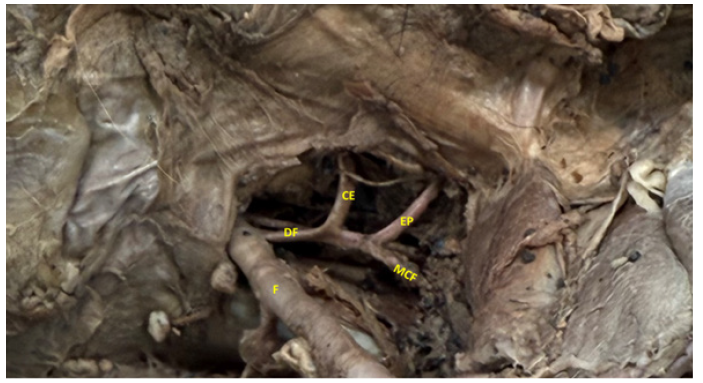
Figure 1:Pudendo-Epigastric (PE) trunk is absent. The Deep Femoral (DF) artery directly gives of the Caudal Epigastric (CE) artery and the External Pudendal (EP) artery. The deep femoral artery then continues as Medial Circumflex Femoral (MCF) artery. F: Femoral artery.
Result
Out of the 30 canine cadaver specimens, 9 (30%) did not show any presence of the pudendo-epigastric trunk. Of specimens lacking PE trunk, 5 were females and 4 were males (Figure 2). In the dogs lacking PE trunk, both the caudal epigastric artery as well as the external pudendal artery originated directly from the deep femoral artery and run towards their expected destinations (Figure 3). The caudal epigastric artery always comes off before the external pudendal artery (Table 1). In the remaining 21 dogs that show presence of the pudendo-epigastric trunk, there is a significant variation in terms of length. We divided the sizes into three divisions based on the length. The three sizes are small (<0.5cm), medium (0.5-1cm), long (>1cm). We found that in the dogs with PE trunk, 10 were small (47.6 %), 9 were medium (42.8%), and 2 (9.5%) were long (Figure 4).
Figure 2:Small (<0.5cm) Pudendo-Epigastric (PE) trunk comes off from the Deep Femoral (DF) artery. PE trunk branches off into the Caudal Epigastric (CE) artery and the External Pudendal (EP) artery whereas the deep femoral artery then continues as Medial Circumflex Femoral (MCF) artery. F: Femoral artery.
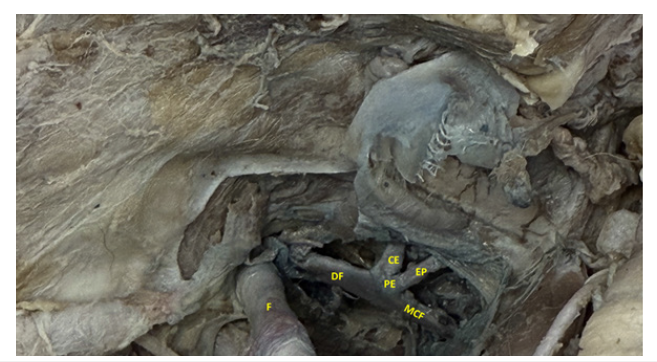
Figure 3:Medium sized (0.5-1cm) Pudendo-Epigastric (PE) trunk is present.
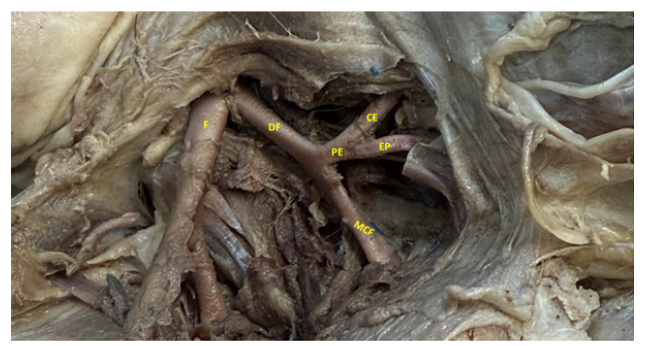
Figure 4:Long (>1cm) Pudendo-Epigastric (PE) trunk is present.
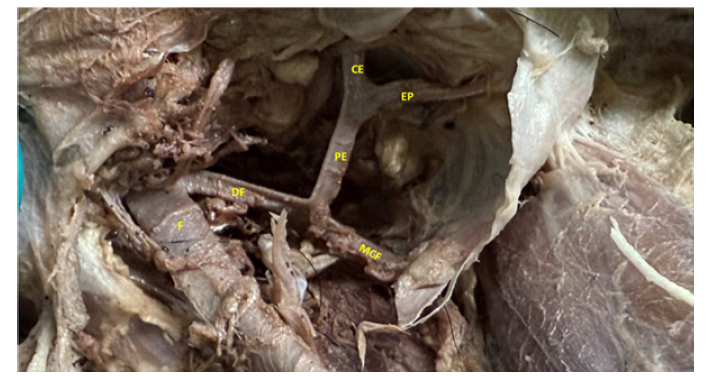
Table 1:

Conclusion
The pudendo-epigastric trunk is an important vessel that gives of branches supplying blood to the caudo-ventral abdominal wall, caudal mammary glands and parts of external genitalia. The mention of the pudendo-epigastric trunk is consistent throughout the canine anatomy textbooks and atlases. The anatomic positioning of the PE trunk is crucial as it is located very close to the femoral triangle, the inguinal canal as well as inguinal ligament. Hence, it is important to understand the variations of the PE trunk both anatomically as well as surgically. This study provides conclusive and detailed analysis about the presence of PE trunk in canines. Out of the 30 canines studied, 9 did not have the PE trunk at all, whereas in 10 canines, the PE trunk was of miniscule length (<0.5cm). These results indicate that there is a need for anatomy educators and writers to make necessary adjustments in their teaching/research of the abdominal/ hindlimb blood supply and branching patterns of canine vascular anatomy.
References
- Watanabe N, Ono S (2022) Anatomical variations of the canine adrenal vessels. Anat Histol Embryol 51(6): 802-809.
- Konstantinos L, Nikolaos T, Ioannis T, George T, Panagiotis S, et al. (2020) Anatomic variations of the uterine artery. Review of the literature and their clinical significance. Turk J Obstet Gynecol 17: 58-62.
- Avedillo L, Martín AN, Salazar I (2015) Anatomical variations of the blood vascular system in veterinary medicine: The internal iliac artery of the dog: Part one. Anat Histol Embryol 44: 299-307.
- Avedillo L, Martín AN, Salazar I (2016) Anatomical variations of the blood vascular system in veterinary medicine: The internal iliac artery of the dog: Part two. Anat Histol Embryol 45: 88-99.
- Avedillo L, Martín AN, Salazar I (2016) Anatomical variations of the blood vascular system in veterinary medicine: The internal iliac artery of the dog-Part three. Anat Histol Embryol 45: 189-196.
- Chawangwongsanukun R, Meemon K, Darawiroj D, Wongtawan T (2019) Variations in the branching pattern of the canine coeliac trunk in Thailand: An anatomical study. The Thai Journal of Veterinary Medicine 49(4): 327-333.
© 2025 Girish P. This is an open access article distributed under the terms of the Creative Commons Attribution License , which permits unrestricted use, distribution, and build upon your work non-commercially.
Editor In Chief







.jpg)































Signup for Newsletter

Quick Links
 Editorial Board Registrations
 Submit your Article
 Best Paper of the Volume
 Reprints
 Refer a Friend
 Advertise With Us
Our Recent Edition

.jpg)



Top Editors




.jpg)

















.bmp)
.jpg)
.png)
.jpg)













.jpg)






.png)

.png)




.png)




Financial Support

Sponsors

Latest e-Books

Latest Video

 a Creative Commons Attribution 4.0 International License. Based on a work at www.crimsonpublishers.com.
Best viewed in
a Creative Commons Attribution 4.0 International License. Based on a work at www.crimsonpublishers.com.
Best viewed in 
 | Above IE 9.0 version