

- About Us
- Information
-

The Author ensures that the research has been conducted responsibly and ethically with adherence to all relevant regulations. read more..
- For Authors
- For Reviewer
- Manuscript Guidelines
- Membership
- Publication Ethics
-
- Journals
- Reprints
- e-Books
- Videos
- Policies
- Contact Us
 COVID-19
- Submissions



Full Text
Novel Techniques in Nutrition and Food Science
Acute Hepatocellular Damage After Consumption of Raphanus Raphanistrum L. (Donkey Radish): A Case Report
İzel Hüzmeli Öncü*, Barbaros Metin Yıldırım, Saliha Köse, Mustafa Polat, Ali Karakuş, Taner Fuygunoğlu and Kenan Sezgin
Department of Emergency Medicine, Hatay Mustafa Kemal University, Turkey
*Corresponding author:İzel Hüzmeli Öncü, Hatay Mustafa Kemal University, Faculty of Medicine, Department of Emergency Medicine, Turkey
Submission: June 12, 2026;Published: September 11, 2026
ISSN:2640-9208Volume9 Issue 1
Summary
Raphanus raphanistrum L. (donkey radish) is a wildplant traditionally used for medicinal purposes but may rarely cause hepatotoxicity. A 19-year-old male presented with nausea, vomiting and fatigue after consuming the plant. Laboratory tests revealed marked transaminase elevation and coagulopathy. Viral caused were excluded and the patient improved with supportive treatment. This case highlights that even plants known for hepatoprotective effects may lead to acute hepatocellular injury.
Keywords:Toxic hepatitis; Hepatoprotective plants; Raphanus raphanistrum L.; Wild plant
Abbreviations: PLT: Platelet Count; HAV: Hepatitis A Virus; HBsAg: Hepatitis B Surface Antigen; VZV: Varicella Zoster Virus; CT: Computed Tomography; EGCG: Epigallocatechin Gallate
Introduction
Acute hepatocellular injury can develop due to many causes, including viral hepatitis, drugs, toxins, and wild plants. Consumption of wild plants is typical, especially in rural areas, and can sometimes lead to severe and potentially life-threatening hepatotoxicity. Acute hepatocellular injury due to the consumption of Raphanus raphanistrum L., commonly known as “donkey radish” “wild radish,” or ‘’wild mustard’’ has been rarely reported. In the literature, this plant is generally noted for its hepatoprotective properties. A study on R. raphanistrum emphasizes that the plant possesses not only antioxidant but also antimicrobial potential [1]. These findings suggest that the plant may possess a wide range of bioactive properties.
Case
A 19-year-old male patient presented to the emergency room with complaints of fever, nausea, vomiting, loss of appetite, and fatigue. His medical history revealed that he had consumed a plant he collected from a field a few days earlier, which is commonly referred to as “donkey radish [2] (Figure 1).” The patient had no known chronic diseases and appeared to be in good general condition upon physical examination. He was conscious and oriented, and there were no signs of jaundice or hepatic encephalopathy. Furthermore, his abdominal examination was normal.
Vital signs at admission were as follows: blood pressure 135/83mmHg, pulse 68 beats per minute, oxygen saturation (SpO₂) 98%, and a fever of 38.6 °C. Laboratory findings revealed the following: AST 485U/L(0-40U/L), ALT 629U/L(0-45 U/L), LDH 587U/L(170-450 U/L), total bilirubin 0.69mg/dl(0,2-1,2), direct bilirubin 0.2mg/dL(0-0,2mg/dl), ALP 80U/L(40-150), GGT 26 U/L(12-64), APTT 45sn (24-36), INR 2.12(0,8-1,2), PTZ 38%(70-120), CRP < 3.13mg/ L(0-3,13), white blood cell count (WBC) 5.1 × 10³/μL(3,8-10,4), and platelet count (PLT) 149 × 10³/μL(150-450). Serology tests for Hepatitis A virus (HAV IgM), Hepatitis B surface antigen (HBsAg), anti-HCV, varicella zoster virus (VZV) IGM, HIV returned negative results. Blood cultures revealed no microbial growth. Additionally, a complete abdominal Computed Tomography (CT) examination showed no acute pathology. The patient was admitted with a preliminary diagnosis of acute hepatocellular injury. Oral intake was stopped, and intravenous fluid support was initiated. Vital signs and laboratory values were closely monitored. Over the follow-up period, gradual improvements were observed in the levels of AST, ALT, and INR (Table 1). The patient remained clinically stable and was discharged after five days, once liver function tests returned to normal limits.
Figure 1:Raphanus raphanistrum L. (Donkey Radish).
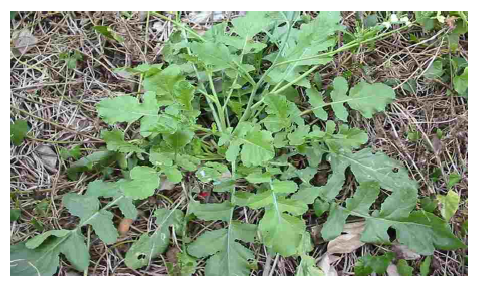
Table 1:Laboratory values of the case.
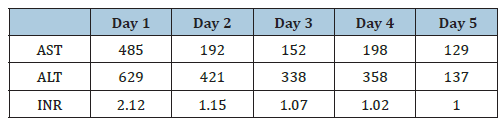
AST: Aspartate Aminotransferase; ALT: Alanine Aminotransferase; INR: International Normalizes Ratio
Discussion
Herbal products have been widely used in various cultures for centuries to prevent and treat various diseases. Today, due to the widespread belief that they are “natural and harmless,” they are frequently preferred by the public, particularly for supporting digestive, immune and liver health. However, the potential side effects of such use should not be overlooked. As reported in the cases of Arum maculatum (nivik herb), the saponin oxalates present in the plant can lead to mucosal irritation, systemic effects from hypocalcemia, and even serious complications that might result in death [3].
The plant known as donkey radish (Raphanus raphanistrum L.) is consumed by the public, particularly for digestive system problems and to support liver health. Some studies in the literature have reported that it exhibits antioxidant and hepatoprotective properties [4]. However, the composition and toxicity profile of herbal products can vary significantly depending on the region where they are grown, the type of soil, climatic conditions, harvest time, and storage conditions. Therefore, although rare, hepatotoxicity can develop even in plants known to be hepatoprotective. In the presented case, the marked elevation of transaminases and coagulopathy that developed shortly after plant consumption are consistent with toxin-mediated acute hepatocellular injury. Exclusion of viral hepatitis and other common causes has focused the etiology on plant consumption. Although green tea (Camellia sinensis) exhibits vigorous antioxidant activity due to its epigallocatechin gallate (EGCG) content, cases have been reported in the literature where it causes hepatocellular liver injury when consumed in high doses and over prolonged periods [5].
These findings indicate that plants with antioxidant properties may also pose a risk of toxicity and should be thoroughly assessed for safety. Cases of liver injury linked to green tea extract often manifest as acute hepatitis, which is characterized by symptoms such as weakness, loss of appetite, jaundice, and significantly elevated aminotransferase levels. While most cases resolve on their own, up to 10% can be fatal [6]. Aloe vera is a widely used plant thought to be beneficial for many ailments, including liver disease. However, it has also been reported that it can be seriously hepatotoxic [7]. Yang et al. [8] highlighted three cases of toxic hepatitis due to Aloe vera use, emphasizing that physicians should always question patients’ medical history about the use of herbal products. These findings demonstrate that herbal products can have both beneficial and potentially harmful effects.
Conclusion
This case demonstrates that some plants known to be hepatoprotective can, in rare cases, cause hepatotoxicity. After ruling out viral causes, it is essential to conduct a thorough investigation into the history of plant consumption and provide early supportive care to prevent potential complications.
Conflict of Interest
The authors declare that they have no financial or other conflicts of interest.
References
- Iyda JH, Fernandes Â, Ferreira FD, Alves MJ, Pires TCSP, et al. (2019) Chemical composition and bioactive properties of the wild edible plant Raphanus raphanistrum L. Food Res Int 121: 714-722.
- https://alchetron.com/Raphanus-raphanistrum
- Karakuş A, Çelik MM, Taşkın A Nivik (2024) Herb - Arum maculatum - Poisoning. Eurasian J Toxicol 6(2): 40-41.
- Küçükboyacı N, Güvenç A, Turan NN, Aydın A (2012) Antioxidant activity and total phenolic content of aqueous extract from Raphanus raphanistrum L. Turkish Journal of Pharmaceutical Sciences 9(1): 93-100.
- Mancak Karakuş N, Küçükboyacı N (2020) Assessment of the hepatotoxicity risk of green tea. FABAD J Pharm Sci 45(3): 229-241.
- Navarro VJ, Khan I, Björnsson E, Seeff LB, Serrano J (2017) Liver injury from herbal and dietary supplements. Hepatology 65(1): 363-373.
- Tekin F, Şahin OZ, Karasu Z, Nart D, Özütmiş Ö, et al. (2006) Severe toxic hepatitis associated with aloe vera: Case report. Academic Journal of Gastroenterology 5(2): 134-136.
- Yang HN, Kim DJ, Kim YM, Kim BH, Sohn KM, et al. (2010) Aloe-induced toxic hepatitis. J Korean Med Sci 25(3): 492-495.
© 2026 İzel Hüzmeli Öncü. This is an open access article distributed under the terms of the Creative Commons Attribution License , which permits unrestricted use, distribution, and build upon your work non-commercially.
Editor In Chief







.jpg)































Signup for Newsletter

Quick Links
 Editorial Board Registrations
 Submit your Article
 Best Paper of the Volume
 Reprints
 Refer a Friend
 Advertise With Us
Our Recent Edition

.jpg)



Top Editors




.jpg)

















.bmp)
.jpg)
.png)
.jpg)













.jpg)






.png)

.png)




.png)




Financial Support

Sponsors

Latest e-Books

Latest Video

 a Creative Commons Attribution 4.0 International License. Based on a work at www.crimsonpublishers.com.
Best viewed in
a Creative Commons Attribution 4.0 International License. Based on a work at www.crimsonpublishers.com.
Best viewed in 
 | Above IE 9.0 version