

- About Us
- Information
-

The Author ensures that the research has been conducted responsibly and ethically with adherence to all relevant regulations. read more..
- For Authors
- For Reviewer
- Manuscript Guidelines
- Membership
- Publication Ethics
-
- Journals
- Reprints
- e-Books
- Videos
- Policies
- Contact Us
 COVID-19
- Submissions



Full Text
Novel Techniques in Nutrition and Food Science
A Review on Emerging Trends and Future Perspective on Microgreens as a Novel Functional Food
Neetu Mishra1*, Shirshika Singh1, Neha Mishra2 and Devinder Kaur3
1 Food and Nutrition Section, Department of Family and Community Sciences, University of Allahabad, India
2 Department of Food Nutrition and Public Health, ECHS, Sam Higginbottom University of Agriculture, India
3 Centre of Food and Technology, Faculty of Science, University of Allahabad, India
*Corresponding author:Neha Mishra, Food and Nutrition Section, Department of Family and Community Sciences, University of Allahabad, Prayagraj-211002, Uttar Pradesh, India
Submission: April 30, 2026;Published: June 03, 2026

ISSN:2640-9208Volume9 Issue 1
Summary
This study aims at conducting an exhaustive bibliometric analysis on microgreen facilitating the future roadmap for farmers, policymakers, researchers and authors. The search was conducted on October 4, 2024. “Microgreens” or “microgreen” keywords were used in the ‘Article Title, Abstract, and Keywords’ section. Total 602 documents retrieved from the Scopus database and analyzed using Biblioshiny and VOS viewer. USA was the leading country in microgreens research with 21% total publications due to its pioneering contribution. Rouphael Y (TP-31) was the most productive author and Horticulturae (TP-32) was the most productive journal. Most existing studies concentrate on controlled agricultural environments, primarily investigating how light conditions influence the synthesis and accumulation of bioactive compounds. Keywords distribution suggests emerging of microgreens as an important functional food, but they still need scientific and regulatory attention to be utilized in mainstream food systems. The future research of microgreens must focus on reducing their postharvest losses, commercialization and enhancing their shelf life as well as therapeutic potential.
Keywords:Bibliometric analysis; Microgreens; Functional foods; Sustainable agriculture; Food safety
Highlights
A. The study is a comprehensive bibliometric analysis of microgreens research to guide farmers,
policymakers and researchers.
B. A total of 602 documents from the Scopus database were analysed (as of October 4, 2024)
using Biblioshiny and VOSviewer tools.
C. The USA leads global research, with Rouphael Y as the most productive author and Horticulturae
as the top journal.
D. Research trends mainly emphasize on nutrition and health, especially bioactive compounds
like antioxidants and carotenoids, often studied under controlled environments.
E. Future directions focus on improving postharvest management, commercialization, shelf life
and exploring the therapeutic potential of microgreens.
Introduction
Due to a continuously growing population and shrinking agricultural land, the search for nutrient-rich, sustainable food sources has become a critical concern globally [1,2]. Addressing issues such as food security, urbanization and climate change demands a potent solution [3]. To overcome this, the United Nations (UN) proposed the Sustainable Development Goals (SDGs) to manage natural resources responsibly and support environment friendly production and consumption. Regarding that, microgreens have emerged as a salient food, due to their ease of farming, fast growth, rich nutritional value, and overall sustainability [4,5].
Microgreens are tiny baby plants that are consumed whole. They are produced from the seeds of various vegetables, cereals, pulses or herbs [6,7]. In late 90s, they were originated as a novel culinary ingredient in San Francisco, California [8,9]. They are typically harvested within 10-14 days of sowing [10,11]. Microgreens have become a promising sustainable food source due to their minimal resource requirement for urban as well as vertical farming, and climate resilient property [12]. They contain a rich reservoir of vitamins, minerals and phytochemical compounds as compare to their mature part [11,13,14]. These qualities of microgreens contribute to a wide range of significant healthpromoting and disease-preventing activities such as antioxidant, anti-inflammatory, anti-tumor and anti-diabetic [10,15-18]. They have recently gained recognition as a vital food for the 21st century [4,5] and are suitable for space missions because they maintain health in extreme space environments [19-21]. Researchers have classified them as a “Superfood” [22,23] and support this by publishing the comparative data of nutritional and functional properties of sprouts, microgreens and their mature plants [24-26].
Bibliometric analysis becomes an important tool to assess this vast data volume, since, scientific literature on microgreens have increased significantly in current scenario [27-29]. In this context, we conducted a bibliometric analysis of microgreens from 2004-2024 (two decades). This analysis covers a broad spectrum of research and review articles, enabling a comprehensive understanding about microgreens by identifying the keywords trend, influential studies, knowledge gaps and find the future area of interest for microgreens to become a vital functional food in sustainable food systems [30-32].
This bibliometric review hypothesizes that each microgreen species contains specific nutritional and bioactive compounds, which makes them a strong functional food, positively impacting human health. The study also focuses on sustainable cultivation and various packaging methods, which shield both the production and nutritional content of microgreens and support farmers for mass production. Consumer awareness and market trends analysis plays a crucial role for policymakers in determining the economic commercialization of microgreens. Therefore, this study analyzes the evolution of microgreens research using bibliometric tools, by assessing publication trends, citation networks and collaborations.
Materials and Methods
Data acquisition
The data was extracted from Scopus database (https://www. scopus.com/home.uri) for analysis due to its huge scientific data repository. The search was conducted on October 4, 2024. This study includes reviews and articles published in English, between 2004 to September, 2024. The term “microgreen” was initially searched in the “ALL FIELDS” category, identifying total 974 documents (Supplementary file 1). Next, the search strategy restricted keywords: “Microgreens” or “microgreen” in “Article title, Abstract, Keywords” section and the result was downloaded in CSV format for analysis. Data analysis involved two primary tools: VOS viewer and Biblioshiny (R Studio). The complete search command used was:
TITLE-ABS-KEY (microgreens OR microgreen) AND PUBYEAR > 2003 AND (PUBYEAR < 2024 OR (PUBYEAR = 2024 AND PUBMONTH <= 9)) AND LANGUAGE (English)
Statistical analysis data
For statistical analysis, VOS viewer (version 1.6.15) and Biblioshiny were used for evaluating research performance. VOS viewer was developed by Van Eck and [33]. This tool specifically analyzes scientific collaborations and generates network maps that display the research interconnections such as publications, authors, institutions and keywords. Aria and [34] developed Biblioshiny on R-studio that analyzes large datasets by identifying research trends, patterns and emerging topics [35]. Publication counts, citation counts, and H-indices are the key bibliometric indicators that estimates research productivity [36]. The number of publications indicates total research produced, whereas, citation count signifies its impact and academic recognition, even if the number of publications is relatively low [37]. The influential authors, institutions and countries were evaluated by H-index, which includes both publication and citation counts [38]. Thematic evolution mapping was used to assess the trending research topics over time. Bibliographic coupling identifies similar research clusters by categorizing documents based on shared references. This approach assisted an in-depth understanding of the thematic structure of microgreen research and its growing pattern [39]. MS Excel software was used to produce several graphs.
Results and Discussion
Data acquired
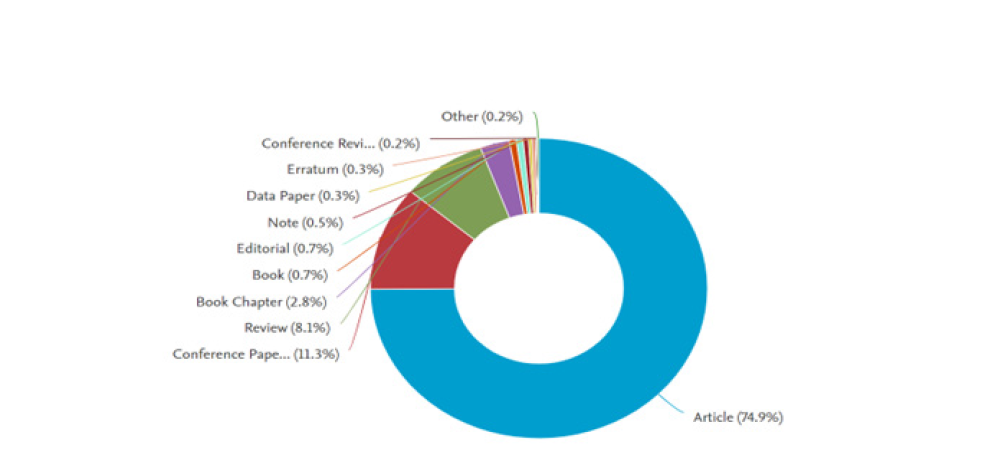
A total of 602 relevant documents (excluding articles set to be published after September 2024) were retrieved from 2004 to September 2024. Research articles accounted for the majority (74.9%, 451 articles), followed by 49 review papers (8.1%), 68 conference papers (11.2%) and 17 book chapters (2.8%) (Figure 1). Other document types, including notes, books and short surveys, comprised 2.86% of total publications. This high proportion of research articles reveals the growing interest in microgreens and their significance in scientific studies.
Figure 1:Document type (%) extracted from scopus database.
Publication trend of microgreens
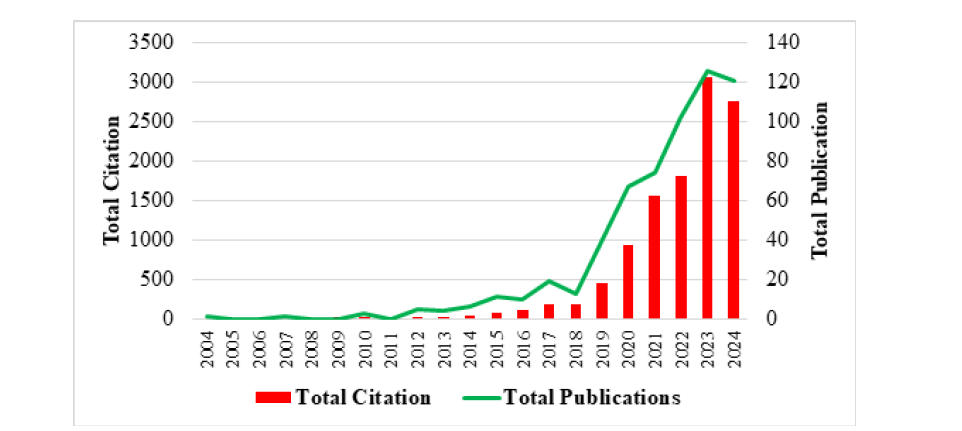
The yearly distribution was addressed using 602 documents (Figure 2). depicts the total scientific publications of microgreens in two decades. Lee published the first research article on microgreens in 2004, “Seed Treatments to Advance Greenhouse Establishment of Beet and Chard microgreens” [40]. The second and sole study, “New trends in hydroponic crop production in the U.S.”, was published in 2007 by Bretlinger. Further, no research was observed in the next two years and then actual study progress was seen after 2010. The research trend of microgreens over two decades can be divided into three phases based on growth patterns: slow growth (2004-2010), steady growth (2011-2016) and rapid growth (2017-2024). The first phase included only 5 documents (0.8%) and represents the slow growth of microgreen research because the interest among the scientific community was very poor during this phase. In the next phase (2011-2016), publications increased from 05 to 36 (6.0%). This shows the gradual rise in the research of microgreens. Since 2017, microgreen research showed a significant rise with 24.69% growth rate. This rapid growth phase includes 561 publications (93.1%) between 2017-2024 (Figure 2). The most productive year was 2023, with 126 publications, followed by 2024, 2022 and 2021 with 121, 102, and 74 publications respectively. This shows the highest research interest in the preceding year. This rise was seen due to the increased demand for nutrient-dense novel food with minimum utilization of resources due to the rising urban population.
Figure 2:Yearly distribution of Total Publications (TP) and Total Citations (TC).
The citation trend of the articles
The line graph in Figure 2 represents the citation trend of the articles. During the slow growth phase (2004-2010), document citation of microgreens research was not very frequent (i.e., less than 100 citations). Average citations during this phase are 1.25 Citations Per Article (CPA). The citation rate increased gradually during a steady phase from 2 to 118 citations between 2011-2016 on an average of 6.58 CPA. This likely occurred due to the short time to consolidate these publications in terms of the number of citations. However, citation count increased significantly, from 181 (2017) to 2759 (2024), with 19.50 CPA. This occurred because of the increased demand for innovative functional foods that offer concentrated nutrient sources while utilizing minimal resources, have short cultivation cycle and high harvest index [40-42]. The most productive year was 2023, with 3067 citations (CPA 2023- 24.34), followed by 2024, with 2759 citations (CPA 2024-22.80). This again indicates the highest research interest in the preceding year. The publications and citations trend analysis suggests that microgreens have received increasing attention in recent years and will become a global hotspot in future.
Top contributing authors, institutes, countries and their collaborations
In total, 1449 authors from 160 institutions and 64 countries showed interest in microgreens research globally. Among 1449 distinct authors, 13 authors had published their studies solely on “microgreens”. Whereas, 1436 authors collaborated with others with a 5.38 average number of co-authors per article. 18.78% authors were engaged in international collaborations. This indicates that the maximum number of articles on “microgreens” have resulted from the collaborative studies. The documents had an average age of 2.77 years, signifying that the literature in the field includes recent advancements.
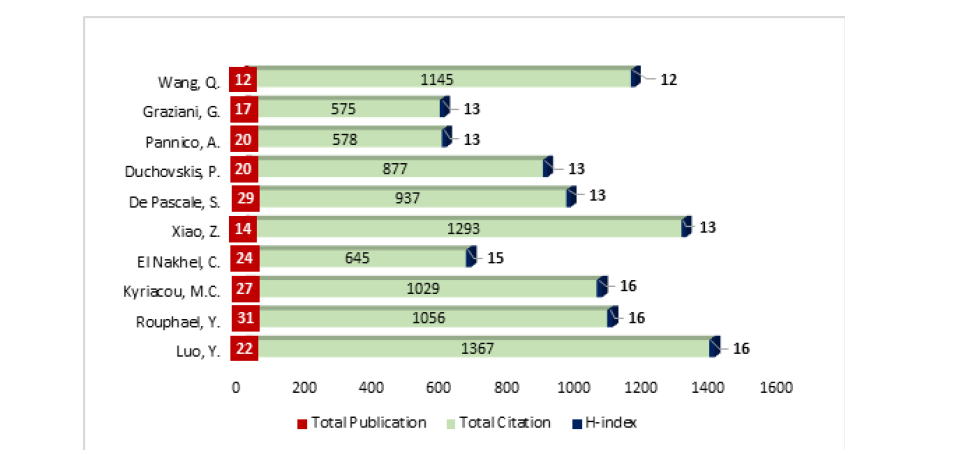
Luo y & rouphael y: The eminent and most productive authors: Figure 3 depicts the top ten most productive authors who contributed to microgreens research, along with their Total Publications (TP), Total Citations (TC), and H-index. These indices measure the productivity and impact of the author’s work. The most productive author was Rouphael Y (31 TP), followed by De Pascale (29 TP) and Kyriacou MC (27 TP). Whereas, Lou Y (22 TP) had the highest citations (1367) and H-index (16), indicating his significant contribution in the field of microgreens research, particularly related to chemical composition, bioactive compounds, antioxidant activity and food safety. Xiao Z, was the second most productive author with 1293 TC and 13 H-index from 14 publications. Interestingly, publication counts represent productivity, but not always correspond to its impact. False positives in author ranking can occur when high publication counts inflate an author’s perceived influence, despite limited citations contributions. Importantly, the top two authors, Rouphael Y. and De Pascale, are affiliated with the University of Naples Federico II, Portici, Italy.
Figure 3:Top contributing authors based on their TP, TC and H-index.
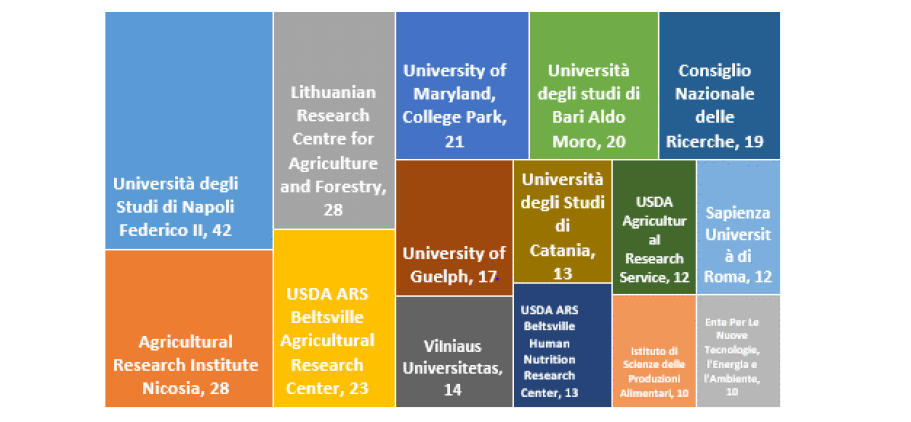
Italian institutions came out ahead: Figure 4 shows the leading institutions based on the number of publications. The University of Naples Federico II in Italy holds top position, with 42 TP, followed by the Agricultural Research Institute in Nicosia, Cyprus and the Lithuanian Research Centre for Agriculture and Forestry, with 28 TP each. The USDA ARS Beltsville Agricultural Research Center in the USA follows closely with 23 TP, while the University of Maryland, College Park, USA, has 21 TP. Italian institutes have achieved top position in the list with around seven institutions among top 15, showing their significant contribution in microgreen studies followed by USA, with its four institutes in the top 15. A well-established academic infrastructure and powerful funding systems for research secures strong top position for Italy. Another contributing factor is the collaborative and coordinated research conducted among the Italian institutes. Italian cuisine is one more reason, because the chefs, nutritionists and researchers have interest in exploring microgreens due to their intense flavor and nutritional benefits. On the other hand, the USA also maintains a strong publication count despite fewer institutions. This reflects its focused research initiatives and high-impact publications. All other institutes had less than 10 TP, that raises questions about the influencing actors such as funding availability, research agendas or regional collaborations.
Figure 4:Leading institutions in microgreen research based on their TP.
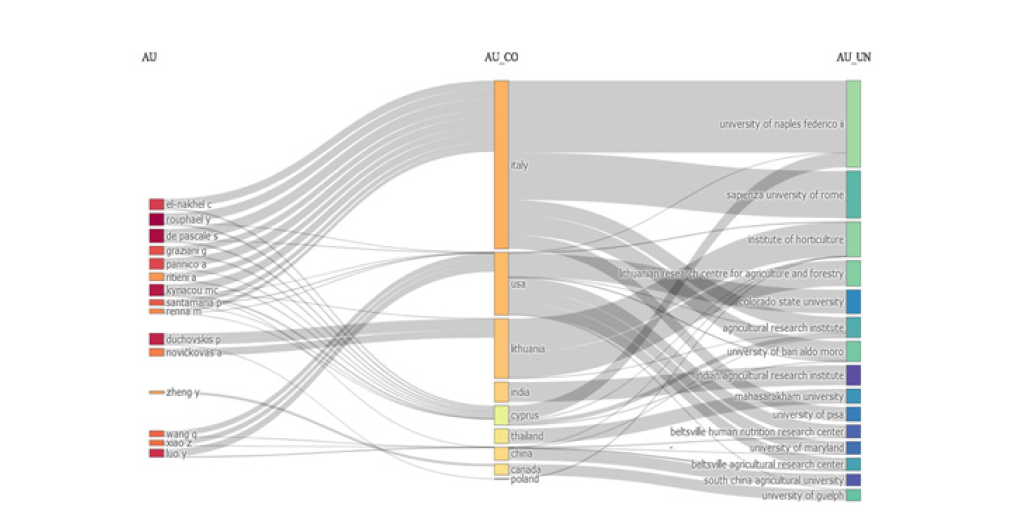
USA is at the forefront in research of microgreens: Figure 5 depicts the top 5 leading countries in microgreens research, accounting for 63.4% TP. The USA was found to be the leading country in microgreens research, with 123 publications (20.4%) and 4,337 citations, reaffirming its pioneering role in this field. Italy follows closely with 113 publications but a lower citation count (2,528), indicates its less impactful publication than USA. India (75 TP) and China (39 TP) rank third and fourth in productivity but show lower citation impacts (755 and 792, respectively), indicating that quantity does not necessarily reflect quality. Meanwhile, Cyprus (28 publications, 1,034 citations) and Lithuania (25 publications, 941 citations) demonstrate high citation impact per article, suggesting their research carries significant influence despite lower publication volume. A more visualized representation of prolific authors, their country, and affiliated institutes in microgreen research, produces by VOS viewer is shown in Figure 6. The leftmost column represents active authors, the middle column shows countries, and the rightmost column represents the institutes name associated with authors. The height of the box and the thickness of the connecting lines represent the contribution level.
Figure 5:Most leading countries in the research of microgreens in terms of TP and TC. Column bars represent TP from each country whereas the shaded area represents the coverage of TC.
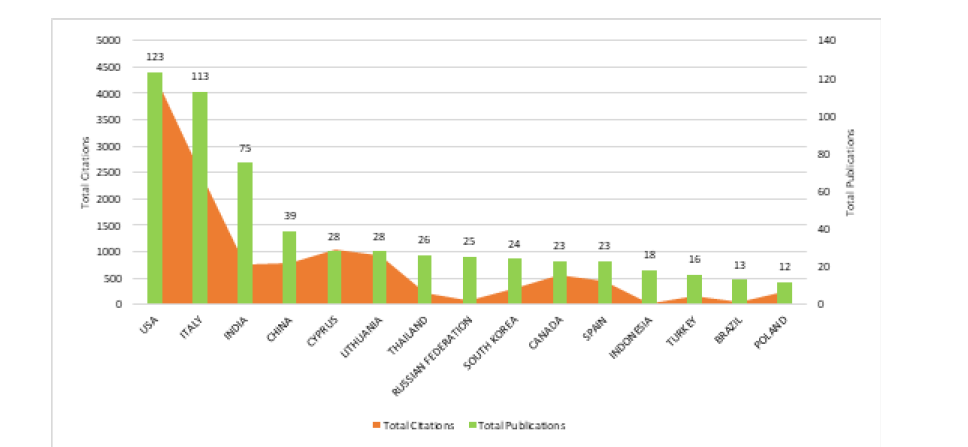
Figure 6:Visualized representation of prolific authors, their countries, and affiliated institutes in the field of microgreen. Authors’ (AU), Authors’ Country (AU_CO), Authors’ University (AU_UN).
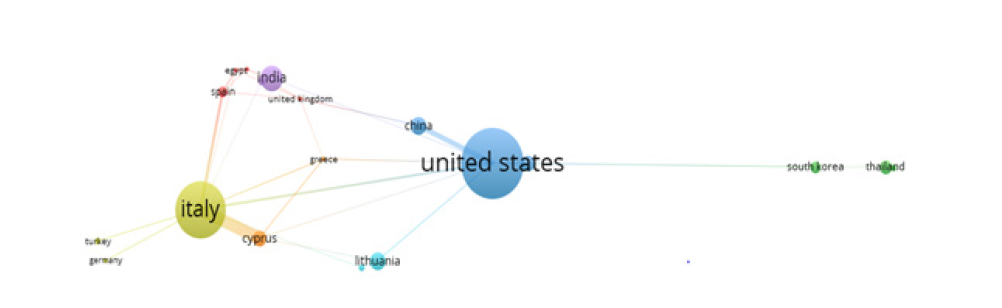
Extensive collaboration has contributed to the highest publications: Another visualization shown in Figure 7 is produced by VOS viewer that links international collaborations in microgreens research. 155 links was found among 21 countries, based on a minimum of five documents per country. The results indicate that Italy and the USA are central hubs in this network. Italy shows a particularly strong degree of collaboration with European countries, boasting a link strength of 42, while the USA, with a link strength of 24, demonstrates frequent collaborative ties with nations such as China, South Korea, Cyprus and Italy. Within Asia, China and India emerge as leading collaborators, with China maintaining strong international relationships (link strength 10). But there is a significant gap in understanding the qualitative nature of these collaborations because the metrics do not reveal whether these international ties lead to high-impact research outputs.
Figure 7:Network of collaboration formed among various countries.
The most productive journal was Horticulturae
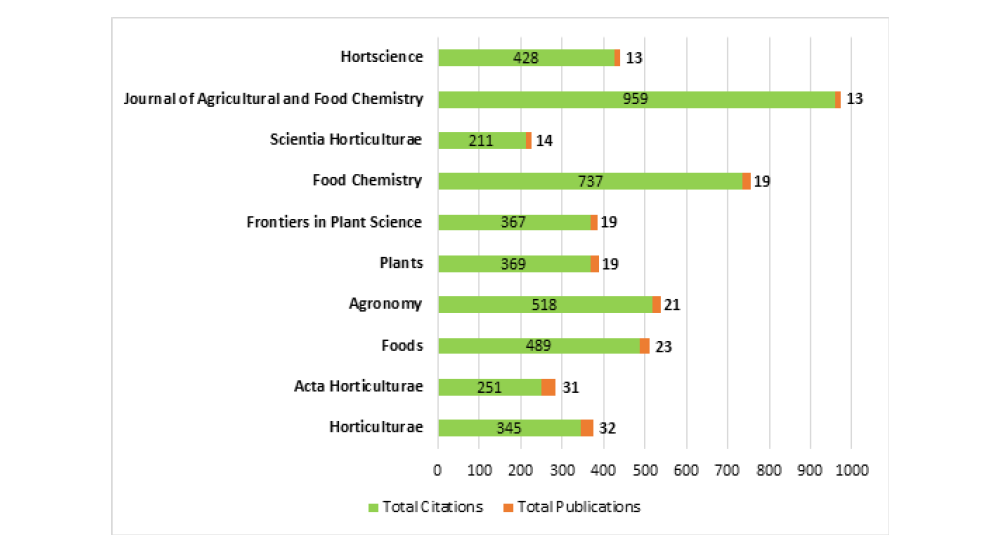
The top ten prolific journals account for 34.2% of the total publications in microgreens research. It comprises 596 scientific papers distributed across 198 different journal sources. Among which Horticulturae was the most productive journal with 32 TP, followed by Acta Horticulturae (31 TP), Foods (23 TP) and Agronomy (21 TP). The top three journals were European based. Further, citation analysis reveals that the Journal of Agriculture Food Chemistry achieved the highest position (TC 959), followed by Food Chemistry (737 TC) and Agronomy (518 TC), highlighting its significance in microgreen research, despite their 9th and 7th ranking, respectively, in terms of publication count. This variation emphasizes the importance of considering both the volume of publications and their citation impact while evaluating journal performance. Figure 8 illustrates that Food Chemistry, Hort science, and Foods, has received the highest H-index i.e., 10. While, Journal of Agricultural Food Chemistry and Agronomy each had 9 H-index. The initial publication trends indicate that Horticulturae and Acta Horticulturae, both had been a pioneering journal in microgreens research. But, over the time Horticulturae has emerged as the leading publication platform, reflecting a huge increase in interest for publishing researches related to microgreens.
Figure 8:Most prominent journals in the field of microgreens research, based on TP and TC.
Most cited articles deal with the effect of light on pigments, carotenoids and bioactive compounds
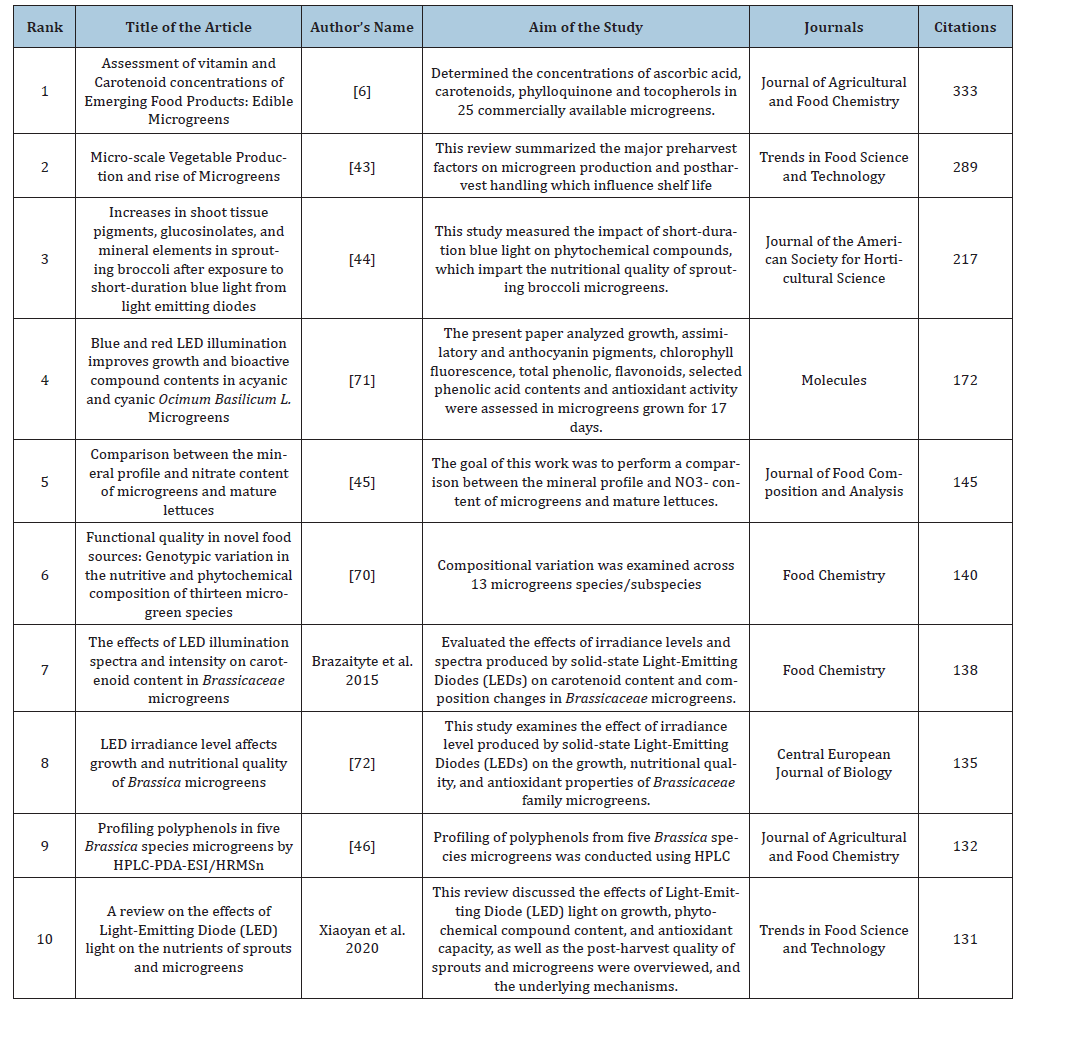
Table 1 shows the top 10 most cited papers along with their publication year, title, and citation counts. The most cited in this study was ‘Assessment of Vitamin and Carotenoid Concentrations of Emerging Food Products: Edible Microgreens’ by Xiao [6], with 333 citations. This article deals with the concentrations of ascorbic acid, carotenoids, phylloquinone and tocopherols in 25 commercially available microgreens. The second most cited paper was ‘Micro-scale Vegetable Production and Rise of Microgreens by Kyriacou [43], (289 citations). This research comprehensively reviewed preharvest factors influencing microgreen production and postharvest aspects affecting shelf life and microbial safety. The third most cited study was done by Kopsell and Sams [44] (217 citations) who emphasizes the impact of short-duration blue light on phytochemical compounds, focusing light-mediated changes in bioactive profiles. Other studies, such as by Pinto et al. [45] analyzed the mineral profile and nitrate content of microgreens, while Sun et al. [46] examined the polyphenolic composition of Brassica species. The remaining highly cited articles have fewer than 200 citations, with an important portion focusing on the effects of light on pigments, carotenoids, and other bioactive compounds. This suggests a strong research focus on controlled environment agriculture. However, this emphasis limits the exploration of other critical factors affecting microgreen composition, such as substrate composition, nutrient availability and environmental stressors. Additionally, while existing research extensively covers vitamins, carotenoids and polyphenols, other bioactive compounds like glucosinolates, bioactive peptides and alkaloids remain underexplored. The postharvest stability of these compounds and their bioavailability upon consumption also require further investigation, as limited studies have explored how storage, processing and digestion influence the functional efficacy of microgreens. Despite the increasing commercial interest in microgreens, research on consumer acceptability, sensory evaluation and market trends remains inadequate.
Table 1:Highlights the top 10 most cited papers with their references, title, and total citation counts.
Top most frequently used keywords have constrained occurrence
The keyword analysis reveals the current state on microgreens research, shedding light on the predominant areas of interest [47]. As per the biblioshiny software, the high occurrence of terms like “microgreens,” “antioxidants,” and “carotenoid” indicates that most of the research is focused on nutrition and human health [48]. Additionally, keywords such as “functional food” and “bioactive compounds” indicates the growing recognition of microgreens as a rich source of bioactive compounds with effective therapeutic properties. The clustering of keywords such as “phenolic compounds,” “ascorbic acid,” “brassica,” and “biofortification” reflects a concentrated effort to understand the biochemical composition of microgreens and their potential to benefit human health. Whereas, term like “LED” indicates a specific focus on cultivation methods that may enhance the nutritional profile of these plants. The top keywords related to microgreens have less than 30 occurrences, despite their frequency. This suggests that the field is still in its nascent phase. A more holistic research approach is required that interplay between the nutritional profile of microgreens, its cultivation techniques, and potential health outcomes, to understand their broader applications in the food and health industries. Insufficient emphasis on the practical aspects of large-scale cultivation, distribution and consumer acceptance is another significant gap found. Since, microgreens continue to gain attention in culinary and health circles, therefore research should also address how to make their production more efficient, sustainable and economically feasible for global markets.
The major research hotspots throughout the years
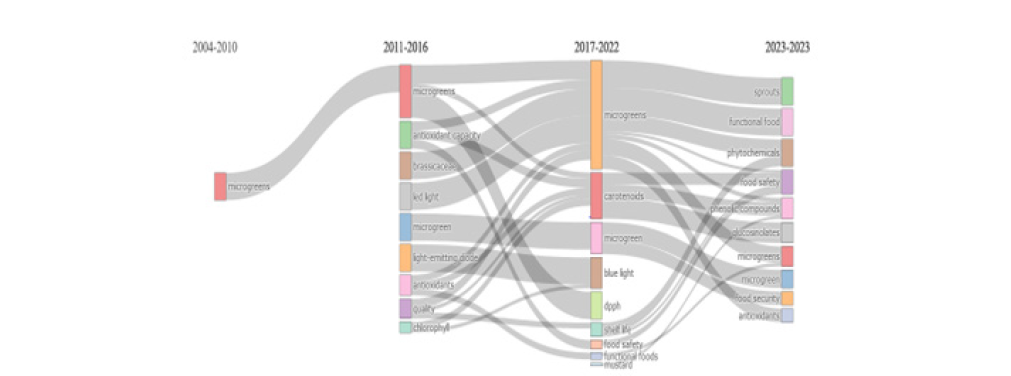
Figure 9 depicts the thematic evolution map of keyword trends concerning microgreen studies obtained through bibliometrics, which describes the progress of topics in three major different stages (2004-2010, 2011-2016 and 2017-2023). Study on microgreens have exponentially increased with rising concerns about food security, urbanization, and climate change [49]. Their rapid growth cycle, minimal resource requirements and high nutritional value have placed them in a sustainable food option [11,50]. Findings shows that a trend of keywords began to appear in the research landscape after 2010 (Figure 10). Between 2011 and 2016, major research topics included “Antioxidant activity,” “Brassicaceae,” “LED,” and “Quality,” highlighting more studies on the nutritional and antioxidant properties of Brassicaceae microgreens [51]. Before this period, microgreens were relatively unknown in academic and commercial spaces. However, as studies highlighted their high nutrient density, health benefits, and potential for indoor farming, researchers began exploring various aspects, including cultivation methods, bioactive compounds, and market feasibility [52,53]. Later, from 2017 to 2022-2023, research expanded into “Food safety,” “Food security,” and “Shelf life,” reflecting a growing emphasis on quality control and the food supply chain. During this phase studies on various innovations were done to ensure the longevity of microgreens like LED lighting, nano-fertilizers, and ink-jet pesticide delivery [54]. introduced ink-jet technology for pesticide application. Research on plant protection issues started during this period [55]. explored the utilization of Light-Emitting Diodes (LEDs) as the primary light source for cultivating highquality Brassicaceae microgreens in controlled environments in their article, “Light-emitting diodes (LEDs) for higher nutritional quality of Brassicaceae microgreens.”
Figure 9:Frequently used keywords distribution with respect to microgreens research.

Figure 10:The emerging trend of microgreens from 2004 to 2023 based on niche research areas throughout the study.
Other factors influencing shelf life include species selection, fertilization, biofortification, lighting conditions, and the growth stage during harvest [56]. Since microgreens are highly perishable and prone to rapid deterioration, optimizing postharvest conditions can extend their shelf life while preserving their nutritional and organoleptic properties [57,58]. Postharvest mechanisms encompass handling and application techniques, temperature regulation, atmospheric composition, lighting conditions and packaging technologies [58-61]. that significantly influence shelf life and microbial safety. Further, studies have explored the efficacy of sanitizing agents, such as calcium chloride and chlorine washes, in reducing microbial load and enhancing post-harvest safety [62,63]. Research on packaging innovations and sanitization methods contributes to improved food safety standards, reducing microbial contamination risks. Future investigations should further explore the synergistic effects of these postharvest strategies to develop sustainable and cost-effective preservation techniques. The selection of appropriate packaging materials, including polyethylene, polypropylene and Modified Atmospheric Packaging (MAP), has also been a focal point in optimizing storage conditions and minimizing postharvest losses [64-73].
Conclusion
The bibliometric analysis identifies microgreens as a current hotspot in the field of functional food, food safety and sustainable food production. USA was the pioneer in microgreen studies but Italy rapidly expanded its contributions since 2019, due to its culinary and nutritional interest. Identifying research gaps, more research are still required to explore therapeutic potential, advanced urban farming systems, innovative postharvest technologies and consumer awareness. As well as, importance of microgreens in global food security, sustainability, and public health initiatives along with focusing individual health. More funding, collaborative research, and interdisciplinary approaches that integrate nutrition science, agricultural economics and food technology are required to fully understand the potential of microgreens as a functional food source. In parallel, enforcement of strict food safety standards will be a vital support for the integration of microgreens into mainstream food supply chains through policy makers.
Limitations of the Study
The study was limited to Scopus for document extraction, limiting citation analysis to publications indexed within this database. The analysis covers publications of two decades, from 2004 to September 2024, excluding secondary documents from the Scopus database, which may be considered in future research. The limitations of VOS viewer and Biblioshiny, such as reliance on predefined parameters may result in incomplete or biased data visualizations. Despite these challenges, the study provides a significant and detailed overview of the current scenario about microgreens research.al cultures, before implementing microbiomemodulating strategies.
Acknowledgment
The Department of Family and Community Sciences, University of Allahabad, has provided support under the Research Project by the Council of Science and Technology, Lucknow, Uttar Pradesh, UPCST-Lucknow.
References
- Ebert AW (2013) Ex situ conservation of plant genetic resources of major vegetables. Conservation of Tropical Plant Species, pp. 373-417.
- Ebert AW (2021) Sprouts and microgreens-novel food sources for healthy diets. Plants 11(4): 571.
- Mirzabaev A, Kerr RB, Hasegawa T, Pradhan P, Wreford A, et al. (2022) Severe climate change risks to food security and nutrition. Climate Risk Management 39: 100473.
- Choe U, Yu LL, Wang TY (2018) The science behind microgreens as an exciting new food for the 21st Journal of Agricultural and Food Chemistry 66(44): 11519-11530.
- Sharma S, Shree B, Sharma D, Kumar S, Kumar V, et al. (2022) Vegetable microgreens: The gleam of next generation super foods, their genetic enhancement, health benefits and processing approaches. Food Research International 155: 111038.
- Xiao Z, Lester GE, Luo Y, Wang Q (2012) Assessment of vitamin and carotenoid concentrations of emerging food products: Edible microgreens. Journal of Agricultural and Food Chemistry 60(31): 7644-7651.
- Galieni A, Falcinelli B, Stagnari F, Datti A, Benincasa P (2020) Sprouts and microgreens: Trends opportunities, and horizons for novel research. Agronomy 10(9): 1424.
- Mir SA, Shah MA, Mir MM (2016) Microgreens: Production, shelf life, and bioactive components. Critical Reviews in Food Science and Nutrition 57(12): 2730-2736.
- Treadwell D, Hochmuth R, Landrum L, Laughlin W (2020) Microgreens: A new specialty crop: HS1164, rev. 9/2020. EDIS 2020(5).
- Truzzi F, Whittaker A, Roncuzzi C, Saltari A, Levesque MP, et al. (2021) Microgreens: Functional food with antiproliferative cancer properties influenced by light. Foods 10(8): 1690.
- Bhaswant M, Shanmugam DK, Miyazawa T, Abe C, Miyazawa T (2023) Microgreens-A comprehensive review of bioactive molecules and health benefits. Molecules 28(2): 867.
- Du M, Xiao Z, Luo Y (2022) Advances and emerging trends in cultivation substrates for growing sprouts and microgreens toward safe and sustainable agriculture. Current Opinion in Food Science 46: 100863.
- Zhang Y, Xiao Z, Ager E, Kong L, Tan L (2021) Nutritional quality and health benefits of microgreens, a crop of modern agriculture. Journal of Future Foods 1(1): 58-66.
- Rizvi A, Sharma M, Saxena S (2022) Microgreens: A next generation nutraceutical for multiple disease management and health promotion. Genetic Resources and Crop Evolution 70(2): 311-332.
- Mlinarić S, Gvozdić V, Vuković A, Varga M, Vlašiček I, et al. (2020) The effect of light on antioxidant properties and metabolic profile of chia microgreens. Applied Sciences 10(17): 5731.
- Dhakshayani GM, Alias PJ (2022) A comparative study of phytochemical, antioxidant, anticarcinogenic, and antidiabetic potential of coriander (Coriandrum sativum): Microgreen and mature plant. Foods and Raw materials 10(2): 283-294.
- Ma S, Tian S, Sun J, Pang X, Hu Q, et al. (2022) Broccoli microgreens have hypoglycemic effect by improving blood lipid and inflammatory factors while modulating gut microbiota in mice with type 2 diabetes. Journal of Food Biochemistry 46(7): e14145.
- Meas S, Luengwilai K, Thongket T (2020) Enhancing growth and phytochemicals of two amaranth microgreens by LEDs light irradiation. Scientia Horticulturae 265: 109204.
- Paglialunga G, Nakhel El, Proietti C, Moscatello S, Battistelli S, et al. (2023) Substrate and fertigation management modulate microgreens production, quality and resource efficiency. Frontiers in Sustainable Food Systems 7: 1222914.
- Amitrano C, Paglialunga G, Battistelli A, Micco DV, Del Bianco, et al. (2023) Defining growth requirements of microgreens in space cultivation via biomass production, morpho-anatomical and nutritional traits analysis. Frontiers in Plant Science 14: 1190945.
- Budé S (2019) Growth and nutritional value of a selection of microgreen plants under space conditions to evaluate their use as astronaut’s food.
- Partap M, Sharma D, Hn D, Thakur M, Verma V, et al. (2023) Microgreen: A tiny plant with superfood potential. Journal of Functional Foods 107: 105697.
- Lucas BF, Costa JV, Brunner TA (2022) How information on superfoods changes consumers’ attitudes: An explorative survey study. Foods 11(13): 1863.
- Yadav LP, Koley TK, Tripathi A, Singh S (2018) Antioxidant potentiality and mineral content of summer season leafy greens: Comparison at mature and microgreen stages using chemometric. Agricultural Research 8(2): 165-175.
- Bianchi G, Falcinelli B, Tosti G, Bocci L, Benincasa P (2019) Taste quality traits and volatile profiles of sprouts and wheatgrass from hulled and non-hulled Triticum species. Journal of Food Biochemistry 43(7): e12869.
- Mishra N, Tripathi R, Pandey D, Shah K, Chauhan NS (2024) Wheatgrass (Triticum aestivum): A miraculous microgreen: An overview. Journal of Future Foods 5(3): 239-247.
- Lone JK, Pandey R, Gayacharan (2024) Microgreens on the rise: Expanding our horizons from farm to fork. Heliyon 10(4): e25870.
- Renna M, Paradiso VM (2020) Ongoing research on microgreens: Nutritional properties, Shelf-Life, sustainable production, innovative growing and processing approaches. Foods 9(6): 826.
- Jambor T, Knizatova N, Valkova V, Tirpak F, Greifova H, et al. (2022) Microgreens as a functional component of the human diet: A review. Journal Of Microbiology, Biotechnology and Food Sciences 12(1): e5870.
- Ganjihal G, Gowda MP (2008) ACM transaction on information systems (1989-2006): A bibliometric study. Information Studies 14(4): 223-234.
- Zupic I, Čater T (2014) Bibliometric methods in management and organization. Organizational Research Methods 18(3): 429-472.
- Ghaleb H, Alhajlah HH, Abdullah B, Kassem AA, Sharafi M (2022) A Scientometric analysis and systematic literature review for construction project complexity. Buildings 12(4): 482.
- Eck NJ, Waltman L (2009) Software survey: VOSviewer, a computer program for bibliometric mapping. Scientometrics 84(2): 523-538.
- Aria M, Cuccurullo C (2017) Biblometrix: An R-tool for comprehensive science mapping analysis. Journal of Informetrics 11(4): 959-975.
- Raan AJ (2005) Fatal attraction: Conceptual and methodological problems in the ranking of universities by bibliometric methods. Scientometrics 62(1): 133-143.
- Svensson G (2010) SSCI and its impact factors: A “prisoner’s dilemma”? European Journal of Marketing 44(1/2): 23-33.
- Teplitskiy M, Duede E, Menietti M, Lakhani KR (2022) How status of research papers affects the way they are read and cited. Research Policy 51(4): 104484.
- Costas R, Bordons M (2007) The h-index: Advantages, limitations and its relation with other bibliometric indicators at the micro level. Journal of Informetrics 1(3): 193-203.
- Jarneving B (2007) Bibliographic coupling and its application to research-front and other core documents. Journal of Informetrics 1(4): 287-307.
- Lee J, Pill W, Cobb B, Olszewski M (2004) Seed treatments to advance greenhouse establishment of beet and chard microgreens. The Journal of Horticultural Science and Biotechnology 79(4): 565-570.
- Michell KA, Isweiri H, Newman SE, Bunning M, Bellows LL, et al. (2020) Microgreens: Consumer sensory perception and acceptance of an emerging functional food crop. Journal of Food Science 85(4): 926-935.
- Goyal MR, Malik JA, Kumari A (2024) The functional foods: Nutrient and health benefits. Apple Academic Press, USA, p. 466.
- Kyriacou MC, Rouphael Y, Gioia D, Kyratzis F, Serio A, et al. (2016) Micro-scale vegetable production and the rise of microgreens. Trends in Food Science & Technology 57: 103-115.
- Kopsell DA, Sams CE (2013) Increases in shoot tissue pigments, glucosinolates, and mineral elements in sprouting broccoli after exposure to short-duration blue light from light emitting diodes. Journal of the American Society for Horticultural Science 138(1): 31-37.
- Pinto E, Almeida AA, Aguiar AA, Ferreira IM (2014) Comparison between the mineral profile and nitrate content of microgreens and mature lettuces. Journal of Food Composition and Analysis 37: 38-43.
- Sun J, Xiao Z, Lin L, Lester GE, Wang Q, et al. (2013) Profiling polyphenols in five brassica species microgreens by UHPLC-PDA-ESI/HRMS (n.). Journal of Agricultural and Food Chemistry 61(46): 10960-10970.
- Song Y, Chen X, Hao T, Liu Z, Lan Z (2019) Exploring two decades of research on classroom dialogue by using bibliometric analysis. Computers & Education 137: 12-31.
- Comerio N, Strozzi F (2018) Tourism and its economic impact: A literature review using bibliometric tools. Tourism Economics 25(1): 109-131.
- Dubey S, Harbourne N, Harty M, Hurley D, Elliott-Kingston C (2023) Microgreens production: Exploiting environmental and cultural factors for enhanced agronomical benefits. Plants 13(18): 2631.
- Turner ER, Luo Y, Buchanan RL (2020) Microgreen nutrition, food safety, and shelf life: A review. Journal of Food Science 85(4): 870-882.
- Baenas N, Gómez-Jodar I, Moreno DA, García-Viguera C, Periago PM (2017) Broccoli and radish sprouts are safe and rich in bioactive phytochemicals. Postharvest Biology and Technology 127: 60-67.
- Singh A, Singh J, Kaur S, Gunjal M, Kaur J, et al. (2024) Emergence of microgreens as a valuable food, current understanding of their market and consumer perception: A review. Food Chemistry X 23: 101527.
- Gunjal M, Singh J, Kaur J, Kaur S, Nanda V, et al. (2024) Microgreens: Cultivation practices, bioactive potential, health benefits, and opportunities for its utilization as value-added food. Food Bioscience 62: 105133.
- Idbella M, Giusti D, Gulli G, Bonanomi G (2023) Structure, functionality, compatibility with pesticides and beneficial microbes, and potential applications of a new delivery system based on ink-jet technology. Sensors 23(6): 3053.
- Vaštakaitė V, Viršilė A (2015) Light-Emitting Diodes (LEDs) for higher nutritional quality of Brassicaceae CABI Databases 1: (111-117).
- Gupta A, Sharma T, Singh SP, Bhardwaj A, Srivastava D, et al. (2023) Prospects of microgreens as budding living functional food: Breeding and biofortification through OMICS and other approaches for nutritional security. Frontiers in Genetics 14: 1053810.
- Dayarathna NS, Damunupola N, Xiao JW, Gamage Z, Merah A, et al. (2023) Effect of storage temperature on storage life and sensory attributes of packaged mustard microgreens. Life 13(2): 393.
- Patil M, Sharma S, Sridhar K, Anurag RK, Grover K, et al. (2024) Effect of postharvest treatments and storage temperature on the physiological, nutritional, and shelf-life of broccoli (Brassica oleracea) microgreens. Scientia Horticulturae 327: 112805.
- Komeroski MR, Beninca T, Portal KA, Malheiros PS, Klug TV, et al. (2024) Postharvest quality of arugula (Eruca sativa) microgreens determined by microbiological, physico-chemical, and sensory parameters. Foods 13(19): 3020.
- Sharma A, Hazarika M, Heisnam P, Pandey H, Devadas V, et al. (2023) Influence of storage conditions, packaging, post-harvest technology, nanotechnology and molecular approaches on shelf life of microgreens. Journal of Agriculture and Food Research 14: 100835.
- Gudžinskaitė I, Laužikė K, Pukalskas A, Samuolienė G (2024) The effect of light intensity during cultivation and postharvest storage on mustard and kale microgreen quality. Antioxidants 13(9): 1075.
- Jain S, Singh N, Bose SK, Pandey A (2025) Management of disease losses in leguminous microgreens. Recent Trends and Applications of Leguminous Microgreens as Functional Foods 217-236.
- Işık S, Aytemiş Z, Çetin B, Topalcengiz Z (2022) Possible explanation for limited reduction of pathogens on radish microgreens after spray application of chlorinated water during growth with disperse contamination spread of abiotic surrogate on leaves. Journal of Food Safety 42(4): e12984.
- Ghoora MD, Srividya N (2020) Effect of packaging and coating technique on postharvest quality and shelf life of Raphanus sativus L. and Hibiscus sabdariffa L. microgreens. Foods 9(5): 653.
- Ranjitha K, Mhasizotuo Y, Vasudeva KR, Sudhakar R, Shivashankara DV, et al. (2023) Effect of modified atmosphere packaging on quality of minimally processed fenugreek (Trigonella foenum-graecum ) microgreens. Journal of Horticultural Sciences 18(2).
- Brazaitytė A, Sakalauskienė S, Samuolienė G, Jankauskienė J, Viršilė A, et al. (2014) The effects of LED illumination spectra and intensity on carotenoid content in brassicaceae microgreens. Food Chemistry 173: 600-606.
- Brentlinger DJ (2007) New trends in hydroponic crop production in the US. In International Conference and Exhibition on Soilless Culture: ICESC 742: 31-33.
- Castilhos GD, Zuanazzi N, Fabrin NR, Oliveira TM (2020) Glyphosate and its toxicology: A scientometric review. The Science of the Total Environment 733: 139359.
- Fuente BL, López-García G, Máñez V, Alegría A, Barberá R, et al. (2020) Antiproliferative effect of bioaccessible fractions of four Brassicaceae microgreens on human colon cancer cells linked to their phytochemical composition. Antioxidants 9(5): 368.
- Kyriacou MC, El-Nakhel C, Graziani G, Pannico A, Soteriou GA, et al. (2018) Functional quality in novel food sources: Genotypic variation in the nutritive and phytochemical composition of thirteen microgreens species. Food Chemistry 277: 107-118.
- Lobiuc A, Vasilache V, Oroian M, Stoleru T, Burducea M, et al. (2017) Blue and red led illumination improves growth and bioactive compounds contents in acyanic and cyanic ocimum basilicum l. microgreens. Molecules 22(12): 2111.
- Samuolienė G, Brazaitytė A, Jankauskienė J, Viršilė A, Sirtautas R, et al. (2013) LED irradiance level affects growth and nutritional quality of Brassica microgreens. Open Life Sciences 8(12): 1241-1249.
- Zhang X, Bian Z, Yuan X, Chen X, Lu C (2020) A review on the effects of Light-Emitting Diode (LED) light on the nutrients of sprouts and microgreens. Trends in Food Science & Technology 99: 203-216.
© 2026 Neetu Mishra. This is an open access article distributed under the terms of the Creative Commons Attribution License , which permits unrestricted use, distribution, and build upon your work non-commercially.
Editor In Chief







.jpg)































Signup for Newsletter

Quick Links
 Editorial Board Registrations
 Submit your Article
 Best Paper of the Volume
 Reprints
 Refer a Friend
 Advertise With Us
Our Recent Edition
.jpg)


Top Editors




.jpg)

















.bmp)
.jpg)
.png)
.jpg)













.jpg)






.png)

.png)




.png)




Financial Support

Sponsors

Latest e-Books

Latest Video

 a Creative Commons Attribution 4.0 International License. Based on a work at www.crimsonpublishers.com.
Best viewed in
a Creative Commons Attribution 4.0 International License. Based on a work at www.crimsonpublishers.com.
Best viewed in 
 | Above IE 9.0 version