

- About Us
- Information
-

The Author ensures that the research has been conducted responsibly and ethically with adherence to all relevant regulations. read more..
- For Authors
- For Reviewer
- Manuscript Guidelines
- Membership
- Publication Ethics
-
- Journals
- Reprints
- e-Books
- Videos
- Policies
- Contact Us
 COVID-19
- Submissions



Full Text
Novel Research in Sciences
Copper-Compound Bipolar Plates for Recyclable Stationary Zinc-Air Batteries-The ‘Zincycle’ Project
Thorsten Hickmann* and Prasad Venkatesan
Whitecell Eisenhuth GmbH und Co. KG, Germany
*Corresponding author:Thorsten Hickmann, Whitecell Eisenhuth GmbH und Co. KG, Germany
Submission: September 19, 2026;Published: November 03, 2026

Volume17 Issue 4November 03, 2026
Abstract
Rechargeable zinc-air batteries combine a high theoretical energy density with water-based electrolytes and the use of relatively readily available raw materials. For stationary storage, however, it is not only the electrochemistry of the anode and air electrode that is crucial, but also the stackable, dense, electrically conductive and recyclable design of the cell connectors. Copper-compound bipolar plates are important in this context. This paper describes the requirements, the development process and the key projectspecific findings: copper-compound plates are manufactured and optimised, examined in zinc-air test cells and assessed with regard to recycling. Copper recovery from bipolar plates was demonstrated at approximately 99.75% by weight. These are the results from the Zincycle project.
Keywords:Bipolar plate; Copper-graphite compound; Stationary energy storage; Recycling of Zinc-Air Batteries (ZAB)
Context and Scope: Zinc-Air Stacks Require Advanced Bipolar Plates
Zinc-Air Batteries (ZABs) are considered a promising post-lithium-ion technology for stationary energy storage because oxygen from the ambient air is used as an active reactant and zinc is comparatively abundant and well established in industrial material cycles [1,2]. Despite these advantages, electrically rechargeable ZABs still face several technological challenges. Current research particularly identifies the reversibility and cycle stability of the zinc anode, the kinetics and durability of bifunctional oxygen electrodes, and the reliable integration of individual cells into low-loss, long-lasting stacks as major development fields [1-4].
While considerable research has focused on electrode materials, catalysts and electrolytes, the role of bipolar plates and current collectors has received comparatively less attention in zinc-air systems. Nevertheless, these components are essential for transferring laboratory-scale electrochemical concepts into technically relevant multi-cell stacks. In a stack configuration, bipolar plates electrically connect adjacent cells in series, separate the individual reaction compartments, provide defined contact and sealing surfaces, transmit mechanical compression forces and contribute substantially to the overall mass, volume and manufacturing complexity of the system. Experience from fuel-cell technology demonstrates that bipolar plates can account for a significant share of stack weight, volume and cost [5].
The alkaline environment of rechargeable zinc-air batteries places additional demands on bipolar-plate materials. Besides sufficient electrical conductivity and mechanical stability, the plates must remain chemically stable in contact with concentrated alkaline electrolyte and zinc-containing species. At the same time, exposed metallic surfaces or metallic impurities must not promote parasitic hydrogen evolution, which may increase cell resistance, disturb the electrolyte balance and negatively affect cycling behaviour.
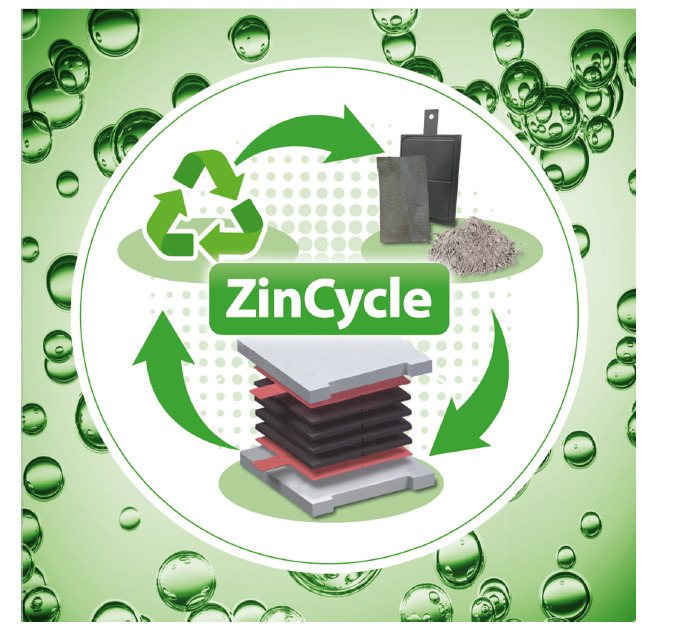
Within the collaborative ZinCycle project, these requirements were addressed through the development of lightweight coppergraphite- polymer compound bipolar plates. The overall battery concept combined a raw-material-optimised membrane-electrode assembly, a cycle-stable porous zinc electrode and compoundbased cell connectors. A stationary demonstrator with a nominal power of 100W and a capacity of 100Ah was constructed within the project. For this project, a special picture was created (Figure 1).
Figure 1:Zincycle project.
The objective of this article is to summarise and critically discuss the project-specific development path of the copper-compound bipolar plates, from material selection and manufacturing considerations to electrochemical screening, stack integration and recyclability. Particular attention is given to the conflicting requirements of electrical conductivity, chemical stability, low gas evolution, processability and end-of-life recovery. The article therefore focuses not only on the performance of the material itself, but on the role of the bipolar plate as an interface between materials engineering, electrochemical cell performance, stack design and circular-economy requirements.
Requirements and Quantitative Evaluation Criteria for Copper-Compound Bipolar Plates
The development of copper-compound bipolar plates for rechargeable zinc-air batteries cannot be based on the optimisation of a single material property. Instead, electrical conductivity, chemical stability, mechanical integrity, low gas evolution, processability, sealing behaviour and recyclability must be considered simultaneously. These requirements are partly conflicting. Increasing the conductive filler content, for example, generally improves electrical conductivity but can reduce melt flow, increase porosity and adversely affect mechanical strength and sealing behaviour [6,7].
From an electrical perspective, the bipolar plate contributes to the total ohmic losses of the cell through both the bulk resistance of the plate and the contact resistance at the interfaces to adjacent components [8-10]. For a homogeneous plate, the bulk resistance can be described by
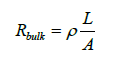
where Rbulk is the electrical resistance, ρ is the specific electrical resistivity, L is the current path length and A is the effective crosssectional area.
The electrical conductivity σ is given by
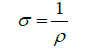
For a bipolar plate integrated into a stack, however, bulk conductivity alone is insufficient. The effective ohmic voltage loss can be approximated by

where I is the operating current and R contact represents the combined interfacial contact resistances. Consequently, material optimisation must consider both intrinsic conductivity and the quality of the electrical interfaces under compression.
The incorporation of copper is intended to reduce electrical resistance and improve current distribution across the active cell area. Graphite or other carbon-based fillers contribute to the formation of a stable electrically conductive network and support chemical resistance. The polymer phase provides mechanical cohesion, enables shaping and contributes to sealing and dimensional stability. In contrast to a solid copper plate, a compound plate can be designed with lower metal content and reduced weight. Compared with brittle graphite plates, polymerbound compounds also provide greater flexibility in manufacturing and geometry integration.
A particularly important requirement for zinc-air batteries is the suppression of parasitic hydrogen evolution. Metallic impurities or electrochemically active surface areas may catalyse hydrogen formation in alkaline media and thereby increase cell resistance, disturb electrolyte distribution and impair cycling behaviour [3,4]. Project-internal screening tests confirmed that unsuitable material combinations and contaminations can result in visible gas evolution and foaming between the current collector and the zinc electrode [11].
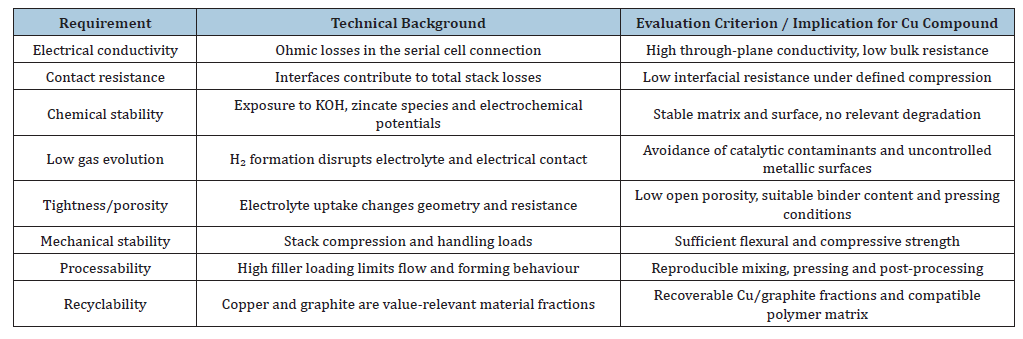
This observation leads to an important design criterion for copper-compound bipolar plates: copper must form an electrically effective conductive network while remaining embedded in a chemically and electrochemically controlled compound architecture. Therefore, the optimisation target is not maximum copper content, but rather the lowest technically achievable electrical resistance combined with acceptable porosity, mechanical stability, chemical resistance and low hydrogen evolution, see also Table 1.
Table 1:Development requirements and evaluation criteria for copper-compound bipolar plates.
Porosity is closely linked to several of these requirements. Open pores may absorb electrolyte, change the local electrical resistance and lead to swelling or drying effects within the zinccontaining electrode compartment. The binder content and pressing parameters must therefore be selected in such a way that a dense structure is obtained without interrupting the electrically conductive Cu/graphite network.
Recyclability represents an additional design criterion. As copper constitutes both a functional and value-determining material fraction, the compound architecture should allow copper, graphite and polymer fractions to be separated or recovered at the end of life. The bipolar plate therefore has to be designed not only for electrochemical operation, but also for subsequent material recovery. This requirement distinguishes the ZinCycle approach from conventional component optimisation focused exclusively on operational performance. The original manuscript already identifies this Cu/graphite/polymer separation as a central end-oflife requirement.
Materials, Fabrication and Optimisation Approach
Material and formulation design
The copper-compound bipolar plate was developed as a threephase material consisting of copper, graphite and a thermoplastic polymer matrix. Copper provides highly conductive pathways, graphite contributes to the formation and stabilisation of the electrically conductive network, while the polymer phase provides mechanical cohesion, dimensional stability and processability.
During the material screening, the relative proportions of copper, graphite and polymer were systematically varied. Both mass- and volume-based formulations were considered, since the large differences in density between copper, graphite and polymer make a comparison based on weight fraction alone insufficient. The volume fraction of an individual component \(i\) can be calculated according to
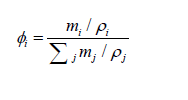
where mi and ρi represent the mass and density of the respective component. This approach allows the formation of the electrically conductive particle network to be related more directly to the actual spatial fraction of copper and graphite within the compound.
Polypropylene (PP) and Polyvinylidene Fluoride (PVDF) were investigated as thermoplastic binder systems. In the course of the optimisation, different copper morphologies were evaluated. Initial formulations using fine copper powder were progressively modified towards defined copper flakes with a characteristic size of approximately 315μm, a copper purity of 99.96%, and an iron content below 20ppm. The change in particle morphology was intended to improve the formation of conductive pathways while simultaneously reducing the amount of potentially electrochemically active impurities.
A broad formulation matrix was investigated, including different copper, graphite and polymer contents. Polymer volume fractions ranging from approximately 10 to 90% were included during the screening stage to identify the limits between electrical conductivity, mechanical integrity and processability. The purpose of this broad screening was not to maximise copper content alone, but to identify compositions combining sufficiently low electrical resistance with low porosity, acceptable mechanical stability and low parasitic gas evolution.
Manufacturing process
The raw materials were initially homogenised as powder mixtures and subsequently processed into blank plates by hot pressing. The manufacturing route was selected because it allowed highly filled compounds to be processed without requiring the flowability necessary for conventional injection moulding.
During process development, pressing pressure, tool temperature, heating and cooling conditions were systematically adjusted to improve material consolidation and obtain a homogeneous plate structure. Particular attention was paid to preventing pores and local material segregation, since both phenomena can increase electrical resistance and promote electrolyte uptake.
An important finding during the project was that the manufacturing equipment itself can influence electrochemical behaviour. Iron-containing contamination was considered particularly critical because even small quantities of foreign metallic particles may contribute to parasitic hydrogen evolution in the alkaline zinc environment. Therefore, a metal-free or steel-free tooling concept was developed for the relevant contact surfaces of the pressing process. Powder handling, mixing, mould filling, tool cleaning and subsequent machining were treated as electrochemically relevant process parameters rather than purely conventional manufacturing variables.
After pressing, blank plates were machined into defined test geometries using CNC/CAM processing. Circular and rectangular specimens were produced for electrical, mechanical and electrochemical screening. This approach allowed identical material batches to be evaluated using different characterisation methods.
Alternative processing routes were also investigated. Trials involving extrusion resulted in increased gas evolution during subsequent screening. Abrasion originating from the extrusion equipment was considered a possible explanation, illustrating the sensitivity of the zinc-air system towards metallic contamination. Consequently, hot pressing under controlled tooling conditions was used as the preferred manufacturing route for the subsequent material-development stages.
Hybrid concepts containing discrete metallic inserts were also evaluated. Although such inserts can theoretically provide highly conductive current pathways, their geometrical positioning and alignment within the compound during processing proved difficult to control reproducibly. Compounds containing dispersed metallic filler therefore represented the more robust manufacturing approach within the scope of the project.
Screening and optimisation criteria
Material development followed an iterative screening procedure rather than the optimisation of a single performance parameter. In one of the systematic development stages, 24 compound variants, with three machined specimens per formulation, were compared. As project results, Table 2 gives an overview
Table 2:Quantitative results of the Zincycle project.
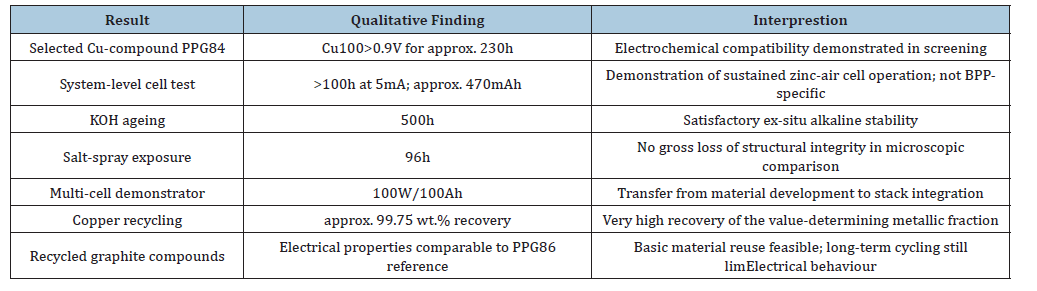
Table 2 summarises the main quantitative findings obtained during the successive validation steps. The results show that the selected copper-compound material provided stable electrochemical behaviour over extended test periods and maintained its structural integrity under alkaline and accelerated corrosion conditions.
At system level, the transfer from material screening to a 100W/100Ah multi-cell demonstrator confirmed the general suitability of the developed bipolar-plate concept for stack integration. At the same time, the very high copper recovery rate and the successful reuse of recycled graphite demonstrate that electrical functionality and recyclability can be addressed within the same material concept.
Overall, the data indicate that the main remaining development needs concern long-term cycling stability and further reduction of electrical and interfacial losses rather than basic material feasibility
Electrical measurements in detail
Electrical measurements were therefore not used as the sole selection criterion. Early screening demonstrated that materials showing attractive electrical properties could nevertheless be unsuitable if they exhibited pronounced gas evolution or excessive electrolyte uptake. Several early formulations generated visible gas bubbles even without applied current, while others showed increased foaming after electrochemical impedance measurements. Porous specimens were also observed to absorb electrolyte and alter the condition of the adjacent zinc slurry [11,12]. These observations were already identified as critical in the original manuscript. EIS-Text-copper-plates-Sept-202…
The optimisation strategy can therefore be expressed conceptually as a multi-criteria problem:

Here, Relectrical represents the electrical resistance of the compound, Popen the open porosity, GH2 the tendency towards hydrogen evolution and Smechanical the required mechanical stability. This representation does not imply that a formal numerical optimisation algorithm was applied during the project; rather, it illustrates the experimentally applied multi-criteria selection strategy.
The screening therefore resulted in a successive narrowing of the formulation window. Copper content and particle morphology, graphite content, polymer fraction and pressing conditions were iteratively adjusted based on the combined electrical, manufacturing and electrochemical results. The most promising formulations were subsequently transferred from coupon-level characterisation to zinc-air cell testing, as discussed in Chapter 4.
Project results, Electrochemical Validation and Recycling Perspective
Material down-selection and electrochemical performance
The iterative screening described in Chapter 3 resulted in a progressive narrowing of the formulation window. Both graphitebased and copper-containing compound plates were manufactured and evaluated. The optimisation showed that electrical conductivity alone was not sufficient for material selection. Low gas evolution, limited electrolyte uptake, mechanical integrity and reproducible processing had to be considered simultaneously.
Among the investigated copper-graphite-polymer formulations, PPG84Cu100 was identified as one of the most promising material variants. In electrochemical screening tests, specimens manufactured from this compound maintained a discharge voltage of more than 0.9V for approximately 230h. On the basis of these screening results, the material was considered sufficiently stable for further evaluation in the multi-cell demonstrator [13].
This result is particularly relevant because early material variants had shown pronounced gas formation and foaming. The development therefore did not simply result in an increase in electrical conductivity, but in a material composition that combined electrical performance with improved electrochemical compatibility.
Additional system-level cell tests were performed within the ZinCycle consortium. A test cell using a PVB-based membrane was operated for more than 100h at 5mA, reaching approximately 470mAh [10]. For comparison, the purely current-time-based charge according to
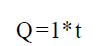
would correspond to 500mAh for 5mA and 100h. The reported value of approximately 470mAh therefore corresponds to about 94% of this nominal current-time product. This comparison should, however, not be interpreted as a coulombic or voltage efficiency, since complete charge/discharge profiles and corresponding charging data were not available.
It is also important to distinguish between system-level and bipolar-plate-specific results. The 100h cell test reflects the interaction of membrane, electrodes, electrolyte and current collectors and cannot be attributed exclusively to the bipolar plate. Conversely, the >0.9V screening result for PPG84Cu100 provides direct information on the compatibility of the selected compound with the zinc-air cell environment.
Quantitative values for bipolar-plate-specific power density and voltage efficiency were not determined independently within the available project data. These parameters therefore cannot be reported without introducing assumptions. This represents a limitation of the present study and defines an important requirement for subsequent validation.
Chemical stability and surface evaluation
Chemical stability was additionally investigated in ex-situ ageing tests. Copper-compound specimens were exposed to alkaline KOH conditions for up to 500h. The specimens showed an overall satisfactory stability with regard to mass development and visual condition [13]. These tests were important because electrolyte absorption, material swelling or dissolution could alter both the electrical resistance and dimensional stability of the bipolar plate.
A complementary surface assessment is shown in Figure 2. The figure compares microscopic images of the selected coppercontaining material in the pristine state (left) and after 96h of exposure in a salt-spray test chamber (right).
At the magnification shown in Figure 2, no gross cracking, extensive material loss or obvious loss of structural integrity can be identified after the 96h exposure. Changes in surface appearance are visible, but the material remains morphologically intact. The microscopy therefore provides a qualitative indication of surface robustness.
Figure 2:Microscopic surface images of the selected copper-containing material before exposure (left) and after 96h salt-spray testing (right).
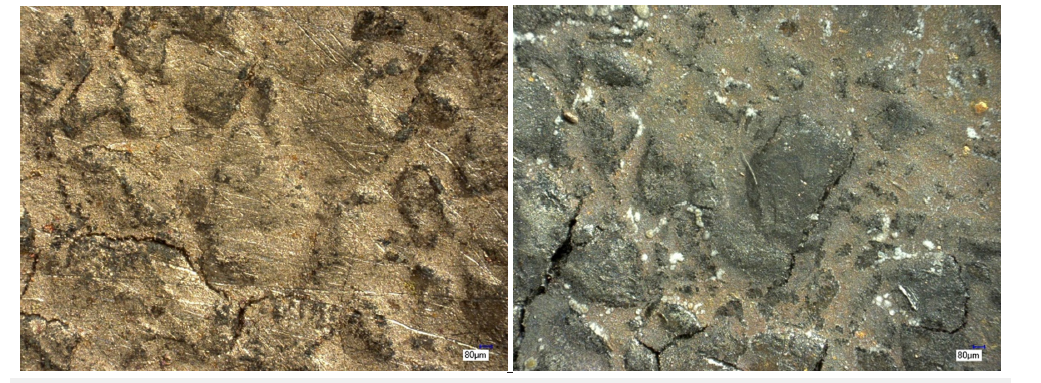
However, the 96h salt-spray test should be regarded as a complementary accelerated corrosion screening rather than as a direct simulation of zinc-air battery operation. The 500h KOH exposure is more directly representative of the alkaline battery environment. Furthermore, microscopic comparison alone does not provide a quantitative corrosion rate. Future investigations should therefore combine optical post-mortem analysis with mass change, electrical resistance and, where appropriate, surfacechemical characterisation.
Multi-cell stack integration
The material development was transferred from coupon and single-cell screening to a multi-cell system. Within the ZinCycle project, a stationary demonstrator with a nominal power of 100W and a capacity of 100Ah was constructed. The demonstrator combined the porous zinc electrode, the membrane-electrode assembly, the bipolar plates and the specifically developed sealing and frame system.
The copper-compound bipolar plates were manufactured in an enlarged pressing tool using steel-free inserts in the relevant contact areas in order to minimise iron contamination. After pressing, the final plate geometry was produced by machining. Elastomer seals developed specifically for the stack geometry were manufactured and integrated together with the bipolar plates.
The successful mechanical assembly and commissioning of the multi-cell stack demonstrated that the compound plates could be transferred from laboratory specimens to geometrically relevant stack components. In particular, the project confirmed the feasibility of combining the compound bipolar plates with the required sealing concept and mechanical stack compression [13].
The level of validation must nevertheless be stated precisely. The project demonstrated stack integration and basic functional operation, but the data available for the present article do not provide a complete quantitative stack characterisation in terms of polarization curves, stack power density, round-trip efficiency or long-term cycling efficiency. The electrochemical stack tests were primarily performed by the project partner responsible for cell and system testing. Consequently, the present contribution should not claim a full stack-level electrochemical qualification.
This distinction is important: the project has demonstrated the transition
Material coupon single cell test → → →multi cellintegration
while a subsequent development stage must quantify longterm stack performance under defined operating conditions.
Recycling of copper and graphite
Recycling was considered as a material-development criterion rather than solely as an end-of-life treatment. Copper-containing compound samples were supplied for pyrolytic recycling trials. During pyrolysis, the polymer fraction was removed and the conductive fractions were recovered.
A particularly relevant result was the recovery of approximately 99.75wt.% of the copper contained in the bipolar-plate material [10,13]. The corresponding material balance can be expressed as

meaning that only approximately 0.25% of the initial copper fraction was not recovered within the reported process. This high recovery rate is particularly relevant because copper is classified as a strategic raw material under Regulation (EU) 2024/1252 [8]. The result therefore changes the material perspective from the one-time consumption of copper towards its use as a potentially circulating functional material.
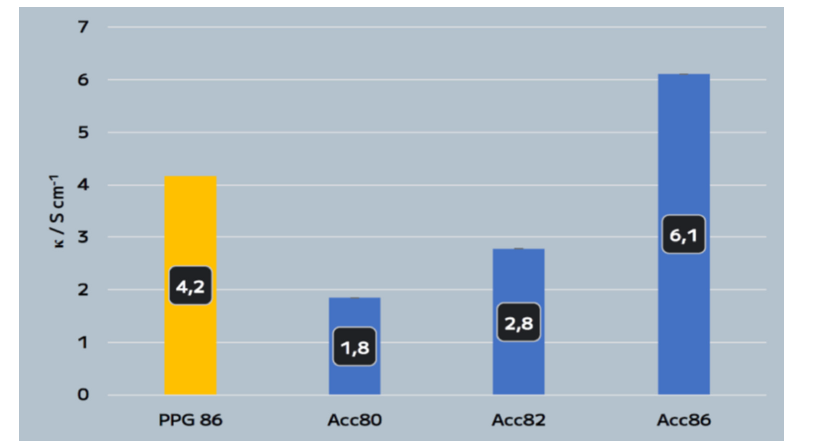
The recycling concept was extended beyond copper. Graphite recovered from pyrolysed bipolar plates was incorporated into new compound formulations, including the variants Acc80, Acc82 and Acc86. Measurements of specific resistance and through-plane conductivity showed that the recycled-graphite compounds reached electrical properties in a range comparable to the primary-material reference PPG86 [13]. This represents an important step towards a closed material loop. At the same time, electrochemical testing showed that the recycling compounds were not yet permanently cycle-stable. Consequently, the results demonstrate technical feasibility of graphite reuse, but not yet complete equivalence of recycled and virgin material during long-term electrochemical operation (Figure 3).
As shown in Figure 3, the use of recycled graphite did not result in a fundamental loss of through-plane electrical performance. Selected recycling formulations reached resistance and conductivity levels comparable to the PPG86 reference. The remaining development challenge is therefore primarily electrochemical longterm stability rather than basic electrical functionality.
Figure 3:Through-plane electrical characterisation of compounds containing recycled graphite compared with the primary-material reference..
Conclusion and Outlook
The ZinCycle project demonstrated that copper-graphitepolymer compounds are a technically viable material concept for bipolar plates in rechargeable zinc-air batteries. The development process showed that electrical conductivity alone is not sufficient as a selection criterion. Gas evolution, porosity, contamination, electrolyte compatibility, mechanical integrity and manufacturability must be considered simultaneously. The iterative screening and optimisation therefore resulted in a multicriteria material selection approach rather than the maximisation of a single property.
The selected copper-compound formulation showed promising electrochemical stability, with cell voltages above 0.9V maintained for approximately 230h in screening tests. In addition, ex-situ ageing in KOH and the 96h accelerated corrosion test indicated satisfactory material stability. Most importantly, the project demonstrated the transition from material and coupon development to integration into a multi-cell system. A stationary demonstrator with a nominal power of 100W and a capacity of 100Ah was assembled, confirming that the developed bipolar-plate and sealing concepts can be implemented in a technically relevant stack configuration. EISAbschlussbericht- Whitecell…
The recycling results represent a second major outcome of the project. Copper recovery rates of approximately 99.75wt.% were achieved, and recycled graphite was successfully reintroduced into new compound formulations. The electrical properties of selected recycled-graphite compounds were comparable to those of reference materials, although long-term electrochemical cycle stability still requires further improvement. These findings support the concept of designing bipolar plates not only for electrochemical functionality, but also for end-of-life material recovery and reuse. The original manuscript already identifies this link between material function and recyclability as one of the central contributions of the project. EIS-Text-copper-plates-Sept-202…
Further development should focus on several areas. First, the electrical performance of the bipolar plates should be quantified more systematically under realistic stack compression, including bulk and contact resistance before and after ageing. Second, longterm electrochemical stability should be assessed using extended charge-discharge cycling under representative zinc-air operating conditions. Particular attention should be paid to the interface between the bipolar plate and the zinc electrode, as local currentdensity variations and metallic contamination may strongly influence gas evolution and cell stability. Third, the manufacturing process should be further scaled towards reproducible near-netshape production, with strict control of tool materials, powder handling and contamination.
Finally, recycling should remain an integral part of future material development. A logical next step is a closed-loop experiment in which recovered copper and graphite are processed into a new generation of bipolar plates and subsequently reevaluated under identical electrical, chemical and electrochemical test conditions. In parallel, future scale-up studies should include a quantitative techno-economic assessment based on validated manufacturing costs, production volumes, component lifetime and end-of-life material value.
Overall, the results indicate that copper-compound bipolar plates can provide a promising link between electrical performance, stack integration and circular material use in stationary zinc-air batteries. The next development stage should therefore concentrate less on demonstrating basic feasibility and more on long-term durability, reproducible manufacturing and quantitative stack-level performance.
Acknowledgement
This article is based on work carried out as part of the ZinCycle collaborative project, with contributions from Whitecell Eisenhuth (coordinator), the University of Duisburg-Essen, VARTA Microbattery, Accurec Recycling, Rhenotherm, GRILLO Zinc Powder, EurA and the Westphalian University of Applied Sciences. Funding was provided by the Federal Ministry of Education and Research pursuant to a resolution of the German Bundestag under grant reference number 03CP0493A-F. Administrative management was handled by the Project Management Agency Jülich-for which Whitecell Eisenhuth and all other project partners express their gratitude.
References
- Fu J, Cano ZP, Park MG, Yu A, Fowler M, et al. (2017) Electrically rechargeable zinc-air batteries: Progress, challenges, and perspectives. Adv Mater 29(7): 1604685.
- Leong KW, Wang Y, Ni M, Pan W, Luo S, et al. (2022) Rechargeable Zn-air batteries: Recent trends and future perspectives. Renewable Sustainable Energy Rev 154: 111771.
- Nazir G, Rehman A, Lee JH, Kim CH, Gautam J, et al. (2024) A Review of rechargeable zinc-air batteries: Recent progress and future perspectives. Nano-Micro Lett 16(1): 138.
- Li Q, Zhao Y, Mo F, Wang D, Yang Q, et al. (2020) Dendrite issues and advances in Zn anodes for aqueous rechargeable Zn-based batteries. EcoMat 2(3): e12035.
- Hermann A, Chaudhuri T, Spagnol P (2005) Bipolar plates for PEM fuel cells: A review. Int J Hydrogen Energy 30: 1297-1302.
- Hala M, Malis J, Paidar M, Bouzek K (2022) Characterisation of commercial polymer-carbon composite bipolar plates used in PEM fuel cells. Membranes 12: 1050.
- Li W, Xie Z, Zeng H (2014) Current status of research on composite bipolar plates for proton exchange membrane fuel cells (PEMFCs): Nanofillers and structure optimisation. RSC Adv 14(10): 7172-7194.
- Regulation (EU) 2024/1252 of the European Parliament and of the Council of 11 April 2024 establishing a framework for ensuring a secure and sustainable supply of critical raw materials. Official Journal of the European Union 2024.
- ZinCycle Consortium (2023) ZinCycle Project-Battery2020Transfer 2023 status seminar, unpublished project presentation.
- ZinCycle Consortium (2025) ZinCycle Project-B@TS 2025 Status Seminar, unpublished project presentation.
- ZinCycle Consortium (2023) Report Compoundscreening_0723, unpublished project report.
- ZinCycle Consortium (2025) ZinCycle-General Description, unpublished project document.
- Whitecell Eisenhuth GmbH & Co. KG (2026) ZinCycle-final report: Development of a resource-optimised, recyclable and rechargeable zinc-air battery for stationary applications, Subproject: Optimisation of composite bipolar plates with coating, Grant No. 03XP0439A, 2026, unpublished project report.
© 2026 Thorsten Hickmann. This is an open access article distributed under the terms of the Creative Commons Attribution License , which permits unrestricted use, distribution, and build upon your work non-commercially.
Editor In Chief







.jpg)































Signup for Newsletter

Quick Links
 Editorial Board Registrations
 Submit your Article
 Best Paper of the Volume
 Reprints
 Refer a Friend
 Advertise With Us
Our Recent Edition





Top Editors




.jpg)

















.bmp)
.jpg)
.png)
.jpg)













.jpg)






.png)

.png)




.png)




Financial Support

Sponsors

Latest e-Books

Latest Video

 a Creative Commons Attribution 4.0 International License. Based on a work at www.crimsonpublishers.com.
Best viewed in

 | Above IE 9.0 version