

- About Us
- Information
-

The Author ensures that the research has been conducted responsibly and ethically with adherence to all relevant regulations. read more..
- For Authors
- For Reviewer
- Manuscript Guidelines
- Membership
- Publication Ethics
-
- Journals
- Reprints
- e-Books
- Videos
- Policies
- Contact Us
 COVID-19
- Submissions



Full Text
Novel Research in Sciences
Pathological Diagnosis of a Case of Canine Ovarian Adenocarcinoma
Yanan Bai, Qiang Liang, Xingjuan Zhang, Dongshen Cao, Xiaohan Liu, Wenchao Wang and Chunyang Wang*
Shandong Vocational Animal Science and Veterinary College, China
*Corresponding author:Chunyang Wang, Shandong Vocational Animal Science and Veterinary College, Weifang 261000, China
Submission: April 02, 2026;Published: June 05, 2026
.jpg)
Volume17 Issue 2June 05, 2026
Abstract
This paper presents a case report of canine ovarian adenocarcinoma, detailing its pathological diagnosis to serve as a reference for the pathological evaluation of this tumor in canines. A routine clinical workup was conducted on the affected dog. The animal exhibited decreased appetite and diarrhea prior to presentation. Physical examination via palpation revealed a markedly increased abdominal circumference, with a palpable free hard mass in the abdomen and absence of pain response. Abdominal ultrasonography demonstrated significant amounts of ascites, uterine fluid accumulation, and marked enlargement of the left ovary. Subsequent laparotomy identified numerous neoplastic masses involving the liver, gastric wall, greater omentum, and uterine cavity. Histopathological analysis of the excised tumor revealed distinct morphological features. Microscopically, the neoplasm exhibited papillary architecture projecting into the lumen, with infiltration and expansion into the ovarian stroma. Focal serous cysticlike structures were observed within the tumor. Tumor cells were cuboidal with hyperchromatic nuclei, displaying coarsely clumped chromatin, prominent nucleoli, and numerous atypical mitotic figures. Focal areas of necrosis, calcification, and stromal fibrosis were also noted. The omental tumor tissue exhibited identical histological characteristics to the ovarian primary tumor. Immunohistochemical staining further supported the diagnosis, showing positive CK7 expression and negative INHa expression in tumor cells, consistent with canine ovarian adenocarcinoma. Conclusion: Based on histopathological examination, immunohistochemical staining, and intraoperative findings, the left ovarian mass in this canine was diagnosed as ovarian adenocarcinoma.
Keywords:Canine; Ovarian adenocarcinoma; Pathological Diagnosis; Histopathology; Immunohistochemistry
Introduction
Ovarian adenocarcinoma is a common malignant neoplasm of the ovary, arising from the ovarian surface epithelium [1]. It predominantly affects aged dogs, cattle, and chickens, though sporadic cases have been reported in other animal species. Clinically, ovarian adenocarcinoma typically presents as a large mass exhibiting invasive growth [2], which may manifest unilaterally or bilaterally. Metastasis is common, with lesions frequently involving para-aortic lymph nodes, kidneys, greater omentum, liver, and lungs; the tumor may also infiltrate the abdominal cavity, resulting in malignant effusion [3].
Histologically, this neoplasm is characterized by cystic acini of variable size and irregular morphology, which are lined by poorly differentiated epithelial cells. These cells often proliferate to form small acini arranged in rosette-like configurations [4], a feature that facilitates histopathological identification. This paper presents the diagnostic approach for a case of canine ovarian adenocarcinoma, aiming to offer insights and guidance for the clinical management of this condition in dogs.
Case Introduction
The affected dog was an 8-year-old intact female Old English Sheepdog maintained on a commercial dog food diet, with up-to-date deworming and vaccination. According to the owner’s report, the animal had exhibited decreased appetite and diarrhea persisting for nearly one week, while maintaining preserved mentation.
Clinical Diagnosis
Clinical examination
The dog weighed 31kg, with a body temperature of 38.5 °C, respiration rate of 30 times/min, heart rate of 100 times/min. The respiration rate and pulse were normal, mental state was good, abdominal palpation showed significant increase in abdominal circumference, a free hard object was felt without pain, and no other obvious abnormalities were found.
Hematological examination
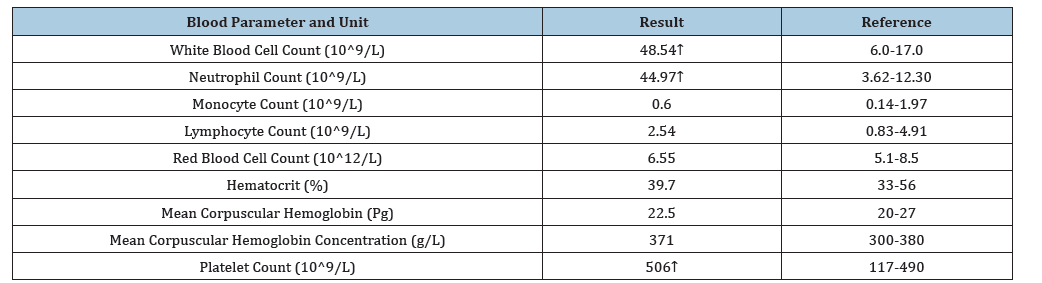
Blood routine examination revealed elevated total WBC and NEU, suggestive of an inflammatory response associated with acute infection. Detailed quantitative results are presented in Table 1.
Table 1:Results of blood routine examination.
Imaging examination
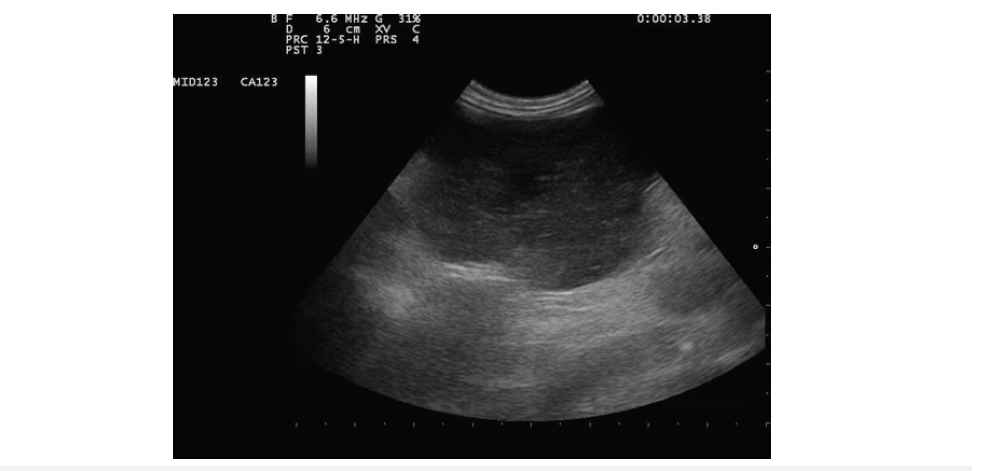
B ultrasonography findings are presented in Figure 1, revealing ascites, uterine fluid accumulation, marked enlargement of the left ovary with heterogeneous echogenicity, well-defined margins, and Doppler imaging demonstrating abundant vascularity. Surrounding the ovary, anechoic fluid-filled regions were identified.
Figure 1:Ultrasonography shows enlargement of left ovary.
Surgical exploration
Anesthesia was induced with propofol and maintained via isoflurane inhalation. The dog was positioned in dorsal recumbency, followed by a midline abdominal incision to access the abdominal cavity. The left ovarian tumor was identified as a round mass measuring 14cm × 11cm × 5cm, with a cauliflower-like appearance and composed of nodules of varying sizes. The connective tissue capsule was largely intact, although local tumor invasion through the capsule was observed.
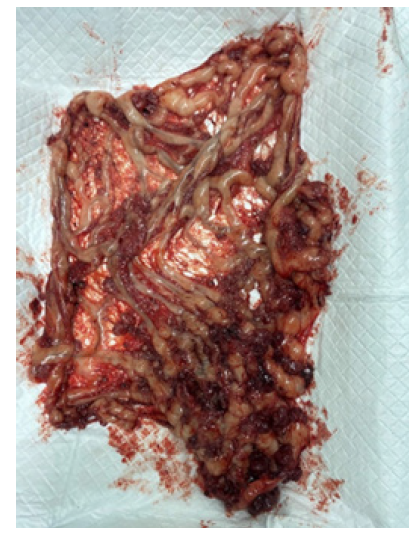
The ovarian tumor was bisected, exposing a solid tissue with a dark red cut surface resembling a blood clot and fragile consistency. The greater omentum revealed diffuse reddish-brown tumor nodules that were fragile, non-encapsulated, and friable. Numerous tumor nodules were identified in the liver, gastric wall, omentum, and uterine cavity. The ovarian and omental tumors were surgically excised for histopathological analysis, and the abdomen was closed in a standard fashion (Figure 2 & Figure 3).
Figure 2:Ovarian tumor
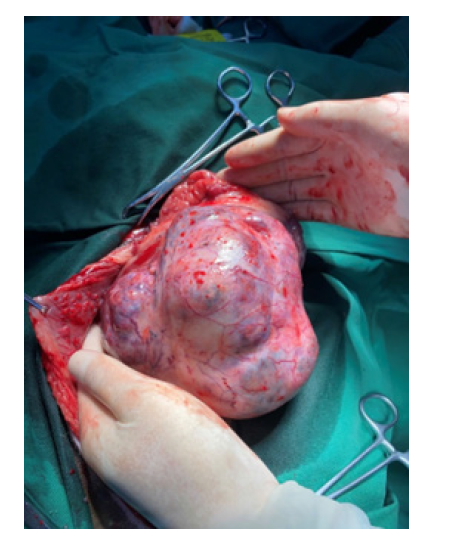
Figure 3:Diffuse neoplasm of greater omentum.
Histopathological and immunohistochemical examination
Histopathology: Tumor samples from multiple sites were trimmed to appropriate sizes, fixed in 10% neutral buffered formalin, embedded in paraffin, sectioned at 4~5μm thickness, stained with Hematoxylin and Eosin (H.E), and examined by light microscopy. Microscopically, the neoplasm exhibited papillary architecture projecting into the lumen, infiltrating and expanding into the ovarian stroma, along with focal serous cysticlike structures (Figure 4). At higher magnification, tumor cells appeared cuboidal with hyperchromatic nuclei, displaying coarsely clumped chromatin, prominent nucleoli, and numerous atypical mitotic figures (Figure 5). Focal areas showed extensive necrosis, calcification, and Hemorrhagic Foci within the stroma. The omental tumor exhibited identical histological features to the ovarian primary lesion, confirming its metastatic origin. Histologically, the prominent papillary architecture of this case classifies it as papillary adenocarcinoma, a distinct subtype of ovarian adenocarcinoma.
Figure 4:Tumor H.E. Stain 40.
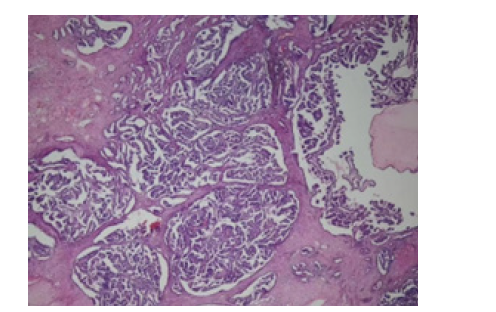
Figure 5:Tumor H.E. Stain 400×
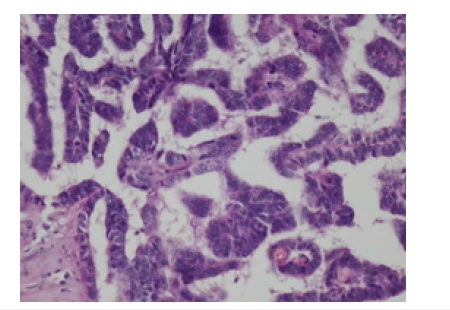
Figure 6:CK7 100×
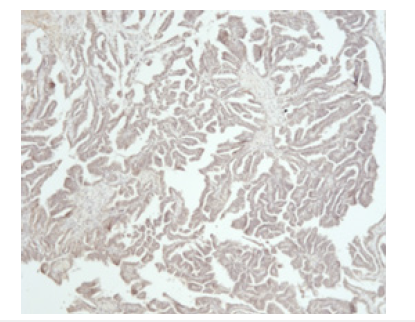
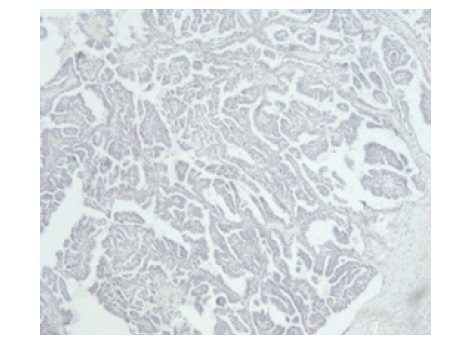
Immunohistochemistry: Clinically, Granulosa Cell Tumors (GCTs) are often misdiagnosed due to their overlapping morphological features with ovarian epithelial neoplasms. To further confirm the diagnosis, elucidate the cellular origin, and assess prognostic implications, Cytokeratin 7 (CK7) and Inhibin- Alpha (INHA) were employed as immunohistochemical markers (Figure 6 & Figure 7). Immunohistochemical analysis revealed positive CK7 expression and negative INHA expression in tumor cells. Collectively, these immunohistochemical findings, in conjunction with histopathological observations and clinical data, support the diagnosis of canine ovarian adenocarcinoma.
Figure 7:INHinbin 100×
Treatment and Prognosis
A surgical resection was performed. One month following the initial postoperative reexamination, the owner reported that the dog continued to exhibit decreased appetite and lethargy. B ultrasonography revealed persistent ascites, suggestive of a poor prognosis. One week later, a telephone follow-up confirmed that the dog had died.
Discussion
Canine ovarian adenocarcinoma may manifest vaginal bleeding independent of the estrous cycle. The tumor tends to rupture upon enlargement, leading to spillage of tumor cells into the abdominal cavity. Ascites and abdominal distension develop as a result of growth of small tumor nodules [5]. In this case, abdominal palpation revealed marked abdominal distension, and B ultrasonography demonstrated significant ascites, aligning with the clinical manifestations of this condition.
The diagnosis and management of canine ovarian adenocarcinoma are well-established in clinical practice. In this case, a Complete Blood Count (CBC) revealed elevated WBC and NEU counts, suggestive of an acute inflammatory response. B-mode ultrasound identified a left ovarian mass, and intraoperative exploration confirmed a cystic-solid mass measuring 14cm × 11cm × 5cm with a cauliflower-like appearance and varying-sized nodules. Numerous metastatic tumor nodules were observed in the liver, gastric wall, omentum, and uterine cavity. In the diagnosis of canine ovarian adenocarcinoma, imaging serves to localize tumors and metastases, and cytological analysis of abdominal effusion can assist in detecting malignant cells [6]. Given the large size of the ovarian mass, cytological analysis was therefore omitted, and surgical resection was directly performed.
Histopathological analysis of the ovarian tumor in this case revealed papillary architecture projecting into the lumen, infiltrative growth into the ovarian stroma, and focal serous cysticlike structures. At higher magnification, tumor cells exhibited cuboidal morphology with hyperchromatic nuclei, coarsely clumped chromatin, prominent nucleoli, and numerous atypical mitotic figures--features consistent with the microscopic criteria for ovarian adenocarcinoma, classified as papillary adenocarcinoma. Concurrently, the omental tumor displayed identical histological features to the ovarian primary lesion, confirming its metastatic origin.
Ovarian adenocarcinoma is a malignant neoplasm arising from the ovarian surface epithelium. Reports indicate that in both humans and dogs, ovarian epithelial neoplasms are typically malignant and prone to metastasis, whereas Granulosa Cell Tumors (GCTs)--originating from the sex cord--are common in domestic animals, generally low-grade malignancies with rare metastatic potential [7]. Given the variable histological presentation of GCTs, they may mimic ovarian epithelial tumors, making differentiation between these entities diagnostically critical [8,9].
To further confirm the diagnosis, elucidate cellular origin, and assess prognostic implications, CK7 and INHA were employed as immunohistochemical markers. Immunohistochemical analysis revealed positive CK7 expression and negative INHA expression in tumor cells. Collectively, these immunohistochemical findings, integrated with histopathological observations and clinical data, support the diagnosis of canine ovarian adenocarcinoma.
Conclusion
This study established a definitive diagnosis of ovarian adenocarcinoma in a canine patient via a multimodal approach (clinical evaluation, histopathology, immunohistochemistry). Histopathology revealed a tumor with papillary architecture, marked nuclear atypia, and numerous atypical mitotic figures. Immunohistochemistry (CK7+, INHA-) confirmed its malignant epithelial origin from the ovarian surface epithelium.
The case exhibited extensive abdominal metastasis and malignant ascites, indicating aggressive behavior and a guarded prognosis. This report highlights the role of multimodal diagnosis in differentiating ovarian tumors, especially malignant epithelial neoplasms, and provides a reference for the diagnosis, staging, and management of similar cases in veterinary medicine.
References
- Mccluggage WG, Wilkinson N (2010) Metastatic neoplasms involving the ovary: A Review with an emphasis on morphological and immunohistochemical features. Histopathology 47(3): 231-247.
- Goto S, Iwasaki R, Sakai H, Mori TA (2021) Retrospective analysis on the outcome of 18 dogs with malignant ovarian tumours. Vet and comp oncol 19(3): 442-450.
- Donald J Meuten (2017) Tumors in domestic animals. 5th (edn), A Blackwell Publishing Company, Iowa State Press, Iowa, USA, pp. 734-735.
- Ehrhart EJ Withrow, MacEwens (2013) Small animal clinical oncology. The Pathology of Neoplasia pp. 51-67.
- Apostol K (2012) Pet Pals: Animal Doctor, Salu Press.
- Chun R, Garrett LD, Vail DM (2007) Small animal clinical oncology.
- Flores AR, Lobo J, Nunes F, Alexandra R, Paula L, et al. (2019) Canine ovarian gonadoblastoma with dysgerminoma overgrowth: A case study and literature review. J Ovarian Res 12(1): 89.
- Balan RA, Căruntu ID, Giuşcă SE, Ludmila Lozneanu, Ioana P, et al. (2017) Immunohistochemical significance of ER alpha, inhibin A, calretinin, and Ki67 expression in granulosa cell ovarian tumors. Rom J Morphol Embryol 58(3): 753-760.
- Young RH (2018) Ovarian sex cord-stromal tumours and their mimics. Pathology 50(1): 5-15.
© 2026 Chunyang Wang. This is an open access article distributed under the terms of the Creative Commons Attribution License , which permits unrestricted use, distribution, and build upon your work non-commercially.
Editor In Chief







.jpg)































Signup for Newsletter

Quick Links
 Editorial Board Registrations
 Submit your Article
 Best Paper of the Volume
 Reprints
 Refer a Friend
 Advertise With Us
Our Recent Edition

.jpg)



Top Editors




.jpg)

















.bmp)
.jpg)
.png)
.jpg)













.jpg)






.png)

.png)




.png)




Financial Support

Sponsors

Latest e-Books

Latest Video

 a Creative Commons Attribution 4.0 International License. Based on a work at www.crimsonpublishers.com.
Best viewed in
a Creative Commons Attribution 4.0 International License. Based on a work at www.crimsonpublishers.com.
Best viewed in 
 | Above IE 9.0 version