

- About Us
- Information
-

The Author ensures that the research has been conducted responsibly and ethically with adherence to all relevant regulations. read more..
- For Authors
- For Reviewer
- Manuscript Guidelines
- Membership
- Publication Ethics
-
- Journals
- Reprints
- e-Books
- Videos
- Policies
- Contact Us
 COVID-19
- Submissions



Full Text
Novel Research in Sciences
A Teaching Reform Path for Architecture Courses in Local Universities in Guangdong Guided by “Three Innovations Integration” - Taking the Course on the History of Chinese and Foreign Architecture at Huizhou University as an Example
Meng Li1*, Dong-Yao Liang1, Hui-wen Huang2, Hui-peng Zeng1 and Chen Luo1
1School of Architecture and Civil Engineering, Huizhou University, China/p>
2Associate Professor, Fujian Agriculture and Forestry University, China
*Corresponding author:Meng Li, School of Architecture and Civil Engineering, Huizhou University, China
Submission: February 24, 2026;Published: May 29, 2026
.jpg)
Volume17 Issue 2May 29, 2026
Abstract
The architectural history course, in the current curriculum planning for architecture students (including landscape architecture majors) in Guangdong, is gradually facing the teaching dilemma of “limited class hours, cumbersome content, and weak critical thinking,” resulting in students’ weak basic knowledge and difficulty in application. To solve this problem, this paper proposes a teaching concept of “three innovations integration”, namely artistic innovation, teaching innovation, and independent innovation. Through innovation in teaching philosophy, teaching models, and teaching methods, this paper attempts to improve students’ knowledge system, enhance their practical innovation ability, improve the adaptability of the course to regional development needs, and provide a practical paradigm for the implementation of similar courses
Keywords:Integration of three innovations; Construction of teaching philosophy; Architectural training program; Teaching innovation
Introduction
Research background
The course “History of Chinese and Foreign Architecture” is planned as 32 class hours in the school’s architecture curriculum, but the content must include two major parts: Chinese architectural history and foreign architectural history. The overall content not only covers the long-term historical development context, but also features a rather complex array of architectural styles, schools and design techniques.
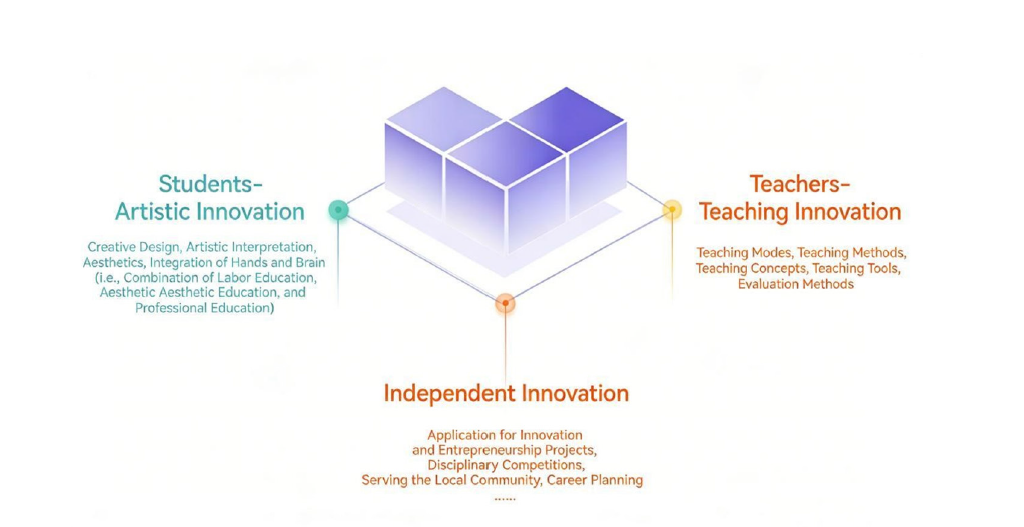
With only 32 class hours of course content, it is not only difficult to conduct field research, but also easy to have a disconnect between theory and practice, which has become a major dilemma in the current course teaching [1]. In view of this, this paper proposes the teaching concept of “three innovations integration” (Figure 1), namely “artistic innovation, teaching innovation and independent innovation”, hoping to help students fully grasp the development context, stylistic changes and characteristics of Chinese and foreign architecture, and integrate local cultural resources, in order to try to solve the problems of limited class hours, complex content and weak thinking.
Figure 1:Concept diagram of the “Three-Innovation Integration” curriculum.
Research objectives
Based on the current situation presented above, this paper raises three key issues: 1. How to complete the teaching content of Chinese and foreign architectural history within a limited time and help students build a knowledge system of architectural history. 2. How to stimulate students’ learning enthusiasm, provide them with opportunities for hands-on practice, and improve their creative and critical thinking abilities. 3. How to broaden students’ international perspectives, establish a concept of cultural heritage protection, and lay the foundation for future employment.
Based on the three key issues, three main research objectives are proposed: a. Integrate and simplify the teaching content, with teachers and students collaborating to organize the teaching content into a visual and easily grasped knowledge system. b. Optimize the teaching process, adopt diversified teaching methods, and improve students’ enthusiasm and creativity with rich teaching forms. c. Improve the evaluation and feedback mechanism, allow students to present their outcomes in various forms, and consider the promotion and social service of the results.
Methods
Reconstruction of teaching content
First, breaking away from the traditional timeline-based teaching framework, this approach divides the history of Chinese and foreign architecture into classic buildings from different cultural spheres, such as ancient Chinese timber-framed architecture, Western classical architecture, and Islamic architecture. This division helps students better understand and compare architectural styles and characteristics from different cultural backgrounds, gain a deeper understanding of the cultural connotations and social significance behind architecture, improve students’ cultural literacy and aesthetic appreciation, and effectively reduce the required course time.
Second, by introducing the latest local architectural cases and design concepts, students can learn about the impact of architectural history on contemporary architectural design from familiar buildings around the school, thereby cultivating their innovative thinking and practical abilities. In this way, students can learn better from life and reduce the problem of complex course content.
Third, set up special research projects, allowing students to choose a topic based on their interests for in-depth research, and complete a short paper or design plan through literature review, field research, case analysis, etc., This will enhance students’ thinking ability and solve the problem of weak thinking [2].
Teaching resource development
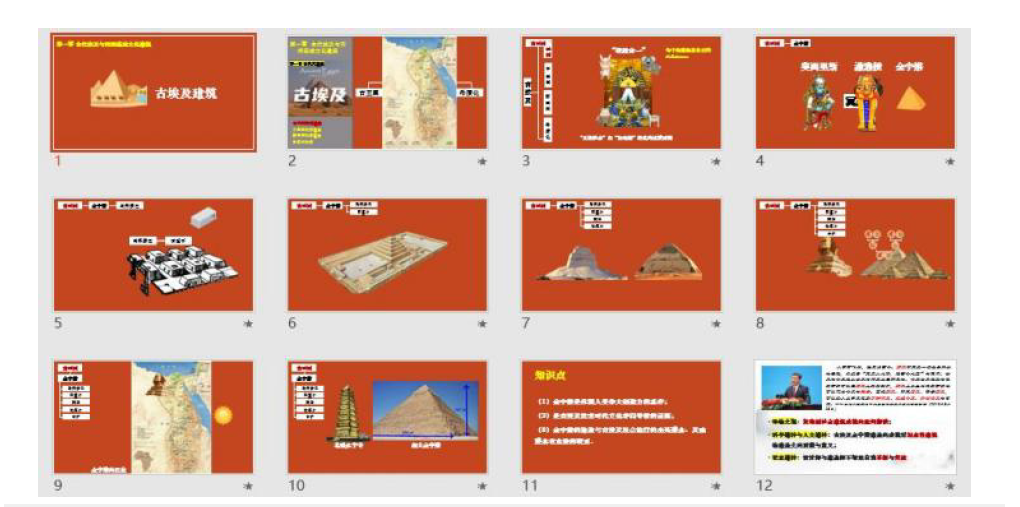
Establish a course website. The website mainly provides teaching resources such as course outline, teaching materials, references, teaching videos, supplementary extracurricular knowledge, open platform resource recommendations, online tests, and discussion forums (Figure 2), which facilitates students’ independent learning and communication outside of class and broadens students’ learning channels and resources.
Figure 2:Teaching resource development: An example of online learning resources collaborated by teachers and students (Ancient Egyptian Architecture).
Establish cooperative relationships with local architecturerelated enterprises and cultural heritage protection units, integrate resources through course-specific research projects, provide students with opportunities for course practice and future internships, and enable students to achieve a fusion of theory and practice in the course, thereby improving their comprehensive abilities and future employment competitiveness.
Diverse teaching methods
In terms of teaching methods, considering the abundance of internet resources available today and the significant differences in students’ learning styles, traditional teaching methods also need to be adjusted. Therefore, this paper proposes a variety of teaching models in order to enhance students’ attention and learning interest through changes in teaching methods.
Classroom lecture: Building a knowledge system together: Although traditional teaching methods are no longer applicable, the classroom lecture method still plays an irreplaceable role. Due to the development of the internet, students can easily obtain a large amount of information. However, this information is abundant and complex, so the lecture method must be adjusted. The current purpose of lectures is to help students sift through the massive amount of information to extract the core knowledge points and assist them in constructing a correct knowledge system, thus avoiding knowledge fragmentation as much as possible.
Thematic teaching: Research method practice: The course content is divided into several topics, each to be completed by a student group. The content of the special topic can cover various aspects such as architectural design, architectural history research, and the protection of cultural heritage. Through various research methods taught in the course, such as oral history recording, students can apply the knowledge they have learned to observe, interview, analyze, design and implement, and present their works in various forms [3]. This approach can help students improve their practical skills and innovation.
Comparative teaching: Experiencing Chinese and foreign cultures: Students are encouraged to conduct comparative analyses of the teaching content of Chinese and foreign architectural history both longitudinally and horizontally, identifying the similarities and differences and intrinsic connections between architecture from different countries, ethnic groups, and regions, emphasizing the important role of cultural exchange in architectural history. For example, comparing the similarities and differences between Islamic architecture in different regions. Through comparative teaching methods, students can better understand the richness and diversity of Chinese and foreign architectural cultures, broaden their international perspectives, and enhance their cultural literacy.
Blended learning: Dual-track complementary learning: A blended learning approach (comprising both in-person lectures and online supplementary materials) is adopted, utilizing platforms such as SPOC and Zhihuishu to provide students with abundant online learning resources. This approach offers students a platform for reviewing and reinforcing their knowledge [4], their self-learning abilities and, to some extent, compensating for the limitations of classroom lectures, such as the inability to conduct on-site investigations of foreign architecture, thus broadening their international perspectives. Simultaneously, teachers can use online teaching data to regularly observe, analyze, and manage students’ online learning behavior and outcomes, identifying and addressing any gaps in their knowledge system.
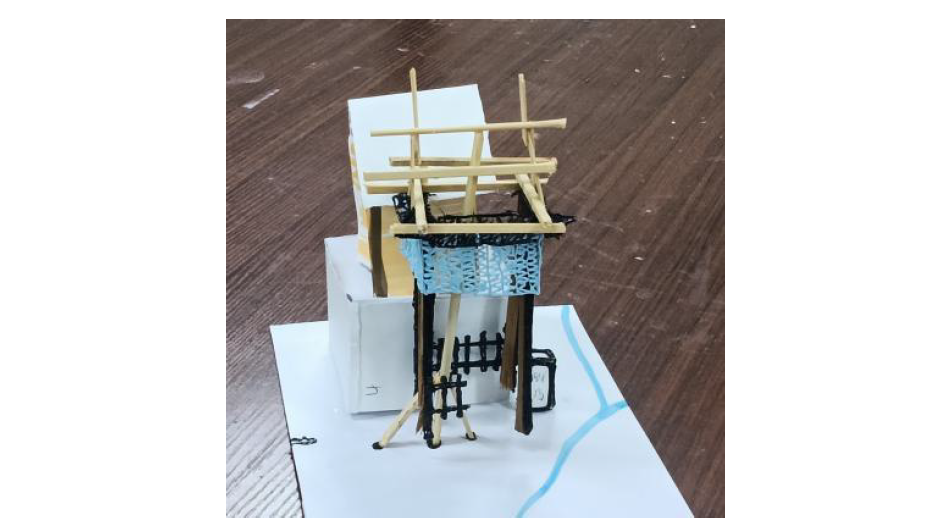
Artistic creation: Inspiring creativity: Based on the course content, students are organized to design cultural and creative products using various architectural elements (Figure 3), experience the charm of intangible cultural heritage, participate in architectural competitions, etc., Through multi-material integrated art, students can easily understand the stylistic characteristics of cities, buildings, and gardens, achieve cognitive structure transfer, feel the spirit of craftsmanship, and enhance their creative abilities [5]. It promotes the connection between history and theory courses and design courses under the architectural curriculum.
Figure 3:Students used 3D printing pens to restore the buildings and scenes of the song dynasty in the “Along the River During the Qingming Festival”.
Conclusion
This study constructs a teaching concept of “three innovations integration” and systematically applies diversified teaching methods to cultivate students’ innovative thinking and practical skills, thereby addressing the problems of limited time, wide coverage of content, and weak critical thinking in traditional classrooms. Furthermore, students’ feedback after class indicates an improvement in their learning interest.
Innovative points of teaching reform
Traditional architectural history courses often focus primarily on theoretical content, rarely integrating it with practical applications. This results in low study interest and difficulty in applying the knowledge. This study systematically integrates artistic innovation, teaching innovation, and self-innovation into architectural history teaching. This breaks away from the traditional one-way transmission model, creating a multi-dimensional and interactive teaching ecosystem. It allows students to learn from multiple perspectives, learning by doing, strengthening the connection between theory and practice, enhancing their independent thinking abilities, and constructing a new studentcentered teaching paradigm.
Interdisciplinary knowledge reconstruction
The course content is no longer confined to a linear narrative approach. It further incorporates elements or research methods from art, history, science and technology, etc., to help students establish a multi-dimensional cognitive framework, break through disciplinary barriers, achieve in-depth integration across multiple fields, and enhance students’ comprehensive abilities.
Diversified teaching methods matrix
Through diverse teaching models, flexible adjustments can be made to suit various types of students, effectively stimulating students’ initiative in learning, truly realizing individualized instruction, and allowing students to better absorb the knowledge they learn.
Discussion
This paper explores the integration of “three innovations” in the course of Chinese and foreign architectural history. Although some effective results have been achieved, there are still problems in practice, such as unreasonable allocation of teaching time, insufficient independent inquiry ability of some students, and the need to improve the depth of transformation of regional resources. In addition, the application of AI digital technology in classroom teaching is also a direction worth considering in depth [6]. Based on this, this research will further optimize the direction in the future, including refining the allocation of teaching time in each stage, adding a self-learning method guidance module, exploring the application of AI technology in the teaching of Chinese and foreign architectural history, and building a long-term linkage mechanism for school-enterprise cooperation, etc.
Acknowledgement
This article supported by several projects, including Huizhou Philosophy and Social Sciences Planning Project “Research on the Enhancement Path of Therapeutic Landscapes in Outdoor Sports Spaces in Huizhou from the Perspective of Sensory Experience” (2025ZX119), the Huizhou University Teaching Reform Project “The Embedding of Architectural Oral History Workshops: A Study on the Teaching Reform of the ‘Introduction to the Protection of Chinese Cultural Heritage’ Course”(HZU[2023]158), and the Huizhou University Teaching Reform Project “Education through Entertainment - An immersive teaching exploration that incorporates games/activities into classes” (HZU[2023]158).
References
- Chen J, Zhang X (2014) Architecture History. China Youth Press, Beijing, China.
- Lai D (2015) Using stones from other hills to process the jade of this one: some thoughts obtained from teaching in China. China Architectural Education (3): 42-46.
- Tong H, Yu J (2023) Oral history series of Chinese architecture: Memory of local architecture. Shanghai Culture Publishing House, Shangha, China.
- Ren W (2022) Research on the teaching reform of landscape architecture history and theory courses based on OBE Concept. Anhui Architecture 29(12): 109-111.
- Huang M (2023) Design thinking in action. Higher Education Press, Beijing, China.
- Hong Z, Kanghong Z, Wei H, Binqing C (2024) Application of big data and artificial intelligence technology in architectural education--Taking the intelligent human settlement environment R&D center of Chongqing university of humanities and technology as an example. Urban Architecture Space 31(S1): 189-191.
© 2026 Meng Li. This is an open access article distributed under the terms of the Creative Commons Attribution License , which permits unrestricted use, distribution, and build upon your work non-commercially.
Editor In Chief





.jpg)






























Signup for Newsletter

Quick Links
 Editorial Board Registrations
 Submit your Article
 Best Paper of the Volume
 Reprints
 Refer a Friend
 Advertise With Us
Our Recent Edition
.jpg)



Top Editors




.jpg)
















.bmp)
.jpg)
.png)
.jpg)












.jpg)






.png)

.png)




.png)




Financial Support

Sponsors

Latest e-Books

Latest Video

 a Creative Commons Attribution 4.0 International License. Based on a work at www.crimsonpublishers.com.
Best viewed in
a Creative Commons Attribution 4.0 International License. Based on a work at www.crimsonpublishers.com.
Best viewed in 
 | Above IE 9.0 version