

- About Us
- Information
-

The Author ensures that the research has been conducted responsibly and ethically with adherence to all relevant regulations. read more..
- For Authors
- For Reviewer
- Manuscript Guidelines
- Membership
- Publication Ethics
-
- Journals
- Reprints
- e-Books
- Videos
- Policies
- Contact Us
 COVID-19
- Submissions



Abstract
Novel Approaches in Cancer Study
Cancer Immunosurveillance and Immune Evasion: Mechanisms of Tumor Control, Metastatic Dormancy, and Immunotherapy
-
Open or CloseElina Roy1, Chikezie O Madu2 and Yi Lu3*
1 Department of Biology, University of Memphis, USA
2 Department of Biological Sciences, University of Memphis, USA
3 Department of Pathology and Laboratory Medicine, University of Tennessee Health Science Center, USA
*Corresponding author:Yi Lu, Department of Pathology and Laboratory Medicine, University of Tennessee Health Science Center, Cancer Research Building, 19 South
Submission: August 24, 2026;Published: September 21, 2026
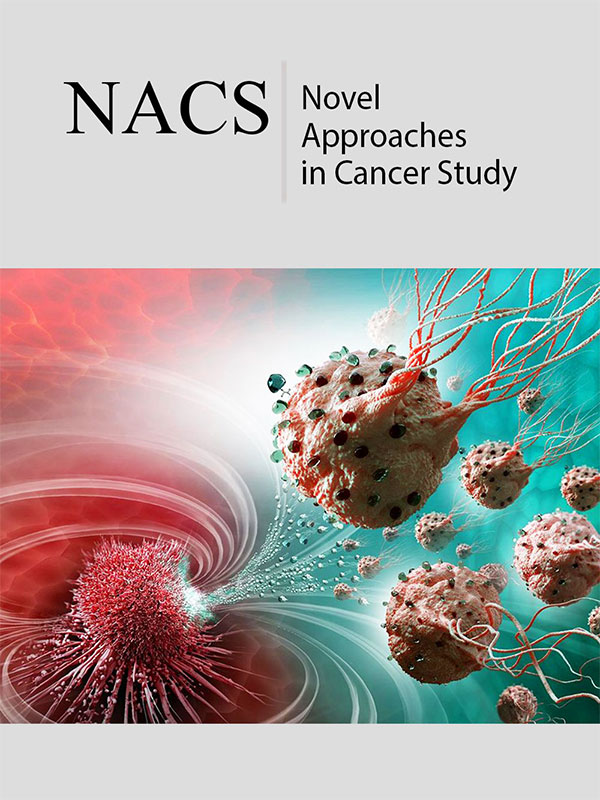
ISSN:2637-773XVolume8 Issue 5
Abstract
The immune system plays a central role in detecting and controlling cancer, this process is called cancer immunosurveillance. Both innate and adaptive immunity help identify and destroy abnormal cells, but tumors that survive this process often develop ways to avoid the immune system and continue growing. Research increasingly shows how tumors and their surrounding microenvironment interact, modulating the balance between immune defense and immune suppression. Immune cells such as cytotoxic T cells, natural killer cells, dendritic cells, macrophages, and regulatory T cells each shape this balance differently through antigen recognition, cytokine signaling, and immune regulation. A further translational consideration is the NAD+-dependent deacetylase SIRT1, which links cellular metabolism, stress responses, inflammation, and immune regulation. Because SIRT1 can have tumor-suppressive or tumor-promoting effects depending on tumor type, disease stage, cellular compartment, and molecular context, SIRT1-directed strategies require careful biomarker selection rather than a uniform activation or inhibition approach. Its potential relationship to immune-cell function, checkpoint signaling, treatment resistance, and circulating biomarkers is discussed as an emerging area for investigation. This review looks at how anti-tumor immunity works at the molecular and cellular level, focusing on antigen presentation via MHC molecules and the activation of tumor-targeting immune cells. This review examines the major mechanisms by which tumors evade immune control, including disrupted antigen presentation, immune checkpoint signaling, immunosuppressive cytokines, metabolic reprogramming, and the development of a tolerogenic tumor microenvironment. It also explores how the immune system maintains metastatic cells in a dormant state, the factors that trigger their reactivation, and current and emerging immunotherapies, including checkpoint blockade, adoptive cell transfer, CAR T-cell therapy, cancer vaccines and combination strategies designed to overcome therapeutic resistance. These insights point toward next-generation immunotherapies that could achieve lasting remission and prevent metastasis.
Editor In Chief







.jpg)































Signup for Newsletter

Quick Links
 Editorial Board Registrations
 Submit your Article
 Best Paper of the Volume
 Reprints
 Refer a Friend
 Advertise With Us
Our Recent Edition




Top Editors




.jpg)

















.bmp)
.jpg)
.png)
.jpg)













.jpg)






.png)

.png)




.png)




Financial Support

Sponsors

Latest e-Books

Latest Video

 a Creative Commons Attribution 4.0 International License. Based on a work at www.crimsonpublishers.com.
Best viewed in

 | Above IE 9.0 version