

- About Us
- Information
-

The Author ensures that the research has been conducted responsibly and ethically with adherence to all relevant regulations. read more..
- For Authors
- For Reviewer
- Manuscript Guidelines
- Membership
- Publication Ethics
-
- Journals
- Reprints
- e-Books
- Videos
- Policies
- Contact Us
 COVID-19
- Submissions



Full Text
Modern Concepts & Developments in Agronomy
Genotype Determines in Vitro Micropropagation Efficiency in Cannabis Sativa L
Villarreal BN1, Adema M1, Voisin AI2, Sharry SE3 and Weber C1,2*
1 Scientific Research Commission of the Province of Buenos Aires CICPBA, Argentina
2 Faculty of Agrarian and Forestry Sciences, National University of La Plata, Argentina
3 National Research System SIN, Panama
*Corresponding author:Weber C, Scientific Research Commission of the Province of Buenos Aires CICPBA, Argentina and Faculty of Agrarian and Forestry Sciences, National University of La Plata, Argentina
Submission: July 28, 2026;Published: August 11, 2026

ISSN 2637-7659Volume15 Issue 5
abstract
Efficient micropropagation is essential for the large-scale clonal propagation of elite Cannabis sativa cultivars. However, the development of broadly applicable in vitro protocols remains challenging because morphogenic responses vary considerably among genotypes. This study evaluated the in vitro micropropagation of two cultivars, Northern Light and Mimosa, with the aim of identifying genotype-dependent differences throughout the propagation process and optimizing culture conditions. Nodal segments and in vitro-derived seedlings were established on half-strength Murashige and Skoog (MS) medium. Shoot proliferation was evaluated using different concentrations of 6-Benzylaminopurine (BAP), while root induction was assessed with Indole-3-Butyric Acid (IBA) and α-Naphthaleneacetic Acid (NAA). Rooted plantlets were subsequently acclimatized under controlled greenhouse conditions.
Both cultivars were successfully established through direct organogenesis without callus formation. Low BAP concentration (0.1mgL⁻¹) promoted efficient shoot proliferation, whereas higher cytokinin levels induced severe hyperhydricity. The greatest genotype-dependent differences were observed during root induction. Northern Light exhibited a maximum rooting rate of 42% after approximately 30 days on medium supplemented with 0.2mL⁻¹ IBA, whereas Mimosa reached approximately 90% rooting within 7-20 days under the same conditions. These contrasting rooting responses were reflected in acclimatization success, with survival rates of 75% and 92% for Northern Light and Mimosa, respectively. Our findings demonstrate that genotype is the primary factor determining micropropagation efficiency in Cannabis sativa, with rooting representing the principal bottleneck limiting propagation success. These results highlight the need for genotype-specific optimization rather than universal protocols and provide a practical framework for the commercial clonal propagation of elite Cannabis cultivars.
Keywords: Clonal propagation; Direct organogenesis; Rhizogenesis; Medicinal cannabis
Introduction
Cannabis sativa L is an economically important crop with diverse industrial, pharmaceutical and biotechnological applications. Industrial cultivars are mainly exploited for fiber, food and biomaterials, whereas medicinal cultivars are valued for the production of bioactive cannabinoids, particularly Cannabidiol (CBD) and Δ9-Tetrahydrocannabinol (THC) [1-4]. The rapid expansion of commercial Cannabis production has increased the demand for efficient propagation systems capable of producing large numbers of genetically uniform and disease-free plants. Although C. sativa can be propagated by seeds or stem cuttings, both methods have important limitations. Due to the highly outcrossing nature of the species, seed-derived plants are genetically heterogeneous, resulting in considerable variation in growth, flowering time and cannabinoid composition. Vegetative propagation preserves elite genotypes but is constrained by the limited availability of mother plants and the relatively low multiplication rate [5,6]. Consequently, in vitro micropropagation has become an attractive alternative Cannabis sativa L is an economically important crop with diverse industrial, pharmaceutical and biotechnological applications. Industrial cultivars are mainly exploited for fiber, food and biomaterials, whereas medicinal cultivars are valued for the production of bioactive cannabinoids, particularly Cannabidiol (CBD) and Δ9-Tetrahydrocannabinol (THC) [1-4]. The rapid expansion of commercial Cannabis production has increased the demand for efficient propagation systems capable of producing large numbers of genetically uniform and disease-free plants. Although C. sativa can be propagated by seeds or stem cuttings, both methods have important limitations. Due to the highly outcrossing nature of the species, seed-derived plants are genetically heterogeneous, resulting in considerable variation in growth, flowering time and cannabinoid composition. Vegetative propagation preserves elite genotypes but is constrained by the limited availability of mother plants and the relatively low multiplication rate [5,6]. Consequently, in vitro micropropagation has become an attractive alternative
Given the genotype-dependent nature of Cannabis micropropagation, developing optimized protocols for individual cultivars is essential to improve propagation efficiency and ensure the production of high-quality planting material. Therefore, the objective of this study was to develop and optimize in vitro micropropagation protocols for the Cannabis sativa cultivars Northern Light and Mimosa, focusing on culture establishment, shoot proliferation, rooting and acclimatization to maximize clonal propagation efficiency.
Materials and Methods
Plant material
Young clonal plants of the Cannabis sativa cultivar Northern Light (Figure 1A & 1B) were used as donor plants. For the cultivar Mimosa, both in vitro-germinated seedlings and young greenhousegrown plants served as the source of explants (Figure 1C & 1D). Mother plants were maintained under controlled growth conditions at 22±2 °C with a 16-h photoperiod provided by 20-W LED lamps to ensure optimal physiological status prior to explant collection.
Figure 1:Northern light and (A; B) and Mimosa cultivars.

Explant disinfection and culture establishment
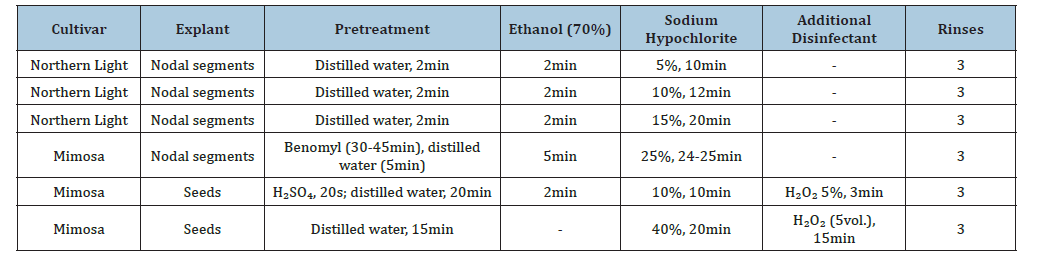
Nodal segments (30 and 2.0-2.5cm long) containing one or two axillary buds and an apical bud were excised from juvenile shoots of both cultivars and used as explants (Figure 2). In addition, approximately 2-cm-long nodal segments bearing developing shoots were collected from Mimosa seedlings after at least one month of in vitro germination. Different disinfection protocols were evaluated for nodal explants and seeds. Surface sterilization involved combinations of fungicide, ethanol, sodium hypochlorite, hydrogen peroxide and sulfuric acid. The concentrations and exposure times used in each treatment are summarized in (Table 1). following disinfection, all explants were rinsed three times with sterile distilled water under a laminar airflow cabinet before culture establishment.
Figure 2:Cannabis sativa explants. (A) Nodal segments of the Northern light cultivar. (B) Nodal segments of the Mimosa cultivar, each bearing at least one axillary or apical bud. (C) In vitro-grown seedling of the Mimosa cultivar.

Table 1:Surface sterilization protocols evaluated for the establishment of Cannabis sativa explants in vitro.
For culture establishment, nodal explants of both cultivars were aseptically inoculated into either 50-mL culture tubes or 150-mL glass vessels, whereas Mimosa seeds were cultured in 300-mL glass jars (Figure 3). All explants were cultured on half-strength Murashige and Skoog (MS) basal medium [12] supplemented with 10gL⁻¹ sucrose and solidified with 8gL⁻¹ agar. Cultures were incubated at 22±2°C under a 16-h light/8-h dark photoperiod provided by 20-W LED lamps. Explants remained in the establishment medium (ph 6 and autoclaving at 121 °C for 20min) for 7-10 days, after which contamination and tissue survival were assessed to determine the effectiveness of each sterilization treatment.
Figure 3:In vitro establishment of Cannabis sativa L. explants in glass jars and culture tubes. (A, B) Nodal segments of the Northern light cultivar. (C) Nodal segments of the Mimosa cultivar. (D) Seeds of the Mimosa cultivar.

Shoot proliferation
Shoot proliferation was induced following the protocol described by Ramos [6]. Explants were cultured on half-strength MS Medium Supplemented with 6-Benzylaminopurine (BAP) to stimulate axillary shoot development. A concentration of 0.1 mg L⁻¹ BAP was evaluated for both cultivars, whereas an additional treatment containing 1.0 mg L⁻¹ BAP was tested exclusively in the cultivar Northern Light. Cultures were maintained under the same environmental conditions used during the establishment phase (22 ± 2 °C, 16-h photoperiod). Newly developed shoots were transferred to rooting media 10-15 days after shoot emergence.
Root induction
Different rooting media were evaluated for the in vitro rooting of the cultivar Northern Light (Table 2). Half-strength Murashige and Skoog (MS) medium supplemented with 10gL⁻¹ sucrose and 8gL⁻¹ agar was used as the basal medium for all treatments. The auxins indole-3-Butyric Acid (IBA) and α-Naphthaleneacetic Acid (NAA) were evaluated for their ability to induce root formation and elongation. Each treatment consisted of 10 shoots.
Table 2:Culture media evaluated for root induction of Cannabis sativa L.
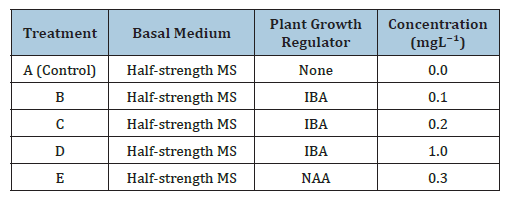
The rooting treatments were as follows: For the cultivar Mimosa, rooting was performed using Treatment C, consisting of half-strength MS medium supplemented with 0.2mgL⁻¹ IBA, following the protocol routinely employed in our laboratory.
Acclimatization
Rooted plantlets were transferred to 330-mL plastic containers filled with sterile Vitaflor® Light Mix substrate, composed of Sphagnum peat, composted pine bark, perlite, vermiculite, a pHadjusting agent and a low level of fertilizer. To maintain high relative humidity during acclimatization, each container was covered with a transparent polyethylene bag. Plantlets were maintained under controlled environmental conditions of temperature and light. After acclimatization, plants were transplanted into 1000-mL plastic pots containing the same substrate for further growth.
Result
Culture establishment is strongly influenced by genotype and explant source
Successful establishment of aseptic cultures depended on both genotype and explant type. Different surface sterilization protocols were required for the two cultivars to achieve acceptable levels of contamination control while preserving explant viability. Nodal segments of Northern Light were successfully established using moderate sodium hypochlorite concentrations, whereas Mimosa required a more intensive disinfection procedure when nodal explants from greenhouse-grown plants were used (Table 3). In contrast, seeds of Mimosa were established using a different sterilization strategy that combined sulfuric acid, sodium hypochlorite and hydrogen peroxide, resulting in healthy in vitro seedlings suitable as a source of juvenile explants. Regardless of the protocol employed, explants that survived the establishment phase resumed active growth without visible tissue oxidation or excessive necrosis, providing suitable material for subsequent multiplication. Importantly, no callus formation was observed during culture establishment, indicating that regeneration proceeded through direct organogenesis. Low BAP concentration promotes shoot organogenesis, whereas excessive cytokinin induces hyperhydricity: Shoot induction occurred rapidly in both cultivars when cultured on half-strength MS medium supplemented with 0.1 mg L⁻¹ BAP. Axillary bud growth became evident within 7-10 days after culture initiation, followed by the development of multiple shoots through direct organ genic pathways (Figure 4 & 5). This response was consistently observed in both Northern Light and Mimosa, regardless of whether the latter originated from greenhouse-grown donor plants or in vitro-derived seedlings.
Table 3:Effect of different surface sterilization protocols on contamination and in vitro establishment of Cannabis sativa L. explants and seeds.
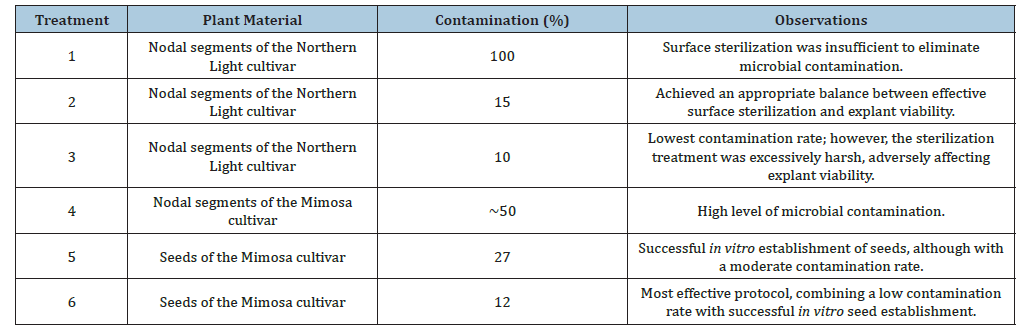
Figure 4:Sprouted nodal segments of the Northern light cultivar. A- D. BAP treatment 0,1mg·L-¹

Figure 5:A, B, C. Shoot regeneration from nodal segments of the Mimosa cultivar. (A-C) Nodal segments excised from mother plants. (D-F) Nodal segments derived from in vitro-grown seedlings

Figure 6:Hyper hydric shoots of the Northern Light cultivar after more than one month of in vitro culture. A-C. Treatment BAP1mg·L-¹.

Increasing the BAP concentration to 1.0mgL⁻¹ markedly altered shoot morphology in Northern Light. Instead of improving multiplication, prolonged exposure to the higher cytokinin concentration resulted in severe hyperhydricity after approximately three weeks of culture (Figure 6). Hyperhydric shoots displayed translucent tissues, brittle stems, enlarged leaves and progressive rosette formation, ultimately reducing shoot quality for subsequent rooting. These observations indicate that although cytokinin is essential for shoot induction, excessive BAP compromises normal morphogenesis and limits the production of physiologically competent propagules.
Root induction represents the principal genotypedependent stage during micropropagation
The greatest differences between cultivars became evident during root induction. Although both genotypes responded positively to IBA supplementation, rooting efficiency and the timing of root emergence differed markedly. In Northern Light, root formation was relatively slow and inefficient. Adventitious roots became visible only after approximately 30 days of culture and the highest rooting percentage (42%) was obtained on half-strength MS medium supplemented with 0.2mgL⁻¹ IBA. Lower or higher IBA concentrations reduced rooting efficiency, whereas NAA failed to induce root formation under the conditions evaluated (Figure 7 & 8) By contrast, Mimosa exhibited a markedly greater rooting capacity. Using the same basal medium supplemented with 0.2mgL⁻¹ IBA, approximately 90% of the shoots produced adventitious roots (Figure 9). Root initiation occurred within seven days in shoots derived from in vitro seedlings, whereas explants collected from young donor plants required approximately 20 days to produce roots. These results demonstrate that rooting performance depended not only on genotype but also on the physiological origin of the explant.
Figure 7:Response of in vitro-derived shoots to different root induction treatments.

Figure 8:Rooting response of Cannabis sativa L. cv. Northern Light on culture medium supplemented with 0.2mg L-¹ indole-3-butyric acid (IBA). (A, B) Shoots developing roots. (C) Root development. (D) Plant after ex vitro acclimatization.

Figure 9:Rooting response of Cannabis sativa L. cv. Mimosa. (A, B) Shoots derived from in vitro-grown plants developing roots. (C) Rooting of shoot-bearing nodal segments excised from young plants of the Mimosa cultivar.

Ex vitro establishment is closely associated with root system development
The contrasting rooting responses directly affected acclimatization performance. Plantlets of Northern Light required approximately 65-70 days in the rooting phase before transfer to ex vitro conditions and achieved a survival rate of 75% during acclimatization. In contrast, Mimosa developed a functional root system considerably faster, allowing acclimatization after only 25- 30 days and resulting in a survival rate of 92%. After acclimatization, surviving plants of both cultivars resumed normal vegetative growth following transplantation into larger containers. However, the superior ex vitro performance of Mimosa closely paralleled its higher rooting efficiency and faster root development, suggesting that the quality of the in vitro-generated root system was a major determinant of successful acclimatization.
Discussion
Genotype determines morphogenic competence during invitro culture
The present study demonstrates that the efficiency of Cannabis sativa micropropagation is largely determined by the genetic background of the donor plant. Although both cultivars were successfully established under aseptic conditions and regenerated through direct organogenesis, each genotype required specific culture conditions to maximize morphogenic performance. These findings reinforce the growing consensus that no universal in vitro protocol is suitable for all cannabis cultivars and that genotypespecific optimization remains essential for efficient clonal propagation. Although genotype-dependent responses have been consistently reported throughout the different stages of cannabis micropropagation [8-15], recent advances suggest that some regeneration systems based on direct organogenesis may reduce genotype dependence under specific experimental conditions [16].
Nevertheless, the marked differences observed between Northern Light and Mimosa in the present study indicate that genotype remains a major determinant of morphogenic competence during commercial micropropagation. Such variability is generally attributed to differences in endogenous hormonal balance, developmental competence of meristematic tissues and the capacity of individual genotypes to perceive and respond to exogenous plant growth regulators. An additional advantage of the protocol developed in the present study was the absence of callus formation during culture establishment and shoot proliferation. Direct organogenesis minimizes the risk of somaclonal variation and contributes to the maintenance of genetic fidelity, an essential requirement for the commercial propagation of elite medicinal cannabis cultivars. Previous molecular analyses using SSR markers have confirmed that direct organogenesis can maintain high levels of genetic fidelity in micropropagated cannabis plants, reinforcing its suitability for the large-scale propagation of elite cultivars [17]. Together, these findings support the use of direct organogenesis as the preferred regeneration pathway for commercial cannabis micropropagation, particularly when long-term clonal fidelity is required.
Hormonal balance regulates shoot development and hyperhydricity
Successful shoot proliferation depended on maintaining an appropriate cytokinin concentration throughout the multiplication phase. Both cultivars exhibited rapid shoot induction in response to low BAP concentrations, whereas increasing cytokinin levels promoted severe hyperhydricity rather than improving multiplication efficiency. These observations indicate that the hormonal balance required for shoot initiation differs from that required to sustain normal shoot development. Hyperhydricity is one of the most common physiological disorders affecting in vitro cultures and is frequently associated with excessive cytokinin exposure, high tissue water content, impaired lignification and abnormal stomatal development. Under these conditions, shoots exhibit translucent tissues, brittle stems, reduced mechanical strength and limited capacity to survive subsequent rooting and acclimatization. Similar responses have been reported in Cannabis sativa following exposure to elevated concentrations of BAP or TDZ [18,19]. The absence of callus formation despite active shoot proliferation further suggests that the selected cytokinin concentration favored direct activation of pre-existing axillary meristems rather than dedifferentiation of mature tissues. From a commercial perspective, this response is particularly desirable because it increases multiplication efficiency while reducing the probability of genetic instability during repeated subcultures.
Differential auxin responsiveness explains genotypedependent rooting
Among all stages evaluated, root induction represented the principal source of variation between cultivars. Although IBA promoted rooting in both genotypes, the marked differences in rooting percentage and the time required for root emergence indicate that rhizogenic competence is strongly genotype dependent. Root initiation in vitro is regulated by a complex interaction between endogenous auxin metabolism, auxin transport, carbohydrate availability and the ability of competent cells to re-enter the cell cycle and differentiate into root primordia. Consequently, even when cultured under identical environmental conditions, different cultivars frequently exhibit contrasting rooting capacities because of intrinsic differences in hormonal sensitivity and developmental plasticity. The superior performance obtained with 0.2mgL⁻¹ IBA agrees with previous reports identifying IBA as the most effective auxin for adventitious root induction in Cannabis sativa [20-24]. In contrast, increasing IBA concentration reduced rooting efficiency, while NAA failed to induce roots under the conditions evaluated. These results suggest that maintaining an adequate auxin balance is more important than simply increasing auxin availability, since excessive concentrations may inhibit root differentiation or promote uncoordinated cellular responses. The remarkable contrast observed between Northern Light and Mimosa emphasizes that genotype-specific differences in auxin responsiveness are likely to represent one of the principal factors limiting the development of broadly applicable micropropagation protocols for Cannabis sativa.
Root system quality determines ex vitro establishment
The differences observed during acclimatization closely reflected the rooting responses obtained during the in vitro phase. The cultivar exhibiting earlier and more abundant root formation also showed the highest survival after transfer to ex vitro conditions, whereas delayed rooting was associated with lower acclimatization success. Successful acclimatization depends largely on the establishment of a functional root system capable of restoring water uptake before the gradual recovery of normal stomatal regulation and cuticle development. Plantlets produced in vitro typically possess poorly developed epicuticular waxes, partially functional stomata and limited control of transpiration, making them highly susceptible to water deficit immediately after transfer to ambient conditions. Consequently, vigorous root development before transplanting is frequently considered one of the strongest predictors of acclimatization success.
The high survival achieved by Mimosa therefore appears to be a direct consequence of its greater rhizogenic competence rather than differences in substrate or environmental conditions during acclimatization. Similar genotype-dependent relationships between rooting performance and ex vitro establishment have been reported previously in cannabis [13], supporting the hypothesis that root quality constitutes one of the major determinants of successful commercial micropropagation. In addition, these results underscore the importance of monitoring both genetic and epigenetic stability, as maintaining clonal fidelity is essential for the long-term productivity, uniformity and quality of cannabis cultivation [25]. Taken together, these findings indicate that improving rooting efficiency represents one of the most effective strategies for increasing the overall success of commercial cannabis micropropagation.
Conclusion
This study demonstrates that the efficiency of Cannabis sativa micropropagation is primarily determined by the genetic background of the cultivar. Although both Northern Light and Mimosa were successfully established and propagated using halfstrength MS medium supplemented with low concentrations of BAP and IBA, each genotype exhibited distinct responses during culture establishment, shoot proliferation, root induction and acclimatization. These findings indicate that the development of a single universal micropropagation protocol is unlikely to be suitable for genetically diverse cannabis cultivars. Among all developmental stages evaluated, root induction emerged as the principal bottleneck affecting the overall efficiency of the micropropagation protocol. The marked differences observed in rooting percentage, root emergence and subsequent acclimatization between the two cultivars suggest that genotype-specific variation in rhizogenic competence has a greater impact on overall propagation success than differences observed during shoot multiplication. Consequently, optimization of the rooting phase should be considered a priority when developing commercial propagation protocols for elite cannabis germoplasm.
The protocol developed in this study provides an efficient framework for the clonal propagation of two commercially relevant Cannabis sativa cultivars while emphasizing the importance of genotype-specific optimization. More broadly, these results contribute to the growing body of evidence indicating that future advances in cannabis micropropagation should focus on understanding the physiological and molecular mechanisms underlying genotype-dependent morphogenic responses, thereby enabling the development of more robust and reproducible propagation systems for pharmaceutical, medicinal and industrial applications.
References
- Salentijn EMJ, Zhang Q, Amaducci S, Yang M, Trindade LM, et al. (2015) New developments in fiber hemp (Cannabis sativa L.) breeding. Industrial Crops and Products 68: 32-41.
- Clarke RC, Merlin MD (2013) Cannabis: Evolution and ethnobotany. Plant Ecology and Evolution 147(1): 149-149
- Small E, Naraine SGU (2016) Expansion of female sex organs in response to prolonged virginity in Cannabis sativa (marijuana). Genetic Resources and Crop Evolution 63(2): 339-348.
- Monthony AS, Page SR, Hesami M, Jones AMP (2021) The Past, present and future of Cannabis sativa tissue culture. Plants 10(1): 185.
- Campbell LG, Naraine SGU, Dufresne J (2019) Phenotypic plasticity influences the success of clonal propagation in industrial pharmaceutical Cannabis sativa. Plos One14(3): e0213434.
- Ramos M (2023) In vitro establishment of Cannabis sativa L. explants [Undergraduate thesis, Faculty of Agricultural and Forestry Sciences], Argentina
- Chandra S, Lata H, Khan IA, ElSohly MA (2013) The role of biotechnology in Cannabis sativa propagation for the production of phytocannabinoids. In: Chandra S, Lata H, Varma A (Eds.), Biotechnology for medicinal plants. pp. 123-148.
- Lata H, Chandra S, Techen N, Khan IA, ElSohly MA, et al. (2016) In vitro mass propagation of cannabis sativa L.: A protocol refinement using novel aromatic cytokinin meta-topolinand the assessment of eco-physiological, biochemical and genetic fidelity of micropropagated plants. Journal of Applied Research on Medicinal and Aromatic Plants 3(1): 18-26.
- Adams TK, Masondo NA, Malatsi P, Makunga NP (2021) Cannabis sativa: From therapeutic uses to micropropagation and beyond. Plants 10(10): 2078.
- Andre CM, Hausman JF, Guerriero G (2016) Cannabis sativa: The plant of the thousand and one molecules. Frontiers in Plant Science 4(7): 19.
- Boonsnongcheep P, Pongkitwitoon B (2020) Factors affecting micropropagation of Cannabis sativa L.: A review. Pharmaceutical Sciences Asia 47(1): 21-29.
- Murashige T, Skoog F (1962) A revised medium for rapid growth and bioassays with tobacco tissue cultures. Physiologia Plantarum 15(3): 473-497.
- Ioannidis K, Tomprou I, Mitsis V (2022) An alternative in vitro propagation protocol for Cannabis sativa L. (Cannabaceae) featuring efficient rooting for commercial production. Plants 11(10): 1333.
- Liang J, Wei X, Liu J, Zhou Q, He D, et al. (2026) Efficient propagation protocol and genetic similarity assessment of medicinal cannabis based on photoautotrophic micropropagation. Front Plant Sci 17: 1846572.
- Kastelec D, Troha S, Svetik S, Trafela T, Murovec J, et al. (2025) Optimization of micropropagation protocols and assessment of epigenetic changes in tissue cultures of diverse medical cannabis (Cannabis sativa L.) genotypes. Industrial Crops and Products 229: 121015.
- Bennur PL, O’Brien M, Fernando SC, Doblin MS (2025) Genotype-independent de novo regeneration protocol in cannabis sativa L. through direct organogenesis from cotyledonary nodes. Plant Methods 21(1): 145.
- Ioannidis K, Tomprou I, Mitsis V, Koropouli P (2022) Genetic evaluation of in vitro micropropagated and regenerated plants of cannabis sativa L. Using SSR Molecular Markers. Plants (Basel) 11(19): 2569.
- Lata H, Chandra S, Khan I, ElSohly MA (2009) Thidiazuron-induced high-frequency direct shoot organogenesis of Cannabis sativa L. In Vitro Cellular & Developmental Biology-Plant 45(1): 12-19.
- Chaohua C, Gonggu Z, Lining Z, Chunsheng G, Tang Qing T, et al. (2016) A rapid shoot regeneration protocol from the cotyledons of hemp (Cannabis sativa L.). Industrial Crops and Products 83: 61-65.
- Lata H, Chandra S, Khan IA, Elsohly MA (2010) High-frequency plant regeneration from leaf-derived callus of high Δ9-tetrahydrocannabinol yielding cannabis sativa L. Planta Medica 76(14): 1629-1633.
- Movahedi M, Omran VOG, Torabi S (2015) The effect of different concentrations of TDZ and BA on in vitro regeneration of iranian cannabis (Cannabis sativa) using cotyledon and epicotyl explants. Journal of Plant Molecular Breeding 3(2): 20-27.
- Chandra S, Lata H, ElSohly MA (2020) Propagation of Cannabis for clinical research: An approach towards a modern herbal medicinal products development. Frontiers in Plant Science 11: 958.
- Favero BT, Salomonsen JK, Lütken H (2023) Alternative rooting methods for medicinal cannabis cultivation in Denmark-Preliminary results. Plants 12(11): 2216.
- González MM, Yañuk G, Sannazzaro A, Butassi E, Liberto MD, et al. (2026) Toward scalable micropropagation of Cannabis sativa (chemotype III): Protocol optimization and preliminary evaluation of cannabinoid stability. Industrial Crops and Products 243: 123040.
- Lefebvre V, Torkamaneh D, Deslauriers S, Devèze T, Ronne MD, et asl. (2026) Micropropagation of cannabis sativa: genetic and epigenetic stability assessment over multiple generations. J Cannabis Res 8(1): 43.
© 2026 Weber C. This is an open access article distributed under the terms of the Creative Commons Attribution License , which permits unrestricted use, distribution, and build upon your work non-commercially.
Editor In Chief







.jpg)































Signup for Newsletter

Quick Links
 Editorial Board Registrations
 Submit your Article
 Best Paper of the Volume
 Reprints
 Refer a Friend
 Advertise With Us
Our Recent Edition

.jpg)



Top Editors




.jpg)

















.bmp)
.jpg)
.png)
.jpg)













.jpg)






.png)

.png)




.png)




Financial Support

Sponsors

Latest e-Books

Latest Video

 a Creative Commons Attribution 4.0 International License. Based on a work at www.crimsonpublishers.com.
Best viewed in
a Creative Commons Attribution 4.0 International License. Based on a work at www.crimsonpublishers.com.
Best viewed in 
 | Above IE 9.0 version