

- About Us
- Information
-

The Author ensures that the research has been conducted responsibly and ethically with adherence to all relevant regulations. read more..
- For Authors
- For Reviewer
- Manuscript Guidelines
- Membership
- Publication Ethics
-
- Journals
- Reprints
- e-Books
- Videos
- Policies
- Contact Us
 COVID-19
- Submissions



Full Text
Modern Concepts & Developments in Agronomy
Bacterial Nanocellulose: A Sustainable Alternative for Barrier Control of Fungal Pathogens in Tomato Plants and Fruit. Pilot Project in the Province of Tucumán
González Exequiel and Sesto Cabral Maria Eugenia*
Laboratory of Pharmaceutical Studies and Pharmaceutical Biotechnology, Institute of Pharmaceutical and Food Biotechnology, Argentina
*Corresponding author:Sesto Cabral Maria Eugenia, Laboratory of Pharmaceutical Studies and Pharmaceutical Biotechnology INBIOFAL-CONICET-UNT, Roca 1900, San Miguel de Tucumán, Argentina
Submission: March 26, 2026;Published: April 17, 2026

ISSN 2637-7659Volume15 Issue 5
abstract
Science and technology offer new opportunities to transform the Argentine agricultural sector toward sustainable and bio-inspired models. Tomato production, with an annual output of 1,100,000 tons, faces the challenge of pathogenic strains resistant to common fungicides, necessitating new control strategies to enhance the plant’s immune system and protect the fruit. In response, research was conducted on the use of Bacterial Nano-Cellulose (BNC) to formulate film-forming suspensions that act as natural fungicides. This formulation coats the plant without interfering with its natural growth or photosynthesis, thanks to an 85% transparency and a controlled pH of 5.9, which optimizes the absorption of essential nutrients such as phosphorus and calcium. Results indicate that BNC forms an adherent, moisture-resistant film capable of protecting the crop from pathogens such as B. cinerea throughout its growth cycle. Notably, BNC-treated plants showed the highest productivity in comparative trials. It is hypothesized that this technology exerts a barrier effect, allowing the plant to redirect its energy toward strengthening its own immune system rather than expending it on defending against external aggressions. Therefore, the use of BNC presents a viable alternative for organic and agroecological production, with the potential to eliminate the use of agrochemicals in the future and ensure healthier harvests in regions with high horticultural potential.
Abbreviations:CP: Clean Production; 4R: (Reduce, Reuse, Recycle and Regenerate); S3B: (Sustainable, Biodegradable, Biotechnological, Bio-inspired); T: Tons; ha: hectares; Kg: Kilogram; INTA: National Institute of Agricultural Technology; BMP: Good Manufacturer Practices; LEFyBiFa: Laboratorio de Estudios Farmacéuticos y Biotecnología Farmacéutica; SF: Filmogenic Suspension; HPMC: Hydroxypropyl Methylcellulose; PEG400: Polietilenglicol 400; ANMAT: Administración Nacional de Medicamentos, Alimentos y Tecnología Médica
Introduction
Advances in science and technology are opening new opportunities to transform Argentina’s agricultural sector. Cleaner Production (CP), 4R (Reduce, Reuse, Recycle, and Regenerate), and S3B (Sustainable, Biodegradable, Biotechnological, Bio-inspired) technologies, developed in our research laboratory, introduce a more sophisticated approach to the concept of the production process and an innovative perspective on the cost-benefit ratio in productive transformation. Leveraging sustainable technologies paves the way for the development of methods that increase productivity in agroecological crops. One of the objectives set forth in Law No. 27738, the “National Science, Technology and Innovation Plan 2030,” is to implement innovation and development projects that enable the integration of the production and scientific systems [1]. The document “Provincial Strategy for the Agri-food Sector-EPSA Tucumán” defines guidelines for the development of agroecological vegetable production ventures [2].
Tomato market is primarily divided into fresh tomatoes and industrial processing tomatoes, such as sauces, puree, juices, dehydrated products, canned goods, etc. The tomato (Solanum lycopersicum) is an herbaceous plant cultivated worldwide for its fruit. Average annual tomato production in Argentina is around 1,100,000 tons (t) across 17,000 hectares (ha). Approximately 60- 70% is destined for the fresh market and 30-40% for processing. Tomato consumption in Argentina is around 16kg/person/year. This volume represents the second largest horticultural product in the country, surpassed only by potatoes. While census data is unavailable, according to a 2020 update by INTA [3], production reaches approximately 767,000 Tons. The cultivated area, according to the same source, is estimated at 11,800 ha. The average yield is 67t/ha, although there are substantial differences between openfield and protected cultivation. The application of S3B technologies would foster conditions for developing diversified and sustainable production systems, encouraging the provision of specialized services.
Because it is an activity heavily influenced by family farming, cultivation tasks are generally carried out by the producer and their community. The demand for labor is concentrated during the harvesting and processing stages and is usually seasonal and unskilled. There are some details that characterize this sector in Argentina and particularly in the province of Tucuman, that we need to highlight in order to better understand the context. From an interview conducted with a group of organic tomato producers in Amberes-Monteros-Tucumán, we obtained the following information. Sector Characteristics: High proportion of smallholdings, significant variation in technology use among producers, lack of organization and cooperativity, lack of sector financing, exposed to adverse weather conditions production, inadequate development of sorting, packing and storage facilities. Main Challenges: Promote the adoption of Good Manufacturer Practices (BMP) at all stages of production and post-harvest, encourage producer cooperation and business management, product differentiation through quality standards and sanitary regulations, the need to generate new value-added by-products. Opportunities: Extended production period (mani microclimates), growing demand for higher-value exotic varieties in the market, increasing number of conscious consumers demanding fresh, agroecologically sourced products. In this regard, our province offers climatic advantages that allow for year-round cultivation. Tucumán represents a potential source of fresh, agroecologically grown vegetables, with the consequent potential for introduction into the national supply market. Throughout the entire growing season, Tucumán produces almost all horticultural species, including our subject of study. Taking advantage of the agroecological characteristics of our territory, production is divided between seasonal crops that supply local markets. Regional and offseason crops are used to supply national markets, taking advantage of marketing windows where better prices are obtained. We are particularly interested in implementing S3B technologies in tomato production in our province and, in the future, expanding to cover the Northwest region of Argentina.
Our team is a pioneer in the development of film-forming suspensions and edible coating matrices for berries and peaches. We have been working with Bacterial Nano-Cellulose (BNC) matrices for 12 years. Bacterial nanocellulose is a product of the aerobic fermentation in a liquid culture medium. BNC is a primary metabolite synthesized by the bacterium Pseudomonas fluorescens, formed at the air-water interface. BNC possesses distinctive characteristics that allow for the modification of its biological, physical and physicochemical properties. Its versatility stems from the processes involved in its production method. A wellstudied and widely used characteristic of BNC is its mechanical strength, biocompatibility and swelling capacity, which reaches approximately 200 times its weight in water [4]. Under specific conditions, this makes it a unique model for the design of edible films and coatings. Previous studies conducted in our laboratory have allowed us to obtain hydrogels and natural suspensions to carry all types of natural extracts, both oily and aqueous [5-8]. Pathogenic strains resistant to commonly used fungicides were detected, requiring the development of new control strategies [9]. To address this problem, we focused on two strategies: Improving the tomato plant’s immune system to prevent infections during the growth period and protecting the fruit during its growth and ripening period [10]. Incidence can fluctuate significantly; for example, the prevalence of greenhouses affected by bacterial wilt ranged from a minimum of 67% (2011) to a maximum of 100% (2008).
In Tucuman province, data collected from interviews with
local organic producers establish that in this period 2025-2026
there was a loss of approximately 32% of plants and seedlings, and
this is generally related to the humidity conditions that promote
the presence of fungal pathogens. Diseases do not have a uniform
impact [11]. Critical diseases: In addition to wilt and bacterial
canker (Clavibacter michiganensis) [12], crops constantly face risks
from pathogens such as:
a. Powdery mildew (Leveillula taurica) [13-15]
b. Downy mildew (Phytophthora infestans) [16]
c. Alternariosis (Alternaria solani) [17]
d. Botrytis (Botrytis cinerea)
The incidence rate of 26.1% reflects the proportion of plants with visible symptoms in the greenhouses studied, which compels producers to implement integrated management practices, humidity control and preventative applications to minimize damage.
Losses due to post-harvest pests and diseases of fruit represent around 50% in developing countries [18]. The high water content of the fruit and the wounds that occur during harvesting and transport make them vulnerable to pathogen attack. This negatively impacts product quality and puts consumer health at risk [19]. Despite the effectiveness of preventive measures such as cleaning and disinfecting equipment and facilities to reduce pathogen populations, the fruit itself generally arrives contaminated from the field. Therefore, prevention at the plant level becomes essential to avoid a total loss of 85%. Synthetic benzimidazole-based fungicides such as I-Ma-Zalil (IMZ), Prochloraz (PRO), and Car- Benda-Zim (CBZ) have lost effectiveness at recommended doses due to resistance developed by the most prevalent pathogens [20] Currently, chemical control is achieved using preventative fungicides with the active ingredients copper oxychloride, chlorothalonil, mancozeb, and folpet. When weather conditions are favorable for disease development, sprays of the active ingredients benomyl, fludioxonil, cyprodinil and boscalid are applied. Our pharmaceutical and biotechnology research laboratory focuses on the application of 4R and P+L. We propose alternatives to current solutions that are problematic due to misuse, lack of trained personnel, the inherent toxicity of each agrochemical and the absence of studies on their combinations.
Our team is able to generate edible films and coatings in the form of film-forming Suspensions (SFs). These are continuous, thin matrices structured around the food, generally by spraying the coating-forming suspension. Like Coating Films (CPs), SFs possess mechanical properties, create a barrier effect against gas transport, and can acquire various functional properties by incorporating encapsulated substances and excipients into the formula. The use of a CP or SF in food applications, and especially in highly perishable products, must consider characteristics such as cost, availability, functional attributes, mechanical properties, optical properties, their barrier effect against gas flow, structural resistance to water and microorganisms, and their sensory acceptability. Studies conducted during my postdoctoral research showed that a coating film formulated with NCB extends the shelf life of strawberries at room temperature by 48 hours [21]. Our main objective is to contribute, in terms of technology and the design of scaling protocols, to the development of natural fungicides useful in the fruit and vegetable treatment of tomatoes, both on the plant and the whole plant, facilitating the transfer of technologies developed in LEFyBiFa. To characterize film-forming Suspensions (SF) formulated from Bacterial Nano-Cellulose (BNC) and compare the efficacy of these products with fungicides currently in use.
Material and Methods
BNC obtention process
In previous work, results related to the coating of soft fruits such as peaches and strawberries were published [21]; this work shows the preliminary results of the harmless coating incorporated into the fruit on the plant and the entire plant. A strain of P. fluorescens WS (wrinkled CFU strain) (donated by Dr. Andrew Spears, Faculty of Science, Engineering and Technology, Abertay University in 2010) was used to obtain BNC. BNC was obtained using a static culture method developed in our laboratory LEFyBiFa [22]. It was cultured in King B broth prepared in our laboratory (Britania-C.A.B.A., Argentina) and maintained at 25 °C in 60cmx40cm high-surfacearea trays to increase production at the air-liquid interface. 120mL of fresh medium was added for 72h at 28 ± 1 °C. To estimate BNC production, all cellulose films were washed with distilled water to remove the culture medium. The BNC was centrifuged for 20min at 8000rpm. Then, 1mL of 2% v/v NaOH was added, and the mixture was autoclaved for 15min at 121 °C to remove any remaining cell debris from the framework [22].
Seed selection
The selected sedes of Solamun licopensicum were from the Pro- Huerta program (a native, open-pollinated variety was chosen). The seeds were acquired from the National Institute of Agricultural Technology.
Study pathogen
The selected pathogen was Botrytis cinerea. Its selection is due to the climatic conditions of our province; both humidity and average temperature coincide with its optimal growth parameters. According to reports from tomato growers, the greatest losses of whole plants and fruit on the plant are due to the presence of this pathogen.
Formula design
The formulated SF was designed with preservatives approved for natural product formulations, specifically Cosgard preservative (Eiffel Química-Argentina), considering the 120-day duration of the trial. This period coincides with the seedling growth time until the fruit is ready for harvest. The formulation consisted of mixing HPMC and BNC (90:10 ratio) with 1% preservative and distilled water using a thermostatically controlled magnetic stirrer (Numak GL- 3250, London, UK) until homogenized. The total cellulose content was 2.0% (w/v). Polyethylene glycol 400 (PEG-400) at 0.5% (v/v) was added as a plasticizer and stirred for more than 10 minutes.
Formulation design quality control [23]
Formulation studies were carried out in order to evaluate pharmacotechnical aspects such as: Homogeinity, pH, viscosity and stability until 140days were developed as required on Administración Nacional de Medicamentos, Alimentos y Tecnología Médica (ANMAT) disposition Nº7667.
pH measurements
The pH of SF was measured in a pHmeter (Broadley James Corporation, Irvine, CA) by dipping the glass electrode into the SF [23].
Homogeneity assays
The SF designed was applied as a thin layer on polypropylene slides. Homogeneity was tested by visual appearance after application. The same SF (3mL) was used for centrifugation assays (15min, 3500rpm) and separation in phases was controlled [24] Under these conditions the homogeneity of SF was qualitatively qualified as follows: Very good (no phase separation), good (appearance of small volume of supernatant), regular (phase separation withslight appearance of clotted) and poor (separation of the phases with appearance of pellet).
Tramittance
When working with SF in plants, it is vital to consider its light transmission capacity so that the product does not interfere with the plant’s photosynthesis. To this end, we designed a protocol in our laboratory, which consists of formulating six SFs of varying thicknesses. For this design, we used a glass plate and special paper to prevent the dried SF from adhering to the coating. We applied the SF to the plate every 30 minutes over a period of 3 hours. This is the maximum drying time we were able to measure with a stopwatch. The objective was to verify if this layer was capable of transmitting light. Transmittance was measured in a single scan using a spectrophotometer (Biolab 2458 Buenos Aires-Argentina). Readings were recorded every 15 days along with quality control studies. These preliminary trials allowed us to calculate the application method and the amount of SF (in mL) applied in each case as the plant grows.
Stability
A period of 140 days was used as a reference because the trial begins 15 days after seedling germination, with germination defined as the appearance of the leaflets. It is recorded that the plant’s growth period until fruiting is 120 days under ideal conditions. Parameters were tested pH, tramitance. For the 140-day shelf-life study: pH, homogeneity and transmittance measurements of the SF will be taken.
Growth Chamber Conditions
The following relative humidity and temperature conditions were used as trial parameters in the growth chambers. The temperature was set at an average of between 15 °C and 23 °C. The relative humidity was set at 80%. The parameters were recorded using a TL300 multifunction digital anemometer (Eureka group- Argentina). The choice of parameters is related to the pathogen selected for this study. A solution of Botrytis cinerea spores, the fungus responsible for black rot, the main problem in tomato crops in our province, will be sprayed. The SF treatment group will be applied every 15 days after shelf-life stability tests.
Figure 1:AI-RS applications ranging from biophysical to socio-economic impacts.

Trial with Tomato Seedlings
For this trial, 200 tomato seedlings, 15 days old from
germination, were placed in 5 Growth Chambers (GC) according to
the treatment they received.
CC1: Untreated control
CC2: Seedlings treated with NBC SF
CC3: Seedlings treated with carbamazepine
CC4: Seedlings with puncture wounds
CC5: Seedlings with non-treatment applied
For the studies, a solution of Botrytis cinerea fungal spores was sprayed. Pathogen inoculation: 10μL of spore suspension (final concentration 10⁵CFU/mL) will be inoculated. The trial will last 140 days.
The parameters to be evaluated are, in plants 15 days or older, up to the reproductive phase (flowering), the appearance of leaf spots, necrotic lesions and stem cankers will be monitored. These characteristics correspond to the symptoms of a plant contaminated with B cinerea. Reproductive phase: In this phase, floral infection will be evaluated, observable through colonization of sensitive petals, progression to the receptacle of the young fruit and fruit rot. Fruiting: Is the period of fruit growth, and the trial will be stopped when the fruit has reached 40% coloration. The use and customs of organic producers in Tucumán were used as a parameter. After harvesting the fruit that had reached the established color percentage, the plant length was measured from the base of the seedling to the total stem length in cm.
Statistical Analysis
All experiments were conducted following a completely randomized design, with 40 seedlings evaluated per treatment. All measurements were performed at least in triplicate, and the results are presented as mean ±standard deviation. Statistical analyses were carried out using INFOSTAT 2020 software. An Analysis of Variance (ANOVA) with an adjustment of the data to a linear mixed model was performed, and mean values were compared using Fisher’s test at a significance level of p<0.05. The comparisons of the means were made among the days of the measurements and among the treatments.
Result and Discussion
Formulation desing:
Table 1 shows complete composition of our formula for SF.
To design our SF formula, three fundamental parameters were
considered:
Technological design parameters.
Parameters related to gas permeability, adequate adhesion and
adaptation to growth.
Parameters related to the clarity of the SF, to avoid interfering
with light transmission.
Table 1:Formulation desing and composition.
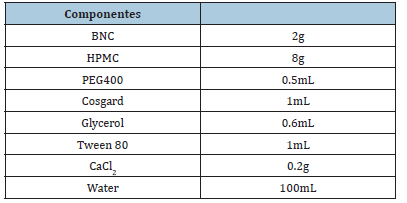
The NCB polymer matrix forms the film. HMPC, as a plasticizing agent, protects the SF from crystallization and cracking (which could cause opacity). We used glycerol at an appropriate concentration to maintain flexibility and transparency. As a surfactant, tween 80 was selected to ensure uniformity on the tomato’s waxy cuticle, since at the appropriate concentration it is able to reduce the contact angle. Finally, we selected a known concentration of calcium chloride to improve water resistance without sacrificing clarity [7,21,22].
pH measurements
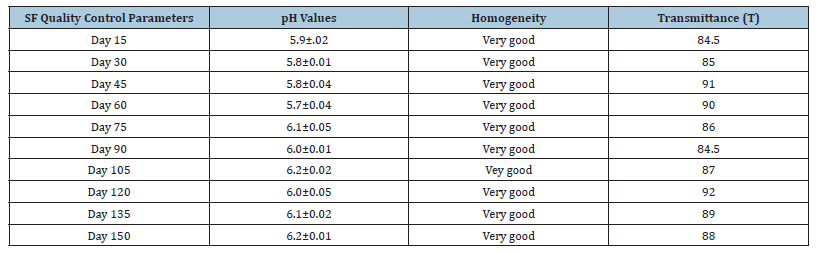
To characterize the SF formulation, a series of quality controls were performed, established for film-forming suspension matrices designed in our laboratory. These controls included pH and Tramitance measurements, as well as homogeneity studies. When the pH in the tested formulations in triplicate on stability studies was measured a value of 5.9 ± 0.04 was obtained. The optimal pH for tomato cultivation is in a slightly acidic range, ideally between 6.0 and 6.8. Although soil pH values are reported, the application is carried out systematically every 15 days, so the pH values of the sprayed SF modify the pH through direct contact with the tomato plant [25].
Maintaining the optimal pH range allows for maximum availability and absorption of essential nutrients such as phosphorus, potassium, calcium and magnesium, facilitating vigorous growth and healthy fruit. Some key points about pH and tomatoes: These were considered in the design of our SF formula [25]. Ideal Range: Although the 6.0-6.8 range is the most recommended, tomatoes can adapt well to a slightly wider range of 5.5 to 6.5. Problems due to Inadequate pH: pH too low (<5.5): Can cause aluminum toxicity and deficiencies in phosphorus, magnesium, molybdenum and calcium. pH too high (>7.5): Causes deficiencies in micronutrients such as iron, zinc, manganese and copper. Maintaining the pH within this range is crucial to prevent diseases, yellowing leaves and ensure a good harvest. These data are highlighted because optimizing plant health is crucial during the study [25-27].
Homogeneity [23]
When homogeneity was measured, it was taken into account that it is a quantitative parameter. Therefore, it was observed by three different operators, and the responses of each were averaged. The recorded data are shown in Table 2. In all cases, complete homogeneity was found, with no phase separation. This could be due to the formulation method and the appropriate selection of the excipients involved.
Table 2:Shelf storage study for 160 days for collected meters: pH, homogeneity and transmittance studies.
Tramitance [28,29]
All T values recorded in the measurements fell within optimal parameters. See Table 2: Shelf storage study for 140 days for collected meters: pH, homogeneity, and transmittance studies. To optimize photosynthesis in a tomato plant (Solanum lycopersicum) after applying a SF, it is crucial to maintain a balance between tissue protection and photon capture. The optimal effective Transmittance (T) for the tomato, a highly heliophilic (lightdemanding) species, should ideally be in the range of 85% to 90% within the Photosynthetically Active Radiation (PAR, 400-700nm) spectrum [30]. The T values obtained were adequate to facilitate fruit quality. It is reported in the literature that a T reduction below 80% can decrease fruit quality. It’s not just the amount of light that passes through that matters, but how it passes through [31]. Film-forming solutions that generate diffuse light (haze) can be beneficial even if the total transmittance drops slightly to 85%. Diffuse light penetrates the lower canopy of the tomato plant better, allowing the inner leaves to also perform active photosynthesis. This prevents photoinhibition in the upper leaves due to excessive direct radiation. In all cases, the transmittance values obtained were adequate to maintain optimal conditions for tomato plant growth and fruit development. Further studies are needed to determine adequate transpiration. Previous studies conducted on post-harvest fruit showed adequate gas exchange [32].
Growth Chamber Conditions
When designing the optimal conditions, we considered not only the average Temperature (T) values obtained from the Obispo Colombres Experimental Station (EEAOC) [33], which has meteorological stations scattered throughout the province of Tucumán and annually establishes average humidity and temperature, but also the average humidity and temperature values that we emulated under controlled conditions in our laboratory. These average values correspond to the ideal parameters for the growth of the fungus B. cinerea [34]. The following relative humidity and temperature conditions were used as test parameters in the growth chambers. The temperature was set at an average of between 15 °C and 23 °C. The relative humidity was set at 80%. The parameters were recorded with a TL300 multifunction digital anemometer (Eureka Group, Argentina). The fungus was sprayed every 15 days in the growth chambers. The application time corresponds to the average rainfall intervals over the last three years: 2023, 2024 and 2025. This data was obtained from the website of the Obispo Colombres Experimental Station, Tucumán, Argentina [33].
Trial with Tomato Seedlings
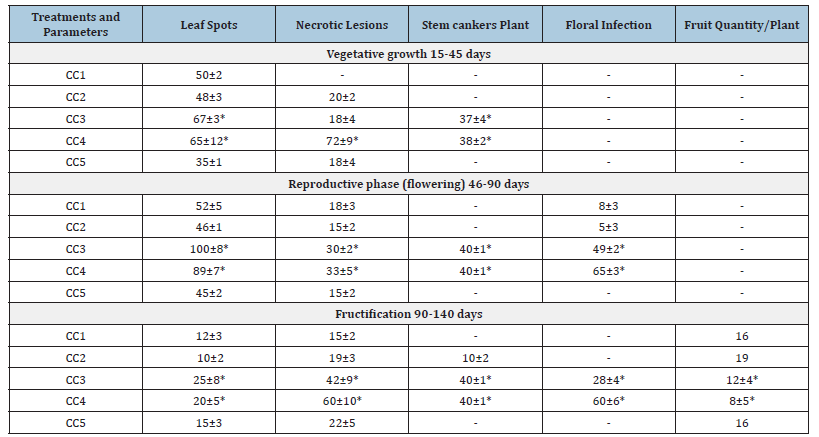
Table 3 shows the average measurements taken over 140 days in 5 growth chambers for 5 evaluated parameters. Three stages were evaluated: vegetative growth, flowering during the reproductive phase, and fruiting. Measurements were taken every 20 days, 5 days after each application of the SF (sporulant dispersion) and 10 days after the application of the B. cinerea spore dispersal. Data were collected from a total of 200 plants, divided into groups of 40, with a total of 7 measurements taken. Plants that were wilted were removed from the trial.
Table 3:Average measurements taken over 140 days in 5 growth chambers for 5 evaluated parameters. Leaf spots, Necrotic lesions, Stem cankers plant, floral infection, Fruit quantity/plant.
The plants were measured from the base to the stem tip, 120 days after harvesting the tomato fruits that had reached the established color percentage. On average, the plants without treatment (CC1), without spraying, measured 80 ± 3cm; the plants with the BNC treatment in SF (CC2) measured 80 ± 5cm; the plants with treatment (CC3) measured 65 ± 2cm. This makes sense since a greater loss of leaves, yellowing and the appearance of cankers were previously observed. Something similar occurred when treatment (CC4) was measured, where the plants measured 55 ± 5cm. This could be due to the sustained infections carried out directly on the plant. In the case of CC5, a plot with healthy plants sprayed with B. cinerea spores, the average height was 68 ± 5cm. No plants were removed from the study except for two plants from CC4.
Table 3 shows all the values from the monitoring carried out over 140 days from seed germination and 125 days from the start of the experiment.
To facilitate understanding, measurements were divided into
the three phases considered.
Phase 1: Vegetative growth 15-45 days
Phase 2: Reproductive phase (flowering) 46-90 days
Phase 3: Fruiting 90-140 days.
Measurements were taken for the 5 designed treatments: CC1: Untreated control, CC2: Seedlings treated with NBC SF, CC3: Seedlings treated with carbamazepine, CC4: Seedlings with puncture wounds, CC5: Seedlings with no treatment applied. In each case, the following parameters were evaluated: Leaf spots, necrotic lesions, stem cankers/plant, floral infections, and fruit quantity/plant. In the case of stem cankers, the number of plants was recorded, and the statistics compiled considering not the number of stem cankers, due to the large number of specimens in each treatment. The same applied to the number of fruits per plant, which corresponds to the average number of fruits per plant in each treatment.
Phase 1: Vegetative growth 15-45 days
Leaf spots: When the average number of leaf spots was measured across all treatments during the first stage, treatments CC3 and CC4 showed significant differences compared to the other treatments. This could be due, in part, to the lesions created with a scalpel to facilitate colonization by B. cinerea spores and in part to the weakening of the plant when the fungal spores were combined with carbamazepine (CBZ was used at the concentrations suggested by the manufacturer on its label). Accumulation actions carbamazepine is known for its high translocation in plants, meaning it easily passes from the soil into the edible tissues of the tomato. Impact of Persistence: Research indicates that CBZ does not degrade easily, leading to its long-term accumulation in the soil-plant system. Effects on the Plant, although no specific concentrations causing immediate tomato death to have been reported in the cited literature, the accumulation of agrochemicals alters nutrient absorption and can affect the plant’s overall physiology. The main problem is not the toxicity to the plant itself, but the potential for CBZ bioaccumulation in the fruit, representing a risk to human food safety [35]. Studies suggest that, due to the use of pharmaceuticals and wastewater, the presence of this drug in crops is a growing concern, requiring further research on the impact of specific doses [35,36].
Necrotic lesions: During the vegetative phase were significantly different in case CC4. Literatura reports that pesticides and agrochemicals applied incorrectly or in excess can cause necrosis (tissue death) and toxicity in tomato plants [37]. This phytotoxicity manifests as necrotic spots on leaves, wilting and burns, often caused by herbicide drift or incompatible mixtures [38]. The table 3 shows that the impact on the tomato plant is reported as follows: Impact of agrochemicals on tomatoes includes phytotoxicity, impact on the fruit, and poor application practices.
Phytotoxicity: The use of non-selective contact or systemic herbicides can cause foliar necrosis and stunted growth [37]. Visible lesions: Young leaves and tender tissues show necrotic or chlorotic (yellow) spots between the veins, which eventually dry out. Impact on the fruit: Small, dark green lesions or localized necrosis may appear on the fruit, especially under high humidity or temperature conditions, such as those observed in our experiment. Poor application practices: Applications with high doses, at inappropriate stages of development, or product drift from neighboring farms [38]. In addition to necrosis, the excessive use of pesticides, such as synthetic pesticides (insecticides and fungicides), affects soil health and can lead to pest resistance, requiring more frequent applications [35].
Stem cankers / plant: When the presence of canker was evaluated on the stems of tomato plants in all the experiments, it was identified only in CC3 and CC4, possibly due to weakening from a decrease in the plant’s immune system protection. As mentioned above in Materials and Methods, tomato canker is present in the seed, but since the seeds in question were healthy and acquired from the National Institute of Agricultural Technology, we can attribute it to the presence of the bacterium Clavibacter michiganensis12 in the soil.
Phase 2: Reproductive phase (flowering) 46-90 days
Leaf spots: When leaf loss was evaluated during the flowering phase, significant differences were found in treatments CC3 and CC4. Leaf loss and yellowing are also related to the energy available for flowering. In all cases, leaf drop increased, which is part of the process, but treatments where the immune system is compromised, such as in the case of pesticide use and injuries caused to facilitate the proliferation of B. cinerea, significantly increased leaf drop [38].
Necrotic lesions: When treatments were evaluated for signs of necrotic lesions, CC3 and CC4 showed significant differences. The literature reports that the cumulative concentration of agrochemicals in the plant and soil increases tissue necrosis in tomato plants. When treatments were evaluated for signs of necrotic lesions, CC3 and CC4 showed significant differences. The literature reports that the cumulative concentration of agrochemicals in the plant and soil increases tissue necrosis in tomato plants [35]. In this particular stage, necrotic signs were identified on lateral branches, which had not been observed during the vegetative phase [36]. When treatments CC1, CC2, CC3, CC4 and CC5 were analyzed, it was found that NCB is a film that, with its adherence and resistance to both ambient humidity and the applied B. cinerea solution, is capable of protecting the tomato plant throughout the entire growth period. The selected native seeds were taken from the research center dedicated to generating healthy seeds, so the appearance of NCB in treatments CC3 and CC4 could be due to factors related to the weakening of the plant’s immune system, both from the presence of B. cinerea and the application of the antifungal carbamazepine. It is noteworthy that, despite providing optimal conditions for fungal growth, treatments CC2 and CC5 did not show significant differences compared to the untreated control. These reactions, as well as the average values in treatments CC3 and CC4, are discussed extensively in the results analysis. Finally, it is worth noting that BNC, with an average of 40 plants, was the treatment with the highest productivity throughout the trial. While further studies are needed, it is possible that BNC exerts a barrier effect, allowing the plant to use its energy to strengthen its immune system and thus better defend itself against losses due to the most common pathogens present in our province due to environmental conditions. More studies are needed to confirm this hypothesis; however, everything seems to indicate that using BNC in organic and agroecological production is a viable alternative to eliminate agrochemicals use in the future.
Stem cankers / plant: When the treatments were evaluated for the appearance of cankers, all plants in treatments CC3 and CC4 showed signs of canker on the stem and lateral shoots. The number of plants was counted because there were many. This infestation persisted despite the application of the agrochemical, as it is not specific to the bacteria [12].
Floral infection: In treatment CC3, Botrytis cinerea (gray mold) severely affects tomato flowers, causing necrosis, wilting, and premature drop. The fungus typically colonizes the wilted petals and spreads to the peduncle, causing flower abortion and significantly reducing fruit set and final yield. Symptoms in flowers are a velvety grayish mold is observed on the petals and the base of the flower, which turns brown or necrotic. Infection mechanism ocurrs when dried floral debris trapped on leaves or stems is the main entry point for fungal infection in the plant. Favorable conditions for B. cinérea as we describe in material and methods, high humidity (above 80-90%) and cool to moderate temperatures (15-23°C) favor its rapid spread. Prevention it is crucial to ventilate greenhouses, remove infected leaves and flowers, and avoid unnecessary wounds during pruning.
In treatment CC4, flower drop was observed, due the stress from chemical application, especially in mixtures, causes the plant to abort flowers. Regarding phytotoxicity of some pesticides are very strong and can burn or deform young floral structures, affecting their development [39]. Reduced production was demonstrated in flower loss due to toxicity directly reduces the number of fruits and affects the final formation of the tomato. And although the effect on pollinators was not analyzed in this closed trial, it is worth mentioning that, regarding the effect on pollinators: Although tomatoes are self-pollinating, pesticides can harm beneficial insects that aid in the process, affecting fruit quality.
Phase 3: Fruiting 90-140 days
Leaf spots; Necrotic lesions; Stem cankers / plant and floral infection; when the parameters already analyzed were examined, similar behaviors were observed in treatments CC3 and CC4. However, when the quantity of fruit produced per plant was analyzed in each treatment, the decrease in CC3 and CC4 was not only significantly different, but this decrease was also greater than 30%, showing what was recorded in the interviews conducted with organic farmers in our province [39,40].
Conclusion
The designed formula was suitable for covering the entire plant without interfering with its natural growth. The formula adhered well and allowed photosynthesis at optimal transparency levels, with an average T% of 85. When the pH in the tested formulations in triplicate on stability studies was measured a value of 5.9 ± 0.04 was obtained. Maintaining the optimal pH range allows for maximum availability and absorption of essential nutrients such as phosphorus, potassium, calcium and magnesium, facilitating vigorous growth and healthy fruit. Some key points about pH and tomatoes: These were considered in the design of our SF formula. Maintaining the pH within this range is crucial to prevent diseases, yellowing leaves and ensure a good harvest. These data are highlighted because optimizing plant health was crucial during the study. The homogeneity was very good in all cases, which also allowed for maintaining the transparency sof the SF. Transparency is a very important parameter since light permeability is crucial for plant photosynthesis. The plants treated with BNC grew to the same size throughout the experiment as the untreated plants, exhibiting normal growth. This was the only case of this type among all the models. When treatments CC1, CC2, CC3, CC4 and CC5 were analyzed, it was found that NCB is a film that, with its adherence and resistance to both ambient humidity and the applied B. cinerea solution, is capable of protecting the tomato plant throughout the entire growth period. The selected native seeds were taken from the research center dedicated to generating healthy seeds, so the appearance of NCB in treatments CC3 and CC4 could be due to factors related to the weakening of the plant’s immune system, both from the presence of B. cinerea and the application of the antifungal carbamazepine. It is noteworthy that, despite providing optimal conditions for fungal growth, treatments CC2 and CC5 did not show significant differences compared to the untreated control. These reactions, as well as the average values in treatments CC3 and CC4, are discussed extensively in the results analysis. Finally, it is worth noting that BNC, with an average of 40 plants, was the treatment with the highest productivity throughout the trial. While further studies are needed, it is possible that BNC exerts a barrier effect, allowing the plant to use its energy to strengthen its immune system and thus better defend itself against losses due to the most common pathogens present in our province due to environmental conditions. More studies are needed to confirm this hypothesis; however, everything seems to indicate that using BNC in organic and agroecological production is a viable alternative to eliminate the use of agrochemicals in the future.
Acknowledgement
National Council for Scientific and Technical Research (CONICET). National University of Tucuman (UNT).
References
- https://www.boletinoficial.gob.ar/detalleAviso/primera/296574/20231023
- Estrategia Provincial Para El Sector Agroalimentario EPSA Tucumán (Resolución del Ministerio de Desarrollo Productivo N°540/2020, Resolución del Ministerio de Desarrollo Productivo N°110/2023).
- https://www.argentina.gob.ar/sites/default/files/2023/05/tucuman_2020_con_actualizacion_2023.pdf
- https://www.argentina.gob.ar%2Fsites%2Fdefault%2Ffiles%2Fproduccion-tomate-argentina-diciembre-2020.pdf
- González E, Cerusico N, Moreno MJ, Sesto CME (2018) Bacterial nano cellulose as non-active pharmaceutical ingredient. Advances and perspectives. Drug Des Develop Ther 2(6): 230-
- González E, Sesto CME (2025) Bacterial nanocellulose: An alternative to increase the mosquito repellent's duration. Natural repellent bifasic spray. Community experience in a rural area with a high prevalence. Int Clinc Med Case Rep Jour 4(11): 1-14.
- González E, Sesto CME (2023) Bacterial nanocellulose, A natural non-active pharmaceutical ingredient for gel design. finding a natural mosquito repellent, a community experience. Int Clinc Med Case Rep Jour 2(18): 1-15.
- González E, Sesto CME (2024) A pharmaceutical biotechnology experience: bacterial nanocellulose for transdermal drug delivery systems design. safety and organoleptic acceptance studies. Int Clin Med Case Rep Jour 3(1): 1-13.
- Sesto CME, González E (2024) Scalp psoriasis natural treatment. Shampoo based on bacterial nanocellulose. Design, technological studies and concept tests. Int Clinc Med Case Rep Jour 3(6): 1-15.
- Panno S, Davino S, Caruso AG, Bertacca S, Crnogorac A, et al. (2021) A review of the most common and economically important diseases that undermine the cultivation of tomato crop in the mediterranean basin. Agronomy 11(11): 2188.
- Hazarika A, Yadav M, Yadav DK, Yadav HS (2022) An overview of the role of nanoparticles in sustainable agriculture. Biocatalysis and Agricultural Biotechnology 43: 102399.
- Nandi M, Macdonald J, Liu P, Weselowski B, Yuan ZC (2018) Clavibacter michiganensis michiganensis: Bacterial canker of tomato, molecular interactions and disease management. Molecular Plant Pathology 19(8): 2036-2050.
- Peritore GFC, Tancos MA, Smart CD (2021) Bacterial canker of tomato: Revisiting a global and economically damaging seedborne pathogen. Plant Disease 105(6): 1581-1595.
- Bhandari R, Neupane N, Adhikari DP (2021) Climatic change and its impact on tomato (Lycopersicum esculentum) production in plain area of Nepal. Environmental Challenges 4: 100129.
- Yanar Y, Yanar D, Gebologlu N (2011) Control of powdery mildew (Leveillula taurica) on tomato by foliar sprays of liquid potassium silicate (K2SiO3). African Journal of Biotechnology 10(16): 3121-3123.
- Mazumdar P, Singh P, Kethiravan D, Ramathani I, Ramakrishnan N (2021) Late blight in tomato: Insights into the pathogenesis of the aggressive pathogen Phytophthora infestans and future research priorities. Planta 253(6): 119.
- Maurya S, Regar R, Kumar S, Dubey S (2022) Management tactics for early blight of tomato caused by Alternaria Solani: A review. J Plant Biol Crop Res 5: 1062.
- Eckert JW, Ogawa JM (1985) The chemical control of postharvest diseases: Subtropical and tropical fruits. Annual review of phytopathology 23(1): 421-454.
- Harvey JM (1978) Reduction of losses in fresh market fruits and vegetables. Annual review of phytopathology 16(1): 321-341.
- Smilanick JL, Denis AR (1992) Control of green mold of lemons with Pseudomonas species. Plant disease 76(5): 481-485.
- Moreno MJ (2023) Technological development of fungicidal matrices: A sustainable alternative for the postharvest of strawberries and peaches. Library of the Faculty of Natural Sciences and the Miguel Lillo Institute.
- González EE, Cerúsico NA, Moreno MJ, Sesto CME (2019) Bacterial nanocellulose as non-active pharmaceutical ingredient: Production optimization, quality control development and prototype design. MOJ Drug Des Dev Ther 3: 35-44.
- Sesto CME, Ramos AN, Macedo AJ, Trentin DS, Treter J, et al. (2015) Formulation and quality control of semi-solid containing harmless bacteria by-products: Chronic wounds pro-healing activity. Pharmaceutical development and technology 20(8): 911-918.
- Hamed R, Basil M, AlBaraghthi T, Sunoqrot S, Tarawneh O (2016) Nanoemulsion-based gel formulation of diclofenac diethylamine: Design, optimization, rheological behavior and in-vitro difusión studies. Pharmaceutical development and technology 21(8): 980-989.
- Leal AOG (2017) Optimal pH range for the development of tomato (Solanum lycopersicum L) and tilapia (Oreochromis niloticus) in aquaponics (master’s thesis).
- Borgognone D, Colla G, Rouphael Y, Cardarelli M, Rea E, et al. (2013) Effect of nitrogen form and nutrient solution pH on growth and mineral composition of self-grafted and grafted tomatoes. Scientia horticulturae 149: 61-69.
- Singh R (2022) Studies on epidemiology and management of early blight of tomato caused by Alternaria solani. Rajmata Vijayaraje Scindia Krishi Vishwa Vidyalaya, Gwalior, India.
- Chen A, Zhang J (2023) Infrared spectroscopy analysis of (3-Aminopropyl) triethoxysilane (APTES) coating.
- Iqbal SZ, Waseem M, Zia KM, Iqbal M, Mohammed OA, et al. (2025) Application of chitosan, zinc oxide nanoparticles and Aloe vera gel edible coating for the extension in shelf life of tomatoes. Food Packaging and Shelf Life 50: 101570.
- Papaioannou C, Katsoulas N, Maletsika P, Siomos A, Kittas C (2012) Effects of a UV-absorbing greenhouse covering film on tomato yield and quality. Spanish Journal of Agricultural Research 10(4): 959-966.
- Tezcan NY, Erkan M, Kurunç A (2025) Effects of polyethylene films with different UV-A transmittance on quality parameters and physiology of greenhouse-grown tomato. Turkish Journal of Agriculture and Forestry 49(4): 691-702.
- Kamran S, Tezcan NY, Gübbük H (2025) Determination of yield by plant leaf temperature and thermal imaging in banana (Musa spp. AAA) under different cover materials. Botanical Notes of the Agrobotanical Garden of Cluj-Napoca 53(3): 14561-14561.
- https://agromet.eeaoc.gob.ar/
- Apablaza G (1998) Trichoderma harzianum and pyrimethanil efficiency to control tomato gray mold (Botrytis cinerea) in greenhouse production. International Journal of Agriculture and Natural Resources 25(1): 51-58.
- Nwankwo CEI, Okeke ES, Umeoguaju FU (2025) Addressing emerging contaminants in agriculture affecting plant-soil interaction: A review on bio-based and nano-enhanced strategies for soil health and Global Food Security (GFS). Discov Toxicol 2: 4.
- Hatamleh AA, Danish M, Al DMA, El ZM, Ali S (2022) Physiological and oxidative stress responses of Solanum lycopersicum (L.) (tomato) when exposed to different chemical pesticides. RSC advances 12(12): 7237-7252.
- Jia Y, Kang L, Wu Y, Zhou C, Li D, et al. (2023) Review on pesticide abiotic stress over crop health and intervention by various biostimulants. Journal of Agricultural and Food Chemistry 71(37): 13595-13611.
- Tumanyan A, Gertrude K, Nadezhda Z, Bayat M (2020) Impact of agrochemicals on the productivity of various tomato cultivars. Res on Crops 21: 301-305.
- De PMBA, Da SBMG, De PFGA, Da CLA, Mielke KC, et al. (2023) Practical knowledge of injuries caused by simulated herbicide drift in young tomato plants. Agrochemicals 2(1): 150-169.
- https://herbariofitopatologia.agro.uba
© 2026 Sesto Cabral Maria Eugenia. This is an open access article distributed under the terms of the Creative Commons Attribution License , which permits unrestricted use, distribution, and build upon your work non-commercially.
Editor In Chief







.jpg)































Signup for Newsletter

Quick Links
 Editorial Board Registrations
 Submit your Article
 Best Paper of the Volume
 Reprints
 Refer a Friend
 Advertise With Us
Our Recent Edition

.jpg)



Top Editors




.jpg)

















.bmp)
.jpg)
.png)
.jpg)













.jpg)






.png)

.png)




.png)




Financial Support

Sponsors

Latest e-Books

Latest Video

 a Creative Commons Attribution 4.0 International License. Based on a work at www.crimsonpublishers.com.
Best viewed in
a Creative Commons Attribution 4.0 International License. Based on a work at www.crimsonpublishers.com.
Best viewed in 
 | Above IE 9.0 version