

- About Us
- Information
-

The Author ensures that the research has been conducted responsibly and ethically with adherence to all relevant regulations. read more..
- For Authors
- For Reviewer
- Manuscript Guidelines
- Membership
- Publication Ethics
-
- Journals
- Reprints
- e-Books
- Videos
- Policies
- Contact Us
 COVID-19
- Submissions



Full Text
Journal of Biotechnology & Bioresearch
Efficient Treatment of Mercury (II)-Containing Wastewater Using Different Techniques
Naseem Zahra*, Muhammad Khalid Saeed, Zilwa Mumtaz and Naima Amjad
Pakistan Council of Scientific and Industrial Research (PCSIR) Laboratories Complex, Pakistan
*Corresponding author:Naseem Zahra, Pakistan Council of Scientific and Industrial Research (PCSIR) Laboratories Complex, Pakistan
Submission: April 24, 2026;Published: June 11, 2026

Volume6 Issue 2June 11, 2026
Abstract
Mercury (Hg) is one of the most hazardous and widely distributed environmental pollutants found in both drinking water and wastewater systems. Due to its persistent nature and strong tendency to bioaccumulate and biomagnify within living organisms, mercury poses significant risks to human health and aquatic ecosystems. Exposure to elevated levels of mercury can lead to severe neurological, developmental, renal, and immunological disorders, particularly affecting vulnerable populations such as children and pregnant women. Recognizing these health concerns, various international and national environmental protection agencies have established maximum permissible limits for mercury concentrations in water resources. Water containing mercury levels above these prescribed standards is considered unsafe for human consumption and environmental sustainability. Mercury contamination originates from both natural and anthropogenic sources, including volcanic activities, mining operations, industrial effluents, fossil fuel combustion, agricultural runoff, and improper disposal of mercury-containing products. The increasing incidence of mercury pollution in water bodies worldwide has become a major environmental and public health concern. Therefore, the effective removal of excess mercury from drinking water and wastewater is of paramount importance. In recent years, considerable attention has been directed toward the development of sustainable, cost-effective, and environmentally friendly remediation technologies for mercury removal.
This review provides a comprehensive overview of mercury contamination in water systems, highlighting its major sources, industrial applications, global status of mercury pollution, and associated health hazards. Special emphasis is placed on the regulatory standards and permissible limits established by environmental authorities. Furthermore, the review critically examines recent advances in mercury removal technologies, including adsorption, membrane filtration, phytoremediation, biosorption, nanotechnology-based approaches, and other eco-friendly treatment methods aimed at ensuring safe and sustainable water quality.
Keywords:Mercury; Metal; Toxicity; Sources; Water; Removal techniques
Introduction
Drinking water constitutes the underground, lake water, streams that can be readily consumed without any harm. The availability and safety of drinking water are serious issues worldwide. Consuming water contaminated with heavy metals, infectious diseases, toxic chemicals, and radioactive components can have negative health effects. Prevalence of heavy metals is most likely to occur in drinking water due to improper waste disposal, seeping of the metals from sediments or soil. Gold, silver, lead, arsenic, cadmium, nickel, arsenic, lead, and zinc are the heavy metals that are found in wastewater the most. Among these many of them occur naturally. Heavy metals in wastewater are the most dominant; the effluent discharges from various chemical and manufacturing industry and waste disposal are the major sources.
Mercury
Mercury is an element that occurs naturally and is silvery in color. It may be found in soil, water, and air. Mercury is a component metal of the earth. It is found as a trace metal in minerals and fossil fuels. When temperatures and pressures are standard, it is the only metal that is liquid. It is named as hydrargyrum and also known as quicksilver. It occurs generally as cinnabar ore i.e. mercuric sulphide and black metacinnabar (β-HgS). It is poisonous and it also forms amalgams by dissolving some other metals due to its high surface tension. It has an amorphous crystalline structure and is found in nature as wurtzite crystal structure [1]. Mercury can cycle in the environment through distinct phases but it cannot be broken down or reduced into harmless components.
Mercury speciation
Elemental mercury, inorganic mercury, and organic mercury are the three different types of mercury. Mercury in its pure, unaltered form, known as elemental mercury, is very infrequently encountered in the natural world. Salts such mercuric sulphide (HgS), mercuric oxide (HgO), and mercuric chloride (HgCl2) are examples of inorganic mercury compounds.
Mercury reacts with carbon to generate organic mercury compounds such as methyl mercuric chloride, phenylmercuric acetate, and dimethyl mercuric. Most frequently, the environment contains methylmercury. Among the three forms of mercury, elemental mercury is predominantly found in the atmosphere. Elemental mercury is less soluble in water and has high vapor pressure due to which it can be transported along long range in the atmosphere. Water soluble Hg (II) can be removed from the atmosphere by both wet and dry deposition [2].
Uses of mercury
Organic mercury compounds can be synthetically made. Mercury has various uses; its compounds are used as fungicides, disinfectants and as pesticides. Mercury is used in mercury relays, mercury switches, thermometers, barometers, and lamps. Inorganic mercury is a constituent of bleaching creams and cosmetics. Use of mercury in jewelry making, coating of mirrors, catalyst in the production of polymer, manufacturing of paints, mining of gold and silver and polarography [3].
Sources of Mercury
Release of mercury into the environment via numerous sources includes natural emission, re-emission and emission due to human activities termed as anthropogenic. Different types of mercury behave differently in the atmosphere due to their varied physicochemical features [4]. Annually, natural sources account for 5207mg of mercury emission to the global atmosphere that includes the release of previously deposited mercury from natural reservoirs as well as anthropogenic sources. Fossil fuel-fired power stations, industrial emissions, small-scale gold mining, the manufacture of non-ferrous metals, cement production, garbage disposal, and caustic soda production all make considerable contributions, contributing 810mg, 2320mg, 400mg, 310mg, 236mg, 187mg, and 163mg/year, respectively. So, the estimation of globally emitted mercury comes out to be nearly 7527mg/ year, this includes the primary emission, secondary emission(re-emission) and the anthropogenic emission. Up to 5% of all mercury emitted in wastewater may be attributable to healthcare facilities, including the use of mercury in dental amalgams and the inappropriate disposal of broken clinical thermometers. Up to 50% of the mercury in dental amalgams is pure mercury. It is expelled as vapor, ions, or tiny particles. Although no unfavorable health impacts have been established, dental amalgam use is rapidly reducing. Mercury in the form of Thiomersal (sodium ethylmercurithiosalicylate or thiomersal) is used as a vaccine preservative, which contains 49.6% ethyl mercury; usually flu vaccine contains thimerosal as a preservative. The health risk from exposure to ethyl mercury is lower than that from exposure to methylmercury since it is actively eliminated from the gut and does not remain there [5].
Natural sources
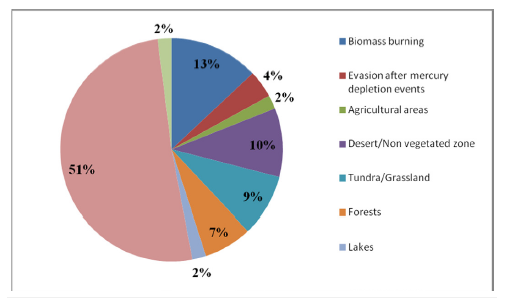
Methylmercury is the primary organic mercury molecule produced by microorganisms and natural processes. Methylmercury, which is fat-soluble is of major concern as it bio accumulates in seafood and marine mammals in high concentration and thus is a threat to man when consumed. Mercury once liberated into the biosphere is highly mobile and circulates between earth crust and the air. Relative contribution of mercury from natural sources is shown in Figure 1. In earth crust it resides in soils, water and bottom sediments. Natural emission of mercury also includes volcanic eruption, microbial activity, oceans, and soils [6]. The relative contribution of mercury from natural sources is given in Figure 1.
Figure 1:Relative contribution of mercury from natural sources.
Anthropogenic sources
Processes including gold and ore mining, pharmaceutical waste incineration, municipal and hazardous materials burning, cement making, fossil fuel burning, and pulp and paper mills are examples of human activities that cause mercury emissions. Mercury can emit in a number of ways, including Hg0, Hg2+, and Hg1+. Approximately 54% of the mercury emissions from anthropogenic sources worldwide in 2000 were from Asian countries, followed by Africa (18%), Europe (including the European part of Russia) and China (28%) [7].
Mining: Elemental mercury cannot be destroyed. Mercury has been used in gold mining along with silver mining since Roman times. Gold extraction practices release approximately 460 tons/ year of mercury, this makes nearly 10% of the global anthropogenic emissions [8]. Miners use mercury to recover gold from its deposits. Gold deposits are mined using dredging, hydraulic, drift, and underground techniques. In all sorts of mining procedures, mercury is employed to increase gold recovery [9]. Mercury amalgamation technique is used for artisanal gold mining, and as a result mercury is released to the environment, thus polluting the biosphere. Amalgamation technique contributes to a high degree of environmental pollution [10]. The primary cause of mercury contamination is the burning of the gold-mercury amalgam and the release of metallic mercury into rivers during the amalgamation process, both of which are regarded as secondary sources. Mercury may reside in the sediment of the waterbed and affect the local fishes and water dwelling plants. People who consume a lot of fish show signs of mercury pollution, particularly high mercury levels in hair. Long-abandoned gold mines that still release mercury into mine pools may also have mercury seeping from them. According to the U.S. Geological Survey a large portion of mercury released is due to gold mine tailings [11].
Coal combustion worldwide: A large source of mercury in the atmosphere is coal burning. In coal mercury usually exist in the form of pyrite. Coal combustion accounts for approximately 75% of the Hg emissions immensely in countries which have heavy industrial background such as China, India and South Korea. Typically, coal combustion sources discharge between 20 and 50 percent elemental mercury (Hg°) and 50 to 80 percent divalent mercury (Hg (II)), which may be HgCl2 [12]. It has also been studied that the acid mine drainage of the coal also releases mercury in the environment. Using standard coal cleaning methods, the hg in coal can be eliminated [13]. Similarly in rural areas the use of unventilated stoves for burning of coal adds elevated emission of mercury. Hg present in the air can be transported over a long distance and deposited far from its origin [14]. Fossil fuel burning is the major source of mercury emissions on a worldwide scale. Two thirds of the total mercury emission in 2000, or 2269 tons of mercury, came from the burning of fossil fuels on a global scale. Particulate mercury is released due to burning of coal in domestic boilers and industry. Lack of flue gas desulfurization devices led to Hg2+ emissions from coal-fired power stations. Desulfurization units dissolve the soluble divalent mercury [15,16].
Chemical industry: Industrial spills contaminate the drinking, underground and reserve water. Industries producing acetaldehyde use HgSO4 as a catalyst to produce the chemical which ultimately leads to contamination of water bodies causing Hg poisoning. Wastewater from such chemical plants contains high concentrations of mercury [17].
Cement kilns: Mercury discharge from cement kilns is the second largest anthropogenic cause of mercury contamination; mercury is produced as a byproduct in the cement kiln flue gas. Mercury in cement production comes from coal, which is used as a fuel. Cement kiln process involves the adsorption of the mercury in the solid residues. Mercury is recirculated residing in the kiln dust and during this the retained mercury is emitted in the air [18].
Chlor alkali plants: The main source of mercury contamination of soil in the past and present has been emissions from chlor-alkali facilities. Mercury is used in the chlor-alkali facilities to turn salt into chlorine gas as well as caustic soda or lye. Chlorine and caustic soda are further used in the manufacture of plastics, detergent and bleach. The nonprofit Natural Resources Defense Council (NRDC) validates the mercury release from chlor alkali plants [19]. In soils with chlor alkali plants, mercury is absorbed as non-reactive, organic Hg complexes, like fulvic acid-bound Hg in soils with a lot of organic matter. In the sandy soils concentrations of reactive, soluble Hg compounds is the highest and the presence of organic mercury compounds is low. The reactive or weak Hg complexes are preserved in the topmost soil layer through sorption on mineral surfaces, while the soluble form of mercury is found deep within the sediment [20].
Trash incinerators: Hazardous waste, medical waste, and common rubbish incinerators discharge 13.1 tons / 26,000 pounds of mercury annually, according to EPA statistical analysis. In the processing of household and municipal solid waste incineration more than 80% of all mercury is released into the gas phase [21]. Mercury emissions from trash incinerators are between 10 and 20 percent Hg° and 75 and 85 percent Hg (II), typically in the form of mercuric chloride [22].
Fluorescent bulbs: Mercury is a poison that accumulates over time in the body. Liquid metallic mercury can easily evaporate at room temperature into colorless, odorless vapors. Elemental mercury is released from broken fluorescent bulbs. Approximately 17-40% of the mercury is emitted into air due to broken lowmercury fluorescent bulbs within two weeks. Over the course of two weeks, a typical discarded bulb releases 3 to 8mg of mercury vapor. 620 million fluorescent bulbs are typically thrown away in the USA each year, and many of them break while being thrown away. In the United States, discarded bulbs leak 2-4 tons of mercury annually. Fluorescent bulbs contain both liquid as well as gaseous mercury, the later in higher quantity. During occupational exposures the worker may come in contact with mercury when a fluorescent bulb accidentally breaks. The mercury present vaporizes and is exposed through inhalation. Liquid mercury may spill and may come in contact with skin. Mercury exposure may be prevalent in case when the machine’s air filtration system is out of order or not working properly [23].
Presence of Mercury in Drinking Water and Wastewater in Pakistan and Worldwide
Contact with toxic metals such as mercury is harmful for humans as well as the animals. Inhalation from atmosphere in the form of dust particles or suspended droplets is a major threat. In developing nations like Pakistan, mercury pollution poses a serious hazard to the environment and the human population. Mercury contamination in Pakistan is increasing due to the improper disposal of spills from the industries. Karachi and Hyderabad are mostly polluted areas with mercury contamination. During a study toxic metal contamination was observed at the National Highway in Karachi and Hyderabad which raises concern over the lack of a proper waste disposal system. Significantly high level of toxic metals especially mercury in the roadside soil along the National Highway is reported. The high level of mercury poses grave danger to public health and calls for immediate action to eliminate mercury. Pakistan is disposing untreated industrial and domestic water into freshwater streams and lakes. Lack of proper disposal practices and no implementation of the environmental laws are observed due to which the condition is getting worse day by day [24]. Water and soil contamination are two important environmental problems that Pakistan is now dealing with. Due to its harmful impact on living things, heavy metal pollution is a major concern.
A Mercury-Cell Chlor-Alkali Plant (MCCAP) in Pakistan’s Kala Shah Kaku industrial zone is a source of mercury contamination since its hazardous effluent is released into Nullah Daik’s waters. Nullah daik originates from Kashmir. Contamination of Nullah Daik is a potential threat to all the aquatic life. Moreover, water from this lake is used for irrigation purposes in the nearby fields and grasslands contaminating the soil. Mercury bioaccumulates in the crops up to thousands of times and is fatal for the consumer of such crops. The residual mercury is transferred from primary consumer to the secondary consumer and bioaccumulates in it and cycles between the ecosystems disturbing it. Additionally, agricultural fields along the Nullah Daik are vulnerable to contamination during monsoon flooding. Concentration of mercury into the lakes also rises during monsoon due to seeping of the soil from the riverbanks. In the lakes, due to photochemical and microbiological activity, mercury is also converted into a more hazardous form i.e. methylmercury. After analysis a mercury contamination ranging between 0.1 to 6.71μg L-1 in the water samples of the river was detected. Chlor-alkali facilities could be a source of mercury contamination since they use mercury as a cathode in a redox reaction to produce caustic soda (NaOH) and chlorine.
In Pakistan, as no environmental protection law is followed so no permissible limit has been set to limit and restrict the concentration of mercury in the soil. Average mercury concentration in soil ranges from 0.05 to 0.08μg/g and not exceed beyond 0.1mg/kg in soil. But in water samples from Nullah Daik the Hg concentrations ranged between 0.1 and 14.8mg/kg. Improper disposal of electronic waste and vehicular emission is the main source of roadside soil pollution by elemental mercury. The lack of proper hospital waste disposal, discarded batteries and fluorescent tubes are also the sources of mercury contamination. Mercury resides in the soil along the roadside and can be transferred from the roadside to the fields by surface run-off by rain. The level of mercury in such roadsides was found to be 45 times larger than the permissible limit in the soil. Mercury deposition in the dust and its contamination through bioaccumulation patterns is found in various areas of Pakistan. The major cause of mercury contamination through dust is urbanization. More than 40% of the human population is at risk of exposure to mercury. In Pakistan urbanized cities like Lahore had the highest level of mercury contamination upto 3000ppb and its bioaccumulation is upto 2480ppb. Moreover, agricultural and industrial areas of the lower Indus were found contaminated with mercury [25].
Permissible Limits of Mercury
Regulations on mercury discharge may be imposed on the following categories: airborne releases, effluent discharges into waters, and hazardous waste disposal. Treaties and regulations based on the release of mercury into the environment impose costs, conditions, or occasionally restrictions on activities. In Pakistan, there is no regulatory standard or legislative statement that defines the limited mercury concentration in the water bodies. However, internationally different maximum permissible limits for mercury in water, soil and the air have been set that fluctuates from country to country. According to US EPA’s national water quality criteria sets 1.4μg/L as permissible limit for mercury in fresh water tolerable to aquatic life [26]. The Clean Air Mercury Rule, which was established by the EPA, aims to permanently sequester and reduce mercury emissions from power plants by 70%, from 48 to 15 tons yearly. The proposed reduction was divided into two phases, with the first phase having a cap of 38 tons annually and the second phase starting in 2018 and requiring a cap of 15 tons annually [25]. Mercury is categorized as a dangerous air pollutant under the Clean Air Act, a piece of legislation in the US. Thus, the National Emissions Standards for Hazardous Air Pollutants (NESHAP’s) are created for its effective management. Over the course of a 10-hour workday, the National Institute for Occupational Safety and Health (NIOSH) advises limiting mercury exposure to 0.05mg/m3. According to the American Conference of Governmental Industrial Hygienists (ACGIH), an 8-hour workday’s worth of metallic mercury exposure is capped at 0.025 mg/m3. The US Environmental Protection Agency (US EPA) has set a safe daily intake level for methylmercury at 0.1μg/kg body weight per day. EPA Act 2002 allows 0.005mg/L as the maximum permissible limit of mercury [27]. WHO prepared a fact file to check and determine the mercury concentration and its permissible limit. It includes the estimation of annual mercury release, the mercury borne diseases and damage to the crops irrigated with mercury contaminated water.
To prevent neurotoxic effects on the developing fetus, the Joint FAO/WHO Expert Committee on Food Additives (JECFA) established a tolerated intake of 1.6g/kg bodyweight per week for methylmercury in 2004. In 2006, according to JECFA, the most susceptible stages of life for mercury contamination are embryo and fetus. Adults can tolerate up to two times the concentration of mercury than fetus. According to WHO; the total mercury congregation in water must be 1μg/lit. And the annual average mercury in the air must be 1μg/m3.
For prolonged exposure to elemental mercury vapor, the WHO determined a safe concentration of 0.2g/m3, and a tolerable intake of total mercury of 2g/kg body weight per day. UNEP Global Mercury Partnership a corporation with the involvement of governments, NGOs, scientists, industrial groups, researchers and agencies that work together to reduce mercury pollution. It consists of eight sector-based areas, efforts are made to implement environment protection laws and give a stand against Minamata disease [28]. The Federal Insecticide, Fungicide, and Rodenticide Act (FIFRA) keeps track of the ingredients in pesticides, insecticides, and bactericides to determine their level of safety with regard to heavy metals. The Food and Drug Administration (FDA) regulates the amount of mercury in food, pharmaceuticals, and cosmetics in accordance with the Federal Food, Drug, and Cosmetic Act (FFDCA). Mercury should only be used as a preservative in products like vaccinations, antimicrobials, cosmetics, and ointments in concentrations below 60ppm. It is not advised that yellow mercuric oxide be used in eye anti-infective ointment. Dental amalgam is subject to FDA regulation under FFDCA. The Mercury-Containing and Rechargeable Battery Management Act of 1996 permits the use of batteries that contain mercury and offers a substitute for them. It also provides for the cost effective and proper disposal of batteries containing heavy metals [29]. The National Pollution Discharge Elimination System (NPDES) permits are issued in accordance with the Clean Water Act, which also specifies the exact water quality criteria for the navigation of water in streams, rivers, wetlands, and lakes. Under this criterion the mercury standards set for the different water are given in Table 1.
Table 1:Mercury standards for different water.

The UNEP Governing Council concluded in February 2009 that a global, legally binding instrument on mercury was necessary. All governments are welcome to join the Intergovernmental Negotiating Committee (INC). The text was opened for signature following the negotiations at a diplomatic conference (Conference of Plenipotentiaries), which took place in 2013 in Japan [30]. The Committee received and examined new information about methylmercury that had been previously requested. The experts amended the PTWI for methylmercury in light of this information, advising that it be decreased to 1.6g per kg of body weight per week in order to adequately safeguard the developing baby. Through contaminated food consumed by the pregnant mother, the fetus is exposed to methylmercury. The previous advice for a dietary restriction of 3.3g per kg of body weight per week is replaced by this revised recommendation.
Harmful Effects of Mercury
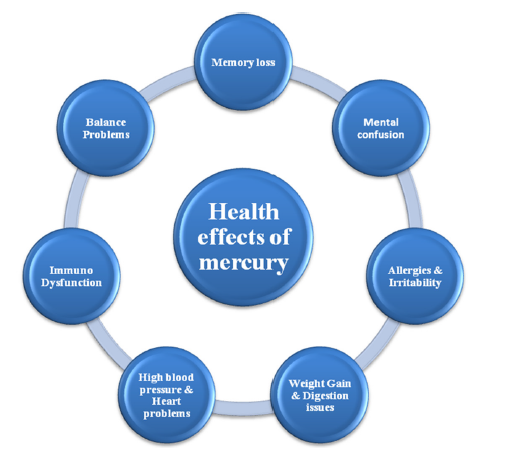
The ongoing emission of mercury due to human activity into the biosphere causes disturbance in the ambience of the environment. Mercury traces in the marine food chain and their negative effects on humans are of great concern. Everyone is exposed to some level of mercury. Chronic exposure is the phrase used to describe long-term exposure to low amounts of mercury. Tremors, hallucinations, uncontrollable movements, imbalance, mood changes, and dementia are signs of prolonged exposure. However, exposure to high quantities of mercury can result in acute exposure that happens quickly, as in the case of an industrial disaster [31]. Cardiomyopathy, arrhythmias, and diabetes have also been reported in cases of acute mercury toxicity. The patients of cardiomyopathy and diabetes have been found to contain very high concentrations of mercury in their hair. In other words, the effects of Hg on living organisms are ubiquitous. Acute exposure to mercury vapor leads to acute poisoning characterized by cough and difficulty in breathing. Direct exposure to mercury vapor damages the lens of the eye. Mercury in trace amounts is naturally eliminated by bodies. Human intake of mercury mostly happens from consuming fish containing methylmercury. One can be exposed to mercury by ingestion or inhalation and even through penetration via skin while using cosmetics with mercury as a constituent. Mercury can enter the body through the skin, respiratory system, and digestive system. However, exposure mostly happens when people eat fish, sea animals, and crustaceans that have methylmercury contamination. Employees may be exposed to elemental mercury through occupational inhalation [32]. Cooking does not eliminate mercury [33]. However, 90% of ingested organic methylmercury is absorbed into the bloodstream from the GI tract, whereas only 2-10% of ingested mercury is absorbed from the stomach. So, methylmercury is far more dangerous than any form of mercury. Mercury intoxication causes neurologic and mutagenic disorders. It damages astrocytes, renal cells, lymphoma cells, alveolar epithelial cells, human gingival fibroblast cells, pancreatic islet β-cells and brain cells. Cellular metabolism is disrupted, and neuronal migration disruption occurs [34]. Minor health effects from exposure to mercury are shown in Figure 2.
Figure 2:Minor health effects from exposure to mercury.
Mercury poisoning
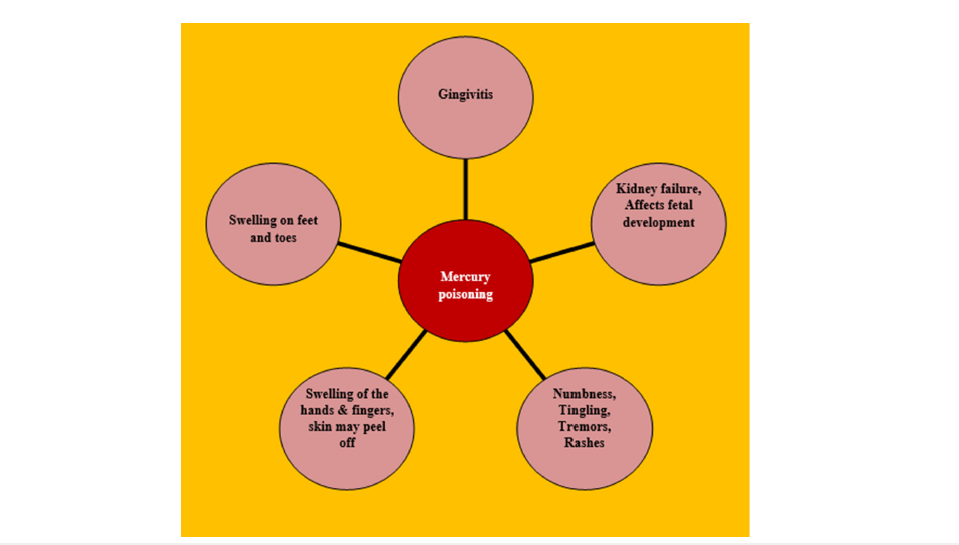
Mercury or quicksilver (Hg) evaporates gradually in the air. Mercury has three forms in nature organic, inorganic, and elementary. Mercury poisoning is a fatal toxicological state [35]. Inhaling mercury vapor, such as that from mercuric chloride or methylmercury, can result in mercury poisoning. It may lead to joint and muscle weakness, fatigue, neurological disorders, hypertension, tachycardia, excessive salivation, sweating, insomnia, depression, symptomatic eruption and even kidney failures can lively occur in mercury poisoning [36]. Congenital mercury poisoning may occur due to fetus poisoning due to maternal exposure. This results into neurological disorders. Babies with congenital mercury poisoning suffer cerebral palsy and mental retardation after birth [37]. Majorly, fetus and people who have chronic exposure are most likely to suffer from mercury poisoning. The fetus is much more sensitive and is susceptible to impairments in development due to mercury. Mothers who eat seafood run the risk of exposing their unborn children to mercury in the form of methylmercury. It seriously affects the nervous system of the developing baby affecting cognitive thinking, memory, spatial skills and language, brain damage, paralysis, acute confusional state. Elemental mercury vapor exposure has an impact on the lungs, kidneys, neurological, digestive, and immunological systems. Inorganic mercury salt exposure harms the gastrointestinal tract and causes skin, eye, and skin irritation. Elemental mercury vapor exposure has an impact on the lungs, kidneys, neurological, digestive, and immunological systems. Inorganic mercury salt exposure harms the gastrointestinal tract and causes skin, eye, and skin irritation. Symptoms include twitching movements of the muscles, insomnia, memory loss and headaches. In an aquatic ecosystem large predatory fishes have much higher level of mercury than the surrounding water as methylmercury biomagnifies. Mercury resides in the sand in bottom layer which is ingested by plankton and then by crustaceans which are eaten by smaller fishes and smaller ones eaten by larger ones so at each trophic level the concentration of the mercury goes on increasing. Hazardous aspects of mercury can be reduced by proper disposal of industrial and electronic waste production of energy by safe means that eliminates the risks of mercury contamination. Many mercury containing products such as electrical devices, batteries, thermometers, dental amalgams are commercialized these instruments must be replaced by safer devices, raising public awareness against the use of such mercury containing devices. The effects of mercury poisoning are shown in Figure 3. Different projects launched by WHO provide proper management for the efficient disposal of the spills containing mercury [38].
Figure 3:Effects of mercury poisoning.
Minamata disease
A neurological illness called Minamata disease, commonly referred to as Chisso-Minamata sickness, is brought on by extreme mercury exposure. Minamata disease is prevalent in the population of Japan and is most common pollutant and considered as the one of the four big pollutants in Japan. Minamata disease is mercury poisoning due to ingestion of methylmercury (MeHg) that may occur due to MeHg contaminated fish and shellfish due to discharge of untreated industrial wastewater. Sensory problems, ataxia, dysmetria, poor speech movement, constricted visual field, muscular twitching, numbness in the hands and feet, general loss of peripheral vision, impairment to hearing and speech, and constricted auditory field are some of the symptoms. In severe cases, paralysis, coma, and death occur weeks after symptoms first appear. Congenital mercury poisoning also has an impact on unborn children [39]. The Minamata Convention on Mercury is a legal joint agreement among different nations that measures the release of mercury from anthropogenic sources. It was adopted in 2013 and maintains a tolerable concentration of mercury by approving and implementing the ordinance to protect human population from hazards of mercury contamination.
Autism
Autism may occasionally be brought on by mercury exposure. A syndrome known as autism is characterized by difficulties with social interaction and communication, unusual gestures, and unfavorable interpersonal conduct. Exposure to mercury may result in immune, sensory, neurological and behavioral disabilities. Thimerosal is a preservative added to many vaccines and is used to treat Autism but has become an imminent source of mercury. Number of disabled pupils has increased due to related disorders of nervous system caused by mercury poisoning. The prevalence of special education kids and autism rates has significantly increased in line with rising mercury release into the environment. The prevalence of autistic children increased by 61% and by 43%, respectively, with every 1000lb of mercury released into the environment [40].
Effects of Mercury on Plants
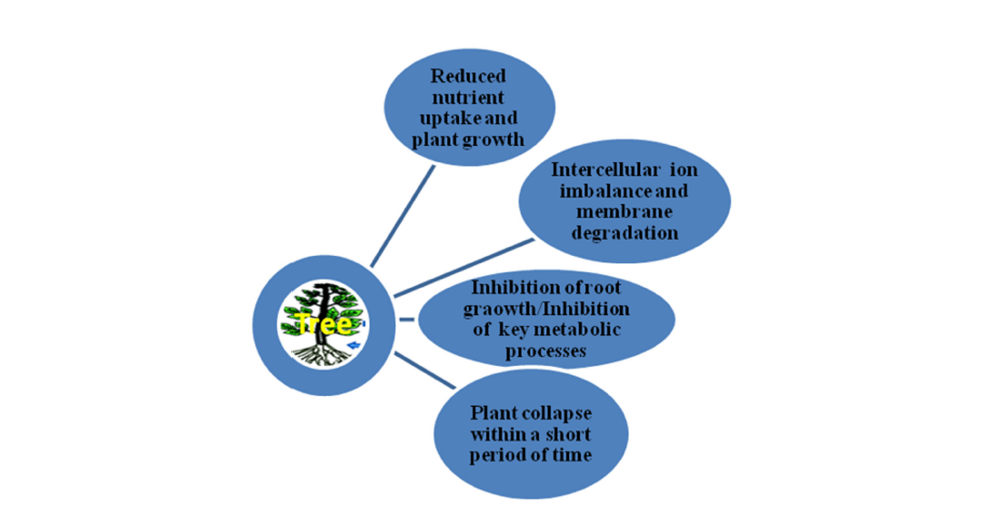
Mercury contamination does not only affect the human population but has severe effects upon the plants and agricultural fields. Nearly two-third of mercury is emitted from natural sources while one-third from manmade sources. Agricultural land may be exposed to mercury through contact with wastewaters, contaminated soil, fertilizers, lime, sludge and manures. The major source of exposure is the use of mercury dressing coated on the seeds that act as a fungicide. Mercury affects the germination of the seed, internode development; alter anatomical features, relative growth of the roots and the shoots. Concentration of mercury increases with an increase of mercury pollution in the atmosphere. Mercury may also bioaccumulates in the aquatic flora. It is believed that organic mercury has 200 times more influence than inorganic mercury. The organic form of mercury is always more absorbent than other forms. A portion of the mercury released into the atmosphere is absorbed by plant leaves before migrating to humus via dead leaves. Mercury may be translocated from plant roots to tips [41]. Humans and wildlife are exposed to methyl mercury through fish ingestion, which substantially bioaccumulates up the freshwater food chain. The effects of mercury are shown in Figure 4. The forested areas with broad wetlands support high concentrations of mercury in freshwater systems and are therefore sensitive to mercury deposition [42].
Figure 4:Mercury toxicity in plants.
Techniques Used for Mercury Removal
Different techniques which are mostly used to remove mercury from water includes coagulation, or filtration, activated carbon, lime softening, and reverse osmosis or electro dialysis, adsorption, precipitation, ion exchange and solvent extraction. All these techniques have their own pros and cons, but most widely applicable and cost-effective technique is adsorption. The removal of inorganic mercury through coagulation, sedimentation and filtration is 80% and for organic mercury is only 20 to 40% from water.
Adsorption
Adsorption is a method in which low-cost adsorbents i.e. industrial waste, algae, forest waste, activated carbons, carbon nanotubes, industrial minerals such as bentonite, magnetite, zeolite, peat, bark, xanthan are used for removal of mercury from drinking and waste water. Mercury and other heavy metals can be removed from wastewater using this environmentally friendly process. The removal of heavy metals from wastewater is done chemically using adsorption, ion exchange, precipitation, and electrochemical deposition [43]. By altering the pH, starting concentration, temperature, and ion charge, one can increase the percentage of metal ions removed from the solution.
It can be represented by a physical equation:
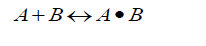
Whereas,
A=adsorbate (contaminant)
B=adsorbent
A•B=adsorbed compound
This is a preferable method because it is a simple, cost effective and rapid method which requires no complex apparatus. Different adsorbents used for adsorption process includes 2 mercapto benzimidazole-clay, carbonated sorbent derived from fruit shell of Indian almond, powdered activated carbon derived from walnut shell, activated carbon made from sagowaste, coal fly ash, activated carbon obtained from furfural, rice husk, bentonite, seaweed and polypyrole and its composites [44-55].
Precipitation
The majority of the mercury in the environment is elemental mercury (HgO), which comprises 99% of all atmospheric mercury and is released from both natural and anthropogenic sources. By adding chemicals, the precipitation technique converts soluble compounds into insoluble compounds. The primary objective of this method, which is the most widely, used method for treating wastewater to remove heavy metals from it, is to make contaminants less soluble. This method is of low cost for high volumes, process can be improved by high ionic strength and above all it is a reliable method. Whereas certain limitations should be overcome such as high-water content sludge should be disposed off, there should be two stage precipitation for parts per billion effluent contaminant levels and its efficiency depends upon initial concentration of contaminant and surface area. Precipitation is of two types i.e. chemical precipitation and co-precipitation/adsorption. Chemical precipitation happens when a supersaturation state is induced, but in co-precipitation, impurities in the liquid phase are adsorbed on crystals or nuclei and eliminated with the parent solid in a single phase [56,57]. Insoluble heavy metal precipitates, such as hydroxide, carbonate, sulfide, and phosphate, are generated as a result of chemical precipitation. Dissolved metal present in the solution reacts with precipitant to produce insoluble metal precipitation which is of very fine particles and techniques such as coagulation; flocculation is used to increase particle size in order to remove them as sludge. Aluminum sulphate or ferric sulphates are mostly used in precipitation technique which reacts with Hg present in solution to form a solid which precipitates out of water.
Granular activated carbon
Due to its vast surface area, carbon is a popular adsorbent. Wood, coal, coconut shells, and charcoal are all sources of carbon. At a high temperature and with a controlled oxidation process, carbon is activated. Efficiency of adsorption depends upon temperature, properties and concentration of contaminant (Hg), exposure time and activity of carbon. The adsorption capacity of adsorbed compound is 5 to 30% of the mass of carbon [58]. The Hg is concentrated on the surface of the charcoal in this adsorption process, which lowers the concentration of Hg in the water [59]. On a commercial basis, carbon adsorption devices are particularly beneficial for removal of mercury and up to 90% mercury can be removed in lab and on commercial scale. Efficiency of the process is increased by increasing temperature until equilibrium is achieved. 1g of activated carbon can remove 100g of Hg at temperature 50 °C at exposure time of 15 min. Adsorbents with changed surfaces have been created to boost mercury adsorption. Recent studies have demonstrated sulfur to be an element which favors removal of mercury from water. Therefore, advancements have been made in surface treatments which incorporate sulfur to improve entrapment of mercury containing specie [60].
Furfural
Furfural is converted into activated carbon through polymerization, carbonization, and activation of the polymer with water vapor at 800 °C. By raising the pH, the adsorption of Hg onto the activated carbons in furfural increases and follows both the Langmuir and Freundlich isotherms. The activated carbon’s adsorption capability is 174mg/g [61].
Bentonite
Pb (II) > Cd (II) > Hg (II) is the order of preference for these elements in granular bentonite’s selectivity. It was discovered that a pH of 3 to 3.5 is ideal for the adsorption of Hg on bentonite. Batch isotherms and batch kinetic studies determined the effect of temperature, pH and contact time on adsorption. It was demonstrated that four hours of contact time are required to reach equilibrium. The adsorption process is confirmed to be endothermic by Freundlich isotherms and BET models. The determination of total mercury adsorbed on bentonite was determined by atomic absorption spectrometry [62]. X-ray fluorescence, cold vapor atomic absorption, high performance liquid chromatography, and inductively coupled plasma mass spectrometry are among the methods used to determine the presence of mercury [63].
Use of biofilms
A complex structure of microorganisms grown on a solid substrate makes up a biofilm. This is an environmentally friendly method which includes removal of mercury in wastewater. In the future, biofilms will be a key technique for the removal of heavy metals since they offer millions of sites for the adsorption of mercury. Different sized mercury droplets were found throughout the biofilm, some of which were in close contact with clumps of biomass glued to the extracellular polysaccharide material, demonstrating that adsorption of mercury to biomass is not the main mechanism underlying this method. Factors affecting rate of adsorption includes high mercury concentration combined with high chloride concentration, concentration of dissolved oxygen and temperature of wastewater. Microorganisms such as Mucor hiemalis EH8, Aspergillus flavus strain KRP1, pseudomonas putida Spi3 and Klebsiella aerogenes NCTC418 are grown on porous carrier material in a lab column bioreactor which is then fed with wastewater. These microbes accumulate toxic ionic mercury in their cells and by active enzymatic reduction these toxic mercury ions are converted to water insoluble metallic mercury which later on diffuses out of cell and accumulates in its pure form in the medium [64]. About 95.3% of 100 mg mercury was found to be adsorbed at pH 5.5 and temperature provided was 30 °C by the microbe 1-gMucor rouxii IM-80 [65]. This led to the discovery of mercury droplets of various sizes throughout the carrier material, some of which were in touch with biomass clumps held together by extracellular polysaccharide material [66]. Mercury is found to be bound with residual matter and organic acids in the biofilms [67].
Carbon nanotubes
Because of their hollow, nano-sized structures with layers, huge surface area, great mechanical strength, and high electrical conductivity, multiwall carbon nanotubes have been regarded as a potential adsorbent material and are helpful in removing mercury and other heavy metals from water. Mercury adsorption by multi wall carbon nano tubes was carried out by batch adsorption. Multi wall carbon nanotubes (MWCNTs) having average diameter of 60 to 100nm were prepared by chemical vapor deposition. These were further characterized by Raman spectroscopy and X-ray diffraction. Capacity of mercury uptake by MWCNTs was studied by using batch adsorption method at different conc. of mercury ranging up to 150ppm. Cold vapor atomic absorption spectroscopy was used to measure mercury concentration before and after the experiment. By examining the effects of pH, temperature, and mercury content, the adsorption efficiency of carbon nanotubes was discovered to be 92%. Adsorption of mercury on multi wall carbon nanotubes follows pseudo second order kinetic model and it also follows Freundlich and Langmuir adsorption isotherm. The amount of mercury adsorbed on multiple-walled carbon nanotubes was calculated by comparing the initial conc. And equilibrium conc. Percentage removal of mercury ions from water was calculated by the formula:

Whereas,
Ci=initial conc. of mercury
Ce=conc. at equilibrium
Removal of mercury increases from pH 5 to 8 whereas by further increase in pH decreases adsorption of mercury on MWCNTs and uptake of mercury was reached at equilibrium after 20 minutes. The study showed that as the pH climbed from pH 4 to pH 8, the Hg uptake by MWCNTs increased up to 100%. It was also determined by the study that the increase of ionic conc. Solution and primary conc. Of inorganic mercury have a negative effect on adsorption process [68-70]. Composite beads were prepared with carbon nanotubes which were composed of chitosan. A protected crosslinking method was used for the preparation of chitosan/ carbon nanotubes beads by the reaction of beads with mercury. These beads adsorbed mercury from the water and results of the experiment showed that optimum temperature for removal was 70 °C, pH was 4 and contact time was 40 min to achieve equilibrium. This technique removed mercury 2.5 times more then by beads prepared by normal crosslinking [71].
Coagulation/filtration
This process of removal of heavy metals including mercury is based on zeta potential measurement. It involves electrostatic interaction of contaminants with coagulant-flocculent agent. Flocculation process increases particle size by the additional interactions and collisions with inorganic polymers which are formed by the addition of organic polymers. When discrete particles are converted to large size particles they can easily be separated by filtration. Application of certain chemicals, sludge production and conversion of toxic compounds into solid phases are the major drawbacks of this method [72]. In coagulation process commonly used coagulant agent is ferric chloride for the removal of mercury from water. Whereas filtration is done by cross flow micro filters and sand bed filters [73].
Ion exchange
Heavy metal ions are removed from water using the ion exchange method, which is both economical and highly sensitive. Ion exchangers or resins containing cations or anions, such as duolite GT-73, polyethyleneimine, or dowex XZS-1 are used to do this by drawing soluble ions from the liquid phase to the solid phase. Ion exchange resins remove charged ions from electrolyte solutions and replace them in the solution with other ions that have the same charge. For instance, positively charged ions like nickel, zinc, and copper are exchanged with positively charged ions like sodium and hydrogen in cationic resins [74,75].
Membrane filtration
Depending on the size of the particle to be kept, membrane filtration might comprise different forms of filtering. Nanofiltration, ultrafiltration, and reverse osmosis are three different forms of membrane filtration.
Ultra filtration
Ultrafiltration or membrane filtration for the removal of mercury from water is carried out using chitosan, reactive FeS, PGA based nanoparticles, polyethylenimine and polyvinylamine as mercury binding polymers. Efficiency of polymer enhanced ultrafiltration is up to 99% which is otherwise impossible with conventional ultrafiltration. The membrane surface is cleaned periodically with dilute HCl to recover permeability of membrane [76]. Chitosan is a biopolymer and is nontoxic. It effectively removes mercury and other heavy metals from water because of its polyelectrolyte properties at an acidic pH. In PAUF process retention of the heavy metal ions depends on its interaction with macromolecular chains. Heavy metal ions smaller in size then membrane pore diameter is restricted to cross the membrane and are bound to the membrane while other ions cross the membrane [77].
In ultrafiltration, a permeable membrane separates heavy metal from solution on the basis of pore size ranging from 5 to 20nm, M.W of contaminant 1000 to 10,000 Da, at pH 5 to 9.5. This method is advantageous because of high packing density and low driving force. The polymer supported ultrafiltration method requires water soluble ligand to bind metallic ions and to form macromolecular complexes and free targeted metal ions effluents are produced. Complexation-ultrafiltration is a hybrid technique that uses ultrafiltration in conjunction with a water-soluble metal binding polymer to remove heavy metals from solution. It is based on the precipitation and ion exchange methods. Reverse osmosis is the process used for separation of solutions also it eliminates heavy metals from water. A semi permeable membrane is used in this process when pressure is applied, semi permeable membrane does not allow heavy metals including mercury to pass through membrane whereas only pure solvent passes through the membrane. This process involves diffusive mechanism, and its efficiency depends upon concentration of solute, water efflux rate and pressure [78].
Reverse osmosis
This labor-intensive method needs a storage tank, a faucet, granular activated carbon pre-filters, and a reverse osmosis membrane. Water is passed over a semi-permeable membrane made of Cellulose Triacetate (CTA), polyamide film, and Thin Film Composite (TFC), and the result is high-quality water that is devoid of pollutants like mercury [79].
Reactive iron sulfide (FeS)-supported ultra filtration
Ultrafiltration is done by using FeS for the removal of mercury with batch and continuous processes. In batch process, experiments showed that the removal of mercury was rapid at low conc. than at higher conc. The elimination of 99% of the mercury from the water took longer. The concentration of iron released is very low, but it could react to form another solid. To overcome this problem, a continuous dead-end ultrafiltration was developed in which Hg reacts with FeS suspension by an ultrafiltration membrane. Whereas mercury contacted FeS was completely rejected by dead end ultrafiltration and mercury was strongly retained on FeS [80].
Electrodialysis
It is a separation technique in which an electric potential is applied on the ion exchange membrane in order to pass ionized species present in solution. Membranes are made of plastic materials having either cationic or anionic properties. When solution having anions are passed through cell compartment, anions are migrated towards anode whereas, cations towards cathode by passing respective membranes i.e. cations passes cation exchange membranes and vice versa. Corrosion and membrane replacement are the major disadvantage of this process Cell performance was enhanced by membranes with increased ion exchange capacities. The performance of the cell is improved by increasing the voltage and temperature, however as the flow rate was increased, the separation % declined [81].
Ion exchange resin adsorption
Duolite GT-73, a chelating resin containing thiol groups that is macroreticular and has a high adsorption efficiency, was employed in a batch adsorption approach to examine the rate of adsorption [82]. Dowex XZS-1 is a cationic resin which has high selectivity for mercury removal from wastewater. HCl was used to regenerate loaded resin. HCl is used for regeneration due to the increased competition between mercury and hydronium ion and formation of a complex ion [83].
Bolden process
Bolden process is a cost-effective method in which at first stage mercury reacts with sulfuric acid to form HgSO4. The concentration of H2 SO4 in this step is 80% and temperature is below 50 °C. In the second stage concentration of H2 SO4 is 93% in a conventional tower. Furthermore, mercury reacts with the acid to form mercurous sulfate [84].

Sulfide precipitation
In sulfide precipitation, sodium thiosulfate reacts with sulfuric acid to form colloidal sulfur [85]. This colloidal sulfur later combines with mercury to create crystalline mercury sulfide.

This method is efficient at a neutral pH. Whereas 15ppm to 0.5ppm level of mercury can be reduced within an hour.
Toho process
Toho process is used on commercial scale having upto 97% efficiency for removing mercury from water in which mercuric iodide is formed as a precipitant by the reaction of mercury with 5% potassium iodide [86,87]. Cuprous iodide is also added in order to make a more stable precipitate of Cu2 HgI4

Conclusion
Mercury presence in drinking as well as in wastewater may harm human health and drinking water quality. The prevention is needed to get rid of this harmful metal to enter in water streams through different sources. Mercury in wastewater discharges may affect river water quality. It is necessary to adopt some preventive measures i.e. use clean and hygienic water and make it safe by boiling and filtration. Analysis of mercury in drinking water is most important for monitoring of water quality associated environmental stresses. Ecofriendly methods should be adapted to remove mercury in water reservoirs in order to provide safe and quality water to living beings.
Conflict of Interest
The authors declare no conflict of interest.
Contribution
All authors have equal contribution.
References
- Abdolmohammad-Zadeh H, Mohammad-Rezaei R, Salimi A (2019) Preconcentration of mercury (II) using a magnetite carbon/dithizone nanocomposite, and its quantification by anodic stripping voltammetry. Microchimica Acta 187(1-8): 2020.
- Ai K, Ruan C, Shen M, Lu L (2016) MoS2 nanosheets with widened interlayer spacing for high efficiency removal of mercury in aquatic systems. Advanced Functional Materials 26(30): 5542-5549.
- Albatrni H, Qiblawey H, El-Naas MH (2021) Comparative study between adsorption and membrane technologies for the removal of mercury. Separation and Purification Technology 257: 117833.
- Ali ME, Hoque ME, Hossain SK, Biswas MC (2020) Nanoadsorbents for wastewater treatment: Next generation biotechnological solution. International Journal of Environmental Science and Technology 17: 4095-4132.
- Awual MR (2019) An efficient composite material for selective lead (II) monitoring and removal from wastewater. Journal of Environmental Chemical Engineering 7(3): 103087.
- Awual MR (2019) Mesoporous composite material for efficient lead (II) detection and removal from aqueous media. Journal of Environmental Chemical Engineering 7(3): 103124.
- Awual MR (2019) Novel conjugated hybrid material for efficient lead (II) capturing from contaminated wastewater. Materials Science and Engineering: C 101: 686-695.
- Baimenov AZ, Berillo DA, Moustakas K, Inglezakis VJ (2020) Efficient removal of mercury (II) from water by use of cryogels and comparison to commercial adsorbents under environmentally relevant conditions. Journal of Hazardous Materials 399: 123056.
- Bao S, Wang Y, Wei Z, Yang W, Yu Y, et al. (2021) Amino-assisted AHMT anchored on graphene oxide as high-performance adsorbent for efficient removal of Cr (VI) and Hg (II) from aqueous solutions under wide pH range. Journal of Hazardous Materials 416: 125825.
- Bessa A, Henrique B, Goncalves G, Irurueta G, Pereira E, et al. (2020) Graphene oxide/polyethyleneimine aerogel for high-performance mercury sorption from natural waters. Chemical Engineering Journal 398: 125587.
- Brião GDV, Andrade JRD, Da Silva MGC, Vieira MGA (2020) Removal of toxic metals from water using chitosan-based magnetic adsorbents. A review. Environmental Chemistry Letters 18: 1145-1168.
- Chaturvedi VK, Kushwaha A, Maurya S, Tabassum N, Chaurasia H, et al. (2020) Wastewater treatment through nanotechnology: Role and prospects. Restoration of Wetland Ecosystem: A Trajectory towards a Sustainable Environment pp: 227-247.
- Dhiman V, Kondal N (2021) ZnO nanoadsorbents: A potent material for removal of heavy metal ions from wastewater. Colloid and Interface Science Communications 41: 100380.
- El-Tawil RS, El-Wakeel ST, Abdel-Ghany AE, Abuzeid HA, Selim KA, et al. (2019) Silver/quartz nanocomposite as an adsorbent for removal of mercury (II) ions from aqueous solutions. Heliyon 5(9): e02415.
- Eqani SA, Bhowmik AK, Qamar S, Shah ST, Sohail M, et al. (2016) Mercury contamination in deposited dust and its bioaccumulation patterns throughout Pakistan. Science of the Total Environment 569-570: 585-593.
- Fabre E, Lopes CB, Vale C, Pereira E, Silva CM (2020) Valuation of banana peels as an effective biosorbent for mercury removal under low environmental concentrations. Science of the Total Environment 709: 135883.
- Fayazi M (2020) Removal of mercury (II) from wastewater using a new and effective composite: Sulfur-coated magnetic carbon nanotubes. Environmental Science and Pollution Research 27(11): 12270-12279.
- Roroutan F, Mohammadi R, Farjadfard S, Esmaeili H, Ramavandi B, et al. (2019) Eggshell nano-particle potential for methyl violet and mercury ion removal: Surface study and field application. Advanced Powder Technology 30(10): 2188-2199.
- Gao P, Lei J, Tan J, Wang G, Liu H, et al. (2021) Self-assembled magnetic microcrystalline cellulose/MoS2/Fe3O4 composite for efficient adsorptive removal of mercury ions (Hg2+). Composites Communications 25: 100736.
- Gomaa H, Shenashen MA, Elbaz A, Yamaguchi H, Abdelmottaleb M, et al. (2021) Mesoscopic engineering materials for visual detection and selective removal of copper ions from drinking and wastewater sources. Journal of Hazardous Materials 406: 124314.
- Gupta K, Joshi P, Gusain R, Khatri OP (2021) Recent advances in adsorptive removal of heavy metal and metalloid ions by metal oxide-based nanomaterials. Coordination Chemistry Reviews 445: 214100.
- Gupta S, Sireesha S, Sreedhar I, Patel CM, Anitha KL (2020) Latest trends in heavy metal removal from wastewater by biochar-based sorbents. Journal of Water Process Engineering 38: 101561.
- Han DS, Orillano M, Khodary A, Duan Y, Batchelor B, et al. (2014) Reactive iron sulfide (FeS)-supported ultrafiltration for removal of mercury (Hg (II)) from water. Water Research 53: 310-321.
- Hasanpour M, Hatami M (2020) Application of three-dimensional porous aerogels as adsorbent for removal of heavy metal ions from water/wastewater: A review study. Advances in Colloid and Interface Science 284: 102247.
- Hashemi SA, Mousavi SM, Ramakrishna S (2019) Effective removal of mercury, arsenic and lead from aqueous media using Polyaniline-Fe3O4-silver diethyldithiocarbamate nanostructures. Journal of Cleaner Production 239: 118023.
- Huang Y, Du JR, Zhang Y, Lawless D, Feng X (2015) Removal of mercury (II) from wastewater by polyvinylamine-enhanced ultrafiltration. Separation and Purification Technology 154: 1-10.
- Jamil N, Baqar M, Ilyas S, Qadir A, Arslan M, et al. (2016) Use of mercury in dental silver amalgam: An occupational and environmental assessment. BioMed Research International 2016: 6126385.
- Khan FSA, Mubarak NM, Khalid M, Walvekar R, Abdullah EC, et al. (2020) Magnetic nanoadsorbents’ potential route for heavy metals removal-a review. Environmental Science and Pollution Research 27: 24342-24356.
- Eleryan A, Aigbe UO, Ukhurebor KE, Onyancha RB, Eldeeb TM, et al. (2024) Copper (II) ion removal by chemically and physically modified sawdust biochar. Biomass Conversion and Biorefinery 14(8): 9283-9320.
- Khodakarami M, Bagheri M (2021) Recent advances in synthesis and application of polymer nanocomposites for water and wastewater treatment. Journal of Cleaner Production 296: 126404.
- Kumar D, Pandey J, Khan N, Kumar P, Kundu PP (2019) Synthesize and characterization of binary grafted psyllium for removing toxic mercury (II) ions from aqueous solution. Materials Science and Engineering: C 104: 109900.
- Li Y, Hu T, Chen R, Xiang R, Wang Q, et al. (2020) Novel thiol-functionalized covalent organic framework as adsorbent for simultaneous removal of BTEX and mercury (II) from water. Chemical Engineering Journal 398: 125566.
- Li W, Wu R, Duan J, Saint CP, Leeuwen JV (2016) Impact of prechlorination on organophosphorus pesticides during drinking water treatment: Removal and transformation to toxic oxon byproducts. Water Research 105: 1-10.
- Liang W, Li M, Jiang S, Ali A, Zhang Z, et al. (2019) Polyamine-co-2, 6-diaminopyridine covalently bonded on chitosan for the adsorptive removal of Hg (II) ions from aqueous solution. International Journal of Biological Macromolecules 130: 853-862.
- Lin D, Liu X, Huang R, Qi W, Su R, et al. (2019) One-pot synthesis of mercapto functionalized Zr-MOFs for the enhanced removal of Hg2+ ions from water. Chemical Communications 55(47): 6775-6778.
- Liu H, Guo Y, Wang Y, Zhang H, Ma X, et al. (2021) A nanozyme-based enhanced system for total removal of organic mercury and SERS sensing. Journal of Hazardous Materials 405: 124642.
- Liu Z, Sun Y, Xu X, Meng X, Qu J, et al. (2020) Preparation, characterization and application of activated carbon from corn cob by KOH activation for removal of Hg (II) from aqueous solution. Bioresource Technology 306: 123154.
- Lone S, Yoon DH, Lee H, Cheong IW (2019) Gelatin-chitosan hydrogel particles for efficient removal of Hg (ii) from wastewater. Environmental science: Water Research & Technology 5(1): 83-90.
- Mahmoud ME, Saad EA, Soliman MA, Abdelwahab MS (2019) Removal of radioactive cobalt/zinc and some heavy metals from water using diethylenetriamine/2-pyridinecarboxaldehyde supported on NZVI. Microchemical Journal 145: 1102-1111.
- Mario EDA, Liu C, Ezugwu CI, Mao S, Jia F, et al. (2020) Molybdenum disulfide/montmorillonite composite as a highly efficient adsorbent for mercury removal from wastewater. Applied Clay Science 184: 105370.
- Modak A, Bhanja P, Selvaraj M, Bhaumik A (2020) Functionalized porous organic materials as efficient media for the adsorptive removal of Hg (II) ions. Environmental Science: Nano 7(10): 2887-2923.
- Nirmala N, Shriniti V, Aasresha K, Arun J, Gopinath KP, et al. (2022) Removal of toxic metals from wastewater environment by graphene-based composites: A review on isotherm and kinetic models, recent trends, challenges and future directions. Science of the Total Environment 840: 156564.
- Nizamuddin S, Siddiqui MTH, Mubarak NM, Baloch HA, Abdullah EC, et al. (2019) Iron oxide nanomaterials for the removal of heavy metals and dyes from wastewater. Nanoscale Materials in Water Purification pp: 447-472.
- Zahra N, Sheikh ST, Mahmood A, Javed K (2009) Removal of arsenic from wastewater using bentonite. Bangladesh Journal of Scientific Industrial Research 44(1): 81-86.
- Naeem S, Zahra N, Zafar U, Munawar S (2009) Adsorption studies of lead on α-alumina. Bangladesh Journal of Scientific and Industrial Research 44(4): 403-406.
- Naeem S, Zahra N, Zafar U (2010) Adsorption studies of copper on rice husk. Bangladesh Journal of Scientific Industrial Research 45(4): 367-370.
- Zahra N (2012) Adsorption of lead from wastewater on Pakistani bentonites. American Journal of Scientific & Industrial Research 3(6): 387-389.
- Naeem S, Zafar U, Zahra N, Rasool G (2010) Adsorption studies of copper on alumina. Journal of Chemical Society of Pakistan 32(1): 252-257.
- Zahra N (2009) Adsorption characteristics of bentonites for chromium in wastewater. Journal of Chemical Society of Pakistan 31(2): 233-236.
- Zahra N, Sheikh ST, Javed K (2008) Batch Adsorption studies of cadmium in wastewater on Bentonite. Journal of Chemical Society of Pakistan 30(6): 797-799.
- Zahra N (2013) Studies of various adsorbents for the removal of copper (II) from drinking water: A review. Journal of Engineering Science & Technology Review 6(5): 72-75.
- Zahra N (2012) Lead removal from water by low-cost adsorbents: A review. Pakistan Journal of Analytical and Environmental Chemistry 13(1): 1-8.
- Zahra N (2010) Arsenic contamination in water and its removal using different low-cost adsorbents. A review. Journal of Chemical Society of Pakistan 32(2): 259-264.
- Zahra N, Mehmood F, Sheikh ST, Amin A, Yusuf S (2007) Adsorption of mercury and copper in wastewater. Journal of Science and Technology 31(1): 37-42.
- Ochedi FO, Liu Y, Hussain A (2020) A review on coal fly ash-based adsorbents for mercury and arsenic removal. Journal of Cleaner Production 267: 122143.
- Odumo BO, Carbonell G, Angeyo HK, Patel JP, Torrijos M, et al. (2014) Impact of gold mining associated with mercury contamination in soil, biota sediments and tailings in Kenya. Environmental Science and Pollution Research 21(21): 12426-12435.
- Oehmen A, Vergel D, Fradinho J, Reis MA, Crespo JG, et al. (2014) Mercury removal from water streams through the ion exchange membrane bioreactor concept. Journal of Hazardous Materials 264: 65-70.
- Pan ZF, An L (2019) Removal of heavy metal from wastewater using ion exchange membranes. Applications of Ion Exchange Materials in the Environment 25-46.
- Radwan A, El-Sewify IM, Shahat A, Azzazy HME, Khalil MMH, et al. (2020) Multiuse Al-MOF chemosensors for visual detection and removal of mercury ions in water and skin-whitening cosmetics. ACS Sustainable Chemistry & Engineering 8(40): 15097-15107.
- Martín AR, Díaz MD, Ruíz SRJA (2014) Measure of the mining image. Resources Policy 41: 23-30.
- Saleh TA, Fadillah G, Ciptawati E, Khaled M (2020) Analytical methods for mercury speciation, detection, and measurement in water, oil, and gas. TrAC Trends in Analytical Chemistry 132: 116016.
- Saleh TA, Mustaqeem M, Khaled M (2022) Water treatment technologies in removing heavy metal ions from wastewater: A review. Environmental Nanotechnology, Monitoring & Management 17: 100617.
- Shahzad A, Jang J, Lim SR, Lee DS (2020) Unique selectivity and rapid uptake of molybdenum-disulfide-functionalized MXene nanocomposite for mercury adsorption. Environmental Research 182: 109005.
- Shrestha R, Ban S, Devkota S, Sharma S, Joshi R, et al. (2021) Technological trends in heavy metals removal from industrial wastewater: A review. Journal of Environmental Chemical Engineering 9(4): 105688.
- Siddeeg SM, Tahoon MA, Alsaiari NS, Shabbir M, Rebah FB, et al. (2021) Application of functionalized nanomaterials as effective adsorbents for the removal of heavy metals from wastewater: A review. Current Analytical Chemistry 17(1): 4-22.
- Sitko R, Musielak M, Serda M, Talik E, Zawisza B, et al. (2021) Thiosemicarbazide-grafted graphene oxide as superior adsorbent for highly efficient and selective removal of mercury ions from water. Separation and Purification Technology 254: 117606.
- Soni R, Pal AK, Tripathi P, Lal JA, Kesari K, et al. (2020) An overview of nanoscale materials on the removal of wastewater contaminants. Applied Water Science 10(8): 189.
- Tran HDM, Boivin S, Kodamatani H, Ikehata K, Fujioka T (2022) Potential of UV-B and UV-C irradiation in disinfecting microorganisms and removing N-nitrosodimethylamine and 1, 4-dioxane for potable water reuse: A review. Chemosphere 286(Pt 2): 131682.
- Tshikovhi A, Mishra SB, Mishra AK (2020) Nanocellulose-based composites for the removal of contaminants from wastewater. International Journal of Biological Macromolecules 152: 616-632.
- Tufaner F (2020) Post-treatment of effluents from UASB reactor treating industrial wastewater sediment by constructed wetland. Environmental Technology 41(7): 912-920.
- Velempini T, Pillay K (2019) Sulphur functionalized materials for Hg (II) adsorption: A review. Journal of Environmental Chemical Engineering 7(5): 103350.
- Waheed A, Baig N, Ullah N, Falath W (2021) Removal of hazardous dyes, toxic metal ions and organic pollutants from wastewater by using porous hyper-cross-linked polymeric materials: A review of recent advances. Journal of Environmental Management 287: 112360.
- Wołowiec M, Komorowska-Kaufman M, Pruss A, Rzepa G, Tomasz B (2019) Removal of heavy metals and metalloids from water using drinking water treatment residuals as adsorbents: A review. Minerals 9(8): 487.
- Xia M, Chen Z, Li Y, Li C, Ahmad NM, et al. (2019) Removal of Hg (II) in aqueous solutions through physical and chemical adsorption principles. RSC Advances 9(36): 20941-20953.
- Yadav M, Gupta R, Sharma RK (2019) Green and sustainable pathways for wastewater purification. In Advances in Water Purification Techniques. Elsevier, Amsterdam, Netherlands, pp: 355-383.
- Yaghmaeian K, Khosravi MR, Nasseri S, Mahvi AH, Alimohammadi M, et al. (2015) Removal of inorganic mercury from aquatic environments by multi-walled carbon nanotubes. Journal of Environmental Health Science and Engineering 13: 55.
- Yan X, Li P, Song X, Li J, Ren B, et al. (2021) Recent progress in the removal of mercury ions from water-based MOFs materials. Coordination Chemistry Reviews 443: 214034.
- Yang P, Shu Y, Zhuang Q, Li Y, Gu J (2019) A robust MOF-based trap with high-density active alkyl thiol for the super-efficient capture of mercury. Chemical Communications 55(86): 12972-12975.
- Yaqub M, Lee SH (2020) Micellar Enhanced Ultrafiltration (MEUF) of mercury-contaminated wastewater: Experimental and artificial neural network modeling. Journal of Water Process Engineering 33: 101046.
- Zhang D, Wang L, Zeng H, Rhimi B, Wang C (2020) Novel polyethyleneimine functionalized chitosan-lignin composite sponge with nanowall-network structures for fast and efficient removal of Hg (ii) ions from aqueous solution. Environmental Science: Nano 7(3): 793-802.
- Zhang Y, Zheng H, Zhang P, Zheng X, Zuo Q (2021) A facile method to achieve dopamine polymerization in MOFs pore structure for efficient and selective removal of trace lead (II) ions from drinking water. Journal of Hazardous Materials 408: 124917.
- Zia Z, Hartland A, Mucalo MR (2020) Use of low-cost biopolymers and biopolymeric composite systems for heavy metal removal from water. International Journal of Environmental Science and Technology 17: 4389-4406.
- Ajiboye EA, Aishvarya V, Petersen J (2023) Selective recovery of copper from the mixed metals leach liquor of e-waste materials by ion-exchange: Batch and column study. Minerals 13(10): 1285.
- Bolden J, Abu-Lebdeh T, Fini E (2013) Utilization of recycled and waste materials in various construction applications. American Journal of Environmental Science 9(1): 14-24.
- Wallace SM, Zhou L, Ma Q, Denslow ND, Bonzongo JCJ, et al. (2024) An XAS study of Hg (II) sorption to Al-based drinking water treatment residuals. Chemosphere 349: 140922.
- Lee E, Lee J, Kim T, Lee S, Back S, et al. (2022) Development of selective mercury recovery technology by using iron iodide from waste sludge of non-ferrous metal smelting process. Environmental Pollution 315: 120402.
- Patil SP, Gawande SM (2020) Study of CFL bulb and systematic removal of mercury (Hg) from it by adsorption process. International Research Journal of Engineering and Technology 7(6): 7030-7033.
© 2026 Naseem Zahra. This is an open access article distributed under the terms of the Creative Commons Attribution License , which permits unrestricted use, distribution, and build upon your work non-commercially.
Editor In Chief







.jpg)































Signup for Newsletter

Quick Links
 Editorial Board Registrations
 Submit your Article
 Best Paper of the Volume
 Reprints
 Refer a Friend
 Advertise With Us
Our Recent Edition

.jpg)



Top Editors




.jpg)

















.bmp)
.jpg)
.png)
.jpg)













.jpg)






.png)

.png)




.png)




Financial Support

Sponsors

Latest e-Books

Latest Video

 a Creative Commons Attribution 4.0 International License. Based on a work at www.crimsonpublishers.com.
Best viewed in
a Creative Commons Attribution 4.0 International License. Based on a work at www.crimsonpublishers.com.
Best viewed in 
 | Above IE 9.0 version