

- About Us
- Information
-

The Author ensures that the research has been conducted responsibly and ethically with adherence to all relevant regulations. read more..
- For Authors
- For Reviewer
- Manuscript Guidelines
- Membership
- Publication Ethics
-
- Journals
- Reprints
- e-Books
- Videos
- Policies
- Contact Us
 COVID-19
- Submissions



Full Text
Journal of Biotechnology & Bioresearch
Papaya: A Magical Tree with Medicinal, Nutritional and Pharmacological Properties
Naseem Zahra*, Muhammad Khalid Saeed, Syeda Batool Fatima, Muhammad Hassan Raza, Ijaz Ahmad and Khurram Shahzad
Pakistan Council of Scientific and Industrial Research Laboratories Complex, Ferozepur Road, Lahore, Pakistan
*Corresponding author:Naseem Zahra, Pakistan Council of Scientific and Industrial Research Laboratories Complex, Ferozepur Road, Lahore, Pakistan
Submission: January 08, 2026;Published: February 24, 2026
Volume6 Issue 1February 24, 2026
Abstract
Carica papaya L. is a fruit plant belonging to genus Carica found in tropic and subtropics regions. It is the third most widely grown fruit worldwide, due to its flexible requirements, usually grown in autumn to spring. Papaya is one of the important pioneers in the succession of different forests in America and even in forest gaps. Different techniques have led to the successful production of cultivars and hybrids that have economical and nutritional gains. However, wild papaya has somehow held its original genome and original traits therefore is able to naturally pollinate with cultivars making successful evolutionary progress. Researchers are still studying its genomics and proteomics to develop breeds of medical and agro-economic benefits. Low in calories but it is enriched with antioxidants, vitamins, minerals, flavonoids, alkaloids, fatty acids, lipids, enzymes like papain, chemopapain etc. Papayas’ qualities and benefits are unmatchable. This review provides information regarding types, health benefits of papaya along with its nutritional, medicinal and pharmacological properties.
Keywords:Carica papaya; Nutraceutical; Antioxidants; Anti-dengue; Anti-malarial; Medicinal aspects
Introduction
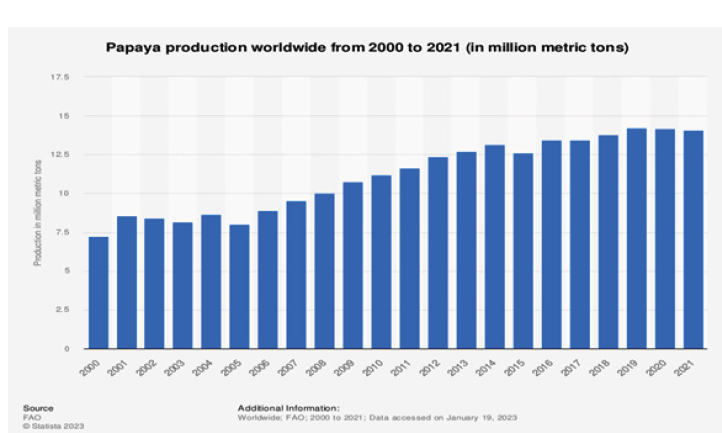
Carica papaya is a fruit tree of tropical and subtropical regions originating from America mainly central and south areas. Most of the world’s production of papaya belongs to Brazil. Majorly, Germany, Netherland and Canada import papaya species [1]. Worldwide production of papaya is shown in Figure 1. It is a multipurpose plant, and its benefits are widely ranging from nutrition to industrial uses like vitamins, minerals particularly folate compounds, proteins of both nutritional and commercial importance like papain and chymopapain, latex being used for healing wounds and other medicinal purposes and in construction too [2]. Spanish traders exported and cultivated it outside America. Mexico, and its neighboring Gulf states are the home to wild species of papaya particularly C. papaya L which is conserved only there. C. papaya L and other wild populations are dioecious whereas the cultivars are trioecious [3]. The successional subtropical and tropical forestation of wild papaya in Mesoamerica and particularly Mexico is due to the moist habitat and optimum biotic factors and most importantly large number of seeds production in the fruit. These marvelous factors led to its diversified evolution and genetic diversity around the continent [4].
Figure 1:Worldwide production of papaya (Statista, 2023).
Evolution and taxonomy
The family Caricaceae consists of 6 genera out of which Carica is the one consisting of only one species C. papaya [5]. Badillo had provided morphological, evolutionary and taxonomic studies of Caricaceae. Its species are herbs, shrubs and arborescent with complex lactifers [6] This family is widely distributed in the tropics of Africa and central and south of America. Its sister family is Moringaceae comprising thirteen tree and shrub species distributed in dry habitats of Africa, Madagascar and tropic Asia [7]. But phylogenetic dating of angiosperms and brassicales shows that during Paleocene era Caricaceae and Moringaceae slivered [8]. The molecular evolutionary studies using AFLPs, RFLPs, plastid sequences etc. could not specify representatives, so the relationship within this family is still ambiguous. The wild species are found in Mexico, Nicaragua, Belize, Guatemala and Costa Rica [9]. Vaconcellea is the largest genus of Caricaceae and is closely related to Carica along with Jarilla (3 herb species) and Jacaratia (7 species). Previously, “Carica L.” genus had been divided into two sub-genera by the taxonomists: Vaconcellea contain 1 locules in the ovary while Carica with 5 locules in the ovary [10].
Wild species and cultivars of papaya
The genera Vasconcellea of Caricaceae consists of 21 species called highland/mountain papayas i.e. wild ones. Most of these are edible and disease resistant [11]. Wild papaya species have shorter life span, are dioecious and sporadic due to natural or deliberate fragmentation of the rainforests like in Mexico and Cuba [12]. This habitat disturbance has caused loss of functional genes but not of local sex genes ratio, rapid genetic drifts [13]. Similarly, the continuous tropical habitats have higher richness in gene pool of wild populations as compared to the fragmented ones; some alleles are not passed on among the fragments due to hindered pollination and other habitat factors thus lesser gene flow and genetic structure does not diversify [14]. However; wild papayas’ resilience is due to seed dormancy thus showing low genetic variations and higher heterozygosity just like other pioneers. But heterozygosity is lower in wider areas like Venezuela, Costa Rica, Colombia and Antilles than in local populations like in Los Tuxtlas. Gene flow from undisturbed forests towards the fragments is much more than in the opposite direction due to suitable dispersal [15].
Wild papaya populations are now scarce, but still present in their originating areas where such crops are associated with cultural values and ethnicity like Mexico and Mayans from Yucatan Peninsula [16]. In these areas wild species grow spontaneously under perturbing humidity, uneven dispersal of seed and seed dormancy thereby. Wild species have shorter life span and are pioneer among natural canopies gaps of 1-5 years, man-made clearings and unplowed areas between tropics and also in secondary forests [17]. Wild species of Veracruz are placed in the same taxa as of cultivars. They survive under water stress conditions and transcriptomic, qRT PCR and RNA sequences analyses show that they can adapt to the water stress conditions by upregulating certain stress resistant genes and transcription factors, however the fruits and seeds are small and light [18]. But in such conditions cultivars’ yields are lowered due to low rate of photosynthesis, higher stomatal and other transpiration and also electrolytes osmosis is perturbed, but not in wild species. So, such evolving genes should be introduced in the cultivars for better yields [19].
The mating process of remote species causes transitional attributes among both wild and cultivated species. Selective breeding under environmental conditions different than natural ones consequently brings drastic variations in the successors. Beneficial modifications include less harsh conditions for seed germination and larger seeds (even in dark, fluctuating temperature and perturbed humidity); which get into the genomes [20]. But such cultivations require handsome gibberellin treatments and/or culturing seeds without sarcotesta showed results exactly like the cultivars of other pioneer plants like rose etc [21]. Introduction of marketable phenotypes like larger, heavier and massive fruits and seeds have compromised environmental stress dealing mechanisms particularly drought controls in these cultivars [22].
Optimum conditions for papaya plants are temperature of 21- 33 °C and cannot bear cold temperatures, humid environment, highmoderate light intensity because low light can reduce vitamin C and sugar concentrations, plenty of timely irrigation, loamed and sandy soil. Different cultivars have different fruits like green to red color flesh with rich taste and aroma and high phenol content, different shapes like long or oval [23]. All these properties also depend upon climatic and harvesting conditions. Similarly, nutritional contents like antioxidants, aromatic compounds, soluble solids, organic acids etc. also vary. For example, 2 cultivars of Bangladesh vary in fibers, carbs, vitamins and minerals [24]. Also, ripen fruits have higher content of proteins and other nutrients than the mature fruits. Cultivars are grown preferably to be hermaphrodite. They produce a variety of flowers and hence give quality fruits particularly in the lower tropics, with high photo intensity and humidity, 1200mm rain per annum and elevated temperature 21- 33 °C [25]. Using sigmoid curve models and preferably Gompertz’ equation model (based on quartiles and quadratic models) rate of growth of fruits of different cultivars can easily be analyzed [26]. Harvesting season affects the fruits ripening. For example, fruits of autumn grown crops ripen after 8 months, whereas winter grown papayas ripen during spring after 6 months and those of spring grow and ripen in 5 months; varying with the temperature of the areas. Although cultivars production depends upon climate and do vary but the small fruited and large fruiting crops need same harvesting time and other conditions [27]. Growing Degree Days GDD calculations are done to forecast the harvesting time by knowing the temperature requirements at different stages of life cycle. Different types of papaya cultivars are grown around the world including hybrids (cross pollination between wild or any cultivar naturally or artificially) with different varieties like yellow to reddish orange pulp, varying fruit size, seeds, varying colors of peel or genetically modified cultivars grown in open farms or greenhouses [28]. Worldwide cultivars include Red Lady, Golden THB, Skybury, Subang, Sekaki, Khaek Dam, Maradol, Star Papayas, Singapore Pink, Higgins, Eksotica, Honey Gold, Hybrids like Coorg Honey Dew, Washington, Ranchi, Taiwan’ hybrids, Sinta, Waimanalo, Hybrid 13 [29].
Morphology and composition
Its plants are either dioecious (individual flowers either male or female) or hermaphrodite/bisexual 20-30ft. high [30]. Some cultivars might be grown triocious meaning flowers of a single plant may contain male, female and hermaphroditic flowers. Stem with diameter of almost 1ft. are hollow, soft, fleshy, green or brown colored with blemishes and are not branched and contain fistulas at internodes [31]. Leaves are wider, lobed with 11 or 7-9 weak venations. Leaves have marginal incisions and are 2.5ft. in width. Flowers are pentamer having corolla and calyx. Male flowers are multi layered, shorter and covered with hair grown on Long Branch. Female and hermaphrodite flowers are waxy and white, grown with stem on leaf axils. Hermaphrodite buds are cylindrical, and their fruits are self-pollinating and female buds are pearshaped [32]. Corolla is tubular, anthers are adnate with 2 thecae with long connective tissue exceeding anther apex. Female flowers are larger and paucifloral. Ovaries are larger, contain 1 locule, styles are usually absent, there are five branched stigmas. Berrylike fruits, green when unripe and yellow and reddish orange when fully ripened, are found in different shapes also known as pepo like berries with hollow center containing seeds like melons. Main stem contains single axillary fruits or in clusters, each weighing 225gm to almost 1kg. Plants grow fruits after 5 to 9 months [33].
On average 100g of fresh fruit gives 179kJ of energy, 1.7g fibers, 11g carbohydrate and <1g protein or fat, 7-11g primary sugars. High concentrations of folate and minerals are present in ripened fruits. Papayas have the highest concentrations of vitamin C 35-142mg per 100g. It also contains precursors of vitamin A carotenoids. Inorganic nutrients include Potassium 3-7%, Magnesium 6-8%, Copper 9% [34].
Fruit contains variety of organic and inorganic components like citric acids and molic acid, dietary fibers, carbs, protein, salts like P, Ca and Fe; vitamin C, cofactors like thiamine, niacin, and caroxene, volatile compounds like linalol, 2,6-dimethyl-3,6expoxy- 7octen-2-ol, benzylisothiocynate and alkaloids like α-carpaine, 2-phenylethyl-β-D-glucoside, benzyl-β-d glucoside, 4-hydroxylphenyl- 2ethyl-B-D-glucoside and four isomers of benzyl-β-D malonate glucosides [35]. Juice contains lipids like stearic acid, myristic acid, palmitic acid, linolenic acid etc. Seeds contain fatty acids, crude raw material like proteins, fibers, papaya oil, carpaine, caricin, glucotropacolin, hentriacontane, benzylglucosinolate, benzylisothiocynate, benzylthiourea, β-sistosterol, and an enzyme nyrosin [36]. Roots contain an enzyme myrosin and arposide. Leaves contain alkaloids like carpain, dehydrocarpaine I and II, pseudocarpain choline and carposide, vitamin C and E. Barks contain glucose, fructose, sucrose, galactose, β-sitosterol and xylitol. Latex obtained from barks contains proteolytic enzymes like glutamine cyclotransferase, peptidases and lysozymes and most importantly papain and chemopapain [37].
Nutritional attributes
Papaya is a cheap and healthy fruit with high nutrient content as can be inferred from its chemical composition. It’s low in calories 32Kcal per 100g is a favorable diet for obesity problems. Low carotene content prevents free radical formation [38]. However dark colored pulp contains high content of beta carotene; a precursor of vitamin A; hence improves eyesight. It’s rich in proteolytic enzymes which improve digestion in any media particularly papain (vegetable pepsin), which also helps treat ulcers and bacterial infections particularly gram negative [39]. Even crude papain can tenderize meat. Celiac patients cannot digest wheat but with papain they can eat wheat. Fermented papaya products, if taken in prescribed amount, are good nutraceutical antioxidants. Papain linked lipase, a natural biocatalyst, can serve different purposes [40]. Papaya helps absorption of iron from rice when eaten with rice. Seeds have a sharp pungent taste like black peppers and can be used as a healthy spice. Its leaves are also used as spinach in some parts of Asia [41].
Pharmacological attributes
The seed extracted benzyl isothiocyanate is an antibacterial
and fungicide. Its vitamins, enzymes and other components show
marvelous antioxidant and anti-inflammatory effects [42]. Papaya
leaves extracts have scientifically proven diverse medicinal and
therapeutic value in different fevers, jaundice etc.so have seeds, fruit
pulp, latex, flowers and barks in different criteria like anticancer, in
pregnancy, anti-infection activities [43]. Medicinal and therapeutic
uses of different parts of papaya are given below:
Leaf extracts: Papaya leaf components contain flavonoids,
tannins, saponins, alkaloids, phenolics and steroids in minute
percentages [44]. They interact with different metabolic targets like
with DNA topoisomerase I/II, disrupting the pathogenic signaling
pathway, inhibiting the expression of Bcl-2 and Bcl-XL genes or
enhancing the expression of Bax, cleaved caspase 3 and P53 genes to
produce anticancer effect [45]. They can increase TNF α, cytokines
like IFN-γ, IL-6, IL-12p40, IL-12p70, and can decrease or modulate
the secretion of pro-inflammatory cytokines and chemokines like:
IL-1β, IL-6, IL-1α, IL-2, IL-4, IL-8, and CCL2, CCL7, CCL8. In dengue,
papaya leaf extract juice has been successful by activating PTAFR
and ALOX 12 gene. Frozen leaves extracts have been successfully
tried on lab mice and rats against dengue and diabetes [46].
Due to a number of raising concern of toxicity of synthetic anticancer drugs, researchers are now working on nutraceuticalphytochemical anticancer therapies with least adversities, papaya grinded extracts particularly leave aqueous extracts are one such best example [47]. This extraction method shows cytotoxicity against benign, malignant and normal cells of cancer. Blood, pulmonary, renal, pancreatic and stomach cancer patients of varying severity survived after intake of aqueous extracts [48]. Crude extracts change their biochemical properties during digestion a little as compared to the in-vitro digested extract. They have stopped proliferation of prostate cancer cells by apoptosis. Their antitumor activity is owed to activation of mitochondrial pathway via activation of caspase three-sevenths and p53 and also in other cancers like breast cancer. As a rough estimate, papaya leaf extracts can stop metastasis by reduction in ECM around malignant cells [49].
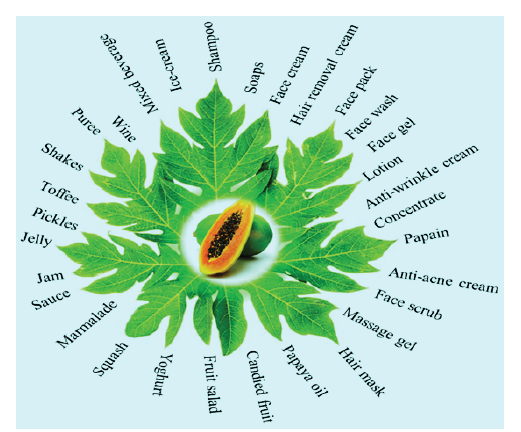
Papaya leaf extracts have been shown to protect against dengue, cancers, cardiac disease, healing, allergic disorders like asthma etc. due to immune modulation as described above. For example, in dengue, papaya can control bleeding and can normalize platelets count and has been clinically shown [50]. Different minute concentrations of crude extracts have been shown to inhibit the sickle cells, but processed leaves extract with HbSSsodium metabisulphite gave the highest results. Osmotic control and hemoglobin polymerization is also decreased in RBC [51]. The benefits of papaya leaf extract are shown in Figure 2 [52].
Figure 2:Benefits of papaya leaf extract [52].
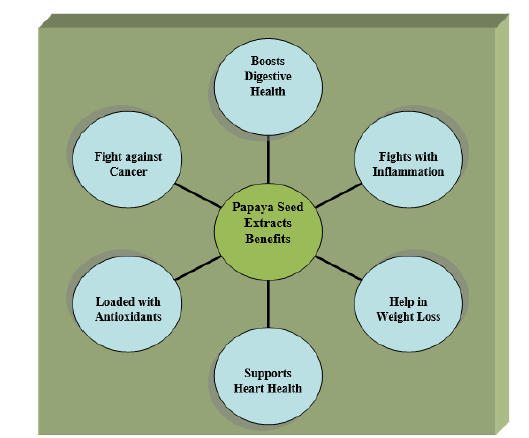
Seeds extracts: Papaya seeds treated under different conditions have shown like aqueous or alcoholic extracts, seed oils have proven antioxidant, immune-modulatory effect [53]. Likewise, mixture of dried seeds and honey has an excellent relieving effect against intestinal helminths. The alkaloid Benzyl isothiocyanate BITC is the major anti-helminthic shown in different studies e.g. against C. elegans, ascaris infections [54]. Seeds extracted in ethanol can relieve smooth muscles’ contractility. Their aqueous solutions have shown antioxidant activity against hydrogen peroxide in skin fibroblasts and can also scavenge other free radicals. They treated with H2O2 can do so more efficiently than ascorbic acid as it stops catalase activity C thus cytochrome C is so not released thus maintaining the mitochondrial membrane potential [55]. The benefits of papaya seed extract are shown in Figure 3 [56].
Figure 3:Benefits of papaya leaf extract [52].
Conclusion
Papaya is one of the most grown plants worldwide. It has a variety of qualities ranging from economic to nutritional. There are numberless studies done on traits of natural and cultivated types of papaya and on their botanical, economical and nutritional qualities. It suggests a need of research over its several aspects for production and farming of papaya in Pakistan since we too have a favorable climate and soil conditions that can bear valuable papaya cultivars. Genetic comparative studies show that cross cohort studies to be conducted for attaining hybrids of having best traits of both wild species and cultivars. Genetic engineering-based research in this regard to have optimum yields should be increased. Papaya has innumerable nutritional and medicinal benefits. In recent years, a lot of studies have been performed on papaya leaves extract particularly as anticancer therapies and as adjuvants. Similarly, papaya seeds and latex have equal benefits and studies are being conducted day by day. No doubt papaya is a magical plant and its increased production round the year is needed for welfare of humankind.
References
- Koul B, Pudhuvai B, Sharma C, Kumar A, Sharma V, et al. (2022) Carica papaya L.: A tropical fruit with benefits beyond the tropics. Diversity 14(8): 683.
- Tan GH, Ali A, Siddiqui Y (2022) Current strategies, perspectives and challenges in management and control of postharvest diseases of papaya. Scientia Horticulturae 301: 111139.
- Vinod BR, Asrey R, Sethi S, Prakash J, Meena NK, et al. (2023) Recent advances in physical treatments of papaya fruit for postharvest quality retention: A review. eFood 4(2): e79.
- Shaheen S, Galanakis CM, Farag MA (2022) Carica papaya biowaste valorization: Biorefinery advances and extraction optimization. Food Reviews International 39(7): 4745-4760.
- Khee YL, Kiew PL, Chung YT (2023) Valorizing papaya seed waste for wastewater treatment: A review. International Journal of Environmental Science and Technology 20(2): 2327-2346.
- Singh P, Singh RL, Pathak N, Singh PK, Tripathi M, et al. (2022) Phytochemistry and nutraceutical properties of Carica papaya (): A review. Dietary Supplements and Nutraceuticals 1(9): 1-15.
- Chughtai MFJ, Tanweer S, Ahsan S, Mehmood T, Liaqat A, et al. (2022) Food and immunity: A pragmatic approach to mitigate corona viruses attack. Nutrition & Food Science 52(2): 346-365.
- Haber RA, Garcia RD, Hernandez JN, Jamieson S, Mondal A, et al. (2022) Papaya (Carica papaya L.) for cancer prevention: Progress and promise. Critical Reviews in Food Science and Nutrition 63(30): 10499-10519.
- Nyakundi BB, Yang J (2023) Uses of papaya leaf and seaweed supplementations for controlling glucose homeostasis in diabetes. International Journal of Molecular Sciences 24(7): 6846.
- Kong YR, Jong YX, Balakrishnan M, Bok ZK, Weng JKK, et al. (2021) Beneficial role of Carica papaya extracts and phytochemicals on oxidative stress and related diseases: A mini review. Biology 10(4): 287.
- Nehra C, Marwal A, Verma RK, Mishra M, Sharma P, et al. (2019) Papaya yellow leaf curl virus: A newly identified begomovirus infecting Carica papaya L. from the Indian Subcontinent. The Journal of Horticultural Science and Biotechnology 94(4): 475-480.
- Sharma SK, Tripathi S (2021) Overcoming limitations of resistance breeding in Carica papaya L. against papaya ringspot virus-recent approaches. Plant Virus-Host Interaction pp: 489-506.
- Feng L, Sun J, Jiang Y, Duan X (2022) Role of reactive oxygen species against pathogens in relation to postharvest disease of papaya Fruit. Horticulturae 8(3): 205.
- Dillon SK, Drew RA, Ramage C (2004) Development of a co-dominant scar marker linked to a putative PRSV-P resistance locus in wild “papaya”. ISHS Acta Horticulturae 694: International Symposium on Harnessing the Potential of Horticulture in the Asian-Pacific Region, Coolum, Queensland, Australia, pp: 101-104.
- Branham SE, Patrick WW, Ling KS, Chanda B, Massey L, et al. (2020) QTL mapping of resistance to fusarium oxysporum sp. niveum race 2 and Papaya ringspot virus in Citrullus amarus. Theoretical and Applied Genetics 133(2): 677-687.
- Sharma SK, Tripathi S (2016) Resistance against papaya ringspot virus in Vasconcellea species: Present and potential uses. Plant Viruses: Evolution and Management, Springer, UK, pp: 215-230.
- Dillon S, Ramage C, Ashmore S, Drew RA (2006) Development of a codominant CAPS marker linked to PRSV-P resistance in highland papaya. Theoretical and Applied Genetics 113(6): 1159-1169.
- Kwabena DE, Aquisman AE (2019) Morphology of green synthesized ZnO nanoparticles using low temperature hydrothermal technique from aqueous Carica papaya Nanoscience and Nanotechnology 9(1): 29-36.
- Nishimwe G, Chepngâ J, Okoth EM, Ochiengâ G, Rimberia FK (2019) Evaluation of the morphological and quality characteristics of new papaya hybrid lines in Kenya. African Journal of Biotechnology 18(2): 58-67.
- Devanesan S, Jayamala M, AlSalhi MS, Umamaheshwari S, Ranjitsingh AJA (2021) Antimicrobial and anticancer properties of Carica papaya leaves derived di-methyl flubendazole mediated silver nanoparticles. Journal of Infection and Public Health 14(5): 577-587.
- Vieira ACF, De Matos FJ, Menezes NMC, Monteiro AR, Valencia GA (2020) Active coatings based on hydroxypropyl methylcellulose and silver nanoparticles to extend the papaya (Carica papaya L.) shelf life. International Journal of Biological Macromolecules 164: 489-498.
- Arunachalam V, Vaingankar JD, Kevat N (2021) Foliar traits in papaya plants intercropped in coconut. National Academy Science Letters 44(3): 267-270.
- Alara OR, Abdurahman NH, Alara JA (2020) Carica papaya: Comprehensive overview of the nutritional values, phytochemicals and pharmacological activities. Advances in Traditional Medicine 22: 17-47.
- Kolu P, Olumide MD, Akintunde AO (2021) Potentials of ripe Carica papaya seed meal using different processing methods as alternative feed ingredients in monogastric animal nutrition. Nigerian Journal of Animal Science 23(3): 177-184.
- Soto M, Pérez AM, Servent A, Vaillant F, Achir N (2021) Monitoring and modelling of physicochemical properties of papaya chips during vacuum frying to control their sensory attributes and nutritional value. Journal of Food Engineering 299: 110514.
- Kaur M, Talniya NC, Sahrawat S, Kumar A, Stashenko EE (2019) Ethnomedicinal uses, phytochemistry and pharmacology of Carica papaya plant: A compendious review. Mini-Reviews in Organic Chemistry 16(5): 463-480.
- Sharma A, Bachheti A, Sharma P, Bachheti RK, Husen A (2020) Phytochemistry, pharmacological activities, nanoparticle fabrication, commercial products and waste utilization of Carica papaya L: A comprehensive review. Current Research in Biotechnology 2: 145-160.
- Solikhah TI, Setiawan B, Ismukada DR (2020) Antidiabetic activity of papaya leaf extract (Carica Papaya L.) isolated with maceration method in alloxan-induces diabetic mice. Systematic Reviews in Pharmacy 11(9): 774-778.
- Hossain MA, Hitam S, Ahmed SHI (2020) Pharmacological and toxicological activities of the extracts of papaya leaves used traditionally for the treatment of diarrhea. Journal of King Saud University-Science 32(1): 962-969.
- Sarker MMR, Khan F, Mohamed IN (2021) Dengue fever: Therapeutic potential of Carica papaya L. Leaves. Frontiers in Pharmacology 12: 610912.
- Singh V, Rizvi A, Sara US (2021) Standardization and Phytochemical screening of Carica papaya Research Journal of Pharmacy and Technology 14(9): 4540-4546.
- Sultana A, Afroz R, Yasmeen O, Aktar MT, Yusuf MA (2019) Anti-inflammatory effect of ethanolic extract of carica papaya leaves and indomethacin in cotton pellet induced granuloma in animal model. Journal of Current and Advance Medical Research 6(1): 2-5.
- Hariono M, Julianus J, Djunarko I, Hidayat I, Adelya L, et al. (2021). The future of Carica papaya leaf extract as an herbal medicine product. Molecules 26(22): 6922.
- Minuye M, Getachew P, Laillou A, Chitekwe S, Baye K (2021) Effects of different drying methods and ascorbic acid pretreatment on carotenoids and polyphenols of papaya fruit in Ethiopia. Food Science & Nutrition 9(6): 3346-3353.
- Ugo NJ, Ade AR, Joy AT (2019) Nutrient composition of Carica papaya leaves extracts. Journal of Food Science and Nutrition Research 2(3): 274-282.
- Pebrianthy L, Lubis MS, Maisyaroh Y (2022) Effect of papaya decoction (Papaya Carica L.) on Increasing breast milk production in breastfeeding mothers. International Journal of Public Health Excellence (IJPHE) 1(2): 69-73.
- Farina V, Tinebra I, Perrone A, Sortino G, Palazzolo E, et al. (2020) Physicochemical, nutraceutical and sensory traits of six papaya (Carica papaya L.) cultivars grown in greenhouse conditions in the mediterranean climate. Agronomy 10(4): 501.
- Gadge S, Game M, Salode V (2020) Marvelous plant Carica papaya Linn: A herbal therapeutic option. Journal of Pharmacognosy and Phytochemistry 9(4): 629-633.
- Joymak W, Ngamukote S, Chantarasinlapin P, Adisakwattana S (2021) Unripe papaya by-product: From food wastes to functional ingredients in pancakes. Foods 2021 10(3): 615.
- Bouatenin KMJP, Kouamé KA, Gueu‐Kehi ME, Djéni NDT, Djè KM (2020) Organic production of vinegar from mango and papaya. Food Science & Nutrition 9(1): 190-196.
- Zhou Z, Ford R, Bar I, Kanchana-Udomkan C (2021) Papaya (Carica papaya l.) flavour profiling. Genes 12(9): 1416.
- Ávila S, Kugo M, Hornung PS, Apea-Bah FB, Songok EM, et al. (2020) Carica papaya seed enhances phytochemicals and functional properties in cornmeal porridges. Food Chemistry 323: 126808.
- Singh SP, Kumar S, Mathan SV, Tomar MS, Singh RK, et al. (2020) Therapeutic application of Carica papaya leaf extract in the management of human diseases. DARU Journal of Pharmaceutical Sciences 28(2): 735-744.
- Oraebosi MI, Good GM (2021) Carica papaya augments anti-malarial efficacy of artesunate in Plasmodium berghei parasitized mice. Annals of Parasitology 67(2): 295-303.
- Kumar V, Singh J, Chandra S, Kumar R, Chaudhary V, et al. (2019) Post harvest technology of papaya fruits and it’s value-added products-a review. Progressive Agriculture 19(2): 199-208.
- Atanu FO, Idih FM, Nwonuma CO, Hetta HF, Alamery S, et al. (2021) Evaluation of antimalarial potential of extracts from Alstonia boonei and Carica papaya in Plasmodium berghei-infected mice. Evidence-Based Complementary and Alternative Medicine 6: 2599191.
- Gupta G, Sharma S, Kumar NR (2020) Carica papaya Aqueous leaf extract as potential botanical insecticide against rose aphids (Macrosiphum rosaeformis). Journal of Entomology and Zoology Studies 8(3): 960-964.
- Arif M, Yustisia I (2020) The combination from ethanol extract of moringa leaves (Moringa oleifera L.) and ethanol extract of papaya leaves (Carica papaya L.) slows the tumor growth in Sprague Dawley rats induced 7, 12-dimethylbenz (a) anthracene. Medicina Clínica Práctica 3(1): 100100.
- Palanisamy P, Basalingappa KM (2020) Phytochemical analysis and antioxidant properties of leaf extracts of Carica papaya. Phytochemical Analysis 13(11): 58-62.
- Ismawanti Z, Suparyatmo JB, Wiboworini B (2019) The effects of papaya fruit as anti-diabetes: A review. International Journal of Nutrition Sciences 4(2): 65-70.
- Jarisarapurin W, Kunchana K, Chularojmontri L, Wattanapitayakul SK (2021) Unripe Carica papaya protects methylglyoxal-invoked endothelial cell inflammation and apoptosis via the suppression of oxidative stress and Akt/MAPK/NF-κB signals. Antioxidants 10(8): 1158.
- Babalola BA, Akinwande AI, Otunba AA, Adebami GE, Babalola O, et al. (2024) Therapeutic benefits of Carica papaya: A review on its pharmacological activities and characterization of papain. Arabian Journal of Chemistry 17(1): 105369.
- Migicovsky Z, Myles S (2017) Exploiting wild relatives for genomics-assisted breeding of perennial crops. Frontiers in Plant Science 8: 460.
- Badillo‐Montaño R, Aguirre A, Munguía‐Rosas MA (2019) Pollinator‐mediated interactions between cultivated papaya and co‐flowering plant species. Ecology and Evolution 9(1): 587-597.
- Leitão M, Ribeiro T, García PA, Barreiros L, Correia P (2022) Benefits of fermented papaya in human health. Foods 11(4): 563.
- Saba S, Pattan N (2022) The potential health benefits of papaya seeds. Int J Res Appl Sci Eng Technol 10(1): 44-50.
© 2026 Naseem Zahra*. This is an open access article distributed under the terms of the Creative Commons Attribution License , which permits unrestricted use, distribution, and build upon your work non-commercially.
Editor In Chief






.jpg)































Signup for Newsletter

Quick Links
 Editorial Board Registrations
 Submit your Article
 Best Paper of the Volume
 Reprints
 Refer a Friend
 Advertise With Us
Our Recent Edition
.jpg)


Top Editors




.jpg)

















.bmp)
.jpg)
.png)
.jpg)













.jpg)






.png)

.png)




.png)




Financial Support

Sponsors

Latest e-Books

Latest Video

 a Creative Commons Attribution 4.0 International License. Based on a work at www.crimsonpublishers.com.
Best viewed in
a Creative Commons Attribution 4.0 International License. Based on a work at www.crimsonpublishers.com.
Best viewed in 
 | Above IE 9.0 version