

- About Us
- Information
-

The Author ensures that the research has been conducted responsibly and ethically with adherence to all relevant regulations. read more..
- For Authors
- For Reviewer
- Manuscript Guidelines
- Membership
- Publication Ethics
-
- Journals
- Reprints
- e-Books
- Videos
- Policies
- Contact Us
 COVID-19
- Submissions



Full Text
Intervention in Obesity & Diabetes
Fatty Acid Profiles and Desaturase Indices as Biomarkers of Metabolic Dysfunction in Obesity
Sounira Mehri1*, Yasmine Bougamourra1, Hayet Mhamdi1, Josef Finsterer2 and Sonia Hammami1
1Biochemistry Laboratory, LR12ES05 Nutrition-Functional Foods, and Vascular Health, Faculty of Medicine, University of Monastir, Tunisia
2Neurology & Neurophysiology Center, Austria
*Corresponding author:Sounira Mehri, Biochemistry Laboratory, LR12ES05 Nutrition-Functional Foods, and Vascular Health, Faculty of Medicine, University of Monastir, Tunisia
Submission:October 08, 2026;Published: October 29, 2026

ISSN 2578-0263Volume7 Issue2
Abstract
Obesity is a multifactorial metabolic disorder characterized by excessive adipose tissue and profound disturbances in lipid metabolism. This review provides a comprehensive overview of current evidence on Fatty Acid (FA) profiles and estimated desaturase activities in individuals with obesity, with emphasis on Stearoyl-CoA Desaturase-1 (SCD1), Delta-5 Desaturase (D5D), and Delta-6 Desaturase (D6D) as potential biomarkers of metabolic dysfunction integrating evidence from human observational studies, experimental models, and genetic investigations. A comprehensive evaluation of FA composition, desaturase enzyme pathways, and their associations with metabolic complications in obesity. We examined biochemical regulation, methodological considerations, genetic influences (including FADS polymorphisms), and the impact of nutritional and pharmacological interventions. Qualitative alterations in FA composition and desaturase activity are increasingly recognized as important determinants of obesity-associated metabolic dysfunction. individuals with obesity frequently exhibit altered FA profiles and estimated desaturase activities. Evidence from human, experimental, and genetic studies supports mechanistic links between desaturase dysregulation, lipotoxicity, inflammation, and cardiometabolic risk. However, methodological heterogeneity, the indirect nature of estimated desaturase indices, population-specific genetic and dietary effects, and limited prospective validation represent important challenges. Altered FA profiles and desaturase indices are promising biomarkers for characterizing metabolic dysfunction in obesity. Future integration of lipidomic approaches with genomic, metabolic, and clinical parameters may improve identification of individuals at increased cardiometabolic risk and support personalized nutritional and therapeutic strategies. Prospective longitudinal and intervention studies remain essential to establish incremental predictive value, reproducibility, and clinical applicability before translation into routine practice.
Keywords:Obesity; Fatty acid; Biochemical pathways; Clinical associations; Methodological considerations; Therapeutic strategies
Introduction
Obesity represents one of the most critical public health challenges worldwide. Recent global estimates indicate that more than 1 billion people are now living with obesity, highlighting the unprecedented scale of the global obesity epidemic. This is primarily due to urbanization, sedentary lifestyles, and the consumption of highly processed food, fast food, and soft drinks. Current studies indicate that obesity prevalence is not declining at a pace consistent with international public health targets, posing significant risks for non-communicable diseases including Cardiovascular Disease (CVD), Type 2 Diabetes (T2DM), and cancer [1,2]. Obesity is now recognized as a multifactorial chronic disease involving genetic susceptibility, environmental exposures, dietary patterns, physical activity, and metabolic adaptations [3].
Regional disparities are particularly pronounced in North Africa, the Middle East, and Pacific Islands, where prevalence exceeds 60% in some populations, with projections suggesting that a substantial proportion of the global adult population may be affected by overweight or obesity by 2050 [4]. In people with obesity, excessive adipose tissue expansion promotes adipocyte hypertrophy, impaired adipose tissue remodeling, and infiltration of immune cells, particularly macrophages, leading to increased production of pro-inflammatory mediators such as Tumor Necrosis Factor-Alpha (TNF-α), Interleukin-6 (IL-6), and C-Reactive Protein (CRP). These inflammatory pathways contribute to impaired insulin signaling through activation of stress-related pathways, including c-Jun N-Terminal Kinase (JNK) and Nuclear Factor-Kappa B (NF-κB), thereby promoting systemic insulin resistance and vascular dysfunction [5].
Among different adipose tissue depots, visceral adipose tissue appears to have a stronger association with metabolic complications and may increase the risk of CVD independently of BMI and other metabolic risk factors, because of its higher inflammatory activity and contribution to ectopic lipid accumulation [6]. Clinical studies and meta-analyses confirm that individuals with overweight have a substantially increased risk of T2DM and CVD, although the magnitude of risk varies according to the degree and distribution of adiposity, age, sex, and metabolic status. Importantly, weight reduction through lifestyle interventions, pharmacological therapies, or bariatric surgery can partially reverse inflammatory alterations, improve insulin sensitivity, and several aspects of metabolic homeostasis [5,7,8].
Beyond inflammation and adipose tissue dysfunction, growing evidence indicates that qualitative alterations in lipid metabolism represent a major determinant of obesity-associated metabolic dysfunction [9]. FA are essential regulators of membrane structure, intracellular signaling, gene transcription, energy metabolism, and inflammatory responses. Among the enzymes involved in FA remodeling, desaturases play a key role by introducing double bonds into FA chains and regulating the balance between Saturated Fatty Acids (SFA), Monounsaturated Fatty Acids (MUFA), and Polyunsaturated Fatty Acids (PUFA). The activity of specific desaturases, including Stearoyl-CoA Desaturase-1 (SCD1), Delta-5 Desaturase (D5D; FADS1), and Delta-6 Desaturase (D6D; FADS2), contribute to the regulation of bioactive lipid species involved in metabolic regulation, inflammation, and insulin sensitivity. In human observational studies, obesity has frequently been associated with higher estimated SCD1 and D6D activities and lower estimated D5D activity, although the direction and magnitude of these associations vary according to the population, tissue or lipid fraction analyzed, and methodological approach. Such changes may contribute to impaired lipid oxidation, increased ectopic lipid deposition, and lipotoxic pathways involving bioactive lipid intermediates such as ceramides [10].
Although modulation of desaturase pathways represents an attractive therapeutic concept, translation into clinical applications remains challenging because of tissue-specific functions, metabolic adaptation, and potential safety concerns [11,12]. Despite increasing evidence linking FA metabolism and desaturase activity with obesity-related metabolic dysfunction, several questions remain unresolved. In particular, the clinical relevance of FA metabolism and estimated desaturase indices as biomarkers requires further clarification due to differences in analytical approaches, biological matrices, genetic backgrounds, and dietary influences. Such multi-omics approaches, integrating lipidomics with genomics, epigenomics, metabolomics, and clinical phenotyping, may provide a more comprehensive characterization of metabolic dysfunction and improve patient stratification. However, clinical evidence supporting routine genotype- or biomarker-guided nutrition remains insufficient. This review aims to critically evaluate current evidence regarding FA profiles and desaturase indices in individuals with obesity, focusing on biological mechanisms, human and experimental evidence, genetic determinants, methodological considerations, and potential applications in precision nutrition and personalized metabolic management.
Fatty Acid Metabolism
Fatty Acids (FA) are classified according to the number of carbon atoms and degree of unsaturation into Saturated Fatty Acids (SFA), which contain no double bonds; Monounsaturated Fatty Acids (MUFAs), which contain a single double bond; and Polyunsaturated Fatty Acids (PUFA), which contain multiple double bonds. Each of these FA groups influences metabolic and inflammatory processes in different ways [9]. Essential FA, including Linoleic Acid (LA; 18:2 n-6) and α-Linolenic Acid (ALA; 18:3 n-3), must be obtained from the diet and can undergo elongation and desaturation reactions to generate long-chain PUFA derivatives (Figure 1). The balance between dietary intake, endogenous synthesis, oxidation, and storage determines the FA profile in the blood and tissues.
In the omega-6 pathway, LA is converted through sequential desaturation and elongation steps into γ-Linolenic Acid (GLA), Dihomo-γ-Linolenic Acid (DGLA), and Arachidonic Acid (AA). In the omega-3 pathway, ALA is converted into stearidonic acid, Eicosapentaenoic Acid (EPA), and Docosahexaenoic Acid (DHA), although the conversion of ALA to EPA and particularly DHA is relatively inefficient in humans. These pathways regulate the availability of lipid mediators, including pro-inflammatory AAderived eicosanoids and specialized pro-resolving mediators derived from omega-3 fatty acids, thereby influencing inflammatory and metabolic homeostasis [10]. Obesity disrupts these metabolic pathways through enhanced de novo lipogenesis, altered desaturase activity, and impaired fatty acid oxidation. Increased estimated SCD1 activity promotes the conversion of SFAs into MUFAs, favoring triglyceride synthesis and lipid storage. However, when adipose tissue storage capacity is exceeded, increased fatty acid flux may promote ectopic lipid deposition and accumulation of bioactive lipid intermediates, including ceramides and diacylglycerols, which can impair insulin signaling and contribute to cardiometabolic dysfunction [13,14]. Because desaturation pathways represent a major regulatory step in fatty acid remodeling, alterations in desaturase activity have attracted increasing attention as potential indicators of metabolic adaptation and dysfunction in obesity. Estimated desaturase indices derived from FA ratios provide indirect information on endogenous lipid metabolism and may complement traditional metabolic markers.
Desaturases and Their Regulation
Stearoyl-CoA Desaturase-1 (SCD1) is a key lipogenic enzyme that catalyzes the introduction of a double bond into saturated fatty acids, converting palmitic acid (16:0) and stearic acid (18:0) into the corresponding monounsaturated fatty acids, palmitoleic acid (16:1 n-7) and oleic acid (18:1 n-9), respectively. Delta-6 Desaturase (D6D; encoded by FADS2) catalyzes the initial desaturation step in essential fatty acid metabolism by converting LA (18:2 n-6) into γ-Linolenic Acid (GLA; 18:3 n-6) and α-Linolenic Acid (ALA; 18:3 n-3) into stearidonic acid. Delta-5 Desaturase (D5D; encoded by FADS1) acts downstream by converting Dihomo-γ-Linolenic Acid (DGLA; 20:3 n-6) into arachidonic acid (AA; 20:4 n-6) and converting 20:4 n-3 (Eicosatetraenoic Acid) to EPA (20:5 n-3) in the omega-3 pathway (Figure 1).
Figure 1:Overview of FA metabolism and desaturase pathways involved in obesity-associated metabolic dysfunction. Dietary and endogenous FA undergo sequential elongation and desaturation reactions mainly controlled by Stearoyl-CoA Desaturase-1 (SCD1) and FA Desaturases (FADS1/FADS2). Alterations in desaturase activities modify FA composition and contribute to obesity-related inflammation, insulin resistance, and metabolic complications.

The expression and activity of desaturases are tightly regulated by nutritional and hormonal signals, including insulin, Sterol Regulatory Element-Binding Protein-1c (SREBP-1c), Carbohydrate- Responsive Element-Binding Protein (ChREBP), and Peroxisome Proliferator-Activated Receptors (PPARs). Among these regulatory pathways, SREBP-1c is a major transcriptional regulator of lipogenic genes and strongly influences SCD1 expression, whereas insulin and PPAR signaling can modulate desaturase expression in a context-dependent manner. SCD1 activity promotes the synthesis of MUFAs, which are important substrates for triglyceride formation and membrane lipid composition. Increased SCD1 activity has been associated with enhanced lipogenesis, adipocyte expansion, hepatic lipid accumulation, and metabolic dysfunction in several experimental and human studies [13]. D6D represents an important regulatory step in PUFA biosynthesis and influences the availability of downstream lipid mediators derived from both omega-6 and omega-3 pathways. Through its action on both LA and ALA, D6D contributes to the formation of downstream PUFA substrates that are subsequently elongated and further desaturated.
D5D acts downstream, catalyzing the conversion of DGLA to AA and of 20:4 n-3 to EPA [10]. Thus, coordinated regulation of FADS2 and FADS1 influences the relative availability of downstream omega-6 and omega-3 PUFA and their bioactive lipid mediators. Alterations in desaturase activity have been associated with metabolic disturbances. Increased estimated SCD1 and D6D indices are frequently reported in individuals with obesity and insulin resistance, whereas higher estimated D5D activity has often been associated with greater insulin sensitivity and more favorable cardiometabolic profiles. However, these associations are not universal and may vary according to dietary intake, adiposity, insulin sensitivity, genetic background, and the biological compartment analyzed. Pharmacological regulators of lipid metabolism, including PPAR agonists such as fibrates, may influence desaturase expression and FA remodeling; however, their specific effects on desaturase pathways remain context-dependent and require further investigation.
Because direct measurement of desaturase activity in humans is technically challenging, estimated desaturase indices based on product-to-precursor FA ratios are commonly used as surrogate markers. For example, the ratios of 18:1 n-9/18:0 and 16:1 n-7/16:0 are frequently used as estimates of SCD1 activity, whereas 18:3 n-6/18:2 n-6 and 20:4 n-6/20:3 n-6 are commonly used as surrogate indices of D6D and D5D activity, respectively. These indices can provide valuable information about endogenous fatty acid metabolism but should not be interpreted as direct measures of enzymatic activity, because they are influenced by dietary intake, substrate availability, genetic variation, metabolic status, tissue specificity, and analytical methodology.
Fatty Acid Profiles in Obesity
Numerous clinical studies reports altered FA profiles in individuals with obesity. Alterations in saturated and monounsaturated fatty acid proportions, including higher circulating or tissue levels of specific SFAs and altered MUFA/ SFA relationships, have been observed in plasma, erythrocyte membranes, and adipose tissue from individuals with obesity [15]. However, these findings are not always consistent because fatty acid composition reflects both endogenous metabolism and external factors, including dietary intake, medication use, physical activity, and differences in analytical approaches. In plasma and erythrocyte phospholipids, obesity is often associated with increased proportions of SFA, particularly palmitic acid (16:0), whereas adipose tissue may exhibit increased oleic acid (18:1 n-9), reflecting enhanced SCD1-mediated desaturation and lipid storage adaptation. Differences between visceral and subcutaneous adipose tissue have also been reported, although the magnitude and direction of fatty acid alterations vary across studies and depend on the metabolic and dietary context. Higher proportions of SFA accumulation in erythrocytes have been associated with lower insulin sensitivity in some studies, independent of BMI [16,17].
Alterations in PUFA metabolism, particularly involving the balance between omega-6 and omega-3 pathways, represent another important component of obesity-associated metabolic dysfunction. Many studies have reported lower circulating proportions of long-chain omega-3 FA, including EPA and DHA, in individuals with obesity, although the magnitude and consistency of these differences vary across populations. Such alterations may influence inflammatory homeostasis by modifying the availability of lipid precursors for bioactive lipid mediator synthesis, including eicosanoids and specialized pro-resolving mediators. Reduced omega-3 FA availability may contribute to an inflammatory milieu and impaired metabolic signaling, although the extent to which these associations are causal remains uncertain.
Figure 2:Integrated assessment of fatty acid profiles together with desaturase indices for comprehensive characterization of metabolic dysfunction.
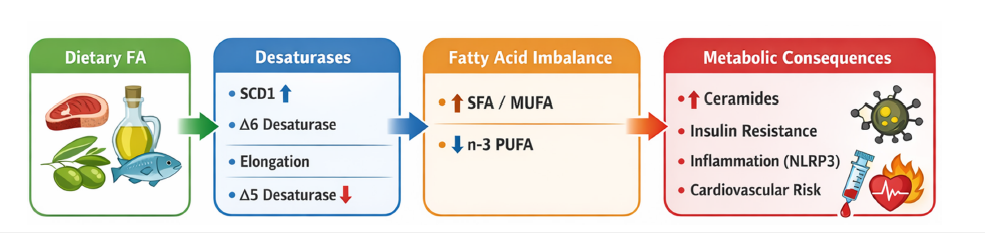
An increased omega-6/omega-3 PUFA ratio has been associated in some studies with less favorable cardiometabolic profiles; however, this ratio should be interpreted cautiously because it may obscure changes in individual FA and is strongly influenced by dietary intake, metabolic status, population characteristics, and analytical methodology. Assessment of individual omega-6 and omega-3 FA may therefore provide complementary information to the ratio itself. Nutritional interventions that increase omega-3 fatty acid intake or availability may modify circulating FA composition and, in some settings, inflammatory and metabolic parameters [18]. Overall, obesity-associated changes in FA profiles reflect a complex interaction between dietary exposure, endogenous lipid metabolism, adipose tissue function, and genetic regulation. Integrated assessment of fatty acid profiles together with desaturase indices may provide a more comprehensive characterization of metabolic dysfunction (Figure 2).
Estimated Desaturase Activity in Human Studies
Since direct measurement of desaturase activity in humans is technically challenging, product-to-precursor FA ratios serve as practical surrogate indices of desaturation activity. These indices should, however, be interpreted as surrogate measures rather than direct measurements of enzyme activity. Product-to-precursor ratios may be influenced by substrate availability, dietary intake, elongase activity, fatty acid transport, tissue-specific metabolism, and genetic variation. Therefore, estimated desaturase indices provide indirect information about fatty acid metabolic pathways and should not be interpreted as direct quantitative measures of enzymatic activity or metabolic flux.
Genetic and Mendelian randomization studies have suggested that genetically predicted differences in D6D-related fatty acid metabolism may be associated with the risk of T2DM and CVD [19,20]. Conversely, higher estimated D5D activity, commonly approximated by the arachidonic acid/dihomo-γ-linolenic acid ratio (20:4 n-6/20:3 n-6), has generally been associated with greater insulin sensitivity and more favorable metabolic profiles in several observational studies. These patterns have been reported across several cohorts, supporting the potential relevance of desaturase indices as candidate biomarkers for cardiometabolic risk [10,21,22].
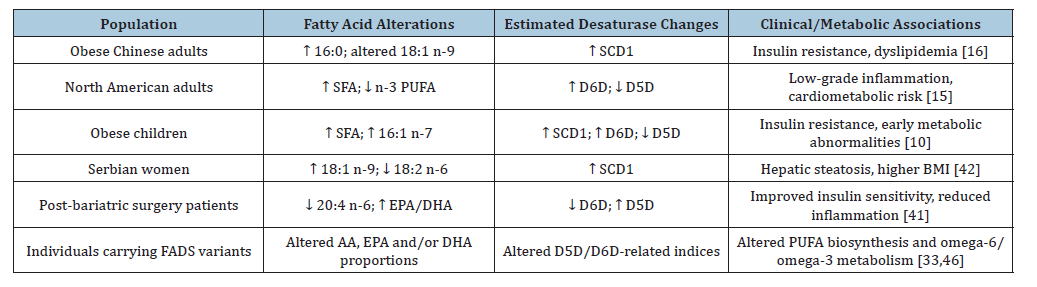
An important challenge is determining whether altered desaturase indices represent causal drivers of metabolic dysfunction or reflect secondary adaptations to obesity and insulin resistance. The directionality of these relationships is particularly relevant for SCD1, whose activity may have distinct effects depending on the tissue, metabolic context, and the balance between lipid storage and lipotoxicity. Integrating longitudinal studies, genetic instruments, and intervention trials may help clarify these relationships. Fatty acid profiles provide a snapshot of lipid composition, whereas estimated desaturase indices may provide additional information about specific endogenous FA metabolic pathways (Table 1).
Table 1:Alterations in fatty acid profiles and desaturase activities across populations with obesity. ↑ Increased activity; ↓ Decreased activity. SFA: Saturated Fatty Acids; PUFA: Polyunsaturated Fatty Acids; MUFA: Monounsaturated Fatty Acids.
Experimental Evidence from Animal Models
Experimental studies in animal models have provided important mechanistic insights into the role of desaturases in energy metabolism, adipose tissue biology, and obesity-related metabolic dysfunction. SCD1-deficient mice are resistant to dietinduced obesity and fatty liver in several experimental models, partly through reduced lipogenesis, increased β-oxidation, and altered energy expenditure associated with increased oxygen consumption [23]. Despite a high-fat diet, these models exhibit a leaner phenotype, improved insulin sensitivity, and lower leptin and insulin levels, highlighting the contribution of SCD1 to adipose tissue expansion and systemic energy metabolism [24- 26]. Importantly, the phenotypes observed in whole-body SCD1- deficient mice cannot be directly extrapolated to humans. SCD1 has distinct physiological functions across tissues, and complete systemic inhibition may produce effects that differ from partial or tissue-specific modulation. These considerations are particularly relevant when evaluating SCD1 as a potential therapeutic target.
Pharmacological and genetic modulation of D5D and D6D has been shown to alter PUFA composition, lipid mediator production, inflammation, and insulin sensitivity in experimental models. Furthermore, some experimental studies have reported reduced body weight or adiposity in mice subjected to high-fat diets following modulation of desaturase pathways, although these effects are not consistently observed and may depend on the enzyme targeted, the experimental model, and the tissue affected. Similarly, modulation of D6D can alter the availability of downstream PUFA substrates and lipid mediators, thereby influencing inflammatory signaling and insulin sensitivity in obese models. These experimental findings support a functional role for desaturase pathways in lipid metabolism and energy homeostasis, while also highlighting the complexity and tissue specificity of these effects [26,27]. Overall, genetic and pharmacological studies indicate that desaturases can influence lipid partitioning, fatty acid oxidation, inflammatory signaling, and metabolic homeostasis. However, the direction and magnitude of these effects depend on the specific desaturase, tissue, genetic background, dietary conditions, and experimental model. These findings support desaturases as potential therapeutic targets for metabolic disease, but their translation to human obesity requires further investigation [28].
Inflammation and Lipotoxicity
Saturated Fatty Acids (SFA), particularly palmitic acid (16:0), can contribute to lipotoxicity and metabolic inflammation associated with obesity by promoting Endoplasmic Reticulum (ER) stress, Reactive Oxygen Species (ROS) generation, activation of Unfolded Protein Response (UPR) signaling pathways (PERK/IRE1/ATF6), and pro-inflammatory signaling involving TLR4/NF-κB [29]. These effects may involve activation of multiple interconnected pathways, including NF-κB signaling, inflammasome activation, and cellular stress responses. However, the precise mechanisms by which SFAs initiate inflammatory signaling remain complex and may depend on the cellular context, concentration, duration of exposure, and lipid species involved. MUFAs, particularly oleic acid, may counteract some SFA-associated metabolic stress by alleviating ER stress, apoptosis, and inflammation in adipocytes and β-cells, improving insulin sensitivity, and reducing the lipotoxic burden in high-fat diet models [30]. The metabolic effects of MUFAs are nevertheless context-dependent and may vary according to the dietary matrix, tissue, dose, and overall metabolic status. Thus, MUFAs should not be considered universally protective, but their incorporation into triglyceride pools may, in some contexts, reduce the accumulation of potentially toxic lipid intermediates.
PUFAs have diverse and sometimes opposing effects on inflammatory signaling. Omega-6 PUFAs serve as precursors for bioactive lipid mediators, including Arachidonic Acid (AA)- derived eicosanoids, whose effects can be either pro-inflammatory or context-dependent, whereas omega-3 PUFAs contribute to the biosynthesis of specialized pro-resolving mediators. Omega-3 PUFAs such as EPA and DHA give rise to specialized pro-resolving mediators, including resolvins, protectins, and maresins, which promote the resolution of inflammation rather than simply suppressing inflammatory signaling. Alterations in PUFA availability may therefore influence the balance between inflammatory and pro-resolving lipid mediators and may interact with pathways such as the NLRP3 inflammasome in adipose tissue and other metabolically active tissues [31,32]. From this perspective, desaturases may represent an important metabolic interface between FA composition and inflammation. By regulating the availability of MUFAs and long-chain PUFAs, SCD1, D5D, and D6D may influence membrane lipid composition, lipid storage, inflammatory mediator biosynthesis, and cellular stress responses. Consequently, altered desaturase activity could contribute to the metabolic phenotype of obesity while simultaneously serving as an indirect marker of underlying metabolic dysfunction.
Genetic and Epigenetic Influences
Polymorphisms in the FA desaturase gene cluster (FADS: FADS1-FADS2-FADS3) can significantly influence desaturase activity and FA composition, thereby altering blood concentrations of PUFAs such as AA, an n-6 PUFA, EPA, and Docosahexaenoic Acid (DHA). These variants may contribute to interindividual differences in PUFA profiles and may thereby influence inflammatory signaling, insulin sensitivity, and cardiovascular risk [33-35]. However, the metabolic consequences of FADS variants are strongly influenced by dietary intake, metabolic status, and the specific genetic variant considered. Gene-diet interactions could explain part of the interindividual variability in metabolic responses to dietary fat intake.
A diet high in LA combined with specific FADS genetic variants may modify the conversion of LA into downstream n-6 PUFA, including AA, relative to n-3 HUFA biosynthesis. However, the magnitude and direction of these effects depend on dietary composition and genetic background. Population-specific differences in FADS allele frequencies may further contribute to variability in PUFA metabolism and response to dietary interventions. Carriers of certain FADS1 variants (e.g., rs174547 CC genotype) have been reported to exhibit greater dependence on preformed EPA/DHA due to differences in endogenous PUFA biosynthesis; however, evidence for genotype-guided supplementation remains inconsistent and requires further clinical validation [33,36].
Obesity is associated with alterations in DNA methylation in the promoters or regulatory regions of FADS and SCD1, which may be associated with changes in desaturase expression and FA profiles. Hypomethylation of SCD1 has been associated with higher SCD1 expression and altered MUFA composition in some studies. These epigenetic alterations may integrate the effects of diet and obesity on long-term PUFA and MUFA metabolism [37,38]. From a biomarker perspective, genetic and epigenetic information may help explain why FA profiles and estimated desaturase indices vary substantially between individuals with similar levels of adiposity. Integrating FADS and SCD1-related genetic or epigenetic information with fatty acid profiling may therefore improve the interpretation of desaturase indices and potentially enhance metabolic risk stratification. However, the incorporation of genetic information into clinical biomarker models remains challenging. Genetic variants may have population-specific effects, and their influence may be modified by dietary exposure and metabolic status. Therefore, prospective studies integrating genotype, epigenetic profiles, dietary data, fatty acid composition, and clinical outcomes are needed before genetically informed desaturase-based strategies can be implemented in routine obesity management.
Nutritional Interventions
The quality and quantity of dietary fat are important determinants of circulating and tissue FA profiles and may influence endogenous desaturase activity. Dietary FA can modify both substrate availability and the expression or activity of enzymes involved in lipid metabolism. These effects may occur through changes in substrate availability, hormonal signaling, transcriptional regulation, and interactions with genetically determined differences in fatty acid metabolism. For example, diets enriched with MUFAs and omega-3 FA have been associated with changes in desaturase indices and improvements in fatty acid composition, although the magnitude and direction of these effects vary across studies [39]. Diets rich in MUFAs, such as that characteristic of Mediterranean dietary patterns and containing olive oil, may modify fatty acid composition and influence SCD1- related indices compared with diets enriched in SFA. Some studies have reported lower estimated SCD1 indices following MUFA-rich dietary interventions, potentially reflecting changes in endogenous fatty acid metabolism and lipid partitioning. Omega-3 FA supplementation may modify estimated D6D and D5D indices, with some studies reporting lower D6D and higher D5D activity estimates, although the direction and magnitude of these changes vary among studies and may depend on the dose, chemical form, duration of supplementation, baseline omega-3 status, and genetic background. These interventions may alter the relative abundance of n-6 and n-3 PUFA in circulating and tissue lipids and influence the availability of substrates for inflammatory and pro-resolving lipid mediators [39,40].
Caloric restriction and weight loss are associated with substantial remodeling of circulating fatty acid profiles. Several studies have reported reductions in circulating SFA and MUFA proportions and relative increases in the availability or proportion of specific PUFA following weight loss, although these changes may vary according to the magnitude of weight loss, dietary composition, and duration of intervention. Such changes are consistent with alterations in lipid storage, fatty acid turnover, and oxidation associated with negative energy balance, although changes in circulating FA composition alone cannot distinguish among these mechanisms. Bariatric surgery causes profound metabolic changes, including alterations in circulating PUFA composition, with some studies reporting lower AA and higher EPA/DHA levels, which may be accompanied by improvements in estimated desaturase indices and insulin sensitivity within a few months after surgery. weightloss interventions, including calorie restriction and bariatric surgery, can therefore lead to substantial and relatively rapid changes in blood FA composition [41,42].
An important emerging question is whether baseline fatty acid profiles and desaturase indices can predict the magnitude of metabolic response to nutritional or weight-loss interventions. If validated prospectively, such biomarkers could help identify individuals who are more likely to benefit from specific dietary patterns or omega-3 supplementation, thereby supporting precision nutrition approaches in obesity management. The integration of fatty acid profiling with genetic information, particularly FADS variants, may provide a more individualized framework for nutritional intervention. However, evidence supporting genotypeguided dietary recommendations remains preliminary. Large, adequately powered randomized controlled trials are needed to determine whether combining fatty acid biomarkers with genetic and clinical characteristics improves the prediction of treatment response compared with conventional clinical parameters alone.
Pharmacological Targeting of Desaturases
Desaturases have emerged as potential therapeutic targets for metabolic and other diseases in which fatty acid remodeling is dysregulated. Selective inhibitors of SCD1 and D5D (encoded by FADS1) have demonstrated metabolic effects in preclinical studies. Experimental SCD1 inhibitors such as A939572 have been investigated in experimental models and can reduce SCD1- dependent lipid synthesis; in cancer models, they have also been reported to reduce tumor cell proliferation and promote apoptosis through cellular stress pathways and to act synergistically with mTOR inhibitors such as temsirolimus in renal cell carcinoma models. These findings illustrate the broader biological effects of SCD1 inhibition but should not be interpreted as evidence of efficacy against obesity in humans. Inhibition of D5D can modify PUFA composition and the production of downstream lipid mediators and has been associated with changes in insulin sensitivity and cardiometabolic phenotypes in some animal studies, although specific D5D inhibitors remain largely at the preclinical stage [43]. However, tissue-specific effects and safety concerns must be carefully evaluated before clinical application.
Tissue-specific effects pose important risks, as whole-body SCD1 knockout in mice leads to skin and eye abnormalities, while broad inhibition may increase tissue SFA availability and disrupt the physiological balance between saturated and MUFA. These findings highlight the importance of partial, selective, or tissue-targeted modulation rather than complete systemic inhibition. These findings highlight the importance of partial, selective, or tissuetargeted modulation rather than complete systemic inhibition. To date, SCD1- or D5D-targeted therapies have not been established as clinically validated treatments for obesity or metabolic dysfunction, and clinical development has been limited by challenges related to efficacy, tissue specificity, and safety. Early efforts, such as MK-8245 for T2DM, illustrate these translational challenges, highlighting the need for more selective approaches and potentially tissue-targeted delivery strategies [44,45].
An alternative therapeutic strategy may therefore be to modulate rather than completely inhibit desaturase activity. This could involve tissue-specific delivery, partial inhibition, or indirect modulation through dietary and metabolic pathways. Such approaches may preserve essential physiological functions while targeting pathological alterations in fatty acid metabolism. From a biomarker perspective, fatty acid profiles and estimated desaturase indices may potentially contribute to the development of future desaturase-targeted therapies. Baseline desaturase indices could potentially identify individuals with distinct metabolic phenotypes, while longitudinal changes in these indices may help monitor pharmacodynamic or metabolic responses to treatment. However, this concept remains hypothetical and requires validation in prospective clinical trials. Desaturase indices may therefore have a dual role: as candidate biomarkers of metabolic dysfunction and, potentially, as pharmacodynamic markers for future therapies targeting lipid remodeling.
Methodological Considerations
The interpretation of FA profiles and estimated desaturase indices requires careful consideration of analytical methods, sample type, fasting status, and diet, as desaturase activity ratios (e.g., 20:4 n-6/20:3 n-6 for D5D) reflect a combination of endogenous metabolism, substrate availability, and genetic and environmental influences [39]. Analytical methods used to quantify FA include Gas Chromatography (GC), gas chromatography coupled with Mass Spectrometry (GC-MS), and liquid chromatography– mass spectrometry (LC-MS/MS). Differences in extraction procedures, derivatization, chromatographic separation, detection limits, and data normalization can affect the comparability of fatty acid measurements between studies. Gas chromatography remains widely used for fatty acid profiling because of its ability to separate fatty acid species according to chain length and degree of unsaturation. LC-MS/MS-based lipidomics, in contrast, provides broader coverage of complex lipid species but may require different analytical workflows and validation procedures. Consequently, results obtained using different platforms should not necessarily be considered directly interchangeable without appropriate analytical standardization and validation.
The biological matrix and lipid fraction analyzed are major determinants of the observed fatty acid profile. Plasma or serum triglycerides may reflect relatively recent dietary exposure and metabolic changes, whereas phospholipid fractions may provide information on circulating membrane-associated FA over a different temporal window. Erythrocyte membrane FA are often considered indicators of relatively longer-term fatty acid exposure, while adipose tissue fatty acid composition reflects longer-term fatty acid storage and remodeling. Accordingly, the same person may display different fatty acid patterns depending on whether plasma, serum, erythrocytes, adipose tissue, or another biological compartment is analyzed. This tissue specificity should be considered when comparing studies and interpreting estimated desaturase indices. In addition, the lipid fraction analyzed within each biological matrix should be reported explicitly, because triglycerides, phospholipids, cholesteryl esters, and total lipid fractions may exhibit distinct fatty acid patterns. Fasting status may also influence circulating lipid concentrations and fatty acid composition, particularly in triglyceride-rich lipoprotein fractions. However, the magnitude and direction of these effects depend on the lipid fraction and metabolic context. These effects should therefore be considered when comparing studies using different sampling conditions [40,42].
Dietary intake represents one of the major potential confounders in studies evaluating fatty acid profiles and desaturase indices. Differences in consumption of saturated fats, MUFAs, omega-6 PUFAs, and omega-3 PUFAs can substantially modify circulating fatty acid composition independently of obesity status. Dietary assessment should therefore be incorporated into study designs whenever possible. Other factors, including age, sex, physical activity, smoking, alcohol consumption, medication use, insulin resistance, diabetes, and lipid-lowering therapies, may also influence fatty acid metabolism and should be considered as potential confounders. Genetic variation, particularly in FADS1 and FADS2, should also be considered when relevant to the study population and research question.
Standardization of fatty acid measurement and estimated desaturase index calculation is essential to improve comparability, reproducibility, and clinical interpretation across studies. Particular attention should be paid to the denominator used to calculate each index, the lipid fraction analyzed, and the reporting of fatty acid concentrations. Studies should clearly specify whether FA are expressed as absolute concentrations, molar percentages, or relative proportion, as these approaches may yield different interpretations. The clinical interpretation of the omega-6/omega-3 ratio remains controversial because the ratio can obscure changes in individual FA and does not necessarily reflect the biological activity of downstream lipid mediators. Individual fatty acid concentrations or specific lipid mediator profiles may therefore provide more informative measures than the ratio alone.
Future studies should aim to establish standardized protocols for fatty acid profiling and desaturase index calculation, including standardized fasting conditions, sample collection, lipid fraction selection, analytical platforms, and reporting units. Such harmonization would facilitate comparison between cohorts and improve the evaluation of fatty acid-based biomarkers in clinical research. For desaturase indices to move from research tools to clinically useful biomarkers, several steps are required. These include analytical validation, biological and clinical validation, assessment of intra-individual reproducibility, determination of appropriate reference ranges, evaluation of incremental predictive value beyond conventional metabolic markers, and prospective validation in diverse populations. Ultimately, clinical utility should be demonstrated through studies showing that biomarker-guided decisions improve clinical decision-making and, ideally, patient outcomes (Table 2). Taken together, methodological heterogeneity represents one of the major barriers to the clinical translation of fatty acid profiles and estimated desaturase indices. The development of standardized analytical and reporting frameworks will be essential to determine whether these biomarkers provide reproducible and clinically meaningful information beyond conventional measures of adiposity and metabolic risk (Figure 3).
Table 2:Nutritional interventions and methodological factors affecting fatty acid profiles and estimated desaturase indices.
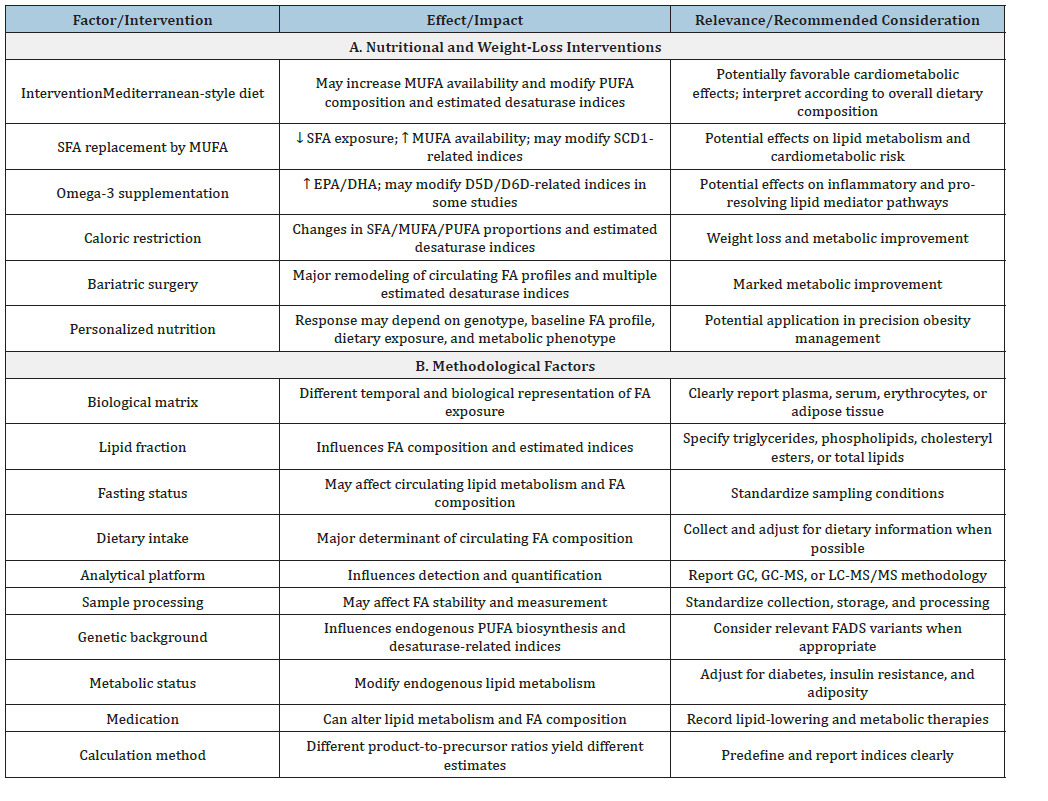
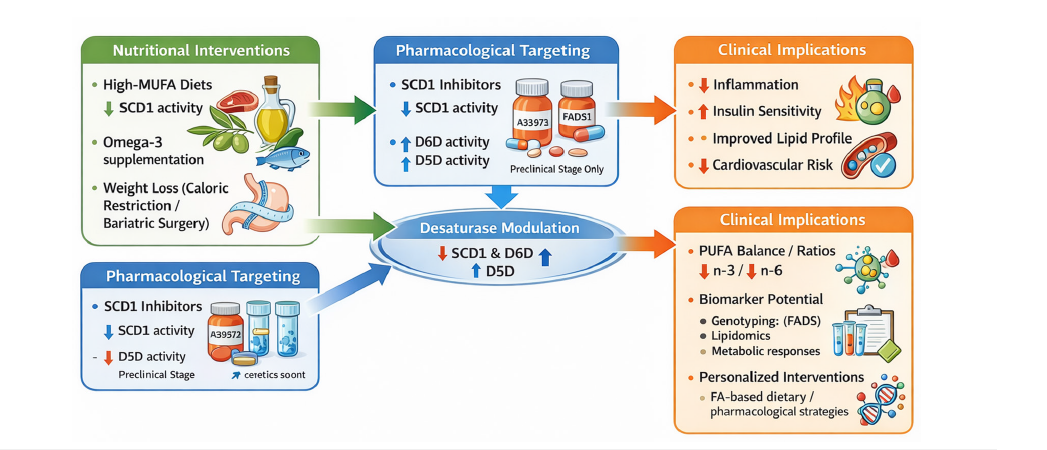
Figure 3:Nutritional and pharmacological interventions targeting desaturase-related pathways.
Clinical Implications and Biomarker Potential
Fatty acid profiles and estimated desaturase indices have emerged as candidate biomarkers for characterizing metabolic dysfunction and stratifying cardiometabolic risk in individuals with obesity. Higher estimated SCD1 activity, commonly assessed using ratios such as 16:1 n-7/16:0 or 18:1 n-9/18:0, has been associated with obesity, insulin resistance, hepatic steatosis, and cardiometabolic risk in several observational studies. However, whether these indices provide superior risk prediction compared with established biomarkers such as LDL-C remains insufficiently established and requires direct prospective comparison evaluation.
Fatty acid profiles may help characterize metabolic phenotypes associated with obesity, insulin resistance, hepatic steatosis, and cardiometabolic dysfunction. However, they are currently not established as standalone diagnostic biomarkers for obesity-related metabolic disease. Altered SCD1, D5D, and D6D indices may help identify individuals with a higher-risk metabolic phenotype. Their potential value may be greatest when combined with established clinical variables, including BMI, waist circumference, blood pressure, glucose metabolism, and conventional lipid parameters.
Baseline fatty acid profiles may identify individuals at increased risk of developing metabolic complications or those more likely to respond to specific nutritional interventions. Nevertheless, prospective studies are required to establish whether these biomarkers provide clinically meaningful predictive information beyond conventional risk factors. Because fatty acid composition can change in response to dietary modification, weight loss, omega-3 supplementation, and bariatric surgery, serial fatty acid measurements may provide a means of monitoring metabolic remodeling during treatment. Longitudinal studies are needed to determine whether changes in desaturase indices correlate consistently with improvements in insulin sensitivity, hepatic metabolism, and cardiovascular risk.
Unlike conventional measures such as Body Mass Index (BMI), waist circumference, and standard lipid profiles, fatty acid-based biomarkers may provide additional information about the quality of lipid metabolism, endogenous fatty acid synthesis, and metabolic remodeling. However, their incremental clinical value beyond established risk factors remains to be fully established. Integration of fatty acid profiles with FADS genotype, dietary intake, and metabolic characteristics may contribute to the development of precision nutrition strategies. Such multi-omics approaches, integrating lipidomics with genomics, epigenomics, metabolomics, and clinical phenotyping, may provide a more comprehensive characterization of metabolic dysfunction and improve patient stratification [46]. However, clinical evidence supporting routine genotype- or biomarker-guided nutrition remains insufficient, and specific dietary strategies cannot currently be recommended based solely on desaturase indices or FADS genotypes [35].
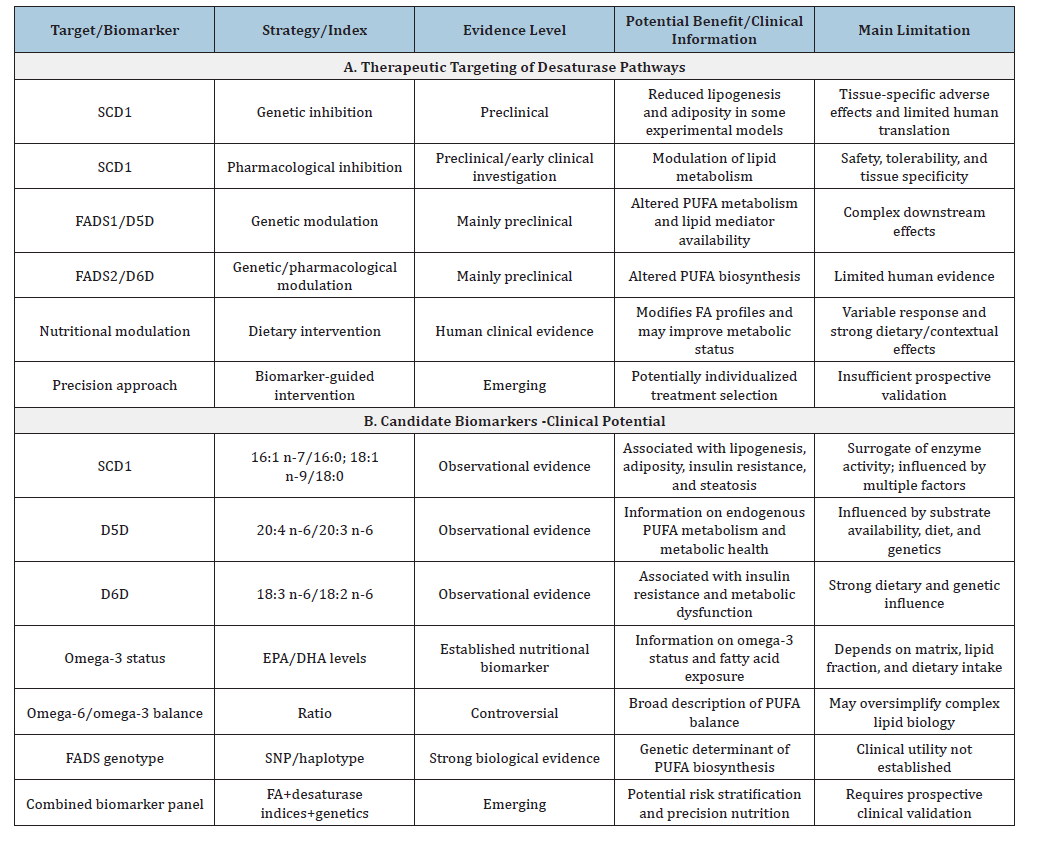
An important research priority is to determine whether fatty acid profiles and desaturase indices provide incremental predictive value beyond conventional clinical and biochemical markers. Future studies should therefore evaluate their performance using established metrics of biomarker validation, including discrimination, calibration, reclassification, and clinical utility. Before clinical implementation, candidate fatty acid biomarkers should undergo a structured validation pathway encompassing analytical validity, biological reproducibility, clinical validity, and clinical utility. Prospective longitudinal cohorts and randomized intervention studies will be particularly important for determining whether changes in fatty acid profiles and desaturase indices reflect meaningful changes in metabolic health or simply parallel changes in adiposity and dietary exposure. FA profiles and estimated desaturase indices are promising candidate biomarkers, but their clinical implementation requires standardized measurement, prospective validation, incremental predictive assessment, and demonstration of clinical utility (Table 3).
Table 3:Therapeutic targeting of desaturase pathways and clinical potential of fatty acid and desaturase biomarkers in obesity.
Limitations, Controversies, and Perspectives
One major source of inconsistency is methodological heterogeneity. Studies differ in analytical platforms used for FA quantification, including gas chromatography-based methods and liquid chromatography–mass spectrometry approaches, as well as in the biological matrices and lipid fractions analyzed. In addition, different formulas are used to estimate desaturase activity, making direct comparisons between studies challenging. Populationspecific differences in FADS genetic variation, dietary patterns, metabolic status, and environmental exposures may further contribute to between-study heterogeneity. In addition, insufficient adjustment for dietary intake, medication use, insulin resistance, or other metabolic confounders may influence observed associations. Differences in sampling conditions, timing, and biological matrices may also contribute to divergent findings across cohorts [42]. Small sample sizes and cross-sectional study design further limit the ability to draw causal conclusions. An important unresolved question is whether altered desaturase activity estimates are a driver of metabolic dysfunction, a consequence of obesity-related metabolic changes, or both. Because FA profiles are influenced by diet, adiposity, insulin signaling, inflammation, medication, and genetic background, disentangling causality remains challenging.
Mendelian randomization and longitudinal studies may help clarify causal relationships, but their interpretation also requires caution because genetic instruments may have pleiotropic effects and may not fully capture tissue-specific enzyme activity. Therefore, causal inference will likely require the integration of genetic, longitudinal, experimental, and intervention-based evidence. Longitudinal studies that track FA profiles and estimated desaturase indices from early metabolic dysfunction through the development of obesity-related complications are needed to clarify temporal relationships. Such studies should ideally integrate repeated measurements of FA, dietary intake, metabolic phenotyping, genetic information, and clinical outcomes. Interventional studies investigating nutritional or pharmacological modulation of desaturase-related pathways, including genotype-stratified omega-3 interventions, in conjunction with lipidomics could help elucidate underlying mechanisms and determine whether biomarker-guided interventions provide clinically meaningful benefits. The causal role of altered desaturase activity in humans with obesity requires further investigation through longitudinal and interventional studies. Future research should focus on the tissue-specific regulation of desaturases, gene-diet interactions, and the integration of multi-omics approaches. Such efforts may contribute to the development of more targeted nutritional and pharmacological strategies.
A major priority should be the formal clinical validation of FA profiles and desaturase indices as biomarkers. Future studies should determine whether these markers provide incremental predictive value beyond BMI, waist circumference, glucose metabolism, and conventional lipid parameters. Importantly, biomarker performance should be evaluated not only in terms of statistical association but also in terms of reproducibility, discrimination, calibration, reclassification, and clinical utility. International standardization of analytical procedures and reporting methods is also needed. Consensus on sample collection, fasting conditions, biological matrices, lipid fractions, analytical platforms, units of measurement, and formulas for calculating desaturase indices would substantially improve reproducibility and facilitate comparison across studies.
Future research should also include geographically, ancestrally, and metabolically diverse populations. Differences in FADS allele frequencies, dietary patterns, environmental exposures, and metabolic phenotypes may influence FA metabolism and the performance of candidate biomarkers. Expanding research beyond traditionally studied European and North American cohorts will therefore be essential for assessing the generalizability of FA-based biomarkers. Ultimately, the clinical translation of FA profiles and desaturase indices will require evidence that their use improves patient management or outcomes. The demonstration of an association with obesity or insulin resistance alone is insufficient to establish clinical utility. Prospective studies should therefore evaluate whether biomarker-guided interventions lead to better metabolic outcomes than standard approaches.
The field is moving from descriptive characterization of FA profiles toward a more integrated understanding of lipid metabolism as a dynamic and potentially actionable component of metabolic health. Future research should combine longitudinal FA profiling with genetic, epigenetic, dietary, and clinical data to determine whether desaturase indices can identify distinct metabolic phenotypes and predict treatment response. The development of standardized analytical frameworks and externally validated biomarker thresholds will be essential for clinical translation. Ultimately, integrating FA-based biomarkers into precision nutrition and personalized obesity management may provide a promising strategy, provided that their reproducibility, incremental clinical value, and clinical utility are demonstrated in well-designed prospective studies.
Conclusion
Alterations in FA composition and estimated desaturase activity are increasingly recognized as important features of the metabolic remodeling associated with obesity. Evidence from human observational studies, experimental models, genetic analyses, and nutritional interventions suggests that SCD1-, D5D- , and D6D-related pathways are closely linked to lipid storage, insulin sensitivity, inflammation, and cardiometabolic dysfunction. However, estimated desaturase indices remain surrogate measures and are influenced by dietary intake, genetic background, metabolic status, tissue specificity, and analytical methodology. Accordingly, FA profiles and estimated desaturase indices should currently be considered candidate biomarkers rather than clinically validated biomarkers. Their potential value may lie not only in characterizing metabolic phenotypes but also in monitoring metabolic remodeling and, potentially, predicting responses to nutritional or other interventions. Establishing their clinical relevance will require standardized analytical approaches, prospective longitudinal studies, external validation, and demonstration of incremental predictive value beyond established clinical and biochemical markers.
Future research integrating lipidomic, genetic, epigenetic, dietary, and clinical information may help clarify interindividual differences in FA metabolism and identify biologically meaningful metabolic phenotypes. However, the transition from mechanistic and observational evidence to precision nutrition and personalized obesity management will depend on demonstrating that biomarker-guided strategies improve clinical decision-making and patient outcomes. Thus, the principal challenge is no longer simply to identify obesity-associated alterations in FA metabolism, but to determine whether these alterations can be measured reproducibly, interpreted reliably, and translated into clinically useful tools for risk assessment and treatment response.
Acknowledgement
The authors have acknowledgements to the Ministry of Higher Education, Scientific Research and Information and Communication Technologies, Tunisia.
Funding
This work received no specific grant from any funding agency in the public, commercial, or not-for-profit sectors.
References
- Mendis S, Graham I, Branca F, Collins T, Tukuitonga C, et al. (2025) Alarming rise of obesity: The 4th United Nations high-level meeting on noncommunicable diseases and mental health should advance action to tackle obesity. Glob Heart 20(1): 70.
- Ng M, Gakidou E, Lo J, Abate YH, Abbafati C, et al. (2025) Global, regional, and national prevalence of adult overweight and obesity, 1990-2021, with forecasts to 2050: A forecasting study for the Global Burden of Disease Study 2021. The Lancet 405(10481): 813-838.
- Ou FS, Le-Rademacher JG, Ballman KV, Adjei AA, Mandrekar SJ (2020) Guidelines for statistical reporting in medical journals. J Thorac Oncol 15(11): 1722-1726.
- Parums DV (2025) Editorial: Global obesity rates continue to rise with challenges for new drug treatments including glp-1 receptor agonists. Med Sci Monit 1(31):
- Rohm TV, Meier DT, Olefsky JM, Donath MY (2022) Inflammation in obesity, diabetes, and related disorders. Immunity 55(1): 31-55.
- Khafagy R, Dash S (2021) Obesity and cardiovascular disease: The emerging role of inflammation. Front Cardiovasc Med 8: 768119.
- Blüher M (2025) An overview of obesity‐related complications: The epidemiological evidence linking body weight and other markers of obesity to adverse health outcomes. Diabetes Obes Metab 27(2): 3-19.
- Wang L, Wang Q, Xiong Y, Shi W, Qi X (2025) Obesity and its comorbidities: Current treatment options, emerging biological mechanisms, future perspectives and challenges. Diabetes Metab Syndr Obes 12(18): 3427-3445.
- Aguilera CM, Gil-Campos M, Cañete R, Gil Á (2008) Alterations in plasma and tissue lipids associated with obesity and metabolic syndrome. Clin Sci 114(3): 183-193.
- Banaszak M, Górna I, Drzymała-Czyż S (2025) Fatty acid profile and desaturase activity in obesity: Roles, mechanisms, and clinical relevance. Metabolites 15(9): 595.
- Dahik VD, Kc P, Materne C, Reydellet C, Lhomme M, et al. (2024) ABCG1 orchestrates adipose tissue macrophage plasticity and insulin resistance in obesity by rewiring saturated fatty acid pools. Sci Transl Med 16(777): eadi6682.
- Maulucci G, Cohen O, Daniel B, Sansone A, Petropoulou PI, et al. (2016) Fatty acid-related modulations of membrane fluidity in cells: detection and implications. Free Radic Res 50(sup1): S40-S50.
- Giudetti AM (2023) Editorial: Lipid metabolism in obesity. Front Physiol 14: 1268288.
- Xu L, Yang Q, Zhou J (2024) Mechanisms of abnormal lipid metabolism in the pathogenesis of disease. Int J Mol Sci 25(15): 8465.
- Wrzosek M, Zawadzka Z, Sawicka A, Bobrowska-Korczak B, Białek A (2022) Impact of fatty acids on obesity-associated diseases and radical weight reduction. Obes Surg 32(2): 428-440.
- Duan Q, Fan R, Lei R, Ma W, Ding B (2020) Plasma fatty acid profile is related to cognitive function in obese Chinese populations (35-64 years): A cross‐sectional study. Food Sci Nutr 8(9): 4773-4781.
- Mahmoud AM, Mirza I, Metwally E, Morsy MH, Scichilone G, et al. (2025) Lipidomic profiling of human adiposomes identifies specific lipid shifts linked to obesity and cardiometabolic risk. JCI Insight 10: e191872.
- Hernandez JD, Li T, Rau CM, LeSuer WE, Wang P, et al. (2021) ω-3PUFA supplementation ameliorates adipose tissue inflammation and insulin-stimulated glucose disposal in subjects with obesity: A potential role for apolipoprotein E. Int J Obes 45(6): 1331-1341.
- Chaaba R, Bouaziz A, Ben Amor A, Mnif W, Hammami M, et al. (2023) Fatty acid profile and genetic variants of proteins involved in fatty acid metabolism could be considered as disease predictor. Diagnostics 13(5): 979.
- Jacobs S, Schiller K, Jansen EH, Boeing H, Schulze MB, et al. (2015) Evaluation of various biomarkers as potential mediators of the association between Δ5 desaturase, Δ6 desaturase, and stearoyl-CoA desaturase activity and incident type 2 diabetes in the European prospective investigation into cancer and nutrition-potsdam study. Am J Clin Nutr 102(1): 155-164.
- Svendsen K, Olsen T, Nordstrand Rusvik TC, Ulven SM, Holven KB, et al. (2020) Fatty acid profile and estimated desaturase activities in whole blood are associated with metabolic health. Lipids Health Dis 19(1): 102.
- Zhou YE, Egeland GM, Meltzer SJ, Kubow S (2009) The association of desaturase 9 and plasma fatty acid composition with insulin resistance-associated factors in female adolescents. Metabolism 58(2): 158-166.
- Aljohani A, Khan MI, Syed DN, Abram B, Lewis S, et al. (2019) Hepatic stearoyl-CoA desaturase-1 deficiency-mediated activation of mTORC1- PGC-1α axis regulates ER stress during high-carbohydrate feeding. Sci Rep 9(1): 15761.
- John SE, Antony D, Eaaswarkhanth M, Hebbar P, Channanath AM, et al. (2018) Assessment of coding region variants in Kuwaiti population: Implications for medical genetics and population genomics. Sci Rep 8(1): 16583.
- Miyazaki M, Flowers MT, Sampath H, Chu K, Otzelberger C, et al. (2007) Hepatic stearoyl-CoA desaturase-1 deficiency protects mice from carbohydrate-induced adiposity and hepatic steatosis. Cell Metab 6(6): 484-496.
- Ntambi JM, Miyazaki M, Stoehr JP, Lan H, Kendziorski CM, et al. (2002) Loss of stearoyl-CoA desaturase-1 function protects mice against adiposity. Proc Natl Acad Sci 99(17): 11482-11486.
- Yashiro H, Takagahara S, Tamura YO, Miyahisa I, Matsui J, et al. (2016) A novel selective inhibitor of delta-5 desaturase lowers insulin resistance and reduces body weight in diet-induced obese C57BL/6J mice. PLOS ONE 11(11): e0166198.
- Tore EC, Adriaans BC, Olsen T, Vinknes KJ, Kooi ME, et al. (2025) Estimated stearoyl-CoA desaturase activity mediates the associations of total cysteine with adiposity: The maastricht study. J Clin Lipidol 19(2): 348-357.
- Kawasaki N, Asada R, Saito A, Kanemoto S, Imaizumi K (2012) Obesity-induced endoplasmic reticulum stress causes chronic inflammation in adipose tissue. Sci Rep 2: 799.
- Liu W, Zhu M, Liu J, Su S, Zeng X, et al. (2024) Comparison of the effects of monounsaturated fatty acids and polyunsaturated fatty acids on the lipotoxicity of islets. Front Endocrinol 15: 1368853.
- Atalay Ekiner S, Gęgotek A, Skrzydlewska E (2024) Inflammasome activity regulation by PUFA metabolites. Front Immunol 15: 1452749.
- Khan SA, Jackson RT (2018) Polyunsaturated fatty acids, inflammation, and metabolic syndrome in South Asian Americans in maryland. Food Sci Nutr 6(6): 1575-1581.
- Blomquist SA, Albrecht JH, Hallmark B, Klimentidis YC, Garcia LA, et al. (2025) The influence of FADS genetic variation and omega-3 fatty acid deficiency on cardiometabolic disease risk in a Mexican American population. Front Nutr 12: 1538505.
- Glaser C, Heinrich J, Koletzko B (2010) Role of FADS1 and FADS2 polymorphisms in polyunsaturated fatty acid metabolism. Metabolism 59(7): 993-999.
- Khamlaoui W, Mehri S, Hammami S, Hammouda S, Chraeif I, et al. (2020) Association between genetic variants in FADS1-FADS2 and ELOVL2 and obesity, lipid traits, and fatty acids in Tunisian population. Clin Appl Thromb 26:
- Ashizawa T, Saito T, Okochi T, Ninomiya K, Ito K, et al. (2024) Association of plasma arachidonic acid levels with a bipolar disorder and the effects of a FADS gene variant. Transl Psychiatry 14(1): 435.
- Kasinska MA, Drzewoski J, Sliwinska A (2016) Epigenetic modifications in adipose tissue - relation to obesity and diabetes. Arch Med Sci 12(6): 1293-1301.
- Zhang S, Shen L, Xia Y, Yang Q, Li X, et al. (2016) DNA methylation landscape of fat deposits and fatty acid composition in obese and lean pigs. Sci Rep 6: 35063.
- Vessby B, Gustafsson IB, Tengblad S, Berglund L (2013) Indices of fatty acid desaturase activity in healthy human subjects: Effects of different types of dietary fat. Br J Nutr 110(5): 871-879.
- Warensjö E, Risérus U, Gustafsson IB, Mohsen R, Cederholm T, et al. (2008) Effects of saturated and unsaturated fatty acids on estimated desaturase activities during a controlled dietary intervention. Nutr Metab Cardiovasc Dis 18(10): 683-690.
- Alsharari ZD, Risérus U, Leander K, Sjögren P, Carlsson AC, et al. (2017) Serum fatty acids, desaturase activities and abdominal obesity - a population-based study of 60-year-old men and women. PLOS ONE 12(1): e0170684.
- Šarac I, Debeljak-Martačić J, Takić M, Stevanović V, Milešević J, et al. (2023) Associations of fatty acids composition and estimated desaturase activities in erythrocyte phospholipids with biochemical and clinical indicators of cardiometabolic risk in non-diabetic Serbian women: The role of level of adiposity. Front Nutr 10: 1065578.
- Von Roemeling CA, Marlow LA, Wei JJ, Cooper SJ, Caulfield TR, et al. (2013) Stearoyl-CoA desaturase 1 is a novel molecular therapeutic target for clear cell renal cell carcinoma. Clin Cancer Res 19(9): 2368-2380.
- Katoh Y, Yaguchi T, Kubo A, Iwata T, Morii K, et al. (2022) Inhibition of stearoyl-CoA desaturase 1 (SCD1) enhances the antitumor T cell response through regulating β-catenin signaling in cancer cells and ER stress in T cells and synergizes with anti-PD-1 antibody. J Immunother Cancer 10(7): e004616.
- Wang C, Shi M, Ji J, Cai Q, Zhao Q, et al. (2020) Stearoyl-CoA desaturase 1 (SCD1) facilitates the growth and anti-ferroptosis of gastric cancer cells and predicts poor prognosis of gastric cancer. Aging 12(15): 15374-15391.
- Reyes-Pérez SD, González-Becerra K, Barrón-Cabrera E, Muñoz-Valle JF, Armendáriz-Borunda J, et al. (2024) FADS1 genetic variant and omega-3 supplementation are associated with changes in fatty acid composition in red blood cells of subjects with obesity. Nutrients 16(20): 3522.
© 2026 Sounira Mehri. This is an open access article distributed under the terms of the Creative Commons Attribution License , which permits unrestricted use, distribution, and build upon your work non-commercially.
Editor In Chief







.jpg)































Signup for Newsletter

Quick Links
 Editorial Board Registrations
 Submit your Article
 Best Paper of the Volume
 Reprints
 Refer a Friend
 Advertise With Us
Our Recent Edition




Top Editors




.jpg)

















.bmp)
.jpg)
.png)
.jpg)













.jpg)






.png)

.png)




.png)




Financial Support

Sponsors

Latest e-Books

Latest Video

 a Creative Commons Attribution 4.0 International License. Based on a work at www.crimsonpublishers.com.
Best viewed in

 | Above IE 9.0 version