

- About Us
- Information
-

The Author ensures that the research has been conducted responsibly and ethically with adherence to all relevant regulations. read more..
- For Authors
- For Reviewer
- Manuscript Guidelines
- Membership
- Publication Ethics
-
- Journals
- Reprints
- e-Books
- Videos
- Policies
- Contact Us
 COVID-19
- Submissions



Full Text
Investigations in Gynecology Research & Womens Health
The Dangers of Exposure to Microplastics during Gestation
Nieves L Capili*
Manila Central University, Philippines
*Corresponding author:Manila Central University, Caloocan, Philippines
Submission:July 09, 2024;Published: July 17, 2024
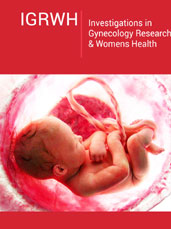
ISSN: 2577-2015 Volume5 Issue1
Opinion
The National Oceanic and Atmospheric administration declares that plastics are everywhere adding to the pollution of land, water, and air. Marine animals ingest them as food, and thus plastics become part of the food chain. These materials chemically include polyethylene, polypropylene, polyurethane, and polyethylene terephthalate.
Zurub [1] termed all plastic particles less than 5mm in size as Micro-Nano Plastics (MNP). From the environment MNP’s can be inhaled, ingested, and absorbed through the skin. Many diseases and disorders can thus be traced with MNP’s as among the origins. Smaller than these are microbeads which are less than one (1) millimeter in size. Hence without their awareness, microplastics and microbeads are ingested both by humans and animals. But one of the alarming aftermaths of Micro-Nano Plastic Particle (MNP’s) exposure is gestation.
Pregnancy can be one of the riskiest stages in human development that can be impacted by exposure to MNP’s. Maternal organs including the heart, brain, lungs, kidneys, large intestines, liver, and reproductive tracts can all absorb these invisible plastic particles. The MNP’s found in utero can cross placental barriers. Female breast milk and meconium attests to the entry of MNP’s in the human body.
During gestation MNP’s can interfere with the normal development of fetal organs. Interference can lead to oxidative stress epigenetic alterations, metabolic dysfunctions, dysbiosis, and inflammation. The damage from exposure of the gestating mother to micromanipulated particles can thus be a factor to infertility, poor fetal development and to certain long term poor health condition.
Geng [2] cited studies both on invertebrate and vertebrate animal models that were used to demonstrate the oxidative stress and overactivation of antioxidant enzyme expression in the fetal stages of development, and even in the mother’s ovarian tissues. The oxidative stress is brought about by the accumulation of Reactive Oxygen Species (ROS) generated by the micro-nano plastic particles. They also found out that in rodents, MPs were found to deposit in the ovary, which further resulted in decreased ovarian reserve, lower ovarian volume, and disruption of the estrous cycle.
Plankton in the ocean eat microplastics and while these creatures serve as the basis of food chain, large marine and aquatic food consumed by humans will have already high accumulations of these pollutants.
Logic has it that in very many ways avoidance of exposure to microplastics must be a major concern. Mc Carthy [3] enumerates practical day to day choices to minimize aggravation of micro-nano plastic pollution: 1) change of laundry style avoiding high washing machine setting that can spin up clothes at high speeds to cause the fibers to pull away; shifting to hand washing of clothes is more practical as much as using laundry filters that could collect microplastics, thus preventing them from going down with the waste water that ends up in water ways and oceans’ 2)n Choose clothing made of natural fibers avoiding those that are of polyester, nylon, acrylic, and the like; 3) travel by public transport instead of cars as tire frictions on the road release microplastic in the air as city dust; 4) buy goods in bulk to avoid small plastic wrappers, and 5) avoid cosmetic creams that contain plastics as adjuncts to absorbents, and exfoliants that use microbeads.
Additionally, the use of microwave plastic containers to heat food must be avoided as plastics when heated contain Bisphenol A. Dr. Zilberstein [4] said “Exposure to this chemical during pregnancy may result in problems with your unborn child. Bisphenol A has been linked to negative effects on the brain of human fetuses. It can affect your baby’s prostate gland as well.”
References
- Zurub RE, Cariaco Y, Wade MG, Bainbridge SA (2024) Microplastics exposure: implications for human fertility, pregnancy, and child health. Front Endocrinol (Lausanne) 14:1330396.
- Geng Y, Liu Z, Hu R, Huang Y, Li F, et al. (2023) Toxicity of microplastics and nano plastics: invisible killers of female fertility and offspring health. Frontiers in Physiology 14:1254886.
- McCarthy J (2021) Global Citizen.
- Zilberstein I (2024) BPA and Pregnancy: what every mom to be should know.
© 2024 Nieves L Capili. This is an open access article distributed under the terms of the Creative Commons Attribution License , which permits unrestricted use, distribution, and build upon your work non-commercially.
Editor In Chief







.jpg)































Signup for Newsletter

Quick Links
 Editorial Board Registrations
 Submit your Article
 Best Paper of the Volume
 Reprints
 Refer a Friend
 Advertise With Us
Our Recent Edition

.jpg)



Top Editors




.jpg)

















.bmp)
.jpg)
.png)
.jpg)













.jpg)






.png)

.png)




.png)




Financial Support

Sponsors

Latest e-Books

Latest Video

 a Creative Commons Attribution 4.0 International License. Based on a work at www.crimsonpublishers.com.
Best viewed in
a Creative Commons Attribution 4.0 International License. Based on a work at www.crimsonpublishers.com.
Best viewed in 
 | Above IE 9.0 version