

- About Us
- Information
-

The Author ensures that the research has been conducted responsibly and ethically with adherence to all relevant regulations. read more..
- For Authors
- For Reviewer
- Manuscript Guidelines
- Membership
- Publication Ethics
-
- Journals
- Reprints
- e-Books
- Videos
- Policies
- Contact Us
 COVID-19
- Submissions



Full Text
Examines in Physical Medicine and Rehabilitation: Open Access
Acupuncture as an Adjunct to Physical Medicine and Rehabilitation in Gynaecological and Paediatric Disorders: A Mini Review
Yingdan Wang1, Haiyan Yang1, Qinqin Xie1 and Qiancheng Mao2*
1Yunlin Clinic, China
2Sun Yat-sen University, China
*Corresponding author:Qiancheng Mao, Sun Yat-sen University, Shenzhen 518107, China
Submission: October 23, 2026;Published: November 03, 2026

ISSN 2637-7934 Volume5 Issue4
Abstract
Acupuncture is increasingly delivered inside Physical Medicine and Rehabilitation (PM&R) services, where it is used less as a stand-alone treatment than as an adjunct that modifies pain, muscle tone, pelvic floor function and autonomic arousal while active training continues. This mini-review examines the rehabilitation-relevant evidence for acupuncture in two populations that remain underserved by mainstream PM&R: women with gynaecological and pelvic floor disorders, and children with developmental, behavioural and supportive-care needs. Targeted searches of PubMed, the Cochrane Library and reference lists (inception to 2025) were used, prioritising systematic reviews and metaanalyses of Randomised Controlled Trials (RCTs). In gynaecology, the most consistent signals concern primary dysmenorrhoea and endometriosis-related pelvic pain, and stress urinary incontinence, where acupuncture added to Pelvic Floor Muscle Training (PFMT) outperforms PFMT alone. In paediatrics, adjunctive acupuncture with rehabilitation training is associated with modest gains in gross motor function in cerebral palsy, whereas evidence in autism spectrum disorder, tic disorders, nocturnal enuresis and chemotherapy-related nausea is heterogeneous and of low to moderate certainty. Serious adverse events are uncommon but not negligible, and paediatric delivery demands specific safeguards. The principal limitations are non-blinded designs, small samples, short follow-up and a scarcity of function- and participation-level outcomes. A rehabilitation-oriented research agenda is proposed in which needling is evaluated as a priming and adherence-supporting component of multidisciplinary care rather than as a competing monotherapy. Because the practical question for a rehabilitation service is whether needling produces measurable biological change, the candidate plasma and serum markers are also appraised here -prostanoids and β-endorphin in dysmenorrhoea, gonadotrophins, androgens and insulin-resistance indices in polycystic ovary syndrome, neurotrophins and neuronal injury proteins in cerebral palsy, monoamines and neuropeptides in autism spectrum disorder, the vasopressin axis in nocturnal enuresis and emetic neurotransmitters in chemotherapy-induced nausea - and are graded in a dedicated table (Table 1) against the framework used to evaluate diagnostic tests.
Keywords:Acupuncture; Physical medicine and rehabilitation; Dysmenorrhea; Pelvic floor; Cerebral palsy; Paediatric rehabilitation; Evidence-based practice; Biomarkers; Plasma Biomarkers; Treatment monitoring
Introduction
Physical Medicine and Rehabilitation (PM&R) is organised around function rather than around diagnosis alone: the clinical question is not simply whether a symptom recedes, but whether the person can move, participate and sustain activity. Judged by that standard, acupuncture occupies an ambiguous position. It is widely used, frequently requested by patients, and increasingly embedded in rehabilitation departments, yet it is usually evaluated as a disease-specific monotherapy in trials that pay little attention to dosing alongside exercise, tone management or behavioural training. This mini-review takes the opposite starting point. It asks what acupuncture contributes when it is positioned as a component of a rehabilitation programme, and it concentrates on two groups in which this question is clinically pressing but analytically neglected: women with gynaecological and pelvic floor conditions, and children with developmental, behavioural and supportive-care needs. Both groups share features that make adjunctive, low-risk, non-pharmacological options attractive: symptoms are chronic or recurrent, pharmacological options are limited by side-effects or are unacceptable during pregnancy and lactation, and adherence to active therapy is often the rate-limiting step.
Why Needling Belongs in a Rehabilitation Plan
The biological rationale for combining acupuncture with rehabilitation rests on three overlapping mechanisms. First, needling activates fine myelinated afferents from muscle and connective tissue and engages segmental gating together with descending inhibitory pathways from the periaqueductal grey and rostral ventromedial medulla, with accompanying release of endogenous opioids [1]. This produces a short analgesic window during which movement that is normally avoided becomes tolerable, which is precisely the window in which graded exercise and functional retraining are most productive. Second, electroacupuncture at defined frequencies recruits autonomic and neuroimmune responses and, in preclinical models, upregulates plasticity-related markers such as BDNF and synaptic proteins in sensorimotor cortex and corticospinal pathways [2]. Third, needling of myofascial and segmental points reduces local triggerpoint irritability and spasticity, an effect that therapists can exploit before manual stretching or neurodevelopmental handling. These mechanisms are plausible but not equivalent to clinical proof, and they carry a practical implication: if acupuncture works mainly by opening a window for active therapy, then trials that compare needling with a sham while holding exercise constant will systematically underestimate its rehabilitation value, whereas trials that add needling to an optimised training programme will capture it. The evidence summarised below should be read with this design asymmetry in mind. If that reading is correct, the effect of a session should be detectable in plasma within hours of needling, and the size of the biochemical change should covary with the functional gain obtained from the therapy that follows. Section 5 examines how far that expectation is actually met.
Gynaecological and Pelvic Floor Rehabilitation
Dysmenorrhoea and endometriosis-related pelvic pain
Primary dysmenorrhoea is the most intensively studied gynaecological indication. A systematic review and meta-analysis of 60 RCTs, 49 of which were pooled, found that manual acupuncture reduced menstrual pain intensity relative to no treatment and to some pharmacological comparators, with most trials at low or unclear risk of bias [3]. For endometriosis-related pain, a metaanalysis of six RCTs involving 371 women reported reductions in menstrual and pelvic pain severity exceeding 20% on visual analogue scales when acupuncture was compared with non-specific acupuncture, usual care or Chinese herbal medicine [4]. These effects are clinically meaningful in a condition where conventional treatment frequently leaves residual pain. Rehabilitation relevance: recurrent pelvic pain is a major barrier to exercise participation and to work and school attendance. Framing acupuncture as episodic pain-window management, delivered in the days before and during menses and paired with breathing, pelvic floor downtraining and graded aerobic activity, is more consistent with rehabilitation logic than open-ended maintenance needling, although this sequencing has not been tested head-to-head.
Stress urinary incontinence and postpartum pelvic floor recovery
Pelvic floor muscle training is first-line care for Stress Urinary Incontinence (SUI), but adherence is modest and long-term effectiveness uncertain. A meta-analysis of acupuncture alone or combined with PFMT found that electroacupuncture improved one-hour pad-test leakage and quality-of-life scores compared with placebo electroacupuncture without increasing adverse events, and that acupuncture plus PFMT was superior to PFMT alone [5]. A separate meta-analysis focused on the postpartum period reached a consistent conclusion: adding acupuncture to pelvic floor rehabilitation training produced greater improvement in leakage and condition-specific quality of life than training alone [6]. Rehabilitation relevance: these are among the few trials in the field designed as add-on studies, and they therefore speak directly to PM&R practice. The plausible mechanisms include improved local circulation, reduced levator ani hypertonicity and better proprioceptive awareness, all of which may help a patient to perform a correct contraction. Practical cautions are that bladder outlet obstruction, urinary retention and pelvic organ prolapse require assessment before needling is credited with improvement, and that needling must not displace supervised training.
Vasomotor symptoms and postpartum mood
Menopausal hot flushes impair sleep, exercise tolerance and mood. The Cochrane review of 16 trials and 1155 women found no significant difference between acupuncture and sham acupuncture in flush frequency, a moderate benefit relative to no intervention or waiting list, and inferior effect relative to hormone therapy [7]. The honest reading is that acupuncture is a reasonable option for women who cannot or will not use hormonal treatment, provided expectations are calibrated. For postpartum depression, a metaanalysis of RCTs reported higher response rates with acupuncture than with control conditions, but the trials were few, small and heterogeneous, and pharmacological or psychological care remains the reference standard for moderate-to-severe illness [8]. Rehabilitation relevance: in both conditions the rehabilitation target is participation. Sleep disruption and low mood reduce the capacity to attend therapy and to care for an infant; short, structured courses of needling may protect that capacity, but they are supportive rather than curative.
Polycystic Ovary Syndrome and Fertility-Oriented Rehabilitation
Lifestyle intervention and exercise remain the cornerstone of management in Polycystic Ovary Syndrome (PCOS). The Cochrane review of eight RCTs found that acupuncture, compared with sham, was associated with more regular menstrual cycles, but concluded there was insufficient evidence that it improves ovulation, pregnancy or live-birth rates [9]. In a rehabilitation frame, this positions acupuncture as a possible adjunct for cycle regularity and treatment burden rather than as a fertility treatment.
Paediatric Rehabilitation
Cerebral palsy
Cerebral Palsy (CP) is the paediatric condition with the largest acupuncture evidence base. A meta-analysis of RCTs comparing acupuncture plus rehabilitation training with rehabilitation training alone found greater improvement in gross motor function, reduced spasticity and better activity-of-daily-living scores, while cautioning that included trials were few and small [10]. A subsequent metaanalysis of 20 RCTs and 1797 children reported a mean gain of 5.93 points on the Gross Motor Function Measure (95% CI 3.67-8.19) and a higher probability of clinically meaningful improvement, with scalp and trunk points among the most frequently used [11]. Rehabilitation relevance: a five-point GMFM gain is modest but not trivial, and it is consistent with the hypothesis that needling temporarily lowers tone and irritability, allowing more productive neurodevelopmental therapy and task-oriented practice. The absence of long-term, blinded follow-up means that durability, and the extent to which gains reflect co-intervention intensity, remain unresolved.
Autism spectrum disorder
The Cochrane review of 10 trials and 390 children found no difference between needle acupuncture and sham acupuncture on the primary outcome of core autistic features, although some secondary communication outcomes favoured needling [12]. A later meta-analysis reached a similar position: some trials reported improvement on autism behaviour and rating scales, but the evidence was limited by small samples, co-interventions and risk of bias [13]. Rehabilitation relevance: behavioural, developmental and educational interventions remain the mainstay. Acupuncture may have a role for comorbidities that interfere with participation, such as sleep disturbance, gastrointestinal complaints and anxiety, but this remains a hypothesis rather than an established indication.
Tic disorders
A meta-analysis of 26 studies including 1862 children with Tourette syndrome reported an approximately 18% higher effective rate and fewer adverse reactions with acupuncture, alone or as an adjunct, compared with pharmacological treatment [14]. Rehabilitation relevance: tics frequently coexist with attention and anxiety problems, and needling can be sequenced with habitreversal or comprehensive behavioural intervention for tics, particularly when families wish to reduce antipsychotic exposure.
Nocturnal enuresis
A meta-analysis of RCTs of acupuncture for nocturnal enuresis reported favourable pooled effects on wet nights and response rates, while noting clinical heterogeneity and generally low methodological quality [15]. Rehabilitation relevance: bladder and bowel training, fluid management and alarm therapy remain firstline; acupuncture is best regarded as an adjunct after organic causes and daytime lower urinary tract dysfunction have been excluded.
Supportive rehabilitation in paediatric oncology
Chemotherapy-Induced Nausea and Vomiting (CINV) is the bestsupported paediatric indication. A meta-analysis of complementary modalities in children and young adults found a significant effect of acupuncture versus control on CINV intensity and episodes (SMD -0.59, 95% CI -0.85 to -0.33) [16], and a systematic review of acupuncture and related techniques in paediatric oncology concluded that the intervention is useful as an adjunct for CINV with a reassuring safety profile [17]. Rehabilitation relevance: controlling nausea protects nutrition, mobility and participation in school and play, and acupoint stimulation can be delivered by trained staff or caregivers with minimal disruption to chemotherapy schedules.
Safety in children
A systematic review of 37 reports found that most adverse events of paediatric needling were mild: pain, bruising, bleeding and transient worsening of symptoms [18]. Serious events are rare but described, including pneumothorax, infection and retained needles. Children require shorter needles, fewer points, brief retention, continuous caregiver presence and explicit infectioncontrol procedures; distressed or uncooperative children should not be restrained for needling.
Plasma Biomarkers as Monitors of Acupuncture Response
A rehabilitation service that embeds needling in a multidisciplinary programme faces a measurement problem that function alone answers slowly. Function is the right endpoint, but it moves over weeks, it is sensitive to attention, expectation and cointervention, and it cannot tell a therapist whether the needles are doing anything at all. A plasma marker that tracks the biological effect of needling would give such a service an intermediate readout: it would allow dose and scheduling to be adjusted within a course, and it would make it possible to identify likely non-responders before twelve sessions have been spent. The question is therefore not whether acupuncture ‘has’ biomarkers, but which analytes behave well enough to be worth a venepuncture in a woman with dysmenorrhoea or a child with cerebral palsy.
What a biomarker must demonstrate before it can guide practice
Biomarkers do not become useful merely by being measured. The framework used to evaluate diagnostic tests transfers directly: a candidate analyte must first be shown to discriminate - with acceptable sensitivity, specificity, positive and negative predictive values, likelihood ratios and an interpretable receiver operating characteristic curve - and must then be shown to change management or improve outcome [19]. For a monitoring marker the bar is different but not lower. What matters is responsiveness: the standardised response mean, the smallest change that corresponds to a clinically important gain in function, and acceptable withinsubject reproducibility. A marker that is abnormal at baseline but does not move with treatment is a trait marker; a marker that moves without any corresponding functional change is a surrogate of uncertain meaning. Almost all acupuncture biomarker studies report only a within-group before-and-after comparison, which cannot separate needling from menstrual phase, season, cointervention or regression to the mean.
Three families of analyte recur in this literature: mediators of the needling response itself (prostanoids, β-endorphin, monoamines), markers of neurotrophic support and neural injury (BDNF, NGF, GDNF, IGF-1, NSE, GFAP, MBP, UCH-L1), and markers of systemic inflammation and oxidative stress (IL-6, TNF-α, IL-33, hs-CRP, malondialdehyde, superoxide dismutase). Pre-analytical standardisation matters more than the choice of assay. Sampling should be fixed relative to the menstrual cycle and, where relevant, the time of day (essential for antidiuretic hormone) and fasting status (essential for insulin and HOMA-IR); the interval between needling and venesection should be stated; and a single batch on a single platform should be used. In children the binding constraint is the volume that may be drawn, so panels must be small, timed with clinically indicated blood draws, and preferably capillary or driedblood- spot based.
Gynaecological conditions
Primary dysmenorrhoea is where the prostanoid hypothesis is most testable, and the result is instructive. In a four-arm randomised study of 40 women, electroacupuncture at Sanyinjiao (SP6) reduced pain intensity immediately, yet plasma PGE2, PGF2α, TXB2, 6-keto-PGF1α and both prostanoid ratios were unchanged [20]. That negative finding is an argument about timing rather than against needling: analgesia within 30 minutes is more plausibly segmental and opioid-mediated than prostanoid-mediated, whereas trials that deliver three monthly courses do report lower serum PGF2α, higher PGE2 and higher plasma β-endorphin. Those trials are mostly unblinded, single-centre and published in Chinese, and their sampling point ranges from cycle day 1 to the end of treatment, so much of the heterogeneity lies in the design rather than in the biology. A defensible panel for a rehabilitation trial is therefore a single pre-specified sampling point (late luteal phase, or day 1 of menses), PGF2α and PGE2 as the primary analytes, and β-endorphin and hs-CRP as secondary ones.
In endometriosis-related pain and in Polycystic Ovary Syndrome (PCOS) the informative markers are endocrine and inflammatory rather than prostanoid. For PCOS, gonadotrophins, total and free testosterone, SHBG, fasting insulin and HOMA-IR form a coherent panel, and one sham-controlled trial provides the most useful caution in the field: true and sham acupuncture produced the same fall in the LH:FSH ratio and the same ovulation rate, yet within the true-acupuncture arm a lower fasting insulin and free testosterone were associated with a higher ovulation rate [21]. The analyte thus behaved as a non-specific marker of needling and attention when compared between arms, and as a plausible correlate of response within an arm. Only a pre-specified responder analysis can separate those two readings, and it is the analysis future trials should plan for. Anti-Müllerian hormone is often proposed as an ovarianreserve endpoint, but no acupuncture trial has been powered for it.
For menopausal hot flushes, FSH and estradiol are descriptive anchors rather than response markers: the Cochrane review found no advantage of acupuncture over sham for flush frequency [7], so a change in gonadotrophins cannot be used as a surrogate for symptom benefit. For stress urinary incontinence, including the postpartum period, there is at present no validated circulating marker at all. Collagen turnover peptides and TGF-β1 are biologically reasonable and remain exploratory; until they are validated, the one-hour pad test, the International Consultation on Incontinence Questionnaire score and adherence to pelvic floor muscle training should carry the weight, with an inflammatory panel collected as a secondary, hypothesis-generating measure.
Paediatric conditions
Cerebral palsy has the richest biochemical dataset in paediatric acupuncture, and it is the only one in which a panel has been measured against a sham procedure. In a randomised trial of 90 children with spastic cerebral palsy, twelve weeks of scalp acupuncture added to conventional rehabilitation lowered serum NSE, GFAP, MBP, UCH-L1, IL-33 and TNF-α and produced greater gains in gross motor function and daily living than sham scalp acupuncture, with parallel changes in corticospinal diffusion tensor metrics [22]. Serum BDNF, NGF, GDNF and IGF-1 have been reported to rise with adjunctive needling in smaller, open-label studies, but the sham-controlled trial above measured injury proteins rather than neurotrophins, so the neurotrophic half of the mechanism remains the weaker one. The critical gap is the missing link between the two levels: almost no study reports the correlation between marker change and functional gain, which is precisely the quantity that would establish a marker as a surrogate rather than an epiphenomenon.
In autism spectrum disorder the biochemical signal is weaker and less consistent. Plasma BDNF fell, and severity and language scores improved, after twelve sessions of low-level laser acupuncture in a small randomised study, while miR-320 discriminated children with autism from typically developing children [23]; but a marker that separates cases from controls is a diagnostic marker, not a monitoring one, and other studies report BDNF rising rather than falling. Serotonin has been measured in several small trials with inconsistent direction, and the neuropeptides oxytocin and arginine vasopressin have been proposed as predictors of response to acupoint stimulation on the basis of preliminary data. Biomarkers in autism should therefore be treated as exploratory secondary outcomes and should not be used to justify clinical decisions.
Nocturnal enuresis has the cleanest mechanistic target, because the vasopressin axis is directly relevant to nocturnal polyuria: in a study of 25 children, nocturnal plasma antidiuretic hormone was low before treatment and rose afterwards, whereas daytime values and serum osmolality were unchanged [24]. Antidiuretic hormone is pre-analytically fragile and has a short half-life, so copeptin is the more practical surrogate and urinary aquaporin-2 offers a non-invasive alternative that is particularly attractive in children. For chemotherapy-induced nausea, the relevant transmitters are serotonin and dopamine, both of which fell in adults receiving transcutaneous electroacupuncture at PC6 and PC5 compared with sham [25]; the paediatric evidence in this setting remains clinical rather than biochemical. Whatever panel is chosen, the paediatric envelope is set by phlebotomy volume and distress rather than by assay availability: total sampling should stay within recognised limits for body weight, be combined with clinically indicated draws, and be justified to the ethics committee as a secondary objective with a stated stopping rule.
A minimal panel, and how to report it
The proposal that follows is deliberately modest. For gynaecological rehabilitation, four analytes - PGF2α, PGE2, hs-CRP and, where the question is neuroendocrine, β-endorphin - sampled at a fixed cycle day before and at the end of a course are affordable, interpretable and sufficient to test whether needling engages the prostanoid and inflammatory axes. For paediatric rehabilitation, BDNF, NGF, NSE and GFAP, or BDNF, GFAP and UCH-L1 in the youngest children, cover neurotrophic support and neural injury with a single small draw. For PCOS and nocturnal enuresis the panel is hormonal and should ride on the existing clinical assay rather than on a research kit.
Reporting should follow the same discipline as the clinical outcomes: a pre-specified primary analyte, a responder definition fixed in advance, change scores with 95% confidence intervals rather than p values alone, the standardised response mean, and an explicit correlation between marker change and functional change. Where a marker is intended to guide practice rather than to explain mechanism, the diagnostic-test framework should be applied in full, with discrimination, calibration and the effect on management reported [19]. Used in this way, a biochemistry table is not decoration: it is a testable bridge between the needle and the rehabilitation goal.
From Evidence to Rehabilitation Practice
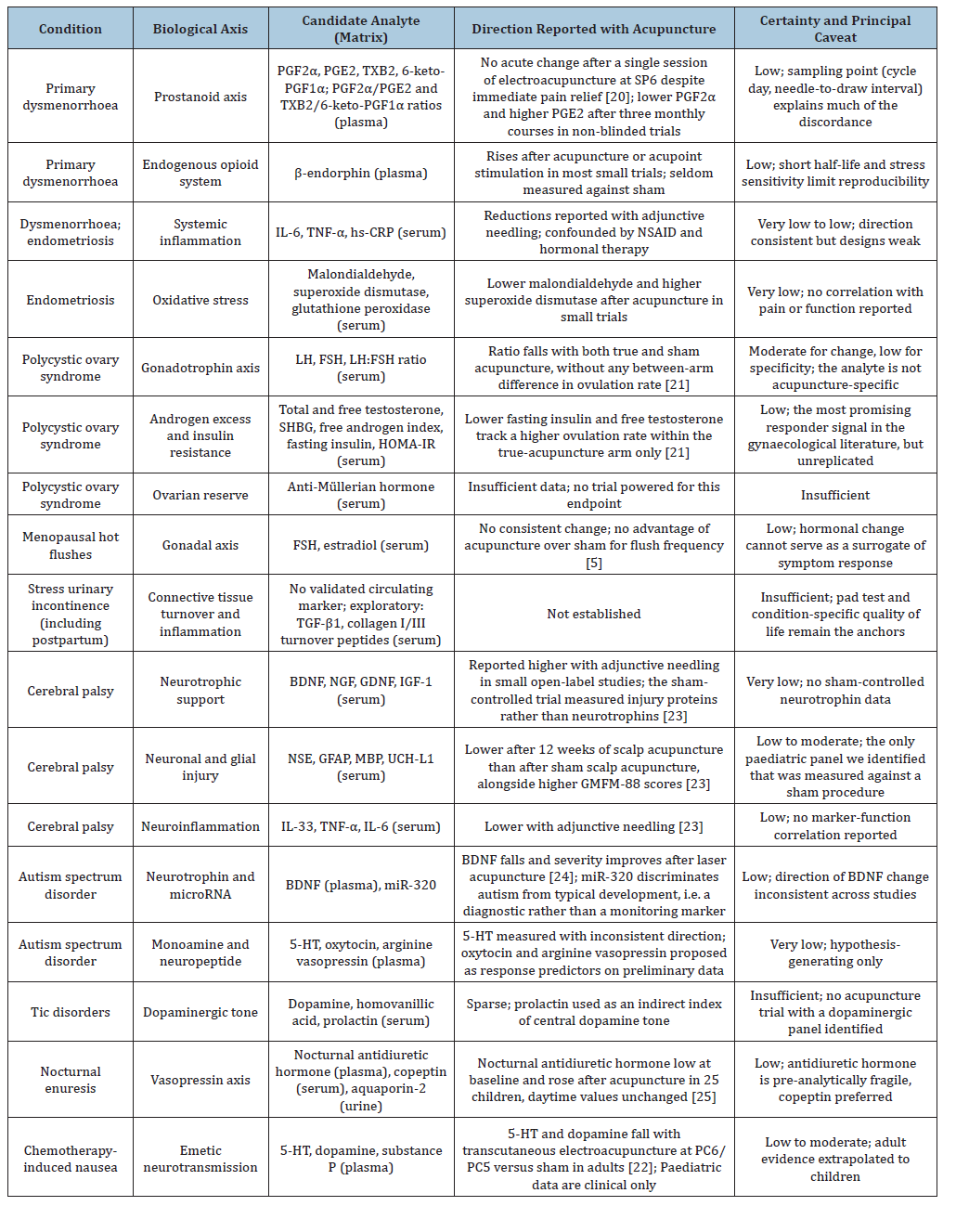
Table 2 summarises the principal findings and their certainty, and (Table 1) sets out the candidate plasma and serum markers that could be used to monitor them. Five practice implications follow. First, define the functional target before the first session. Useful baseline measures include a numeric pain scale, the International Consultation on Incontinence Questionnaire, a one-hour pad test, the Gross Motor Function Measure, the Yale Global Tic Severity Scale and a bladder diary. Repeating these at fixed intervals keeps acupuncture accountable to function rather than to sensation.
Table 1: Rehabilitation-relevant evidence for acupuncture in gynaecological and paediatric conditions.
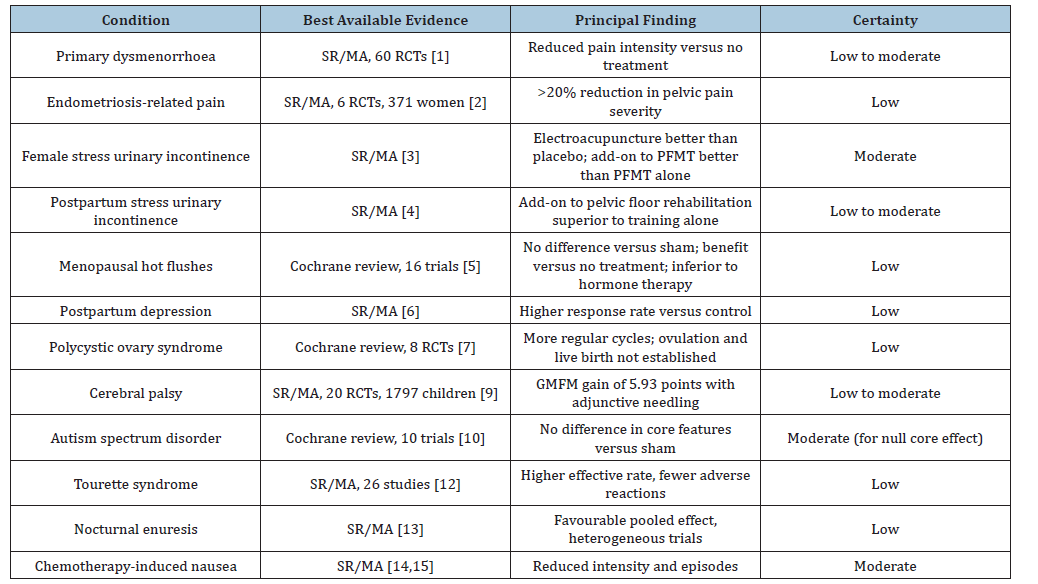
Table 2: Candidate plasma and serum biomarkers for monitoring acupuncture response in gynaecological and paediatric rehabilitation.
Second, treat needling as a priming intervention. Sessions are commonly scheduled once or twice weekly for 8 to 12 sessions, with active therapy placed in the hours that follow needling when soreness and tone are lowest. This sequencing is a pragmatic inference from mechanism rather than a validated protocol, and it should be documented so that it can be tested. Third, integrate rather than isolate. The strongest signals in this review come from add-on designs, in which needling was compared with the same rehabilitation programme plus sham or plus nothing [5,6,11]. Departments should therefore resist the temptation to create parallel acupuncture clinics detached from therapy planning.
Fourth, report transparently. Adherence to the STRICTA recommendations, registration of pragmatic trials, and collection of participation-level outcomes would substantially improve the usefulness of future studies. Fifth, collect a small biochemistry panel alongside the functional outcomes. Table 1 identifies what is worth measuring and, equally, what is not yet worth measuring. The panel should be fixed before the first session, sampled at a standardised point in the cycle or the day, reported as change with confidence intervals, and correlated with the functional endpoint. A marker that does not track function should be dropped from the next protocol rather than reported as a mechanism.
Limitations and Research Agenda
This review is narrative and selective; it was not prospectively registered, did not use duplicate independent screening, and did not perform formal risk-of-bias or GRADE appraisal for each included study. Certainty judgements in (Table 2) are therefore indicative. Four limitations recur across the primary literature. Most trials have been conducted in a single country and published in Chinese, raising questions about external validity and selective reporting. Blinding of practitioners is impossible and blinding of participants is imperfect, so expectancy effects cannot be excluded. Co-interventions, especially rehabilitation training, are often poorly described, which makes it impossible to determine whether needling added value or merely added contact time. Follow-up rarely extends beyond three months, so durability is unknown, and outcomes are usually symptom scores rather than activity and participation measures.
Biomarker evidence carries limitations of its own. Assays are rarely standardised across centres: the same analyte may be measured in serum or in plasma, at different cycle days, with different kits and different limits of detection, and inter-kit variability for BDNF and for the prostanoids is large relative to the effects reported. Almost all studies present within-group change rather than a between-group comparison against sham, so a fall in PGF2α or a rise in BDNF cannot be attributed to needling rather than to time, co-intervention or expectancy. Samples are small and the analytes are usually secondary or exploratory outcomes that were never adjusted for multiplicity. Finally, the diagnostictest framework that would establish a marker’s discrimination, calibration and effect on management has, to our knowledge, not been applied to any candidate marker of acupuncture response; the certainty ratings in (Table 1) should be read in that light. Priority studies would include pragmatic trials of needling embedded in protocolised rehabilitation, factorial designs that separate needling from co-intervention intensity, assessment of whether needling improves adherence to PFMT and to home exercise, and economic evaluation in paediatric and postpartum services where the alternative is long-term pharmacotherapy.
Conclusion
Within PM&R, acupuncture is best understood as a modulator of the conditions that limit participation: pain, tone, pelvic floor dysfunction, nausea and sleep disruption. The evidence is strongest where needling is added to an established rehabilitation programme, as in stress urinary incontinence and cerebral palsy, and weakest where it is offered as a substitute for behavioural or developmental intervention. For gynaecological and paediatric patients, the pragmatic position is neither advocacy nor dismissal: use acupuncture as a time-limited, function-oriented adjunct, measure what matters, and stop it when function does not improve. Biochemistry should follow function rather than replace it: a fall in PGF2α or a rise in BDNF is informative only when it travels with a measured gain in activity, and a marker that changes while the patient does not should be treated as a hypothesis rather than as a result.
References
- Zhao ZQ (2008) Neural mechanism underlying acupuncture analgesia. Prog Neurobiol 85(4): 355-375.
- Xu YS, Wu CX, Yu W, Guo HJ, Lu LM, et al. (2024) Systematic review and meta-analysis of brain plasticity associated with electroacupuncture in experimental ischemic stroke. J Tradit Chin Med 44(5): 859-870.
- Woo HL, Ji HR, Pak YK, Lee H, Heo SJ, et al. (2018) The efficacy and safety of acupuncture in women with primary dysmenorrhea: A systematic review and meta-analysis. Medicine (Baltimore) 97(23): e11007.
- Giese N, Kwon KK, Armour M (2023) Acupuncture for endometriosis: A systematic review and meta-analysis. Integr Med Res 12(4): 101003.
- Jiang T, Dong ZY, Shi Y, Zhou YQ, Zhang HB, et al. (2024) Efficacy and safety of acupuncture monotherapy or combined with pelvic floor muscle training for female stress urinary incontinence: A systematic review and meta-analysis. Front Med (Lausanne)11: 1499905.
- Chu W, Deng X, Gao L, Gao X (2025) Acupuncture combined with pelvic floor rehabilitation training for postpartum stress urinary incontinence: A systematic review and meta-analysis. Clin Rehabil 39(5): 618-631.
- Dodin S, Blanchet C, Marc I, Ernst E, Wu T, et al. (2013) Acupuncture for menopausal hot flushes. Cochrane Database Syst Rev 2013(7): CD007410.
- Li W, Yin P, Lao L, Xu S (2019) Effectiveness of acupuncture used for the management of postpartum depression: A systematic review and meta-analysis. Biomed Res Int 2019: 6597503.
- Lim CED, Ng RWC, Xu K, Cheng NCL, Xue CCL, et al. (2016) Acupuncture for polycystic ovarian syndrome. Cochrane Database Syst Rev 3(5): CD007689.
- Li LX, Zhang MM, Zhang Y, He J (2018) Acupuncture for cerebral palsy: A meta-analysis of randomized controlled trials. Neural Regen Res 13(6): 1107-1117.
- Cheng YY, Huang YY, Yang TH, Chang YJ, Fu RH, et al. (2024) Acupuncture and acupoints for managing pediatric cerebral palsy: A meta-analysis of randomized controlled trials. Healthcare (Basel) 12(17): 1780.
- Cheuk DKL, Wong V, Chen WX (2011) Acupuncture for autism spectrum disorders (ASD). Cochrane Database Syst Rev (9): CD007849.
- Lee B, Lee J, Cheon JH, Sung HK, Cho SH, et al. (2018) The efficacy and safety of acupuncture for the treatment of children with autism spectrum disorder: A systematic review and meta-analysis. Evid Based Complement Alternat Med 2018:1057539.
- Lai S, Wan H, Deng F, Li Y, An Y, et al. (2025) Efficacy and safety of acupuncture for tourette syndrome in children: A meta-analysis and systematic review. Clin Pediatr (Phila) 64(5): 719-735.
- Lv ZT, Song W, Wu J, Yang J, Wang T, et al. (2015) Efficacy of acupuncture in children with nocturnal enuresis: A systematic review and meta-analysis of randomized controlled trials. Evid Based Complement Alternat Med 2015: 320701.
- Mora DC, Overvag G, Jong MC, Kristoffersen AE, Stavleu DC, et al. (2022) Complementary and alternative medicine modalities used to treat adverse effects of anti-cancer treatment among children and young adults: A systematic review and meta-analysis of randomized controlled trials. BMC Complement Med Ther 22(1): 97.
- Martinez Garcia E, Nishishinya Aquino MB, Cruz Martinez O, Ren Y, Xia R, et al. (2024) Efficacy and safety of acupuncture and related techniques in the management of oncological children and adolescent patients: A systematic review. Cancers (Basel) 16(18): 3197.
- Adams D, Cheng F, Jou H, Aung S, Yasui Y, et al. (2011) The safety of pediatric acupuncture: A systematic review. Pediatrics 128(6): e1575-e1587.
- Ian JM (2018) Evaluation of diagnostic tests in human health and disease. J Clin Path Lab Med 2(1): 13-15.
- Shi GX, Liu CZ, Zhu J, Guan LP, Wang DJ, et al. (2011) Effects of acupuncture at sanyinjiao (SP6) on prostaglandin levels in primary dysmenorrhea patients. Clin J Pain 27(3): 258-265.
- Pastore LM, Williams CD, Jenkins J, Patrie JT (2011) True and sham acupuncture produced similar frequency of ovulation and improved LH to FSH ratios in women with polycystic ovary syndrome. J Clin Endocrinol Metab 96(10): 3143-3150.
- Xu JB, Tong GL (2023) Efficacy and mechanism of scalp acupuncture for spastic cerebral palsy. Zhongguo Zhen Jiu 43(2): 163-169.
- Elsheikh MS, Ashaat EA, Ramadan A, Mohamed NH, Elaraby NM, et al. (2023) Efficacy of laser acupuncture for children with autism spectrum disorder: Clinical, molecular, and biochemical study. Pediatr Neurol 147: 44-51.
- Zhang LH, Chen YS, Li HW, Wang JY (2011) Influence of acupuncture and moxibustion on plasma antidiuretic hormone in children with nocturnal enuresis. Chin J Birth Health Hered 19(4): 110-111.
- Zhang X, Jin HF, Fan YH, Lu B, Meng LN (2014) Effects and mechanisms of transcutaneous electroacupuncture on chemotherapy-induced nausea and vomiting. Evid Based Complement Alternat Med 2014: 860631.
© 2026 Qiancheng Mao. This is an open access article distributed under the terms of the Creative Commons Attribution License , which permits unrestricted use, distribution, and build upon your work non-commercially.
Editor In Chief






.jpg)































Signup for Newsletter

Quick Links
 Editorial Board Registrations
 Submit your Article
 Best Paper of the Volume
 Reprints
 Refer a Friend
 Advertise With Us
Our Recent Edition



Top Editors




.jpg)

















.bmp)
.jpg)
.png)
.jpg)












.jpg)






.png)

.png)




.png)




Financial Support

Sponsors

Latest e-Books

Latest Video

 a Creative Commons Attribution 4.0 International License. Based on a work at www.crimsonpublishers.com.
Best viewed in

 | Above IE 9.0 version