

- About Us
- Information
-

The Author ensures that the research has been conducted responsibly and ethically with adherence to all relevant regulations. read more..
- For Authors
- For Reviewer
- Manuscript Guidelines
- Membership
- Publication Ethics
-
- Journals
- Reprints
- e-Books
- Videos
- Policies
- Contact Us
 COVID-19
- Submissions



Full Text
Examines in Marine Biology & Oceanography
Seasonal Occurrence and Fishery Exploitation of the Endangered Giant Devil Ray (Mobula mobular Bonnaterre, 1788) off the Mediterranean Coast of the Gaza Strip, Palestine
Abdel Fattah N Abd Rabou*
Department of Biology & Biotechnology, Faculty of Science, Islamic University of Gaza, Gaza Strip, Palestine
*Corresponding author: Abdel Fattah N Abd Rabou, Department of Biology & Biotechnology, Faculty of Science, Islamic University of Gaza, P.O.Box 108, Gaza Strip, Palestine
Submission: April 27, 2026;Published: May 14, 2026
ISSN 2578-031X Volume 8 Issue 2
Abstract
The Giant Devil Ray (Mobula mobular Bonnaterre, 1788) is an endangered pelagic mobulid ray and one of the most vulnerable elasmobranchs in the Mediterranean Sea because of its slow growth, delayed maturity, and extremely low reproductive output. Despite its regional conservation importance, information on its occurrence and fishery interactions in the southeastern Mediterranean remains limited. The present study investigated the seasonal occurrence, fishery capture, utilization, conservation awareness, and management status of the species along the approximately 42km Mediterranean coast of the Gaza Strip, Palestine. Data were obtained through field observations at landing sites, market surveys, interviews with fishermen and the General Directorate of Fisheries at the Ministry of Agriculture, photographic documentation, and review of available literature. Results showed that the Giant Devil Ray occurs seasonally in Gaza Strip coastal waters, mainly between February and April, when large aggregations approach nearshore areas and become accessible to artisanal fisheries. Fishing activity was concentrated 6-12 nautical miles offshore and involved both targeted and incidental capture using purse seines, gillnets, trawls, and occasionally longlines. Landed specimens were dominated by mature size classes, commonly measuring 200-350cm disc width, while larger individuals exceeded 500cm and 700-800kg; juveniles were rarely observed. Catch levels varied considerably among years, with the most exceptional event recorded in 2013 when more than 500 individuals were reportedly landed within a few days. All captured rays were fully utilized for local consumption, with meat sold fresh in markets at affordable prices and sometimes distributed through informal transport systems including equine-drawn carts. Although fisheries authorities and some fishermen showed awareness of the threatened status of the species, effective management, monitoring, seasonal protection, and enforcement measures remain limited. No preserved reference specimens were found in Palestinian academic collections, indicating broader institutional constraints in research capacity and biodiversity documentation. In contrast, local awareness initiatives were undertaken, including a specialized workshop organized in 2013 by the Islamic University of Gaza in cooperation with fisheries authorities following the exceptional capture event. The study identifies the Gaza Strip coast as a potentially important seasonal habitat for the Giant Devil Ray and demonstrates how predictable aggregations, artisanal fishing pressure, weak governance capacity, and socioeconomic hardship combine to create a high-risk conservation scenario. Immediate seasonal protection, regular monitoring, community-based awareness programs, and regionally coordinated management are urgently needed to safeguard this iconic Mediterranean species.
Keywords:Giant Devil Ray; Mobula mobular; Mediterranean Sea; Artisanal fisheries; Seasonal aggregations; Bycatch; Fishery interactions; Elasmobranch conservation; Endangered species; Gaza Strip; Palestine
Introduction
Cartilaginous fishes (Class Chondrichthyes), including sharks, rays, and chimaeras, represent an ecologically important yet highly vulnerable component of marine biodiversity worldwide. In the Mediterranean Sea, these taxa have experienced substantial declines due to overfishing, bycatch, habitat degradation, and other anthropogenic pressures [1-3]. Their life-history characteristicssuch as slow growth, late maturity, and low fecundity-make them particularly susceptible to population depletion and hinder their recovery once impacted [4,5]. As a result, many Mediterranean elasmobranchs are currently listed under threatened categories, emphasizing the urgent need for region-specific research and conservation efforts. The Mediterranean coast of the Gaza Strip constitutes a relatively small yet ecologically significant segment of the southeastern Levantine Basin. Despite its limited spatial extent, this coastal zone supports a diversity of cartilaginous fishes that are frequently encountered through artisanal fisheries, bycatch, strandings, and opportunistic sightings [6]. Historically, research on marine biodiversity in the Gaza Strip has been limited, with early efforts highlighting the need for systematic scientific investigation into marine environments and fisheries resources [7]. More recent studies have begun to document the occurrence and status of several threatened elasmobranch species in the area, including the Whale Shark (Rhincodon typus), guitarfishes (Glaucostegus cemiculus and Rhinobatos rhinobatos), the Spiny Butterfly Ray (Gymnura altavela), the Angular Roughshark (Oxynotus centrina), and the Scalloped Hammerhead (Sphyrna lewini) [8-12]. In addition, electric rays such as the Marbled Electric Ray (Torpedo marmorata) and the Common or Eyed Electric Ray (Torpedo torpedo) have been documented as part of local bycatch, further illustrating the diversity of cartilaginous fishes interacting with the Gaza Strip fisheries [13].
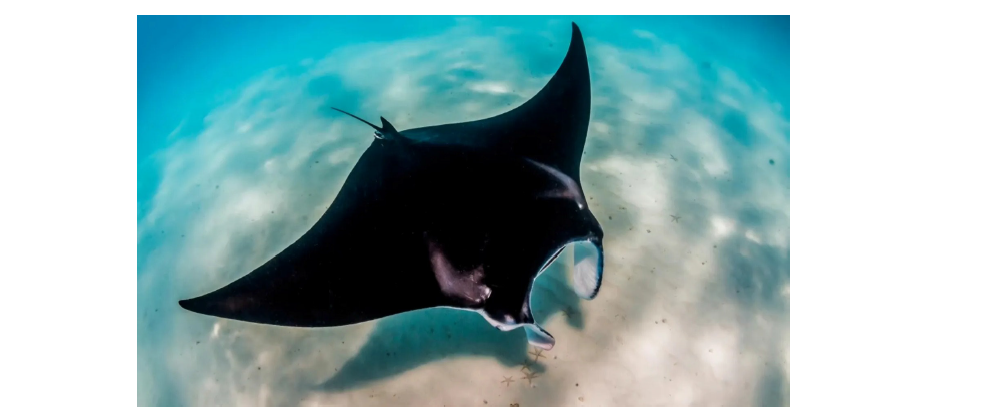
Within this assemblage, the Giant Devil Ray, Mediterranean Devil Ray, Devil Fish, Devil Ray, or Giant Mobula (Mobula mobular Bonnaterre, 1788), stands out as one of the most distinctive and conservation-sensitive species. It is the only mobulid ray regularly occurring in the Mediterranean Sea (Figure 1) and is considered largely endemic to this basin [14-16], despite earlier reports of the Spinetail Devil Ray (Mobula japanica Müller & Henle, 1841), from Mediterranean coastal waters by Capapé et al. [17] and Rafrafi-Nouira et al. [18], and from Turkish coastal waters by Sakalli et al. [19]. The Giant Devil Ray, a large pelagic filter feeder, plays a significant ecological role in marine food webs by linking planktonic productivity to higher trophic levels [4]. However, like other mobulids, The Giant Devil Ray exhibits K-selected life-history traits, including slow growth, delayed maturity, and extremely low reproductive output, typically producing a single pup per reproductive cycle [4,5]. These biological constraints, combined with increasing anthropogenic pressures, have led to its classification as Endangered [14,15].
Figure 1:The Giant Devil Ray (Mobula mobular Bonnaterre, 1788) seems to be the only mobulid ray regularly occurring
in the Mediterranean Sea.
[Source: https://www.aljazeera.net/programs/2023/3/15/].
Across the Mediterranean, records of the Giant Devil Ray are generally sparse and geographically scattered, often derived from incidental captures, strandings, or opportunistic sightings [20,21]. Documented occurrences span the Adriatic, central, and eastern Mediterranean regions, including the coasts of Italy, Tunisia, Algeria, Turkey, and the Levant [22-26]. Environmental variables such as sea surface temperature, productivity, and oceanographic conditions have been shown to influence its spatial distribution and seasonal movements [27,28]. Furthermore, recent studies have revealed complex behavioral patterns, including extensive horizontal migrations and deep-diving behavior linking surface and mesopelagic environments [29-31]. In contrast to its generally rare and sporadic occurrence elsewhere in the Mediterranean, the coastal waters of the Gaza Strip represent a unique hotspot for the Giant Devil Ray. Notably, this region hosts the only welldocumented, seasonally targeted fishery for the species in the entire Mediterranean basin [32-34]. This artisanal fishery typically operates during a short seasonal window between late winter and early spring, when large aggregations of Giant Devil Rays approach nearshore waters and become accessible to purse seine nets [33]. The predictability of these aggregations suggests that the Gaza Strip coast may serve as a critical habitat, potentially linked to feeding, reproduction, or migratory behavior. The ecological significance of such aggregation sites is well recognized for mobulid rays, as they often represent essential habitats that concentrate individuals in space and time, thereby increasing their vulnerability to fishing pressure [35,36]. Similar aggregation phenomena have been reported in other regions and are frequently associated with high productivity zones or specific oceanographic features [37,38]. However, the exploitation of these aggregations, particularly in small-scale fisheries, poses serious conservation challenges given the species’ low reproductive capacity and endangered status [5,39].
In the Gaza Strip, the capture of cartilaginous fishes, including the Giant Devil Ray, occurs primarily through artisanal fishing practices that target a variety of species or result in incidental bycatch [6,7]. Socio-economic factors, including food insecurity and limited fishing opportunities, may further influence the exploitation of large marine species, sometimes leading to the utilization of endangered fauna for local consumption [40-42]. These pressures, combined with broader environmental challenges such as pollution, climate change, and habitat degradation, may exacerbate the vulnerability of local elasmobranch populations [43,44]. Despite the recognized importance of the Gaza Strip coast as a key area for the Giant Devil Ray, available data on its occurrence, population structure, and fishery interactions remain limited and fragmented. Most existing information is derived from a small number of studies and observational reports, underscoring the need for comprehensive and updated research. Such efforts are essential not only for improving scientific understanding of the species but also for informing conservation and management strategies at both local and regional scales. Accordingly, the present study aims to provide a detailed assessment of the occurrence and fishery capture of the Endangered Giant Devil Ray (Mobula mobular Bonnaterre, 1788) along the Mediterranean coast of the Gaza Strip, Palestine. By integrating available literature, fisheries data, and field observations, this work seeks to contribute to the growing body of knowledge on cartilaginous fishes in the region and to support the development of effective conservation measures for this iconic and threatened species.
Methodology
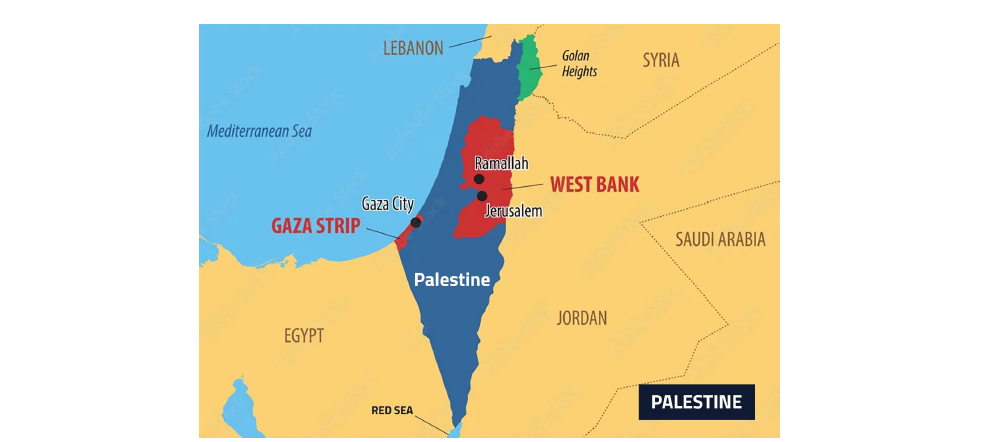
Field data were collected along the ~42km Mediterranean coast of the Gaza Strip, focusing on major artisanal landing sites during the peak season of the Giant Devil Ray (Mobula mobular Bonnaterre, 1788) from February to April, when nearshore aggregations occur. The area is characterized by intensive small-scale fisheries operating over a narrow continental shelf and targeting diverse pelagic and demersal species, including cartilaginous fishes [6,7,45]. Data recorded included numbers of individuals, fishing gear, and basic measurements (e.g., estimated weight and size). Additional records of other cartilaginous fishes, along with interviews with fishermen, fishmongers and the General Directorate of Fisheries at the Ministry of Agriculture, supplemented the dataset. Literature, market observations, and photographs were also used for validation. Data were analyzed descriptively, and results are considered indicative due to the artisanal nature of the fishery. The Gaza Strip (365km2), located along the southeastern Mediterranean coast (Figure 2), supports a population of about 2.4 million people. Its fisheries sector is vital for food security, employment, and socio-economic stability, sustaining over 4,500 fishermen operating around 1,800 mostly small, motorized or oar-powered vessels. A variety of fishing gears-including gillnets, trammel nets, longlines, handlines, and trawlers-are used to target diverse pelagic and demersal fishes [45]. Cartilaginous fishes are mainly captured as bycatch, though they are occasionally targeted.
Figure 2:Map of Palestine showing the location of the Gaza Strip along the southeastern Mediterranean coast.
Result
Morphology, identification, and size characteristics
The Giant Devil Ray, locally known as “Watwat” in the Gaza Strip and parts of Palestine (meaning “bat”; plural: “Wataweet”), is among the largest ray species recorded in the Mediterranean Sea off the Gaza Strip. Captured individuals are distinguished by a broad diamond-shaped disc, elongated wing-like pectoral fins, and a relatively small head. A key diagnostic feature is the paired cephalic fins (horn-like lobes) on the anterior margin of the head, which guide plankton toward the mouth during filter feeding and likely inspired the common name “Devil Ray”. The dorsal surface is typically dark blue to black, whereas the ventral side is pale or whitish. The tail is long, slender, and whip-like, and no stinger was observed in examined individuals. Landed specimens in the Gaza Strip are predominantly large, commonly measuring 200-350cm disc width and weighing approximately 300-600kg. During peak seasonal aggregations, larger individuals may reach 400-500cm and may exceed 700-800kg, whereas juveniles and small individuals (<150cm) are rarely encountered.
Seasonal occurrence, fishery history, and spatial distribution
The capture of Giant Devil Rays along the Gaza Strip coast has been reported for several decades by fishermen and fisheries authorities, indicating that it represents a long-established seasonal component of artisanal fisheries. The fishery occurs mainly between February and April, when the species forms dense nearshore aggregations in the eastern Mediterranean. Fishing activity is concentrated along the continental shelf of the Gaza Strip, typically 6-12 nautical miles offshore (1 nautical mile=1.852 kilometers), within the operational range of the local fishing fleet. Along the approximately 42km coastline, effort is unevenly distributed and focused in areas where favorable ecological conditions, fish movement, and fishing accessibility overlap. Outside the main season, records are scarce, suggesting temporary coastal presence and offshore habitat use during the remainder of the year.
Catch dynamics, interannual variability, and population structure
Catch records reveal marked fluctuations among years, likely influenced by fishing effort, aggregation intensity, and environmental conditions. The highest documented landings occurred between 2012 and 2016, when several hundred individuals were reported during peak seasons. In many other years, catches were lower and often remained below 100 individuals per season, although occasional spikes occurred. Across all years, landings were strongly dominated by large-bodied individuals, particularly those measuring 200-350cm disc width, with some exceptionally large rays reaching 400-500cm. Juveniles were rarely observed, indicating that fisheries interactions mainly involve mature aggregations rather than younger life stages.
Fishing practices and gear interactions
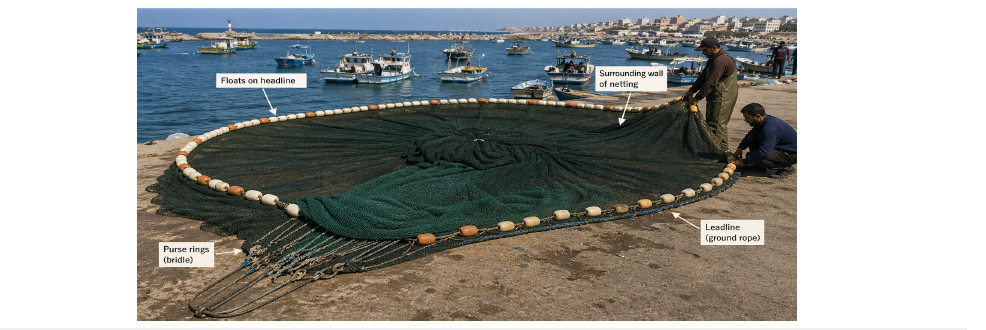
The fishery includes both targeted and incidental capture, with success closely linked to the species’ seasonal aggregation behavior. Purse seine nets “shanshula” represent the principal targeted method, especially when surface schools are visible, and may capture several individuals in a single operation (Figure 3). Gillnets (set nets and driftnets) also contribute substantially through bycatch, as rays become entangled while moving through fishing grounds. Mortality in such cases is often high because of stress and injury. Bottom and pelagic trawls occasionally capture individuals incidentally and may cause severe body damage. Longlines represent a rare and largely accidental interaction pathway, as the species is not actively attracted to baited hooks.
Figure 3:Purse seine net (Shanshula) used by artisanal fishermen at Gaza fishing harbor, Mediterranean coast of the Gaza Strip, Palestine. The gear is characterized by a surrounding wall of netting fitted with floats on the headline and used mainly to encircle schooling pelagic fish.
Drivers of capture: Socioeconomic and ecological factors
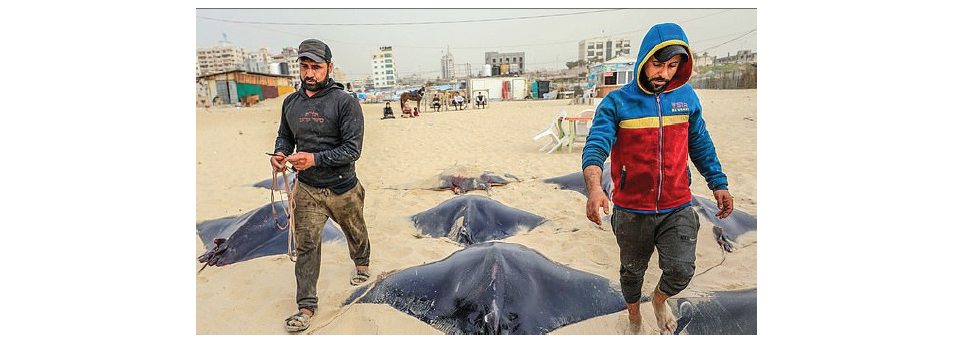
The capture of Giant Devil Rays in the Gaza Strip is shaped by interacting ecological opportunity and socioeconomic necessity rather than by a fully specialized target fishery. Severe economic hardship has made fishing a primary livelihood for many households, and the large biomass of captured rays provides Gazan fishermen with a temporary yet significant source of income (Figure 4). Restricted access to offshore fishing grounds reduces catch diversity and increases dependence on species available within accessible waters. Although many rays are initially caught as bycatch, they are commonly retained because release is difficult and their meat has market value. Seasonal coastal aggregations further increase vulnerability to fishing gears, causing periodic spikes in landings. Weak enforcement of conservation regulations and continued local demand for affordable protein also reinforce the landing and sale of captured individuals.
Figure 4:The substantial biomass of captured Giant Devil Rays provides Gazan fishermen with a temporary yet significant source of income.
Catch handling, utilization, and market distribution
Handling practices vary according to gear type but generally lead to rapid use of landed individuals. Purse seine operations often land multiple rays simultaneously, whereas gillnet and trawl captures usually involve fewer specimens. Most individuals are brought ashore by fishing boats either dead or in poor condition as a result of capture stress (Figure 5A). Due to their relatively large size, the samples are usually hauled by ropes from landing points on the beach to nearby processing sites on the beach sands away from the seawater (Figure 5(B-E)), where they are sorted and prepared, often upside down to stabilize the body during cutting (Figure 5(F-I)). No whole-fish discarding was observed, indicating nearly complete utilization. Processed meat is sold fresh in markets throughout the Gaza Strip, especially during the main fishing season. Traditional culinary preparations include frying, grilling, and Sayadieh (fish with rice, onions, and spices). Market availability is highly seasonal, and the meat is generally sold at relatively affordable prices.
Figure 5:Management of captured Giant Devil Rays (Mobula mobular Bonnaterre, 1788) on the Gaza Strip coast: (A) Fishermen transport Devil Ray specimens from the sea to the shore aboard fishing boats, where they are unloaded individually; (B-E) due to their relatively large size and weight, specimens are hauled ashore using ropes and dragged away from the waterline; and (F-I) the specimens are arranged on the beach sand in full view of local residents who gather to observe.

Consumer preferences and economic substitution
Despite its seasonal availability, Giant Devil Ray meat is not generally considered a preferred or premium seafood product in the Gaza Strip when compared with commonly consumed other fish species. Consumption is largely opportunistic and increases during periods of economic hardship because the meat is affordable and available in large quantities. Consumers often favor other fish species with more familiar taste, texture, or higher cultural value. Consequently, ray meat occupies a secondary dietary position, with demand driven more by price and accessibility than by culinary preference.
Transport and informal supply chains
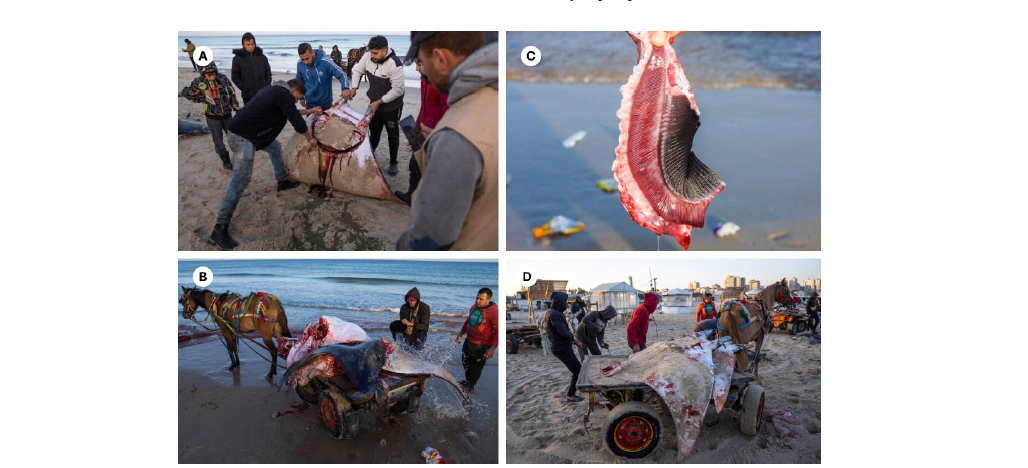
Following landing and initial processing (Figure 6A & 6B), Giant Devil Rays or their meat are commonly transported using equine-drawn carts (horses, donkeys, and mules), as documented during field observations (Figure 6C & 6D). This practice remains important because of fuel shortages, high transportation costs, damaged infrastructure and the sandy nature of coastal landing areas, where motorized vehicles are less practical. In some cases, tuk-tuk vehicles are also used. These low-cost transport systems facilitate movement of heavy catches from landing sites to markets, urban neighborhoods, and refugee camps, particularly during the February–April peak season.
Figure 6:The captured Giant Devil Rays are processed on the beach by being cut into large and small pieces, and then loaded onto horse-drawn carts for transport and subsequent sale in markets and streets across the Gaza Strip
The 2013 exceptional fishing season
The 2013 season represented one of the most remarkable and widely documented Giant Devil Ray fisheries in the Mediterranean region. In late February 2013, large schools appeared in the Gaza Strip coastal waters, particularly near the southern sector. Fishermen captured exceptionally high numbers, with reports indicating that more than 500 individuals were landed within several days, making it the largest recorded harvest in the Gaza Strip. Many weighed 150-250kg, while larger specimens reached several hundred kilograms. This unusual event was likely driven by seasonal aggregation behavior, near-surface swimming, and temporary expansion of the permitted fishing zone following the 2012 ceasefire, which allowed access to deeper waters. Contrary to early suggestions of natural stranding, later investigations confirmed active capture using large encircling nets. Once landed, rays were butchered on beaches and sold at low prices because of sudden abundance. While the event provided rare economic benefits to fishermen under Israeli blockade conditions, it also raised major conservation concerns because the species is globally threatened and highly vulnerable to overexploitation.
Conservation awareness and management gaps
The General Directorate of Fisheries at the Ministry of Agriculture in the Gaza Strip, and to a lesser extent some fishermen, are aware that the Giant Devil Ray is listed as Endangered (EN) by the IUCN. However, this awareness has not been effectively translated into fisheries management, monitoring, or enforcement measures. As a result, substantial numbers of individuals continue to be captured during peak aggregation periods in late winter and early spring. In addition, no preserved reference specimens of the Giant Devil Ray were found in Palestinian university museums or local academic collections, reflecting broader institutional gaps in scientific documentation, public awareness, and research capacity concerning the conservation of this threatened species.
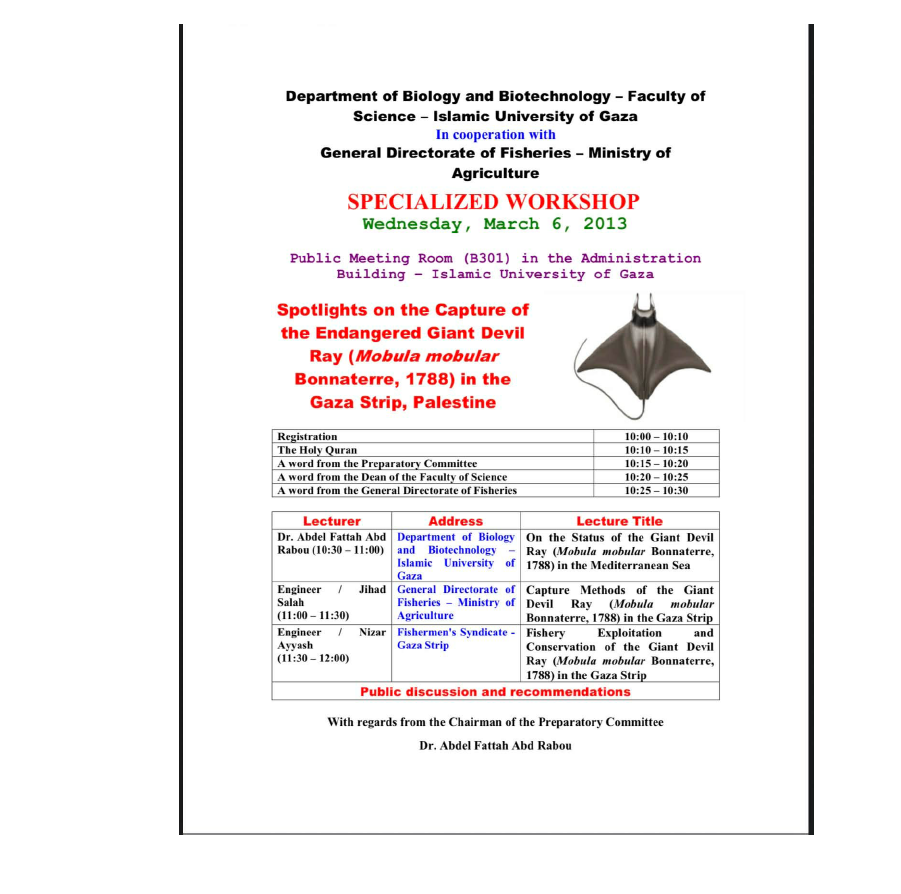
On the other hand, the Department of Biology and Biotechnology at the Islamic University of Gaza, in cooperation with the General Directorate of Fisheries at the Ministry of Agriculture, organized a specialized workshop on the capture of endangered Giant Devil Rays in the Gaza Strip, Palestine (Figure 7). The workshop aimed to raise awareness among academics, university students, and fishermen about the largest ray species in the Mediterranean Sea. It was held on March 6, 2013, following the exceptional event in which more than 500 sizable Giant Devil Rays were caught within a short period. The workshop was attended by academics, stakeholders, and students, and concluded with important recommendations primarily focused on the protection and conservation of threatened species within the marine ecosystem of the Gaza Strip, Palestine.
Figure 7:Schedule of the specialized workshop on the capture of endangered Giant Devil Rays in the Gaza Strip, Palestine, organized by the Department of Biology and Biotechnology at the Islamic University of Gaza, in cooperation with the General Directorate of Fisheries at the Ministry of Agriculture, on March 6, 2013.
Media coverage of Giant Devil Ray captures
The capture of Giant Devil Rays in the Gaza Strip attracted broad local and international media attention because of the unusual scale of landings, their economic value to fishermen, and the conservation implications of harvesting an endangered species. Headlines emphasized mystery, abundance, livelihood benefits, and ecological concern. Examples include: Gazans make huge catch of rare Devil Ray; Mystery of Giant Devil Rays off the Gaza Strip solved; Gazan fishermen catch hundreds of Giant Devil Rays in rare seasonal haul; and Fishermen in Gaza selling Devil Ray carcasses despite them being endangered.
Social media reactions
In addition to formal media coverage, social media platforms widely discussed Giant Devil Ray captures in the Gaza Strip. Many posts praised the resilience of Gazans and viewed the catches as divine provision during hardship, while others criticized the harvest of rare marine wildlife. Some posts celebrated the event as a blessing and source of livelihood, whereas others questioned the ethics of exploiting an endangered species. This mixed reaction reflects the tension between humanitarian realities, cultural perceptions, and conservation values.
Discussion
The present study confirms that the Mediterranean coast of the Gaza Strip, Palestine, constitutes one of the most important currently documented seasonal occurrence areas for the Giant Devil Ray (Mobula mobular Bonnaterre, 1788) in the eastern Mediterranean. While records of the species from many Mediterranean countries are often sporadic and based on isolated captures, strandings, or opportunistic sightings, the Gaza Strip shows a repeated and predictable seasonal pattern associated with fishery interactions. Similar scattered records have been reported from Algeria, Tunisia, Turkey, the Adriatic Sea, and other Mediterranean sectors [20- 24,26,38,46-48]. In contrast, the recurrence of captures in the Gaza Strip suggests that this coastal zone may represent a localized hotspot of ecological importance rather than a random area of occurrence. The strong seasonality observed between February and April indicates that the species likely uses the Gaza Strip coastal waters temporarily during a specific phase of its annual movement cycle. Seasonal presence of mobulid rays is frequently linked to environmental conditions such as plankton pulses, thermal structure, frontal systems, and localized productivity that enhance feeding opportunities [28,35,49]. Because the southeastern Levantine Basin is generally considered oligotrophic, predictable aggregations near the Gaza Strip may reflect localized oceanographic processes that temporarily concentrate prey resources. Such habitat use has been recognized elsewhere in the Mediterranean, where Giant Devil Rays show selective use of productive zones and shelf-associated habitats [14,50,51].
The dominance of large individuals in landings, together with the rarity of juveniles, is one of the most significant findings of this study. Most captured rays fell within mature size classes, suggesting that the Gaza Strip fisheries primarily interact with adult aggregations. This pattern may indicate that the area functions as a feeding ground, reproductive meeting site, or migratory staging area used mainly by subadults and adults. Similar ontogenetic habitat partitioning has been described in elasmobranchs, where juveniles occupy different habitats than adults to reduce predation risk or optimize growth conditions [52]. If juvenile Giant Devil Rays occur offshore or in deeper waters beyond the reach of local fisheries, the apparent absence of smaller size classes in catches would be expected. From a conservation perspective, the removal of large mature individuals is especially concerning. Mobulid rays are among the least productive elasmobranchs because of slow growth, delayed maturity, and extremely low fecundity, with females generally producing a single pup per reproductive cycle [4,5]. Consequently, sustained fishing mortality on reproductive adults can have disproportionate population effects, even when catches are seasonal or geographically restricted. This demographic sensitivity has been repeatedly highlighted as a central reason for global declines in manta and devil rays [36,53,54].
The concentration of fishing effort within 6-12 nautical miles offshore in the Gaza Strip demonstrates a direct overlap between accessible artisanal fishing grounds and the seasonal distribution of the species. Such spatial overlap increases vulnerability because aggregating animals become predictable and repeatedly exposed to fishing gears. Aggregation fisheries are widely recognized as high-risk systems because they remove individuals when they are naturally concentrated in space and time [35]. Even modest fishing fleets can exert substantial mortality under these circumstances, particularly where animals school near the surface and are easily detected. The observed interaction with multiple gear types further amplifies risk. Purse seines were the principal gear used during visible aggregations, but gillnets, trawls, and occasionally longlines also contributed to capture. Multi-gear exposure creates cumulative mortality that may exceed that inferred from targeted catches alone. Similar patterns have been reported in other mobulid fisheries, where directed landings are only one component of total fishing pressure and bycatch in diverse fisheries can be equally important [55-58]. Entanglement in gillnets is particularly problematic because mobulids possess broad pectoral fins and depend on continuous swimming for effective ventilation, reducing the likelihood of survival after prolonged capture.
Marked interannual variation in catches suggests that annual landings should not be interpreted simply as indicators of population abundance. Instead, fluctuations likely reflect changes in aggregation size, detectability, oceanographic conditions, fishing effort, and possible limitations in fisheries reporting systems. Similar variability has been documented in mobulid ray sightings and catches elsewhere, where climatic oscillations, prey distribution, and local productivity strongly influence seasonal occurrence [27,49]. Therefore, years of high catch may represent periods of elevated accessibility rather than genuine increases in stock size. In addition, historical analyses have demonstrated that marine fisheries catches in the Gaza Strip have been substantially underreported and misreported over time, which further complicates the interpretation of landing data [59]. The exceptional 2013 fishing season in the Gaza Strip is particularly illustrative of this dynamic. The unusually high number of rays landed over a short period likely resulted from the coincidence of strong biological aggregation, favorable detection conditions, and temporary changes in fishing access. Such episodic events can create the false perception of abundance, yet for long-lived low-fecundity species they may instead represent severe pulses of mortality concentrated on a vulnerable segment of the population. Similar episodic exploitation events have raised conservation concern in mobulid fisheries elsewhere in Asia and the Indian Ocean [60,61].
Complete post-landing utilization of all captured individuals reflects the socioeconomic context of the Gaza Strip rather than luxury demand. Giant Devil Ray meat was marketed as an affordable protein source, and no evidence of systematic discarding was observed. In resource-constrained coastal communities, full utilization of available biomass is a rational response to food insecurity and limited income opportunities [62]. The secondary consumer preference for ray meat, compared with more desirable teleost fishes, suggests that demand is largely price-driven and opportunistic. Similar patterns of shark and ray meat consumption driven by affordability and household protein needs have been documented in developing coastal regions such as India and Bangladesh, where elasmobranch products continue to support local livelihoods and food security [63,64]. This differs from regions where mobulids are heavily exploited for high-value gill plate trade products and export-oriented markets, such as parts of Peru and other international trade hubs [61,65-67]. In the Gaza Strip, subsistence needs and local food markets appear to be stronger drivers than international trade.
The use of equine-drawn carts and low-cost transport systems also reveals how fisheries practices are shaped by broader infrastructural and political constraints. Fuel shortages, damaged roads, sandy landing beaches, and restricted logistics favor simple transport methods that allow rapid movement of heavy catches. Although they may seem marginal, these post-harvest adjustments in the Gaza Strip illustrate how the pressures associated with the Israeli occupation, blockade, and wars can indirectly affect fisheries exploitation patterns by reducing transaction costs for large-scale seasonal fishing. In fact, the use of equine-drawn carts in the Gaza Strip is not confined to transporting and selling fish, but extends to several other sectors, most notably solid waste management, where they are employed for collecting and removing garbage from the streets, as indicated by Salem [68].
The limited translation of conservation awareness into effective management is another important finding of this study. Although the General Directorate of Fisheries and some fishermen recognize that the Giant Devil Ray is an Endangered species according to the IUCN, this knowledge has not yet resulted in consistent monitoring programs, landing regulations, seasonal protection measures, or enforcement actions. Consequently, substantial numbers of rays continue to be captured during predictable aggregation periods. Similar gaps between awareness and implementation are common in small-scale fisheries facing governance constraints, weak institutional capacity, and urgent livelihood pressures, where short-term economic needs often override long-term conservation goals [62,69]. The awareness workshop organized in March 2013 by the Islamic University of Gaza in cooperation with the fisheries authorities represents a positive local response to the exceptional mass capture event of that year. Such initiatives demonstrate that collaboration among universities, management agencies, and fishing communities can provide an important foundation for conservation action. Awareness programs can improve species recognition, encourage voluntary release of live individuals, strengthen catch reporting, and promote public support for seasonal protection measures. However, awareness alone is insufficient unless accompanied by practical management tools, regular data collection, and stakeholder-supported regulations.
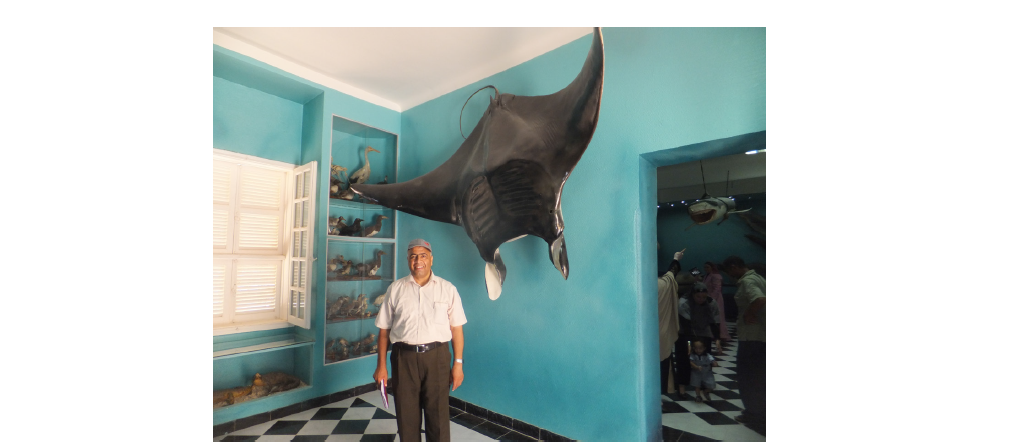
Another institutional challenge associated with the conservation and study of Giant Devil Rays in Palestine is the absence of preserved reference specimens in local university museums. Because of their exceptionally large body size, these rays require extensive space, specialized preservation materials, and technical expertise that are often unavailable locally. As a result, no preserved Giant Devil Ray specimens are currently held in Palestinian academic collections, where museum holdings mainly consist of smaller and more manageable species [70-72]. In contrast, preservation of similarly large batoids appears more feasible in better-equipped regional and international institutions. For example, a preserved giant ray specimen is displayed in the Marine Biology Museum of the National Institute of Oceanography and Fisheries, Hurghada, Egypt (Figure 8). The Gaza Strip fishery represents a socio-ecological system where the predictable seasonal presence of an endangered large ray overlaps with the economic hardship of coastal communities that depend on this temporary resource. This creates conflict between short-term fishing benefits and the long-term survival of a slow-reproducing species. Therefore, practical local management is needed, including seasonal monitoring of catches, fishermen-based reporting, biological sampling, awareness programs for safe release of accidentally caught individuals, and temporary protection during peak aggregation months. Cooperation with fishing communities, together with regional coordination and data sharing across the Mediterranean, is essential to reduce mortality while supporting livelihoods.
Figure 8:In 2013, the author standing beside a preserved giant ray specimen displayed at the Marine Biology Museum of the National Institute of Oceanography and Fisheries, Hurghada, Egypt.
Conclusion
In conclusion, the Gaza Strip coast appears to be a regionally significant seasonal habitat for the Giant Devil Ray and simultaneously one of the areas where the species faces concentrated fishing pressure. The recurrent capture of mature aggregations, combined with weak management and persistent socioeconomic stress, creates a high-risk conservation scenario. Continued monitoring and adaptive management are urgently needed if this iconic Mediterranean ray is to persist in the eastern basin.
Acknowledgment
The author expresses sincere gratitude to the General Directorate of Fisheries at the Ministry of Agriculture for its continuous support, facilitation, and valuable cooperation throughout all stages of this research. Special appreciation is also extended to Gazan fishermen and fishmongers for their collaboration and willingness to share their observations and traditional knowledge, which significantly contributed to the success of this work. Collectively, their efforts enabled the completion of this modest yet pioneering study in Palestine.
References
- Cavanagh RD, Gibson C (2007) Overview of the conservation status of cartilaginous fishes in the Mediterranean Sea. International Union for Conservation of Nature (IUCN), Switzerland.
- Bradai MN, Saidi B, Enajjar S (2018) Overview on Mediterranean shark fisheries: Impact on the Biodiversity. Marine Ecology-Biotic and Abiotic Interactions, pp. 211-230.
- Walls RHL, Dulvy NK (2021) Extinction risk of sharks and rays. Scientific Reports 11: 15397.
- Couturier LIE, Marshall AD, Jaine FRA, Kashiwagi T, Pierce SJ, et al. (2012) Biology, ecology and conservation of the Mobulidae. Journal of Fish Biology, 80(5) 1075-1119.
- Croll DA, Dewar H, Dulvy NK, Fernando D, Francis MP, et al. (2016) Vulnerability of manta and devil rays to exploitation and conservation implications. Aquatic Conservation: Marine and Freshwater Ecosystems 26(3): 562-575.
- Abd Rabou AN, Elkahlout KE, Elnabris KJ, Attallah AJ, Salah JY, et al. (2023) An inventory of some relatively large marine mammals, reptiles and fishes sighted, caught, by-caught or stranded in the Mediterranean coast of the Gaza Strip-Palestine. Open Journal of Ecology (OJE) 13(2): 119-153.
- Abd Rabou AN (2013) Priorities of scientific research in the fields of marine environment and fishery resources in the Gaza Strip-Palestine. Priorities of Scientific Research in Palestine: Towards a National Directory of Scientific Research. Scientific Research Affairs, Islamic University of Gaza, Gaza Strip, Palestine, pp. 481-522.
- Abd Rabou AN, Abu Aitah EI, Samara SK, Alajrami MS, Jebril MA, et al. (2026) First record of the globally endangered Whale Shark (Rhincodon typus Smith, 1828) in the Mediterranean waters of the Gaza Strip, Palestine, and its consumption shortly after the ceasefire following the two-year Israeli war of genocide (2023-2025): Examines in Marine Biology & Oceanography 8(1).
- Abd Rabou AN, Abualtayef MT, Qahman KA, Amodi EA, Al-Hamidi FA, et al. (2026) Rediscovery of a single specimen of the critically endangered spiny butterfly ray (Gymnura Altavela Linnaeus, 1758) on the mediterranean coast of the Gaza Strip, Palestine, following a 30-year absence. Examines in Marine Biology & Oceanography 8(1): 1-6.
- Abd Rabou AN, Qaraman AA, Khalaf NA, Abuhajjaj GI, Jebril MA, et al. (2026) Status of two critically endangered guitarfish species (Glaucostegus cemiculus Geoffroy Saint-Hilaire, 1817 and Rhinobatos rhinobatos Linnaeus, 1758) in the coastal waters of the Gaza Strip, Palestine. Open Journal of Ecology (OJE) 16(3): 153-169.
- Abd Rabou AN, Al-Hamidi FA, Samara SA, Abu Aitah EI, Alajrami MS, et al. (2026) Rare records of the critically endangered angular rough shark (Oxynotus centrina Linnaeus, 1758) from the marine ecosystem of the Gaza Strip, Palestine. Journal of Entomology and Zoology Studies 14(1): 06-13.
- Abd Rabou AN, Salah JY, Abd Rabou OA, Abd Rabou AA, Abualtayef MT, et al. (2026) Occurrence and bycatch of the critically endangered scalloped hammerhead shark (Sphyrna lewini Griffith & Smith, 1834) in the coastal waters of the Gaza Strip, Eastern Mediterranean. Uttar Pradesh Journal of Zoology 47(6): 10-19.
- Abd Rabou AN, Elkahlout KE, Fayyad NA, Shafei AA, El-Hindi MW, et al. (2026) Occurrence, bycatch patterns, and associated risks of mediterranean electric rays (Torpedo marmorata Risso, 1810 and Torpedo torpedo Linnaeus, 1758) in the Gaza Strip, Palestine. Examines in Marine Biology & Oceanography 8(2): 1-9.
- Notarbartolo di Sciara G, Lauriano G, Pierantonio N, Ana C, Greg D, et al. (2015) Habitat use of the giant devil ray (Mobula mobular) in the Mediterranean Sea. PLOS ONE 10(11): e0141189.
- Notarbartolo di Sciara G, Lauriano G, Pierantonio N, Canadas A, Donovan G, et al. (2015) The devil we don’t know: Investigating habitat and abundance of endangered giant devil rays in the North-Western Mediterranean Sea. PLoS ONE 10(11): e0141189.
- Ebert DA, Dando M (2020) Field guide to sharks, rays & chimaeras of Europe and the Mediterranean. Princeton University Press, New Jersey, USA.
- Capapé C, Rafrafi-Nouira S, El Kamel-Moutalibi O, Boumaiza M, Reynaud C (2015) First Mediterranean records of spine tail devil ray, Mobula japanica (Elasmobranchii: Rajiformes: Mobulidae). Acta Ichthyologica et Piscatoria 45(2): 211-215.
- Rafrafi-Nouira S, El Kamel-Moutalibi O, Ben Amor MM, Capapé C (2015) Additional records of spine tail devil ray Mobula japanica (Chondrichthyes: Mobulidae) from the Tunisian coast (Central Mediterranean). Annales: Series Historia Naturalis 25(2):103-108.
- Sakalli A, Yucel N, Capapé C (2016) Confirmed occurrence in the Mediterranean Sea of Mobula japanica (Müller and Henle 1841) with a first record off the Turkish coasts. Journal of Applied Ichthyology.
- Holcer D, Lazar B, Mackelworth P, Fortuna CM (2013) Rare or just unknown? The occurrence of the giant devil ray (Mobula mobular) in the Adriatic Sea. Journal of Applied Ichthyology 29(1): 139-144.
- Mancusi C, Baino R, Fortuna C (2020) MEDLEM database: Monitoring elasmobranch occurrences in the Mediterranean Sea. Mediterranean Marine Science 21(2): 276-288.
- Hemida F, Mehezem S, Capapé C (2002) Captures of the Giant Devil Ray Mobula mobular Bonnaterre, 1788 (Chondrichthyes: Mobulidae) off the Algerian coast (southern Mediterranean). Acta Adriatica 43: 69-76.
- Scacco U, Consalvo I, Mostarda E (2009) First catch of Mobula mobular in Adriatic. Marine Biodiversity Records 2: e93.
- Basusta N, Özbek E Ö (2017) New record of Giant Devil Ray (Mobula mobular) from the Gulf of Antalya. Journal of the Black Sea/Mediterranean Environment 22: 162-169.
- Hussein KB, Talet LB (2019) New record of Giant Devil Ray in Oran Bay. Indonesian Fisheries Research Journal 25(1): 55-63.
- Kabasakal H, Oruç A, Kalecik E (2024) Occurrence of Mobula mobular in Turkish waters. Annales: Series Historia Naturalis 34(1): 51-60.
- Sakalli A (2017) Climate effects on Mobula mobular. Aquaculture Studies 17(1): 5-16.
- Lezama-Ochoa N, Hall MA, Pennino M G (2019) Environmental drivers of Mobula mobular distribution in the Mediterranean Sea. PLOS ONE 14(8): e0220854.
- Canese S, Cardinali A, Romeo T, Giusti M, Salvati E, et al. (2011) Diving behavior of the Giant Devil Ray (Mobula mobular) in the Mediterranean Sea. Endangered Species Research14: 171-176.
- Thorrold SR, Afonso P, Fontes J, Camrin D Bruan, Ricardo S Santos, et al. (2014) Extreme diving behavior in devil rays. Nature Communications 5: 4274.
- Notarbartolo di Sciara G, Abudaya M, Milisenda G, Simonepietro C (2025) Spatial ecology of spine tail Devil Ray. Scientific Reports 15: 2405.
- Mahdi I (2017) Despite its endangered status, Gazans continue to fish for Giant Devil Rays as a source of food and livelihood. Afaq for Environment and Development Magazine: An electronic magazine published by the Development Action Center 95.
- Abudaya M, Ulman A, Salah J, Fernando D, Wor C, et al. (2018) Speak of the Devil Ray (Mobula mobular) fishery in Gaza. Reviews in Fish Biology and Fisheries 28(1): 229-239.
- Couturier LI, Bennett MB, Richardson AJ (2013) Mystery of giant rays off Gaza Strip solved. Oryx 47(4): 480.
- Stevens GMW, Fernando D, Dando M, Notarbartolo di Sciara G (2023) Aggregations of mobulid Frontiers in Marine Science 10: 1148234.
- Palacios MD, Stewart JD, Croll DA (2023) Devil ray conservation. Frontiers in Marine Science 10: 1148234.
- Chaikin S, Belmaker J, Barash A (2020) Coastal aggregations of rays and guitarfish in the Levant. Aquatic Conservation 30(6): 1160-1171.
- Carrasco-Puig P, Colmenero AI, Degollada E, Tort B, Jara D, et al. (2026) The elusive spine tail Devil Ray (Mobula mobular): A multimethod approach to track its presence in the Spanish Mediterranean Sea. Journal of Fish Biology 108(1): 294-306.
- Ouled-Cheikh J, Coll M, Cardona L (2022) Fisheries pressure in Mediterranean ecosystems. Elementa Science of the Anthropocene 10(1): 00028.
- Abd Rabou AN (2025) Amid the Israeli war on the Gaza Strip, Palestine, which has been ongoing since October 7, 2023, Famine is driving Gazans to eat the meat of globally endangered sea turtles. Examines in Marine Biology & Oceanography 7(5): 1-8.
- Abd Rabou AN, Mohanna AM, Bakheet BA, Abu Toima RM, Ashour LZ, et al. (2025) First record of the striped dolphin (Stenella coeruleoalba Meyen, 1833) in the Gaza Strip and its consumption during the famine in the midst of the Israeli war following October 7, 2023. Examines in Marine Biology & Oceanography 7(5): 1-8.
- Abd Rabou AN, Gafar MF, Mohanna AM, Rafeea AA, Jadallah RI, et al. (2025) A look at the deadly shark attack on an Israeli diver off the Mediterranean coast of Hadera, Palestine. Uttar Pradesh Journal of Zoology 46(12): 124-142.
- Zafeiraki E, Gebbink WA, Van Leeuwen SP (2019) Contaminants in Mediterranean sharks and rays. Environmental Pollution 252: 379-387.
- Bordbar L, Strogyloudi E, Hatzianestis I, Vasiliki P, Archontia C (2023) First evidence of trace metals and contaminants in Mobula mobular. Marine Biology Research 19(8-9): 399-406.
- Hussein DM, Lucchetti MC, Zaqoot HA (2022) Fisheries in Gaza Strip. International Journal of Euro-Mediterranean Studies 15(2): 179-216.
- Bradaii MN, Capapé C (2001) Captures of Mobula mobular in the Gulf of Gabè Cybium 25(4): 389-391.
- Celona A (2004) Caught and observed Giant Devil Rays Mobula mobular (Bonnaterre 1788) in the Strait of Messina. Annales: Series Historia Naturalis 14: 11-18.
- Yaglioglu D, Turan C, Gurlek M (2013) Occurrence of Mobula mobular in Turkey. Journal of Applied Ichthyology 29: 935-936.
- Marshall AD, Bennett MB, Kodja G, Hinojosa-Alvarez S, Galván-Magaña F, et al. (2020) Mobulid ray ecology and conservation. Marine Ecology Progress Series 635: 165-180.
- Fortuna CM, Kell L, Holcer D (2014) Distribution of Mobula mobular in the Adriatic Sea. Scientia Marina 78(2): 227-237.
- Fortuna C, Kell L, Holcer D, Canese S, Filidei E, et al. (2014) Summer distribution and abundance of the Giant Devil Ray (Mobula mobular) in the Adriatic Sea: Baseline data for an iterative management framework. Scientia Marina 78(2): 227-237.
- Scacco U, Gennari E, Di Crescenzo S, Fanelli E (2023) Juvenile elasmobranch bycatch. Frontiers in Marine Science 10: 1303961.
- Dulvy NK, Fowler SL, Musick JA, Cavanagh RD, Kyne PM, et al. (2014) Extinction risk and conservation of the world’s sharks and rays. eLife 3: e00590.
- Lawson J, Fordham S, O Malley M, Davidson L, Walls RHL, et al. (2017) Sympathy for the devil: A conservation strategy for devil and manta rays. Peer J 5: e3027.
- Fernando D, Stevens GMW (2011) Fisheries interactions with mobulid rays in Sri Lanka. Aquatic Conservation: Marine and Freshwater Ecosystems 21(4): 381-394.
- Fernando D, Stewart JD (2021) Bycatch of devil rays in Sri Lanka fisheries. PeerJ 9: e11994.
- Mas F, Forselledo R, Domingo A (2015) Mobulid bycatch in longlines. Marine and Freshwater Research 66(9): 767-777.
- Alfaro-Cordova E, Del Solar A, Alfaro-Shigueto J, Mangel JC, Diaz B, et al. (2017) Captures of manta and devil rays by small-scale gillnet fisheries in northern Peru. Fisheries research 195: 28-36.
- Abudaya M, Harper S, Ulman A, Zeller D (2014) Correcting mis- and under-reported marine fisheries catches for the Gaza Strip: 1950-2010. Acta Adriatica 54(2): 241-252.
- Haque AB (2021) Devil ray trade in Bangladesh. Aquatic Conservation: Marine and Freshwater Ecosystems 31(6): 1392-1409.
- Palacios MD, Weiand L, Laglbauer BJ (2025) Global trade in devil rays. Environmental Biology of Fishes 108(4): 611-638.
- FAO (2022) The state of world fisheries and aquaculture 2022. Food and Agriculture Organization of the United Nations (FAO), Canada, p. 266.
- Haque AB, D Costa NG, Washim M, Baroi AR, Hossain N, et al. (2021) Fishing and trade of devil rays (Mobula spp.) in the Bay of Bengal, Bangladesh: Insights from fishers’ knowledge. Aquatic Conservation: Marine and Freshwater Ecosystems 31(6): 1392-1409.
- Karnad D, Narayani S, Kottillil S, Kottillil S, Gupta T, et al. (2022) Shark and ray meat consumption as a threat to India’s elasmobranchs. Authorea Preprints.
- O’Malley M, Townsend KA, Hilton P, Heinrichs S, Stewart JD (2016) Characterization of the trade in manta and devil ray gill plates in China and South-east Asia through trader surveys. Aquatic Conservation: Marine and Freshwater Ecosystems 27(2): 394-413.
- Rojas-Perea S, D’Costa NG, Kanagusuku K, Escobedo R, Rodríguez F, et al. (2025) Fisheries, trade, and conservation of manta and devil rays in Peru. Environmental Biology of Fishes 108(4): 725-748.
- Palacios MD, Weiand L, Laglbauer BJ, Cronin MR, Fowler S, et al. (2025) Global assessment of manta and devil ray gill plate and meat trade: Conservation implications and opportunities. Environmental Biology of Fishes 108(4): 611-638.
- Salem R (2013) Gaza’s challenge. Chartered Institution of Wastes Management. CIWM Journal, pp. 48-49.
- Dulvy NK, Allen DJ, Ralph GM, Walls RHL (2017) The conservation status of sharks, rays and chimaeras in the Mediterranean Sea. Aquatic Conservation: Marine and Freshwater Ecosystems 27(1): 7-11.
- Abd Rabou AN (2020) The Palestinian marine and terrestrial vertebrate fauna preserved at the Biology Exhibition, Islamic University of Gaza, bombarded by the Israeli Army in December, 2008. Israa University Journal of Applied Science (IUGAS) 4(1): 9-51.
- Abd Rabou AN, Musallam NJ, Musallam EJ, Elkahlout KE, Elnabris KJ, et al. (2020) The Palestinian terrestrial vertebrate fauna preserved at the biology exhibitions of the universities of the Gaza Strip. Research in Ecology 2(4): 9-21.
- Abd Rabou AN, El-Kichaoui AY, El-Bashiti TA, Abdel Aziz II, Elnabris KJ, et al. (2025) On the mummified marine and terrestrial vertebrate fauna adorning the Biology Department Museum at the Islamic University of Gaza, Gaza Strip, Palestine, before the Israeli war on October 7, 2023. Open Journal of Ecology (OJE) 15(9): 528-568.
© 2026 Abdel Fattah N Abd Rabou. This is an open access article distributed under the terms of the Creative Commons Attribution License , which permits unrestricted use, distribution, and build upon your work non-commercially.
Editor In Chief







.jpg)































Signup for Newsletter

Quick Links
 Editorial Board Registrations
 Submit your Article
 Best Paper of the Volume
 Reprints
 Refer a Friend
 Advertise With Us
Our Recent Edition

.jpg)



Top Editors




.jpg)

















.bmp)
.jpg)
.png)
.jpg)













.jpg)






.png)

.png)




.png)




Financial Support

Sponsors

Latest e-Books

Latest Video

 a Creative Commons Attribution 4.0 International License. Based on a work at www.crimsonpublishers.com.
Best viewed in
a Creative Commons Attribution 4.0 International License. Based on a work at www.crimsonpublishers.com.
Best viewed in 
 | Above IE 9.0 version