

- About Us
- Information
-

The Author ensures that the research has been conducted responsibly and ethically with adherence to all relevant regulations. read more..
- For Authors
- For Reviewer
- Manuscript Guidelines
- Membership
- Publication Ethics
-
- Journals
- Reprints
- e-Books
- Videos
- Policies
- Contact Us
 COVID-19
- Submissions



Full Text
Examines in Marine Biology & Oceanography
Recent Stranding of the Endangered Sperm Whale (Physeter macrocephalus Linnaeus, 1758) near the Northern Coastal Border of the Gaza Strip, Palestine
Abdel Fattah N Abd Rabou*
Department of Biology & Biotechnology, Faculty of Science, Islamic University of Gaza, PO Box 108, Gaza Strip, Palestine
*Corresponding author: Abdel Fattah N Abd Rabou, Department of Biology & Biotechnology, Faculty of Science, Islamic University of Gaza, PO Box 108, Gaza Strip, Palestine
Submission: March 09, 2026;Published: March 27, 2026
ISSN 2578-031X Volume 8 Issue 1
Abstract
The Sperm Whale or Cachalot (Physeter macrocephalus Linnaeus, 1758), the largest living toothed whale, maintains a small and genetically distinct endangered subpopulation in the Mediterranean Sea. On 24 February 2026, a large individual measuring approximately 12-13m stranded at Hiribya (Zikim) Beach near the northern border of the Gaza Strip in the southeastern Mediterranean. This study documents the event and evaluates its ecological and conservation significance. Information was compiled from verified media sources, official statements and publicly available photographs and videos to confirm species identification, body length and carcass condition. The stranded whale, likely an adult male, appeared relatively fresh with no advanced decomposition, suggesting recent mortality. Although a necropsy was reportedly conducted by Israeli marine authorities, its results have not yet been published. This event represents the eighth documented case-and the largest-of Sperm Whale strandings along the Mediterranean coast of palestine since monitoring began in the early 1990s, and the first recorded case in close proximity to the Gaza Strip. Considering the offshore ecological niche of the species and the endangered status of the Mediterranean subpopulation, such mortality events are biologically significant. Potential contributing factors may include vessel strikes, fisheries interactions, plastic ingestion, chemical contamination, underwater noise associated with seismic exploration and other anthropogenic or environmental stressors. The record contributes to the limited documentation of cetaceans in the southeastern Mediterranean and highlights the importance of continued monitoring and regional cooperation for the conservation of Mediterranean Sperm Whales.
Keywords:Sperm Whale; Physeter macrocephalus; Toothed whales; Stranding; Hiribya (Zikim) beach; Anthropogenic threats; Marine conservation; Mediterranean Sea; Gaza Strip; Palestine
Introduction
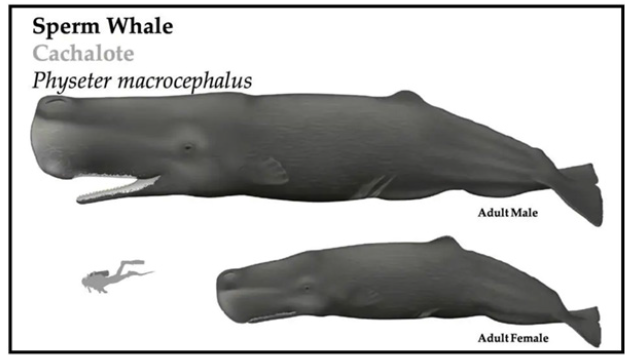
The Sperm Whale (Physeter macrocephalus Linnaeus, 1758) (Figure 1), commonly known as Cachalot, a term describing the “big head”, is the largest extant odontocete and one of the most widely distributed marine mammals, inhabiting tropical to subpolar oceans worldwide [1]. The term “Sperm Whale” is a shortened form of “Spermaceti Whale”, referring to the waxy substance in its head, which was historically mistaken for “semen” [2]. Adult males may reach 16-20m in length and exceed 50tons, whereas adult females are smaller, typically measuring 10-12m in length and weighing about 12-15tons [3] (Figure 2). The species is highly specialized for deep-sea foraging, performing dives beyond 1,000m that may last over one hour while feeding primarily on cephalopods and deep-water fishes [4]. Within the Mediterranean Sea, Sperm Whales constitute a geographically and genetically distinct subpopulation largely confined to deep offshore waters extending from the Strait of Gibraltar to the Levantine Basin [5-7]. Photo-identification and movement studies have confirmed limited interchange with Atlantic populations, reinforcing concerns regarding genetic isolation [8,9]. The Mediterranean subpopulation is classified as Endangered, with current estimates ranging between 250 and 2,500 mature individuals [10,11]. Compared with global population assessments [12], this group is small, regionally restricted and particularly susceptible to cumulative anthropogenic pressures. Major threats in the Mediterranean include ship strikes [13-15], entanglement in driftnets and longlines [16], ingestion of marine debris [17], and chemical contamination [18-20]. Underwater noise from seismic exploration and naval sonar may disrupt echolocation and navigation [21], while habitat degradation and maritime traffic further compound risks [22,23]. Strandings throughout Mediterranean coasts-including Italy, Tunisia, Morocco, Turkey, Syria, Algeria and Palestine-have provided essential information regarding mortality drivers and conservation status [24-39].
Figure 1:Labeled diagram of the Sperm Whale (Physeter macrocephalus Linnaeus, 1758). [Source: https://www.enchantedlearning.com/subjects/whales/species/Spermwhale.shtml]
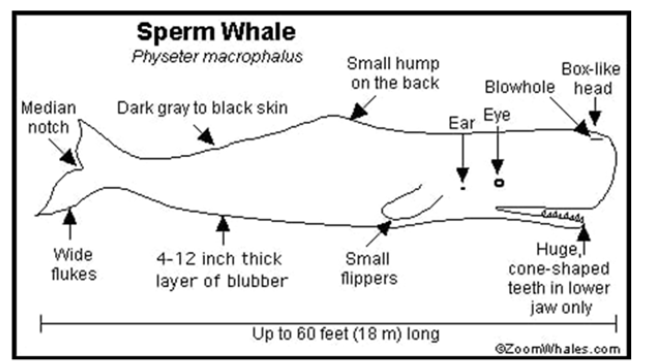
Figure 2:Comparison of the body length and mass between adult male and female Sperm Whale (Physeter macrocephalus Linnaeus, 1758). [Source: https://www.azoreswhalewatch.com/educational/speciescatalogue/mammals/sperm-whale-cachalote]
Despite numerous documented sightings and strandings of marine mammals along the Mediterranean coast of the Gaza Strip, as reported by Abd Rabou [40] and Abd Rabou et al. [41-44], no previously confirmed occurrence of the Sperm Whale has been recorded in this area. Therefore, the present study documents the stranding of a Sperm Whale (Physeter macrocephalus Linnaeus, 1758) in February 2026 and discusses its ecological and conservation implications within the broader context of the southeastern Mediterranean Sea. One of the main objectives of this modest study is to raise awareness among Palestinians in general, and Gazans in particular, about this unique whale speciesthe Sperm Whale (Physeter macrocephalus Linnaeus, 1758), the largest toothed whale in the world. Such awareness may contribute to the protection of this endangered species, whose population in the Mediterranean Sea is limited and estimated at fewer than 2,500 adult individuals [10,11]. To support this goal, the study includes several illustrations to facilitate its identification by Gazan fishermen, the Palestinian community, and potentially residents of neighboring countries. For this reason, the present study can be regarded as an educational contribution for the Palestinian community as well as for communities in neighboring countries.
Methodology
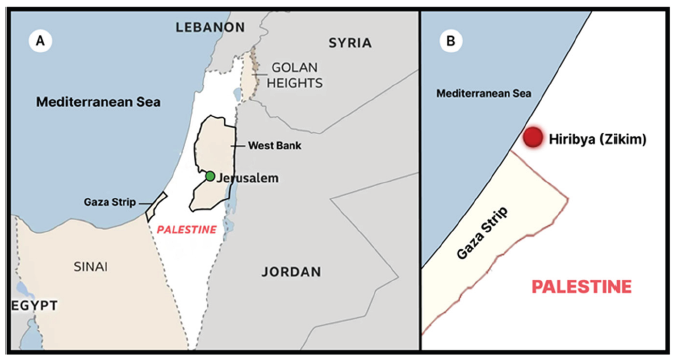
This descriptive study compiles information regarding the stranding event of a Sperm Whale (Physeter macrocephalus Linnaeus, 1758) of 24 February 2026 from verified digital news platforms, official statements, and publicly available visual documentation. Photographs and video materials were examined to confirm species identification, approximate body length and general condition. The stranding occurred along the southern Levantine coast of the Mediterranean Sea, just north of the Gaza Strip (approximately 365km²) (Figure 3), highlighting the site’s close geographical connection to Palestinian marine waters.
Figure 3:Map showing (A) the geographical location of the Gaza Strip (365km²) in the southwestern part of Palestine (27,000 km²), and (B) the site of the Sperm Whale (Physeter macrocephalus Linnaeus, 1758) stranding at Hiribya (Zikim) beach near the northern border of the Gaza Strip.
Result and Discussion
Event description
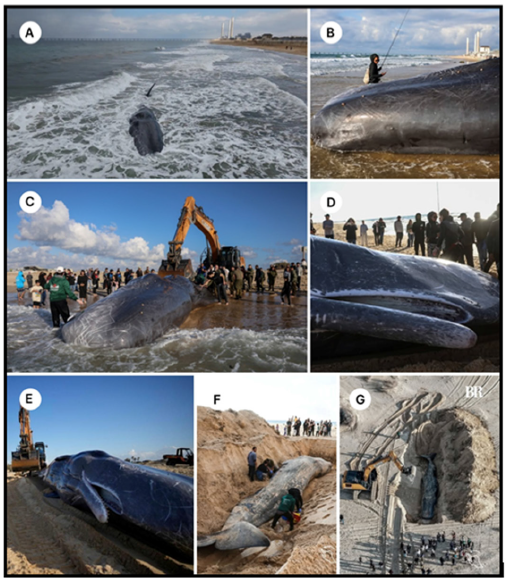
On 24 February 2026, a Sperm Whale (Physeter macrocephalus Linnaeus, 1758) measuring approximately 12-13m in length stranded at Hiribya (Zikim) Beach, situated just north of the Gaza Strip. According to field observations and local reports, sea waves pushed the carcass ashore (Figure 4). Although it remains uncertain whether the whale died offshore or shortly after stranding, mortality was confirmed at the site. The carcass appeared relatively fresh and showed no advanced decomposition, suggesting that death likely occurred shortly before the stranding event. Based on the recorded body length, the individual was most likely an adult male. Due to the large size of the carcass, heavy machinery and a crane were required to remove and bury the whale, and a trench was excavated at the site to allow safe burial. Such procedures are commonly adopted in coastal stranding events involving large cetaceans when detailed necropsy investigations are not feasible [45].
Figure 4:Stranding of a Sperm Whale (Physeter macrocephalus Linnaeus, 1758) on Hiribya (Zikim) Beach, near the Gaza Strip, southern Palestine, on 24 February 2026: (A-C) Sea waves pushed the carcass onto the shore, (D-E) The toothed lower jaw of the whale is clearly visible, and (F-G) Heavy machinery was used to excavate a trench for burial of the whale carcass.
Regarding the stranding of large whales, only a few cases involving dead Fin Whales (Balaenoptera physalus Linnaeus, 1758) have been recorded along the Gaza Strip’s coast during the past 40-50 years, and most of these were in advanced stages of decomposition. In some instances, the carcasses were safely buried to prevent the spread of odors associated with decomposition [41,43]. In Australia, similar burial operations for whale carcasses have been documented [45,46]. Given that Sperm Whales are predominantly deep-diving oceanic cetaceans inhabiting offshore waters, strandings along coastal areas are relatively uncommon and often associated with ecological or anthropogenic stressors rather than simple navigational error [47]. Consequently, stranding events provide important opportunities to document species occurrence and evaluate environmental pressures affecting Mediterranean cetacean populations.
Possible causes of stranding
Although no official necropsy findings have been publicly disclosed for this individual, a range of anthropogenic and natural factors have been recognized as major contributors to Sperm Whale strandings worldwide and in the Mediterranean Sea. Ship strikes represent one of the leading causes of mortality in the eastern Mediterranean due to dense maritime traffic and the presence of major international shipping routes crossing the Levantine Basin [13,15,48]. Large-bodied and slow-moving whales are particularly vulnerable to collisions with vessels traveling at high speed [49,50]. Entanglement in fishing gear also constitutes a significant threat. Longlines and other fishing equipment targeting pelagic species such as swordfish and tuna may accidentally trap large cetaceans, leading to injury, stress or eventual death [16]. Such interactions are widely documented across the Mediterranean [21,51]. Marine pollution represents an additional conservation concern. Plastic ingestion has been repeatedly documented in stranded Mediterranean Sperm Whales, with plastic debris sometimes constituting a substantial portion of stomach contents and potentially causing digestive obstruction or malnutrition [17,52]. Moreover, contaminant accumulation, including heavy metals and persistent organic pollutants, has been detected in stranded individuals and may negatively affect physiological functions such as immune response and reproduction [53-57]. Anthropogenic underwater noise particularly that associated with seismic surveys for oil and gas exploration represents another possible factor influencing cetacean behavior. Exposure to intense acoustic disturbances may disrupt orientation, navigation and feeding behavior, potentially forcing whales into atypical shallowwater environments [21,58-60]. In addition to these human-related factors, natural causes such as disease, physiological stress or other biological conditions cannot be excluded [61].
Regional context
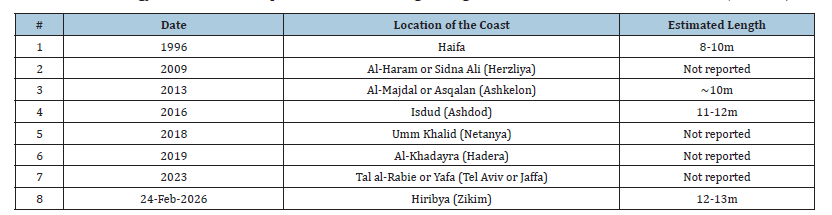
This event represents the eighth documented Sperm Whale stranding along the Mediterranean coast of Palestine since systematic monitoring began [28,38] and is the largest recorded stranding as well (Table 1). It occurred in the southernmost part of the Palestinian coast, near the northern Gaza Strip. Although the Levantine Basin is generally an offshore habitat for this species, occasional coastal strandings indicate that Sperm Whales periodically enter the broader southeastern Mediterranean region [62,63]. The Levantine Basin is characterized by intense maritime activity, expanding fisheries and increasing offshore energy exploration, all of which may contribute to cumulative pressures on marine megafauna. Recent spatial analyses indicate that existing marine protected areas may not adequately cover important Sperm Whale habitats within the Mediterranean basin [23]. Furthermore, acoustic monitoring studies suggest relatively low regional abundance of Sperm Whales, highlighting the vulnerability of this Mediterranean subpopulation [64]. Consequently, individual mortality events may have disproportionate ecological significance for the conservation of the species. In the Gaza Strip, this stranding event expands the limited records of both baleen and toothed whales along the southeastern Mediterranean coast. Despite constraints in scientific infrastructure and monitoring, such observations remain important for understanding regional cetacean distribution and mortality, and highlight the need for standardized stranding response, necropsy investigations and stronger regional scientific cooperation.
Table 1:Chronology of documented Sperm Whale Strandings along the Mediterranean Coast of Palestine (~230km)*.
Conclusion
The February 2026 stranding of a Sperm Whale (Physeter macrocephalus Linnaeus, 1758) near the northern coastal border of the Gaza Strip represents the first documented record of the species close to Gaza Strip’s Mediterranean waters. As part of the endangered Mediterranean subpopulation, the event highlights potential pressures on large cetaceans in the southeastern Mediterranean, including maritime traffic, fisheries interactions, pollution and underwater noise. Documenting such incidents contributes to the scarce records from the Levantine Basin and emphasizes the need for continued monitoring, standardized stranding-response protocols and stronger regional scientific cooperation.
References
- Jaquet N (1996) How spatial and temporal scales influence understanding of Sperm Whale distribution: A review. Mammal Review 26(1): 51-65.
- Wikipedia (2026) Sperm Whale.
- Watwood SL, Miller PJO, Johnson M, Madsen PT, Tyack PL (2006) Deep-diving foraging behavior of Sperm Whales (Physeter macrocephalus). Journal of Animal Ecology 75(3): 814-825.
- Whitehead H (2003) Sperm Whales: Social evolution in the ocean. University of Chicago Press, Chicago, USA, pp. 431.
- Drouot-Dulau V, Gannier A (2007) Movements of Sperm Whale in the western Mediterranean Sea: Preliminary photo-identification results. Journal of the Marine Biological Association of the United Kingdom 87(1): 195-200.
- Rendell L, Frantzis A (2016) Mediterranean Sperm Whales, Physeter macrocephalus: The precarious state of a lost tribe. Advances in Marine Biology 75: 37-74.
- Farrag MMS, Ahmed HO, TouTou MMM, Eissawi MM (2019) Marine mammals on the Egyptian mediterranean coast: “Records and vulnerability”. International Journal of Ecotoxicology and Ecobiology 4(1): 8-16.
- Frantzis A, Airoldi S, Notarbartolo-di-Sciara G, Johnson C, Mazzariol S (2011) Inter-basin movements of Mediterranean Sperm Whales provide insight into their population structure and conservation. Deep Sea Research Part I: Oceanographic Research Papers 58(4): 454-459.
- Frantzis A, Alexiadou P, Gkikopoulou KC (2014) Sperm Whale occurrence site fidelity and population structure along the Hellenic Trench (Greece, Mediterranean Sea). Aquatic Conservation: Marine and Freshwater Ecosystems 24(S1): 83-102.
- Notarbartolo di Sciara G, Frantzis A, Bearzi G, Reeves R (2012) Sperm Whale Physeter macrocephalus Mediterranean subpopulation. Aquatic Mammals 38(4): 441- 455.
- Pirotta E, Carpinelli E, Frantzis A, Gauffier P, Lanfredi C, et al. (2021) Physeter macrocephalus (Mediterranean subpopulation). The IUCN Red List of Threatened Species 2021: e. T16370739A50285671.
- Whitehead H, Shin M (2022) Current global population size post-whaling trend and historical trajectory of Sperm Whales. Scientific Reports 12(1): 19468.
- Frantzis A, Alexandrakis C, Gkikopoulou KC (2003) Sperm Whale mortality due to ship strikes in the Hellenic Trench, eastern mediterranean sea. Journal of the Marine Biological Association of the United Kingdom 83(4): 841-844.
- Frantzis A, Leaper R, Alexiadou P, Prospathopoulos A, Lekkas D (2019) Shipping routes through core habitat of endangered Sperm Whales along the Hellenic Trench, Greece: Can we reduce collision risks? Plos One 14(2): e0212016.
- Di-Meglio N, David L, Monestiez P (2018) Sperm Whale ship strikes in the Pelagos Sanctuary and adjacent waters: assessing and mapping collision risks in summer. Journal of Cetacean Research and Management 18: 135-147.
- Blasi MF, Caserta V, Bruno C, Salzeri P, Di Paola AI, et al. (2021) Behavior and vocalizations of two Sperm Whales (Physeter macrocephalus) entangled in illegal driftnets in the Mediterranean Sea. Plos One 16(4): e0250888.
- De Stephanis R, Giménez J, Carpinelli E, Gutierrez-Exposito C, Cañadas A (2013) As main meal for Sperm Whales: Plastics debris. Marine Pollution Bulletin 69(1-2): 206-214.
- Marsili L, Maltese S, Coppola D, Carletti L, Mazzariol S, et al. (2014) Ecotoxicological status of seven Sperm Whales (Physeter macrocephalus) stranded along the Adriatic coast of Southern Italy. Aquatic Conservation: Marine and Freshwater Ecosystems 24(S1): 103-118.
- Zaccaroni A, Andreini R, Franzellitti S, Barceló D, Eljarrat E (2018) Halogenated flame retardants in stranded Sperm Whales (Physeter macrocephalus) from the Mediterranean Sea. Science of the Total Environment 635: 892-900.
- Bartalini A, Muñoz-Arnanz J, Marsili L, Mazzariol S, Fossi MC, et al. (2019) Evaluation of PCDD/Fs, dioxin-like PCBs and PBDEs in Sperm Whales from the Mediterranean Sea. Science of the Total Environment 653: 1417-1425.
- Notarbartolo‐Di‐Sciara G (2014) Sperm Whales, Physeter macrocephalus, in the Mediterranean Sea: A summary of status, threats, and conservation recommendations. Aquatic Conservation: Marine and Freshwater Ecosystems 24(S1): 4-10.
- Panigada S, Pesante G, Zanardelli M, Capoulade F, Gannier A, et al. (2006) Mediterranean fin Whales and Sperm Whales summer distribution, habitat use and disturbance in an international marine sanctuary. Marine Ecology Progress Series 312: 257-268.
- Brotons JM, Cerdà M, Pirotta E, Rendell L (2024) New data on the distribution of Sperm Whales in the western mediterranean highlight’s insufficiency of currently proposed protection measures. Aquatic Conservation: Marine and Freshwater Ecosystems 34(11): e70020.
- Bearzi G, Pierantonio N, Bonizzoni S, Notarbartolo di Sciara G, Demma M (2010) Perception of a cetacean mass stranding in Italy: The emergence of compassion. Aquatic Conservation: Marine and Freshwater Ecosystems 20(6): 644-654.
- El Hili HA, Cozzi B, Salah CB, Podestà M, Ayari W, et al. (2010) A survey of cetaceans stranded along the northern coast of Tunisia: Recent findings (2005-2008) and a short review of the literature. Journal of Coastal Research 26(5): 982-985.
- Karaa S, Bradai MN, Jribi I, Hili HAE, Bouain A (2012) Status of cetaceans in Tunisia through analysis of stranding data from 1937 to 2009. Mammalia: International Journal of the Systematics, Biology and Ecology of Mammals 76(1): 21-29.
- Karaa S, Saadaoui A, Bradai MN (2016) First record of live stranded Sperm Whales Physeter macrocephalus in the Gulf of Gabes, Tunisia. Cahiers de Biologie Marine 57: 329-333.
- Kerem D, Hadar N, Goffman O, Scheinin A, Kent R, et al. (2012) Update on the cetacean fauna of the Mediterranean Levantine basin. Open Marine Biology Journal 6(1): 6-27.
- Bellante A, Manta DS, Traina A, Buscaino G, Buffa G, et al. (2013) Trace elements in tissues of Sperm Whales stranded along the Italian coast. Chemistry and Ecology 29(5): 404-414.
- Bargagli R, Lucchetti A (2015) Sperm Whales (Physeter macrocephalus) stranded along the Adriatic coast (Southern Italy, Mediterranean Sea) as bioindicators of essential and non-essential trace elements in the environment. Ecological Indicators 58: 418-425.
- Garibaldi F, Podestà M (2014) Stomach contents of a Sperm Whale (Physeter macrocephalus) stranded in Italy (Ligurian Sea, north-western Mediterranean). Journal of the Marine Biological Association of the United Kingdom 94(6): 1087-1091.
- Squadrone S, Brizio P, Chiaravalle E, Abete MC (2015) Sperm Whales (Physeter macrocephalus), found stranded along the Adriatic coast (Southern Italy, Mediterranean Sea) as bioindicators of essential and non-essential trace elements in the environment. Ecological Indicators 58: 418-425.
- Masski H, De Stéphanis R (2018) Cetaceans of the Moroccan coast: Information from a reconstructed strandings database. Journal of the Marine Biological Association of the United Kingdom 98(5): 1029-1037.
- Mazzariol S, Centelleghe C, Cozzi B, Povinelli M, Marcer F, et al. (2018) Multidisciplinary studies on a sick-leader syndrome-associated mass stranding of Sperm Whales (Physeter macrocephalus) along the Adriatic coast of Italy. Scientific Reports 8(1):11577.
- Lo Brutto S, Calascibetta A, Pavan G, Buffa G (2021) Cetacean strandings and museum collections: A focus on Sicily Island crossroads for Mediterranean species. Diversity 13(3): 104.
- Tonay AM, Öztürk AA, Salman A, Dede A, Danyer Aytemiz, et al. (2021) Stranding records of Sperm Whale (Physeter macrocephalus) on the Turkish coast in 2019-2020 with a note on the opportunistic sampling of stomach content. Journal of the Black Sea/Mediterranean Environment 27(3): 281-293.
- Bouslah Y, Zaidi R, Messaoudi M, Maamar K, Belmahi AE, et al. (2022) New occurrence of cetacean stranded on the Algerian West Coast and associated threats: (2016‑2020). South Asian Journal of Experimental Biology 12(3): 357-
- Thompson KF, Gordon J, Webber T, Zuriel Y, Kobo K, et al. (2024) Threatened cetaceans off the coast of Israel and long‐range movement of a Sperm Whale. Aquatic Conservation: Marine and Freshwater Ecosystems 34(5): e4155.
- Badran M (2025) Stranded cetaceans on the Syrian coast of the Mediterranean Sea. Mesopotamian Journal of Marine Sciences 40(1): 93-106.
- Abd Rabou AN (2023) The first record of the Mediterranean Monk Seal (Monachus monachus Hermann 1779) in the marine coast of the Gaza Strip, Palestine. International Journal of Fauna and Biological Studies 10(3): 29-35.
- Abd Rabou AN, Abd Rabou MA, Qaraman AA, Abualtayef MT, Abd Rabou AA, et al. (2021) Sightings and strandings of the cetacean fauna in the Mediterranean coast of the Gaza Strip, Palestine. Israa University Journal of Applied Science (IUGAS) 5(1): 152-186.
- Abd Rabou AN, Abd Rabou MA, Abd Rabou OA (2023) On the arrival of the rare and endangered Mediterranean Monk Seal-Yulia (Monachus monachus Hermann, 1779) on the shores of Jaffa, Palestine (May 2023). International Journal of Fauna and Biological Studies 10(3): 19-23.
- Abd Rabou AN, Elkahlout KE, Elnabris KJ, Attallah AJ, Salah JY, et al. (2023) An inventory of some relatively large marine mammals, reptiles and fishes sighted, caught, by-caught or stranded in the Mediterranean coast of the Gaza Strip-Palestine. Open Journal of Ecology 13(2): 119-153.
- Abd Rabou AN, Mohanna AM, Bakheet BA, Abu Toima RM, Ashour LZ, et al. (2025) First record of the Striped Dolphin (Stenella coeruleoalba Meyen, 1833) in the Gaza Strip and its consumption during the famine in the midst of the Israeli war following October 7, 2023. Examines in Marine Biology & Oceanography 7(5):1-8.
- Tucker JP, Santos IR, Crocetti S, Butcher P (2018) Whale carcass strandings on beaches: Management challenges, research needs, and examples from Australia. Ocean & Coastal Management 163: 323-338.
- Tucker JP, Santos IR, Provost SC, Butcher PA (2021) Community sentiment on whale carcass beach burial and potential shark attraction. Regional Studies in Marine Science 45: 101817.
- Mazzariol S, Di Guardo G, Petrella A, Marsili L, Fossi MC, et al. (2011) Sometimes Sperm Whales (Physeter macrocephalus) cannot find their way back to the high seas: A multidisciplinary study on a mass stranding. Plos One 6(5): e19417.
- Pirotta E, Merchant ND, Thompson PM, Barton TR, Lusseau D (2015) Quantifying the effect of boat disturbance on the foraging activity of Sperm Whales (Physeter macrocephalus) Biological Conservation 181: 1-10.
- Pérez Santos C (2025) Eyes in the sky: Mapping humpback whale and vessel movements via satellite to characterize collision risk hotspots in Pacific Mexico. Master Thesis, Department of Fisheries, Wildlife, and Conservation Sciences Oregon State University, USA, pp.120.
- Saltzman J, Yeager EA, Hlavin JF, Fuentes MMPB, Krumholz M, et al. (2026) Charting the course for management: A global analysis of effects of vessels on marine megafauna. NPJ Ocean Sustainability 5(1): 11.
- Pace DS, Miragliuolo A, Mussi B (2008) Behavior of a social unit of Sperm Whales (Physeter macrocephalus) entangled in a driftnet off Capo Palinuro (Southern Tyrrhenian Sea, Italy). Journal of Cetacean Research and Management 10(2): 131-135.
- Jerbi H, Pérez W, Tellechea JS (2021) Ingestion of floating net debris in Sperm Whales and larynx strangulation with gillnet parts in bottlenose dolphins on the coast of Tunisia. Aquatic Mammals 47(3): 239-244.
- Squadrone S, Chiaravalle E, Gavinelli S, Monaco G, Rizzi M, et al. (2015) Analysis of mercury and methylmercury concentrations, and selenium: Mercury molar ratios for a toxicological assessment of Sperm Whales (Physeter macrocephalus) in the most recent stranding event along the Adriatic coast (Southern Italy, Mediterranean Sea). Chemosphere 138: 633-641.
- Girolametti F, Cannavacciuolo A, Centelleghe C, Truzzi C, Illuminati S, et al. (2025) Elemental composition of ten different tissues from a stranded Sperm Whale (Physeter macrocephalus) in the Mediterranean Sea. Chemistry and Ecology 41(6): 729-746.
- Yaghmour F, Samara F, Torres CAN, Gulland F, Budd J, et al. (2023) Analysis of persistent organic pollutants and heavy metals in mysticetes from the United Arab Emirates. Regional Studies in Marine Science 68: 103276.
- Pinzone M, Budzinski H, Tasciotti A, Ody D, Lepoint G, et al. (2015) POPs in free ranging Pilot Whales, Sperm Whales and Fin Whales from the Mediterranean Sea: Influence of biological and ecological factors. Environmental Research 142: 185-196.
- Holsbeek L, Joiris CR, Debacker V, Ali IB, Roose P, et al. (1999) Heavy metals, organochlorines and polycyclic aromatic hydrocarbons in Sperm Whales stranded in the southern North Sea during the 1994/1995 winter. Marine Pollution Bulletin 38(4): 304-313.
- Cuvertoret-Sanz M, López-Figueroa C, O’Byrne A, Canturri A, Martí-Garcia B, et al. (2020) Causes of cetacean stranding and death on the Catalonian coast (Western Mediterranean Sea) 2012-2019. Diseases of Aquatic Organisms 142: 239-253.
- Madsen PT, Møhl B, Nielsen BK, Wahlberg M (2002) Male Sperm Whale behavior during exposures to distant seismic survey pulses. Aquatic Mammals 28(3): 231-240.
- Weir CR (2008) Overt responses of Humpback Whales (Megaptera novaeangliae) Sperm Whales (Physeter macrocephalus) and Atlantic spotted dolphins (Stenella frontalis) to seismic exploration off Angola. Aquatic Mammals 34(1): 71-83.
- Smeenk C (1997) Strandings of Sperm Whales Physeter macrocephalus in the North Sea: History and patterns. Bulletin de l'Institut royal des sciences naturelles de Belgique. Entomologie & Biologie 67: 15-28.
- Gannier A, Drouot V, Goold JC (2002) Distribution and relative abundance of Sperm Whales in the Mediterranean Sea. Marine Ecology Progress Series 243: 281-293.
- Skarsoulis EK, Piperakis GS, Orfanakis E, Papadakis P, Pavlides D, et al. (2022) A real time acoustic observatory for Sperm Whale localization in the eastern Mediterranean Sea. Frontiers in Marine Science 9: 873888.
- Boisseau O, Reid J, Ryan C, Moscrop A, McLanaghan R, et al. (2024) Acoustic estimates of Sperm Whale abundance in the mediterranean sea as part of the ACCOBAMS survey initiative. Frontiers in Marine Science 11: 1164026.
© 2026 Abdel Fattah N Abd Rabou*. This is an open access article distributed under the terms of the Creative Commons Attribution License , which permits unrestricted use, distribution, and build upon your work non-commercially.
Editor In Chief







.jpg)































Signup for Newsletter

Quick Links
 Editorial Board Registrations
 Submit your Article
 Best Paper of the Volume
 Reprints
 Refer a Friend
 Advertise With Us
Our Recent Edition

.jpg)



Top Editors




.jpg)

















.bmp)
.jpg)
.png)
.jpg)













.jpg)






.png)

.png)




.png)




Financial Support

Sponsors

Latest e-Books

Latest Video

 a Creative Commons Attribution 4.0 International License. Based on a work at www.crimsonpublishers.com.
Best viewed in
a Creative Commons Attribution 4.0 International License. Based on a work at www.crimsonpublishers.com.
Best viewed in 
 | Above IE 9.0 version