

- About Us
- Information
-

The Author ensures that the research has been conducted responsibly and ethically with adherence to all relevant regulations. read more..
- For Authors
- For Reviewer
- Manuscript Guidelines
- Membership
- Publication Ethics
-
- Journals
- Reprints
- e-Books
- Videos
- Policies
- Contact Us
 COVID-19
- Submissions



Full Text
Examines in Marine Biology & Oceanography
Photographic Observation of the Mangrove Slug Platevindex sp. Across Selected Sites in Klang Straits, Selangor
Chee Kong Yap1* and Tze Yik Austin Hew2
Department of Biology, Faculty of Science, University Putra Selangor, Malaysia
*Corresponding author: Chee Kong Yap, Department of Biology, Faculty of Science, University Putra Malaysia, 43400 UPM Serdang, Selangor, Malaysia
Submission: December 15,2025;Published: January 30, 2026

ISSN 2578-031X Volume 8 Issue 1
Abstract
The mangrove slug Platevindex sp. is one of the most abundant non-shelled gastropods in the Straits of Malacca, yet it remains understudied, particularly in relation to habitat disturbance and pollution. This study provides the first photographic observational record of Platevindex sp. from several sites along the Klang Straits in Selangor. Field surveys were conducted from 4 October to 23 November 2025 to document the species’ presence, microhabitat use, and visible pollution indicators within mangrove environments. Informal interviews with local residents were used to supplement field interpretations. Observations showed that in disturbed sites, slugs frequently occupied man-made substrates such as artificial rocks, discarded wood, and debris rather than natural structures such as pneumatophores. This apparent shift in microhabitat use suggests that habitat alteration and pollution pressures may be influencing behavioural responses. As this study represents an exploratory assessment, future systematic work is recommended to evaluate toxicological effects on the behaviour, habitat utilisation, and genetic diversity of Platevindex sp. public awareness on pollution in mangrove areas and potential ecological consequences is also needed.
Keywords:Platevindex sp; Mangrove pollution; Habitat stress; Microhabitat utilisation; Ecotoxicology
Introduction
The family Onchidiidae comprises diverse marine pulmonate slugs, with the Straits of Malacca recognized as a major biogeographical hotspot for mangrove molluscs [1,2]. Within this group, Platevindex sp. (Figure 1) is among the most diverse and widely distributed genera in Malaysia [1]. More than ten species are known globally, with at least five occurring in Peninsular Malaysia. Although common in mangrove ecosystems, Platevindex species remained poorly studied until recent taxonomic clarifications by Dayrat et al. [2]. which used genomic approaches to refine species delimitation, distribution patterns, and morphological characteristics [2]. These advances provide a foundation for ecological and environmental studies, particularly those concerning pollution impacts in mangrove habitats. Ecologically, Platevindex functions as a grazer of biofilms and microalgae [3,4] and serves as prey for benthic fish such as catfish and stingrays (local fishermen, personal communication, 1 November 2025). Its intermediate trophic position suggests that environmental changes affecting Platevindex populations may influence both energy flow and pollutant transfer within the mangrove food web. Understanding its microhabitat use and exposure to environmental stressors is therefore important for assessing ecosystem health. The Klang Straits contain extensive mangrove stands along Pulau Indah, Pulau Che Mat Zin, Pulau Ketam, Telok Gong, Sijangkang, and Pandamaran [5,6]. These areas are subject to strong anthropogenic pressures, including industrialisation, plantations, fisheries, and port-related activities. As a result, pollutants such as heavy metals and microplastics [7,8], and Polycyclic Aromatic Hydrocarbons (PAHs) [9,10] frequently accumulate in water, sediments [11-13], biota [13-16], and even air [17]. Such conditions may influence the abundance, distribution, and behavior of resident invertebrates. This study documents potential pollution sources and microhabitats used by Platevindex spp. across selected sites in the Klang Straits using photographic observations. The findings provide a preliminary ecotoxicological interpretation of environmental stressors affecting this little-studied mangrove slug.
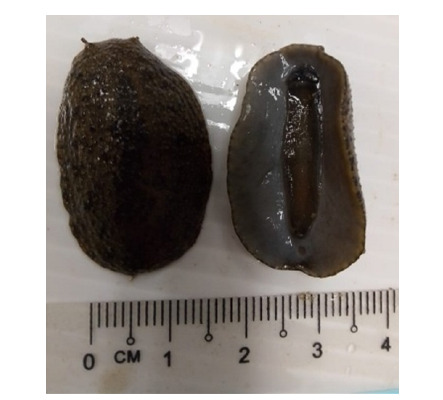
Figure 1:Plate index sp. individual collected from the observed sites. The species is characterised by its slightly rough brownish texture on the hyponotum (dorsal part) and a creamy foot on the notum (ventral part) with a hole-like structure representing the anus. The photo was not edited with AI assistance.
Methodology
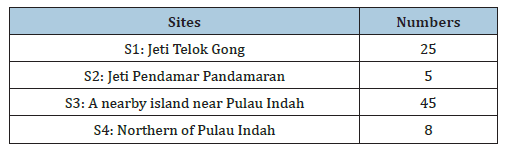
An on-site observational survey was conducted between 4 October and 23 November 2025 at four locations along the Klang Straits: Jeti Telok Gong, Kampung Pendamar in Pandamaran, an offshore island near Pulau Indah, and northern Pulau Indah. Site information, including coordinates, tidal conditions, and brief descriptions, is summarised in Table 1. At each site, photographs were taken to document the numbers of Platevindex individuals, the type of substrates they occupied, microhabitat conditions, and visible pollution sources. All photographs were captured by the observers without any AI editing. Informal interviews with local residents and fishermen provided qualitative insights into perceived pollution severity and long-term changes. Observational notes and photographic records were subsequently examined to assess patterns in habitat utilisation and to infer potential exposure to anthropogenic stressors.
Table 1:Descriptions of selected sites of plate index sp. in the Klang Straits.
Result
Observation of Platevindex sp. abundance and microhabitats
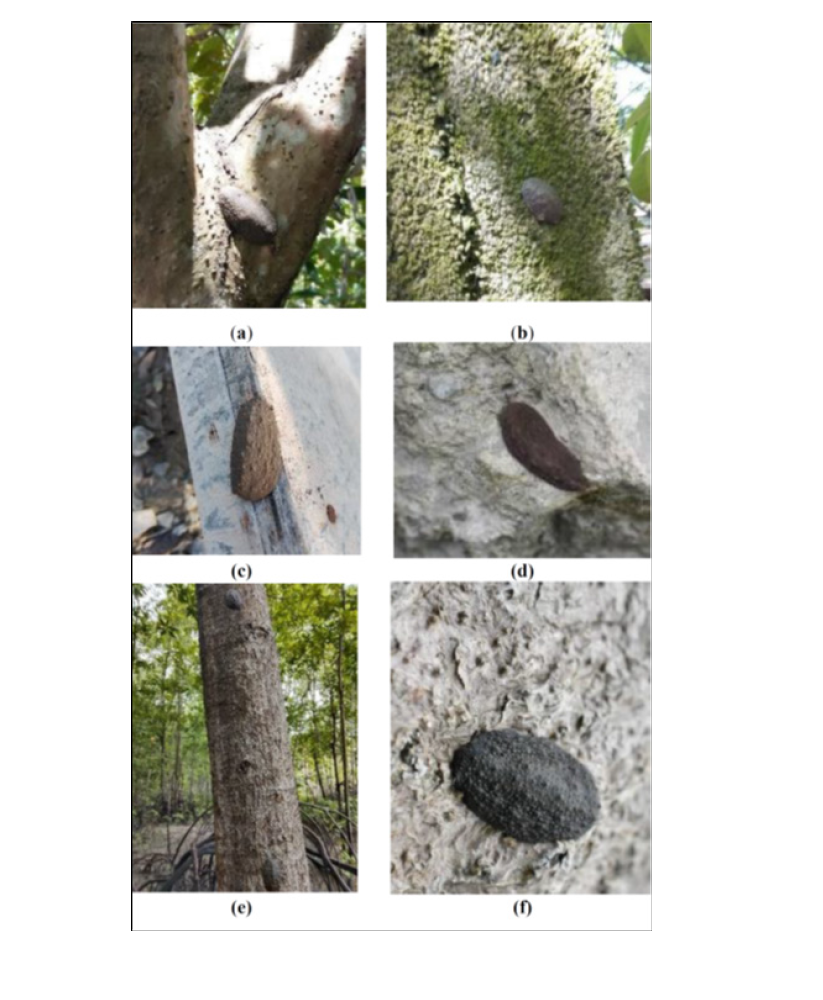
At Site 1 (Jeti Telok Gong), observations were made during low tide between 11:00 and 12:00. Weather conditions ranged from partly to intensely sunny. More than 25 active individuals of Platevindex sp. were recorded in the high intertidal zone near a small stream adjacent to the jetty. Slugs were found resting on mangrove tree trunks and pneumatophores as well as on shaded, slightly rough artificial surfaces such as wood and rocks (Figure 2a-2c). Only a few individuals were observed on discarded PVC pipes. The area was approximately 50m from small-scale fishing platforms and residential houses, with minor development opposite the site. Light but noticeable rubbish was scattered around the area, and vehicles were present at the jetty parking zone. At Site 2 (Kampung Pendamar jetty, Pandamaran), observations between 9:30 and 10:30 on a slightly sunny day recorded only five individuals of Platevindex sp. Three individuals were resting on Nipah (Nypa fruticans) fronds in the high intertidal area, while two were on artificial rocks (Figure 2d, 2f). The site represented a rural village environment with mainly young mangrove stands, fishing structures, small recreational areas, and residential settlements. The intertidal area was dominated by small rocks, zinc pieces, stone fragments, and dumped wood. A nearby plastic and chemical container dumping site was located close to the village. At Site 3 (an island near Pulau Indah), surveyed between 11:30 and 12:30, substantially less rubbish was observed compared with Sites 2 and 4, possibly due to its location and relatively higher mangrove canopy. Taller Avicennia trees were present, and approximately 40 individuals of Platevindex sp. were recorded within a 2m radius. Slugs were mainly found on tree trunks and branches and on decaying logs (Figure 2e & 2f), with none observed directly on mud surfaces. High local densities were recorded, with more than five individuals on a single piece of wood within a one-metre span. A possible instance of copulatory behaviour was also photographed at this site. At Site 4 (northern Pulau Indah), surveyed between 12:30 and 13:00 during the lowest tide of the day, the largest amount of rubbish was recorded among all sites. Plastic, mechanical debris, and medical waste were scattered from low to high intertidal zones. Although slugs were again associated with logs and branches, only eight individuals were recorded, each separated by distances of around 30m. Slug abundance across sites is summarised in Table 2, while representative habitat photographs for all four sites are shown in Figure 2.
Table 2:Numbers of plate index sp. observed at the four study sites.
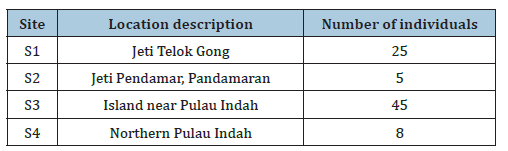
Figure 2:The habitat of plate index sp observed from four sites (a) The individual was observed on a tree trunk around 2m from ground in S1 (b) The individual was observed on an artificial rock with dense biofilm in S1 (C) The individual was observed on an abandoned wood S1 (D) plate index sp was found on rocks with less biofilm in S2. (e) Two individuals were found resting on a branch of tree in S3. (f) A direct zoom in photo of plate index inhabiting on rotted trunk in S4. All photos were captured by Mr. Izzuddin with a camera.
Discussion: An Ecotoxicological Perspective
Microhabitat utilisation and sensitivity to habitat condition
From the present study, the slug abundance followed a clear gradient: S2<S4<S1<S3. This ecological distribution pattern corresponds with the degree of habitat disturbance and mangrove structural complexity at each site. Site 3, which supported the highest number of Platevindex individuals, contained relatively undisturbed mangrove stands with abundant pneumatophores and mature trees [18]. These provide shaded, moist, and structurally complex substrates that favour pulmonate slugs [19]. The lower quantity of on-site rubbish suggests that much of the waste arrived indirectly via tidal transport, resulting in less direct disturbance. In contrast, Site 4 had substantial solid waste inputs across the intertidal zone, yet only a low number of slugs was recorded. Despite the presence of logs and branches suitable for attachment, extensive rubbish may have degraded habitat quality or forced slugs to migrate to higher or more remote intertidal areas not covered by this survey. Site 2, dominated by young mangroves and artificial materials, showed further evidence of habitat modification: three of the five individuals were observed on Nipah fronds and two on artificial rocks, indicating a reliance on alternative vertical or artificial structures where mangrove complexity is reduced. The representative habitat photographs in Figure 2 illustrate these contrasts in microhabitat availability and disturbance.
Sources and spatial patterns of pollution stressors
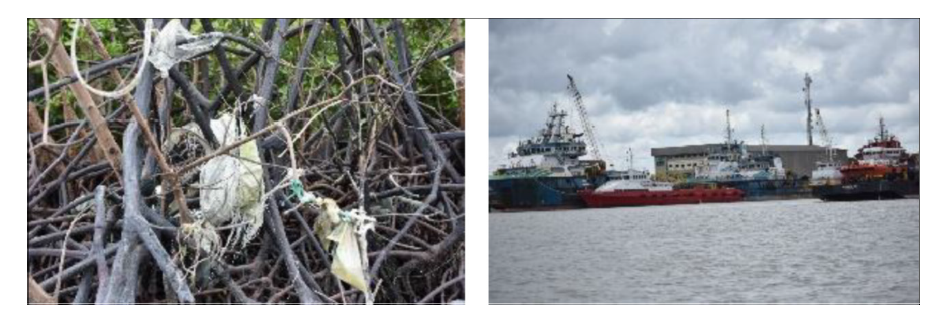
As Platevindex habitats become increasingly degraded, the species faces greater exposure to nearby pollution sources. Two primary pathways of pollution were identified. First, direct anthropogenic inputs involve on-site dumping, local burning, and physical disturbance associated with fisheries and small-scale infrastructure (Figure 3) [20]. Second, tidal and hydrological transport carries pollutants from upstream regions into mangrove zones during high tide and heavy rainfall events (Figure 3) [21]. These pollutants may originate from wastewater discharge, urban runoff, industrial activities, and riverine transport within the catchment [22]. Information from a local fisherman at Site 2 indicated the frequent accumulation of microplastic debris in the intertidal zone during low tide. This observation strengthens the inference that degraded mangrove habitats in Klang Straits are vulnerable to pollutant deposition and that Platevindex populations inhabiting such areas are likely subjected to elevated environmental stress.
Figure 3:Possible pollution pathways affecting plate index habitats: (left) tidal transport that drives floating waste into mangrove stands; (right) direct anthropogenic inputs such as shipping, and other human activities.
Exposure pathways
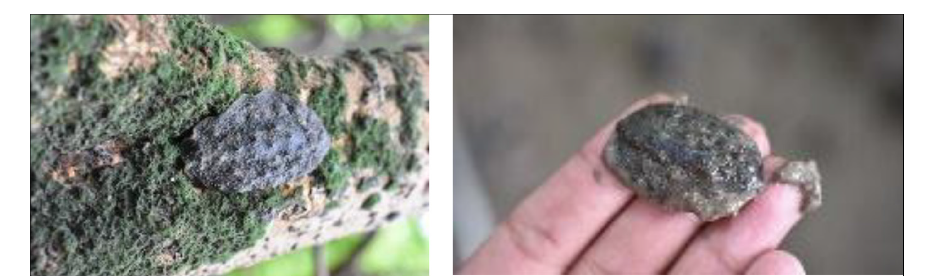
Pollutants entering mangrove systems can reach Platevindex sp. through three principal exposure routes: surface contact, ingestion, and respiration [23]. Field observations suggest that surface contact is a dominant pathway because slugs move and rest on sediments, roots, trunks, and biofilm-covered surfaces (Figure 4). Their ocular tentacles and muscular foot, which maintain constant contact with substrates, may be especially vulnerable to contaminant uptake, similar to other molluscs [24,25]. Ingestion represents a second route. Slugs feed on algae, diatoms, bryophytes, and associated biofilms [3,4], which may accumulate microplastics, metals, and organic pollutants (Figure 4). Accidental ingestion of attached particles can introduce contaminants into the digestive tract. A third route is respiratory uptake. As pulmonate gastropods, Platevindex spp. respire through a pneumostome connected to a lung-like sac [19]. Airborne contaminants or those present in thin water films during high tide may be inhaled, contributing to internal exposure. Together, these pathways highlight the susceptibility of Platevindex spp. to environmental pollutants in degraded mangrove ecosystems.
Figure 4:Exposure interfaces of plate index sp.: (left) individual attached to an algal surface, indicating potential exposure via food and substrate; (right) the ventral surface in direct contact with sediments, illustrating continuous contact with possibly contaminated mud.
Bioaccumulation processes within individuals
The foot surface of Platevindex is likely the most susceptible body region because of continuous contact with potentially contaminated substrates. The radula, which scrapes biofilms during feeding, also facilitates ingestion of pollutants [3]. Once ingested, contaminants can travel through the oesophagus into the stomach and gastrointestinal tract, where absorption and subsequent accumulation in internal organs may occur [23]. Metabolically active tissues, such as muscles and digestive glands, often serve as principal storage sites [24]. Over time, contaminant burdens may exceed physiological tolerance thresholds, leading to cellular damage, oxidative stress, and altered metabolic processes [24]. Pollutants may also be transported to reproductive organs such as the penial sheath or ova, with possible implications for reproductive success and population dynamics [3]. Like other molluscs, slugs may employ detoxification mechanisms such as egestion of undigested materials, excretion of contaminants in granular forms, and sequestration within specific tissues [25-28]. Although these mechanisms have not yet been characterised in detail for Platevindex spp., their existence can be inferred based on evidence from other molluscan taxa.
Biomagnification within the mangrove food web
Pollutants retained in Platevindex tissues, including PAHs, heavy metals, and microplastics, may not only affect slug physiology, genetics, and behaviour but also contribute to broader ecological impacts. As primary consumers in mangrove ecosystems, Platevindex spp. represent a potential vector for contaminant transfer to higher trophic levels. Natural predators such as stingrays, catfish, and other benthic feeders may ingest slugs directly or indirectly (for example, when slugs are used as bait by local fishers). Through biomagnification, pollutant concentrations can increase along the food chain, resulting in higher body burdens among top predators [26]. Fish consumed by humans could therefore accumulate substantial contaminant loads over time, with possible health risks such as neurotoxicity, endocrine disruption, and other chronic outcomes depending on contaminant type and concentration.
Recommendations for a Future Ecotoxicological Framework
To deepen understanding of pollutant impacts in mangrove ecosystems from the perspective of Platevindex spp., future studies should emphasise dose-response relationships and mixture toxicity. Controlled laboratory experiments should determine pollutant concentrations that elicit sublethal and lethal effects in slugs, including changes in survival, growth, feeding, reproduction, and behavioural responses [29,30]. These thresholds can help explain field patterns in abundance and distribution and clarify whether Platevindex spp. can function as sensitive bioindicators of environmental health. Investigations into mixture toxicity are also necessary, as mangrove habitats are typically contaminated by multiple pollutants simultaneously [16]. Understanding whether contaminants act synergistically, additively, or antagonistically will provide a more realistic assessment of ecological risk. By combining field observations with dose-response and mixture studies, Platevindex spp. could be proposed as a novel biomonitor in mangrove ecosystems, complementing existing molluscan indicators and improving the assessment of pollutant dynamics.
Conclusion
This study documented the occurrence, abundance, and microhabitat characteristics of Platevindex sp. across four selected sites in the Klang Straits, Selangor. The results indicate that slug abundance and behaviour are closely linked to habitat quality and pollution levels. Less disturbed sites with structurally complex mangroves supported higher numbers of individuals, whereas heavily polluted and structurally simplified sites exhibited lower abundance and greater reliance on artificial substrates. These patterns suggest that Platevindex spp. may be sensitive to habitat degradation and pollutant exposure, making them promising candidates for future biomonitoring. Further research focusing on dose-response relationships and mixture toxicity could establish Platevindex sp. as a novel bioindicator and biomonitoring organism, contributing to improved assessment and management of mangrove ecosystem health in the Klang Straits and similar coastal environments.
References
- Goulding TC, Dayrat B (2023) The coral triangle and strait of Malacca are two distinct hotspots of mangrove biodiversity. Scientific Reports 13(1): 15793.
- Dayrat B, Goulding TC, Apte D, Bhave V, Ngô Xuân Q (2017) A new genus and four new species of onchidiid slugs from South-East Asia (Mollusca: Gastropod: Pulmonated: Onchidiidae). Journal of Natural History 51(31-32): 1851-1897.
- Goulding TC, Bourke AJ, Comendador J, Khalil M, Quang NX, et al. (2021) Systematic revision of plate index baker 1938 (Gastropoda: Euthyneura: Onchidiidae). European Journal of Taxonomy 737: 1-133.
- Akbari NN, Shojaei MG, Farahani MM, Weigt M (2022) Stable isotopes reveal the food sources of benthic macroinvertebrates in the arid mangrove ecosystem of the Persian Gulf. Estuaries and Coasts 45(7): 2241-2253.
- Zakaria R, Chen G, Chew LL, Sofawi AB, Moh HH, et al. (2021) Carbon stock of disturbed and undisturbed mangrove ecosystems in Klang Straits, Malaysia. Journal of Sea Research 176: 102113.
- Hattam C, Goh HC, Then AYH, Jones EA, Ruslan NFN, et al. (2021) Using nexus thinking to identify opportunities for mangrove management in the Klang Islands, Malaysia. Estuarine, Coastal and Shelf Science 247: 106917.
- Praveena SM, Pradhan B, Ismail SNS (2015) Spatial assessment of heavy metals in surface soil from Klang District (Malaysia): An example from a tropical environment. Human and Ecological Risk Assessment: An International Journal 21(7): 1980-2003.
- Zaki MRM, Ying PX, Zainuddin AH, Razak MR, Aris AZ (2021) Occurrence, abundance, and distribution of microplastics pollution: Evidence in surface tropical water of Klang River estuary, Malaysia. Environmental Geochemistry and Health 43(9): 3733-3748.
- Praveena SM, Hisham MAFI, Nafisyah AL (2023) Microplastics pollution in agricultural farms soils: Preliminary findings from tropical environment (Klang Valley, Malaysia). Environmental Monitoring and Assessment 195(6): 650.
- Hishamuddin NH, Khan MF, Suradi H, Siraj BZ, Islam MT, et al. (2023) The sources of polycyclic aromatic hydrocarbons in road dust and their potential hazard. Sustainability 15(16): 12532.
- Tavakoly SSB, Salleh A, Rezayi M, Saadati N, Narimany L, et al. (2013) Distribution and contamination of heavy metal in the coastal sediments of Port Klang, Selangor, Malaysia. Water, Air & Soil Pollution 224(4): 1476.
- Ong GH, Wong LS, Tan A L, Yap CK (2016) Effects of metal-contaminated soils on the accumulation of heavy metals in gotu kola (Centella asiatica) and the potential health risks: A study in Peninsular Malaysia. Environmental Monitoring and Assessment 188(1): 40.
- Yap CK, Mutairi KA (2022) The ecological-health risks of potentially toxic metals in the surface sediments and leaves of salt-secreting Avicennia officinalis as potential phytoremediators: A field-based biomonitoring study from Klang Mangrove Area. Biology 12(1): 43.
- Janaydeh M, Ismail A, Omar H, Zulkifli SZ, Bejo MH, et al. (2018) Relationship between Pb and Cd accumulations in house crow, their habitat, and food content from Klang area, Peninsular Malaysia. Environmental Monitoring and Assessment 190(1): 47.
- Abas A, Awang A, Aiyub K (2018) Lichen as bio-indicator for air pollution in Klang, Selangor. Pollution Research 37(4): 35-39.
- Yap CK, Tiamiyu MA, Bakar NA, Syazwan WM, Wahid NNA, et al. (2025) Reframing the collapse of the Aral Sea through the principles of ecotoxicology: A critical synthesis of toxicological governance, environmental justice, and restoration. Coronus Biology 3(3): 14-32.
- Yap CK, Kumar K, Nulit R, Syazwan WM, Bakar NA, et al. (2025) Reinterpreting world War II atrocities through the principles of ecotoxicology: A critical historical-ecological framework. BAUET Journal 5(1):
- Bourke AJ (2016) Field identification of the'Platevindex' mangrove slugs (Mollusca: Gastropoda: Onchidiidae) of Darwin Harbour. Northern Territory Naturalist 27: 102-105.
- Goulding TC, Khalil M, Tan SH, Cumming RA, Dayrat B (2022) Global diversification and evolutionary history of onchidiid slugs (Gastropoda, Pulmonata). Molecular Phylogenetics and Evolution 168: 107360.
- Islam MA, Billah MM, Idris MH, Bhuiyan MKA, Kamal AHM (2024) Mangroves of Malaysia: A comprehensive review on ecosystem functions, services, restorations, and potential threats of climate change. Hydrobiologia 851(8): 1841-1871.
- Sulaiman MS, Anuar ST, Ibrahim YS, Yusof KMKK, Mohamad Y, et al. (2025) Estimation of macroplastic yield from river basin to coastal area: A case study of the Klang River, Malaysia. Marine Pollution Bulletin 212: 117527.
- Sun H, Tian Y, Li L, Meng Y, Huang X, et al. (2022) Anthropogenic pollution discharges, hotspot pollutants and targeted strategies for urban and rural areas in the context of population migration: Numerical modeling of the Minjiang river basin. Environment International 169: 107508.
- Yap CK, Tan WS, Syazwan WM, Wahid NA, Nulit R, et al. (2022) A conceptual model of nickel content in the bodies of seafood mollusks and their gastrointestinal absorption. J Biomed Res Environ Sci 3(4): 323-326.
- Yap CK, Mutairi KA (2024) Bioaccumulation of iron (Fe) and lead (Pb) in various body tissues of Telescopium in Peninsular Malaysia: Implications for biomonitoring and sustainability. Journal of Fisheries 12(3): 123203-123203.
- Pal D, Prabhakar R, Barua VB, Zekker I, Burlakovs J, et al. (2025) Microplastics in aquatic systems: A comprehensive review of its distribution, environmental interactions, and health risks. Environmental Science and Pollution Research 32(1): 56-88.
- Yap CK, Pang BH, Cheng WH, Kumar K, Avtar R, et al. (2023) Heavy metal exposures on freshwater snail Pomacea insularum: Understanding its biomonitoring potentials. Applied Sciences 13(2): 1042.
- Yap CK, Austin H, Nulit TY, Syazwan R, Okamura WM, et al. (2024). Copper in commercial marine fish: From biomonitoring to the ESG (Environment, Social, and Governance) Method. Pollutants 4(1): 117-135.
- Borriello L, Scivicco M, Cacciola NA, Esposito F, Velotto S, et al. (2025) Distribution and probabilistic consumer risk assessment of heavy metals, bisphenol A and phthalate esters in Mytilus galloprovincialis from Naples coastal waters. Journal of Food Composition and Analysis 148: 108203.
- Panda F, Pati SG, Das K, Samanta L, Sahoo DK, et al. (2022) Biochemical and molecular responses of the freshwater snail Pila sp. to environmental pollutants, abiotic, and biotic stressors. Frontiers in Environmental Science 10: 1033049.
- Dhiman V, Pant D (2021) Environmental biomonitoring by snails. Biomarkers 26(3): 221-239.
© 2025 Chee Kong Yap. This is an open access article distributed under the terms of the Creative Commons Attribution License , which permits unrestricted use, distribution, and build upon your work non-commercially.
Editor In Chief







.jpg)































Signup for Newsletter

Quick Links
 Editorial Board Registrations
 Submit your Article
 Best Paper of the Volume
 Reprints
 Refer a Friend
 Advertise With Us
Our Recent Edition

.jpg)



Top Editors




.jpg)

















.bmp)
.jpg)
.png)
.jpg)













.jpg)






.png)

.png)




.png)




Financial Support

Sponsors

Latest e-Books

Latest Video

 a Creative Commons Attribution 4.0 International License. Based on a work at www.crimsonpublishers.com.
Best viewed in
a Creative Commons Attribution 4.0 International License. Based on a work at www.crimsonpublishers.com.
Best viewed in 
 | Above IE 9.0 version