

- About Us
- Information
-

The Author ensures that the research has been conducted responsibly and ethically with adherence to all relevant regulations. read more..
- For Authors
- For Reviewer
- Manuscript Guidelines
- Membership
- Publication Ethics
-
- Journals
- Reprints
- e-Books
- Videos
- Policies
- Contact Us
 COVID-19
- Submissions



Full Text
Environmental Analysis & Ecology Studies
NatureScaping: A Conceptual Hydro-Ecological Framework for Groundwater Recharge and Climate-Resilient Landscape Restoration
Satya Prakash Mehra1,2*
1 Independent Environmental Scientist and Development Professional, Vasudha Ecologicals Global (VEG), India
2 Econsus Environmental Solutions LLP, India & Global Forum for Sustainable Rural Development (GFSRD), India
*Corresponding author:Satya Prakash Mehra, Independent Environmental Scientist and Development Professional, Vasudha Ecologicals Global (VEG) and Econsus Environmental Solutions LLP, India & Global Forum for Sustainable Rural Development (GFSRD), India
Submission: July 09, 2026; Published: October 23, 2026

ISSN 2578-0336 Volume14 Issue 1
Abstract
Globally dryland ecosystems are affected by the environmental challenges like groundwater depletion, land degradation, biodiversity loss, and increasing hydro-climatic variability. The approaches like groundwater management, watershed restoration, and Nature-based Solutions (NbS) have largely evolved as independent disciplines resulting in fragmented strategies for restoring landscape hydrological function. Conventional groundwater recharge programmes continue to rely predominantly on engineering interventions, while ecological restoration initiatives frequently prioritize vegetation recovery without explicitly optimizing hydro-ecological processes that govern infiltration, soil moisture dynamics, and aquifer replenishment. The perspective of NatureScaping is presented as a conceptual hydro-ecological framework. It integrates hydrogeomorphology, ecohydrology, restoration ecology, agroforestry, and adaptive landscape stewardship into a unified approach for climate-resilient landscape restoration. The foundation of the framework is based on the premise that groundwater recharge is governed by interacting ecological and hydrological processes operating across landscapes. Within this framework, Hydro-Ecological Vegetation Profiling (HVP) and Agroforestry-Based Soil Moisture Engineering (ABSME) are introduced as complementary planning concepts that align vegetation design and agroforestry systems with hydrological processes to enhance infiltration, soil moisture conservation, groundwater recharge, and ecosystem resilience.
By integrating ecological processes with landscape-scale hydrological planning, NatureScaping extends existing Nature-based Solutions beyond ecosystem restoration toward functional hydro-ecological design. Although conceptual in nature, the framework provides a scientific foundation for future empirical validation and offers a multidisciplinary pathway for sustainable groundwater management, climate adaptation, and landscape restoration in dryland environments. Its application has the potential to support the achievement of the United Nations Sustainable Development Goals, particularly SDG 6 (Clean Water and Sanitation), SDG 13 (Climate Action), and SDG 15 (Life on Land).
Keywords:NatureScaping; Hydro-ecological framework; Groundwater recharge; Ecohydrology; Nature-based solutions; Agroforestry; Climate resilience; Landscape restoration
Introduction
Water security has become one of the defining environmental challenges of the twenty-first century [1]. Accelerating climate change, rapid land-use transformation, groundwater depletion, biodiversity loss, and increasing pressure on natural resources are altering hydrological processes across landscapes worldwide. These interconnected changes are particularly pronounced in arid and semi-arid regions, where highly variable rainfall, increasing temperatures, and land degradation have reduced the capacity of ecosystems to capture, store, and regulate water [2]. As a consequence, many landscapes are becoming progressively less resilient to climatic extremes, threatening ecosystem integrity, agricultural productivity, and human wellbeing [3].
Recent assessments indicate that humanity is approaching critical environmental thresholds associated with freshwater availability, climate regulation, biodiversity loss, and land-system change, highlighting the urgent need for integrated approaches that simultaneously restore ecosystem function and hydrological resilience [2]. In this context, the concept of green water - the fraction of precipitation stored in soils and subsequently utilized by vegetation - has gained increasing recognition as a fundamental regulator of terrestrial ecosystem productivity and groundwater recharge [2,10]. Maintaining the integrity of these interconnected water pathways requires landscape-scale planning that integrates ecological and hydrological processes rather than treating water resources, vegetation, and land management as independent components of environmental planning.
Groundwater represents the largest accessible source of freshwater on Earth, providing drinking water for nearly half of the global population and supporting approximately 40% of irrigated agriculture while sustaining rivers, wetlands, forests, and numerous ecosystem services [4,5]. In dryland environments, groundwater functions as a strategic ecological reserve, buffering ecosystems and communities against prolonged droughts and seasonal variability [6,7]. However, increasing groundwater abstraction combined with declining natural recharge has resulted in widespread aquifer depletion across many regions of the world, including the Indo-Gangetic Basin, North China Plain, Central Valley of California, and parts of Australia, Africa, and the Middle East [8].
Responses to groundwater decline have traditionally focused on engineering-based recharge interventions, including recharge wells, percolation tanks, check dams, infiltration basins, and other artificial recharge structures [9]. While these measures have demonstrated localized success under favourable hydrogeological conditions, they frequently address groundwater recharge as an isolated hydrological process rather than as the outcome of healthy landscape functioning. The effectiveness of such interventions ultimately depends on vegetation cover, soil structure, hydrogeomorphology, infiltration capacity, biological activity, and long-term landscape management, factors that often receive limited attention during planning and implementation [10].
During the past decade, Nature-based Solutions (NbS) have emerged as an important paradigm for addressing environmental challenges by restoring and sustainably managing ecosystems while simultaneously generating ecological and societal benefits [11,12]. Similarly, advances in ecohydrology [13], restoration ecology [14], landscape ecology [15], and agroforestry have demonstrated that vegetation, soils, microorganisms, and landscape connectivity play fundamental roles in regulating infiltration, runoff, groundwater recharge, and ecosystem resilience [16-18]. Despite these advances, current approaches remain largely disciplinary in nature. Hydrological studies often concentrate on aquifer processes, restoration programmes prioritize vegetation establishment and biodiversity recovery, and agroforestry research emphasizes agricultural productivity and carbon sequestration. Relatively little attention has been given to integrating these disciplines within a unified hydro-ecological framework explicitly designed to restore landscape hydrological function and enhance groundwater recharge.
This conceptual disconnect represents an important scientific opportunity. Groundwater recharge is influenced not only by rainfall and geology but also by the interaction of hydrogeomorphology, vegetation architecture, soil biological processes, land management, and ecological connectivity. Consequently, restoring groundwater sustainability requires moving beyond isolated interventions toward landscape-scale approaches that intentionally design ecological processes to regulate water movement, infiltration, storage, and ecosystem resilience.
Against this background, this paper introduces NatureScaping, a hydro-ecological framework that integrates principles from hydrogeomorphology, ecohydrology, restoration ecology, agroforestry, and adaptive landscape stewardship into a coherent approach for climate-resilient landscape restoration. Rather than treating groundwater recharge as an engineering objective alone [19], NatureScaping conceptualizes it as an emergent ecosystem function arising from healthy interactions among landscape form, vegetation, soils, hydrological connectivity, and human stewardship. The framework seeks to provide a scientific foundation for integrating ecological restoration with groundwater management and sustainable land-use planning while supporting long-term resilience under changing climatic conditions. The paper first examines the scientific foundations underpinning NatureScaping, then presents the principal components of the framework, and finally discusses its potential contribution to future research, integrated watershed management, and sustainable landscape restoration.
Unlike existing Nature-based Solutions, watershed restoration, or groundwater recharge approaches, NatureScaping provides a structured synthesis of existing hydrogeomorphology, ecohydrology, agroforestry, and restoration ecological principles into an integrated planning framework. The originality of NatureScaping lies not in proposing a new groundwater recharge technology, but in integrating established principles of hydrogeomorphology, ecohydrology, restoration ecology, agroforestry, and adaptive stewardship into a unified hydro-ecological planning framework capable of guiding climate-resilient landscape restoration.
Why NatureScaping? Towards an Integrated Hydro-Ecological Framework
The restoration of groundwater systems has become an increasingly interdisciplinary challenge that extends beyond conventional hydrogeology. Growing evidence indicates that groundwater recharge is governed not only by rainfall, geology, and aquifer characteristics but also by the structure and functioning of terrestrial ecosystems. Vegetation regulates rainfall interception, infiltration, evapotranspiration, soil aggregation, and preferential flow pathways, while soil microorganisms, organic matter, and root systems collectively influence the movement and storage of water within landscapes [16,17]. Consequently, groundwater recharge should be viewed as a landscape-scale ecological process rather than solely a hydrogeological phenomenon [15].
Recent decades have witnessed considerable progress in disciplines relevant to sustainable water management. Ecohydrology has demonstrated the reciprocal interactions between ecological processes and the hydrological cycle [13,20], whereas hydrogeomorphology has highlighted the importance of landforms, drainage networks, and geological settings in determining recharge potential [21]. Likewise, Nature-based Solutions (NbS) have emerged as an internationally recognized approach for addressing societal challenges through ecosystem protection, restoration, and sustainable management [11]. Parallel advances in agroforestry have shown that integrating trees with agricultural systems improves soil organic carbon, infiltration capacity, nutrient cycling, and resilience to climatic variability [22].
These scientific advances have progressively transformed the understanding of water from a purely physical resource to an ecological process embedded within complex socio-ecological systems. Ecohydrology recognizes that hydrological processes regulate ecosystem structure while ecological processes simultaneously influence water movement, storage, and quality across landscapes [13,20]. Similarly, landscape ecology emphasizes that ecological connectivity, spatial heterogeneity, and landscape configuration strongly influence hydrological responses and ecosystem resilience [15]. Collectively, these perspectives suggest that sustainable groundwater management should emerge from integrated landscape functioning rather than isolated sectoral interventions.
Despite these advances, these disciplines have largely evolved independently. Hydrogeological studies primarily focus on aquifer dynamics and recharge structures, restoration ecology emphasizes biodiversity recovery and vegetation establishment, while agroforestry research has traditionally prioritized agricultural productivity, carbon sequestration, and livelihood enhancement. Although each discipline contributes valuable knowledge, relatively few studies have integrated these complementary perspectives into a unified framework capable of simultaneously restoring groundwater recharge, ecosystem function, and landscape resilience.
Existing groundwater recharge programmes continue to rely predominantly on structural interventions, including recharge wells, check dams, infiltration basins, and percolation tanks. These measures often provide localized improvements but are frequently implemented without systematic consideration of vegetation architecture, soil biological processes, hydrogeomorphic variability, or ecological connectivity [15]. Similarly, many ecological restoration programmes emphasize increasing vegetation cover without explicitly evaluating the hydrological performance of restored landscapes. As a result, opportunities to enhance groundwater recharge through functional landscape design remain underutilized [10,23].
The global evolution of Nature-based Solutions (NbS) further reinforces this perspective by recognizing that ecosystem restoration can simultaneously address climate adaptation, water security, biodiversity conservation, and human well-being [11,12]. Nevertheless, most NbS frameworks remain intentionally broad and do not explicitly describe how hydrogeomorphology, vegetation architecture, soil ecological processes, and agroforestry should be integrated to maximize groundwater recharge and long-term hydrological resilience. NatureScaping is intended to complement rather than replace existing NbS approaches by providing a functional hydro-ecological planning framework specifically focused on restoring landscape hydrological performance.
A further limitation lies in the way vegetation is commonly incorporated into restoration planning [14]. Species selection is generally based on survival, growth rate, biodiversity value, or economic benefits, whereas relatively little attention is given to canopy architecture, rooting characteristics, seasonal water use, or ecohydrological functions that regulate infiltration and soil moisture dynamics. Likewise, agroforestry systems are rarely designed as components of watershed hydrology despite their well-documented capacity to improve soil structure, increase macroporosity, reduce runoff, and enhance groundwater recharge [18].
These observations suggest that groundwater sustainability requires a shift from intervention-based planning toward processbased landscape design. Rather than considering groundwater recharge as the outcome of isolated engineering structures [19], it should be recognized as an emergent property of healthy socioecological systems in which hydrogeomorphology, vegetation, soils, biodiversity, and human stewardship function as interconnected components of a resilient landscape.
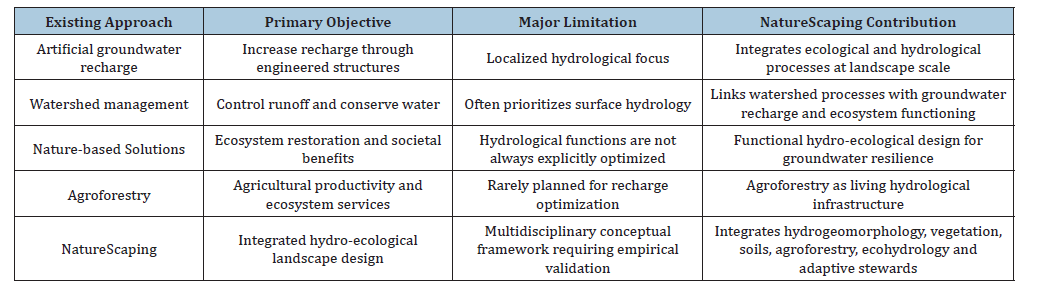
Against this scientific background, NatureScaping is introduced as an integrated hydro-ecological framework that synthesizes established principles from ecohydrology, hydrogeomorphology, restoration ecology, agroforestry, and Nature-based Solutions into a coherent landscape planning approach. The framework addresses the existing disconnect between ecological restoration and groundwater management by promoting hydro-ecological landscape design in which vegetation, soils, and hydrological processes are intentionally planned to enhance groundwater recharge, ecosystem resilience, and climate adaptation (Figure 1). The distinctions between NatureScaping and existing approaches to groundwater management and ecological restoration are summarized in Table 1.
Figure 1:Conceptual rationale for NatureScaping showing the transition from fragmented disciplinary approaches toward an integrated hydro-ecological framework for groundwater recharge and climate-resilient landscape restoration.
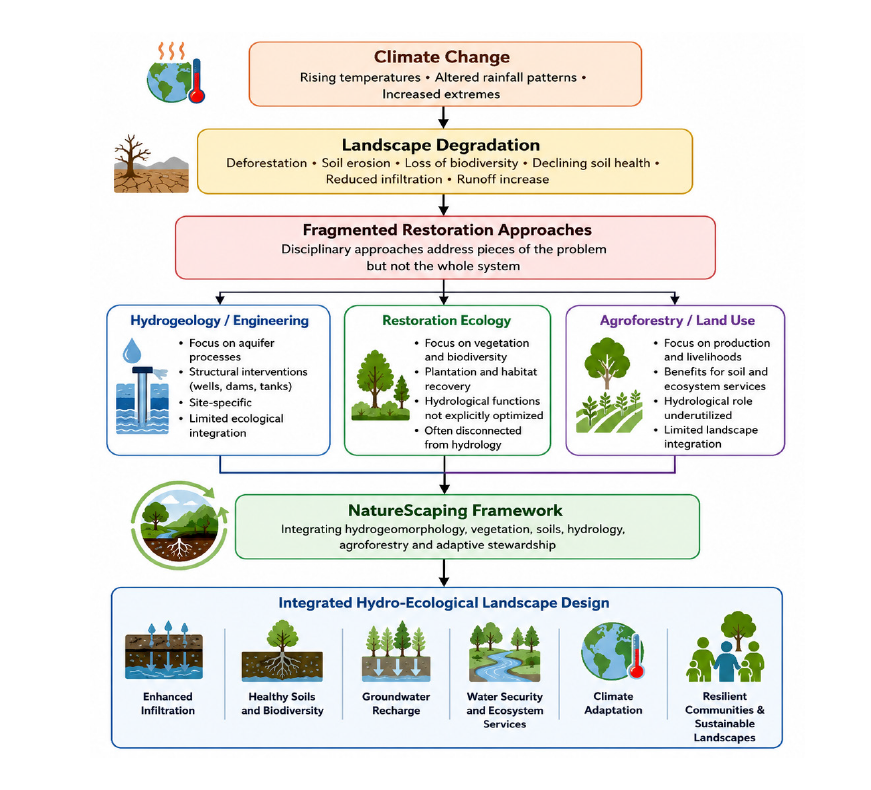
Table 1:Comparison of NatureScaping with existing approaches to groundwater recharge and landscape restoration.
The NatureScaping Framework
The increasing complexity of water-related environmental challenges requires a transition from fragmented resource management towards integrated landscape planning. Climate change, groundwater depletion, declining soil health, biodiversity loss, and unsustainable land use are interconnected processes that cannot be effectively addressed through isolated interventions. NatureScaping is introduced as a hydro-ecological framework that integrates these dimensions into a coherent approach for restoring landscape function and strengthening groundwater resilience.
The central premise of NatureScaping is that groundwater recharge emerges from the dynamic interaction of hydrogeomorphological, ecological, biological, and socioenvironmental processes operating across landscapes. From this perspective, restoration shifts from constructing recharge structures towards designing hydro-ecological landscapes that naturally enhance infiltration, conserve soil moisture, regulate runoff, and sustain aquifer replenishment over the long term.
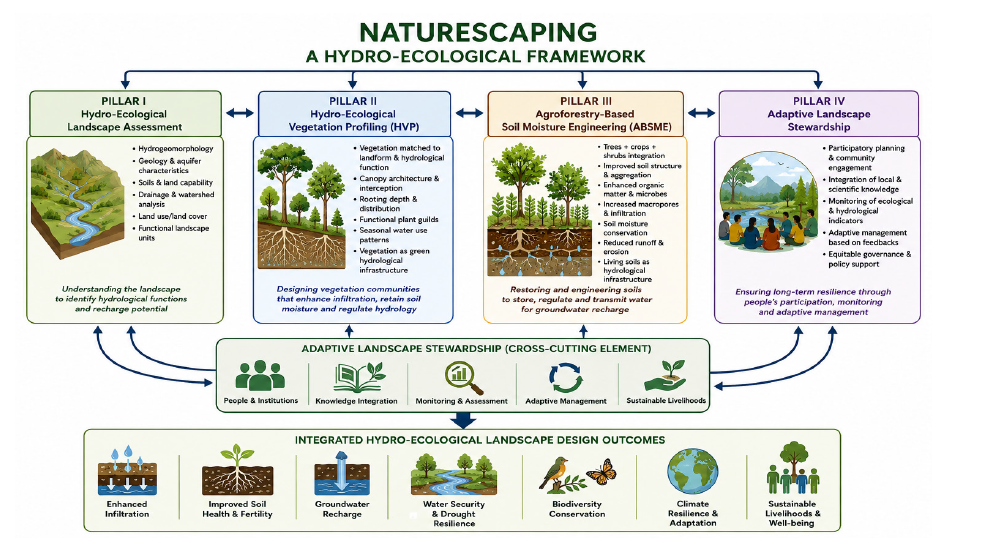
The framework synthesizes established scientific knowledge from hydrogeomorphology, ecohydrology, restoration ecology, agroforestry, and Nature-based Solutions into four interdependent pillars that collectively guide hydro-ecological landscape design (Figure 2). These pillars are not intended to function independently; rather, they operate through continuous ecological feedbacks that strengthen landscape resilience and improve hydrological performance.
Figure 2:Conceptual representation of the four interdependent pillars of NatureScaping showing feedbacks among hydrogeomorphology, vegetation, soils and adaptive stewardship.
Unlike conventional restoration frameworks that emphasize individual interventions, NatureScaping adopts a systems perspective in which landscape processes operate through continuous feedbacks among climate, vegetation, soils, hydrology, biodiversity, and human management. Consequently, the framework is intended to guide the functional design of hydroecological landscapes rather than prescribe individual restoration technologies. Engineering structures, ecological restoration measures, agroforestry systems, and community stewardship are therefore viewed as complementary components of an integrated hydro-ecological system rather than independent management interventions.
Pillar I: Hydro-ecological landscape assessment
Effective groundwater restoration begins with understanding the physical characteristics of the landscape. Geological formations, hydrogeomorphology, slope, drainage density, soil depth, watershed configuration, and land-use patterns strongly influence infiltration, runoff generation, subsurface flow, and recharge potential [4,21].
NatureScaping therefore advocates that hydrogeomorphic assessment should precede restoration planning. Instead of applying uniform interventions across a watershed, restoration measures should be matched to landscape position and ecological function. Ridge tops, upper slopes, valley bottoms, floodplains, riparian corridors, and natural depressions each perform distinct hydrological roles and therefore require different restoration strategies. By identifying these hydro-ecological landscape units, hydro-ecological assessment provides the scientific foundation upon which subsequent restoration interventions are designed.
Pillar II: Hydro-ecological vegetation profiling
Vegetation represents one of the most influential regulators of terrestrial hydrological processes. Canopy interception, litter accumulation, rooting depth, soil aggregation, evapotranspiration, and rhizosphere activity collectively determine the partitioning of rainfall into runoff, soil moisture, and groundwater recharge [16,17].
NatureScaping introduces Hydro-Ecological Vegetation Profiling (HVP) as a functional planning approach in which vegetation communities are selected and spatially organized according to hydrogeomorphic conditions and hydrological objectives rather than plantation density alone. Within this framework, vegetation is viewed as green hydrological infrastructure, performing multiple ecosystem functions that enhance infiltration, stabilize soils, improve water retention, support biodiversity, and regulate microclimatic conditions.
HVP encourages the integration of canopy architecture, rooting characteristics, phenological behaviour, functional plant guilds, and landscape position into restoration planning. Consequently, the objective shifts from maximizing tree numbers to maximizing landscape hydrological performance.
Pillar III: Agroforestry-based soil moisture engineering
Healthy soils form the critical interface between precipitation and groundwater recharge. Soil organic matter, microbial communities, root networks, aggregate stability, and macropore development regulate infiltration, water storage, nutrient cycling, and plant water availability. Degraded soils often lose these functions, resulting in increased runoff, erosion, and reduced recharge.
NatureScaping extends the ecological role of agroforestry through Agroforestry-Based Soil Moisture Engineering (ABSME). Rather than considering agroforestry solely as a production system, ABSME recognizes trees, shrubs, crops, and associated soil biota as components of living hydrological infrastructure. Strategically designed agroforestry systems improve soil structure, enhance infiltration, increase soil organic carbon, promote rhizosphere activity, and strengthen landscape resilience while simultaneously supporting sustainable agricultural production [18,22].
This pillar also recognizes that effective groundwater recharge depends not only on the quantity of water entering the soil but also on the capacity of soils to retain, regulate, and gradually release water through ecological processes. Accordingly, soil restoration becomes an essential component of groundwater management rather than a separate agricultural objective.
Pillar IV: Adaptive landscape stewardship
Hydrological processes are continuously influenced by human activities, including land-use decisions, vegetation management, agricultural practices, grazing intensity, and groundwater abstraction. Consequently, long-term groundwater sustainability depends not only on ecological restoration but also on adaptive governance and community participation.
NatureScaping therefore incorporates Adaptive Landscape Stewardship, which emphasizes participatory planning, integration of scientific and indigenous knowledge, continuous ecological monitoring, and adaptive management [24]. Community stewardship strengthens the long-term effectiveness of restoration interventions by ensuring that ecological processes are maintained beyond the implementation phase. This pillar also encourages crosssectoral collaboration among hydrologists, ecologists, foresters, agricultural scientists, policymakers, and local communities, thereby promoting integrated landscape governance.
Collectively, these four pillars provide a systems-based framework in which landscape assessment, vegetation design, soil ecological restoration, and adaptive stewardship operate as interconnected components of a single hydro-ecological system. Rather than replacing existing groundwater recharge technologies or ecosystem restoration practices, NatureScaping integrates them within a broader landscape perspective that seeks to restore natural hydrological function while enhancing biodiversity, climate resilience, and sustainable livelihoods.
Scientific Significance and Future Perspectives
NatureScaping represents a conceptual shift in the way groundwater recharge and landscape restoration are understood and implemented. Conventional groundwater management has predominantly focused on structural interventions designed to increase recharge through engineering solutions, whereas ecological restoration has largely emphasized vegetation establishment, biodiversity conservation, and ecosystem recovery. Although these approaches have generated important advances independently, their integration into a coherent hydro-ecological planning framework has remained limited. NatureScaping seeks to bridge this gap by positioning groundwater recharge as an emergent ecosystem function resulting from interactions among landscape morphology, vegetation dynamics, soil ecological processes, hydrological connectivity, and adaptive human stewardship.
One of the principal contributions of the framework is its emphasis on hydro-ecological landscape design rather than isolated restoration interventions. Instead of asking where recharge structures should be constructed, NatureScaping encourages planners to ask how landscapes themselves can be designed to regulate infiltration, conserve soil moisture, reduce runoff, and sustain groundwater recharge through ecological processes. This transition from structure-based management to process-based landscape design broadens the scope of groundwater restoration and aligns hydrological planning with ecosystem functioning and climate adaptation.
The framework also introduces a stronger ecological dimension to groundwater management by recognizing vegetation and soils as active components of hydrological infrastructure. Through Hydro-Ecological Vegetation Profiling (HVP), vegetation is no longer viewed simply as biological cover or a means of carbon sequestration but as a functional regulator of interception, infiltration, evapotranspiration, soil stabilization, and groundwater recharge. Similarly, Agroforestry-Based Soil Moisture Engineering (ABSME) expands the role of agroforestry beyond agricultural production by integrating soil ecological processes, root architecture, and rhizosphere dynamics into landscape hydrology. These concepts complement existing Nature-based Solutions by providing a structured approach for designing vegetation and agroforestry systems according to hydro-ecological function rather than solely ecological or economic objectives.
Relationship of naturescaping with existing frameworks
NatureScaping builds upon, rather than replaces, several wellestablished scientific and management paradigms that have shaped contemporary environmental restoration and water-resource planning. Its principal contribution lies in integrating these complementary disciplines into a unified hydro-ecological planning framework specifically oriented towards restoring landscape hydrological function.
Nature-based Solutions (NbS) promote ecosystem conservation and restoration to address societal challenges, including climate adaptation, biodiversity conservation, and water security. However, NbS frameworks intentionally remain broad and generally do not prescribe explicit hydro-ecological design principles for optimizing groundwater recharge. NatureScaping complements NbS by providing a process-oriented framework that explicitly integrates vegetation architecture, hydrogeomorphology, soil ecological processes, and agroforestry into landscape planning for groundwater resilience.
Similarly, Integrated Water Resources Management (IWRM) emphasizes coordinated management of water, land, and related resources across sectors [25,26]. While IWRM provides an institutional and governance framework, NatureScaping contributes an ecological design perspective by focusing on how landscape structure and ecosystem processes regulate hydrological function at multiple spatial scales. Ecohydrology has demonstrated the reciprocal interactions between ecological processes and the hydrological cycle, whereas landscape ecology has emphasized spatial heterogeneity, ecological connectivity, and landscape configuration. NatureScaping synthesizes these scientific principles into a practical planning framework that guides restoration interventions according to hydrogeomorphic context, vegetation function, soil ecological processes, and adaptive stewardship.
Likewise, ecological engineering and watershed management have traditionally focused on engineered recharge structures, runoff control, and ecosystem restoration. NatureScaping does not replace these approaches; rather, it positions them as complementary components within an integrated hydro-ecological landscape system in which ecological processes enhance the longterm effectiveness of engineering interventions.
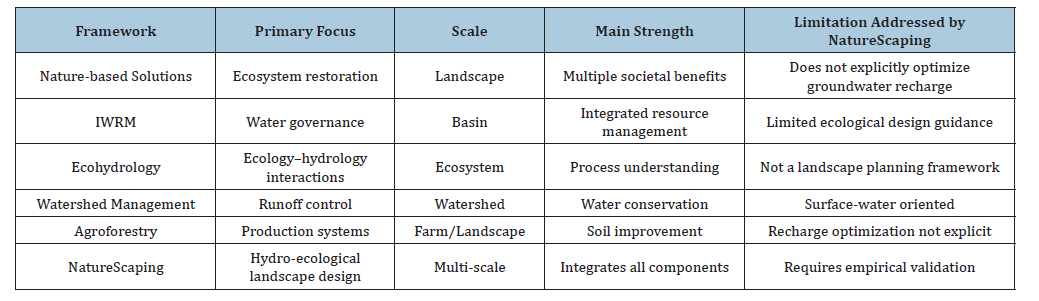
Accordingly, NatureScaping should be viewed as an integrative conceptual framework that connects existing scientific disciplines through functional hydro-ecological landscape design rather than as an alternative to established groundwater management or ecological restoration approaches (Table 2). NatureScaping is not intended to replace established groundwater recharge technologies or watershed management practices. Instead, it provides an integrative planning framework within which conventional engineering measures, ecological restoration, agroforestry, and community-based management can operate synergistically. Recharge structures, wetlands, riparian buffers, contour bunds, infiltration systems, and restoration plantations become complementary components of a larger hydro-ecological landscape rather than independent interventions. Such integration has the potential to improve the efficiency, resilience, and longterm sustainability of groundwater recharge programmes across diverse environmental settings [27].
Table 2:Conceptual comparison of NatureScaping with existing hydro-ecological planning frameworks.
Although presented here as a conceptual framework, NatureScaping provides several opportunities for future scientific investigation. Field experiments across contrasting climatic and hydrogeomorphic regions are required to evaluate the effectiveness of Hydro-Ecological Vegetation Profiling and Agroforestry-Based Soil Moisture Engineering under different landscape conditions. Advances in remote sensing, Geographic Information Systems (GIS), hydrological modelling, and environmental monitoring can further support the development of spatial decision-support tools for identifying priority recharge landscapes and evaluating ecosystem responses over time. Future research should also investigate measurable hydro-ecological performance indicators, including infiltration capacity, soil organic carbon, vegetation functional diversity, groundwater recharge rates, and ecosystem resilience, thereby strengthening the empirical basis of the framework.
Future empirical validation of NatureScaping should adopt interdisciplinary research designs capable of evaluating both hydrological performance and ecological functioning across multiple spatial and temporal scales. Comparative field experiments conducted in contrasting hydro-climatic regions would provide an effective approach for assessing the robustness and transferability of the framework. Validation may employ paired watershed studies in which conventionally managed landscapes are compared with landscapes restored using NatureScaping principles. Such studies could quantify changes in groundwater recharge, infiltration dynamics, runoff generation, soil moisture retention, vegetation recovery, biodiversity, and ecosystem resilience over extended monitoring periods.
Hydrological evaluation should combine groundwater-level monitoring, infiltration measurements, saturated hydraulic conductivity, soil moisture observations, and water balance analyses. Simultaneously, ecological assessments may include vegetation functional diversity, canopy structure, rooting characteristics, soil organic carbon, microbial activity, aggregate stability, and biodiversity indicators to determine whether improvements in ecosystem functioning correspond with enhanced hydrological performance.
Advances in remote sensing, Geographic Information Systems (GIS), Unmanned Aerial Vehicles (UAVs), distributed hydrological modelling, environmental DNA (eDNA), and digital terrain analysis provide additional opportunities for evaluating landscape-scale responses. These technologies can facilitate spatial prioritization of restoration sites, monitor vegetation dynamics, quantify hydrological connectivity, and assess long-term ecosystem recovery.
Ultimately, validation should extend beyond demonstrating increased groundwater recharge alone. The broader objective should be to determine whether NatureScaping simultaneously improves ecological integrity, landscape resilience, climate adaptation, and sustainable ecosystem services, thereby providing evidence for its application as an integrated hydro-ecological planning framework.
Future research should evaluate the applicability and performance of NatureScaping across diverse hydro-climatic and hydrogeomorphic settings using quantitative hydro-ecological indicators. Validation should extend beyond conventional groundwater level monitoring to include integrated assessments of ecological structure, hydrological function, and ecosystem resilience. Appropriate indicators include infiltration rate, saturated hydraulic conductivity, soil organic carbon, aggregate stability, vegetation functional diversity, groundwater level fluctuations, groundwater recharge rates, biodiversity indices, and landscape connectivity. Recent advances in remote sensing, Geographic Information Systems (GIS), Unmanned Aerial Vehicle (UAV) surveys, distributed hydrological modelling, and environmental DNA (eDNA) monitoring provide powerful opportunities to quantify landscape responses and evaluate the long-term effectiveness of restoration interventions.
Long-term comparative studies across contrasting climatic regions will be essential for assessing the robustness, transferability, and scalability of the framework. Such investigations may also facilitate the development of standardized hydro-ecological performance indices capable of supporting adaptive landscape planning and evidence-based groundwater governance. Consequently, NatureScaping should presently be regarded as a scientifically grounded conceptual framework whose broader applicability will progressively be strengthened through interdisciplinary empirical research.
The interdisciplinary nature of NatureScaping also creates opportunities for integrating environmental science with land-use planning, climate adaptation, ecological engineering, and sustainable agriculture. By linking hydrogeomorphology, ecohydrology, restoration ecology, agroforestry, and adaptive governance, the framework provides a common platform for collaboration among hydrologists, ecologists, foresters, soil scientists, agricultural experts, planners, and local communities. Such integration is increasingly necessary as environmental challenges become more interconnected under changing climatic conditions.
Beyond its scientific implications, NatureScaping contributes to international efforts aimed at restoring ecosystem function while improving water security and climate resilience. The framework is consistent with the principles of the United Nations Decade on Ecosystem Restoration, the IUCN Global Standard for Naturebased Solutions, and the objectives of Integrated Water Resources Management (IWRM) [25,26]. Its implementation can support progress towards the Sustainable Development Goals, particularly SDG 6 (Clean Water and Sanitation) through improved groundwater management, SDG 13 (Climate Action) by enhancing landscape resilience to climate variability, and SDG 15 (Life on Land) through ecological restoration and biodiversity conservation.
NatureScaping is not intended to establish a new discipline, but rather to provide an integrative framework that synthesizes advances in ecohydrology, hydrogeomorphology, restoration ecology, agroforestry, ecological engineering, watershed management, and Nature-based Solutions into a common hydroecological perspective. In contrast to conventional groundwater recharge programmes that primarily emphasize engineering interventions, and broader restoration frameworks that often prioritize biodiversity or ecosystem recovery, NatureScaping explicitly links landscape structure with hydrological function through functional vegetation design, soil ecological processes, and adaptive stewardship. The framework therefore complements existing paradigms by providing a systems-based approach for integrating ecological restoration and groundwater management within climate-resilient landscape planning.
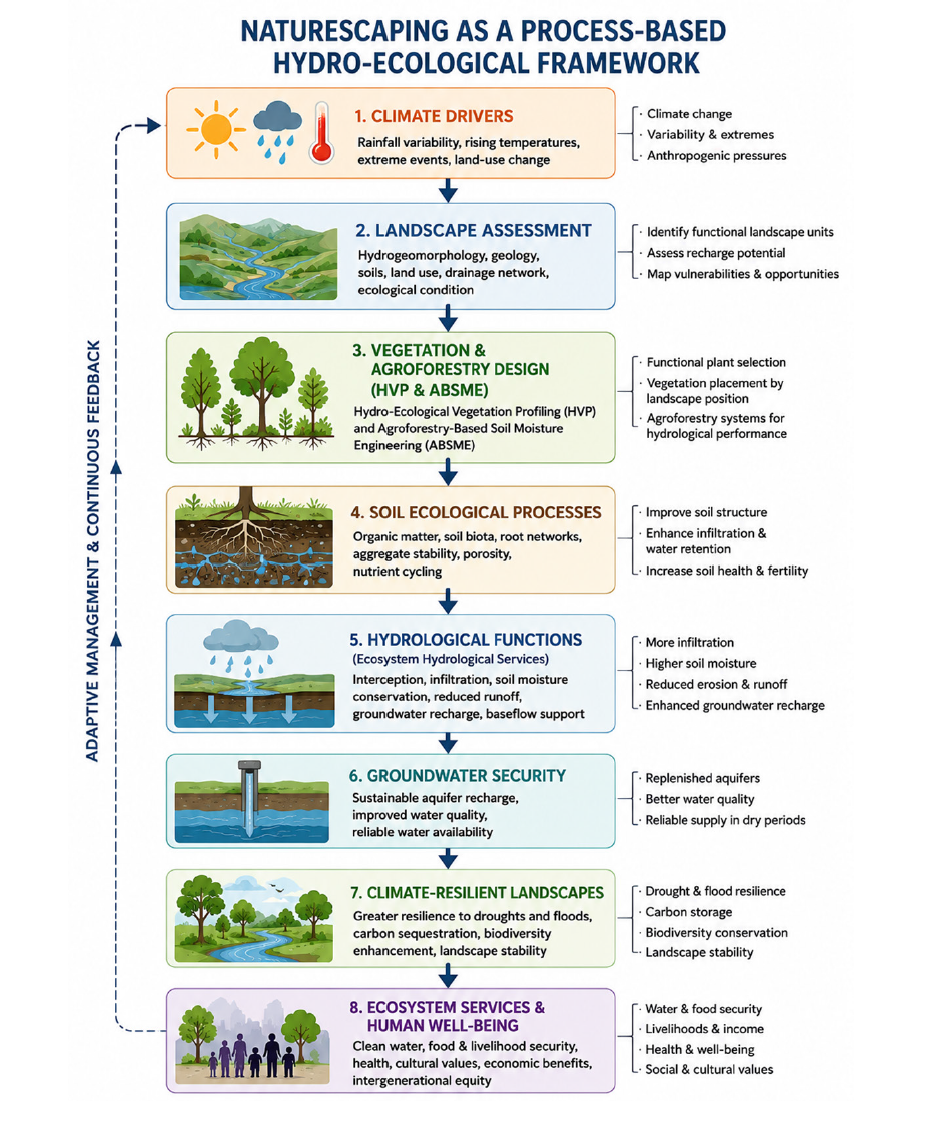
Ultimately, NatureScaping offers a new perspective in which groundwater recharge is viewed not as the endpoint of engineered interventions but as the natural outcome of resilient hydroecological landscapes. By integrating physical, ecological, and social dimensions of landscape restoration within a single conceptual framework, NatureScaping provides a scientific foundation for future research and practical application in dryland restoration, watershed management, and sustainable groundwater governance. NatureScaping is intended to evolve as an adaptive scientific framework whose components may be refined through future empirical evidence and interdisciplinary collaboration (Figure 3).
Figure 3:NatureScaping as a process-based hydro-ecological framework showing the flow from climate drivers to ecosystem services and human well-being through integrated ecological and hydrological processes.
From Concept to Practice: Operationalizing NatureScaping
Although NatureScaping is presented as a conceptual framework, its underlying principles are intended to guide practical landscape planning and ecosystem restoration across diverse environmental settings [27]. Rather than prescribing a single restoration model, the framework provides a flexible decisionmaking process that can be adapted to different climatic, ecological, and socio-economic conditions.
Implementation begins with a comprehensive hydro-ecological assessment of the landscape, integrating information on geology, hydrogeomorphology, soils, drainage patterns, vegetation cover, groundwater conditions, and land use. The implementation pathway is inherently iterative, whereby monitoring results continuously inform refinement of vegetation design, soil management practices, and adaptive governance strategies. Advances in remote sensing, Geographic Information Systems (GIS), Unmanned Aerial Vehicles (UAVs), and digital terrain analysis now provide efficient tools for identifying recharge zones, degraded landscapes, erosion-prone areas, and ecological connectivity. These technologies enable restoration planning to move beyond administrative boundaries towards hydro-ecological landscape units [27].
Following landscape assessment, vegetation and agroforestry systems should be designed according to hydro-ecological function rather than solely species composition or plantation density. Native vegetation with complementary rooting characteristics, canopy architecture, phenological behaviour, and ecological functions can be strategically positioned to regulate infiltration, reduce runoff, stabilize soils, and improve groundwater recharge. Agroforestry systems should likewise be configured to enhance soil organic matter, biological activity, hydraulic conductivity, and long-term soil moisture conservation while maintaining agricultural productivity. Implementation should also incorporate Nature-based recharge infrastructure, including restored wetlands, riparian buffers, contour infiltration systems, ecological ponds, recharge forests, bioswales, and managed floodplains wherever appropriate. Importantly, these ecological interventions are intended to complement rather than replace conventional groundwater recharge structures, creating hybrid systems that combine engineered and ecological solutions for greater resilience and long-term sustainability.
The success of NatureScaping ultimately depends upon adaptive management supported by continuous monitoring and stakeholder participation. Indicators such as vegetation establishment, infiltration capacity, soil organic carbon, groundwater levels, biodiversity, and ecosystem resilience should be periodically evaluated to inform management decisions. Community engagement, integration of indigenous ecological knowledge, and institutional collaboration are equally important for ensuring longterm stewardship of restored landscapes. Although the framework requires validation through field experimentation across different hydro-climatic regions, it provides a practical foundation for integrating groundwater management, ecological restoration, sustainable agriculture, and climate adaptation into a single landscape planning strategy.
Limitations
NatureScaping is presented as a conceptual framework that synthesizes existing scientific knowledge into an integrated hydroecological perspective. Although its principles are supported by established evidence from ecohydrology, restoration ecology, hydrogeomorphology, agroforestry, and landscape ecology, the framework itself has not yet been comprehensively validated through coordinated field experimentation across contrasting environmental conditions. Future investigations should therefore focus on empirical testing, hydrological modelling, long-term ecological monitoring, and comparative watershed studies to evaluate its effectiveness and scalability. Accordingly, NatureScaping should presently be regarded as a scientifically informed conceptual hypothesis that provides a foundation for future interdisciplinary research and practical landscape applications.
Conclusion
Groundwater security is increasingly dependent upon the capacity of landscapes to regulate hydrological processes under changing climatic conditions. Existing approaches to groundwater recharge, ecosystem restoration, and sustainable land management have generated substantial scientific advances but often remain fragmented in both research and practice. NatureScaping addresses this limitation by integrating hydrogeomorphology, ecohydrology, vegetation science, agroforestry, soil ecology, and adaptive stewardship into a unified hydro-ecological framework for landscape restoration.
The framework advances a process-based perspective in which groundwater recharge is recognized as the outcome of integrated hydro-ecological landscape processes rather than solely engineered interventions. By introducing Hydro-Ecological Vegetation Profiling and Agroforestry-Based Soil Moisture Engineering, NatureScaping extends existing Nature-based Solutions through a functional approach to landscape design that simultaneously supports groundwater recharge, biodiversity conservation, climate resilience, and sustainable livelihoods.
While conceptual in its present form, NatureScaping establishes a scientific foundation for future empirical research, spatial modelling, and field validation across diverse environmental settings. Its application has the potential to strengthen integrated watershed management, improve ecosystem restoration outcomes, and support global efforts towards water security and climate adaptation. As environmental challenges become increasingly interconnected, hydro-ecological landscape design offers an important pathway for developing resilient landscapes capable of sustaining both ecological integrity and human well-being [28].
By viewing landscapes as interconnected hydro-ecological systems rather than collections of isolated interventions, NatureScaping provides a scientifically grounded pathway for integrating groundwater sustainability with ecosystem restoration in an era of accelerating environmental change.
References
- MEA (2005) Ecosystems and human well-being: Synthesis. Millennium Ecosystem Assessment. Island Press, Washington DC, USA, p. 137.
- Rockström J, Steffen W, Noone K, Persson Å, Chapin III FS, et al. (2009) A safe operating space for humanity. Nature 461(7263): 472-475.
- IPCC (2023) Climate Change 2023: Synthesis Report. Geneva. Contribution of Working Groups I, II and III to the Sixth Assessment Report of the Intergovernmental Panel on Climate Change In: Lee H, Romero J (Eds.), IPCC, Geneva, Switzerland, p. 184.
- Gleeson T, Cuthbert M, Ferguson G, Perrone D (2020) Global groundwater sustainability, resources, and systems in the Anthropocene. Annual Review of Earth and Planetary Sciences 48: 431-463.
- UNESCO (2024) The United Nations World Water Development Report 2024: Water for prosperity and peace. UNESCO, Paris, France, p. 153.
- Reynolds JF, Smith DMS, Lambin EF, Turner II BL, Mortimore M, et al. (2007) Global desertification: Building a science for dryland development. Science 316: 847-851.
- Taylor RG, Scanlon B, Döll P, Rodell M, Van Beek R, et al. (2013) Ground water and climate change. Nature Climate Change 3(4): 322-329.
- Rodell M, Famiglietti JS, Wiese DN, Reager JT, Beaudoing HK, et al. (2018) Emerging trends in global freshwater availability. Nature 557(7707): 651-659.
- Bouwer H (2002) Artificial recharge of groundwater: Hydrogeology and Engineering. Hydrogeology Journal 10: 121-142.
- FAO (2022) The State of the World's land and water resources for food and agriculture 2021: Systems at breaking point (SOLAW 2021). FAO, Rome, Italy, p. 393.
- IUCN (2020) Global Standard for nature-based solutions: A user-friendly framework for the verification, design and scaling up of NbS. IUCN, Switzerland, p. 30.
- Cohen SE, Walters G, Janzen C, Maginnis S (2016) Nature-based solutions to address global societal challenges. International Union for Conservation of Nature (IUCN) 97:
- Zalewski M, Janauer GA, Jolánkai G (1997) Ecohydrology: A new paradigm for the sustainable use of aquatic resources. UNESCO: United Nations Educational, Scientific and Cultural Organisation. France, p. 58.
- Gann GD, McDonald T, Walder B, Aronson J, Nelson CR, et al. (2019) International principles and standards for the practice of ecological restoration. Society for Ecological Restoration, Washington DC 20005, USA 27(S1): 100.
- Forman RTT (1995) Land mosaics: The ecology of landscapes and regions. Cambridge University Press, Cambridge, UK.
- Bruijnzeel LA (2004) Hydrological functions of tropical forests: Not seeing the soil for the trees? Agriculture, Ecosystems & Environment 104(1): 185-228.
- Ellison D, Morris CE, Locatelli B, Sheil D, Cohen J, et al. (2017) Trees, forests and water: Cool insights for a hot world. Global Environmental Change 43: 51-61.
- Ilstedt U, Malmer A, Verbeeten E, Murdiyarso D (2016) Intermediate tree cover can maximize groundwater recharge in the seasonally dry tropics. Scientific Reports 6: 21930.
- Mitsch WJ, Jørgensen SE (2004) Ecological engineering and ecosystem restoration. Wiley John Wiley & Sons, Inc. p. 424.
- Zalewski M (2002) Ecohydrology- The use of ecological and hydrological processes for sustainable management of water resources. Hydrological Sciences Journal 47(5): 823-832.
- Freeze RA, Cherry JA (1979) Groundwater. Englewood Cliffs, Prentice-Hall, New Jersey, USA, p. 604.
- Jose S (2009) Agroforestry for ecosystem services and environmental benefits: An Overview. Agroforestry Systems 76(1): 1-10.
- Kebede MM, Kumar M, Mekonnen MM, Clement TP (2024) Enhancing groundwater recharge through nature-based solutions. Hydrology 11(11): 195.
- Holling CS (1978) Adaptive environmental assessment and management. John Wiley & Sons, Chichester, UK, XVIII: 377.
- IWRM (2000) Integrated water resources management. Global water partnership technical advisory committee (TAC). TAC Background Papers No 4. Global Water Partnership, Stockholm, Sweden, p. 67.
- Grigg NS (2024) Framework and function of integrated water resources management in support of sustainable development. Sustainability 16(13): 5441.
- Aronson J, Clewell A, Blignaut J, Milton S (2006) Ecological restoration: A new frontier for nature conservation and economics. Journal for Nature Conservation 14(3): 135-139.
- Falkenmark M, Rockström J (2004) Balancing water for humans and nature: The new approach in ecohydrology. Earthscan Publications Ltd, London, p. 320.
© 2026 © Satya Prakash Mehra This is an open access article distributed under the terms of the Creative Commons Attribution License , which permits unrestricted use, distribution, and build upon your work non-commercially.
Editor In Chief







.jpg)































Signup for Newsletter

Quick Links
 Editorial Board Registrations
 Submit your Article
 Best Paper of the Volume
 Reprints
 Refer a Friend
 Advertise With Us
Our Recent Edition





Top Editors




.jpg)

















.bmp)
.jpg)
.png)
.jpg)













.jpg)






.png)

.png)




.png)




Financial Support

Sponsors

Latest e-Books

Latest Video

 a Creative Commons Attribution 4.0 International License. Based on a work at www.crimsonpublishers.com.
Best viewed in

 | Above IE 9.0 version