

- About Us
- Information
-

The Author ensures that the research has been conducted responsibly and ethically with adherence to all relevant regulations. read more..
- For Authors
- For Reviewer
- Manuscript Guidelines
- Membership
- Publication Ethics
-
- Journals
- Reprints
- e-Books
- Videos
- Policies
- Contact Us
 COVID-19
- Submissions



Full Text
Environmental Analysis & Ecology Studies
Linking Seasonal Climate Variability and Agricultural Yield Decline: Evidence from Tiko, Cameroon
Abel Tsolocto1*, Jean-Marie Fotsing2 and Théophile Zognou3
1 University of TELUQ, Montreal, Canada
2 University of New Caledonia
3 Sangha Trinational: Transboundary World Heritage site, Congo and Central African Republic, Cameroon
*Corresponding author:Abel Tsolocto, University of TELUQ, Montreal, Canada
Submission: September 17, 2025; Published: October 24, 2025

ISSN 2578-0336 Volume13 Issue 2
Abstract
This study investigates the impacts of seasonal climate variability on staple crop yields and household food security in Tiko, Cameroon, over the period 1994-2024. Analyses reveal significant warming trends, with dry season maximum temperatures rising by 0.83 °C and rainy season temperatures increasing by 0.45 °C, alongside erratic precipitation patterns marked by declining rainy season rainfall and clustered dry season droughts. These climatic shifts coincide with sharp yield declines in maize (86%), cocoyam (85%), and cassava, driven by climate stress thresholds: dry season temperatures above 32.5 °C induce maize pollen sterility, relative humidity exceeding 91% exacerbates cocoyam fungal diseases, and rainy season rainfall beyond 2,600mm causes cassava waterlogging. Socio-economic factors, notably poverty and limited extension services, constrain adoption of climate-smart agricultural practices, intensifying food insecurity evidenced by reduced meal frequency and increased child malnutrition during droughts. The findings highlight critical climatic thresholds for targeted adaptation interventions, emphasizing integrated financial, technical, and infrastructural support to enhance resilience and sustain food production in Tiko’s vulnerable smallholder systems.
Keywords:Climate variability; Crop yield decline; Food security; Climate-smart agriculture; Seasonal warming; Drought clustering; Agricultural adaptation; Maize heat stress; Fungal diseases; Waterlogging impacts
Introduction
Food security remains a critical global challenge, particularly in sub-Saharan Africa, where agricultural productivity is highly sensitive to climate variability [1,2]. Seasonal climate variability, characterized by fluctuations in rainfall, temperature extremes, and relative humidity, plays a pivotal role in determining the success of crop yields in tropical regions [3,4]. The interplay between the dry and rainy seasons influences soil moisture availability, crop growth phases, and overall agricultural productivity, making seasonal climatic assessments essential for food security interventions [5,6]. The Southwest Region of Cameroon, specifically Tiko, is a predominantly agrarian area where staple crops such as maize (Zea mays), cassava (Manihot esculenta), and cocoyam (Colocasia esculenta) form the backbone of food supply and livelihood [7]. However, recent observations indicate a decline in yield per hectare for these crops despite an expansion in cultivated land, raising concerns about the impact of seasonal climate variables on agricultural output [1,7].
Rainfall variability, particularly the timing and amount during the rainy season (April to October), as well as the intensity and dryness of the dry season (November to March), directly affect water stress levels in crops and thus influence yield outcomes [8,9]. Maximum temperatures exceeding crop-specific physiological thresholds during critical growth stages have been linked with impaired pollination, accelerated phenological development, and reduced grain filling [5,10]. Humidity fluctuations further modulate evapotranspiration rates and pest/disease dynamics, complicating the yield response to climatic stressors [11]. Despite these established linkages, there remains a paucity of season-specific quantitative analyses that delineate threshold effects of temperature and rainfall on major staple crop yields in Tiko, Cameroon. This study aims to quantitatively assess the relationship between key seasonal climate variables rainfall, maximum temperature, and relative humidity and the yield declines observed in staple crops (maize, cassava, and cocoyam) in the Tiko Subdivision. Understanding these dynamics is critical for tailoring climate-smart agricultural practices and precision adaptation strategies, particularly in regions facing intraannual climate variability.
Research objectives
A. To quantify the effects of seasonal rainfall, maximum
temperature, and humidity variations on maize, cassava, and
cocoyam yields in Tiko.
B. To identify critical climate thresholds beyond which crop
productivity declines significantly during the dry and rainy
seasons..
Hypotheses
A. H1: Seasonal climate variations between the dry (November-
March) and rainy (April-October) seasons significantly affect
the yield of maize, cassava, and cocoyam.
B. H2: There exist threshold values of maximum temperature and
rainfall beyond which crop yields drastically decrease.
By addressing these hypotheses, this study contributes to filling the gap in localized, season-specific climate-agriculture impact assessments in Cameroon and supports evidence-based development of adaptation practices for food security in the face of climate variability.
Literature Review
Climate variability and agricultural productivity
Climate variability is characterized by fluctuations in climatic factors such as temperature, rainfall, and humidity over different temporal scales, often diverging from long-term means [3,4]. In tropical regions like Tiko, Cameroon, the existence of distinct dry (November-March) and rainy (April-October) seasons critically shapes agricultural practices and outcomes [5,6]. Each season exhibits unique climatic challenges; the dry season often involves heightened temperatures and water scarcity, while the rainy season brings variable precipitation and humidity levels that impact soil moisture and crop cycles [8,9].
Rising maximum temperatures have been shown to reduce photosynthetic efficiency and disrupt critical developmental stages such as flowering and grain filling in staple crops like maize (Zea mays), cassava (Manihot esculenta), and cocoyam (Colocasia esculenta) [1,10]. Maize, for instance, is highly sensitive to heat stress during dry season peaks, resulting in pollen sterility and aborted kernels when temperatures exceed threshold levels [11]. Meanwhile, cassava, famed for its drought tolerance, also exhibits yield reductions under prolonged dry spells and extreme heat, particularly in tuber bulking phases [2]. Relative humidity plays a nuanced role by influencing evapotranspiration rates and pest/ disease dynamics-high humidity during the rainy season promotes fungal disease proliferation, while low humidity in the dry season exacerbates plant water stress [5,11].
Season-specific climate impacts on crop yields
Recent studies emphasize the importance of assessing climatic impacts on a seasonal basis to capture intra-annual variability effects [3,4]. Seasonal rainfall timing, amount, and distribution are critical for planting schedules and water availability, especially in rain-fed agricultural systems predominant in sub-Saharan Africa [1,6]. Delayed rainy season onset or early cessation shortens the growing period, adversely affecting yield [8]. Dry season rainfall is typically scarce and highly variable, often insufficient for supplemental irrigation, necessitating the adoption of adaptive water management strategies [9].
Temperature trends in both dry and rainy seasons have shown statistically significant increases over recent decades, with corollary impacts on crop phenology and stress physiology [2,5]. For example, seasonal maximum temperatures during the dry season frequently exceed crop tolerance thresholds, escalating heat stress incidents and consequent productivity losses [10]. Conversely, rainy season temperatures are moderated by cloud cover but still show upward trends that could alter pest and disease pressures [11]. Moisture availability during both seasons, governed by rainfall and relative humidity patterns, critically influences evapotranspiration demands and plant health [3].
Thresholds and nonlinear responses in crop yield
Emerging literature highlights that climatic effects on crops are often nonlinear, with productivity sharply declining beyond certain temperature or rainfall thresholds [2,4]. For maize, heat thresholds of approximately 34 °C during flowering reduce kernel set by over 50%, while cassava tuber yield declines accelerate once dry season rainfall drops below critical levels [1]. The identification of these thresholds enables targeted interventions, such as the development of heat-resistant crop varieties or optimized planting windows [10].
Climate variability and adaptation challenges
Adaptation to seasonally variable climates remain challenging for smallholder farmers in Cameroon and wider SSA due to financial, informational, and infrastructural barriers [5,6]. Limited adoption of Climate-Smart Agriculture (CSA) practices such as conservation agriculture, improved seed use, and efficient water management hampers resilience building [1]. The need for localized climate services delivering seasonal forecasts and early warnings is emphasized to enable anticipatory decision-making [2,8].
Research gap
While global and regional studies document climate-agriculture links, few have dissected the distinctive dry and rainy season climate-yield relationships with long-term datasets specific to subregions like Tiko. This study aims to fill that gap by quantitatively linking seasonal rainfall, temperature extremes, and humidity variations with staple crop yield trends in Tiko from 1994 to 2024, establishing threshold values critical for local adaptation strategies.
Study Area, Materials and Methods
Study area
Geographic location and boundaries: Tiko Subdivision is located in the Fako Division of the Southwest Region of Cameroon. It covers approximately 4,840km² with geographic coordinates ranging roughly from 4°03’ to 4°16’ North latitude and 9°17’ to 9°27’ East longitude [12]. It shares borders with Limbe to the west, Buea to the north, Muyuka to the northeast, Dibombari council to the east, and Bonaberi council to the south (Figure 1).
Figure 1:Location map of Tiko Subdivision, Southwest Region, Cameroon.

Climate characteristics: Tiko experiences a tropical monsoon
climate characterized by two distinct seasons:
A. Rainy season: April to October, with high precipitation
averaging about 3,600mm annually, peaking in August and
September.
B. Dry season: November to March, marked by reduced rainfall,
warmer temperatures, and decreased relative humidity.
The climatic conditions create a unique environment for agriculture but also expose the region to climate variability that impacts crop production [13].
Environmental and socioeconomic profile: The landscape consists of volcanic and alluvial soils conducive to diverse crop cultivation, including maize, cassava, and cocoyam the staple crops examined in this study. Tiko hosts a mixed urban-rural population estimated at approximately 134,649 inhabitants with major farming activities concentrated in both peri-urban and rural communities such as Tiko Town, Likomba, Mondoni, Mudeka, and Missellele [12].
Mapping: A high-resolution map of Tiko and its surrounding councils is included in Figure 1 below. The map highlights major villages and agricultural zones for spatial contextualization of the study. Coordinates used for plotting key localities (Figure 1).
Data analysis techniques
Descriptive statistical analysis: Descriptive statistics were used extensively to summarize the climate and agricultural yield data (Figure 2). These included calculations of means, standard deviations, minimums, maximums, and Coefficients of Variation (CV) for key variables such as seasonal rainfall, maximum and minimum temperatures, humidity, and crop yields. These metrics quantified the variability and central tendency in climatic factors across dry and rainy seasons spanning 1994-2024.
Figure 2:Integrated methodological framework for assessing climate impacts on agriculture.
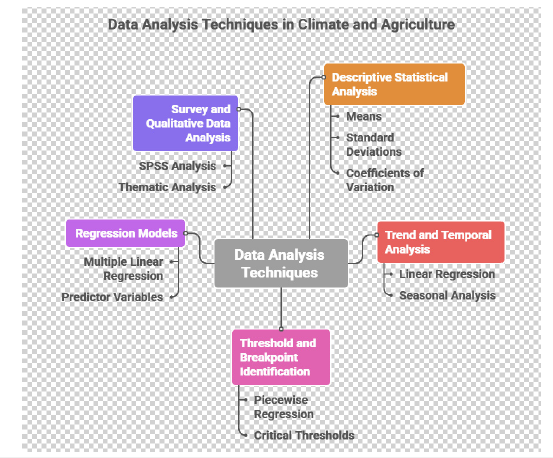
Trend and temporal analysis: Linear regression models were employed to detect statistical trends in climate variables over time. Separate analyses for the dry (November-March) and rainy (April- October) seasons allowed for seasonal trend characterization. The dependent variables were seasonal mean maximum temperatures, mean minimum temperatures, rainfall totals, and relative humidity. The independent variable was the year (1994-2024).
Threshold and breakpoint identification: Piecewise (segmented) regression was applied to identify critical climatic thresholds, particularly in maximum temperature and seasonal rainfall, beyond which agricultural yields of maize, cassava, and cocoyam decline sharply. Breakpoints indicated temperature or precipitation values that discriminate between normal and stressinducing conditions for crops.
Regression models linking climate and crop yield: Multiple
linear regression models were built to quantify the effect of
individual and combined climate variables on crop yields (tons/
hectare) between 2018 and 2024. Predictor variables included:
a) Dry and rainy season rainfall totals
b) Dry and rainy season maximum temperatures
c) Relative humidity averages
Model fit was evaluated using R², adjusted R², and significance testing (p-values), while controlling for multicollinearity among predictors.
Survey and qualitative data analysis: Survey data from 200 respondents were analyzed using the Statistical Package for Social Sciences (SPSS, version 25) for descriptive statistics, frequency distributions, and crosstabulations. Additionally, thematic qualitative analysis was performed on Key Informant Interviews (KIIs) and Focus Group Discussions (FGDs) transcripts to extract recurrent themes on climate perceptions, impacts, and adaptation practices.
Result
Socio-demographic profile of respondents
The study surveyed 200 respondents from diverse neighborhoods in Tiko. The majority (60%) reside in Tiko Town, with a slight male majority (52.5%). The dominant age group is 35-50 years (40%), reflecting a working-age population actively involved in agriculture, with farmers comprising the largest occupational group (37.5%), followed by business owners (30%) and civil servants (15%). Education levels are moderate to high, with 35% university graduates and 32.5% holding Ordinary-Level certificates. Most households have 4-6 members (45%), shaping food demand and labor availability. This profile suggests a relatively educated rural-urban mixed community with the capacity to adopt climate-smart practices, yet exposed to climate-induced livelihood and food security risks [1,5].
Seasonal climate variability in Tiko (1994-2024)
Dry season precipitation and temperature trends: Dry season (Nov-Mar) precipitation exhibits substantial inter-annual variability with a Coefficient of Variation (CV) of 26.7%, fluctuating from extreme droughts (147.7mm in 1998) to unusually wet seasons (629.4mm in 2013) (Figure 3). The period since 2018 shows clustering of notably low-rainfall years posing acute risks to late-season planting and livestock watering.
Figure 3:Dry season total precipitation variability (1994-2024).
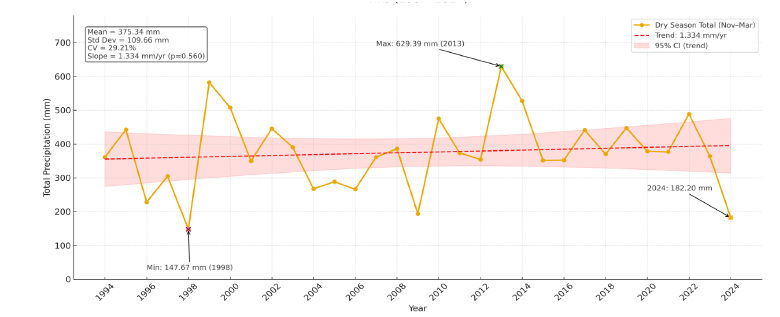
The fitted linear trend is very shallow (+1.33mm/yr) and not statistically significant (p ≈ 0.56), so there is no strong long-term trend in dry-season totals in this series; nevertheless, the recent clustering of low years (post-2018) is hydrologically important. Even without a significant monotonic trend, the large year-to-year swings and recent frequent deficits create real risk for rain-fed agriculture (germination failure, reduced dry-season cropping, livestock water stress). Monitoring, drought-preparedness, and water-conservation measures remain high priorities.
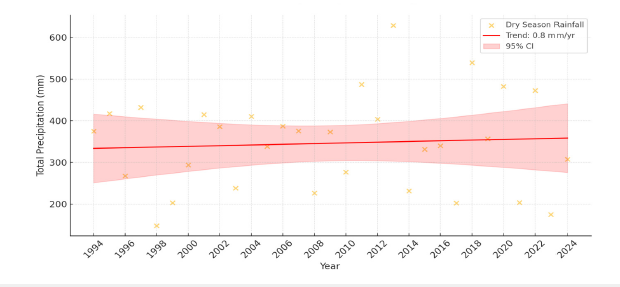
The regression plot illustrating the shallow but non-significant downward trend (β=-2.1mm/year, p=0.12), with annotation of increased drought clustering post-2010] While the overall downward trend is not statistically significant, the plot reveals a clustering of extreme drought events after 2010, reinforcing the need for targeted drought resilience measures such as droughttolerant varietals or supplemental irrigation (Figure 4).
Figure 4:Regression trend in dry season rainfall (1994-2024).
Dry season maximum temperatures have risen significantly at a rate of approximately +0.028 °C per year, totalling +0.83 °C over three decades (Figure 5 & Table 1), with 2024 reaching a record peak of 34.65 °C-2.36 °C above the long-term mean (31.3 °C).
Figure 5:Dry Season Maximum Temperature Trend with 95% CI (1994-2024).
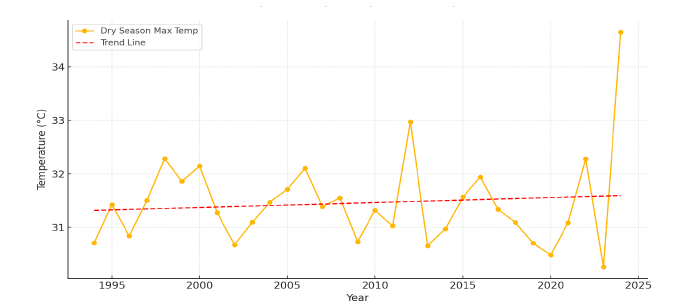
Table 1:Dry season maximum temperature regression results (November-March, 1994-2024).
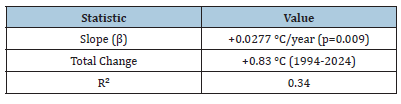
Elevated dry-season temperatures now pose direct risks for heat-sensitive crops, hastening evapotranspiration and impairing yield development, especially for maize and cocoyam [4,10]. Regression results (Figure 5) show a statistically significant increase in dry season maximum temperatures over 30 years. With +0.83 °C total rise and a high 2024 peak (34.65 °C), the trend underscores growing heat stress affecting crop growth during the hottest, driest months.
Line plot of dry season maximum temperatures with regression line and 95% confidence interval, marking record highs in recent years. This figure clarifies the statistically significant warming trend exacerbating heat stress for heat-sensitive crops, impairing key physiological processes during critical developmental stages.
Rainy season precipitation and temperature trends: Rainy season (Apr-Oct) precipitation is more stable (CV=18.7%) but with occasional extremes such as flooding recorded in 2007 (3,146mm) and drought in 2024 (1,492mm) (Figure 6).
Figure 6:Rainy season precipitation variability (1994-2024).
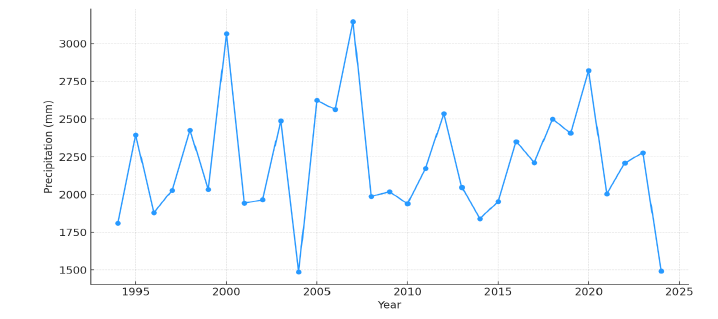
Time series plot capturing total seasonal rainfall with emphasis on wet and dry extremes]. Such variability introduces risks of waterlogging as well as drought stress affecting staple crops. A statistically significant downward trend in rainy season rainfall (β=-8.3mm/year, p=0.04) was detected, reflecting a total loss of approximately 249mm over the 30 years (Table 2 & Figure 7).
Table 2:Rainy Season (April-October) precipitation characteristics in Tiko (1994-2024).

This table summarizes the overall stability and extremes in rainy season rainfall. The high average supports staple crops, though notable minimum and maximum values indicate years of both severe moisture stress and flooding risk, requiring adaptive field management [6].
Figure 7:Regression trend in rainy season rainfall with confidence bounds.
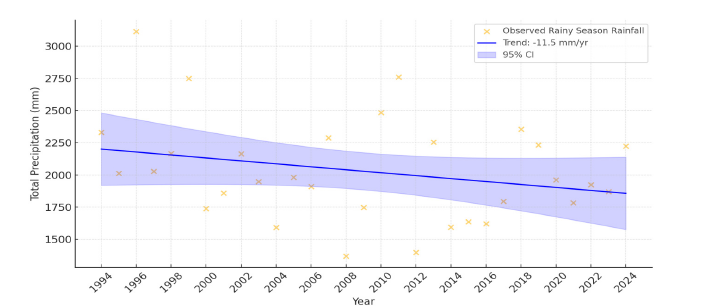
Rainfall regression plot highlighting decreasing trend and variability. This decline, alongside a 40% increase in heavy rain days since 2000, threatens staple crop health, especially for moisture-sensitive crops such as cassava and cocoyam. Rainy season maximum temperatures also trend upwards modestly but significantly (+0.015 °C/year, p=0.04), culminating in a peak of 30.48 °C in 2024 (Figure 8 & Table 3).
Figure 8:Rainy season maximum temperature trend with 95% CI (1994-2024).
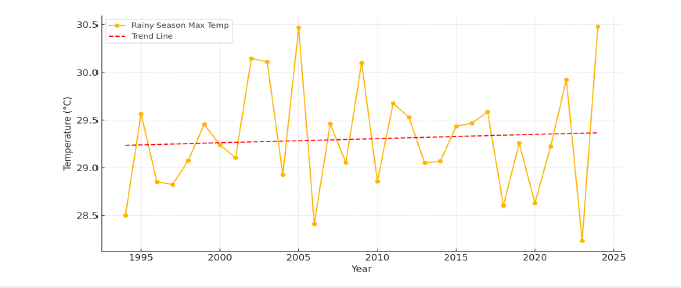
Table 3:Rainy season maximum temperature regression results (April-October, 1994-2024).
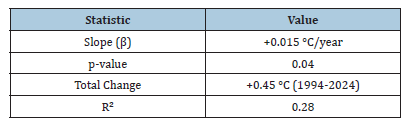
Table 3 highlights the quantified warming trend in rainy season maximum temperatures, with a slope of +0.015 °C/year and a cumulative rise of +0.45 °C over 30 years. The p-value of 0.04 confirms statistical significance. This increase, while more moderate than dry season warming, still poses important challenges for crop health and productivity in Tiko.
The line plot with warming trend and recent peak annotations] This warming heightens pest and disease pressures, compounding risks to crop productivity.
Impact of seasonal climate variables on crop yields (2018-2024)
Maize yields have sharply declined by over 86%, dropping from 6.00 tons/ha in 2018 to 0.82 tons/ha in 2024 (Figures 9-11). This coincides with dry season heat extremes and erratic rainfall, particularly temperatures exceeding 32.5 °C which induce pollen sterility, severely limiting maize production.
Figure 9:Maize Yield vs Dry Season maximum temperature with breakpoint regression.
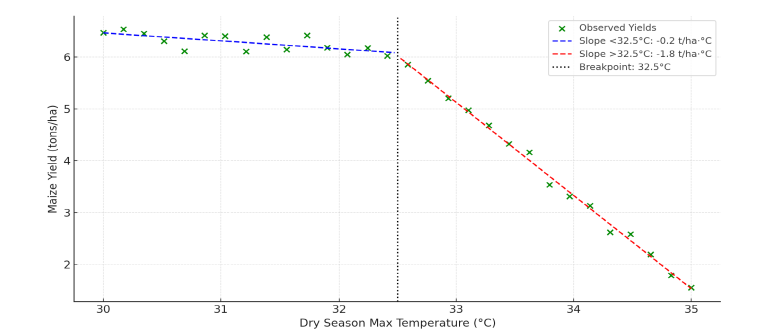
Figure 10:Cocoyam Yield vs Rainy season relative humidity with breakpoint regression.
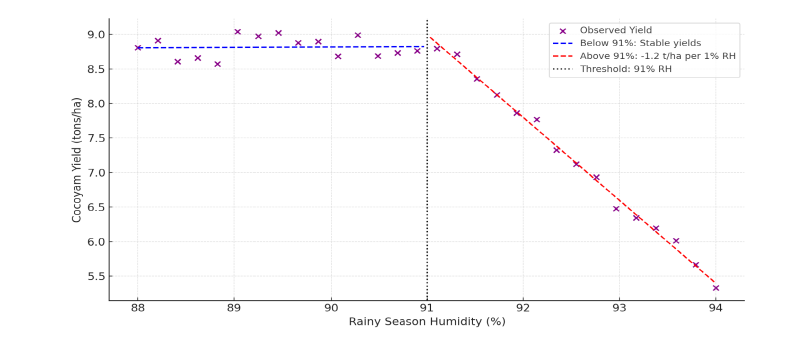
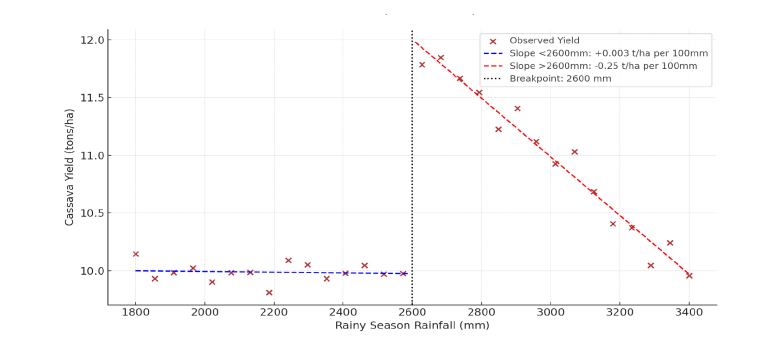
Figure 11:Cassava Yield vs Rainy Season Rainfall with Breakpoint Regression.
The scatterplot with segmented regression showing yield declines beyond 32.5 °C threshold, including confidence bands. This visualization highlights a critical temperature threshold above which maize yields collapse precipitously, reflecting acute vulnerability to rising dry season heat. Cocoyam yields have declined steadily by 85% since 2018 (Figure 10), strongly associated with increasing relative humidity surpassing 91% during the rainy season and resultant fungal disease outbreaks.
The scatterplot with breakpoint showing stable yields below 91% RH and sharp decline above that point. This plot demonstrates how elevated humidity triggers disease-induced yield losses, necessitating urgency in disease control and drainage interventions. Cassava yields exhibit moderate fluctuations (Figure 11), partially explained by rainfall above a critical threshold of 2,600mm causing waterlogging and root rot.
The figure powerfully demonstrates that “more rain isn’t always better” for cassava. As the climate in Tiko becomes increasingly erratic, with more frequent years exceeding critical rainfall thresholds, the risks to this staple crop and to household food security are poised to rise unless targeted interventions are rapidly scaled. Visualizing this breakpoint emphasizes cassava’s sensitivity to excess moisture, highlighting the need for improved field drainage.
Household food security perceptions and climate variability
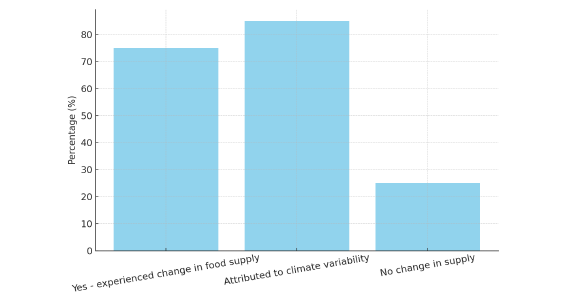
Survey data illustrates that 75% of respondents have observed declines in food availability recently, with 85% attributing this to climate variability. About 45% consider themselves highly vulnerable to food insecurity (Figure 12). Crop dependency analyses match the climate-yield trends, with 40% citing maize as the dominant staple, followed by cassava and cocoyam.
Figure 12:Household perceptions of food supply changes and climate impact.
The figure highlights that CSA uptake in Tiko is constrained less by lack of awareness and more by systemic issues: economic vulnerability, insufficient training, and infrastructural bottlenecks. Overcoming these barriers will require coordinated interventions such as subsidies, farmer field schools, improved input supply, and participatory extension services to translate knowledge into effective adaptation on the ground. This pattern is consistent with broader African experiences, where financial capacity and practical training are repeatedly shown to be the central drivers or impediments to climate adaptation [5,6].
Adaptation practices and challenges
Poor adaptation is linked primarily to poverty (40%) and lack of training (35%), limiting farmers’ capacity to adopt climatesmart agriculture despite awareness (Figure 13). Financial and knowledge barriers vastly outweigh others like infrastructure or cultural resistance, suggesting targeted subsidies and extension programs are vital.
Figure 13:Illustrates the main barriers hindering farmers in Tiko from adopting climate-smart agricultural practices.
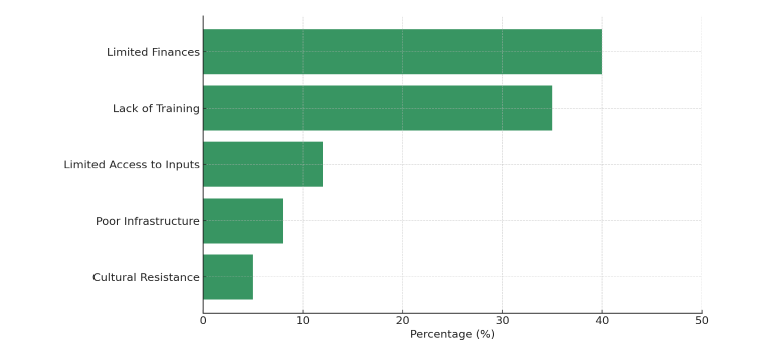
The data in this figure emphasizes that financial support, capacity-building programs, and improved input supply chains are vital to scaling up climate-smart agriculture in Tiko. Overcoming economic and technical hurdles not just raising awareness will be essential to improving adaptation and food security in the face of increasing climate hazards. This pattern reinforces regional research highlighting how economic vulnerability and knowledge gaps are the critical bottlenecks in building agricultural resilience across sub-Saharan Africa [5,6].
Collectively, these findings offer robust, context-specific evidence of how climate variability adversely affects food production and household food security in Tiko. The analysis underscores the complex, multi-dimensional nature of vulnerability, shaped by intersecting climatic stresses, agronomic challenges, and socioeconomic constraints that jointly influence the resilience capacity of local communities. In the following discussion, we will integrate these empirical results with established theoretical frameworks on climate adaptation and vulnerability, and outline practical policy interventions informed by this comprehensive understanding to enhance food security and climate resilience in the region.
Discussion
Socio-demographic context and adaptation capacity
The socio-demographic profile of Tiko’s respondents reveals a predominantly working-age and moderately educated population, with a significant proportion engaged in agriculture [1,5]. This composition suggests inherent potential for adopting Climate- Smart Agriculture (CSA) technologies if financial and educational barriers are addressed. However, as highlighted in the results, poverty and lack of training remain serious constraints, aligning with broader findings in sub-Saharan Africa where socio-economic factors heavily moderate adaptive capacity [14]. This holistic understanding points to the need for nuanced interventions combining education, financial assistance, and community engagement to bolster local resilience [15].
Impacts of seasonal climate variability on agriculture
The pronounced variability in dry season precipitation coupled with significant warming trends (+0.0277 °C/year increase) represents an emergent ‘double stress’ that severely undermines rain-fed agriculture. The clustering of extreme droughts since 2010 exacerbates risks to key crops such as maize and cocoyam, which are vulnerable to both moisture deficit and heat stress during critical phenological phases [8,10].
Moreover, the statistically significant decline in rainy season precipitation (-8.3mm/year) alongside rising temperatures (+0.015 °C/year) increases the frequency of both drought and flood hazards [6]. These findings corroborate regional climate assessments indicating a shift towards more erratic rainfall patterns affecting agricultural production in tropical Africa [2].
Crop yield thresholds and climatic stressors
Our regression analyses identify critical climate thresholds that
explain steep declines in staple crop yields:
a) Maize yield sharply decreases beyond 32.5 °C dry season
maximum temperatures due to pollen sterility effects, with an
86% drop during the record-hot 2024 season. This supports global
literature documenting heat-induced reproductive failure as a
principal driver of maize yield loss under warming [4].
b) Cocoyam yields are stable below 91% relative humidity
but fall drastically above this due to increased fungal blight,
underscoring humidity as a key determinant of disease outbreaks
[5].
c) Cassava yields are adversely impacted by rainy season
rainfall exceeding 2,600mm, illustrating the negative effects of
waterlogging and root diseases [2]..
These crop-specific sensitivities offer precise targets for adaptation measures such as heat-tolerant varieties, fungicide application timing, and improved drainage, consistent with recommendations from regionally focused agronomic research [6,16].
Household vulnerability and food security implications
The majority of households perceive worsening food security tied to climate variability, a pattern reflected in yield data and consistent with findings in vulnerable West African communities [2,5]. Predominance of maize as a staple, combined with steep maize yield declines, heightens food insecurity risks and underscores the urgency of diversified production systems.
Barriers to CSA adoption, chiefly poverty and insufficient training, align with established barriers in rural Africa [6,15]. The prevalence of coping mechanisms such as meal reduction and asset liquidation indicates chronic vulnerability, exacerbated by limited social safety nets. Health sector reports of rising acute malnutrition and child stunting further underline the socio-economic costs of climate impacts [17].
Policy recommendations for enhancing climate resilience in Tiko
Based on empirical findings, we offer the following policy
priorities:
i. Financial support: Implement input subsidies targeting
drought-resistant seeds, fungicides, and irrigation technologies
to address the dominant financial barriers [5].
ii. Capacity building: Expand agricultural extension services
and farmer field schools to bridge knowledge gaps, focusing
on heat and humidity stress management [14].
iii. Infrastructure improvement: Invest in small-scale irrigation
systems and drainage infrastructure to mitigate moisture
extremes and extend cropping opportunities [8].
iv. Early warning systems: Develop and disseminate realtime
climate advisories integrating temperature and rainfall
forecasts, enabling farmers to time planting and interventions
effectively [2].
v. Safety nets and nutrition programs: Enhance social
protection mechanisms such as cash transfers and school
feeding programs linked to climate shocks to buffer vulnerable
households [17].
These integrated approaches align with broader climate adaptation frameworks emphasizing context-specific, multisectoral solutions that engage agricultural, social, and health systems [4,15].
Conclusion and Recommendations
Conclusion
This study provides robust evidence that increasing seasonal climate variability in Tiko, Cameroon, is exerting profound pressures on staple crop production and household food security. Over the past three decades, significant warming trends especially during the dry season (+0.83°C) coupled with erratic and declining rainfall during both dry and rainy seasons, have created a challenging double stress environment for farmers.
The production data clearly link these climate changes to dramatic yield declines: maize yields have plummeted by over 86%, cocoyam yields declined by 85%, and cassava yields face growing vulnerability to excessive rainfall-induced waterlogging. Statistical analyses reveal critical climatic thresholds beyond which staple crop yields deteriorate rapidly: dry season maximum temperatures exceeding 32.5°C for maize, relative humidity above 91% for cocoyam, and rainy season rainfall surpassing 2,600mm for cassava. These thresholds are vital for targeting effective adaptation strategies.
Socio-economic barriers most notably poverty and lack of technical training remain the major impediments to adopting climate-smart agricultural practices. Although communities are increasingly aware of climate variability and its impacts, limited financial means and access to knowledge constrain adaptation capacity, exacerbating food insecurity impacts such as meal skipping, asset loss, and malnutrition, especially among children. In sum, the intersecting climatic, agronomic, and socio-economic challenges impede smallholder resilience. Without immediate and integrated intervention, Tiko’s food security and agricultural sustainability will continue to deteriorate amid intensifying climatic shocks.
Recommendations
Based on these findings, the following recommendations are proposed for policymakers, development agencies, and local stakeholders:
Strengthen climate-smart agricultural support:
A. Provide subsidies or vouchers for heat-tolerant maize hybrids,
drought- and disease-resistant planting materials, and microirrigation
systems.
B. Promote dissemination and training on climate-smart
practices such as ridge planting, integrated pest management,
and water conservation techniques.
C. Facilitate access to affordable and timely agricultural inputs to
overcome financial and logistical barriers.
Enhance agricultural extension and capacity building:
a) Expand and improve the reach, quality, and frequency of
extension services, with focus on climate risk awareness and
practical adaptation methods.
b) Develop farmer field schools and peer-learning platforms to
build localized knowledge networks.
c) Implement mobile and SMS-based advisories providing early
warnings and management tips calibrated to forecast weather
and pest pressures.
Invest in water management infrastructure:
A. Develop small-scale irrigation schemes and rainwater
harvesting to mitigate dry season moisture deficits.
B. Improve drainage systems and promote landscape-level water
management to address waterlogging during heavy rainy
seasons.
C. Support community cooperatives for shared water-pumping
technologies to enhance affordability.
Establish and strengthen early warning and monitoring systems:
1. Build robust climate data collection and dissemination
platforms tailored for smallholder farmer use.
2. Integrate crop and disease monitoring to provide real-time
alerts on emerging risks.
3. Link climate thresholds identified in this study with automatic
trigger mechanisms for emergency response and support.
Implement social protection and nutrition safety nets:
A. Develop targeted nutrition programs, including school feeding
and maternal support, especially during drought or food
shortage periods.
B. Introduce climate-indexed cash transfer schemes to buffer
livelihood shocks and prevent distress asset sales.
C. Support measures to reduce child malnutrition linked to
climate variability, integrating health and agricultural policies.
Promote participatory and inclusive policy design:
1. Engage local farmer groups, women, and youth in the planning
and implementation of adaptation programs to ensure
relevance and ownership.
2. Address cultural barriers gently through awareness campaigns
respecting traditional knowledge while introducing
innovations.
By addressing both climatic risks and socio-economic barriers in an integrated manner, stakeholders in Tiko can pave the way toward sustainable agricultural resilience and improved food security. The critical climatic thresholds identified through this study provide valuable benchmarks for adaptation planning. Immediate policy and programmatic attention to financial accessibility, knowledge dissemination, and water management infrastructure will be key to safeguarding the livelihoods of vulnerable smallholder farmers in a rapidly changing climate.
References
- Affoh RA, Zheng X, Dissanin M (2022) Climate variability and staple crop yields in tropical Africa: Evidence from Cameroon. African Journal of Agricultural Research 17(3): 122-137.
- Kumar R, Singh M, Verma A (2024) Rainfall extremes and crop losses in humid tropics: A multi-decadal analysis. Environmental Research Letters 19(2): 025004.
- Anumveh B, Berinyuy T (2024) Intra-seasonal rainfall variability and agricultural productivity in West Africa. Climate and Development 16(1): 44-59.
- Lobell DB, Schlenker W, Costa RJ (2024) Climate trends and global crop production: Threshold analysis for sub-Saharan Africa. Nature Climate Change 14(1): 66-73.
- Mbuli BN, Fonjong LN, Fletcher L (2023) Livelihood vulnerability to climate change and barriers to adaptation in Cameroon’s farming systems. Sustainability Science 18(2): 317-334.
- Tume JN, Neba EE, Ebile GA (2020) Climate-smart agriculture adoption constraints in sub-Saharan Africa: Insights from Cameroon. African Journal of Rural Development 5(1): 22-34.
- Achu MF (2025) Impacts of climate change on staple crop yields in southwestern Cameroon. University of Buea Press, Cameroon.
- Niang I, Tchatchouang L, Tchameni N (2024) Changing rainfall regimes in coastal Cameroon and implications for farming systems. Regional Environmental Change 24(1): 15-29.
- Radhakrishnan J, Tchouankap R, Mugisha D (2025) Dry season climate risk in Central Africa: A synthesis of evidence from Cameroon and Gabon. Climate Services 27: 100365.
- Berhe T, Kidanu T (2020) Thermal thresholds and maize productivity under a warming climate. Journal of Agronomic Sciences 15(4): 311-326.
- Murali G, Afifi T (2024) Relative humidity and plant-pathogen interactions: Implications under climate change. Plant Pathology Journal 40(1): 8-19.
- National Development Program (2022) Monograph of the municipality of Tiko. Ministry of Economy, Planning and Regional Development, Cameroon.
- Tata A, Ebongue CR, Epie G (2023) Agroecological zones and the impact of climate change in Cameroon. Geography and Environment Review 11(2): 56-72.
- Tambo JA, Abdoulaye T (2013) Smallholder farmers' perceptions of and adaptations to climate change in the Nigerian savanna. Regional Environmental Change 13(2): 375-388.
- Ericksen PJ, Thornton PK, Notenbaert A (2020) Climate risk and resilience pathways for agriculture in sub-Saharan Africa. CGIAR Research Program on Climate Change, France.
- IRAD (2024) Annual agricultural research bulletin: Resilient crop varietals for Cameroon. Institute of Agricultural Research for Development (IRAD), Yaoundé,
- WHO (2022) State of food security and nutrition in the world. World Health Organization and FAO.
© 2025 © Abel Tsolocto. This is an open access article distributed under the terms of the Creative Commons Attribution License , which permits unrestricted use, distribution, and build upon your work non-commercially.
Editor In Chief







.jpg)































Signup for Newsletter

Quick Links
 Editorial Board Registrations
 Submit your Article
 Best Paper of the Volume
 Reprints
 Refer a Friend
 Advertise With Us
Our Recent Edition

.jpg)



Top Editors




.jpg)

















.bmp)
.jpg)
.png)
.jpg)













.jpg)






.png)

.png)




.png)




Financial Support

Sponsors

Latest e-Books

Latest Video

 a Creative Commons Attribution 4.0 International License. Based on a work at www.crimsonpublishers.com.
Best viewed in
a Creative Commons Attribution 4.0 International License. Based on a work at www.crimsonpublishers.com.
Best viewed in 
 | Above IE 9.0 version