

- About Us
- Information
-

The Author ensures that the research has been conducted responsibly and ethically with adherence to all relevant regulations. read more..
- For Authors
- For Reviewer
- Manuscript Guidelines
- Membership
- Publication Ethics
-
- Journals
- Reprints
- e-Books
- Videos
- Policies
- Contact Us
 COVID-19
- Submissions



Full Text
COJ Nursing & Healthcare
Advancing Evidence-Based Nursing: Economic Savings Meeting both Demand and Economic Efficiency Improvement - Evidence-based Decisions with Respect to Clinical Use of Incontinence Underpads
Janet Twomey1Michael Overcash2* and Evan Griffing3
11Wichita State University, USA
22Environmental Genome Initiative, USA
3Environmental Clarity, Inc, USA
*Corresponding author: Michael Overcash, Environmental Genome Initiative, USA
Submission: May 11, 2026;Published: July 02, 2026

ISSN: 2577-2007Volume9 Issue 5
Abstract
IIn hospitals and long-term care facilities, nurses are involved daily in decisions and patient management related to Incontinence Underpads (IUP). There are reusable and single-use options, but with some interesting variations. This paper provides evidence-based information on annual costs and the supply chains with environmental footprints, available to assist nurses in lowering hospital annual costs and reducing environmental impact when managing these clinical devices for patients. With the four-layer underpad architecture, the absorbent zone materials are typically rayon-polyester or cellulose, while the protective barrier for beds is available in Polyurethane (PU) or Polyvinyl Chloride (PVC). Data from 148 health care facilities show that nurses and administrative personnel have teamed up with Centers for Disease Control and Prevention-certified laundries to collect and determine that the typically reusable IUP achieve 29 cycles with reliable performance. All incontinence underpads are laundered on a set schedule, but interestingly, from a direct field evaluation at multiple locations, 75% were unsoiled, 25% wet, and only 5% feces soiled. Another important nursing decision is that, because of the lighter, smaller size, it is not uncommon to use about 2 single-use incontinence underpads rather than 1 reusable underpads. For the approximate actual use rate of 2.1 disposable:1 reusable incontinence underpad, reusables with laundry processing are 80% lower in annual cost, resulting in significant cost savings. Even at a ratio of 1 disposable:1 reusable, the reusables are 64% lower in annual cost. Said differently, the selection by nurses or their hospital Group Purchasing Organization (GPO) of disposable incontinence underpads leads to a 510% higher hospital cost for the approximate actual usage of 2.1:1; while, for equal uses (1:1 ratio), the disposable incontinence underpads annual cost is still 280% higher. If we calculate the financial impact of all 6,129 U.S. hospitals switching to reusable incontinence underpads, the U.S healthcare system will save about $340 million each year. Thus, the annual cost savings of reusables are very significant, and as published separately, reusables also have much lower supply chain and environmental impacts.
This study was not required to be registered since no patient data were involved.
Keywords: Reusable incontinence underpads; Life cycle analysis; Environmental Genome Initiative; Disposable incontinence underpads; Laundry; Hygienically clean
Introduction
Incontinence underpads are widely used textile products in health care facilities. The role of these underpads is to:
a. absorb liquid away from the patient’s skin to prevent
dermatological problems
b. provide a barrier to prevent liquids from getting into the
mattress
The single-use and reusable incontinence underpads have different materials of construction and hence different supply chains, but largely look similar in style of textile product. The construction of the disposable incontinence underpads is given in Figure 1. The liquid barrier in reusables is provided with either polyurethane or polyvinyl chloride (Figure 2). Materials and weights are in Tables 1A & 1B.
Figure 1:Disposable incontinence underpad layers.
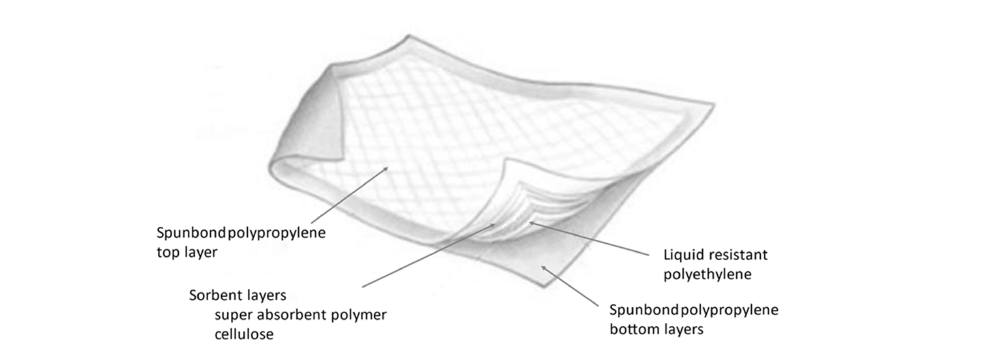
Figure 2:Reusable incontinence underpads (A) with polyvinyl chloride barrier and (B) with polyurethane barrier.
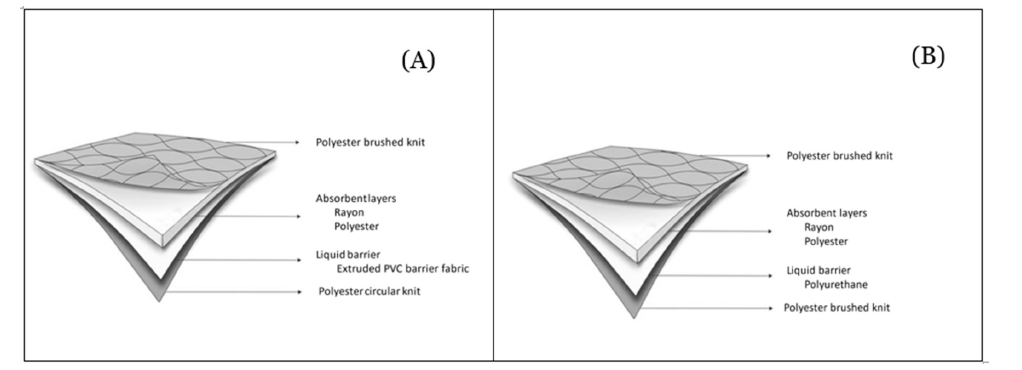
Table 1A:Reusable incontinence underpad evaluated in life cycle study.
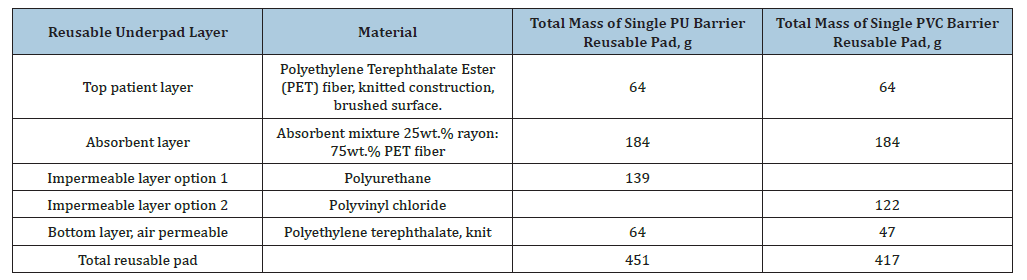
Table 1B:Disposable incontinence underpads evaluated in life cycle study.

Incontinence underpads generally have a complex multi-layer structure. The supply chain and environmental benefits of reusable incontinence underpads compared to single-use incontinence underpads have been well documented and published [1]. It has been learned, based on comparative usage per average patient day, that disposables are used more frequently than reusables. Anecdotal inquiries indicated the disposables are generally smaller and lighter, and so, as a precaution, nurses use these more frequently on the bed. Thus, from the anecdotal information, the environmental assessment used a ratio of 2.12 disposable uses per one reusable use. This is carried forward to the economic assessment.
A novel method for economic evaluation was developed and used to compare cleanroom reusable versus disposable Personal Protective Equipment (PPE), and was published in 2020 [2]. This general economic approach is now being used for incontinence underpads. An integral part of the economic evaluation of reusables is the laundry cycle (Centers for Disease Control and Prevention Guidelines) [3]. The reuse phase integrates water use, cleaning chemicals, and energy for washing and drying to continue the use cycle. In addition, from an environmental perspective, nearly 20 independent studies of diverse products evaluating disposables versus reusables have consistently documented the environmental benefit of reusables [4]. Thus, the annual economic comparisons developed in this study provide important new evidence-based information for health-care decisions on reusable versus disposable products, such as incontinence underpads.
Methods
The study design has been to assemble annual cost data on the processing of reusable incontinence underpads, using a number of large laundry organizations. This study was not required to be registered. These data consisted of the annual cost and the number of incontinences underpads processed. Additionally, the reusable information included the estimated number of cycles and the cost of new incontinence underpads when ragged out or repurposed. Overall, we are first comparing annual costs likely for hospital usage of 2.12 disposables versus one reusable (evaluated using the market share of the respective polyurethane and polyvinyl chloride barrier layers). In addition, for completeness, we compare just one disposable versus one representative reusable, reflecting the usage rate found in the detailed environmental study (1:1 ratio) [1]. The total reusable processing costs included both the Centers for Disease Control and Prevention laundry processing and the purchase of new replacement incontinence underpads after the field operational use cycles, calculated as an annual value. Data from 148 hospitals were collected. For the disposables, the number of reusable cycles was first used, which then defined the number of equivalent disposable incontinence underpads needed (for both the 2.1:1 and the 1:1 use ratios). The cost of disposables was also obtained from a supplier.
Results
The data received were from five States or regions of the Eastern U.S. and Canada. The hospital-wide economic analysis methodology, published previously in a cleanroom coveralls paper [2], was applied to hospital incontinence underpads. To include both the polyvinyl chloride and polyurethane barriers for the representative reusable incontinence underpads, we evaluated their relative market shares. The market-average composition of reusable pads, based on a survey of laundries, was estimated at 52% polyvinyl chloride and 48% polyurethane. These laundries are all separate organizations with varying ages of equipment, their own processing and transport methods, ownership, and annual operating scales. The information was from 148 separate hospitals over the period from January to December 2021. All are in competitive markets and are assumed to be representative of the broader domain of U.S. and Canadian laundries serving hospitals.
From a related study of laundries in this project, the degree of soiling was cataloged from 2,314 separate observations of incontinence underpads (Table 2). Interestingly, the level of soiling is low. These soiling data were then used in the environmental evaluation as part of wastewater treatment.
Table 2:Number of pads by soil content. The total is 2,314 pads.

The annual number of incontinences underpads processed per hospital (with more than the insignificant use cases i.e. below two per day), ranges from about 330,000 to about 1,309,000. With the increased amount of data collected in this economic study, we have revised the number of cycles before replacement from 46 in the environmental publication (1) to 29 cycles from this larger economic study. In addition, since there are two conceptual use rates 1 reusable to 1 disposable and 1 reusable to 2.12 disposable), both of these cost improvement scenarios are described. The first is just a direct one-for-one comparison, while the second is based on hospital practices that generally use more disposables when compared to reusables. If we consider the ratio of incontinence underpads used in hospitals to surgical gowns used across 148 hospitals it was between 3:1 to 8:1, so these represent a major increase in reusable processing due to the incontinence underpads needed for hospitals and laundries compared to surgical gowns only.
Economic results are provided in Table 3. Reusable items are heavier, but have a use cycle of about 29 across the study of 148 health care facilities, where the number of cycles is reported before replacement due to ragout or other losses. Single U.S. disposable basic level 3 incontinence underpads have an average cost of $1.67, while new reusable incontinence underpads range from $3.10 to $5.70. Laundry processing costs already include the cost of replacing these reusable incontinence underpads.
Table 3:Cost savings from selecting reusable incontinence underpads.
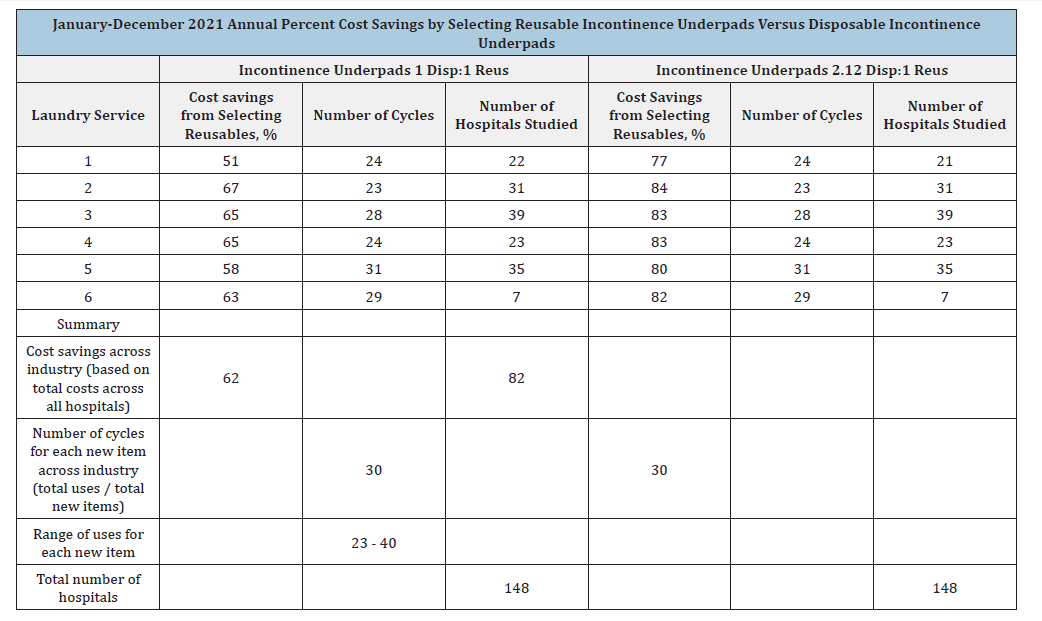
Cost savings are calculated as the difference between annual disposable and reusable costs divided by the annual disposable cost (as a percent). For the approximate actual use rate of 2.1 disposable:1 reusable incontinence underpads, the reusables with laundry processing were 80% lower in annual cost. Even at a ratio of 1 disposable: 1 reusable, the reusables were 64% lower in annual cost. Said differently, the selection by nurses or their hospital Group Purchasing Organization (GPO) of singleuse incontinence underpads leads to a 510% higher cost for the approximate actual usage of 2.1:1; while, for equal uses (1:1 ratio) the disposables annual cost is still 280% higher. In other words, selecting disposables is between 280% and 500% more expensive on an annual basis.
Given the wide range of hospitals (size, location, annual processing, etc.) represented in these 148 facilities, we sought to translate the single-hospital annual savings into an overall economic benefit for the U.S. healthcare system from just selecting reusable incontinence underpads. Given the approximate 2023 U.S. hospital count of 6,129, selecting reusable incontinence underpads for all facilities would save the U.S. healthcare system about $340 million each year in operational expenses for this one healthcare item. In an informal survey of firms providing hospital laundry of incontinence underpads, there was confidence that with contracts for laundry services, the national need for managing reusable incontinence underpads (up to at least 95% of hospitals) could be met. This would then provide significant economic and as published separately environmental [1] benefits to society.
Conclusion
Across a wide geographic region of health care facilities and for substantial differences in local competition, health care facility needs, size of annual laundry processing, and other factors there is a distinct annual economic benefit in selecting reusable incontinence underpads. Reusables resulted in nearly 64%-80% greater annual cost savings, which accrue to the health care organizations’ bottom line. Combined with even greater reduction in environmental impacts [1] plus contribution to circularity, the overall contribution from reusables to economic and environmental sustainability is now well documented. Such benefits for incontinence underpads can thus be used as documentation by individual hospitals, health care organizations, and organizations providing and servicing these reusable products.
Acknowledgement
The American Reusable Textile Association assembled a committee of incontinence underpads health care organizations representing single use and reusable textiles from fabrics, and laundries to provide context, data, and insights regarding health care use of incontinence underpads.
Conflict of Interest
The authors have no technical or financial conflicts of interest with the contents of this paper
Funding Declaration
No funding was received for conducting this study
Author Contribution
All of the following authors had these roles
a. making substantial contributions to the conception or
design of the work; or the information acquisition, analysis.
b. drafting the work or revised it critically for important
intellectual content.
c. or approving the version to be published.
References
- Griffing E, M Overcash (2023) Reusable and disposable incontinence underpads: Environmental footprints as a route for decision making to decarbonize health care. J Nursing Care Quality 38(3): 278-285.
- Overcash M, E Griffing (2022) National economic and environmental benefit of reusable textiles in cleanroom industry, PDA Journal of Pharmaceutical Science and Technology 76(2): 109-119.
- Center for Disease Prevention and Control (2024) CDC's Core Infection Prevention and Control Practices for Safe Healthcare Delivery in All Settings, Core Infection Prevention and Control Practices for Healthcare Program, Center for Disease Prevention and Control, Atlanta, Georgia, USA.
- Alshqaqeeq F, Griffing E, Twomey J, Overcash M (2020) Comparing reusable to disposable products: Life cycle analysis metrics. J Adv Mfgr and Processing 2(4): e10065.
© 2026 Michael Overcash. This is an open access article distributed under the terms of the Creative Commons Attribution License , which permits unrestricted use, distribution, and build upon your work non-commercially.
Editor In Chief







.jpg)































Signup for Newsletter

Quick Links
 Editorial Board Registrations
 Submit your Article
 Best Paper of the Volume
 Reprints
 Refer a Friend
 Advertise With Us
Our Recent Edition

.jpg)



Top Editors




.jpg)

















.bmp)
.jpg)
.png)
.jpg)













.jpg)






.png)

.png)




.png)




Financial Support

Sponsors

Latest e-Books

Latest Video

 a Creative Commons Attribution 4.0 International License. Based on a work at www.crimsonpublishers.com.
Best viewed in
a Creative Commons Attribution 4.0 International License. Based on a work at www.crimsonpublishers.com.
Best viewed in 
 | Above IE 9.0 version