

- About Us
- Information
-

The Author ensures that the research has been conducted responsibly and ethically with adherence to all relevant regulations. read more..
- For Authors
- For Reviewer
- Manuscript Guidelines
- Membership
- Publication Ethics
-
- Journals
- Reprints
- e-Books
- Videos
- Policies
- Contact Us
 COVID-19
- Submissions



Full Text
COJ Nursing & Healthcare
Consumption of Milk from Fluorosed Animals Poses a Threat to Children’s Health in India: A Brief Review
Shanti Lal Choubisa1,2*
1Department of Advanced Science and Technology, National Institute of Medical Science and Research, NIMS University Rajasthan, India
2Former Department of Zoology, Government Meera Girls College, MLS University, India
*Corresponding author: Shanti Lal Choubisa, Department of Advanced Science and Technology, National Institute of Medical Science and Research, NIMS University Rajasthan, India
Submission: February 25, 2026;Published: May 01, 2026

ISSN: 2577-2007Volume9 Issue 4
Abstract
In India, especially in rural areas, most children, adults, and the elderly are exposed to fluoride from drinking water and industrial fluoride pollution. In these areas, most drinking water sources, such as hand pumps, bore wells, and deep wells, are contaminated with fluoride to varying degrees. Most of these sources contain fluoride above the national and international recommended levels of 1.0ppm and 1.5ppm, respectively. Therefore, thousands of people of various ages in rural areas of the country suffer from chronic fluoride intoxication in the form of fluorosis due to drinking this fluoridated water. In many rural areas of the country, people are also suffering from fluorosis due to exposure to industrial fluoride. In rural areas, thousands of domesticated animals, especially cows (Bos taurus), buffaloes (Bubalus bubalis), goats (Capra hircus), and sheep (Ovis aries) are also affected by fluorosis, which is caused by long-term exposure to fluoride through drinking fluoridated water and industrial fluoride pollution. The milk of such fluorosed animals also contains varying amounts of fluoride, depending on the fluoride content of the drinking water. In a recent study, the fluoride content of fluoridated cow, camel, goat, and buffalo milk was reported to be 4.128±2.804, 5.379±1.732, 5.216±1.271, and 6.034±1.837, respectively. If children consume such fluoridated milk of fluorosed animals for a long time, it can pose a serious risk to their health. Long-term fluoride exposure in children from drinking fluoridated milk can not only lead to osteo-dental fluorosis but also impact mental health. In the present communication, focuses on the consumption of milk from fluorosed animals and its potential adverse health or toxic effects on children. This review is useful for researchers in India to do an advance research work on this fluoride-related health problem in children. This communication will also draw the attention of the concerned health department so that a health policy can be made to prevent children’s health from being harmed by drinking animal milk containing fluoride.
Keywords: Adverse health effects; Children; Chronic fluoride exposure; Dental fluorosis; Fluoride poisoning; Fluorosed animals; Mental health; Milk; Skeletal fluorosis; India
Introduction
Fluoride is a mineral found naturally or through human intervention in varying amounts in water, soil, rocks, air, and food. From a health perspective, it is safe and effective when consumed at or below the recommended levels (1.0ppm or 1.5ppm) as per guidelines from the Indian Council of Medical Research (ICMR), the Bureau of Indian Standards (BIS), and the World Health Organization (WHO) [1-3]. In general, it is beneficial in growing children and adults by preventing tooth decay, strengthening tooth enamel, helping to rebuild weakened enamel, and fighting harmful bacteria. It also plays an important role in the mineralization of growing bones, strengthening them [3]. When children consume or are exposed to high levels of fluoride over a long period of time, it becomes toxic and acts as a slow poison [3], causing various pathological changes in the teeth, bones, and brain of growing children [4-6]. These pathological changes caused by fluoride are commonly referred to as fluorosis [3].
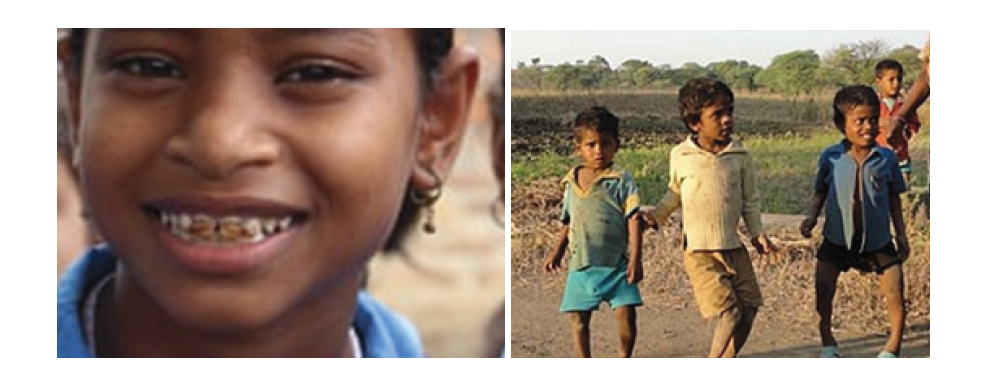
In India, especially in rural areas or villages, most children, adults and elderly people are usually exposed to fluoride from drinking water. Studies have shown that in rural areas of the country, most of the drinking water sources, such as hand-pumps, bore-wells, and deep dug-wells, are contaminated with fluoride to varying degrees. Water from most of these sources contained fluoride above the prescribed or recommended levels of 1.0ppm or 1.5ppm [7,8]. Therefore, thousands of people of different age groups in rural areas of the country are suffering from chronic fluoride poisoning in the form of fluorosis disease (Figure 1) due to drinking fluoridated water [9-16]. Not only humans but various species of domesticated animals, such cattle (Bos taurus), water buffaloes (Bubalus bubalis), sheep (Ovis aries), goats (Capra hircus), horses (Equus caballus), donkeys (Equus asinus), and dromedary camels (Camelus dromedarius) are also found to be suffering with fluorosis in the rural areas of the country due to drinking of water from these domestic drinking water sources [17-25]. In villages, bore-well water is also used for agricultural irrigation. This often leads to fluoride contamination of crops or feed [26]. Fluoride-containing agricultural products and feed are often fed to domesticated animals, which can also lead to chronic fluoride poisoning or fluorosis in animals.
Figure 1:Rural children afflicted with sever dental (a) and skeletal (b) fluorosis due to chronic fluoride exposure.
In India, not only people but also domestic animals are exposed to industrial fluoride pollution, which is caused by numerous coalburning brick kilns and thermal power stations, as well as factories manufacturing steel, iron, aluminum, zinc, phosphorus, chemical fertilizers, bricks, glass, plastics, cement, and hydrofluoric acid. Fluoride from these industries is emitted into the surrounding areas or atmosphere in both gaseous and particulate/dust forms, creating industrial fluoride pollution [3]. This industrial fluoride contaminates not only the surrounding soil, air, and water, but also vegetation, agricultural crops [27], and many other biological communities on which domesticated bovine animals typically depend for food and water. When animals consume fluoridecontaminated food (fodder) and water and exposed to fluoride pollution for a long time, they develop fluorosis [28-36]. The milk of these fluorosed animals is also likely to contain fluoride. Although research on this issue has not been done in India, research is needed from a health perspective. In the present communication, focuses on the consumption of fluoridated animal milk and its potential adverse health effects on children. This review is useful for researchers in India to do an advance research work on this fluoride-related health problem in children. This communication will also draw the attention of the concerned health department so that a health policy can be made to prevent children’s health from being harmed by drinking animal milk containing fluoride.
Fluoride in milk of domesticated animals
The milk from fluorosed animals contains varying amounts of fluoride. However, fluoride content in milk of animals is much more depending on the fluoride levels in their drinking water and feed. Typically, cow and buffalo milk from non-fluorosed areas contains approximately 0.09mg/L (ppm) of fluoride. However, this level can reach 0.4 to 0.8mg/L in areas with high fluoride levels in drinking water (approximately 10-30mg/L) [37]. A recent research study jointly conducted by the Indian Council of Agricultural Research (ICAR) and the National Institute of Nutrition (NIA, ICMR) in rural areas with high fluoride levels in drinking waters (>2.0ppm) in the states of Rajasthan, Punjab, and Haryana revealed truly shocking results, which are also very important from a health perspective. The milk of domestic animals (cows and female buffaloes) in these areas contained high fluoride levels of 0.8-1.2ppm. Vegetables from these areas also have higher fluoride levels of 2.0-3.0mg/k [38]. In the recent study, the fluoride content in cow, camel, goat, and buffalo milk has been observed and reported to be 4.128±2.804, 5.379±1.732, 5.216±1.271, and 6.034±1.837, respectively [39]. In fact, from a health perspective, these data are truly disturbing.
Consumption of fluoridated animal milk and its adverse health effects on children
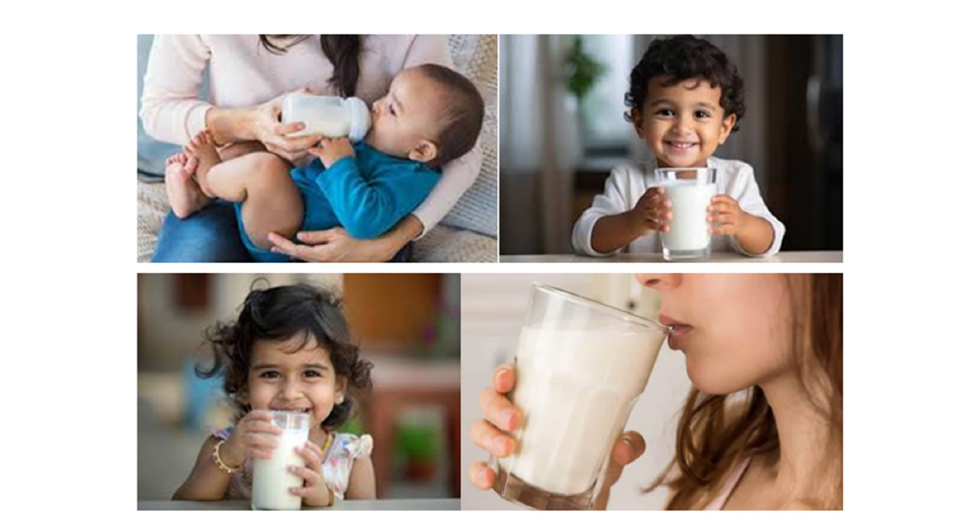
In Indian villages, children are mostly exposed to fluoride through drinking water. Therefore, most of these children are found to suffer from osteo-dental fluorosis [6]. However, skeletal fluorosis is more dangerous and children affected by this disease (bone deformities) suffer from lameness throughout their lives. Several studies have shown that children are comparatively more sensitive and highly susceptible to fluoride toxicity [13,14]. This is why they develop dental and skeletal fluorosis more quickly. However, most parents do not know that their growing infants and children (Figure 2) are also exposed to fluoride by drinking milk from fluorosed animals in rural areas. Consuming animal milk with high fluoride content over a long period of time is not safe and can be detrimental to the health of developing infants and children. Depending on the fluoride content of the animal’s milk, it can cause mild to severe fluoride toxicity or osteo-dental fluorosis.
Figure 2:Fluoridated animal milk can be a good source of fluoride exposure for growing infants and children.
The worst part of fluoride poisoning from drinking fluoridated milk is that it can damage brain neurons, which can ultimately affect the mental development and health of children [5]. This cannot be denied. Therefore, there is a need for extensive research on this topic in India to protect the mental health of growing children from fluoride poisoning. Once fluoride enters the body from any source, it is carried to various tissues and parts of the body through the blood circulation. More than 50% of absorbed fluoride is usually excreted through urine, faeces, and sweat. Interestingly, fluoride can cross the placental barrier and reach the growing foetus. It also has the remarkable ability to cross the Blood-Brain Barrier (BBB) and ultimately reach the brain [40]. Furthermore, fluoride can be excreted through cerebrospinal fluid drainage to maintain a relative balance of fluoride concentrations in the brain. However, long-term exposure to high concentrations of fluoride can lead to fluoride accumulation in the brain, resulting in various morphological, structural, and functional changes or pathological damage to brain tissue in both humans and animals [41]. Whatever the case, fluorideinduced neurological changes in brain tissues such as the cerebral cortex, hippocampus, and cerebellum ultimately significantly affect physiological brain functions such as learning, memory, Intelligence Quotient (IQ), emotion, behaviour, etc. In India, neurological manifestations such as memory loss, headache, dizziness, tremors, paralysis, and ataxia were also reported in children living in high fluoride endemic areas [42]. All these children suffered from fluoride poisoning or fluorosis. Since then, a growing number of experimental studies have focused on the effects of fluoride on cognitive abilities [43-47]. These studies show that long-term exposure to high levels of fluoride can significantly impair learning and memory in animals. In India, several epidemiological studies conducted on schoolchildren living in various fluorosis-prone areas also support the finding that long-term fluoride exposure significantly impacts mental health, including reduced IQ and learning and memory abilities [48-53]. Whether the severity of these neurological disorders is due to fluoride exposure is not clear. However, the severity of fluorosis in children is greatly influenced by several factors, such as fluoride concentration, constituents in water, age, sex, food nutrients, environmental factors, individual susceptibility or tolerance and genetics, etc. [54-64]. Several other neurological disorders associated with fluoride exposure, such as headache, paralysis, quadriplegia, lethargy, insomnia, depression, polydipsia, polyuria, etc., have also been observed and reported in children as well as animals [65-75]. Thus, high fluoride exposure may lead to impaired learning and memory, lower IQ, mental impairment, and an increased risk of dementia in children. These neurodegenerative toxic effects of fluoride on the central nervous system are multifaceted and are likely due to oxidative stress and inflammation in neurons and microglia cells, neuronal apoptosis, neurotransmitter imbalances, disruption of metabolic regulation, synaptic function, and disruption of the blood-brain barrier. However, the specific mechanisms of fluoride on brain damage are still unclear. Therefore, it is important to better understand how long-term fluoride exposure causes brain damage. If these mechanisms are identified, it could be a major health breakthrough in preventing physical and mental health problems in children living in fluorosis-prone areas of the country. However, more scientific research studies are needed in India to assess the health effects of children consuming fluoridated animal milk. The results of these studies will be more effective in protecting children from fluoride poisoning.
Conclusion
Long-term consumption of fluoridated animal milk in rural areas of the country can harm children’s health and lead to fluoride poisoning. Most people know that drinking fluoridated water and exposure to industrial fluoride causes fluorosis. However, many parents are unaware that when their growing infants and children are exposed to fluoride through milk from fluorosed animals, their teeth, bones, and brain can be affected. In fact, milk from fluorosed animals may even have high fluoride levels (>1.0ppm). Most villagers are aware of dental and skeletal fluorosis, but they are still unaware that fluoride can also cause mental health problems in their growing children. Therefore, parents should be cautious and avoid drinking milk from animals living in fluoride endemic areas. Otherwise, their growing children may develop dental and bone deformities (osteo-dental fluorosis) and neurological disorders. However, for confirmation, large scale research is needed on this topic in India. This communication will also draw the attention of the concerned health department so that a health policy can be made to prevent children’s health from being harmed by drinking animal milk containing fluoride.
Acknowledgement
The author thanks to Dr. Darshana Choubisa, Professor, Department of Prosthodontics, Geetanjali Dental and Research Institute, Udaipur, Rajasthan 313002, India and Dr. Pallavi Choubisa, Assistant Professor, Department of Obstetrics and Gynaecology, RNT Medical College and Pannadhay Zanana Hospital, Udaipur, Rajasthan 313002, India for cooperation.
References
- ICMR (1974) Manual of standards of quality for drinking water supplies. Special report series No. 44, Indian Council of Medical Research, New Delhi, India.
- BIS (2012) Indian standard drinking water-specification. 2nd revision, Bureau of Indian Standards, New Delhi, India, p. 2.
- Adler P, Armstrong WD, Bell ME, Bhussry BR, Büttner W, et al. (1970) Fluorides and human health. World Health Organization Monograph Series No 59. World Health Organization, Geneva, Switzerland.
- Choubisa SL (2022) The diagnosis and prevention of fluorosis in humans. Journal of Biomedical Research and Environmental Sciences 3(3): 264-267.
- Choubisa SL, Choubisa D, Choubisa A (2024) Are children in India safe from fluoride exposure in terms of mental health? This needs attention. Journal of Pharmaceutics and Pharmacology Research 7(11): 1-6.
- Choubisa SL (2025) A brief review of fluoride exposure and its adverse health effects among tribal children in India. Journal of Clinical Medicine and Health Care 2(2): 1-9.
- Choubisa SL (2018) A brief and critical review on hydrofluorosis in diverse species of domestic animals in India. Environmental Geochemistry and Health 40(1): 99-114.
- Choubisa SL (2018) Fluoride distribution in drinking groundwater in Rajasthan, India. Current Science 114(9): 1851-1857.
- Choubisa SL, Sompura K, Bhatt SK, Choubisa DK, Pandya H, et al. (1996) Prevalence of fluorosis in some villages of Dungarpur district of Rajasthan. Indian Journal of Environmental Health 38(2): 119-126.
- Choubisa SL, Choubisa DK, Joshi SC, Choubisa L (1997) Fluorosis in some tribal villages of Dungarpur district of Rajasthan, India. Fluoride 30(4): 223-228.
- Choubisa SL (1998) Fluorosis in some tribal villages of Udaipur district (Rajasthan). Journal of Environmental Biology 19(4): 341-352.
- Choubisa SL (1999) Chronic fluoride intoxication (fluorosis) in tribes and their domestic animals. International Journal of Environmental Studies 56(5): 703-716.
- Choubisa SL (2001) Endemic fluorosis in southern Rajasthan (India). Fluoride 34(1): 61-70.
- Choubisa SL, Choubisa L, Choubisa DK (2001) Endemic fluorosis in Rajasthan. Indian Journal of Environmental Health 43(4): 177-189.
- Choubisa SL, Choubisa D, Choubisa A (2023) Fluoride contamination of groundwater and its threat to health of villagers and their domestic animals and agriculture crops in rural Rajasthan, India. Environmental Geochemistry and Health 45(3): 607-628.
- Choubisa SL (2023) Is drinking groundwater in India safe for human health in terms of fluoride? Journal of Biomed Research 4(1): 64-71.
- Choubisa SL (1999) Some observations on endemic fluorosis in domestic animals of southern Rajasthan (India). Veterinary Research Communications 23(7): 457-465.
- Choubisa SL (2010) Osteo-dental fluorosis in horses and donkeys of Rajasthan, India. Fluoride 43(1): 5-10.
- Choubisa SL (2010) Fluorosis in dromedary camels of Rajasthan, India. Fluoride 43(3): 194-199.
- Choubisa SL (2012) Status of fluorosis in animals. Proceedings of National Academy of Sciences, India Section B: Biological Sciences. 82(3): 331-339.
- Choubisa SL, Modasiya V, Bahura CK, Sheikh Z (2012) Toxicity of fluoride in cattle of the Indian Thar Desert, Rajasthan, India. Fluoride 45 (4): 371-376.
- Choubisa SL (2013) Fluorotoxicosis in diverse species of domestic animals inhabiting areas with high fluoride in drinking waters of Rajasthan, India. Proceedings of National Academy of Sciences, India Section B: Biological Sciences 83(3): 317-321.
- Choubisa SL (2013) Fluoride toxicosis in immature herbivorous domestic animals living in low fluoride water endemic areas of Rajasthan, India: An observational survey. Fluoride 46(1): 19-24.
- Choubisa SL (2018) A brief and critical review of endemic hydrofluorosis in Rajasthan, India. Fluoride 51(1): 13-33.
- Choubisa SL (2021) Chronic fluoride exposure and its diverse adverse health effects in bovine calves in India: an epitomised review. Global Journal of Biology. Agriculture and Health Sciences 10(3): 1-6: 107.
- Choubisa SL (2023) Is naturally fluoride contaminated groundwater irrigation safe for the health of agricultural crops in India? Pollution and Community Health Effects 1(2): 1-8.
- Choubisa SL (2025) Can emissions from coal-fired brick kilns harm agricultural crops in India? International Journal of Food Science and Agriculture 9(4): 266- 271.
- Ray SK, Behra SK, Sahoo N, Dash PK (1993) Studies on fluorosis in cattle of Orissa due to industrial pollution. Indian Journal of Animal Science 67: 943-945.
- Patra RC, Dwivedi SK, Bhardwaj B, Swarup D (2000) Industrial fluorosis in cattle and buffalo around Udaipur, of the India. Science of the Total Environment 253(1-3): 145-150.
- Swarup D, Dey S, Patra RC, Dwivedi SK, Ali SL (2001) Clinico-epidemiological observations of industrial bovine fluorosis in India. Indian Journal of Animal Science 71(12): 1111-1115.
- Choubisa SL (2015) Industrial fluorosis in domestic goats (Capra hircus), Rajasthan, India. Fluoride 48(2): 105-115.
- Choubisa SL, Choubisa D (2016) Status of industrial fluoride pollution and its diverse adverse health effects in man and domestic animals in India. Environmental Science and Pollution Research 23(8): 7244-7254.
- Jena CK, Gupta AR, Patra RC (2016) Osteo-dental fluorosis in cattle reared in villages on the periphery of the aluminium smelter in Odisha, India. Fluoride 49(4 Pt2): 503-508.
- Mandal KD, Das MR, Pati M, Gupta AR, Patra RC (2019) Prevalence of fluorosis in calves reared in the vicinity of aluminium smelter plant, Odisha. International Journal of Chemical Studies 7(1): 2502-2504.
- Choubisa SL (2026) Are bovine calves safe in India from drinking water in case of fluoride poisoning? Journal of Toxicological Research 15(1): 1-6. 5285.
- Choubisa SL (2026) Are bovine calves in India safe from industrial fluoride pollution? More epidemiological studies are needed. Clinical Research in Animal Science 4(1):1-5.
- Gupta P, Gupta N, Meena K, Moon NJ, Kumar P, et al. (2015) Concentration of fluoride in cow's and buffalo's milk in relation to varying levels of fluoride concentration in drinking water of Mathura city in India- a pilot study. Journal of Clinical and Diagnostic Research 9(5): 5-7.
- Rajasthan Patrika (2025) Fluoride is found in animal milk and vegetables. Rajasthan Patrika, Patrika News, Jaipur, India, p. 13.
- Iram A, Datta S (2021) Correlation between fluorine contaminated animal fodder and cattle milk in high-risk fluorosis districts of Rajasthan. International Journal of Advanced Research 9: 25-29.
- Mullenix PJ, Denbesten PK, Schunior A, Kernan WJ (1995) Neurotoxicity of sodium fluoride in rats. Neurotoxicology Teratology 17(2): 169-177.
- Holland RI (1979) Fluoride inhibition of DNA synthesis in isolated nuclei from cultured cells. Acta Pharmacologica et Toxicologica 45(4): 302-305.
- Shortt HE, Pandit CG, Raghavachari TNS (1937) Endemic fluorosis in the Nellore District of South India. Indian Medical Gazette 72(7): 396-398.
- Jiang C, Zhang S, Liu H, Guan Z, Zeng Q, et al. (2014) Low glucose utilization and neurodegenerative changes caused by sodium fluoride exposure in rat's developmental brain. Neuromolicular Medicine 16(1): 94-105.
- Paul V, Ekambaram P (2001) Calcium preventing locomotor behavioural and dental toxicities of fluoride by decreasing serum fluoride level in rats. Environmental Toxicology and Pharmacology 9(4): 141-146.
- Chioca LR, Raupp IM, Cunha CD, Losso EM, Andreatini R (2008) Subchronic fluoride intake induces impairment in habituation and active avoidance tasks in rats. European Journal of Pharmacology 579(1-3): 196-201.
- Liu F, Ma J, Zhang H, Liu P, Liu YP, et al. (2014) Fluoride exposure during development affects both cognition and emotion in mice. Physiology Behavior 124: 1-7.
- Wang J, Zhang Y, Guo Z, Li R, Xue X, et al. (2018) Effects of perinatal fluoride exposure on the expressions of miR-124 and miR-132 in hippocampus of mouse pups. Chemosphere 197: 117-122.
- Trivedi MH, Verma RJ, Chinoy NJ, Patel RS, Sathawara NG (2007) Effect of high fluoride water on intelligence of school children in India. Fluoride 40:178-183.
- Reddy DR (2009) Neurology of endemic skeletal fluorosis. Neurology India 57(1):7-12.
- Saxena S, Sahay A, Goel PE (2012) Effect of fluoride exposure on the intelligence of school children in Madhya Pradesh, India. Journal of Neuroscience in Rural Practice 3(2): 144-149.
- Aravind A, Dhanya RS, Narayan A, Sam G, Adarsh VJ, et al. (2016) Effect of fluoridated water on intelligence in 10-12-year-old school children. Journal of International Society of Preventive & Community Dentistry 6(Suppl 3): S237-S242.
- Das NK, Mondal K (2016) Dental fluorosis and urinary fluoride concentration as a reflection of fluoride exposure and its impact on IQ level and BMI of children of Laxmisagar, Simlapal Block of Bankura District, WB, India. Environmental Monitoring and Assessment 188(4): 218.
- Kaur D, Kaur K, Sharma A, Goyal H, Pahuja A, et al. (2022) Assessment of fluoride content in water and its impact on the intelligence quotient of school children Aged 12–13 Years. Cureus 14(10): e30157.
- Choubisa SL, Choubisa L, Sompura K, Choubisa D (2007) Fluorosis in subjects belonging to different ethnic groups of Rajasthan. Journal of Communicable Diseases 39(3): 171-177.
- Choubisa SL, Choubisa L, Choubisa D (2009) Osteo-dental fluorosis in relation to nutritional status, living habits and occupation in rural areas of Rajasthan, India. Fluoride 42(3): 210-215.
- Choubisa SL, Choubisa L, Choubisa D (2010) Osteo-dental fluorosis in relation to age and sex in tribal districts of Rajasthan, India. Journal of Environmental Science and Engineering 52(3): 199-204.
- Choubisa SL (2010) Natural amelioration of fluoride toxicity (fluorosis) in goats and sheep. Current Science 99(10): 1331-1332.
- Choubisa SL, Choubisa L, Choubisa D (2011) Reversibility of natural dental fluorosis. International Journal of Pharmacology and Biological Sciences 5(2): 89-93.
- Choubisa SL, Mishra GV, Sheikh Z, Bhardwaj B, Mali P, et al. (2011) Food, fluoride, and fluorosis in domestic ruminants in the Dungarpur district of Rajasthan, India. Fluoride 44(2): 70-76.
- Choubisa SL (2012) Osteo-dental fluorosis in relation to chemical constituents of drinking waters. Journal of Environmental Science and Engineering 54(1): 153-158.
- Choubisa SL (2013) Why desert camels are least afflicted with osteo-dental fluorosis? Current Science 105(12): 1671-1672.
- Choubisa SL, Choubisa D, Choubisa P (2023) Are tribal people in India relatively more susceptible to fluorosis? More research is needed on this. Pollution and Community Health Effects 1(2): 1-10.
- Choubisa SL (2024) Are sheep and goat animals relatively more tolerant to fluorosis? Journal of Veterinary Medicine and Research 11(1): 1-5.
- Choubisa SL (2024) Is the water buffalo species (Bubalus bubalis) relatively more sensitive to fluorosis than other species of domestic animals? Still, there is a need for more in-depth research on this. Journal of Veterinary Medicine and Animal Sciences 7(1): 1-6.
- Spittle B (1994) Psychopharmacology of fluoride: A review. International Clinical Psychopharmacology 9: 79 -82.
- Sharma JD, Sohu D, Jain P (2009) Prevalence of neurological manifestations in a human population exposed to fluoride in drinking water. Fluoride 42(2): 127-132.
- Spittle B (2018) Fluoride, IQ, emotion, and children’s school performance. Fluoride 51(2): 98-101.
- Gumora G, Arsenio WF (2002) Emotionality, emotion regulation, and school performance in middle school children. Journal of School Psychology 40(5): 395-413.
- Choubisa SL, Choubisa D (2019) Genu-valgum (knock-knee) syndrome in fluorosis-endemic Rajasthan and its current status in India. Fluoride 52(2): 161-168.
- Miranda GHN, Alvarenga MOP, Ferreira MKM, Puty B, Bittencourt LO, et al. (2021) A systematic review and meta-analysis of the association between fluoride exposure and neurological disorders. Science Report 11: 22659.
- Choubisa SL (2021) Chronic fluoride exposure and its diverse adverse health effects in bovine calves in India: An epitomised review. Global Journal of Biology Agriculture and Health Sciences 10(3): 10-107.
- Choubisa SL (2022) Status of chronic fluoride exposure and its adverse health consequences in the tribal people of the scheduled area of Rajasthan, India. Fluoride 55(1): 8-30.
- Choubisa, SL (2022) A brief and critical review of chronic fluoride poisoning (fluorosis) in domesticated water buffaloes (Bubalus bubalis) in India: focus on its impact on rural economy. Journal of Biomedical Research and Environmental Sciences 3(1): 96-104.
- Choubisa SL (2022) A brief review of chronic fluoride toxicosis in the small ruminants, sheep and goats in India: focus on its adverse economic consequences. Fluoride 55(4): 296-310.
- Fiore G, Veneri F, Lorenzo RD, Generali L, Vincet M, et al. (2023) Fluoride exposure and ADHD: A systematic review of epidemiological studies. Medicina 59(4): 797.
© 2026 Shanti Lal Choubisa. This is an open access article distributed under the terms of the Creative Commons Attribution License , which permits unrestricted use, distribution, and build upon your work non-commercially.
Editor In Chief







.jpg)































Signup for Newsletter

Quick Links
 Editorial Board Registrations
 Submit your Article
 Best Paper of the Volume
 Reprints
 Refer a Friend
 Advertise With Us
Our Recent Edition
.jpg)



Top Editors




.jpg)

















.bmp)
.jpg)
.png)
.jpg)













.jpg)






.png)

.png)




.png)




Financial Support

Sponsors

Latest e-Books

Latest Video

 a Creative Commons Attribution 4.0 International License. Based on a work at www.crimsonpublishers.com.
Best viewed in
a Creative Commons Attribution 4.0 International License. Based on a work at www.crimsonpublishers.com.
Best viewed in 
 | Above IE 9.0 version