

- About Us
- Information
-

The Author ensures that the research has been conducted responsibly and ethically with adherence to all relevant regulations. read more..
- For Authors
- For Reviewer
- Manuscript Guidelines
- Membership
- Publication Ethics
-
- Journals
- Reprints
- e-Books
- Videos
- Policies
- Contact Us
 COVID-19
- Submissions



Full Text
COJ Biomedical Science & Research
Genital Hygiene Across the Female Life Course: The Global Influence of Culture, Practices and Habits
Miranda A Farage*
Dermatosciences, Cincinnati, USA
*Corresponding author:Miranda A Farage, Dermatosciences, Cincinnati, USA
Submission: June 10, 2026; Published: July 10, 2026

Volume3 Issue 1July 10, 2026
Abstract
Female genital hygiene needs evolve substantially across the life course, from infancy through older age and are shaped as much by culture, socioeconomic conditions and the physical environment as by physiology. This review summarizes current evidence on genital hygiene across the female life course and examines how cultural beliefs, learned behaviors, regional practices, ethnicity and climate influence hygiene practices and associated health outcomes worldwide. Several consistent themes emerge. Menstruation remains stigmatized or taboo in many societies and hygiene practices are commonly transmitted from mother to daughter, making established behaviors slow to change. Access to affordable menstrual products, clean water, private sanitation facilities and menstrual health education remains highly unequal globally. Certain long-standing practices, particularly vaginal douching, continue to be associated with adverse reproductive health outcomes despite widespread cultural acceptance. Clinical evidence indicates that contemporary menstrual products are generally well tolerated across diverse ethnic groups and climatic conditions, while ethnic differences in susceptibility to skin irritation appear to be modest. Overall, healthy genital hygiene depends less on the products themselves than on equitable access to education, safe hygiene practices, menstrual products, clean water, sanitation and supportive health systems. Recent global initiatives, culminating in the 2024 recognition of menstrual health as a human right, have helped reframe genital and menstrual hygiene from a private concern to an important issue of public health, equity, dignity and sustainable development.
Keywords:Genital hygiene; Menstrual hygiene management; Life course; Culture; Ethnicity; Climate; Sanitary pads; Douching; Vulvar health; Menstrual stigma; Incontinence
Introduction
Genital hygiene is a near-universal aspect of daily self-care, yet it remains among the least openly discussed health practices. It encompasses the routine care of the external genital and perineal region throughout the female life course, including menstrual hygiene during the reproductive years. Although approximately half of the world’s population menstruates at some stage in life and adolescents comprise nearly one-fifth of the global population [1,2], surprisingly little evidence describes how women actually practice genital hygiene or how those practices vary across cultures and life stages. Consequently, many recommendations continue to rely more on tradition and expert opinion than on robust scientific evidence and relatively little research has documented everyday hygiene practices even in high-income countries [1].
There are mainly two factors that make genital hygiene a genuinely global issue rather than simply a biological one. First, the vulva differs substantially from skin elsewhere on the body. It is naturally more occluded, more highly hydrated and in some circumstances more permeable to topically applied substances than exposed skin. Consequently, findings from conventional skin testing cannot be assumed to apply directly to the vulva [3]. Second, genital hygiene practices are influenced far more by culture, religion, socioeconomic conditions and the physical environment than by anatomy alone. For example, menstruation may be managed with commercially manufactured disposable menstrual products in one setting but with reusable cloth, leaves, ash, or other locally available materials in another. Likewise, menstruation may be regarded as a routine physiological event in one culture but as a source of ritual impurity or social restriction in another. This review summarizes current evidence on genital hygiene across the female life course, from infancy through older age, with genital hygiene considered as one important component of broader intimate care during the reproductive years. Particular emphasis is placed on genital hygiene across the female life course, highlighting the interplay between biological, cultural, environmental and socioeconomic determinants and their implications for clinical practice and public health [3]. The review integrates foundational publications with more recent global health literature, including evidence on alternative menstrual products and the 2024 recognition of menstrual health as a human right.
The Vulva is a Distinct Hygiene Site
A common but incorrect assumption is that vulvar skin behaves exactly like skin elsewhere in the body [4]. Vulvar tissue is different in that it is naturally occluded by mainly the labia and by clothing, is more hydrated than exposed skin and retains that elevated hydration even after the surrounding environment dries or after deliberate surface desiccation [3]. These properties have two practical consequences for hygiene across the life course. For example, cold, dry weather, which reliably worsens irritation on exposed body skin in winter patch testing, appears to affect the vulva much less, because its hydration and occlusion usually buffer and protect it, against the fluctuations of the external environment. Contact irritants or allergens may penetrate vulvar skin more readily than forearm or back skin, so product safety assessment must build in an added margin for the site itself. Interestingly, a study investigating real menses skin effect on the vulva vs. the forearm, demonstrated that the vulva was relatively insensitive to menses irritation [5].
This distinctiveness underlies a recurring finding of the clinical literature which are provided products are appropriately formulated, the vulva tolerates modern absorbent products well across a wide range of climates and populations and most reported adverse reactions are transient and secondary to a pre-existing dermatosis, infection, or sensitivity to a specific fragrance or adhesive rather than to the product category itself [3,4,6].
The distinctive properties of the vulvar skin barrier reflect its unique molecular composition. Compared with other skin sites, vulvar tissue has lower filaggrin and ceramide content, a less compact barrier structure and greater permeability to irritants and allergens, while maintaining higher baseline hydration [3,7,8]. Estrogen is a key regulator of these properties, supporting barrier integrity, microbiome and the acidic vaginal microenvironment; consequently, barrier function changes substantially during menarche, the postpartum period and menopause [3,6,9]. A biomarker study further demonstrated that estrogen withdrawal after menopause is accompanied by increased vulvar and vaginal pH and other measurable molecular and physiological changes in the local microenvironment [10]. Together, these characteristics explain why hygiene products and recommendations developed for general skin may require site-specific evaluation before being applied to the vulva.
Infancy and Early Childhood
Normal physiology and basic care
The vulva of the newborn reflects residual maternal estrogen: the labia appear swollen and a normal white mucoid discharge is present for the first weeks of life, often followed by brief estrogenwithdrawal spotting, all of which resolves within three to four weeks as maternal hormones dissipate [6]. Gentle front-to-back cleansing with a damp cloth, cotton wool, or wipe is usually sufficient hygiene practice. Labial adhesions, related to the subsequent estrogendeficient state, commonly appear between roughly two months and two years of age and are usually asymptomatic and typically they resolve without treatment unless they obstruct urine flow.
Diaper dermatitis: A model of occlusion-driven issue
Managing incontinence is the main urogenital hygiene challenge of infancy and global practice differ sharply: disposable products predominate in industrialized countries while cloth remains common in much of the developing world [6]. The pathogenesis of diaper dermatitis provides a useful model because the same cascade of skin barrier disruption, moisture exposure, friction and inflammation often reappears decades later in incontinent older adults. In many respects, this represents a “life-circle loop,” in which similar vulva-perineal skin challenges emerge at both ends of the lifespan. Prolonged contact with urine and feces raises skin wetness and pH. This elevated pH (driven by ammonia liberated from urea by bacterial action) impairs barrier function and activates fecal enzymes that degrade skin proteins and lipids. Wet, occluded skin has a higher coefficient of friction and is more vulnerable to mechanical damage; and thus, the compromised skin barrier permits secondary infection(s). Contrary to older belief, urinary ammonia is not itself a primary irritant [6].
In general, the practical implications are consistent worldwide even though the means are not: keep the skin dry, limit contact with urine and feces, use barrier preparations and aerate the area often. Superabsorbent disposable diapers were shown to reduce rash frequency and severity where they were introduced [6], but because such products are neither universally available nor affordable, frequent changing and good perineal hygiene remain the foundational recommendation regardless of diapering method.
The Premenarchal Years
Premenarchal hygiene becomes more difficult as parental supervision and guidance starts to fade or becomes limited [1,6]. Poor hygiene can lead to smegma accumulation in the clitoral folds, hardening over time and causing itch and/or pain that constant scratching aggravates the skin condition. Usually, routine gentle washing prevents or alleviates these symptoms. The relationship between hygiene and pediatric vulvovaginitis, however, is genuinely disputed in the literature and the disagreement is helpful.
A North American case series attributed most non-infectious vulvitis in young girls to poor perineal hygiene, whereas an Australian case-control study found no difference in hygiene habits between affected and unaffected girls. A separate Australian study with 130 girls concluded that the majority of “nonspecific” complaints were in fact undiagnosed dermatologic conditions such as irritant or atopic dermatitis, psoriasis, or lichen scleroses [6]. Most probably, these contradictions arise from differences between the populations studied. While inadequate hygiene may be the dominant factor in some groups, other causes may become more prominent where hygiene standards are already adequate. Importantly, fecal soiling of the vulva is not always attributable to inadequate or poor hygiene. It can result from overflow related to constipation and the major risk factors for recurrent urinary tract infection in girls are infrequent voiding, inadequate fluid intake and stool retention, with hygiene acting as one contributing factor among several ones [6]. Hygiene-related conditions of this age may include vaginal foreign bodies (i.e. retained from toilet paper), pinworm infestation (an intensely itchy, worldwide nuisance whose control requires treating the whole household) and autoinoculation of the genitalia with respiratory or skin organisms such as group A streptococcus [6]. The recovery of a sexually transmitted organism in a child point to abuse and must be urgently acted upon. A small but important literature also documents aberrant hygiene practices imposed on children, ranging from ritualistic over-washing to Munchausen syndrome by proxy to overt abuse, all of which are forms of maltreatment requiring intervention [11,12].
Adolescence and the Reproductive Years
Menarche is simultaneously a biological event, a hygiene challenge and, in most cultures, a profound social milestone [1]. Across well-nourished populations the average age is fairly consistent at around 12-13 years and has been falling for two centuries, with parallel declines now seen in urbanizing populations worldwide as nutrition improves. For example, in China, the mean menarcheal age fell from about 16.5 to 13.7 years over four decades [1]. Depending on age at onset, a girl may end up managing around 3,000 days of menstruation over her lifetime. Menstrual physiology itself is well defined and does not vary meaningfully by ethnicity: in general, about 90% of adult women have cycles of 25-45 days and a median flow of around six days [3,4].
Practices in the industrialized world
Disposable pads, pantyliners and tampons are in general a given and universal in industrialized countries. Although, their acceptance evolved over time: disposable pads which were invented in 1896, were not successfully marketed in North America until the year 1921 and commercial tampons followed in 1936 during early concerns about virginity, sepsis and suitability [1,6]. Tampons started gaining acceptance with women’s entry into the workforce and the women’s movement. Even in wealthy environment, regional and ethnic variation still persist. Surveys found that more Caucasian women used tampons (alone or with pads) than African-American or Mexican-American women. Self-reported habits such as limiting bathing during menstruation or handwashing around product changes varied substantially between regions, for example, between Texas and California (Table 1) [1,6]. Up to 70% of adolescents and around 80% of college students in the industrial world use tampons alone or in combination with pads, with mothers and friends being the strongest influences on adoption. However, many girls report difficulty with first insertion and usually, the successful users tend to be older and more knowledgeable [1] (Table 1).
Table 1:Reported menstrual protection choices among women in the USA.

Adapted from data compiled in the adolescent and genital-hygiene reviews of Farage and colleagues [1,6]. Percentages are not mutually exclusive across rows. “Both” means combined tampon and pad use. Figures reflect self-reported cross-sectional survey data from North American samples and are not nationally representative.
Practices in the developing world
In developing world, the practices are usually different, due mainly to commercial products scarcity or cost affordability or prohibitory expensive, usually cloth and/or household materials predominate (Table 2) [1,6]. A month of commercial protection has been estimated to cost roughly a tenth of a poor family’s monthly income in Uganda and such products are taxed as luxuries in some countries [1]. In general, the reported absorbent products use among the rural poor, might include cloth (often washed and then reused), tissue, cotton wool, gauze, banana leaves, newspaper, jute, papyrus, sand and ash. Notably, in some situations, girls without access to materials have managed by sitting immobilized on sand for the days of menstruation [1]. Choice of cloth is not only related to economic. Still taboos against disposing of blood-soaked material favor discreet washing and reuse and because a woman launders the cloth herself, she may feel she retains better control over hygiene and odor. However, the repeated use of cloth dried improperly and sometimes hidden damp in unhygienic places because men must not see signs of menstruation, can significantly increase the rate for infection [1] (Table 2).
Table 2:Menstrual protection choices among girls in selected developing-world settings.

Adapted from data compiled in Farage, Miller and Davis [1]. Numbers are illustrative of wide regional variation rather than nationally representative. “Other” includes paper, toilet roll, cotton, and combined use.
China: Urban-rural disparities in menstrual hygiene: China represents a compelling case study of the coexistence of rapid urbanization and persistent urban-rural disparities in menstrual health. Surveys conducted in urban secondary schools consistently report that most adolescent girls use commercially manufactured disposable sanitary pads as their primary menstrual product, whereas tampon use remains uncommon because of cultural concerns surrounding virginity and limited familiarity with the product. In contrast, studies from rural and peri-urban communities continue to document the use of reusable cloths and other household materials, reflecting patterns reported across many middle-income countries [1].
Published surveys have identified significant rural-urban disparities in premenarche menstrual education and the overall experience of menarche. Inadequate menstrual hygiene facilities in rural schools have also been associated with school absenteeism at rates comparable to those reported in sub-Saharan Africa, challenging the assumption that middle-income country status necessarily translates into equitable menstrual health resources and outcomes. Traditional Chinese Medicine (TCM) beliefs, including the avoidance of cold foods and bathing during menstruation, remain common among older generations and in rural communities and may conflict with evidence-based menstrual hygiene recommendations [6]. These findings highlight the need for intervention strategies that address regional inequalities, generational differences in menstrual practices and the interaction between traditional cultural beliefs and contemporary menstrual health education.
A clinical validation study of the Farage Quality of Life (FQoL™) instrument involving 800 Chinese women demonstrated that menstrual product choice significantly influenced emotional well-being, physical comfort and overall quality of life during menstruation. Meaningful differences were observed among commercially available sanitary pads, indicating that product performance and user experience vary within the Chinese population. These findings suggest that incorporating quality-of-life measures into menstrual product evaluations provides important complementary information beyond conventional assessments of safety and efficacy [13].
Despite the growing body of evidence, comprehensive analyses of nationally representative Chinese survey data remain limited, highlighting the need for future systematic reviews that incorporate primary data from national studies.
The additional hidden costs: Water, sanitation and schooling
For many girls, the binding constraint is not the absorbent product itself but rather the infrastructure and/or situations around it. A widespread lack of private, sex-segregated toilets with running water and disposal options means many girls cannot freely change, wash, or dispose of materials at school, furthermore, a strong cultural prohibition against men seeing menstrual evidence intensifies the problem [1].
This leads to important educational consequences. Surveys have reported that as many as 60% of girls occasionally miss school because they cannot manage menstruation in the school settings. A study in Nepal found that roughly half of girls had missed school for this reason, while in parts of Africa, girls may miss three to five days each month [1]. However, in recent years, interventions were implemented and separate facilities were provided in many areas, which led to the significant rise of female attendance. Thus, these have reframed menstrual hygiene from a private matter into an education and gender-equity issue, a shift formalized in subsequent global-health agendas [14,15].
Douching: A good hygiene gone wrong
Douching is the clearest example of a culturally entrenched practice that is both widespread and harmful [1,6]. Roughly a quarter to a third of American women douche, with markedly higher rates among Black and Latina women, among those with less education or lower income and among Afro-Caribbean immigrants compared with Caucasian British women [6]. The practice is usually learned, transmitted from mother to daughter and driven mostly by a desire to feel clean and to remove odor after menstruation or sex. Among adolescents, it is sometimes initiated at a partner’s request [1]. Despite health and medical warning, women who douche often dismiss advice from healthcare providers warnings, with the reasoning that commercially available and marketed preparations would not be sold if they were unsafe [6].
Through epidemiological studies, douching has been associated with bacterial vaginosis, pelvic inflammatory disease, ectopic pregnancy, preterm birth, sexually transmitted infections and cervical cancer [6,16,17]. Separating causes from confounding factors is difficult because women who douche share many risk factors with women prone to these conditions and some women douche in response to symptoms rather than before them. Nonetheless, the weight of evidence supports a plausible causal contribution: douching does disturb the vaginal microbial ecology, can then lead to increase in pathogens and was the strongest predictor of bacterial vaginosis in at least one study [16,17]. No doubt, the consensus is that douching is unnecessary for hygiene and may be harmful but yet few professional organizations have explicit policies. Most probably because robust controlled prospective studies and data are scarce and limited.
Other reproductive-age practices
Routine perineal cleansing varies culturally: showers and baths predominate in the USA, hand-held showerheads and bidets are more common in Europe and basin washing or bathing in rivers persists where running water is lacking [6]. Wet wipes have grown popular in North America and Western Europe. However, a previous European outbreak of allergic contact dermatitis to a wipe preservative led to tighter regulation and modern quantitative sensitization risk assessment now permits safe formulation [6]. Scented feminine sprays which were popular in the 1970s, fell out of favor and are generally discouraged. Perineal talc use, which some women historically practiced daily for decades, has been linked to ovarian cancer in retrospective studies. However, this association remains challenged because of weak effect sizes, the absence of a clear dose-response relationship and findings from a large perspective cohort of nurses that showed no overall association. Selection bias and residual confounding, including by body mass index, may account for the observed findings [6]. Pubic hair removal, widespread for aesthetic reasons in the West and ritually practiced in some Islamic cultures (98% of Turkish women in one survey), causes mostly minor folliculitis, with occasional allergic reactions to epilating-wax constituents [6].
Modern external sanitary protection, by contrast, is reassuringly safe. An industry series of prospective trials of pads and panty liners in North America and Europe (12 trials, about 1,600 participants) found no adverse gynecological or dermatologic effects and no meaningful change in vaginal or vulvar microflora [4,6]. The principal tampon-specific concern, menstrual toxic shock syndrome, is now rare and has declined significantly since the early 1980’s. Evidence suggests that the risk is more closely associated with tampon absorbency than with chemical composition. As a result, the risk can generally be minimized by using the lowest effective absorbency, limiting tampon wear to the US Food and Drug Administration (FDA)-recommended maximum of 8 hours and alternating tampon use with pads [6].
Culture, Ethnicity and Climate: An Integrated Framework
Across the female life course, genital hygiene practices are shaped by the complex interplay of culture, ethnicity and climate. Although these factors have traditionally been examined as separate domains, they are closely interconnected in practice. Cultural norms influence bathing practices, menstrual hygiene behaviors and product selection, while ethnic variation in skin characteristics and climatic conditions may modify physiological responses to these practices. Section 6.1 examines the influence of religious and cultural traditions and Section 6.2 explores ethnic and climatic factors and their clinical implications.
Across the life course, no factor shapes menstrual and genital hygiene more than culture. Menstruation has been treated as dangerous or polluting from first-century Rome to nineteenthcentury England and a striking cross-cultural finding is that, despite enormous variation in beliefs, girls in virtually every society studied enter menarche poorly prepared and nearly universally describe it negatively (horrifying, frightening, shameful, or embarrassing) [1]. A widespread folk belief holds that menstrual blood is “dirty” or toxic and that its free flow rids the body of impurity. This directly discourages the use of tampon, which is feared to impede flow or compromise virginity and breeds suspicion of any product perceived to alter the pattern of bleeding [1,4].
Girls obtain information predominantly from mothers and other female relatives, with friends serving as secondary sources and schools and healthcare providers contributing relatively less. When mothers themselves lack accurate knowledge, the traditional taboos and feelings of inadequacy may be reinforced and transmitted across generations [1]. The fact is a better education and preparness are consistently linked to a better positive experience and even lead to reduced perceived menstrual pain, which is the central practical mean for intervention [1]. In contrast, in the industrialized world, media has become the dominant cultural influence.
Advertising for menstrual products conveys the paradoxical message that menstruation is normal but yet must be camouflaged at all costs. In doing this, it is suggesting that the body requires this daily “protection,” reinforcing the perception and sense that it is continuously and inherently unclean and in need of a wide variety of other products to hide, mask or manage it [1].
A more recent extension of this media influence is the rise of health-related content on social media. In highly connected settings, platforms such as TikTok and Instagram have become a common source of vulvovaginal and menstrual information for adolescents and young adults. Content analyses using validated quality instruments tools have found the overall quality of the information shared to be low, with commercial and non-professional accounts predominating. In addition, these platforms have been linked to the promotion of unnecessary or potentially harmful practices including intravaginal washing, douching and steaming [18]. As with the mother-to-daughter transmission of douching, these channels can reinforce the notion that the normal vulva is unclean and in need of correction. Although higher-quality content from medical professionals also circulates however, some young people report skepticism toward such info, so the net effect is mixed rather than uniformly negative [18,19]. However, this phenomenon is mostly confined to populations who can have access to reliable internet and often does not reach the many girls and women in low-income and rural settings where the more pressing constraints and challenges remain access to water, private sanitation, affordable menstrual hygiene products and/or basic menstrual education. Therefore, its relevance is more on a regional side rather than on a global one and it is best considered as a new route within the industrialized world media environment rather than as a worldwide determinant of hygiene behavior [18].
Given the documented deficiencies in the quality of health information available on social media platforms, several complementary monitoring and mitigation strategies should be integrated into public health practice. First, systematic surveillance of online health content using validated assessment tools, such as the DISCERN instrument or modified JAMA benchmarks, should be conducted at regular intervals across major platforms to monitor trends in misinformation related to vaginal hygiene and menstrual health [18,19]. Second, healthcare professionals and medical organizations should invest in the development and dissemination of evidence-based, algorithmically competitive content, recognizing that online visibility and user engagement are critical determinants of information reach alongside scientific accuracy. Third, platform operators should be engaged as partners in addressing health misinformation through regulatory and policy initiatives. Governments and the European Union have begun implementing measures that promote health-content labeling and direct users to authoritative sources when seeking medical information, approaches that could be extended explicitly to menstrual and vulvovaginal health [18,19]. Finally, health media literacy interventions that equip adolescents with the skills to critically evaluate online health information have demonstrated promising results in school-and community-based settings and represent an important complement to platform-level content moderation [20]. Although these strategies are particularly applicable in settings with widespread internet access and high social media use, adapting them for populations with limited digital connectivity remains an important implementation challenge.
Religious and cultural traditions
Major traditions categorize menstrual practice in ways that bear directly on hygiene and daily life [1,6].
A. Islam: the Qur’an exempts the menstruating woman from prayer, fasting and pilgrimage and prohibits intercourse during menses; a ritual wash restores religious purity. In conservative settings menarche signals modest dress and gender separation and virgins typically avoid tampons. Some girls refrain from changing protection for long intervals or from bathing, fearing increased loss or a trapped flow [1,6].
B. Chinese / Yin-Yang traditions: In some cultures, the balance of “hot” and “cold” foods is believed to govern menstrual conduct and practices. Hair washing may be avoided because it is considered as “cold” and some clinicians have expressed concern that tampons use may promote cervical ectopy, a condition generally seen as a normal physiological phenomenon in Western medicine [6].
C. Orthodox judaism: ritual law considers the menstruating woman niddah. Conservative interpretations may involve separation from the husband and abstention from contact with sacred objects, followed by a ritual immersion (Mikvah) after a count of “clean” days. Because the first Mikvah immersion traditionally occurs before marriage, unmarried post-menarchal girls may also be regarded as ritually unclean [1,6].
D. Buddhist and Hindu menarche rituals (e.g., Tamil Nadu, Sri Lanka): in contrast to cultures of silence, some communities’ mark menarche with elaborate seclusion, special foods and a public ritual bath and celebration that present the girl to the community as marriageable [1].
In general, common themes seem to be similar and cut across these traditions such as seclusion or isolation, prohibition of sexual activity, restrictions on touch and on religious participation, food and drink taboos, ritual bathing and limits on public appearance [1]. Particularly, such customs are not uniformly experienced as oppressive. Actually, some women value menstrual seclusion as a sanctioned break from family duties and resist its eradication, a caution against assuming that outside reform is always welcome (Table 3).
Table 3:The three cross-cutting drivers of hygiene skin compatibility.
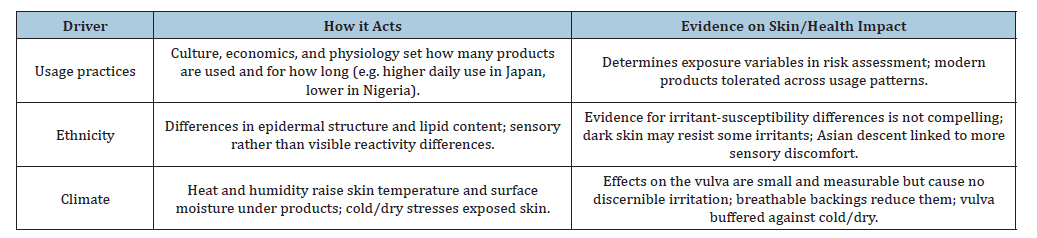
Summarized from Farage, Elsner and Maibach [4]. Categories reflect qualitative synthesis across multi-region prospective trials; quantitative estimates are presented where available in the original source.
Ethnicity and climate as modifying influences
Ethnicity and skin susceptibility: Although ethnic groups differ in skin structure, the evidence that they differ in susceptibility to skin irritation is not compelling [4]. Patch testing in the 1970s and 1980s suggested people of African descent were less responsive to some irritants, but those studies were limited by the difficulty of seeing erythema on darker skin. Newer techniques tell a more nuanced story: reflectance confocal microscopy found higher irritation thresholds and less epidermal damage in African- Americans than in whites for model irritants and darkly pigmented skin is denser, more cohesive and higher in total lipid (though lower in ceramide) [21]. Comparisons of fair-skinned Asians and whites are inconsistent and an apparent higher reactivity in Japanese participants was not reproducible. The recurring conclusion is that intra- and inter-individual variability may exceed inter-ethnic variability and that observed differences may track epidermal structure rather than race per se, especially since “ethnic” categories often encompass mixed heritage (Table 3) [4,21].
The clearer ethnic signal is sensory rather than visible: people of Asian descent report more intense sensory reactions (such as stinging, itch) without greater objective erythema [4]. Risk assessment accommodates all of this with a conventional tenfold uncertainty factor for susceptibility differences between test and use populations.
Climate and the vulvar microenvironment: The two climate extremes that matter are cold and dry and hot and humid [4]. Cold, dry conditions reliably worsen irritation on exposed skin, but the vulva’s elevated occlusion and hydration appear to shield it. A study in Munich, using menstrual pads during late summer into winter, found that vulvar skin was normal across all 242 participants at the completion of the study [4]. The occlusive backing of the menstrual product raises vulvar temperature and surface moisture by a small, measurable amounts. Swedish studies found that conventional panty liners increased mean labial temperature by approximately 1.5°C and surface evaporation by 34%, without affecting underlying epidermal hydration or producing visible irritation. These changes were comparable to normal intra-day fluctuations associated with food intake, exercise, or ambient environmental conditions. Hot and humid climates may further contribute to sensory discomfort; however, the use of vapor-permeable or “breathable” backings has been shown to reduce increases in genital surface moisture and microenvironment humidity. Overall, the evidence suggests that menstrual products may slightly alter the local microclimate but generally do not cause clinically discernible irritation (Table 3) [4].
The pooled clinical picture across regions: Much of the strongest available evidence comes from a series of prospective, controlled, examiner-blinded trials comparing modern and traditional pads and liners across multiple regions, including Indianapolis, Athens, Mexico City, Abuja (Nigeria), Munich, Kiev and Göteborg. These studies included North American, European, Latino and African participants and were conducted under a range of climatic conditions, from moderate winters to equatorial heat. The most significant finding was the consistency of the results: no clinically significant adverse skin effects were observed in any region and modern designs were generally preferred for comfort and skin compatibility (Table 4).
Table 4:Prospective sanitary-product trials across world regions.
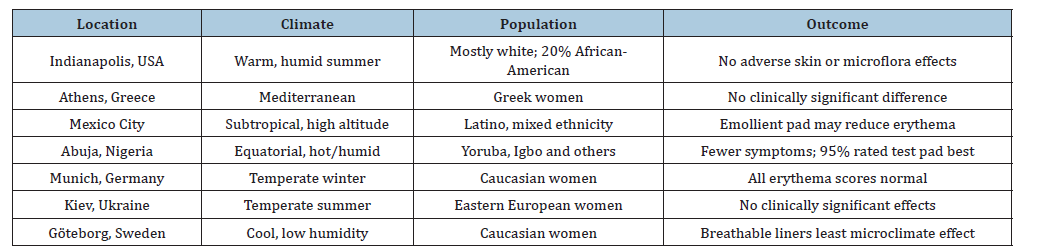
Adapted from Farage, Elsner and Maibach [4]. All studies were ethics-approved and conformed to the Declaration of Helsinki. Outcomes reflect examiner-blinded assessments unless otherwise noted; subjective outcomes were used where cultural constraints precluded direct examination.
In Nigeria, where cultural constraints limited evaluation to subjective assessments, more than 70% of users of modern pads, compared with 60% of users of a locally available conventional pad, reported no discomfort and 95% rated the modern pad as the best they had used. These findings are particularly reassuring given that approximately 20% of participants in the study had undergone genital circumcision [22].
The major limitation of this body of evidence is that cultural barriers in some parts of Africa, the Middle East and Asia may restrict direct vulvar visual examination, thus necessitating reliance on mostly subjective outcome measures that require careful crosscultural comparison and validation (Table 4).
The Perimenopause and Older Age
Hygiene needs do not end with the reproductive years, rather, they may intensify and/or change in character. The perimenopausal transition is often associated with irregular and sometimes heavy bleeding, with approximately 30% of women over the age of 40 experiencing menorrhagia which is frequently related to fibroids. This may lead to the daily need and use of feminine hygiene pads and liners and can present particular challenges in traditions that regard menstruating or bleeding women as ritually unclean [23- 25]. Underlying these symptoms is a well-characterised shift in the vulvar biomolecular environment: estrogen withdrawal elevates labial and vaginal pH, reduces histamine-mediated vascular tone and alters cytokine profiles, resulting in dryness, reduced lubrication and heightened susceptibility to irritation and infection [10].
In addition, light urinary incontinence, which becomes increasingly common in midlife and beyond, is often managed with liners, menstrual pads and/or dedicated incontinence products. In one Swedish study, a significant proportion of women with stress urinary incontinence reported needing to frequently change their protective products and/or underwear several times per day and around 30% of the subjects experienced associated vulvar irritation [6].
Incontinence dermatitis: Diaper dermatitis revisited
In frail older adults, the diaper dermatitis cascade seen in infancy may re-emerge but now it is compounded by the physiological changes of aging [6]. Elevated moisture, increased pH and exposure to fecal enzymes can damage skin that is already thinner, more fragile, slower to recover from occlusion-related hydration and slower to heal. Immobility might further contribute through friction and shear forces, particularly over the sacral area, while impaired immunity increases susceptibility to infection. Polypharmacy, poor nutritional status and cognitive impairment may further hinder recovery and limit the individual’s ability to alert caregivers to discomfort or skin injury [26,27].
Urinary incontinence is highly prevalent after the age of 65 and, as in younger women, varies by ethnicity, with one U.S. survey reporting higher prevalence among Caucasian women than among African American women. Preventive strategies mimic those used in infant skin care: maintaining dryness, preserving a healthy skin pH, minimizing friction and/or prolonged exposure to urine and feces, using formulated cleansers or wipes rather than soap and washcloths, applying moisture barriers, utilizing superabsorbent products and ensuring the prompt replacement of soiled garments or absorbent products, especially among bedridden individuals [26,27]. Evidence supporting specific treatment regimens remains limited and is derived largely from small clinical trials and case reports involving barrier creams and hydrogel dressings. This highlights a persistent research gap at the end of the life course, much as at its beginning.
Additional hygiene-related conditions in older age include intertrigo, vulvar folliculitis in obese or less mobile women and tinea affecting skin folds. These conditions are usually present by warmth and moisture and can be managed primarily through keeping the affected areas clean, dry and protected.
Clinical Implications
The evidence reviewed supports several practical considerations for nursing and clinical practice. Genital hygiene should be assessed routinely as part of the clinical history, recognizing that hygiene needs evolve across the female life course. Priorities include preventing diaper dermatitis during infancy, providing menstrual hygiene education during adolescence, discouraging intravaginal douching and other potentially harmful practices during the reproductive years, managing vulvovaginal symptoms and urinary incontinence during the menopausal transition and preventing incontinence-associated dermatitis in older adults.
Healthcare professionals should discuss hygiene practices using a culturally sensitive, nonjudgmental approach, recognizing that many behaviors are shaped by longstanding religious and cultural traditions. Contemporary menstrual products, including sanitary pads, panty liners, tampons and menstrual cups, are generally well tolerated when used appropriately and product selection should be individualized according to patient preference, anatomy, lifestyle and cost [28]. In women with urinary or fecal incontinence, gentle cleansing, pH-balanced skin care, barrier preparations and absorbent products remain the cornerstone of preventing skin damage.
Persistent vulvar symptoms, suspected vulvar dermatoses, recurrent vulvovaginal infections, or abnormal perimenopausal bleeding warrant appropriate specialist referral. Routine documentation of hygiene practices and product use may facilitate patient education and early recognition of hygienerelated skin problems. Despite these practical recommendations, comprehensive evidence-based nursing guidelines addressing genital hygiene across the female life course remain limited, highlighting the need for standardized, life-stage-specific clinical guidance [29].
Recent Global Developments
Recently, the field has shifted from a narrow product-safety focus toward menstrual health as a matter of rights, equity and the whole life course.
Reusable and alternative products
The most significant recent addition to the evidence base concerns are some reusable menstrual products, particularly the menstrual cups. The first systematic review and meta-analysis, which included 43 studies and 3,319 participants, including 15 studies from low- and middle-income countries, concluded that menstrual cups are safe and associated with leakage rates similar to or lower than those of disposable feminine hygiene pads and tampons [30]. Across four direct-comparison studies, leakage was reported as similar or lower with menstrual cups and approximately 73% of participants in 13 studies expressed a desire to continue using them. Four studies involving 507 women found no adverse effects on the vaginal flora and serious adverse events were rare [30].
The review also highlighted potential cost and environmental benefits, particularly relevant in resource-limited settings, although it noted that only a minority of the included studies were of moderate to high methodological quality. Recently, a randomized trial conducted in Kenyan schools examined the effects of menstrual cup use on bacterial vaginosis, the vaginal microbiome and sexually transmitted infections, reflecting the field’s progression toward more rigorous, life-course and low- and middle-income country– based research [14].
Menstrual health as a human right and development priority
Global institutions have reframed the issue. The “Menstrual Hygiene Management (MHM) in Ten” 2014-2024 agenda set targets for menstrual hygiene in schools and reviews have argued that menstrual health and hygiene was long neglected on the development agenda because of its measurability challenges, cultural sensitivity and the marginalized status of those affected [14,15,31]. In 2024 a landmark resolution at the United Nations Human Rights Council, echoed by the World Health Organization (WHO), recognized menstrual health as integral to the human right, to health and to gender equality, calling for universal access to safe, affordable products and to adequate water, sanitation and disposal infrastructure [15,32]. Qualitative work has simultaneously broadened the lens beyond schoolgirls: research across women’s life stages in rural India found that adequate menstrual hygiene requires, at every age, clean materials and products, privacy to change them, water and soap for bathing and a means of disposal needs aligned with the WHO/UNICEF Joint Monitoring Programme definition [33]. Humanitarian and displacement settings have emerged as a distinct concern, where loss of privacy and supply chains turns ordinary hygiene into an acute crisis [34,35].
Stratified Intervention Framework: Campus, Community, Clinic and Policy
Translating evidence into practice requires interventions that are tailored to specific settings and implemented across multiple levels of the health system. A stratified framework spanning educational institutions, communities, healthcare services and policy offers a comprehensive approach to improving menstrual and genital health outcomes.
A. Campus level: School-based menstrual health programs that integrate biological education, access to menstrual products and appropriate disposal facilities have reduced school absenteeism and improved menstrual self-efficacy in trials conducted across low- and middle-income countries [36,37]. Programs are most effective when they extend beyond classroom instruction to engage teachers across several disciplines, school administrators, parents and even male students, thereby reducing stigma and fostering supportive school environments.
B. Community level: Community health worker programs have successfully delivered menstrual hygiene education and distributed reusable menstrual products in rural and peri-urban settings. Economic evaluations indicate that reusable products are generally more cost-effective than disposable alternatives over longer time horizons [36]. However, improvements in Water, Sanitation and Hygiene (WASH) infrastructure, including access to private sanitation facilities, reliable water supplies and appropriate waste-disposal systems, remain essential for sustainable menstrual hygiene management. Without these investments, the benefits of menstrual product interventions are unlikely to achieve their full impact.
C. Clinic level: Primary care clinicians, nurses, midwives and gynecological providers play a central role in delivering life course-specific counselling on menstrual and genital hygiene.
Routine clinical assessment should include discussions of genital hygiene practices, counselling against intravaginal douching, identification of potentially harmful cultural practices and screening for urinary incontinence and vulvovaginal symptoms in older adults [6]. Standardized clinical checklists and brief counselling protocols tailored to adolescents, reproductive-age women, perimenopausal women and older adults could promote more consistent, evidence-based care. Their development should be guided by a patient and stakeholder co-design process.
D. Policy level: Structural policy interventions can improve equitable access to menstrual hygiene resources at the population level. More than 30 countries have eliminated valueadded taxes or import duties on menstrual products, commonly referred to as “tampon tax” reform. Although these policies have improved affordability in some settings, their benefits have not been distributed equally across populations [38,39]. Additional measures, including the mandatory provision of menstrual products in schools, correctional facilities and shelters, together with the integration of menstrual health into national adolescent and reproductive health strategies, could address structural barriers that cannot be overcome through individual behavior change or product distribution alone.
Across all levels of this framework, interventions should adopt an intersectional approach that recognizes the overlapping influences of gender, socioeconomic disadvantage, disability, geographic isolation and other forms of social inequality. Embedding equity considerations throughout implementation is essential to ensure that menstrual and genital health interventions reach populations experiencing the greatest barriers to care and resources.
Limitations of the Present Review
Several limitations should be considered when interpreting the findings of this review. First, by virtue of its narrative design, this review is necessarily selective and does not comprehensively cover every aspect of female genital hygiene or all geographic regions. The available literature is also unevenly distributed, with substantially more research originating from North America, Europe and other high-income settings than from Central Asia, the Pacific, or conflict-affected regions. Second, much of the available evidence is derived from cross-sectional studies that rely on selfreported hygiene practices and are therefore susceptible to recall and social desirability bias. Third, the evidence supporting the safety of menstrual products relies heavily on industry-sponsored studies, underscoring the need for independent evaluation of a broader range of contemporary products. Fourth, understanding of the molecular biology of the vulvar skin barrier behavior populations. Finally, this review excluded grey literature, non- English publications and unpublished national survey data, which may have led to the underrepresentation of regional practices and emerging evidence. In addition, because social media platforms and online health information evolve rapidly, estimates of digital health misinformation may become outdated over time, emphasizing the need for continued surveillance and periodic reassessment.
Conclusion
Several key conclusions emerge consistently across the female life course and diverse global settings. First, genital hygiene needs do evolve with age, yet many of the underlying biological principles remain constant. The vulvar environment is characterized by moisture, occlusion, friction and a distinctive skin barrier, creating shared physiological challenges from infancy through older adulthood. The same mechanisms that contribute to diaper dermatitis in infancy re-emerge later as incontinence-associated dermatitis in frail older adults, underscoring the importance of life course approaches to prevention and care.
Second, hygiene behaviors are shaped as much by social context as by biology. Cultural norms, economic resources, access to water and sanitation and social stigma exert a greater influence on practices such as menstrual management, bathing and intravaginal cleansing than anatomy alone. Although ethnic and climatic variation may influence skin comfort and the vulvar microenvironment, current evidence suggests that these effects are generally modest and modern hygiene products are well tolerated across diverse populations.
Third, not all hygiene practices are beneficial. Traditional or culturally embedded practices, particularly intravaginal douching, remain associated with adverse reproductive health outcomes despite longstanding evidence of harm. At the same time, stigma surrounding menstruation and inadequate preparation for menarche continue to affect girls and women worldwide. Educational interventions consistently improve menstrual knowledge, confidence and self-efficacy, making education one of the most effective and scalable strategies for improving menstrual health.
Finally, the greatest barriers to optimal genital and menstrual health are not the products themselves but inequities in access and resources. Contemporary disposable menstrual products are generally safe and effective and reusable menstrual cups provide a safe and cost-effective alternative for many users. However, effective hygiene and menstrual management ultimately depends on equitable access to clean water, private sanitation facilities, safe disposal systems, affordable products, evidence-based education and supportive social environments.
The field of female genital and menstrual hygiene and health have evolved substantially over the past two decades. What was once focused primarily on product safety and dermatologic outcomes has expanded into a multidisciplinary, life course and rights-based field that recognizes the complex interplay between biology, behavior, culture and structural determinants of health. This evolution is reflected in the growing international recognition of menstrual health as a human rights issue [32].
Despite this progress, important priorities remain. Future research should extend beyond school-aged girls to encompass the full female life course, include more diverse populations across geographic and socioeconomic settings and strengthen the evidence base through longitudinal and implementation research. Similarly important are investments in water, sanitation and hygiene infrastructure, rightful access to menstrual products and educational programs for girls, families, clinicians and communities that reduce stigma while promoting informed, evidence-based hygiene practices. Addressing these priorities will require coordinated efforts across healthcare, education, public health and policy to ensure that women and girls can maintain genital hygiene and health throughout the life course.
References
- Farage MA, Miller KW, Davis A (2011) Cultural aspects of menstruation and menstrual hygiene in adolescents. Expert Rev Obstet Gynecol 6(2): 127-139.
- Kunin CM (1997) Urinary tract infections: Detection, prevention and management. (5th edn), Baltimore: Williams & Wilkins, USA.
- Farage MA, Maibach HI (2017) Tissue structure and physiology of the vulva. In: Farage MA, Maibach HI (Eds.), The Vulva: Physiology and Clinical Management. (2nd edn), CRC Press, USA.
- Farage MA, Elsner P, Maibach HI (2007) Influence of usage practices, ethnicity and climate on the skin compatibility of sanitary pads. Arch Gynecol Obstet 275(6): 415-427.
- Farage MA (2009) Irritation differences between genital and upper arm skin and the effects of emollient application. In: Barel AO, Paye M, Maibach HI (Eds.), Handbook of Cosmetic Science and Technology. CRC Press, USA, pp: 505-508.
- Farage MA, Bramante M (2017) Genital hygiene: Culture, practices, and health impact. In: Farage MA, Maibach HI (Eds.), The Vulva: Physiology and Clinical Management. (2nd edn), CRC Press, USA, pp: 297-312.
- Yong TL, Zaman R, Rehman N, Keat Tan C (2025) Ceramides and skin health: New Insights. Exp Dermatol 34(2): e70042.
- Lowe AJ, Su JC, Allen KJ, et al. (2023) Filaggrin and beyond: new insights into atopic dermatitis and skin barrier function. Ann Allergy Asthma Immunol 131(6): 679-688.
- Berard AR, Brubaker DK, Birse K, Lamont A, Mackelprang RD, et al. (2023) Vaginal epithelial dysfunction is mediated by the microbiome, metabolome, and mTOR signaling. Cell Rep 42(5):
- Farage MA, Wehmeyer K, Fadayel G, Carpenter S, Cheng R, et al. (2015) Urogenital biomolecular and physical measures in pre- and post-menopausal women. J Clin Gynecol Obstet 4(3): 237-250.
- Herman-Giddens ME, Berson NL (1989) Harmful genital care practices in children: A type of child abuse. JAMA 261(4): 577-579.
- Hornor G, Ryan-Wenger NA (1999) Aberrant genital practices: An unrecognized form of child sexual abuse. J Pediatr Health Care 13(1): 12-17.
- Farage MA, Rodenberg C, Chen J (2013) Translation and validation of the Farage quality of life (FQoL™) instrument for consumer products into traditional Chinese. Glob J Health Sci 5(1): 1-12.
- Hennegan J, Plesons M, Torondel B, Caruso BA, Sommer M, et al. (2023) Research priorities for improving menstrual health across the life-course in low- and middle-income countries. Glob Health Action 16(1): 2279396.
- Sommer M, Caruso BA, Torondel B, Warren EC, Yamakoshi B, et al. (2021) Menstrual hygiene management in schools: Midway progress update on the ‘MHM in Ten’ 2014-2024 global agenda. Health Res Policy Syst 19(1): 1.
- Holdcroft AM, Ireland DJ, Payne MS (2023) The vaginal microbiome in health and disease-what role do common intimate hygiene practices play? Microorganisms 11(2): 298.
- Hesham H, Mitchell AJ, Bergerat A, Hung K, Mitchell CM (2021) Impact of vaginal douching products on vaginal lactobacillus, Escherichia coli and epithelial immune responses. Sci Rep 11(1): 23069.
- Bhuiyan J, Addison J, Hassan A (2024) Qualitative assessment of vulvovaginal health information on social media. J Pediatr Adolesc Gynecol 37(1): 33-38.
- Rengifo R, Williams DN, D’Ambrosi G, Leahy G, Addison J, et al. (2026) “Hey guys, how are your vaginas doing?” Exploring adolescents’ and young adult women’s attitudes and practices toward vulvovaginal health: A qualitative study. J Pediatr Adolesc Gynecol S1083-3188(26): 00356-00600.
- Lin LC, Chang FC, Huang TF, Chen TY, Chiu CH, et al. (2024) Effects of media literacy intervention on weight-control products digital marketing targeting adolescents. Behav Sci (Basel) 14(11): 1023.
- Zou Y, Maibach HI (2017) Vulva ethnic differences: An overview. In: Farage MA, Maibach HI (Eds.), The Vulva: Physiology and Clinical Management. (2nd edn), CRC Press, USA, pp: 29-37.
- Stadler A, Tischler H, Wambebe C, Osisanya T, Farage MA (2006) An investigator-blind, single-center, controlled, parallel group study to confirm the suitability of sanitary pads for menstrual protection in a Nigerian female population. Cutan Ocul Toxicol 26(1): 1-10.
- Dreisler E, Frandsen CS, Ulrich L (2024) Perimenopausal abnormal uterine bleeding. Maturitas 184: 107944.
- Manley C, Manias T (2022) The management of perimenopausal abnormal uterine bleeding. Obstet Gynaecol Reprod Med 32(12): 282-288.
- Santoro N, Clain E (2021) Perimenopausal abnormal uterine bleeding: The challenge of diagnosis occurs in distinguishing “normal” from “abnormal” in a time of rapid and dynamic change. Contemp OB/GYN 66(2): 26-32.
- Farage MA, Miller KW, Berardesca E, Maibach HI (2007) Incontinence in the aged: Contact dermatitis and other cutaneous consequences. Contact Dermatitis 57(4): 211-217.
- Farage MA, Miller KW, Berardesca E, Maibach HI (2017) Cutaneous effects and sensitive skin with incontinence in the aged. In: Farage MA, Miller KW, Maibach HI (Eds.), Textbook of Aging Skin, Springer, Germany, pp: 857-868.
- Krause A, Zane GK, Rivas-Nieto AC, Mulugeta A, Hossain MR, et al. (2025) Assessing the relationship between menstrual products and reproductive and urogenital tract infections (RUTIs): A systematic review evaluating the evidence and recommendations for future research. PLoS One 20(12): e0332006.
- Graham T, Beeckman D, Kottner J, Fader M, Fiorentino F, et al. (2025) Skin cleansers and leave-on product interventions for preventing incontinence-associated dermatitis in adults. Cochrane Database Syst Rev 7(7): CD011627.
- van Eijk AM, Zulaika G, Lenchner M, Mason L, Sivakami M, et al. (2019) Menstrual cup use, leakage, acceptability, safety, and availability: A systematic review and meta-analysis. Lancet Public Health 4(8): e376-e393.
- Jalali R (2023) Global health priorities and the neglect of menstrual health and hygiene: The role of issue attributes. Sociol Dev 9(4): 317-345.
- WHO (2024) Menstrual health is a fundamental human right. World Health Organization, Geneva, Switzerland.
- MacRae ER, Clasen T, Dasmohapatra M, Caruso BA (2019) ‘It’s like a burden on the head’: Redefining adequate menstrual hygiene management throughout women’s varied life stages in Odisha, India. PLoS One 14(8): e0220114.
- Sadique S, Ali I, Ali S (2024) Barriers to women’s menstrual hygiene practices during recurrent disasters and displacement: a qualitative study. J Biosoc Sci 56(3): 480-492.
- Patel K, Panda N, Sahoo KC, Saxena S, Chouhan NS, et al. (2022) A systematic review of menstrual hygiene management during humanitarian crises in low- and middle-income countries. Front Public Health 10: 1018092.
- Shah V, Schmidt W, Sonko B, Sinjanka E, Mendy F, et al. (2025) Effect of a multicomponent intervention to improve menstrual health and hygiene and school attendance among adolescent girls in the Gambia (MEGAMBO Trial). J Adolesc Health 76(5): 879-888.
- Betsu BD, Medhanyie AA, Gebrehiwet TG, Wall LL (2024) Menstrual hygiene management interventions and their effects on schoolgirls’ menstrual hygiene experiences in low and middle income countries: A systematic review. PLoS One 19(8): e0302523.
- Kinnl K, Wohak U (2025) Free the period? Evaluating tampon tax reforms using household scanner data. J Econ Behav Organ 24: 107356.
- Shomuyiwa DO, Odey GO, Ndep AO, Ekerin O, Amesho JN, et al. (2024) Transforming adolescent menstrual health through policy: The role of value added tax exemptions in improving access to sanitary products. Glob Health Res Policy 9(1): 19.
© 2026 Miranda A Farage. This is an open access article distributed under the terms of the Creative Commons Attribution License , which permits unrestricted use, distribution, and build upon your work non-commercially.
Editor In Chief







.jpg)































Signup for Newsletter

Quick Links
 Editorial Board Registrations
 Submit your Article
 Best Paper of the Volume
 Reprints
 Refer a Friend
 Advertise With Us
Our Recent Edition

.jpg)



Top Editors




.jpg)

















.bmp)
.jpg)
.png)
.jpg)













.jpg)






.png)

.png)




.png)




Financial Support

Sponsors

Latest e-Books

Latest Video

 a Creative Commons Attribution 4.0 International License. Based on a work at www.crimsonpublishers.com.
Best viewed in
a Creative Commons Attribution 4.0 International License. Based on a work at www.crimsonpublishers.com.
Best viewed in 
 | Above IE 9.0 version