

- About Us
- Information
-

The Author ensures that the research has been conducted responsibly and ethically with adherence to all relevant regulations. read more..
- For Authors
- For Reviewer
- Manuscript Guidelines
- Membership
- Publication Ethics
-
- Journals
- Reprints
- e-Books
- Videos
- Policies
- Contact Us
 COVID-19
- Submissions



Full Text
Biodiversity Online J
Surgical Removal of a Tumorous Mass in a Koi Carp: A Case Report
Miroslava Palíková*, Jiří Pikula, Ivana Mikulíková and Ivana Papežíková
Department of Ecology & Diseases of Zoo Animals, Game, Fish and Bees, University of Veterinary Sciences Brno, Czech Republic
*Corresponding author:Miroslava Palíková, Department of Ecology & Diseases of Zoo Animals, Game, Fish and Bees, University of Veterinary Sciences Brno, Czech Republic
Submission: March 24,2026; Published: April 02, 2026
ISSN 2637-7082Volume5 Issue 5
Abstract
An adult koi carp presented with a pedunculated tumour on the dorsal head was surgically treated under clove oil sedation. The mass was ligated and excised while the fish remained submerged. Post excision arterial bleeding was controlled by compression and surgical skin glue. The carp recovered quickly, resumed feeding the next day and showed normal behaviour; wound healing progressed with granulation and epithelial growth. Histology identified the lesion as a papilloma. This case demonstrates the feasibility of individualized surgical intervention in ornamental fish.
Keywords:Cyprinus rubrofuscus var. Koi; Papilloma; Benign epithelial tumour; Surgical excision; Fish pathology
Introduction
Health assessment in fish commonly relies on diagnostic procedures that require sacrificing several individuals to obtain representative samples for pathological, microbiological and toxicological analyses. This is followed by targeted therapy for the entire stock at the facility. While this approach remains the gold standard for detecting infectious agents and identifying underlying disease processes, it is not always necessary or appropriate in cases involving valuable or individually kept fish. In such situations, individualized diagnostics and targeted therapeutic interventions may offer a viable alternative, enable treatment while preserve the animal. Ornamental koi carp (Cyprinus rubrofuscus var. koi) are frequently presented with various dermatological and neoplastic conditions, including benign epithelial tumours. Among these, papilloma’s represent common lesions observed across both freshwater and marine fish species. These tumours typically appear on the skin, fins, or in the oral region and are characterized by slow growth and predominantly non-invasive behaviour. Weakened or immunocompromised fish have increased susceptibility to papilloma formation [1]. Tumour development is influenced by environmental factors, chronic irritation, or stress [2,3] but viral origin has also been demonstrated [4,5]. Although papillomas are generally not life threatening, their size or location can impair normal behaviour, feeding, or hydrodynamics and therefore may require clinical intervention. Advances in fish anaesthesia, surgical techniques and postoperative care have expanded the possibilities for individualized treatment in ornamental aquaculture. Procedures can now be performed under controlled sedation, often while the fish remains submerged, minimizing physiological stress and improving recovery outcomes. Despite these advances, reports documenting practical surgical management of such cases remain relatively limited.
Case Report
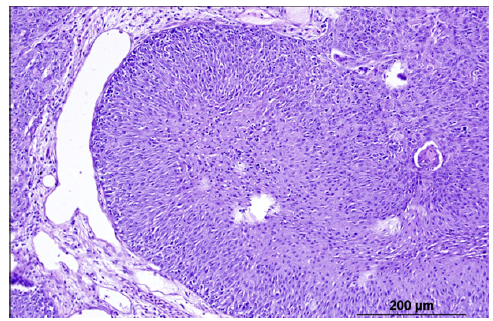
An example of such an individualized curative intervention was performed on an adult specimen of Cyprinus rubrofuscus var. koi that had a tumorous mass on the dorsal aspect of the head, spherical-cap shaped with a diameter of approximately 4 cm and a height of 3 cm (Figure 1). The carp was sedated by immersion in water containing clove oil at 0.03 ml·L-1, the mass was ligated and subsequently excised using surgical suture material (Figure 2). Throughout the procedure, the fish was kept in water. The growth was a pedunculated structure closely attached to the skin, with the short stalk having a cross-sectional area of approximately 1 cm2. After removal of the tumour, severe arterial bleeding occurred from the centre of the surgical wound. The bleeding was controlled by compression, followed by closure of the bleeding vessel using absorbable surgical skin glue. The carp was transferred to a tank shortly after the procedure and was feeding again the following day. It showed no behavioural abnormalities. The healing process was monitored, with granulation tissue formation and proliferation of the covering epithelium observed over time (Figure 3). Histologically, the tumour was identified as a papilloma (Figure 4). In the present case, tumour development could not be associated with environmental contamination or elevated xenobiotic levels in the water. The carp was kept in a garden pond supplied exclusively with municipal tap water, which is regularly monitored and meets drinking-water standards. This reduces the likelihood that chemical pollutants, heavy metals, or other harmful substances played a role in tumour induction. Nevertheless, even in controlled environments, other non-chemical stressors such as fluctuating water temperature, suboptimal pond hygiene, mechanical irritation, or social stress may contribute to epithelial hyperplasia or neoplastic transformation in susceptible fish [6]. Therefore, while environmental xenobiotics can be important cofactors in tumour development in aquatic animals, their involvement in this case appears unlikely, suggesting that other factors such as viral aetiology or individual immunological predisposition may have been more influential.
Figure 1:Dorsolateral tumour on the head of a koi carp.
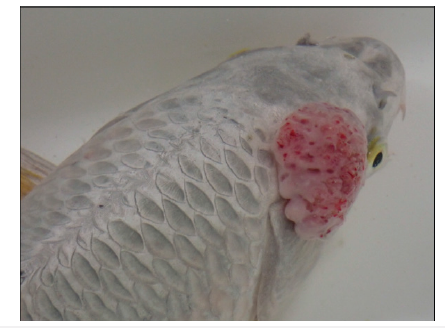
Figure 2:Removal of neoplastic tissue by cutting the lesion’s stalk using suture material.
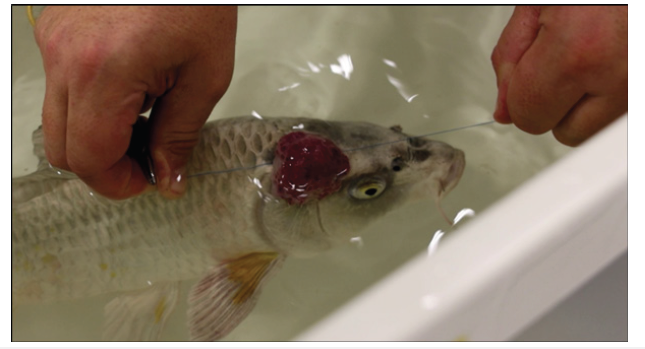
Figure 3:Healing of the tissue defect after removal of neoplastic tissue: one week (A) and one month (B).
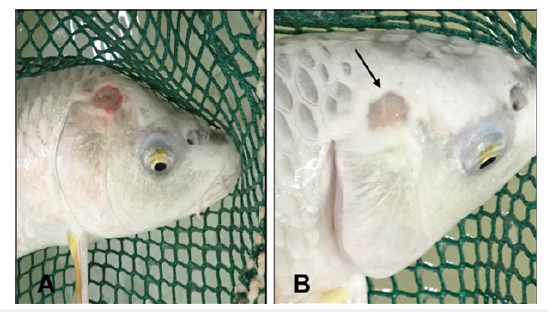
Figure 4:Histological examination classified the tumour as a papilloma.
Conclusion
This case demonstrates that individualized surgical intervention can be a practical and effective therapeutic option for ornamental fish, particularly when dealing with benign yet clinically significant lesions such as papilloma’s. The successful removal of a large pedunculated tumour in a koi carp, performed under immersion anaesthesia and with careful intraoperative haemostasis, resulted in rapid recovery and normal postoperative behaviour. The healing process progressed without complications, highlighting the potential of minimally invasive techniques performed with the fish submerged to reduce stress and improve outcomes. Although papilloma’s often arise in association with environmental stressors, irritation, immunosuppression, or viral agents, timely surgical management can restore animal welfare and prevent further impairment.
References
- Roberts RJ (2001) Neoplasia of teleost’s. In Fish. Pathology, W.B. Saunders, London.
- Korkea-aho TL, Partanen JM, Kiviniemi V, Vainikka A, Taskinen J (2006) Association between environmental stress and epidermal papillomatosis of roach rutilus rutilus. Diseases of Aquatic Organisms 72(1): 1-8.
- Palíková M, Navrátil Svobodová, Z Tichý, Reček L, Pikula J (2007) Skin and gonadal tumours in a barbel (Barbus barbus L.)-a case report. Bulletin of EAFP 27(6): 233-237.
- McAllister PE, Nagabayashi T, Wolf K (1997) Viruses of eels with and without stomato papillomas. Annals of the New York Academy of Sciences 298: 233-244.
- Coffee LL, Casey JW, Bowser PR (2013) Pathology of tumors in fish associated with retroviruses: A review. Veterinary Pathology 50(3): 390-403.
- Kumar S, Paul T, Sarkar P, Kumar K (2025) Environmental factors affecting aquatic animal health. In: Mallik SK, Shahi N, Pandey PK (Eds.), Management of Fish Diseases. Springer, Singapore.
© 2026 Miroslava Palíková. This is an open access article distributed under the terms of the Creative Commons Attribution License , which permits unrestricted use, distribution, and build upon your work non-commercially.
Editor In Chief







.jpg)































Signup for Newsletter

Quick Links
 Editorial Board Registrations
 Submit your Article
 Best Paper of the Volume
 Reprints
 Refer a Friend
 Advertise With Us
Our Recent Edition

.jpg)



Top Editors




.jpg)

















.bmp)
.jpg)
.png)
.jpg)













.jpg)






.png)

.png)




.png)




Financial Support

Sponsors

Latest e-Books

Latest Video

 a Creative Commons Attribution 4.0 International License. Based on a work at www.crimsonpublishers.com.
Best viewed in
a Creative Commons Attribution 4.0 International License. Based on a work at www.crimsonpublishers.com.
Best viewed in 
 | Above IE 9.0 version