

- About Us
- Information
-

The Author ensures that the research has been conducted responsibly and ethically with adherence to all relevant regulations. read more..
- For Authors
- For Reviewer
- Manuscript Guidelines
- Membership
- Publication Ethics
-
- Journals
- Reprints
- e-Books
- Videos
- Policies
- Contact Us
 COVID-19
- Submissions



Full Text
Approaches in Poultry, Dairy & Veterinary Sciences
Application of B-Ultrasound Technique in Pregnancy Examination of Captive Malayan Tapirs
Yongteng HUO#1, Junren WANG#1, Zhe XU1, Bo LI1, Xin YAO1, Ning LIU1, Xiaolong CHE1, Simin JIAO1, Xinlin FAN1, Wei WANG1, Xin WANG1, Dongyao WANG1, Cun LI1, Shujun LIU1, Yizhuo ZHANG1, Shaochun HE1, Yan LU2, Yuyan YOU2 and Tianchun PU1*
1Beijing Zoo, China
2Beijing Key Laboratory of Captive Wildlife Technology, Beijing Zoo, China
#These authors contributed equally to the manucsript
*Corresponding author: Tianchun PU, Beijing Zoo, Beijing 100044, China
Submission: March 16, 2026;Published: March 30, 2026
ISSN: 2576-9162 Volume 10 Issue 2
Abstract
In the field of animal protection and research, B-ultrasound technology is playing a vital role. Due to the nature of mammals, the use of routine pregnancy tests in captive medium and large wild animals may be limited. In this study, Malayan tapirs from Beijing Zoo were used as the research objects, and B-ultrasound examination was carried out to determine the pregnancy and fetal status of the Malayan tapir in the mother’s non-anaesthetic state, and basic data such as fetal heart rate, thoracic length, amniotic fluid depth, and fetal umbilical artery blood flow parameters were obtained. Maternal respiratory frequency, blood oxygen saturation, body temperature, heart rate and other parameters were collected. This study not only avoided the risk that anaesthesia may bring to the Malarian tapir, minimized the disturbance to the animals, filled the gap in the biological pregnancy data of the Malarian tapir, and provided a reference for the reproduction of the Malayan tapir. The results demonstrated that non-anaesthetic B-ultrasound is feasible for monitoring the pregnancy of large captive wild animals. This study not only avoided the potential risks associated with anaesthesia for the Malayan tapir but also minimized disturbance to the animals. Furthermore, it filled the gap in the biological pregnancy data of the Malayan tapir, providing a scientific reference for the ex-situ conservation and reproductive management of this endangered species.
Keywords:B-ultrasound technology; Malay tapir; Non-anaesthesia; Pregnancy
Introduction
The Malayan tapir (Tapirus indicus), also known as the Asian tapir or Indian tapir, is the largest species among tapirs. It has a body length of 180-250cm, a shoulder height of 90- 120cm, a tail length of 5-10cm, and a body weight of 250-540kg. It mainly feeds on bamboo, as well as twigs and leaves. Malayan tapirs are monogamous, with mating usually occurring from May to June each year. Previous studies have shown that the gestation period of the Malayan tapir is generally 390-410 days (55-58 weeks). They produce one calf per year on average, occasionally two calves. Newborn calves weigh 8-10kg [1]. The Malayan tapir is listed as an Appendix I protected species under CITES and is classified as Endangered (EN) on the IUCN Red List of Threatened Species Version 3.1 (2012).
As a non-invasive examination method, B-ultrasound technology has important application value in pregnancy diagnosis of captive Malayan tapirs. B ultrasound is an important tool for monitoring fetal development during gestation. Through positive reinforcement training, non-anaesthetic and non-restraint B ultrasound examinations can be performed on pregnant Malayan tapirs. Non-anaesthetic B-ultrasound examination, based on Positive Reinforcement Training (PRT) allows for repeated, long-term, and low-stress monitoring of fetal development. Beijing Zoo began conducting B ultrasound examinations on a pregnant Malayan tapir in December 2023. During the monitoring period, maternal physiological data, fetal developmental imaging data, and fetal umbilical artery blood flow parameters were collected, providing a reference for the breeding management of captive Malayan tapirs.
Materials and Methods
Experimental instruments
Portable color B-ultrasound diagnostic instrument: A
portable color B-ultrasound diagnostic instrument Mindray M5,
produced by Zhonglianrui (Beijing) Biotechnology Co., Ltd., was
selected. It was equipped with a phased array probe (2P2S), an
abdominal convex array probe (6C2S), an abdominal convex array
probe (3C5S), and an ultrasound image management system
Mindray DS-88.
Research objects: A female Malayan tapir with a body weight
of 212.5kg, a body length of 226cm, a trunk length of 135cm, a tail
length of 10cm, a neck length of 18 cm, a neck circumference of
87cm, an ear length of 20cm, a shoulder height of 100cm, a forelimb
circumference of 56cm, a forelimb spacing of 8cm, a hip height of
114cm, a hind foot length of 26cm, a hind limb circumference of
61cm, a hind limb spacing of 10cm, a forelimb spacing of 58cm,
a chest circumference of 136cm, an abdominal circumference of
152cm, and a waist circumference of 154cm.
Behavioural training
Most pregnant animals are sensitive and highly vigilant; therefore, behavioural training is an indispensable preliminary preparation for imaging examinations of captive wild animals. Good behavioural training can help animals maintain a relatively natural and relaxed state during the examination, thereby enabling imaging examinations to obtain more objective and accurate data. A positive reinforcement training method was adopted. Firstly, the target behaviour was determined to make the Malayan tapir adapt to the contact of the B-ultrasound probe. Secondly, bananas and apples were used as reinforcers (rewards). Finally, positive reinforcement was implemented: when the target behaviour appeared, the reinforcer was given immediately.
Evaluation of behavioural stability
After the results of behavioural training became stable, the frequency of giving reinforcers was gradually reduced. When the behaviour was stable, B-ultrasound examination was performed. During the actual examination, the Malayan tapir should be in a stable mood and fully adapted to the contact of the B-ultrasound probe. During the examination, the training time of the female tapir and the changes in the duration of B-ultrasound operation were recorded, and basic data such as the female tapir’s heart rate, blood oxygen, rectal temperature, and respiratory rate were collected. The stability of the female tapir during the B-ultrasound examination was analysed through changes in the data.
Imaging examination
B-ultrasound exploration: Malayan tapirs are pachyderms.
The abdominal changes are not obvious in the early stage of
pregnancy, and estrus and mating may also occur in the early stage
of pregnancy, making it difficult to observe the pregnancy status.
The fetal development degree was monitored, and data such as the
thoracic cage diameter, spinal length, heart rate, placental thickness,
amniotic fluid depth, and umbilical artery blood flow of the Malayan
tapir fetus were collected to evaluate the fetal development degree.
B-ultrasound exploration time: The B-ultrasound exploration
time was formulated according to the pregnancy cycle of the
Malayan tapir, with a frequency of once a week. On the premise of
non-anaesthesia and non-restraint, after confirming the pregnancy
of the Malayan tapir, B-ultrasound imaging examinations were
carried out every 7 days until the female tapir gave birth normally,
with a total of 28 B-ultrasound examinations.
Result
Stability of non-anaesthetic B-ultrasound examination
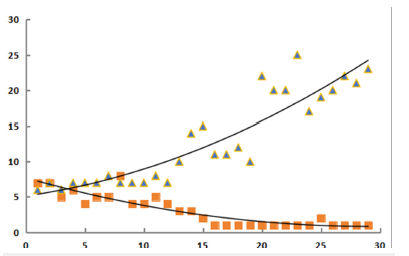
Correlation between training duration and examination time: With the progression of pregnancy and the increase in training times, the time required for pre-examination behavioural induction significantly decreased, while the duration of successful B-ultrasound operation gradually increased. This indicated that the tapir established a positive conditioned reflex and trust towards the breeding and research team (Figure 1).
Figure 1:Changes in the duration of B-ultrasound examination of Malayan tapir during pregnancy with the increase of the number of behavioural trainings. (The abscissa is the number of trainings, and the ordinate is the training and B-ultrasound operation time/min).
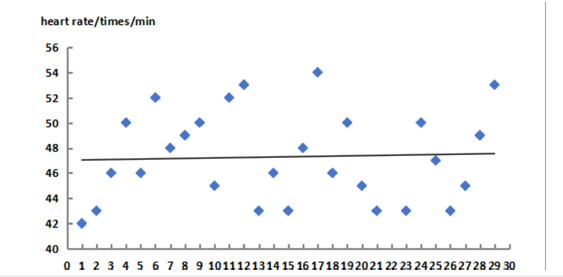
Changes in maternal heart rate: During the entire monitoring period, the maternal vital signs remained relatively stable, reflecting the safety of the non-anaesthetic protocol (Figure 2). The heart rate of pregnant Malayan tapirs was relatively stable during B-ultrasound examination, with a heart rate range of 42-54 beats per minute (bpm), and an overall average heart rate of 47.14bpm, which was consistent with the normal range for perissodactyls.
Figure 2:Maternal heart rate of Malayan tapirs during pregnancy. (The abscissa is the number of detections and the ordinate is the maternal heart rate/time/min).
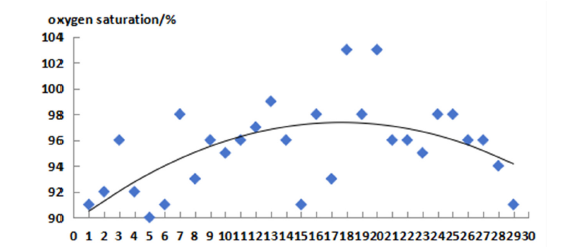
Changes in maternal blood oxygen saturation: The blood oxygen saturation of pregnant Malayan tapirs during B-ultrasound examination ranged from 90% to 103%, with an overall average blood oxygen saturation of 95.41% (Figure 3).
Figure 3:Changes in maternal oxygen saturation of Malayan tapirs during pregnancy.
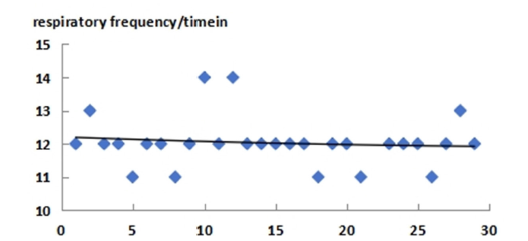
Changes in maternal respiratory rate during b-ultrasound examination of pregnant Malayan tapirs: During the B-ultrasound examination of pregnant Malayan tapirs, the respiratory rate ranged from 11 to 14 breaths per minute (bpm), and the overall average respiratory rate was relatively stable, with an average of 12bpm (Figure 4).
Figure 4:Maternal respiratory frequency of Malayan tapirs during pregnancy.
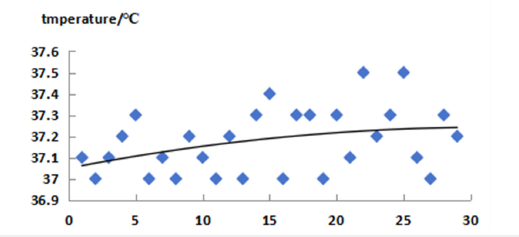
Changes in maternal rectal temperature during b-ultrasound examination of pregnant Malayan tapirs: During the B-ultrasound examination of pregnant Malayan tapirs, the rectal temperature ranged from 37.0 to 37.5 °C, and the overall average rectal temperature was 37.18 °C (Figure 5).
Figure 5:Changes in maternal anal temperature of Malayan tapirs during pregnancy.
Fetal development monitoring
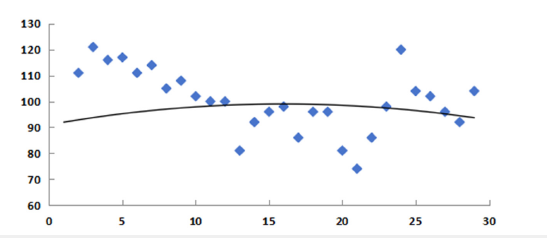
Fetal umbilical artery blood flow dynamics: B-ultrasound imaging examination was used to monitor the fetal development of Malayan tapirs. Data such as fetal umbilical artery blood flow (peak systolic velocity ratio, PS; end-diastolic velocity ratio, ED; Figure 6), systolic/diastolic peak velocity ratio (S/D; Figure 7), resistance index (RI; Figure 8), and heart rate (HR; Figure 9) were collected to evaluate the fetal development (Figure 6-8).
Figure 6:High-speed peak velocity ratio (PS) and low-velocity peak velocity ratio (ED) of Malayan tapir fetal blood flow.
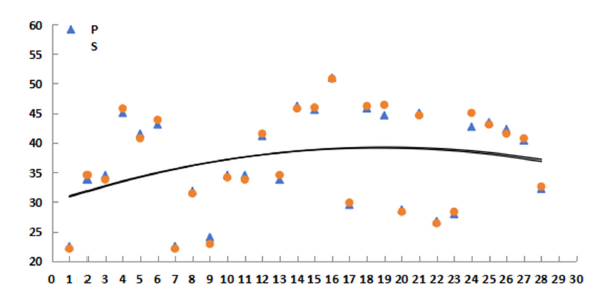
Figure 7:Changes in peak diastolic ratio of blood flow in Malayan tapir fetuses (S/D).
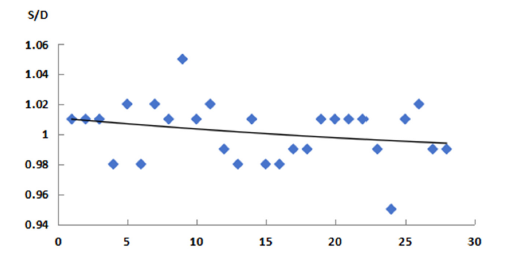
Figure 8:Changes in Fetal Resistance Index (RI) of Malayan tapir.
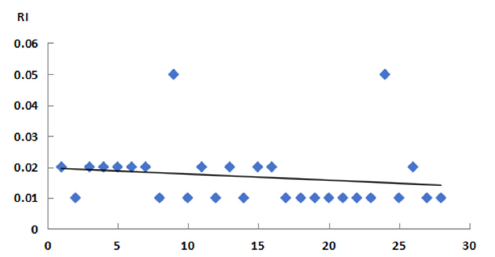
Figure 9:Malayan tapir fetal Heart Rate (HR).
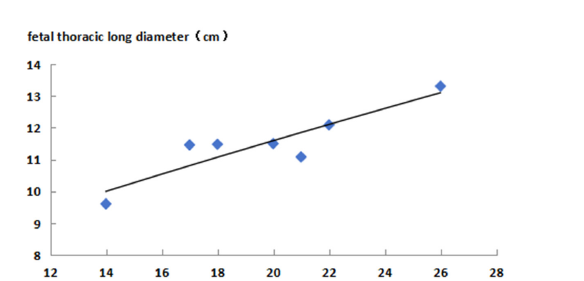
Fetal biometry: B-ultrasound imaging examination was used to monitor the fetal development of pregnant Malayan tapirs. The changes in amniotic fluid depth of the female tapir (Figure 10) and the fetal thoracic cage diameter (Figure 11) during pregnancy were measured. The fetal development was evaluated by analysing the changing trend of the data. Amniotic fluid depth initially remained stable and then gradually decreased in the late stage of pregnancy, which is a normal physiological change during parturition preparation. The fetal thoracic cage diameter showed a linear growth trend throughout the monitoring period, providing a reliable basis for evaluating fetal growth.
Figure 10:Changes in amniotic fluid depth during pregnancy in Malayan tapirs.
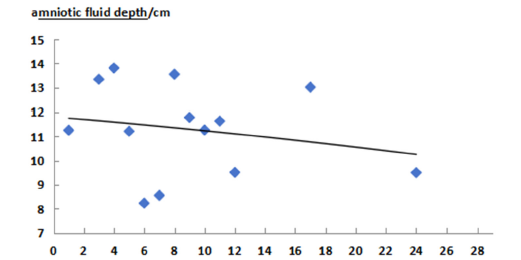
Figure 11:Changes in the diameter of the fetal thorax during pregnancy in Malayan tapirs.
Discussion
The Role of behavioural training in non-invasive imaging
This study confirmed that Positive Reinforcement Training (PRT) is the key to achieving non-anaesthetic B-ultrasound examination of large captive wild animals. As shown, the tapir’s cooperation degree improved significantly with training. This noninvasive approach not only eliminates the risks of anaesthesia (such as respiratory depression or cardiac arrhythmia) but also enables high-frequency dynamic monitoring. This technology has broad educational implications for zoo veterinarians and animal care professionals, as it provides a low-stress, high-efficiency alternative for the clinical examination of endangered species.
Behavioural training is one of the important links in the behavioural management of captive wild animals in modern zoos, and it is a communication channel between breeders and wild animals. Through this kind of communication that does not bring negative stimulation to animals, trust between animals and breeders is established [2]. From the relationship between the duration of behavioural training and the duration of B-ultrasound examination since the start of the Malayan tapir’s pregnancy (Figure 1), it can be seen that with the passage of training time, the behaviour induction time before B-ultrasound examination gradually decreases, and the operation duration of B-ultrasound examination gradually increases.
During the B-ultrasound examination, although the monitored basic data of the Malayan tapir’s maternal heart rate, respiratory rate, blood oxygen saturation, rectal temperature and other indicators fluctuated slightly, the overall trend was relatively stable. From the overall changing trend of the data, it can be known that with the continuous positive reinforcement of good behavioural training, the animals become more and more adapted to the B-ultrasound examination operation, and their cooperation degree gradually increases. Especially for animals that are more sensitive during pregnancy, good behavioural training can effectively reduce the stress response of animals to external stimuli. It not only can realize non-anaesthetic and non-restraint clinical examinations, but also can conduct high-frequency follow-up detection of animals, making B-ultrasound examinations more coherent and the results more reflective of objective facts.
Analysis of basic physiological data
During the B-ultrasound examination, the heart rate changes of the pregnant Malayan tapir were collected, with a variation range of 42-54 beats per minute (bpm) and an overall average heart rate of 47.14bpm. The reference value for equine animals (Perissodactyla) is 42.57-50.50bpm [3]. The respiratory rate of the Malayan tapir ranged from 11 to 14bpm, with an overall average respiratory rate of 12bpm. The reference value for equine animals (Perissodactyla) is 19.8-27.33bpm [3]. The average rectal temperature of the Malayan tapir ranged from 37.0 °C to 37.5 °C, with an overall average temperature of 37.18 °C. The reference value for equine animals (Perissodactyla) is 37.51 °C-38.08 °C [3]. The baseline physiological data (heart rate, respiratory rate, temperature) obtained in this study were compared with reference values for equine animals [3]. The results showed that although the Malayan tapir belongs to the Perissodactyla order, its basic vital signs are slightly different from equines (e.g., lower respiratory rate). These data fill the gap in the basic physiological database of the Malayan tapir and serve as important reference standards for future clinical diagnosis and health assessment of the species.
Fetal blood flow analysis
Fetal umbilical artery blood flow data were collected by B-ultrasound imaging under non-anaesthetic and non-restraint conditions in pregnant Malayan tapirs. Although positive reinforcement behavioural training can make the female tapir in a relatively stable state during the examination, it still has varying degrees of impact on the collection of fetal data, resulting in large fluctuations in the obtained data. However, through the linear trend comparison of the data, the general growth trend of the fetus can be known. The dynamic changes in fetal umbilical artery blood flow (PS, ED, S/D, RI) reflected the well-being of the fetus. The decreasing RI and S/D values indicated that the placenta was functioning adequately to supply oxygen and nutrients to the fetus. It is worth noting that during the development of the Malayan tapir fetus, its peripheral vascular resistance was relatively low, which may be related to the species’ specific physiological characteristics.
B-ultrasound data analysis
Due to the influence of factors such as animal body position, drinking water and urination before the examination, the amniotic fluid depth fluctuated slightly during pregnancy. With the fetal development, the amniotic fluid depth gradually decreased, and the fetal thoracic cage diameter showed a linear increase. The above values can be used as technical reference data for evaluating the fetal development of Malayan tapirs during pregnancy.
Limitations and implications
This study was limited to a single individual; however, it provides a successful technical model. For the field of reproductive biology and wildlife conservation education, this study demonstrates how modern veterinary technology can be applied to protect endangered species. The establishment of a standardized non-anaesthetic monitoring protocol is conducive to improving the success rate of captive breeding of the Malayan tapir and other endangered perissodactyls.
Conclusion
In conclusion, this study successfully established a nonanaesthetic B-ultrasound monitoring protocol for captive pregnant Malayan tapirs through positive reinforcement training. A total of 28 sessions of ultrasound imaging data were collected, revealing the dynamic rules of fetal growth and maternal physiological changes during gestation.
References
- Hoyer MJ, van Engeldorp Gastelaars HMD (2014) Ultrasonographic measurement of fetal growth parameters over three successive pregnancies in a captive Malayan Tapir (Tapirus Indicus). Zoo Biology 33(4): 295-304.
- Zhang EQ, Li XG (2018) Behavioural management of wild animals in Zoos. China Architecture & Building Press, Beijing, China, p. 10.
- Ding ZH, Chen ZH, Yue HN (1993) Determination of 18 physiological and biochemical indexes in healthy equine animals in Gansu. Journal of Gansu Agricultural University 4: 388-390.
© 2026 Tianchun PU. This is an open access article distributed under the terms of the Creative Commons Attribution License , which permits unrestricted use, distribution, and build upon your work non-commercially.
Editor In Chief







.jpg)































Signup for Newsletter

Quick Links
 Editorial Board Registrations
 Submit your Article
 Best Paper of the Volume
 Reprints
 Refer a Friend
 Advertise With Us
Our Recent Edition

.jpg)



Top Editors




.jpg)

















.bmp)
.jpg)
.png)
.jpg)













.jpg)






.png)

.png)




.png)




Financial Support

Sponsors

Latest e-Books

Latest Video

 a Creative Commons Attribution 4.0 International License. Based on a work at www.crimsonpublishers.com.
Best viewed in
a Creative Commons Attribution 4.0 International License. Based on a work at www.crimsonpublishers.com.
Best viewed in 
 | Above IE 9.0 version