

- About Us
- Information
-

The Author ensures that the research has been conducted responsibly and ethically with adherence to all relevant regulations. read more..
- For Authors
- For Reviewer
- Manuscript Guidelines
- Membership
- Publication Ethics
-
- Journals
- Reprints
- e-Books
- Videos
- Policies
- Contact Us
 COVID-19
- Submissions



Full Text
Approaches in Poultry, Dairy & Veterinary Sciences
Effects of Varying inclusion Levels of Brewers Dried Grain on the Performance of Broilers (6-10) Weeks Old.
Ahaotu E O1,2*, Simeon A V C3, Alsharifi S K A4, Oko E C5, Ikpe, J N5, Hagos H A6 and Raichuk L7
1Department of Animal Science, University of Agriculture and Environmental Sciences, Nigeria
2Department of Animal Production and Health Technology, Nigeria
3Department of Microbiology, Gregory University, Nigeria
4Department of Agricultural Machinery, University of Al-Qasim Green, Iraq
5Department of Animal Health and Production Technology, Akanu Ibiam Federal Polytechnic, Nigeria
6Department of Animal Production and Technology, Adigrat University, Ethiopia
7Institute of Agro ecology and Environmental Management of NAAS, Ukraine
*Corresponding author: Emmanuel Ahaotu, Department of Animal Science, University of Agriculture and Environmental Sciences, Umuagwo, Imo State, Nigeria
Submission: June 11, 2024;Published: July 05, 2024
ISSN: 2576-9162 Volume9 Issue4
Abstract
28 days feeding trial was conducted to investigate the effect of partially and completely replacing maize with Brewers Dried Grain in a Broiler Finisher ration. 60 Anak broilers of 6 weeks old were randomly assigned to five treatment diet. Diets 1, 2, 3, 4 and 5 containing 0, 10, 20, 30 and 40% levels of Brewers Dried Grain. Each treatment was replicated in a completely randomized design. The result of the experiment shows no sufficient difference (p<0.05) in feed intake, weight gain, feed conversion ratio and cost of diet per kg meat. However, treatments T3 and T4 were found to be the most effective ration because of the high proportion of energy and protein content of Brewers Dried Grain contained in the treatments (T3) and (T4) because they have the same effect on the performance of the broilers.
Keywords:Performance; Maize; Brewers dried grain; Broiler finisher ration
Introduction
The backbone of livestock development is adequate and cheap supply of good quality feed. In the past years, the demand on grains (which is a major constituent of feed) has caused the price of the commodity to rise [1,2]. Nigeria’s poultry industry has passed through phases of severe difficulties. During the past years thousands of birds have died of starvation or due to poor quality feed. This was caused by economic crisis facing Nigeria and lack of fund to finance most poultry enterprises.
It becomes eminently clear that increase in feeds can be traced directly to constant price hike in grains used in compounding feed. This invariably will result to reduction in feed cost and cheaper animal protein as the overall cost of producing birds will be reduced [3] and livestock farmers could afford to sell meat at affordable price to an average Nigerian.
Objectives of the study were: to determine the effects of incorporating graded levels of brewers dried grain in broilers finisher ration on the broilers performance, to determine the best level of brewers dried grain inclusion in broiler finisher ration and to determine the Feed Conservation Ration and cost benefit analysis of feeding broilers to obtain adequate weight.
Maize is a good source of energy but it is becoming increasing expensive and not readily available. The reduction or elimination of maize from broiler rations therefore, is an important aspect of substitution research in feed resource development and management. The partial or complete replacement of maize with brewers dried grain would take advantage of its rich energy and protein content and lower cost [4,5].
Brewers dried grain inclusion in diets would help to reduce the proportion of maize in broiler rations and reduction in cost of feed Lynch et al. [6]. These authors further stated that the production of cheaper sources of animal protein especially and high feed conversion ability of broiler will be harnessed thus encouraging higher production of animal protein, protect our environment from the pollution and contamination which the decomposition of the unutilized brewers dried grain would pose if not controlled. An economic way of solving this problem is by feeding them to livestock Almeida et al. [7] and Özvural et al. [8].
Materials and Methods
Location of the experiment
The experiment was carried out at the poultry unit of University of Agriculture and Environmental Sciences Umuagwo, Imo State, Nigeria which lies in the humid tropical climate of the rain forest zone. This zone is characterized by two main seasons; rainy and dry seasons. It is situated in the south-eastern zone
Experimental animals
Sixty (60) healthy day-old Anak broiler chicks bought from a commercial hatchery were used for this study. The initial body weight of these broilers was obtained on the commencement of the trial. Commercial starter mash was fed to the birds ad libitum for seven days for acclimatization prior to the commencement of the trial. Good sanitation, prophylaxis and overall management practices were maintained.
Experimental diets
Five diets were formulated for the experiment which contained varying levels of brewer’s dried grain. The rations were T1, T2, T3, T4 and T5 at 0%, 10%, 20%, 30% and 40% inclusion levels respectively. Diet T1 which contained no brewer’s dried grain served as the control.
Ration formulation
The compounding of the feed was carried out at the University of Agriculture and Environmental Sciences Umuagwo, Imo State, Nigeria feed mill. Five treatment diets were formulated using the ingredients as shown in Table 1 above. The percentage of each ingredient for the respective diets was converted to Kilogrammes (kg) equivalent and measured out using a salter weighing balance.
Table 1:Percentage ingredient levels of inclusion of experimental diets.

Vitamin/Mineral Premix.
Source: Advit super product of Spain.
Nutrients/kg: Vitamins: A-10,000,000 iU; B2-5g, B1-0.75g, D3-2,000,000, IU, Nicotinic acid-25g, Calcium panthothenate-
12.5g, B12-0.015g, k3-2.5g, E-25g, Biotin-0.050g, Folic acid-1g Choline Chloride-250g,Trace Elements: Cobalt-0.400g,
Copper 8g, Iron-32g, Manganese-64g, Zinc-40g, Other Items: Flavomycin-100g, spramycin-5g, 3 Nitro-50g, DLMethionine-
50g, Selenium 0.16g, L-Lysine-120g, BHT 5G.
SBM= Soya bean meal; PKM= Palm kernel meal; BDG= Brewers dried grain.
Methodology
Sixty (60) 5 week old broilers were used for this study. They were randomly assigned to 5 treatments of 3 replications each with 4 broilers per replicate. A seven-day pre-experimental feeding trial was allowed to enable the broilers to be accustomed to the treatments. The initial body weight of each bird was taken and the birds distributed to obtain about the same body weight per treatment before the experiment commenced (Table 2).
Table 2:Calculated nutrient composition of experimental diets (%).

The birds were fed ad-libitum with unlimited or free access to clean water which was changed daily. The expected weight gains were obtained at end of every 7 days for four weeks. However, feed given and feed left in feeding through were weighed every day to obtain the daily feed daily intake for the period of the experiment (4 weeks).
Response parameters measured
The response parameters measured include daily feed intake, weekly average weight gain per bird, cost benefit analysis and feed conversion ratio respectively.
Experimental design, model and analysis
A complete randomized design was used for this experiment. The linear model is as follows
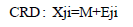
Xij = value of any observation
M = Unknown Constant; population mean common to all
treatments
Ti = Treatment effect
Eij = Error term
Differing Treatment Means were separated - using Duncan Multiple Range Test.
Results and Discussion
Weight gain
From the results as shown in Table 3, there was a gradual increase in weight gain of broilers from T1 to T4 and a decrease in treatment 5 (T5). Treatment 4 has the highest weight gain followed by treatments 3, 2, 1 and 5 respectively. However, when subjected to statistical analysis, the weight gain of broilers were significant (p<0.05). Broilers fed with diet T4 which has 30% brewer’s dried gain and T3 with 20% brewer’s dried grain gave the highest weight than T2. However, T1 and T5 show no significant difference (p>0.05) and has the lowest weight gain.
Table 3:Performance characteristics of the tested animals.

Ishangulyyev et al. [9] and Bonifácio-Lopes et al. [10] reported that the protein content of dried brewer’s grain was found to be higher than that of maize by 106g. Paritosh et al. [11] stated that excess crude protein of Brewer’s dried grain is converted to energy which equals to that of maize. However, von Grebmer et al. [12] and Connolly et al. [13] reported that Brewer’s dried grain has an unidentified growth factor which must have played a prominent role in the increase weight gain pattern of the broilers. Decrease in weight gain in treatment 5 maybe as a result of high fibre consumption. This is in line with findings of [14], who stated that fibre depresses food intake and digestibility.
Feed intake
From results in the above Table 2, there was a gradual increase in feed intake of broilers as the dried brewer’s grain in the ration increased. However, there was a decrease in feed intake in T5 which had the highest dried brewer’s grain without maize.
Treatment I which was 0% brewer’s dried grain had the lowest feed intake of 10.58kg followed by T2 11.00kg. T3 11.52kg, T4 11.92kg and decreased in T5 which had 11.08kg feed intake.
However, when subjected to statistical analysis, there were no significant difference (P>0.05) in broiler feed intake. Broilers on T4 consumed highest, closely followed by those fed T3 which are fairly the same. Treatment 4 shows significant difference with T1, T2 and T5.
Zeko-Pivač et al. [15] and McCarthy et al. [16] stated that factors like physical condition of the feed, the nutrient content, live weight and the environmental condition in which animals are reared influence their feed intake.
The difference in feed intake of broilers could be as a result of increase in crude fiber of the treatment as shown in Table 2 above. This observation is in line with Shafiee-Jood & Cai [17], who reported that fats are the major component of the feed-stuff which enhances palatability of any given feed.
The drop in feed intake in treatment 5 maybe as a result of high crude fibre content, as shown in Table 2 above. This is in line with Lynch et al. [18] and Eliopoulos et al. [19], who stated that high level of crude fibre in the diet depresses feed intake.
Feed Conversion Ratio
Feed conversion ratio is the relationship between feed intake and animals’ weight gain. The lower the feed conversion ratio the higher the efficiency of feed conversion. From the Table 3 above, there was a gradual decrease in feed conversion ratio up to 30% Brewer’s dried grain inclusion when subjected to statistical analysis the result proved not significant. Broilers fed ration 5 gave the highest feed conversion ratio which means low in feed conversion closely followed by those fed T2 and T1. The feed conversion ratio of broilers fed T3 and T4 did not differ significantly and were the best in feed conversion.
However, Waters et al. [20] and Jaeger et al. [21] stated that feed conversion ratio can be affected by the rate of growth, metabolizable energy content of the feed, nutrient adequacy of the ration, environmental temperature and health of the animal. Yitayew et al. [22] and Choi et al. [23] stated that replacement of maize with barley based Brewers dried grain depressed growth even at lower level of 20% but especially when it is completely replaced maize.
Cost Benefit Analysis
The average costs of producing 1kg weight of meat in each of the diets are shown in Table 2. There was decrease in cost of producing 1kg weight of meat from T1 to T5. Broilers on diet consumed feed at the cost of N 69.64 to produce 1kg weight of meat. In the same view, it costed N 63.61, N 56.29, N 52.23 and N 43.05 to produce 1kg weight of meat for treatment 2, 3, 4 and 5 respectively. Treatment 5 had the least cost of production. However, when subjected to statistical analysis there was significant difference in the cost of producing 1kg of meat. This maybe as a result of increase in levels of brewer’s dried grain inclusion in the diets.
Nocente et al. [24] and Reis et al. [25] further disclosed that brewers dried grain is one of the cheapest feed ingredients. However, the high cost of T1 maybe as a result of high maize level inclusion. This is in line with Ginindza et al. [26] and Neylon et al. [27] who stated the possibility due to its competition with man, industries and livestock.
Conclusion and Recommendation
The result obtained from this experiment showed that brewer’s dried grain can conveniently replace maize in broiler finisher ration without any negative effect on the performance of birds. Brewer’s dried grain is cheap and widely available. Broilers fed diet with 20% and 30% brewer’s dried grain had the highest weight gain, followed by T2 and T1 while T5 had the least performance. Partial replacement of maize with the appropriate level of brewer’s dried grain would always yield a favourable result in broiler finisher ration. Since broilers fed with treatment, (T4) had the highest weight gain, with good feed conversion and low cost of producing 1kg of meat; it is therefore, highly recommendable that 30% brewer’s dried grain should be used to substituting maize in broiler finisher ration.
References
- Ezeafulukwe CF, Onuoha LC, Ahaotu EO (2017) Growth performance of clarias gariepinus (Buchell 1822) fed varying inclusion levels of cassava flour. Greener Journal of Biological Sciences 7(5): 045-049.
- Fernandes H, Salgado JM, Ferreira M, Vršanská M, Fernandes N, et al. (2022) Valorization of brewer’s spent grain using biological treatments and its application in feeds for European seabass (Dicentrarchus labrax). Front Bioeng Biotechnol 10: 732948.
- Yeong F (2000) Dried and wet brewer’s grains in fattening chicken.
- Abdulrazak SA, Njuguna EG, Karau PK (2005) The effect of supplementing Rhodes grass (Chloris gayana) hay with Acacia tortilis leaves and pods mixture on intake, digestibility and growth performance of goats. Livestock Research for Rural Development 17(12): 134.
- Nazzaro J, Martin DS, Perez VAM, Padrell L, Inarra B, et al. (2021) Apparent digestibility coefficients of Brewer’s by-Products used in feeds for Rainbow Trout (Oncorhynchus mykiss) and Gilthead Seabream (Sparus aurata). Aquaculture 530: 735796.
- Lynch KM, Strain CR, Johnson C, Patangia D, Stanton C, et al. (2021) Extraction and Characterisation of arabinoxylan from brewers spent grain and investigation of microbiome modulation potential. Eur J Nutr 60(8): 4393-4411.
- Almeida A da R, Geraldo MRF, Ribeiro LF, Silva MV, Maciel MV de O B, et al. (2017) Bioactive compounds from brewer’s spent grain: phenolic compounds, fatty acids and in vitro antioxidant capacity. Acta Sci Technol 39(3): 269-277.
- Özvural EB, Vural H, Gökbulut I, Özboy Özbaş Ö (2009) Utilization of brewer’s spent grain in the production of frankfurters. Int J Food Sci Technol 44(6): 1093- 1099.
- Ishangulyyev R, Kim S, Lee SH (2019). Understanding food loss and waste-Why are we losing and wasting food? Foods 8(8): 297.
- Bonifácio LT, Vilas Boas A, Machado M, Costa EM, Silva S, et al. (2022) Exploring the bioactive potential of brewers spent grain ohmic extracts. Innov Food Sci Emerg Technol 76: 102943.
- Paritosh K, Kushwaha SK, Yadav M, Pareek N, Chawade A, et al. (2017) Food waste to energy: An overview of sustainable approaches for food waste management and nutrient recycling. Biomed Res Int 2370927.
- von Grebmer K, Bernstein J, Wiemers M, Reiner L, Bachmeier M, et al. (2022) Global hunger index: Food Systems Transformation and Local Governance; Welthungerhilfe and Concern Worldwide.
- Connolly A, Piggott CO, Fitzgerald RJ (2013) Characterisation of protein-rich isolates and antioxidative phenolic extracts from pale and black brewers’ spent grain. Int J Food Sci Technol 48(8): 1670- 1681.
- Luu HM, Tran CB, Nguyen NX, Dung BP, Thu H (2000) Composition and nutritive value of rice distiller’s by-product (Hem) for small-holder pig production. Sustainable Livestock Production on Local Feed Resources. Proceedings, National SeminarWorkshop.
- Zeko Pivač A, Tišma M, Žnidaršič PP, Kulisic B, Sakellaris G, et al. (2022) The Potential of brewer’s spent grain in the circular bioeconomy: State of the Art and Future Perspectives. Front Bioeng Biotechnol 10: 870744.
- McCarthy AL, O’Callaghan YC, Piggott CO, FitzGerald RJ, O’Brien NM (2013) Brewers’ spent grain; Bioactivity of phenolic component, Its role in animal nutrition and potential for incorporation in functional foods: A Review Proc Nutr Soc 72(1): 117-125.
- Shafiee JM, Cai X (2016) Reducing food loss and waste to enhance food security and environmental sustainability. Environ Sci Technol 50(16): 8432-8443.
- Lynch KM, Steffen EJ, Arendt EK (2016) Brewers’ spent grain: A Review with an emphasis on food and health. J Inst Brew 122(4): 553- 568.
- Eliopoulos C, Arapoglou D, Chorianopoulos N, Markou G, Haroutounian SA (2022) Conversion of brewers’ spent grain into proteinaceous animal feed using solid state fermentation. Environ Sci Pollut Res 29(20): 29562-29569.
- Waters DM, Jacob F, Titze J, Arendt EK, Zannini E (2012) Fibre, protein and mineral fortification of wheat bread through milled and fermented brewer’s spent grain enrichment. Eur Food Res Technol 235: 767-778.
- Jaeger A, Sahin AW, Nyhan L, Zannini E, Arendt EK (2023) Functional properties of brewer’s spent grain protein isolate: The missing piece in the plant protein portfolio. Foods 12(4): 798.
- Yitayew T, Moges D, Satheesh N (2022) Effect of brewery spent grain level and fermentation time on the quality of bread. Int J Food Sci 2022: 8704684.
- Choi MS, Choi YS, Kim HW, Hwang KE, Song DH, et al. (2014) Effects of replacing pork back fat with brewer’s spent grain dietary fiber on quality characteristics of reduced-fat chicken sausages. Korean J Food Sci Anim Resour 34(2): 158-165.
- Nocente F, Taddei F, Galassi E, Gazza L (2019) Upcycling of brewers’ spent grain by production of dry pasta with higher nutritional potential. LWT Food Sci Technol 114: 108421.
- Reis SF, Gullón B, Gullón P, Ferreira S, Maia CJ, et al. (2014) Evaluation of the prebiotic potential of arabinoxylans from brewer’s spent grain. Appl Microbiol Biotechnol 98(22): 9365-9373.
- Ginindza A, Solomon WK, Shelembe JS, Nkambule TP (2022) Valorisation of Brewer’s Spent Grain Flour (BSGF) through Wheat-Maize-BSGF composite flour bread: Optimization using D-Optimal mixture design. Heliyon 8(6): e09514.
- Neylon E, Arendt EK, Zannini E, Sahin AW (2021) Fundamental study of the application of Brewers Spent grain and fermented brewers spent grain on the quality of pasta. Food Struct 30: 100225.
© 2024 Ahaotu E O. This is an open access article distributed under the terms of the Creative Commons Attribution License , which permits unrestricted use, distribution, and build upon your work non-commercially.
Editor In Chief







.jpg)































Signup for Newsletter

Quick Links
 Editorial Board Registrations
 Submit your Article
 Best Paper of the Volume
 Reprints
 Refer a Friend
 Advertise With Us
Our Recent Edition

Top Editors




.jpg)

















.bmp)
.jpg)
.png)
.jpg)













.jpg)






.png)

.png)




.png)




Financial Support

Sponsors

Latest e-Books

Latest Video

 a Creative Commons Attribution 4.0 International License. Based on a work at www.crimsonpublishers.com.
Best viewed in

 | Above IE 9.0 version