

- About Us
- Information
-

The Author ensures that the research has been conducted responsibly and ethically with adherence to all relevant regulations. read more..
- For Authors
- For Reviewer
- Manuscript Guidelines
- Membership
- Publication Ethics
-
- Journals
- Reprints
- e-Books
- Videos
- Policies
- Contact Us
 COVID-19
- Submissions



Full Text
Aspects in Mining & Mineral Science
Hydrothermal Microbial Communities, Major Contributors to OM and Entrapment of Metals in 1.4Ga Old Carbonaceous Shales of the Banded Iron Formation, Hamersley Basin, Western Australia
Miryam Glikson*
PO Box 553; Palmwoods, Queensland 4555, Australia
*Corresponding author:Miryam Glikson, PO Box 553; Palmwoods, Queensland 4555, Australia
Submission: September 08, 2026: Published: September 29, 2026

ISSN 2578-0255Volume15 Issue 3
Abstract
Organic petrology, electron microscopy, Transmission Electron Microscopy (TEM) and Electron Dispersive Spectrometry (EDS) of organic matter-rich sediments interlayered with silica-iron-rich units (Banded-Iron Formation – BIF) in 1.4 to 1.1Ga [1] Hamersley Group, display alternations of chemical and biological conditions in early Proterozoic seafloor hydrothermal environment. The carbonaceous shales contain organic matter with bacterial remains closely resembling hypo-thermophile methanogenic archaea found today in sea floor hydrothermal environments. These are associated with a unique mineral assemblage consisting of iron sulphide and elemental iron particles signifying strongly reducing conditions. Carbonaceous bundles of strings detached from Methanocaldococcus cell- connecting filaments abound resembling such as found in today’s hydrothermal environments associated with the Archaeon Methanocaldococcus. Relatively low organic maturity expressed by reflectance values (R0) of 1.6-1.8% characterize these organic-rich sediments. On the other- hand organic-poor samples (less than 1% TOC) have high Ro values of OM as a result of oxidation. The fluctuations between reducing and oxidizing environments may be attributed to alternating episodes anoxic and oxygenating fluids in a turbulent hydrothermal environment inducing methane formation and methane oxidation.
Keywords:Carbonaceous shales; Iron sulphide; Electron; Silica; Hamersley basin
Introduction
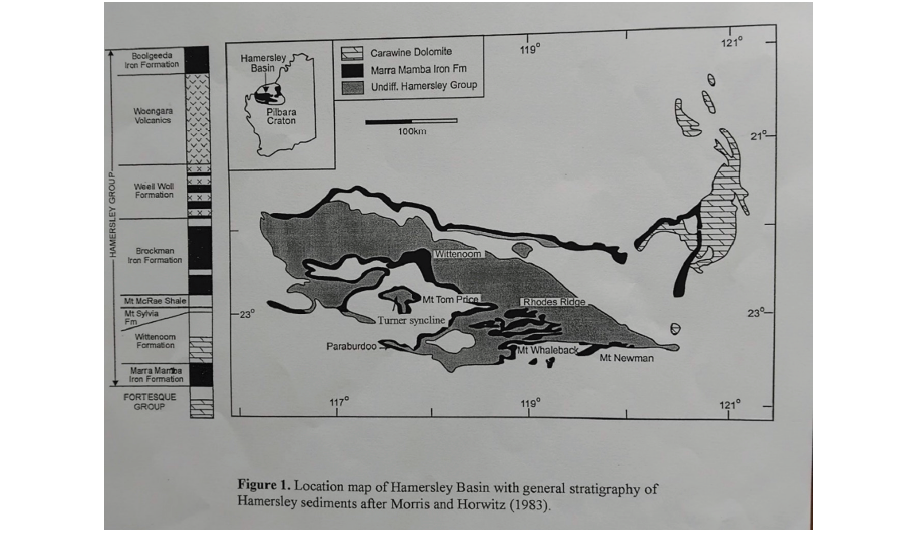
The Archaean to early Proterozoic Hamersley Basin, Northwestern Australia (Figure 1), contains numerous thick units of intercalated banded carbonaceous shales and siltstones, chert ironstone formations (BIF), ferruginous shales and carbonates. The BIFs of the Hamersley Basin have been regarded as predominantly chemical in origin [2], possibly related to extensive hydrothermal sources of iron (Sugitani, 1992). A hydrothermal model is supported by Dymek & Klein (1988). The relationship between hydrothermal activity and bacterial communities in the early Archaean has been documented in sediments from South Africa [3,4]. The present study describes bacterial remains from intercalated reduced carbonaceous sediments of Mount McCrae and Mount Whaleback shale and considers the significance of these micro-organisms to the understanding of the relation between the organic matter and mineral assemblages.
Shales and carbonaceous siltstones form about one fifth of Hamersley Group sediments. The majority of samples included in the present study are derived from Mount McRae shale, forming 60-90m thick sequence of laminated argillaceous and dolomitic siltstone, within intercalated thin bedded chert and Banded Iron Formation (BIF) of remarkable stratigraphic continuity. Samples include carbonaceous siltstones and mudstones with varying concentration of OM ranging from less than 1 to 6% Total Organic Carbon (TOC). Whole rock samples and organic concentrate were studied using light microscopy, electron microscopy mainly Transmission Electron Microscopy (TEM) and Electron Microprobe Analysis (EDS) techniques. Organic petrology was carried out on polished samples embedded in polyester resin and examined in reflected light microscopy. Metamorphic grade determination was carried out by reflected light measurement using standard petrology methods as in [5]. TEM was performed on ultra-thin sections of organic matter concentrate following the method outlined by Glikson & Taylor [6].
Figure 1:Key map of Hamersley Basin.
Three groups of Organic Matter (OM) are distinguished: (a) OM with low R0 (1.6-1.9%) consisting of well -preserved high electron dense microbial cells enveloped by a translucent membrane; (b) OM that has anomalously high Ro in the range of 7-9% and absence of structured and identifiable microorganisms; (c) OM with intermediate Ro range of 3-5% lacking defined forms displaying a very fine mesophase structure (in high resolution TEM), indicating solidification from soft semi-fluid material. Type (a) OM with relatively low-reflectance (1.6-1.9% Ro) in the organicrich sediments of the Mount McRae Shale and Mount Whaleback Member contain remains of microorganisms closely resembling modern hypo-thermophile methanogenic microbes isolated and reported from hot springs [7].
Results
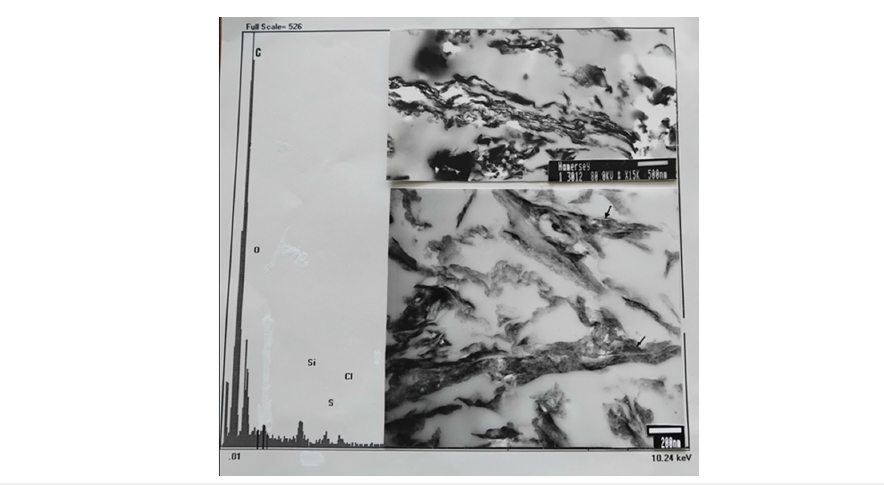
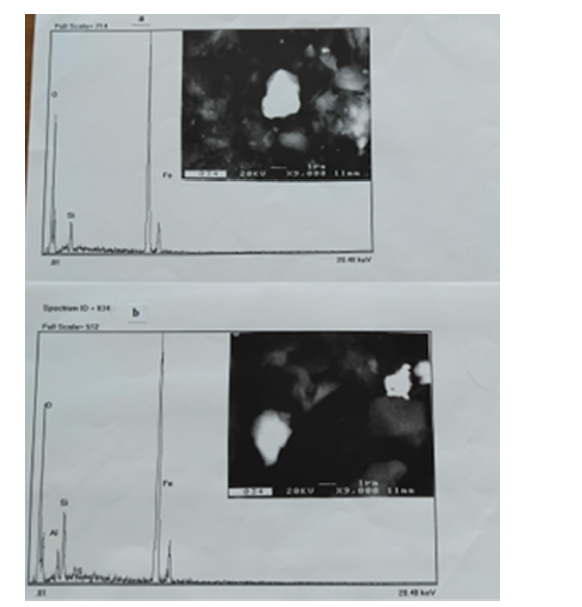
Microbial forms in the Mount McRae shale and Whaleback member display a range of shapes, having an electron dense wall often enveloped by membranous organic matter (Figure 2). Cell membranes, are a protective cover and a distinguishing feature of methanogen bacteria that allows them to survive in an extreme environment. Some bacteria are characterized by distinguished appendages, whereas others are connected by narrow bridge-like material reported in an earlier study [8]. The size of the microbial remains ranges from 1.5 to 5 microns in length. Shapes vary from spherical to sub-spherical, spindle-shaped and elongate. Electron probe microanalysis identified the opaque, highly electron dense shell as consisting predominantly of iron sulphide mixed with carbonaceous material (Figure 2a & 2b). The enveloping membrane consists of carbon-based material (Figure 2a & 2b). Other distinct OM identifiable in these organic-rich samples are bundles of matforming filaments often displaying entwined fibres (Figure 3). The microbial filamentous structures in Mount McRae and Mount Whaleback OM often form a matrix in which discrete bodies of iron/iron-sulfide particles are embedded/trapped, also reported earlier [9]. The filamentous structures are interpreted here as the accumulated entwined strings detached from the microbial cells. Methanocaldococcus individual cells are naturally connected by strings which may separate from the cells in a turbulent hydrothermal environment. Ro values of OM in samples containing microbial forms indicate it has been subjected to relatively low temperature of 180-200 °C [10].
Figure 2:Metathanogenic bacteria in Shale: Note: highly electron-dense case in a semi-translucent envelope.
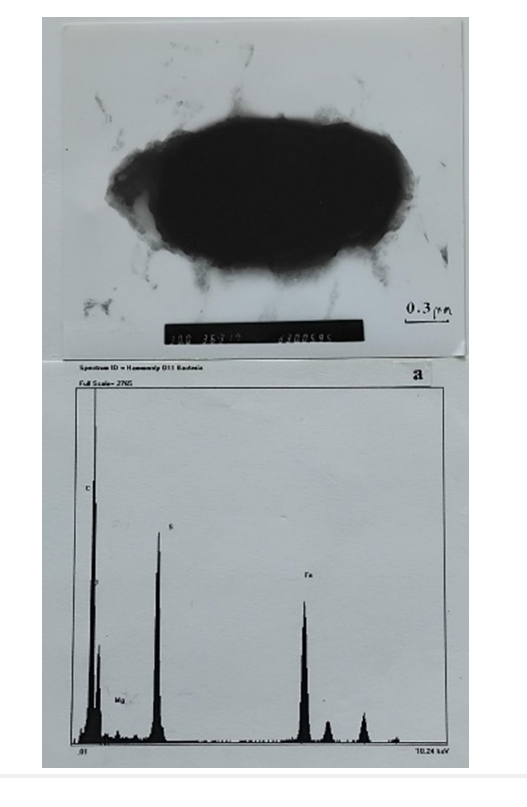
Figure 3:Entwined filaments of methanogens
The high Ro values of OM (>7.0Ro) encountered in mine site samples display in TEM poorly organised molecular ordering and absence of lattice fringes, contrary to what would be expected in highly thermally effected OM such as for example graphite the end product of thermally metamorphosed carbonaceous material with similar Ro values. The absence of graphitic or semigraphitic molecular ordering in Mount McRae/Mount Whaleback shales OM suggests that oxidation reactions rather than thermal metamorphism contributed to the high Ro values in these rock samples. Ro values, the result of thermal stress are accompanied by molecular ordering [11]. The higher the fluidity, the higher the molecular ordering. High Ro due to oxidation reactions is not expected to be accompanied by molecular ordering as no fluidisation is involved.
In Transmission Electron Microscopy (TEM) molecular ordering is expressed by textures termed ‘mesophase’ [12]. The higher the fluidity, the more developed the mesophase will become leading to distinct anisotropy. On the other hand, a less developed mesophase texture will result in more viscous organic material [9,13]. Intermediate Ro values of 2.5-3.0% of OM in the Hamersley samples display very poorly developed mesophase texture typical of re-solidification from viscous material subjected to temperatures in the range of 240-260 degrees C. Fluidity versus viscosity propensity is dependent on H/C ratio of the source material [13].
Reflectance profiles (Figure 4) generally display perturbations consistent with heat transfer dominated by convection and hydrothermal processes [13]. In convection-driven processes, water: rock ratio is a determining factor, unlike heat transfer solely by conduction when gradual increase of reflectance (Ro ) with depth occurs as a result of burial and subsidence, with a more or less constant geothermal gradient [14]. The mineral assemblage associated with anomalous high reflectance of OM is dominated by iron oxides/hydroxides, with varying proportions of silica and alumina, and absence of or only traces of sulfur. A considerable proportional variability of O and Si peaks is indicated by EDS analysis (Figure 5).
Figure 4:Ro profiles of bore hole.
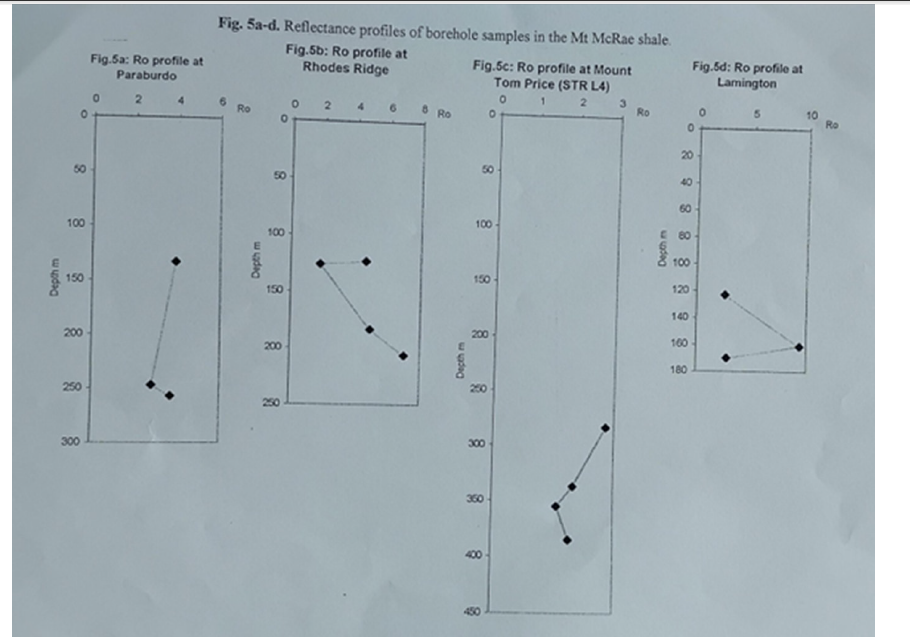
Figure 5:Sub-micron particles of titanium (Ti) in carbonaceous shale
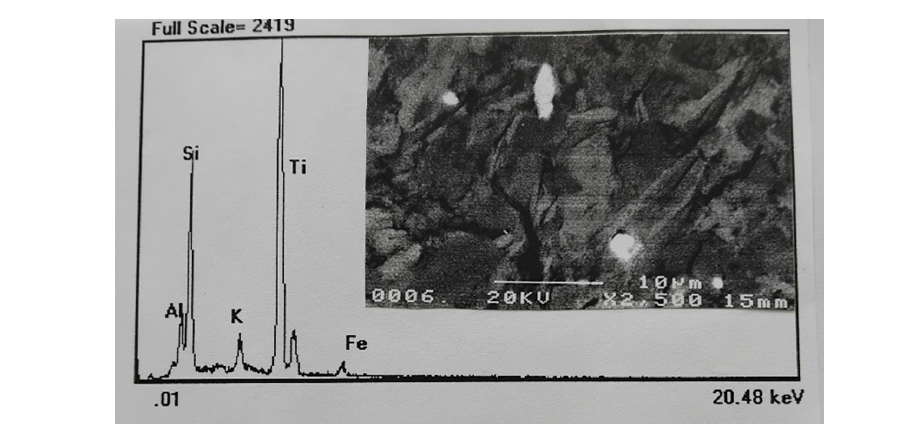
The mineral assemblage associated with methanogenic microbes in low Ro samples consists predominantly of semirounded near pure iron particles of fairly consistent size around 5microns with only traces of sulfur and Si (Figure 6). Metallic iron is also suggested from very high reflectance of these particles. Subeuhedral iron sulphide particles (Figure 6 range from less than 2 microns to over 20 microns are associated with the methanogenic micro-organisms and organic-rich samples generally. Submicron titanium-rich particles with traces of iron and varying concentrations of Si are dispersed through the matrix. Other submicron particles in organic-rich low Ro samples show consistent coating of silica. The mineral assemblage associated with anomalous high Ro OM is dominated by iron oxides/hydroxides, with varying proportions of silica and alumina, and absence of or only traces of sulfur. A considerable proportional variability of O and Si peaks is indicated by EDS analysis.
Figure 6:Pure iron particles associated with microbial remains.
Discussion
The evidence from bacterial remains, organic petrology and mineral associations suggests alternations between anoxic, carbon and sulphide-rich and more oxygenic conditions, comparable to environments in modern sea floor hydrothermal systems. The anoxic domain characterized by methanogenic microbial communities, iron sulfide and elemental iron alternated with more oxygenated conditions seen in the form of oxidized OM and abundant silicates and iron oxides. Iron and sulfur forming pyrite, and metallic iron, as well as silica associated with the microbial communities in the anoxic part of the sediment would have been derived from the vent emissions. The incorporation of iron sulphide within bacterial cell walls greatly contributed to their preservation. In a study of Archaean bacteria in hydrothermally-effected sediments from South Africa, [3] documented the adsorption and replacement of OM by metals.
This study suggests that sulfides and elemental iron become scares or altogether absent close to the water-sediment interface, where methanogens were absent, and may have been replaced by methane-oxidizing bacteria. Iron in the form hydroxide and silica are commonly associated with the poorly structured high Ro oxidized OM. Studies of active seafloor hydrothermal systems [15] show that highly anoxic environment at relatively high temperature is associated with methanogenic bacteria and sulfides. Carbon from such methane may be utilized by other microbial communities in oxygenated parts of the depositional environment, and thus become incorporated in the residual OM. The OM from the Hamersley sediments with anomalously high Ro values (over 6.0%), when observed in high resolution TEM does not show high molecular ordering of semi-graphitic structure expected in OM resolidified from heated temperatures over 300 deg.C. High resolution TEM studies by Oberlin et al. [16-18], of OM from different sources subjected to thermal stress show that molecular ordering progresses from semi-graphitic to graphitic with increase in temperature. High Ro samples in Hamersley samples is therefore a result of oxidation.
In general, the Ro profiles in the Hamersley Basin show an increase with stratigraphic depth, consequent on subsidence and sediment overload control on maturation of OM during the depositional history of the basin. Locally, however, Ro profiles are inconsistent with the sole burial effect, where organic maturation increases at a constant rate with depth. Here, the maturation indicator (Ro, Figure 4) displays erratic reflectance profiles characteristic of hydrothermal regimes, where rock/water ratio is the predominant factor in convective/advective heat transfer [13]. Ro values express the maximum temperature that acted upon the OM. Perturbations in Ro values reflect subtle lithological differences leading to variations in water/rock ratios during thermal pulsations in a marine vent system.
Comparisons between the OM-mineral association and the alternating metallic iron, iron sulfide, silica and iron oxide-rich mineral assemblages in active hydrothermal systems allows an insight into processes responsible for formation of carbonaceous shale – BIF association. Detailed study of modern hydrothermal systems emitting iron and silica showed mineralogical zonation between iron sulfide – silica assemblages, and iron oxides/ hydroxides - silica assemblages [19], through anoxic to oxygenated fluctuations controlled by dense filamentous bacterial mats. The latter were thought to “act as an interface between seawater and hydrothermal fluids transporting iron and silica thus producing redox gradients” [19].
The depositional environment of the organic-rich carbonaceous shale, within the Hamersley Group sediments is similar to that observed in active modern venting seafloor environments. The abundance of sub-micron iron particles coated with silica commonly observed in these shales may be a testimony to density fractionation between the iron and the coating silica following discharge from the venting system. Modern iron and silica venting systems are rare; how-ever they were widespread and predominant in the Archaean and Paleoproterozoic, as a result of more vigorous and high temperature venting close to the Earth’s surface as well as intense meteorite impacts that create hydrothermal systems [4]. In the Hamersley samples high C is usually associated with high S, both typically apparent in high concentrations within carbonaceous shales. Significantly lower concentrations of both C and S are evident in cherts, organic-poor siltstones and altogether absent from BIF. Sulfur sources are from bacterial sulfate reduction as also suggested by Boetius [20]. The alternating anoxic versus oxygenic facies are interpreted in terms of anoxic conditions existing at times in sediments around sea-floor hydrothermal vent systems supporting a thermophile chemoautotrophic methane producing microbial community. Methane oxidizing bacteria in sediments overlying these vent systems, and subjected to marine water circulation utilized methane diffusing through the underlying sediments [21-24].
Acknowledgment
Samples were supplied by Rio Tinto.
References
- Courtney-Davis H, Florentini M, Dalstra H, McInnes BA, Hagemann S, et al. (2024) A billion -year shift in the formation of Earth’s largest ore deposits. Earth, Atmospheric @ Planetary Sciences 121(31): e2405741121.
- Morris RC, Horowitz RC (1938) The origin of the iron-formation-rich Hamersley Group of Western Australia – deposition on a platform. Precambrian Research 21(3-4): 273-297.
- Westall F, de Witt MJ, Dann J van der Gaast S, De Ronde CEJ, Geneke D (2001) Early Archaean fossil bacteria and biofilms in hydrothermally-influenced sediments from the Barbarton Greenstone belt, South Africa. Precambrian Res 106(1-2): 93-116.
- Glikson M (2026) Life forms and mineral association in 3.5Ga Rocks. Aspects in Mining and Mineral Science 15(3): 1923-1927.
- Taylor GH, Teichmuller M, Davis A, Diessel CFK, Littke R, et al. (1998) Gebruder Borntraeger, Berlin, pp. 347-389.
- Glikson M, Taylor GH (1986) Cyanobacterial mats, major contributers to the organic matter in Toolebuc Formation oil shales. Geol Soc of Australia Special Publication 12: 273-226.
- Segerer AH, Burggraf S, Fiala G, Huber G, Pley U, et al. (1993) Life in hot springs and hydrothermal vents. Origin of Life and Evolution of the Biosphere. Kluwer Academic Publ Organic Petrology, pp. 77-90.
- Glikson M, Taylor D (2000) Nature of organic matter in the early Proterozoic, earliest life forms and metal association. In: Glikson M, Mastalerz M (Eds.), Organic matter and mineralisation. Kluwer Academic Publishers, Dordrecht, Netherlands, pp. 66-101.
- Golding SD, Glikson M, Glikson AY (2004) Origin of organic matter in 2.5Ga Mt McRae Shale, Hamersley Basin, Western Australia. 14th Annual Goldschmidt Conference: Abstract in: Geochim et Cosmochim Acta p. 784.
- Aizawa J (1991) Palaeotemperatures from fluid inclusions and coal rank of carbonaceous material of the tertiary formations in northwest Kyushu, Japan. J Mineralogy Petrology & Economic Geology 85: 145-154.
- Khavari-Khorasani G, Michelsen JK (1994) The effect of overpressure, lithology and heating on vitrinite reflectance evolution and its relationship with oil generation. APEA J 34(1): 418-436.
- Brooks D, Taylor GH (1968) The formation of some graphitising carbons. In: Walter PL (Ed.), Chemistry and physics of carbon. Marcel Dekker, pp. 243-286.
- Glikson M (2001) The application of electron microscopy and microanalysis min conjunction with organic petrology to further the understanding of organic-mineral association: examples from Mount Isa and McArthur Basins, Australia. Int J Coal Geology 47: 139-159.
- Suggate RP (1998) Relation between depth of burial, vitrinite reflectance and geothermal predictions. J of Petroleum Geology 21 (1): 5-32.
- McCollom TM, Schock EL (1997) Geochemical constrains on chemolithotrophic metabolism by microorganisms in seafloor hydrothermal systems. Geochem et Cosmochim Acta 61(20): 4375-4391.
- Oberlin A, Boulmier JL, Villey M (1980) Electron microscopic study of Kerogen microtexture. In: Durand B (Ed.), Kerogen. Editions Technip, pp. 1919-2041.
- Buseck PR, Bo-Jun H, Miner B (1988) Structural order and disorder in Precambrian kerogens. Organic Geochemistry 12(3): 221-234.
- Ayache J, Oberlin A (1990) Thermal simulation of the evolution of carbonaceous oil source rocks as compared to pyrolysis of model substances of type I, II, III. J Anal Appl Pyrolysis 17: 329-356.
- Juniper SK, Fouquet Y (1988) Filamentous iron-silica deposits from modern and ancient hydrothermal sites. Canadian Mineralogist 26(3): 859-869.
- Boetius A, Ravenschlag K, Schubert CJ, Rickert D, Widdel F, et al. (2000) A marine microbial consortium apparently mediating anaerobic- bacteria. Nature 407(6804): 623-626.
- Buseck PR, Bo-Jun H (1985) Conversion of carbonaceous material to graphite during metamorphism. Geochim Cosmochim Acta 49(10): 2003-2016.
- Davy R (1983) A geochemical study of the Mount McRae shale and upper Mount Sylvia formation in core RD1. Geol Surv W A Record, Rhodes Ridge, Wester Australia.
- Naraoka H, Ohtake M, Maruyama S, Ohmoto H (1996) Non biogenic graphite in 3.8Ga metamorphic rocks from the Isua district, Greenland. Chem Geol 133(1-4): 251-260.
- Robert P (1998) Organic metamorphism and geothermal history. Elf-Aquitaine & D Riddel publ co, p. 311.
© 2026 Miryam Glikson. This is an open access article distributed under the terms of the Creative Commons Attribution License , which permits unrestricted use, distribution, and build upon your work non-commercially.
Editor In Chief






.jpg)






























Signup for Newsletter

Quick Links
 Editorial Board Registrations
 Submit your Article
 Best Paper of the Volume
 Reprints
 Refer a Friend
 Advertise With Us
Our Recent Edition
.jpg)



Top Editors




.jpg)

















.bmp)
.jpg)
.png)
.jpg)













.jpg)






.png)

.png)




.png)




Financial Support

Sponsors

Latest e-Books

Latest Video

 a Creative Commons Attribution 4.0 International License. Based on a work at www.crimsonpublishers.com.
Best viewed in
a Creative Commons Attribution 4.0 International License. Based on a work at www.crimsonpublishers.com.
Best viewed in 
 | Above IE 9.0 version