

- About Us
- Information
-

The Author ensures that the research has been conducted responsibly and ethically with adherence to all relevant regulations. read more..
- For Authors
- For Reviewer
- Manuscript Guidelines
- Membership
- Publication Ethics
-
- Journals
- Reprints
- e-Books
- Videos
- Policies
- Contact Us
 COVID-19
- Submissions



Full Text
Aspects in Mining & Mineral Science
Cement-Formation Bonding in Idle and Orphan Wells and Methane Emission
Mehrzad Shoshtari Zadeh Naseri and Iraj Ershaghi*
Mork Family Department, University of Southern California, United States
*Corresponding author:Iraj Ershaghi, Mork Family Department, University of Southern California, Los Angeles, CA, United States
Submission: June 29, 2026: Published: August 18, 2026

ISSN 2578-0255Volume15 Issue 3
Abstract
Gas emission is a safety concern associated with idle and orphan oil and gas wells. Among the various well-integrity barriers, cement bonding between the wellbore and the surrounding geologic formation can prevent gas from escaping to the surface. The emission of gases can contribute to groundwater contamination and surface safety hazards. As such, studying the factors that affect borehole cement bonding is important for reducing methane emissions and extending long-term well integrity. This study evaluated a series of wells in Southern California to assess cement bonding across hydrocarbon-bearing geological intervals. The results show that for these wells, hydrocarbon-bearing formations exhibit weaker cement bonding than water-bearing formations. Poor bonding can create preferential pathways for methane leakage, allowing gas to migrate outside the steel casing through compromised cement barriers over long time scales and ultimately reach the surface. These findings show the importance of doing such studies before structures are built on top of plugged and abandoned wells.
Keywords:Cement-formation bonding; Idle and orphan wells; Methane emissions; Cement bond log (CBL); Variable density logs (VDL)
Introduction
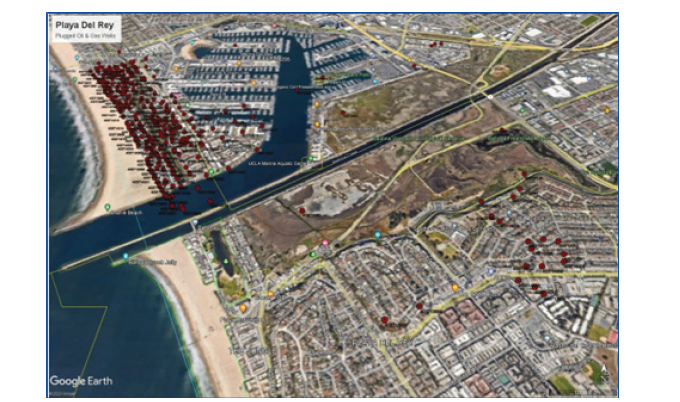
Long-term gas emissions from idle and orphan wells can be an important environmental and safety concern. In California, many active, abandoned, and orphan hydrocarbon wells are located beneath or near residential areas, schools, hospitals, and other critical infrastructure, making gas-leak prevention a priority for environmental protection and public safety. Figure 1 shows an example of well locations in one area of southern California. Methane emissions are of particular concern because they can affect groundwater resources, air quality, and public safety, while also contributing to environmental degradation and long-term climate change [1]. Uncontrolled gas migration may also create serious hazards, including near-surface gas accumulation and the potential for explosions in populated areas,
Figure 1:Plugged oil & gas wells located in Playa Del Rey. (Courtesy Aisha Ershaghi).
Well integrity is important, as among all things, it prevents the migration of gases from subsurface oil-bearing formations to shallow depth and groundwater zones and the atmosphere. A professionally designed well relies on competent casing, cement, and formation seals to maintain long-term containment of hydrocarbons. However, degradation or failure of any of these barriers may create preferential pathways for fluid and gas movement. Other studies have identified poor cementing practices as one of the primary causes of well-integrity failure [2]. There are issues with cement degradation, interfacial effects, and the formation of microannuli. These can increase the risk of fluid and gas emission. If the effectiveness of the cement sheath as a barrier is significantly reduced, it can create potential pathways for gas migration along the wellbore [3].
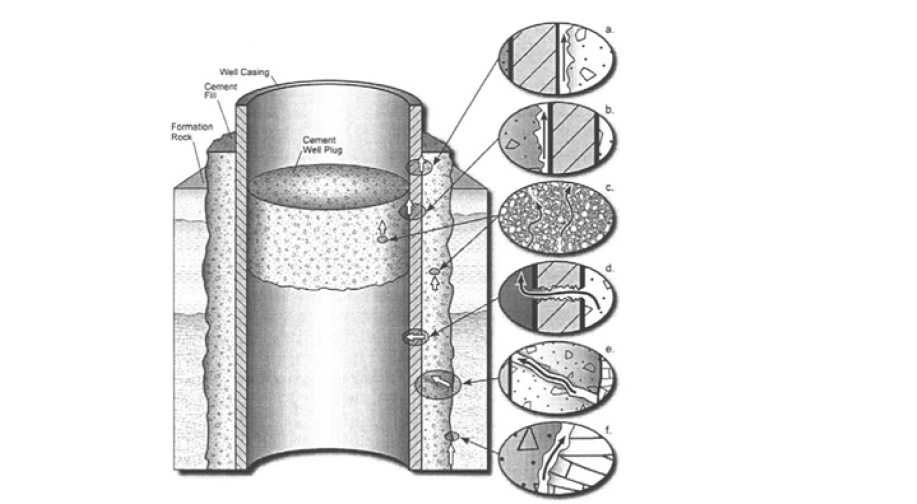
Figure 2 illustrates several leakage pathways that may develop when proper bonding and zonal isolation are not achieved. These pathways include: (a) debonding between the casing and cement sheath; (b) debonding between the cement plug and casing; (c) gas migration through fractures within the cement plug; (d) leakage through fractured casing; (e) migration through fractured cement sheath; and (f) debonding at the interface between the cement sheath and the surrounding formation [1]. Previous studies [4] have shown that over a long time, gas can migrate through the cement matrix even in the absence of fractures, micro annuli, or debonding. This finding implies that, although achieving perfect cement bonding remains a critical objective, long-term gas migration may also develop through the cement itself. As such, the weak cement formation bonding can be a concern as it can increase gas migration to the surface. Improving cement formation bonding remains an important component of well- integrity management. The cement barrier can also undergo chemical reactions that can affect the cement sealing structure [5]. These reactions may alter petrophysical properties and create pathways for gas migration. Barrier performance can deteriorate with time, even in wells that initially show satisfactory cement bonding. Prior studies conducted across five oil fields in California show that for three hundred fifty wells studied none were completely cemented to the surface [6].
Figure 2:Potential leakage pathways along an existing well, between cement and casing (paths a and b), through the cement (c), through the casing (d), through fractures (e), and between cement and formation (f) [3].
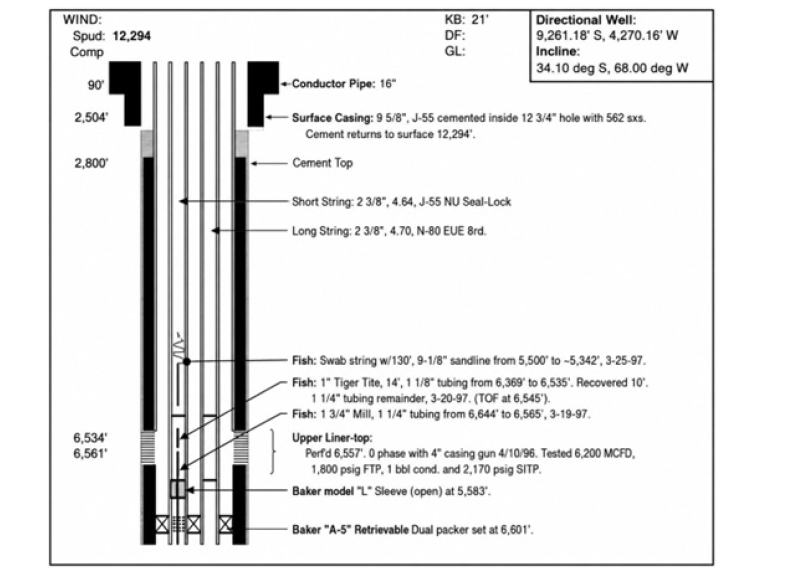
This finding highlights a significant well integrity concern, as incomplete cement coverage can leave portions of the wellbore unprotected and create potential pathways for fluid and gas migration. As illustrated in (Figure 3), the absence of continuous cement barriers may increase the risk of surface methane emission by providing direct communication pathways between subsurface formations and shallow geological units.
Figure 3:Example of a wellbore diagram demonstrating a case where an annulus was not fully cemented to the surface.
Poor cement bonding can enhance gas leakage [7]. During cement hydration and curing, inadequate adhesion between the cement sheath and the surrounding formation can create an interfacial gap. Such gaps may provide pathways for gas migration and, in many cases, can pose a greater leakage risk than the intrinsic permeability or microfractures within the cement itself [8]. Formation wettability is a key factor in cement -formation bonding, particularly whether the surface is water-wet or oil-wet [9]. Oil and gas wells depth commonly extends many hundreds of feet vertically and, in some cases, they can exceed 20,000ft. Along their length, these wells penetrate multiple geological layers, including hydrocarbon-bearing and water-bearing formations. As a result, the cement sheath behind the casing contacts intervals with distinct surface and fluid properties. Some sections are adjacent to oil-bearing formations, while others are in contact with waterbearing zones [10]. Because wettability strongly affects interfacial adhesion, cement attachment quality can vary significantly along the wellbore A review of cement additives is discussed by Broni- Bediaki et al. [11]. Previous studies [12] have shown that Cement Bond Logs (CBL) can be effectively used to evaluate cement-bond quality and assess the integrity of the cement sheath behind the casing. In this study, typical Cement Bond Logs (CBL), Variable Density Logs (VDL), and resistivity logs were integrated to examine hydrocarbon-bearing and water-bearing formations and to evaluate the quality of cement bonding across these intervals as read from CBL.
The primary objective was to determine whether the quality of cement formation bonding varies between oil-bearing and water-bearing formations and to identify intervals that may present an elevated risk of gas emission with time. Detecting and understanding zones with poor cement bonding is of considerable importance because compromised cement barriers can serve as preferential pathways for methane leakage. Detection of poor bonding intervals can contribute to more effective well integrity assessments, early detection of leakage risk, and the development of mitigation strategies to reduce methane emissions and their associated environmental impacts.
Data Collection and Analysis
In this study, we used over 110 well logs collected from oil and gas wells in a Southern California oil field. The dataset included Cement Bond Logs (CBL), Variable Density Logs (VDL), and resistivity logs. These logs were selected because they provide complementary information regarding formation fluid characteristics and cement bonding quality. Completion data and Resistivity logs were used to distinguish hydrocarbon-bearing and water-bearing formations. Based on well records and resistivity information, hydrocarbonbearing intervals were identified, and cement binding from CBL was examined. Cement bonding was investigated by using both the Cement Bond Logs (CBL) and Variable Density Logs (VDL). These logs helped to assess the degree of acoustic attenuation.
We used lower CBL amplitudes as an indicator of improved bonding. We noted higher amplitudes corresponding to cement attachment and potential communication pathways. VDL data were analyzed with CBL measurements to verify bonding conditions and identify intervals exhibiting poor zonal isolation. The combined interpretation of CBL and VDL responses provided a better assessment of cement bonding quality than either log alone. Hydrocarbon-bearing and water-bearing intervals were evaluated with their corresponding CBL and VDL responses. This integrated analysis allowed direct comparison of cement-bonding behavior between oil-bearing and water-bearing formations. Particular attention was given to intervals showing evidence of weak cement formation bonding, such as elevated CBL amplitudes and VDL signatures indicating poor acoustic coupling.
Case Study
As shown in (Figure 4), Well A from the field is an example where resistivity, CBL, VDL, and cement map data are available over the same interval. In the depth interval of 3290-3360ft, the resistivity log shows elevated values. This response indicates the presence of hydrocarbon-bearing intervals, also suggesting that the formation in this section is oil-bearing. Within the same interval, the CBL response shows high and variable amplitudes, indicating that the cement bond quality is not adequate. The corresponding VDL response also indicates incomplete acoustic attenuation, further supporting the interpretation of imperfect bonding behind the casing. In addition, the cement map over this interval displays darker colors, including black and dark orange responses. low cement bonding or poor zonal isolation. Below approximately 3400ft., after passing the main oil-bearing interval, the resistivity response decreases, suggesting a transition into a less hydrocarbonsaturated or more water-bearing interval. In this lower section, the cement bonding appears improved compared with the hydrocarbon-bearing interval above. This observation supports the hypothesis that oil-bearing formations may be associated with weaker cement formation bonding compared with adjacent waterbearing formations
Figure 4:Well A. We had resistivity logs, VDL, CBL, and even a cement map available [15].
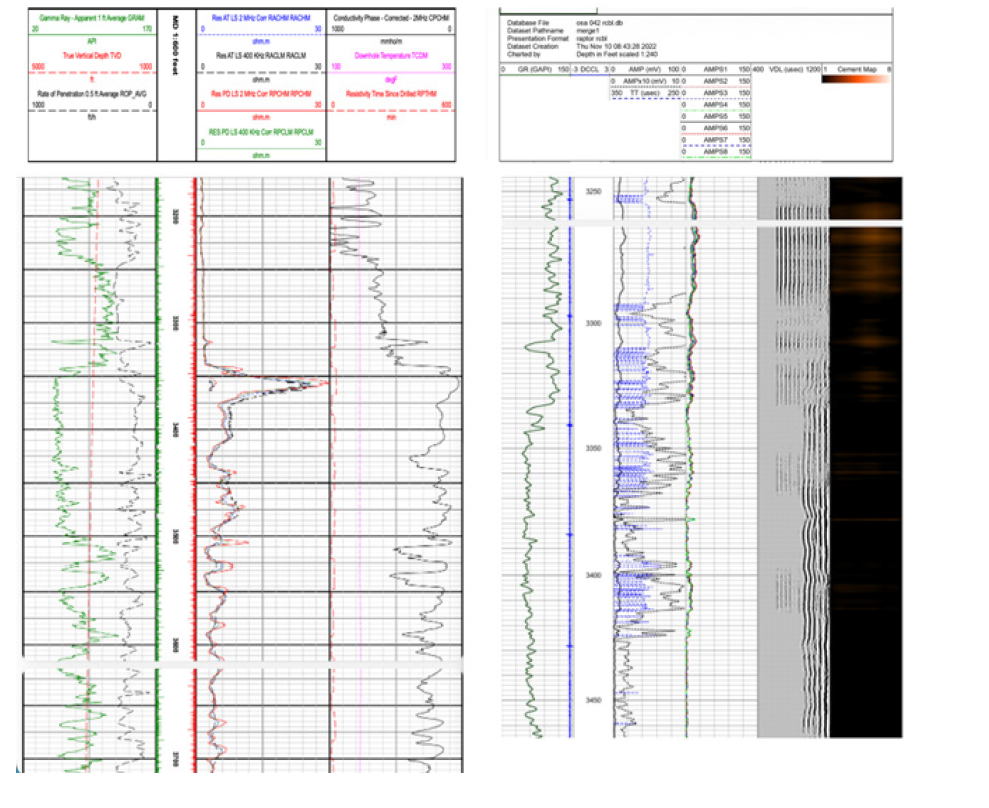
Figure 5 shows Well B from the Field. At approximately 900ft, the resistivity response reaches one of its lowest values, suggesting that this interval is water-bearing or non-hydrocarbon-bearing. At the same depth, the CBL amplitude is low. There is a need to have better cement bonding and improved acoustic coupling between the casing, cement, and the surrounding formation. The VDL response also shows more favorable wave attenuation, and the cement map appears light in color. Together, these observations suggest that the cement bonding quality at this interval is good and that effective zonal isolation has been achieved. Figure 6 illustrates the response at a depth of approximately 3200ft., where the resistivity log shows significantly high values, indicating a potentially hydrocarbonbearing interval. At this depth, the CBL response indicates poorer bonding conditions. The darker cement map signature, together with the elevated CBL amplitude and less favorable VDL response, suggests reduced cement attachment and weaker cement-bonding in the oil-bearing zone. This comparison supports the hypothesis that water-bearing intervals tend to exhibit better cement bonding. In contrast, oil-bearing formations exhibit weaker cement -formation bonding, thereby increasing the risk of gas migration.
Figure 5:Well B. For this well, we had resistivity logs, VDL, CBL, and even a cement map available (900ft) [15].
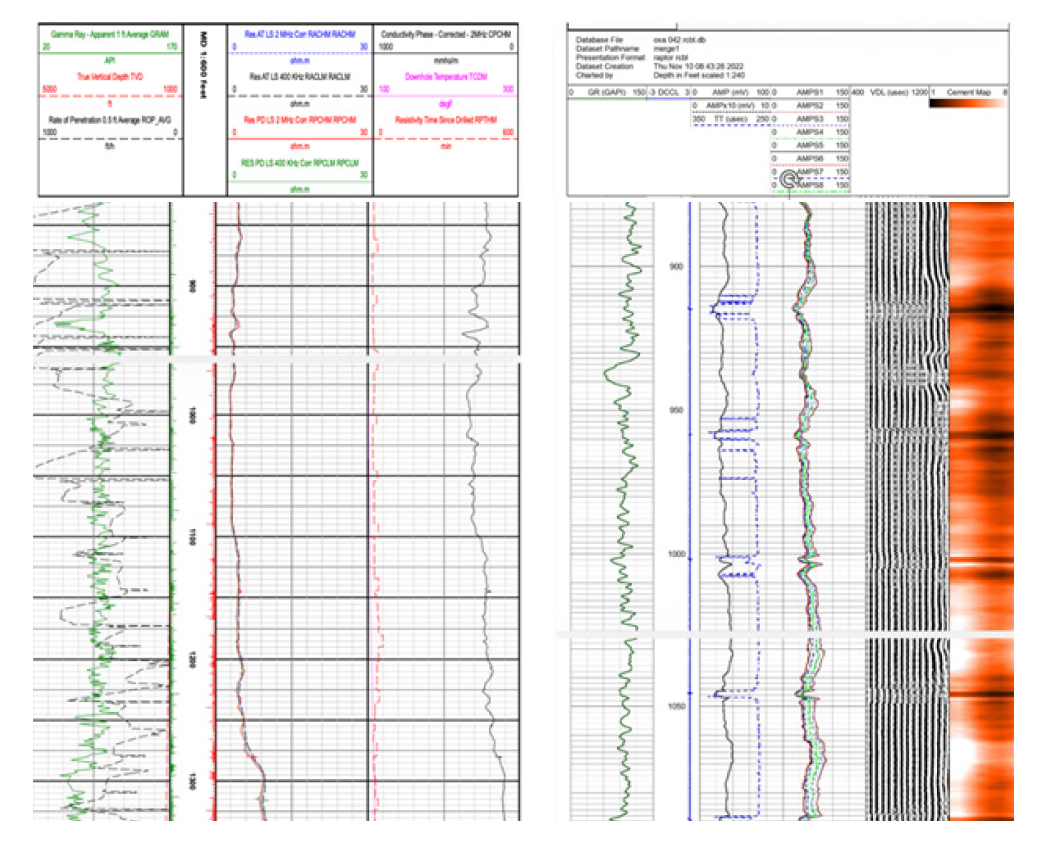
Figure 6:Well C. For this well, we had resistivity logs, VDL, CBL, and even a cement map available (3200ft). [15].
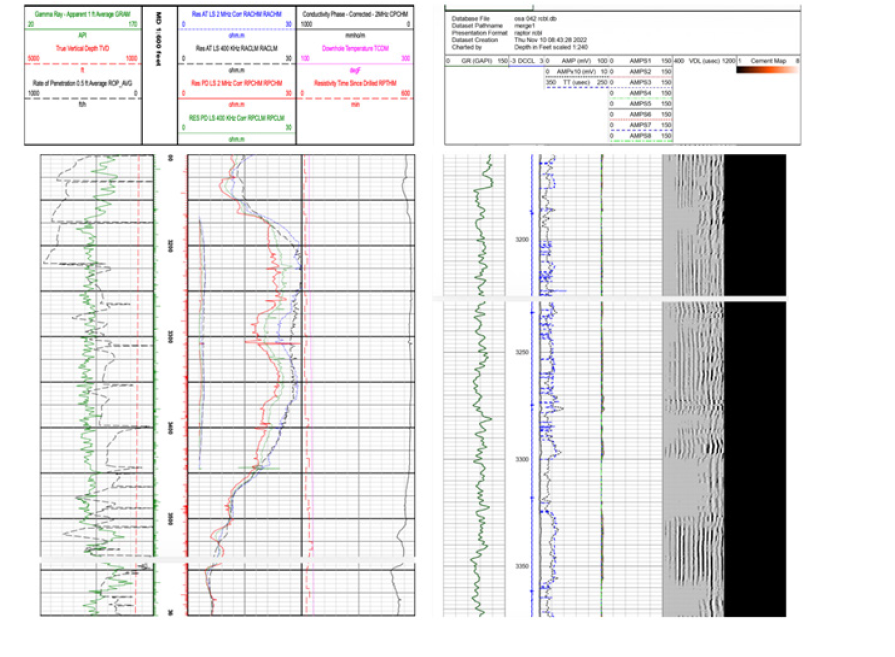
Figure 7:Well D. For this well, we had Resistivity logs, VDL, CBL, and even a cement map available (2000ft). [15].
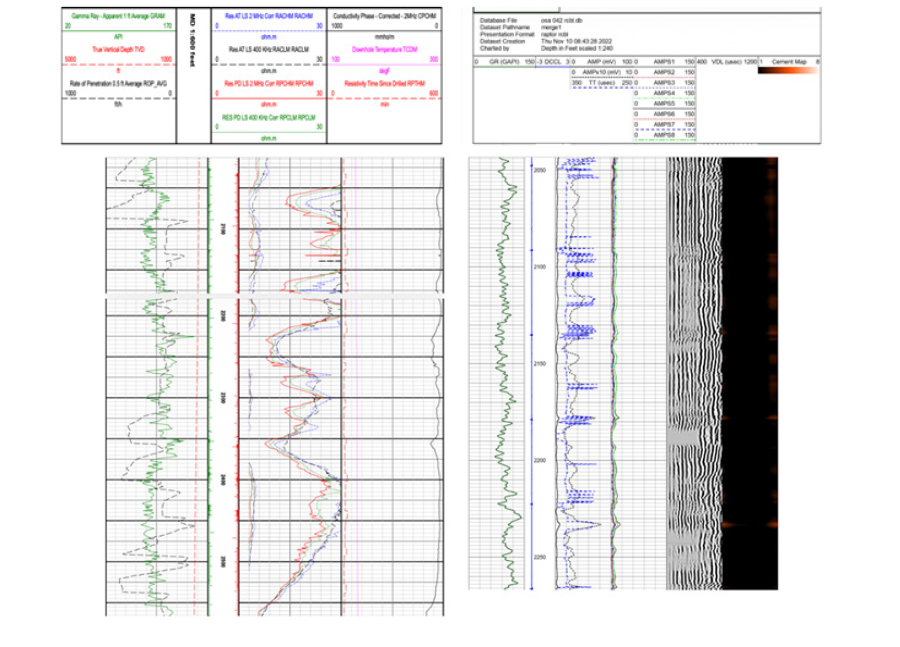
Figure 7 also demonstrates that the interval between approximately 2,000ft. and 2,500ft. corresponds to a hydrocarbonbearing zone, as indicated by the elevated resistivity values. In the same interval, both the CBL and cement-map responses indicate poorer cement -formation bonding, further supporting the hypothesis that oil-bearing formations tend to exhibit weaker cement attachment than water-bearing formations.
Surfactant
A study conducted by Hu et al. [13] demonstrated that the presence of surfactants in cement systems can significantly alter the contact angle of cement particles. The authors showed that surfactant adsorption modifies the wettability characteristics of cement surfaces, potentially affecting interfacial interactions and bonding behavior. Operators in California can utilize surfactantbased additives during well construction and cementing operations to improve mud removal, alter wettability, and to enhance cement placement efficiency. Although these additives are not always explicitly identified as surfactants, they are commonly incorporated into cementing systems under commercial names such as wetting agents, water-wetting additives, spacer surfactants, mutual solvents, emulsifiers, dispersants, and compatibility additives. Oilfield service companies offer a wide range of products designed to improve cement -formation interaction and zonal isolation in challenging well environments. The analysis suggests that, when economic and operational constraints are not the limiting factors, operators often include chemical additives such as surfactants during cementing operations to improve mud removal and enhance cement placement. As shown in Figure 8, the resistivity and cement-evaluation logs from Well E indicate a different bonding behavior compared with the previous cases. The resistivity log identifies the oil-bearing interval; however, both the CBL and the cement map indicate improved cement bonding compared with the previously analyzed wells. The use of surfactant-based additives or wettability-modification treatments during cementing operations improves mud removal and enhances cement -formation adhesion. Such additives may reduce the adverse effects of oil-wet conditions at the interface and promote stronger bonding between cement and the surrounding formation [14].
Figure 8:Well E. For this well, we had resistivity logs, VDL, CBL, and even a cement map available(3200ft) [15].
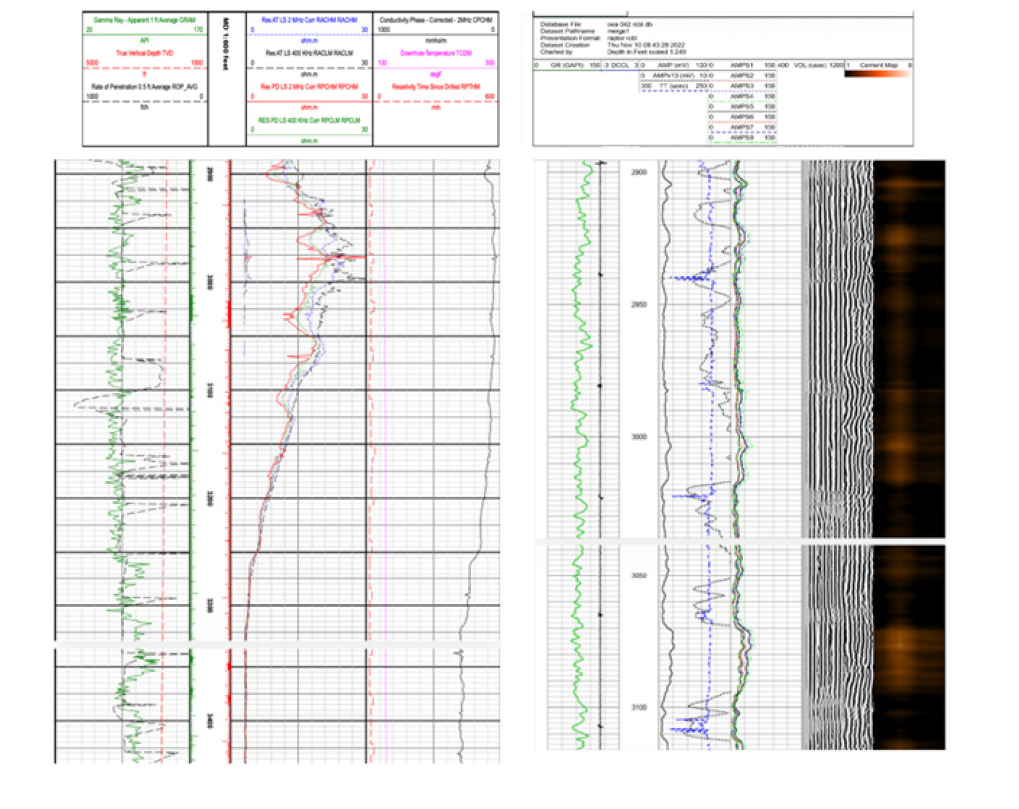
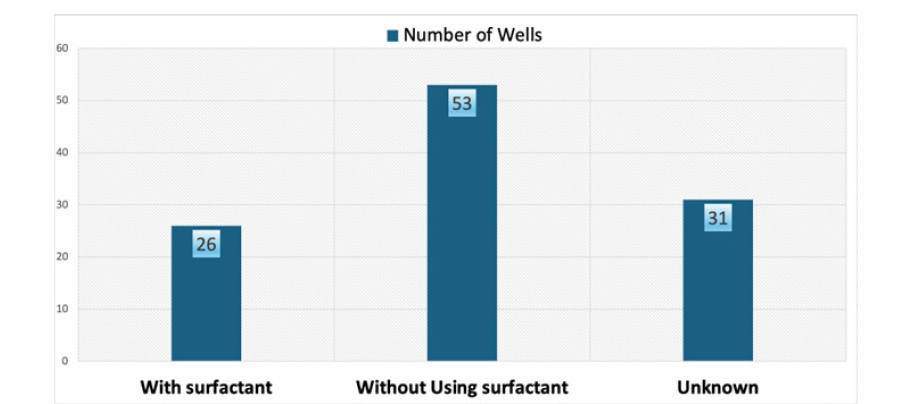
Figure 9 also illustrates the beneficial effect of surfactant-based additives. Although the well penetrates a hydrocarbon-bearing formation, the CBL and cement-map responses indicate good cement -formation bonding. This suggests that the use of surfactant cement additives has improved formation wettability, and has reduced the oil film at the cement -formation interface, and consequently has enhanced cement adhesion compared with wells completed without such additives. Among the 110 wells analyzed, 26 wells (23.6%) were identified as using surfactant-based additives during cementing, whereas 53 wells (48.2%) were completed without documented surfactant use (Figure 10). For the remaining 31 wells (28.2%), the cementing records were unavailable or incomplete, and therefore, the use of surfactants could not be confirmed. These findings highlight the importance of evaluating both active and abandoned wells to ensure long-term well integrity. Because inadequate cement bonding can create potential pathways for gas migration, systematic assessment of cement quality is essential for identifying wells that may pose future methane leakage risks and protecting groundwater resources, the environment, and nearby residential communities.
Figure 9:Well F. For this well, we had resistivity logs, VDL, CBL, and even a cement map available(2500ft) [15].
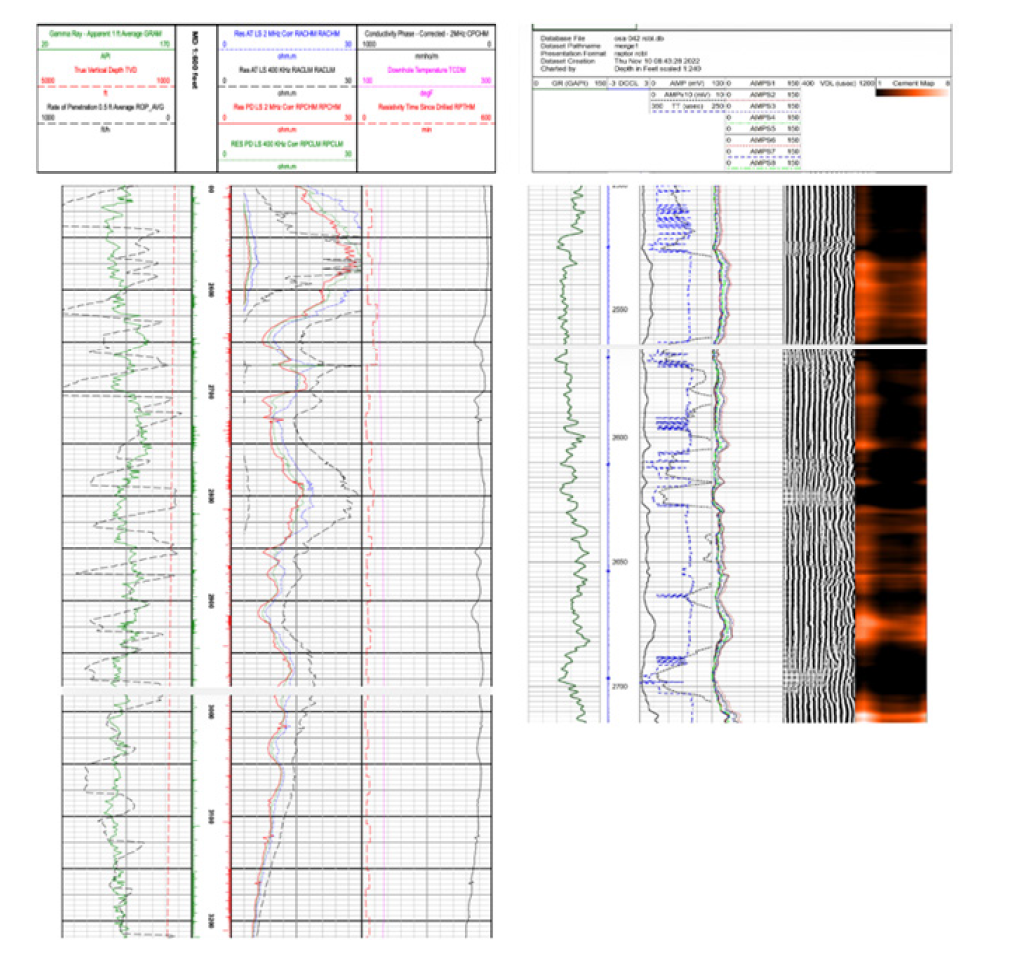
Figure 10:Distribution of wells according to surfactant use during cementing.
Bonding Quality Index (BQI)
Bond Quality Index (BQI) was derived from Cement Bond Log (CBL) measurements and provides a normalized indicator of cement bonding performance. Air was used as the flowing fluid phase, starting with specific initial saturation conditions. The cement permeability was assigned to be a value of 0.01mD. to represent a low permeability consistent with laboratory measurements. This numerical study allowed for the evaluation of potential gas migration pathways through the cement column, as well as the influence of low cement permeability on long-term wellbore integrity.
The BQI is defined and calculated as:

ACBL is the measured CBL amplitude at a given depth interval and Afree is the reference amplitude corresponding to free pipe conditions.
The indices range from 0 to 1, Values approaching one indicate strong cement bonding and effective zonal isolation, whereas values approaching zero represent poor bonding conditions and potential communication pathways behind the casing. Because cement bond quality cannot always be fully characterized using a single measurement, the BQI was used together with VDL responses and cement map observations to evaluate the overall bonding condition. Intervals exhibiting low BQI values, poor VDL attenuation, and darker cement-map signatures were interpreted as zones with increased potential for gas migration. The BQI provides a convenient framework for comparing bonding performance across different formations and enables a more objective assessment of the relationship between formation fluid type and cement-formation bonding quality.
Result
Analysis of the available resistivity, CBL, VDL, and cement composition data, on some wells in Southern California, indicates that cement placed adjacent to hydrocarbon-bearing formations exhibits weaker cement -formation bonding compared with cement placed against water-bearing formations. Water-bearing intervals tend to promote stronger cement attachment and zonal isolation. This is particularly important from a well-integrity perspective because the quality of the cement formation interface directly influences the ability of the cement sheath to function as an effective barrier against fluid and gas migration. Bonding can improve sealing efficiency and reduce the likelihood of creating preferential flow paths behind the casing. Using surfactant-based additives to cement systems can improve bonding in hydrocarbonbearing formations.
This may enhance cement adhesion and partially offset the reduction in bond quality commonly observed in oil-bearing zones. Furthermore, it is important to recognize that, even under ideal conditions where perfect cement placement and bonding are achieved, intact oilwell cement still possesses measurable intrinsic permeability. As a result, gas migration through the cement matrix may still occur over long-time scales (Around 60 years) [4]. Thus, the presence of cement debonding can lead to the development of microannuli (interfacial gaps), increase the conductivity of emission pathways, and cause methane migration to the surface. The low bonding observed in hydrocarbon-bearing formations represents an important risk factor for long-term well integrity [15]. The combination of weaker cement attachment and the intrinsic permeability of cement can facilitate the development of gas migration pathways, potentially increase the likelihood of methane leakage and associate environmental impacts. These findings highlight the importance of understanding cement bonding to various formations, but our studies show a lack of implementation of using additives in many wells. This should be of concern for long time environmental effects of plug and abandoned wells [16].
Conclusion
In Southern California, many structures, including residential houses, schools, and hospitals, are built in areas that originally contained plugged and abandoned oil and gas wells. Any form of gas emission from these wells can be a significant safety and environmental concern. Compared with water-bearing intervals, this study suggests that cement placed against hydrocarbonbearing formations may not bond perfectly to the formation. The reduced bonding can be attributed to wettability issues caused by oil at the cement -formation interface, which limit effective cement adhesion. Over time, such weak interfaces may lead to the development of methane migration pathways. Movement of methane toward the surface and potential accumulation beneath homes or other structures may become problematic. In cases where no surface-active additive is used in the cement, the poor bonding issue can be a major safety concern for structures above plug-andabandoned wells.
Acknowledgment
ECET sponsored this study at the University of Southern California.
References
- Saunois M, Jackson RB, Bousquet P, Poulter B, Canadell JG (2016) The growing role of methane in anthropogenic climate change. Environmental Research Letters 11(12): 120207.
- Parcevaux PA, SauIt PH (1984) Cement shrinkage and elasticity: A new approach for good zonal isolation. In the SPE Annual Technical Conference and Exhibition? SPE pp. 16 -19.
- Celia MA, Bachu S, Nordbotten JM, Gasda SE, Dahle HK (2005) Quantitative estimation of CO2 leakage from geological storage: Analytical models, numerical models, and data needs. In Greenhouse Gas Control Technologies 71: 663-671.
- Zadeh Naseri MS, Ershaghi I (2026) Permeability of borehole cements. In SPE Western Regional Meeting (p. D031S009R004). SPE pp. 13 -16.
- Naseri MSZ, Salimbahrami B, Ershaghi I (2025) Integrity losses in carbon dioxide injection wells. In SPE Western Regional Meeting (p. D041S010R004).
- Abedi N, Ershaghi I (2026) Deficiencies in standard plug-and-abandonment of oil and gas wells in California. In SPE Western Regional Meeting (p. D031S009R002). SPE.
- Opedal N, Todorovic J, Torsæter M, Vrålstad T, Mushtaq W (2014) Experimental study on cement-formation bonding. In SPE International Conference and Exhibition on Formation Damage Control (p. D021S010R006). SPE.
- Lichinga KN, Maagi MT, Wang Q, Hao H, Gu J (2019) Experimental study on oil-based mudcake removal and enhancement of shear bond strength at cement-formation interface. Journal of Petroleum Science and Engineering 176: 754-761.
- Huang S, Zhou C, Su D, Li Z, Yao Z, et al. (2023) Fatty alcohol polyoxyethylene ether sodium sulfate-modified cement to improve the bonding and sealing of cement to oil-wet casing or formation surface in shale gas wells. SPE Journal 28(04): 1729-1743.
- Tabatabaei M, Santos L, Al Hassan AA, Dahi Taleghani A (2022) Limiting the deteriorative impacts of oil-based mud residuals on cement bonding. In SPE Annual Technical Conference and Exhibition? (p. D022S080R002). SPE.
- Broni-Bediako E, Joel OF, Ofori-Darrpong G (2016) Oil well cement additives: A review of the common types. Oil Gas Ees 2: 112.
- Fertl WH, Pilkington PE, Scott JB (1974) A look at cement bond logs. Journal of Petroleum Technology 26(6): 607-617.
- Hu X, Dong H, Zhou Y, Shao W, Liu J, et al. (2025) Study on the influence of different surfactants on cement particles. Langmuir 41(13): 8524-8534.
- Mansour AG, Gamadi T, Emadibaladehi H, Algadi O, Kakadjian S (2021) Investigating effects of adding surfactant to cement spacer on mud removal and cement bond with formation-An experimental study. In SPE/AAPG/SEG Unconventional Resources Technology Conference (p. D011S014R001). URTEC.
- CALGEM.
- Qi Q, Ghaliah K, Ershaghi I (2021) Reservoir engineering and geomechanical aspects of well plugging and abandonment. In SPE Middle East Oil and Gas Show and Conference (p. D031S029R004). SPE.
© 2026 Iraj Ershaghi. This is an open access article distributed under the terms of the Creative Commons Attribution License , which permits unrestricted use, distribution, and build upon your work non-commercially.
Editor In Chief







.jpg)































Signup for Newsletter

Quick Links
 Editorial Board Registrations
 Submit your Article
 Best Paper of the Volume
 Reprints
 Refer a Friend
 Advertise With Us
Our Recent Edition

.jpg)



Top Editors




.jpg)

















.bmp)
.jpg)
.png)
.jpg)













.jpg)






.png)

.png)




.png)




Financial Support

Sponsors

Latest e-Books

Latest Video

 a Creative Commons Attribution 4.0 International License. Based on a work at www.crimsonpublishers.com.
Best viewed in
a Creative Commons Attribution 4.0 International License. Based on a work at www.crimsonpublishers.com.
Best viewed in 
 | Above IE 9.0 version