

- About Us
- Information
-

The Author ensures that the research has been conducted responsibly and ethically with adherence to all relevant regulations. read more..
- For Authors
- For Reviewer
- Manuscript Guidelines
- Membership
- Publication Ethics
-
- Journals
- Reprints
- e-Books
- Videos
- Policies
- Contact Us
 COVID-19
- Submissions



Full Text
Aspects in Mining & Mineral Science
Mineralogical and Geochemical Assessment of Monazite, Ilmenite and Zircon in Recent Coastal Black Sands of Uruguay using SEM/EDS Microanalysis
Gonzalo Blanco*, Paulina Abre and Camila Zunino
Departamento de Geociencias, Centro Universitario Regional del Este, Universidad de la República, Ruta 8 km 282, Treinta y Tres, Uruguay
*Corresponding author:Gonzalo Blanco, Departamento de Geociencias, Centro Universitario Regional del Este, Universidad de la República, Ruta 8 km 282, Treinta y Tres, Uruguay
Submission: July 11, 2026: Published: July 24, 2026

ISSN 2578-0255Volume15 Issue 2
Abstract
This work describes the mineralogical and geochemical features of the heavy mineral assemblage within a very fine- to medium-grained black sand occurrence along the Uruguayan Atlantic coast. Mineralogical analysis focused on the valuable heavy minerals’ varieties bearing TiO2, LREE, and ZrO2 using a SEM/EDS instrument. The total concentration of valuable heavy minerals (ilmenite, zircon, and monazite) increases from 21% in the raw black sand sample to 65% after concentrating and sieving within the very fine to fine grain-size fraction (63 to 180μm). This concentrated fraction comprises 46% ilmenite, 19% Ti-magnetite, 2% leucoxene and rutile, 5% monazite, and 14% zircon, alongside other non-valuable heavy minerals and light minerals (gangue). Average geochemical microanalysis (n=557) show that the ilmenites are composed of 54% TiO2, 42% FeO, 1.6% MnO and 0.9% MgO. Ti-magnetites are composed of 36% TiO2, 58% FeO, 0.7% MnO, 1.8% MgO, 0.7% Al2O3, 0.9% SiO2 and 1.1% CaO. Ce-monazite yields 35% CeO2, 15.5% La2O3, 13.2% Nd2O3, 8.8% Th2O, 1.3% U3O8, and 25.7% P2O3. Zircon is composed of 65.6% ZrO2 and 33.1% SiO2.
Keywords:SEM-EDS; Mineralogy; Geochemistry; Black sands; Ilmenite; Monazite; Uruguay
Introduction
Natural heavy mineral concentration in black sand occurs through eolian, fluvial and wave action in both recent and ancient sedimentary deposits [1,2]. Coastal placer deposits containing ilmenite (Fe2+TiO3), leucoxene (an alteration product with >70% of TiO2), and rutile (TiO2) represent the main economic source of titanium, accounting for approximately, 45% of known worldwide resources [1,3,4]. When coastal placer deposits additionally accumulate other valuable heavy minerals such as monazite ((Ce,La,Nd,Th)PO4) and zircon (ZrSiO4), they may be profitable as co- or by-products [1]. Monazite is exploited for its Light Rare Earth Elements (LREE) and thorium (Th) content as a by-product during titanium and zirconium extraction from coastal deposits, such as those in South Africa, Australia, Brazil and India [1,3-8]. Monazite deposits hosting Rare Earth Elements (REEs) are critical raw materials of high economic value [9,10] and strategic relevance globally [1].
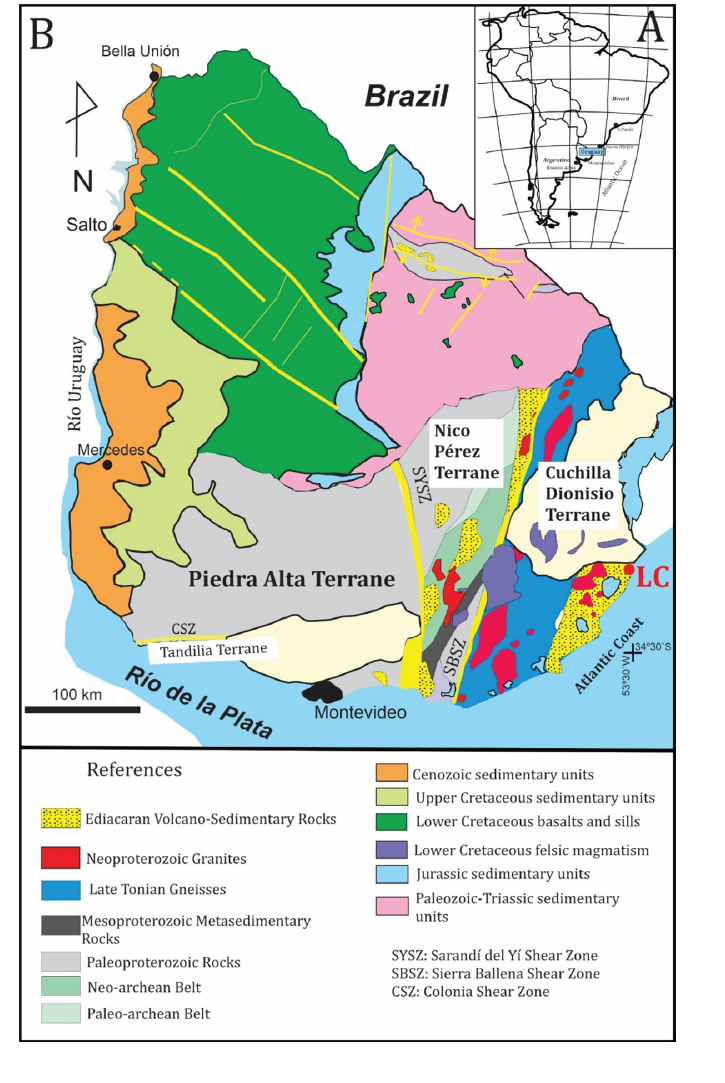
Along the Atlantic coast of Uruguay (Figure 1), research on black sand deposits has focused on reserve estimations for potential titanium exploitation, aimed at the production of white and highly opaque TiO2 pigment [11-13]. However, a significant knowledge gap persists regarding detailed single-grain mineralogical and geochemical analytical data for valuable heavy minerals such as ilmenite, monazite, and zircon. Consequently, the precise chemical variations and potential economic viability of these sub-products remain unresolved.
Figure 1:A. Location of Uruguay. B: Simplified Uruguayan geological map, modified after [9,10]. LC: La Coronilla. Paleoproterozoic is misspelled in the references. The letters A are too small to read.
Scanning Electron Microscopy (SEM) coupled with Energy- Dispersive X-ray Spectrometry (EDS) has emerged as a robust, non-destructive, and efficient tool for the characterization of heavy minerals [2] and other aspects of the mining industry [14,15]. Unlike traditional bulk geochemistry methods, SEM-EDS singlegrain analysis combined with automated elemental mapping allows precise determination of compositional variations. Furthermore, the technique is useful for identifying internal textures within individual mineral phases, which may influence the economic evaluation and metallurgical processing potential of potential placers and other ores [15].
In this study, we investigate the recent black sand deposits of La Coronilla beach, located approximately 30Km southwest of the Brazilian border. In this area, heavy minerals are concentrated by eolian and wave action and are distributed along the coast, overlying the Late Pleistocene marine sediments of the Chuy Formation. The objective of this work is to evaluate the use of the Scanning Electron Microscopy and Energy-dispersive X-ray spectrometry analysis [16] to characterize the geochemical composition and textural features of valuable economic minerals (ilmenite, monazite, and zircon) and the associated gangue minerals within this coastal system.
Materials and Methods
A 10kg bulk sample was collected from swash zone of the La Coronilla locality in the Atlantic coast of Uruguay. Sample processing and analysis were carried out at the Laboratorio de Geología (Departamento de Geociencias, Centro Universitario Regional del Este) following established procedures [17]. The raw sample was split by quartering, and an aliquot was taken for grain-size separation. Sieving was performed using a Retsch AS 200 analytical sieve shakers to separate four distinct grain-size fractions: 63- 125μm, 125, and 180μm and ˃180μm. A raw black sand aliquot (N) was kept untreated for comparison with the separated mineral fractions. For each fraction, an epoxy resin probe of 1.25-inch diameter was performed. The obtained resin discs were polished with diamond paste of 3μm, 1μm and 1/4μm to obtain a mirror-like finished surface. Subsequently, the mounts were carbon-coated for SEM observations and chemical analysis. Back-Scattered Electron (BSE) imaging and elemental analysis were conducted using a JEOL NeoScope JCM-6000 Plus equipped with an Energy-Dispersive X-ray Spectrometer (EDS) consisting of a 10mm2 Silicon Drift Detector (SDD). A total of 557 single-grains analyses of major and minor elements were done following standard procedures [18]. Electrons are emitted by a traditional W cartridge filament with a working distance of 19mm. The X-ray take-off angle is about 25°. The energy resolution of the SDD is ~133eV at the energy of Mn Kα (5894eV). The EDS analyses were conducted using standard probe current (~30nA), a data collection time of 60s and an accelerating voltage of 15kv.
Result and Discussion
The modal point-counting results on both the sieved and nonsieved fractions reveal significant trends regarding the selective concentration of valuable heavy minerals (Figure 2). The data confirm that the majority of these valuable mineral phases occur within the 63 to 180μm grain-size range (very fine to fine sand). The 63-125μm and 125-180μm fractions exhibit an exceptionally high concentration of ilmenite (46%), representing a substantial enrichment compared to the >180μm fraction and the raw, nonsieved black sand sample (N), which yields an ilmenite concentration of only 19-21%. Zircon shows concentration levels of 14% and 9% in the 63-125μm and 125-180μm fractions respectively. Monazite preferentially concentrate up to 4-5% within the same 63-180μm size range. In contrast, the primary silicate gangue, quartz, is notably scarce in these very fine to fine fraction, accounting for only 1 and 9% of the 63-125μm and 125-180μm fractions, respectively. However, quartz reaches up to 47% in the raw black sand sample, typically displaying a grain size larger than 180μm.
Figure 2:Bar diagram showing the modal mineralogy of heavy mineral phases distributed according to the grainsize. N: raw black sand sample (n=557). I think the letters in the diagram could be bigger.
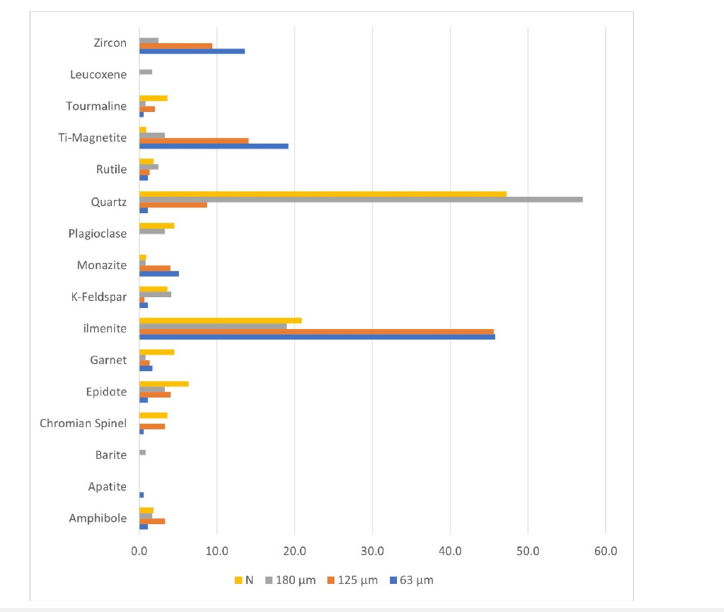
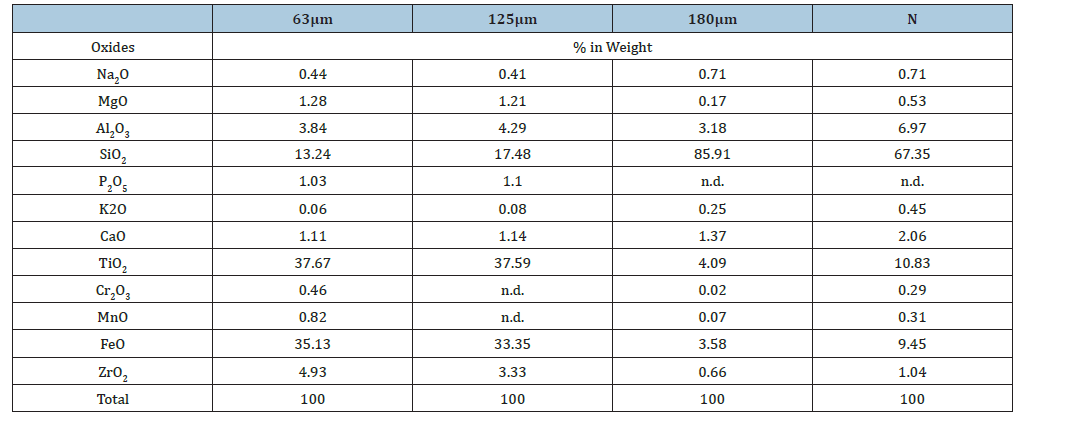
To validate the modal mineral counts and grain-size distribution, automated elemental mapping and bulk elemental analyses were conducted (Figure 3). Non-valuable heavy minerals such as epidote, amphibole, chromian spinel, tourmaline and garnet account for up to 20% of the total heavy minerals in the raw black sand sample and 14% in the 125-180μm fraction. In contrast, they only constitute up to 5% in the finest fraction (63-125μm). Bulk geochemical data (Table 1) strongly support these modal counts, indicating a TiO2 concentration of approximately 37 wt.% for the fine fractions 63- 125μm), compared to around 11wt% in the raw black sand sample. Consequently, sieving the La Coronilla black sands to isolate the very fine to fine grained fractions proves to be a highly effective preconcentration technique for ilmenite, monazite, and zircon which combined represent up to 65% of the economically valuable heavy minerals.
Figure 3:Elemental Ti and Si chemical mapping of the analyzed black sand sample, the efficient removal of quartz (gangue) and the high concentration of ilmenite after sieving. The pink-colored grains within the 63-125μm fractions correspond to zircon grains.
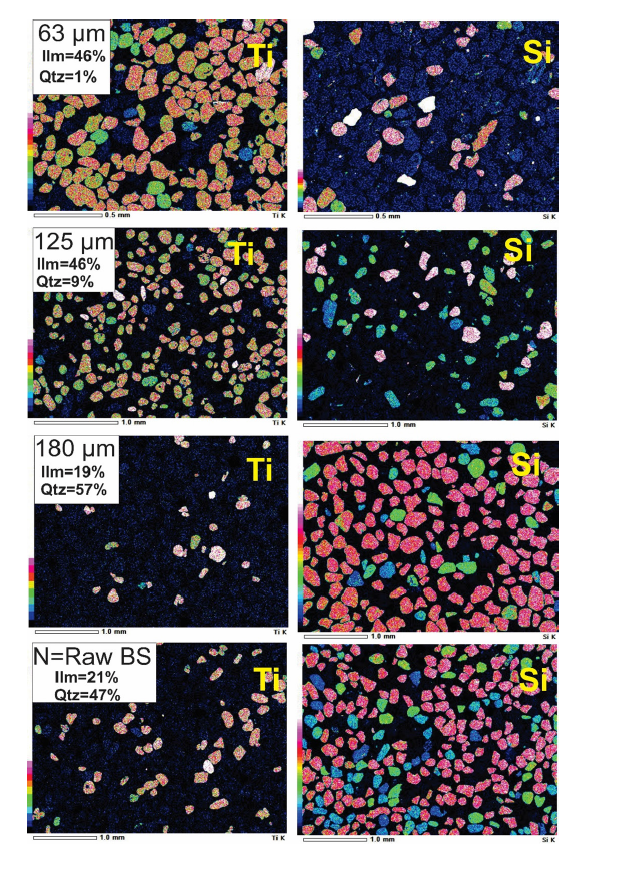
Table 1:Average geochemical composition of the analyzed samples taken from the compositional map X-ray spectra. n.d.=no data.
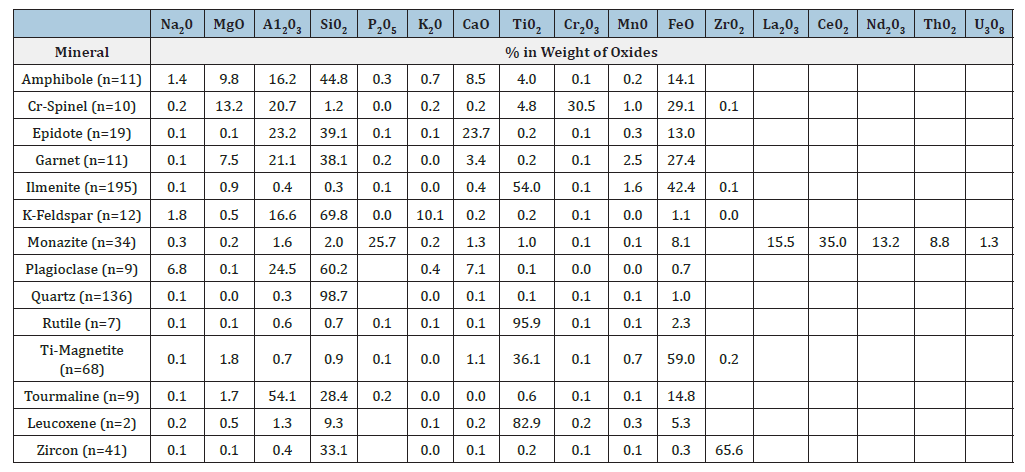
Textural analysis of the ilmenites and Ti-magnetite’s indicates that they consist of fine-grained, well-rounded grains. Significant variety in internal textures was observed via Back-Scattered Electron (BSE) imaging (Figure 4). Several ilmenite grains exhibit internal textures, with domains of variable TiO2 concentrations and inclusions of feldspar, titanite, quartz and zircon (Figure 4). Alteration to leucoxene was also observed, characterized by Tirich zones or alteration halos. Monazite and zircon grains are generally texturally homogenous, hosting rare inclusions of quartz or apatite. Single-grain geochemical microanalysis corroborated these mineralogical compositional heterogeneities in ilmenite and variations in the TiO2 distribution in other mineral phases particularly within Ti-magnetites. Only few grains of rutile and leucoxene were detected and are insignificant economic value in this deposit (Figure 5a). Figure 5b illustrates a trend toward MgO enrichment in the Ti-magnetites, whereas Figure 5c shows elevated MnO concentrations in the ilmenites. On average, ilmenites are composed of 54% TiO2, 42% FeO, 1.6% MnO, and 0.9% MgO. Timagnetites are composed of 36% TiO2, 58% FeO, 0.7% MnO, 1.8 of MgO, 0.7% Al2O3, 0.9% SiO2, and 1.1% CaO (Table 2). Ce-monazite grains, which reach up to 4-5% within the 63-180μm fractions yield average compositions of 35% CeO2, 15.5% La2O3, 13.2% Nd2O3, 8.8% Th2O, 1.3% U3O8, and 25.7% P2O3. ThO2 values show wide dispersion, with concentrations ranging between 3 and 25% (Figure 6). Zircon grains are composed of 65.6% ZrO2 and 33.1% SiO2, with negligible trace amounts of LREEs, Th, and Hf.
Figure 4:Back-scattered electron images of some analyzed heavy minerals. Ilm: ilmenite, Mon: Monazite, Tit: Titanite, Zr: Zircon, Fd: Feldspar, CSp: Chromian Spinel. Notice the differences in ilmenite textures, inclusions and compositions.
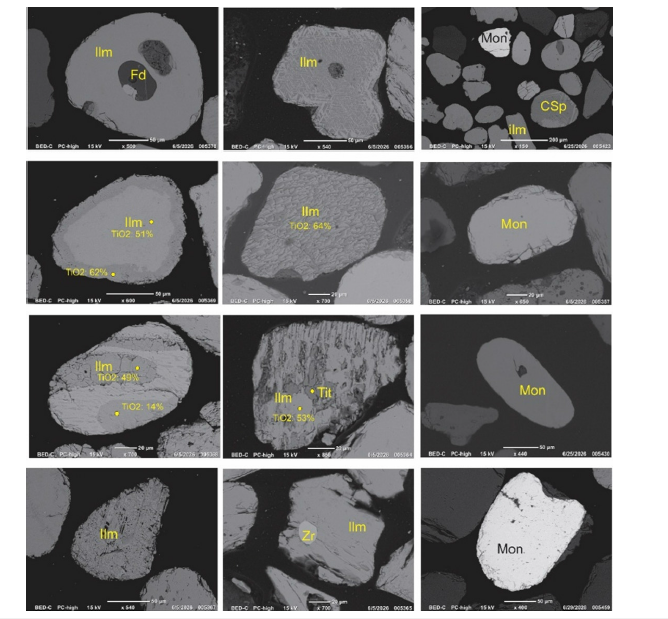
Figure 5:Binary plots characterizing the TiO2-bearing mineral phases of the black sands, A: TiO2 vs. FeO, B: TiO2 vs. MnO and C: TiO2 vs. MgO. The letters in the diagrams need to be larger.
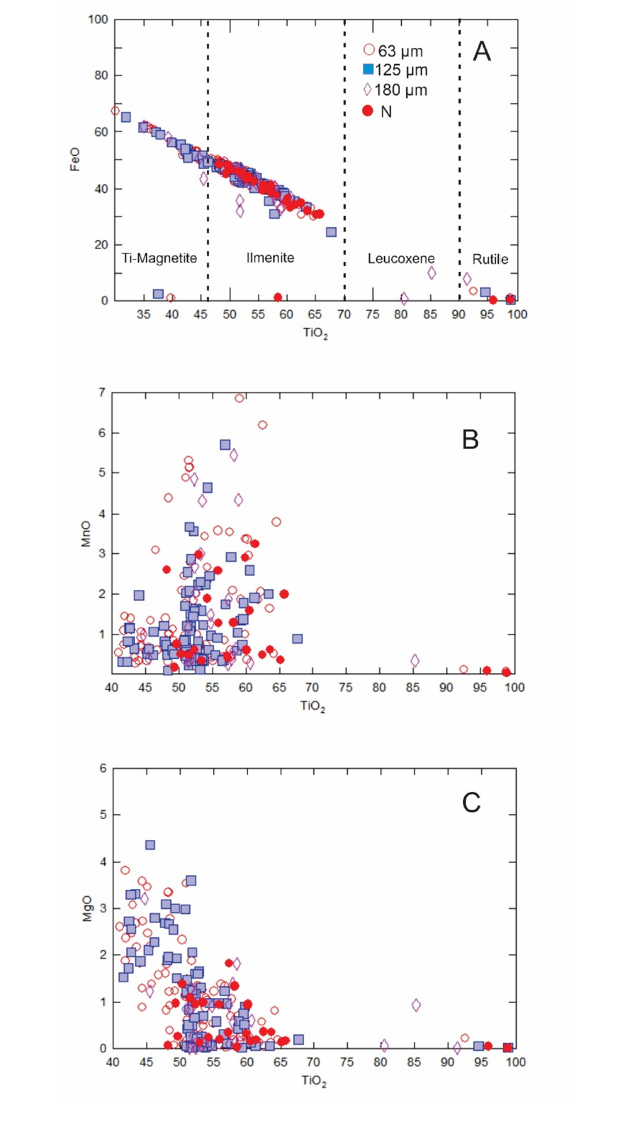
Figure 6:Binary geochemical plots for the analyzed single-grain monazites. A: Total LREE+Th vs. P2O5, B: ThO2 vs. LREE. The letters in both diagrams need to be larger.
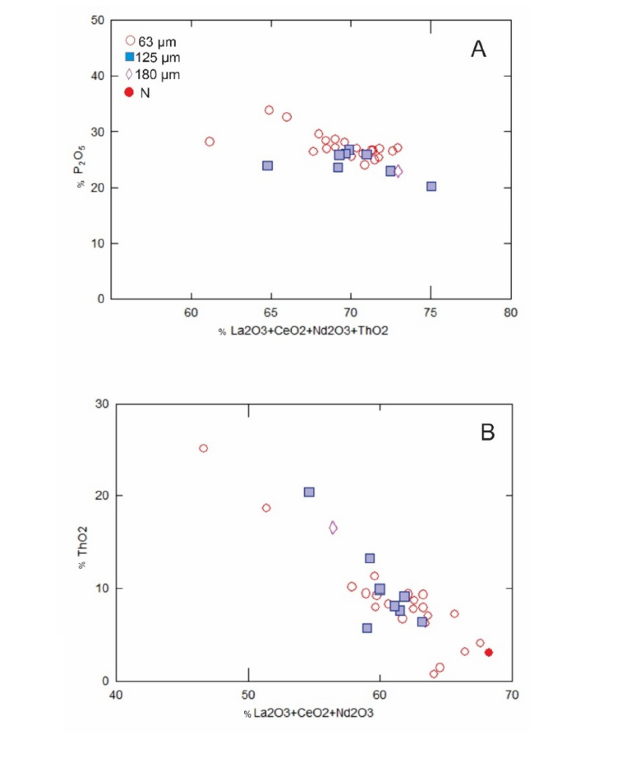
Table 2:Average composition of the black sand analyzed minerals.
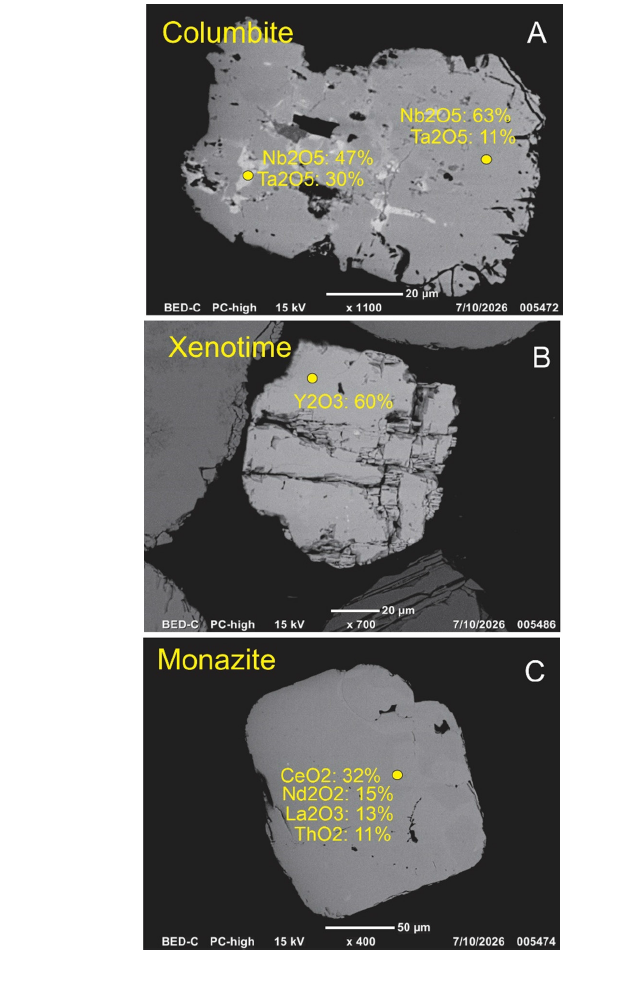
Furthermore, others valuable heavy mineral like manganocolumbite (Mn, Fe2+) (Nb,Ta)2O6 and xenotime Y(PO4) grains were detected in the black sands but they are scarce and thus, further investigation is needed to evaluate these minerals from an economic perspective (Figure 7). The granulometric separation applied in this study highlights an increase in total valuable heavy minerals (ilmenite-zircon-monazite), rising from 21% in the raw black sand sample to 65% within the very fine to fine grained fraction. A similar heavy mineral concentration in the finest fraction was previously documented in the Aguas Dulces black sand deposit near La Coronilla beach [12]. However, the LREE reserve calculation for the Aguas Dulces deposit was limited because single-grain geochemical analyses on monazite were not conducted, and the ƩLREE was unreported. In this work, the analyzed monazites yielded an outstanding average of 64% ƩLREE (n=35, standard deviation of 8%). This high value, combined with the proven capability to concentrate this mineral up to 5% via sieving within the 63-180μm range, highlights the need for further research to reevaluate the reserves of this strategic resource along the Uruguayan coast. From a processing standpoint, the sharp compositional and granulometric boundary between the valuable heavy minerals and the identified gangue (quartz), offers a favorable scenario for low-cost gravimetric or magnetic separation.
Figure 7:Back-scattered electron images of valuable heavy minerals founded the very fine to fine sand fractions (63- 180μm). Only two grains of columbite and xenotime were detected.
Conclusion
The integration of the Scanning Electron Microscopy (SEM) and Energy-Dispersive X-ray Spectrometry (EDS), combined with modal point counting and geochemical mapping, provides a powerful approach for characterizing the mineralogical and geochemical features of coastal placer deposits. At La Coronilla beah, a simple granulometric separation effectively isolates the economically important phases. The very fine to fine sand fractions (63-180μm) selectively concentrate 65% of the valuable heavy minerals dominated by ilmenite, monazite, and zircon. the majority, which consist of Ilmenite yields an average TiO2 composition of 54% with a standard deviation of 4%. Although individual leucoxene grains as alteration products are scarce, some ilmenite and Ti-magnetite grains show varying degrees of alteration, characterized by Ti-rich zones and halos. Ce-monazite and zircon grains are homogenous, rounded and very fine to fine grained. Monazite are composed of 64% LREE (standard deviation of 8%), whereas lastly, zircon grains are composed of 65.6% ZrO2.
Acknowledgement
The authors are grateful to the Universidad de la República and PEDECIBA Geociencias for their support. The reviewers and the Editor are deeply acknowledged.
References
- Brathwaite RL (2003) Geological and mineralogical characterization of zeolites in lacustrine tuffs, Ngakuru, Taupo Volcanic Zone, New Zealand. Clays and Clay Minerals 51: 589-598.
- Brathwaite RL, Hill D, Merchant RJ (2006) Zeolite deposits in lacustrine tuffs, Ngakuru, Taupo Volcanic Zone. Geology and exploration of New Zealand mineral deposits. In: Christie AB, Brathwaite RL (Eds.), Australasian Inst Min Metal, Melbourne, Australia, Monograph 25: 211-216.
- Brathwaite RL, Rae A (2021) Epithermal zeolite alteration associated with siliceous sinters, hydrothermal eruption breccias and gold-silver mineralization, central Taupo Volcanic Zone, New Zealand. Economic Geology 116(5): 1093-1114.
- Wilson CJN, Rowland JV (2016) The volcanic, magmatic and tectonic setting of the Taupo Volcanic Zone, New Zealand, reviewed from a geothermal perspective. Geothermics 59: 168-187.
- Grindley GW (1959) Sheet N85 - Waiotapu, Geological Map of New Zealand 1:63 360 scale. Department of Scientific and Industrial Research, Wellington, New Zealand.
- Smith RCM, Smith IEM, Browne PRL, Hochstein MP (1993) Volcano-tectonic controls on sedimentation in the Taupo Volcanic Zone, New Zealand. In: Balance PF (Ed.), South Pacific Sedimentary Basins, Sedimentary Basins of the World, 2: Amsterdam, Netherlands, Elsevier, pp. 143-156.
- Manville VR (2001) Sedimentology and history of Lake Reporoa: An ephemeral supra-ignimbrite lake, Taupo Volcanic Zone, New Zealand. Volcanogenic sedimentation in lacustrine settings. In: White JDL, Riggs N (Eds.), International Association of Sedimentologist, Special Publication 30: 109-140.
- Downs DT, Rowland JR, Wilson CJN, Rosenberg MD, Leonard GS, et al. (2014) Evolution of the intra-arc Taupo-Reporoa Basin within the Taupo Volcanic Zone of New Zealand. Geosphere 10(1): 185-206.
- Steiner A (1977) The Wairakei geothermal area North Island, New Zealand. New Zealand Geological Survey Bull. 90. Department of Scientific and Industrial Research, Wellington, New Zealand.
- Browne PRL (1978) Hydrothermal alteration in active geothermal fields. Annual Reviews Earth Planetary Science 6: 229-250.
- Villamor P, Berryman KA (2001) Late Quaternary extension rate in the Taupo Volcanic Zone, New Zealand, derived from fault slip data. New Zealand Journal Geology Geophysics 44(2): 243-269.
- Rowland JV, Sibson RH (2004) Structural controls on hydrothermal fluid flow in a segmented rift system, Taupo Volcanic Zone, New Zealand. Geofluids 4: 259-283.
- Gravley DM, Wilson CJN, Rosenberg MD, Leonard GS (2006) The nature and age of Ohakuri Formation and Ohakuri Group rocks in surface exposures and geothermal drillhole sequences in the central Taupo Volcanic Zone, New Zealand. New Zealand Journal Geology Geophysics 49: 305-308.
- Gravley DM, Deering CD, Leonard GS, Rowland JV (2016) Ignimbrite flare-ups and their drivers: A New Zealand perspective. Earth Science Reviews 162: 65-82.
- Drake BD, Campbell KA, Rowland JV, Guido DM, Browne PR, et al. (2014) Evolution of a dynamic paleo-hydrothermal system at Mangatete, Taupo Volcanic Zone, New Zealand. J Volcanology Geothermal Research 282: 19-35.
- Brito-Rojas AD, Coutin-Correa DP, Rodriguez-Fuentes G (2017) Sedimentary zeolite deposits in Cuba. Volcanogenic sedimentary zeolite deposits in Cuba. International Zeolite Association, Commission on Natural Zeolites, Catalog of Deposits: Cuba.
- Nguyen ML, Tanner CC (1998) Ammonium removal from waste water using natural New Zealand zeolites. New Zealand Journal Agricultural Science 41(3): 427-446.
- Colella C (1996) Ion exchange equilibria in zeolite minerals. Mineralium Deposita 31: 554-562.
- Morante-Carballo F, Montalván-Burbano N, Carrión-Mero P, Espinoza-Santos N (2021) Cation exchange of natural zeolites: Worldwide Research. Sustainability 13: 7751.
- Pansini M (1996) Natural zeolites as cation exchanges for environmental protection. Mineralium Deposita 31: 563-575.
- Wang S, Peng Y (2010) Natural zeolites as effective adsorbents in water and wastewater treatment. Chemical Engineering Journal 156: 11-24.
- Bowman RS (2003) Applications of surfactant modified zeolites to environmental remediation. Microporous Mesoporous Materials 61: 43-56.
- Bish DL, Guthrie GD (1993) Mineralogy of clay and zeolite dusts (exclusive of 1:1-layer silicates). In: Guthrie GD, Mossman BT (Eds.), Reviews in Mineralogy. Mineralogical Society of America 28: 139-184.
- Özkundakci D, Hamilton DP, Scholes P (2010) Effect of intensive catchment and in-lake restoration procedures on phosphorous concentrations in a eutrophic lake. Ecological Engineering 36(4): 396-405.
- Silipajarn O, Silipajarn K, Boyd C (2006) Evaluation of zeolite products used for aquaculture in Thailand. Journal World Aquaculture 37: 136-138.
© 2026 Robert Brathwaite. This is an open access article distributed under the terms of the Creative Commons Attribution License , which permits unrestricted use, distribution, and build upon your work non-commercially.
Editor In Chief







.jpg)































Signup for Newsletter

Quick Links
 Editorial Board Registrations
 Submit your Article
 Best Paper of the Volume
 Reprints
 Refer a Friend
 Advertise With Us
Our Recent Edition

.jpg)



Top Editors




.jpg)

















.bmp)
.jpg)
.png)
.jpg)













.jpg)






.png)

.png)




.png)




Financial Support

Sponsors

Latest e-Books

Latest Video

 a Creative Commons Attribution 4.0 International License. Based on a work at www.crimsonpublishers.com.
Best viewed in
a Creative Commons Attribution 4.0 International License. Based on a work at www.crimsonpublishers.com.
Best viewed in 
 | Above IE 9.0 version